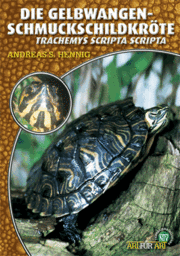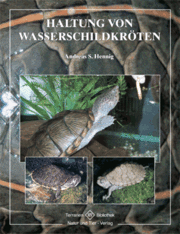
Keeping water turtles

Article no: BZ-1211789

CHF 35.50

Stock: 0

Ready for dispatch in 1-3 days, delivery time 14 working days

Delivery between Tuesday, 5 May and Wednesday, 6 May
Zahlungsarten
Product information "Keeping water turtles"

All about keeping water turtles

  • 128 Seiten
  • 116 Farbfotos
  • Format: 16,8 x 21,8 cm
  • Autor Andreas S. Hennig

Inhalt:

Der erfahrene Terrarianer Andreas S. Hennig gibt in diesem neuen Ratgeber eine umfassende Einführung in die Haltung von Wasserschildkröten.
Er stellt Biologie, Pflege- und Nachzuchtbedingungen der beliebten urtümlichen Tiere ausführlich und praxisnah vor und zeigt auf, worauf man für eine erfolgreiche Haltung und Vermehrung von Anfang an achten muss und wie man Probleme erst gar nicht aufkommen lässt.
Kompakte Information, bestechende Bilder - ein Muss für alle Schildkrötenfans!

Composition
Feeding recommendation
Technical details
Size information

0 of 0 reviews

Give us a rating!

Share your experience with the product with other customers.


Suggested products

Handbook of food plants for tortoises and other reptiles
Handbook of forage plants 2nd revised editionMarion Minch is not only a successful breeder of diverse tortoises for many years, but also an excellent connoisseur of native wild herbs. She founded and runs samenkiste.de, which is well known to many tortoise keepers and nature lovers. Her name is inextricably linked with reptile care and species-appropriate nutrition for tortoises. Her handbook of food plants summarises the most important native food plants for herbivorous and omnivorous reptiles. She not only considers tortoises, but also iguanas, spiny-tailed dragons and even chameleons. From the basics of plant biology to native wild herbs to suitable food plants for hardy tropical reptile species, this comprehensive work provides the basis for species-appropriate keeping. In the expanded and supplemented 2nd edition, the plant section is divided according to flower colour. This makes it even easier to identify wild herbs. The work has also been supplemented with a wealth of additional information and many pictures.

CHF 46.50

Geckos
Geckos in the terrarium by Astrid FalkThe book offers a comprehensive introduction to geckos and their species-appropriate keeping in terrariums. It explains what you need to think about before buying a gecko and what preparations should be made. The book describes in detail how the terrarium is technically equipped and set up. The care of the animals, their special features and behaviour, their diet, reproduction and rearing of young animals are described, as well as diseases and husbandry problems with tried and tested suggestions for prevention and treatment. Individual gecko species that are particularly suitable for keeping and breeding in terrariums are portrayed in detail in the second part of the book.

CHF 28.50

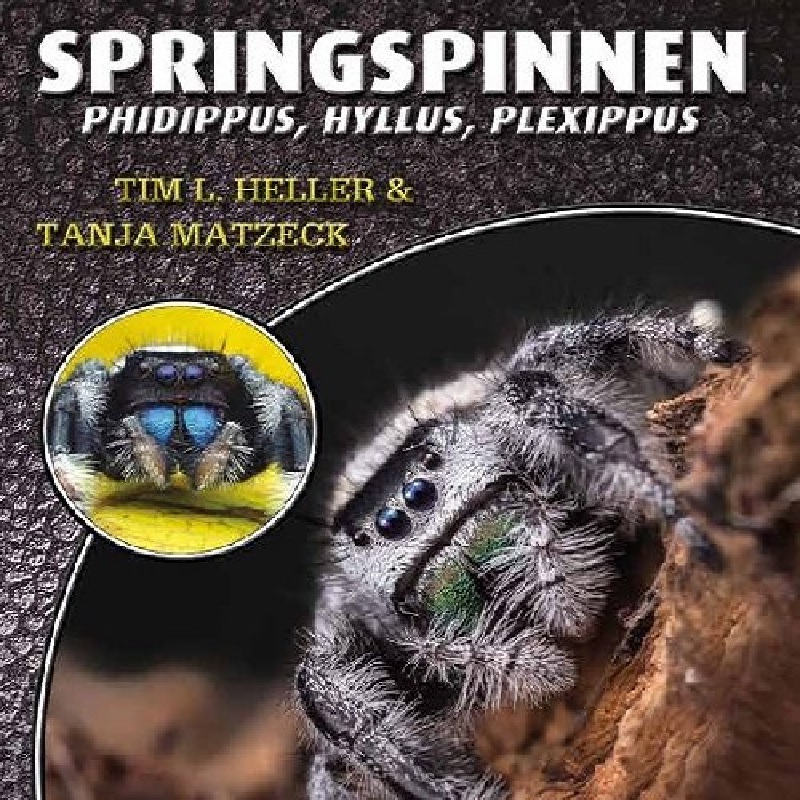
Jumping spiders Phidippus, Hyllus, Plexippus
Book Jumping Spiders - Phidippus, Hyllus & Plexippus A guide to keeping jumping spiders of the genera Phidippus, Hyllus & Plexippus. Who can resist the charm of jumping spiders? The childlike appearance of their expressive face simply leaves no one cold! In addition, their behavior is extremely exciting to observe, their colors are bright and their requirements for species-appropriate keeping are very easy to meet. No wonder these likeable jumpers are all the rage! This volume in the "Species by Species" series describes in detail what to look out for when buying and keeping them, introduces the most commonly kept species and color forms and provides plenty of tips on how to keep them successfully - so you can be sure they will breed well! Species by Species introduces you to the books in this series, which present the most popular terrarium animals. Each volume offers you detailed, practical care instructions and all the information you need to successfully breed your animals. All important questions from the required tank size to terrarium set-up, technical equipment, species-appropriate nutrition and disease prevention are answered with numerous tricks and tips. Experienced, long-standing breeders reveal how you can encourage the animals to reproduce and raise healthy young. All this in full color, generously illustrated and attractively designed - just about your terrarium animal - species by species

CHF 23.90

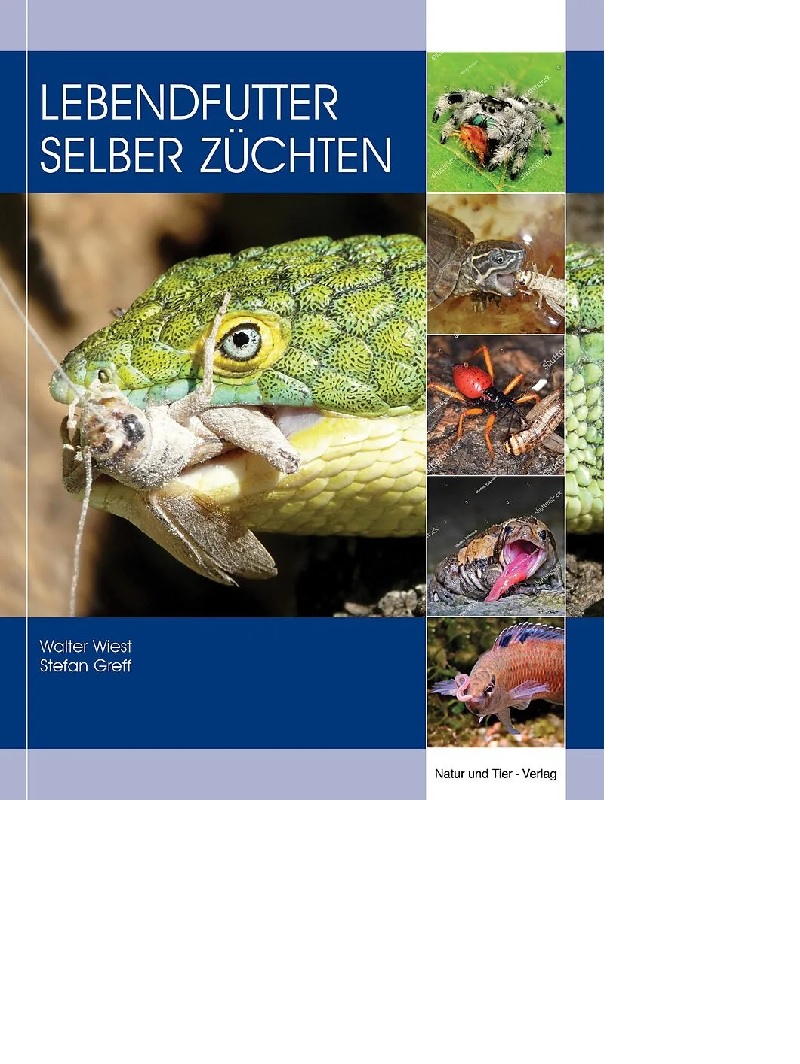
Book Breeding live food yourself
Book "Grow your own live food" - The perfect guide for pet owners Discover practical and detailed instructions on how you can easily breed food for your reptiles, birds, fish or other animals yourself in the book "Breeding live food yourself". With valuable tips on various food insects, their care and breeding, you can save money and ensure a species-appropriate diet for your pets. Contents of the book: Step-by-step instructions for breeding feeder insects Information on the best types of food for reptiles, birds and fish Care instructions and breeding conditions for various live food species Tips for sustainable and cost-effective food production Why breed your own live food? Get healthy, fresh food for your animals Save money and reduce dependence on pet shops Promote the health and well-being of your animals with species-appropriate food Whether you are a beginner or an experienced pet owner, this book provides you with everything you need to successfully breed live food yourself.

CHF 46.50

Marginata 69 - New Guinea tortoises
Marginata 69 - New Guinea tortoises – the genus ElseyaCover storyThe unrecognised beauties: New Guinea tortoises (Andreas S. Hennig)My experiences with Branderhorst's New Guinea tortoise, Elseya (Elseya) branderhorsti (Ouwens, 1914) (Andreas S. Hennig)Keeping and breeding of Rhodin's New Guinea tortoise, Elseya (Hanwarachelys) rhodini Thomson, Amepou, Anamiato & Georges, 2015 (Andreas S. Hennig)PortraitGeoemyda spengleri, Chinese serrated tortoise (Andreas S. Hennig)ReportageMacrochelys temminckii – Experiences and impressions with vulture tortoises part 2 (Reiner Praschag)KeepingAn alternative to year-round keeping of the Egyptian tortoise in the terrarium – my experiences with seasonal outdoor keeping of Testudo kleinmanni (Ricarda Schramm)EtymologySawbacks and living maps part 4: Graptemys gibbonsi, Pascagoula humpback tortoise (Holger Vetter)Classifieds & animal placement

CHF 16.50

Terraria No. 29 - Incubators for reptile eggs
Schildkrötenjahr: Europäische Landschildkröten im Mai und JuniFreilandterrarien fit für den Sommer machen Inhalt: Ein Schlüsselmoment bei der Nachzucht eierlegender Reptilien ist die Bebrütung der Gelege. Umso wichtiger ist es, Inkubatoren zur Verfügung zu haben, die sowohl die Temperatur als auch die relative Luftfeuchtigkeit zuverlässig regeln. Gerade rechtzeitig zur Nachzuchtsaison 2011 stellen wir Ihnen die verschiedenen Funktionsprinzipien von Brutkästen ausführlich vor, geben Tipps zu den diversen Brutsubstraten und haben die gängigsten Inkubator-Modelle für Sie auf Herz und Nieren geprüft. EditorialMagazinSuche nach verschwundenen Amphibien: vier von 100 Arten wiederentdeckt / Nachschlag / Schlangentagung / Paarung der Gelbgrünen Zornnatter (Hierophis viridiflavus) auf Malta / Rechtliches / Riskante Beute TERRAglobalStrandvergnügen und PazifikleguaneMaik Dobiey Bromelienfrösche – jede NachtMirco Solé TitelthemaEntwicklungsgeschichte der Reptilienzucht und -inkubation – Ein nicht nur historischer ÜberblickHans-Dieter Philippen TestlaufInkubatoren Kriton Kunz SchrankbrüterKriton Kunz Vor- und Nachteile verschiedener InkubationssubstrateHans-Dieter Philippen Das Schildkrötenjahr. Freilandbiologie und Haltung europäischer Landschildkröten über den Jahreslauf. Teil 2: Mai bis Juni – Fortpflanzungszeit Michael Wirth Rhacophorus – Die fliegenden Frösche von Borneo J. Maximilian Dehling Renovierung der Abdeckung des Freilandterrariums für Strumpfbandnattern Helmut Kreyerhoff Reise Die Herpetofauna des westlichen Hohen Atlas in Marokko Uwe Schlüter Abo & Service Neue ArtenListe der im Jahr 2010 neu beschriebenen Reptilien Axel Kwet BlickfangEin Keller voller KGV – und Asseln Michael Wirth In Ihrer Nähe Vorschau Brutkasten Schlimme Nächte: Guayaquil Teil 1: Wir Topchecker-TouristenHeiko Werning

CHF 12.00

The mandarin snake
All about the Mandarin Snake by Andreas Gumprecht 64 pages Format: 14.8 x 21 cm numerous colour photos Author Andreas Gumprecht Contents: Despite the high acquisition costs, the fascination that the mandarin snake exerts on a large number of snake lovers remains unbroken.This marvellous Asian climbing snake is universally admired for its extraordinary beauty and aesthetics.In this guide, Andreas Gumprecht, long-time terrarium keeper and snake expert, shares his positive experiences with the care and reproduction of the mandarin snake with the reader. Systematics and body structure The fascinating biology: From the life of the mandarin snake All information on species-appropriate keeping: from suitable terrariums to equipment and technology to feeding Successful breeding: Mating stimulation, incubation of the eggs and rearing the young Solutions to problems: How to avoid the most common mistakes in care and how to help sick animals Brilliant photos

CHF 19.90

Ulmer, pocket atlas Turtles
Ulmer Pocket Atlas of TurtlesAll turtles at a glanceDetailed portraits of all turtle speciesTerrarium types organised according to group characteristicsPictograms for a quick overviewDetailed portraits of 111 commercially available turtle species inform you about their origin, appearance and all the important data on care in the terrarium. You will also learn everything you need to know about terrarium types, natural habitats and keeping conditions. Practical pictograms provide you with the most important information at a glance.

CHF 14.90

Reptilia 72 - Grasshoppers, crickets, house crickets
Reptilia 72 - Grasshoppers, Crickets, House Crickets Jamaican AnoleIndochinese Hinged TurtleSunglow Boas Contents: 2    EDITORIAL 4    REPORTAGE      Potential Dangers of Giant Snakes      by B. Akeret 13  MAGAZINE 21  DATES 24  PHOTOSTORY      Crickets and Grasshoppers      by F. Tomasinelli 32  REPORTAGE      Grasshoppers:      Defence and Survival      by F. Tomasinelli 36  KEEPING AND BREEDING      The Egyptian Migratory Locust     Anacridium aegyptium     by A. Mangoni 40  REPORTAGE      Lord of the Bugs      Visiting Europe’s Largest       Breeding Facility for Feeder Insects      by H. Werning 54  HERPETOFAUNA      The European Tree Frog (Hyla arborea)      “Frog of the Year” in the “Year of the       Frog 2008”      by A. Kwet, A. Nöllert & A. Geiger 64  KEEPING AND BREEDING      Successful Keeping and Offspring of      Cistoclemmys (galbinifrons) bouretti,      the Indochinese Hinged Turtle      by W. & K. Heuberger 73  TRAVEL/KEEPING AND BREEDING      Jamaica, its Iguanas and the      Giant Anole Anolis garmani      by T. Baum 81  KEEPING AND BREEDING      And the Sun Rises … the Sunglow Boa      by R. Ihle & J. Bergman 86  WESTERN HERP PERSPECTIVES      A Turtle Story      by B. Love 91  LIBRARY 104 BRUTKASTEN      Thoughts on the Day of Milk Suffering      by H. Werning

CHF 12.00

Reptilia 92 - Color variations of the corn snake
Reptilia 92 - Color variations of the corn snake Ernährung von WirbellosenTerrarien - RückwandKielschwanzleguan Inhalt: InhaltImmer neue, immer spektakulärere Farb- und Zeichnungsformen der Kornnatter drängen ins Hobby. Wie bei kaum einer anderen Art haben die Züchter bei dieser Schlange ihre Kunst auf die Spitze getrieben aus dem Klassiker der Terraristik wurde so auch ein topmodernes Terrarientier. REPTILIA-Kolumnist Bill Love und seine Frau Kathy, selbst langjährig erfahrene Züchter, bieten Ihnen in mehreren prächtig bebilderten Artikeln einen Überblick über die Entwicklung der Farbzuchten und die aktuell erhältlichen Varianten, über das für die gezielte Zucht notwendige Know-how, und last but not least berichten sie aus ihrer persönlichen Erfahrung über eine ganz spezielle Morphe, die sie als Erste überhaupt erzielten. EDITORIAL MAGAZIN TERMINEWESTERN HERP PERSPECTIVES Regelungs-Rage Von B. LoveFOTOSTORY Den Guppys auf der Spur 50 Jahre Zucht der Kornnatter, Pantherophis guttatusVon K. & B. Love Haltung und Nachzucht Kornnattern vermehren Ein Rezept für JedermannVon K. & B. Love HALTUNG UND NACHZUCHT Okeetee Rising Mein Vierteljahrhundert in der Welt der KornnatternVon K. LoveReiseÜberleben im Sand Eine Exkursion in die peruanische WüsteVon G. Chavez & A. P. Mendoza PORTRÄT und PosterTriturus carnifexVon B. TrappHerpetofauna Auf dem Weg ins All Die Welt der Buchstaben-Schmuckschildkröte, Trachemys scriptaTeil 2Von A. S. HennigHaltung und VermehrungHaltung und Vermehrung des Halsband-Kielschwanzleguans, Tropidurus torquatusVon J. LuttermannTERRARIENPRAXISSelbstbau der perkeften Terrarienrückwand – ein missglückter VersuchVon L. Pfetzing & J. EgererERNÄHRUNGHochwertige Ernährung wirbelloser Futtertiere und Terrarienbewohner – Teil 2Von R. Lautensack & R. HübersTiere unserer HeimatEin schützenswertes Reptil – die KreuzotterVon R. LeptienBibliothekBRUTKASTENMit den Fleisch der FeindeGastgeschichte von U. Hannemann  

CHF 12.00

Terraria 13 - Overwintering of terrarium animals
Terraria 13 - Hibernation of terrarium animals Breeding the palmatogecko from the NamibKeeping and reproducing the Andean kingsnake Contents: 2 Editorial by Heiko Werning4 Magazine Dangerous animals in Saarland / Zoo Days in Frankfurt / Liability for escaped pets / Climbing ability of snakes at different temperatures / First imports of vipers12 TERRAglobal The finest hour of Bolivian television: Herpetologist on Canal 21 by Martin Jansen The discovery of a new species by Karl-Heinz Switak 16 Cover story: Hibernation of terrarium animals Hibernation – Adaptations to cold climatic conditions by Beat Akeret23 Hibernation of reptiles and amphibians in the outdoor terrarium by Martin Hallmen32 The refrigerator method by Hans-Dieter Philippen37 Hibernation of turtles in the cellar light well by Xaver Wapelhorst 40 Hibernation in tarantulas Hans-Werner Auer44 Grey giants among themselves – of leopard tortoises and elephants in the Addo Elephant National Park, South Africa Part 2: Size and population ecology by Michael Wirth54 Lampropeltis triangulum andesianus – rare terrarium jewel with a dubious reputation Part 1: Biology and keeping by Thorsten Schmidt60 On keeping and breeding the palmatogecko Pachydactylus rangei Andersson, 1908 by Sebastian Schenk & Sebastian Wolf66 Frog die-off in the hotspot – a case study in eastern Brazil by Dennis Rödder70 Travel Costa Rica’s Hitoy Cerere, the gateway to the land of Sibú by Ivonne Meuche82 New species Leaf-fingered geckos of the genus Phyllodactylus/ Three tree frogs from southern Brazil84 Among researchers Bolivia: still a “terra incognita” of herpetology by Martin Jansen88 Test run Irrigation systems by Kriton Kunz94 Eye-catcher A turtle paradise – from the garden to the bathroom by Kriton Kunz99 Near you103 Preview104 Incubator The child does not speak by Heiko Werning

CHF 12.00

Marginata 01 - Marginated tortoise
Marginata 01 - Broad-shelled tortoises Articulated tortoises Turtle conservation stationCorrect wintering Contents: 2 EDITORIAL 3 ADVISORY BOARD 5 MAGAZINE 10 PHOTO REPORTAGEBroad-shelled tortoises – the most impressive and largest land tortoises in EuropeHans - Dieter Philippen 18 REPORTKeeping and breeding of the broad-shelled tortoiseMatthias Mähn 24 REPORTAGEThe Sardinian population of the broad-shelled tortoiseWolfgang Wegehaupt 31 PORTRAITIndian flapshell softshell turtleMatthias Mähn 36 REPORTAGERemarks on the biology and alternative keeping and breeding of Kinixys belliana nogueyi (LATASTE, 1886)Irmtraud Jasser-Häger and Hans - Dieter Philippen 46 REPORTAGERed-eared slider turtles – Threatening newcomers?Hans - Dieter Philippen 48 REPORTAGEHibernation in European land tortoisesNatural, physiological preparation and “wake-up phase” Markus Baur and R. W. Hoffmann 55 ADVICE & ACTION 56 CLASSIFIEDS 57 REPORTAGEOfficial opening of the International Centre for Turtle Conservation – a look in front of and behind the scenesHans - Dieter Philippen 63 REGIONAL GUIDE 64 AGATHA MARGINATA

CHF 14.70