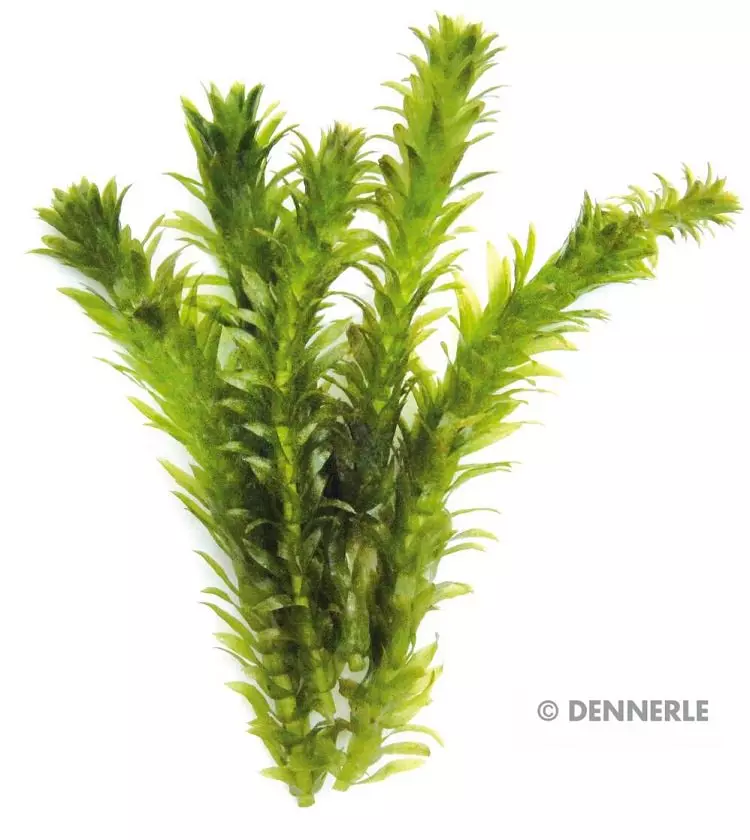
Echinodorus grisebachii Tropica

Article no: DE-456

CHF 10.90

Stock: 0

Ready for dispatch in 1-3 days, delivery time 14 working days

Delivery between Tuesday, 5 May and Wednesday, 6 May
Zahlungsarten
Product information "Echinodorus grisebachii Tropica"

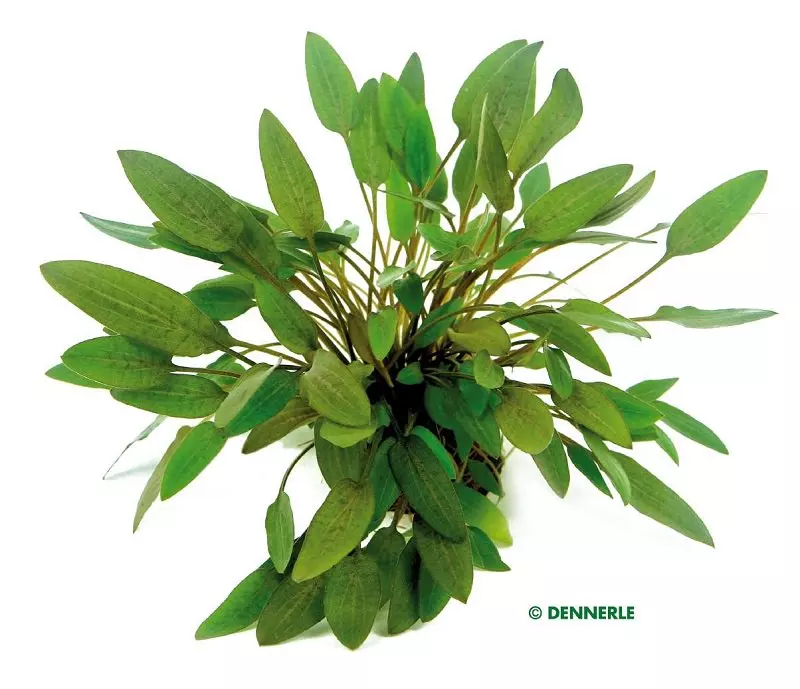
Echinodorus grisebachii Tropica - Aquarium plant

max. growth height 5 - 10 cm Country of origin Cultivated form
Suitability NanoCube, aquascaping, perch aquarium
Community aquarium
Type Rosette plant
family Alismataceae Genus Echinodorus
Propagation Adventive plants on the flower stalk Growth rate slow
pH 5 - 8 Water hardness 10 - 20 °dh
Notes  

Samolus - Sword plant

The origin of this compact Echinodorus is unknown. It is thought to have arisen through mutation in a plant stock at a nursery in Asia. With a height of just 5-10 cm, it is ideal for the foreground. Its light requirements are significantly higher than those of the standard form; good nutrition and a supply of CO2 are also essential for optimal growth. In Nano Cubes, the plant creates a striking contrast when placed alone against delicate species. In larger aquariums, several individual plants should be arranged in a group.

Aquarium: Community aquarium, Landscape/Aquascaping, Nano aquarium, Perch aquarium
Feature: Rosette plants
Genus: Echinodorus
Growth: slowly
Origin: Cultivated form
Properties: Rosette plants
Stand: In the foreground
Composition
Feeding recommendation
Technical details
Size information

0 of 0 reviews

Give us a rating!

Share your experience with the product with other customers.


Customers also bought

Echinodorus Dschungelstar No. 2 - Small bear (Kleiner Bär) Sword
Echinodorus Jungle Star No. 2 / Sword Plant Little Bear max. growth height - 25 cm Country of origin Cultivated form Suitability Perch aquarium, community aquarium Type  Rosette plant Family Alismataceae Genus Echinodorus Propagation Adventive plants on the flower stalk Growth rate medium pH 5 - 8 Water hardness 0 - 20 °dh Notes   The 'Little Bear' variety has been on the market since 1995 and is still one of the most popular red-leaved varieties. In the aquarium, the plant forms a compact rosette with a rust-red to deep dark red colour. Older plants reach a height of up to 25 cm. As with many Echinodorus varieties, emersed and submerged leaves differ enormously. The 'Little Bear' is bright green in the greenhouse and produces its first red submerged leaves after just a few days in the aquarium. Always a fascinating spectacle!

CHF 8.90

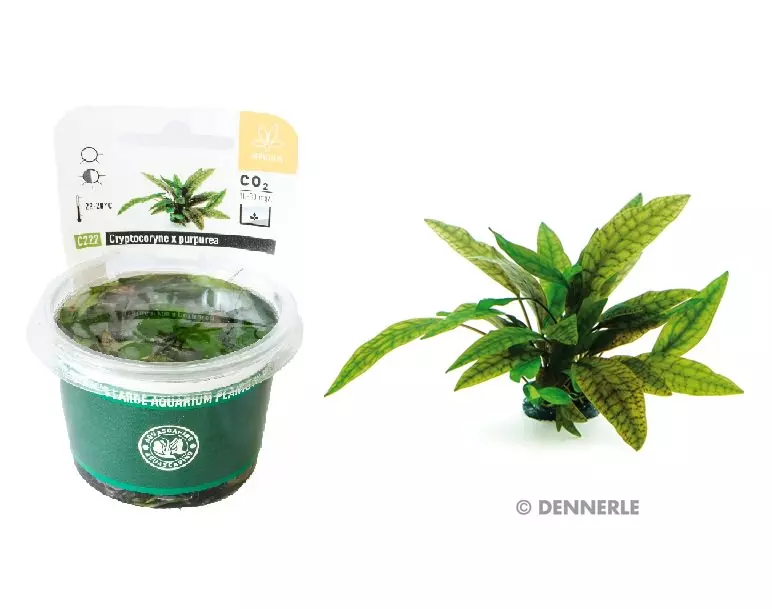
Cryptocoryne x purpurea - In-Vitro
Cryptocoryne x purpurea max. growth height - 10 cm Country of origin Borneo Suitability Aquascaping, community aquarium and NanoCubes Type Rosette plant family Araceae Genus Cryptocoryne Propagation Stolons Growth rate slowly pH 5 - 7 Water hardness 2 - 8 °dh Notes somewhat more demanding Cryptocoryne x purpurea from South-East Asia is a rare aquatic chalice. It is a natural hybrid between Cryptocoryne griffithii and Cryptocoryne cordata. The type described here originates from Borneo with an unusual marbling of the leaf blades. Its growth is significantly slower than that of other known species of water calyx in the aquarium hobby. With a growth height of approx. 10 cm (previous cultivation experience in the aquarium), it remains relatively small in size and can therefore be used well in the foreground, depending on the size of the tank. As with all Cryptocorynes, a nutrient-rich substrate is very important, as many nutrients are absorbed via the roots.Aquatic plants in vitroIn vitro plants are cultivated in the laboratory under sterile conditions. They are supplied in a 7cm closed container. The small plants are completely free of algae and snails and can be planted directly. This product group is ideal for smaller aquariums and nano cubes as well as for modern aquascaping. You can easily see how demanding each plant is by looking at the top right-hand corner of the packaging. Before planting, simply rinse off the culture medium and portion out the plant

CHF 10.90

Echinodorus grisebachii Bleherae - Large Amazon sword
Echinodorus grisebachii Bleherae Amazonas - Sword Plant max. growth height 60 - 80 cm Country of origin Brazil Suitability Perch aquarium, discus aquariumCommunity aquarium Type Rosette plant family Alismataceae Genus Echinodorus Propagation Adventive plants on the flower stalk Growth rate fast pH 5 - 9 Water hardness 10 - 20 °dh Notes   The large Amazonas sword plant is perhaps the most popular plant in the aquarium hobby. Its leaves are 3–6 cm wider than those of the ‘amazonicus’ variety, and the height of up to 60 cm makes this species appear even more dominant. Mature clumps, some with more than 50 leaves, are a striking feature. However, the substrate must be at least 10 cm deep for the root system to develop properly. Combined with Helanthium species (dwarf Echinodorus), beautiful South American underwater landscapes can be created.

CHF 8.90

Cryptocoryne wendtii C 421 - Medium, brown cryptocoryne
Cryptocoryne wendtii C 421 -Medium sized, brown calyx max. growth height 10 - 15 cm Country of origin Sri Lanka Suitability NanoCube Type Rosette plant family Araceae Genus Cryptocoryne Propagation Stolons Growth rate slow pH 5 - 8 Water hardness 0 - 20 °dh Notes Easy to care for and grows well. Another variety of the C. wendtii group is our C421, a medium-sized, brown water calyx that grows very well and is easy to care for. Its above-water leaves are rust-brown, in the submerged stage the leaves are chocolate brown. Planting tip: Water calyxes remain particularly small and compact when grown in a clay pot. This is pressed directly into the substrate. The small volume in the root area keeps the plants smaller - creating a bonsai effect.

CHF 10.90

Staurogyne Repens (Creeping Staurogyne)
Staurogyne RepensStaurogyne Repens is a light green plant that is straightforward to grow. Suitable for the foreground or background, it can be grown into a lawn shape in larger tanks to create a wonderful base in the aquarium.Growth: easyLight requirements: mediumCO₂ requirements: lowAdult plant height: up to 10 cmGrowth: ModerateTemperature: 20-28°CPlacement in aquarium: Foreground or backgroundOrigin: South AmericaShell diameter 6 cm The Staurogyne Repens requires a Medium light and CO₂ requirements. Cut shoots can be planted in the Substrate to be planted and continue to multiply. The Staurogyne Repens has an interesting leaf structure and color. It is characterized by moderate growth and adult specimens reach a height of up to 10 cm. It is popular for arrangements in planted aquariums. It has a well-developed root system. It originates from South America, more precisely from the southern Amazon. In the wild it was discovered in the Rio Cristalino river. The plant is characterized by low light requirements. In good light, it does not grow too tall and forms a dense lawn. Less light is not a problem for it, but then it grows more slowly. The dosage of carbon dioxide and feeding with micro and macronutrient fertilizers ensure intensive growth. Staurogyne Repens absorbs nutrients mainly through its root system and therefore prefers a fertile substrate. Advanced aquarists, however, can keep this species attached to ornaments or decorations. It is enough to use a suitable adhesive. In this case, care must be taken to provide fertilizers to the water column. The best growth results are obtained when the plant is planted in an active substrate. Under good conditions, the plant grows very quickly. It does not require complicated care. All you need to pay attention to is regular pruning using sharp scissors with curved blades. Frequent pruning will help Staurogyne Repens become denser and grow. After pruning, it spreads and forms new stems with leaves. Therefore, it can also be used to create an interesting foreground. Planting: The plant must be removed from the cup and thoroughly rinsed from the gel under running water. This is best done by placing the plant in a container of lukewarm water. Most of the gel will then fall off by itself. Divide the contents of the cup into 1-2 cm lumps and then place them at intervals between 3 - 4 cm..

CHF 6.50

Limnophila sessiliflora - Small Ambulia
Limnophila sessiliflora / small Ambulia max. growth height - 50 cm Country of origin Southeast Asia Suitability Community aquarium Type Stem plant family Scrophulariaceae Genus sessifloria Propagation Head cuttings, side shoots Growth rate  fast pH 5 - 8 Water hardness 10 - 20 °dh Notes   A widespread stem plant in Asia. In the emersed stage it is small with densely leafed shoots. In the aquarium, the leaflets are much more pronounced and the colour is now light green. Limnophila sessiliflora is a good alternative to the more light-demanding Cabomba plant. As with many delicate stem plants, it should also be planted in a larger number of stems as a group. With good lighting, the tips of its shoots turn rusty brown.

CHF 8.90

Suggested products

New
Sagittaria subulata
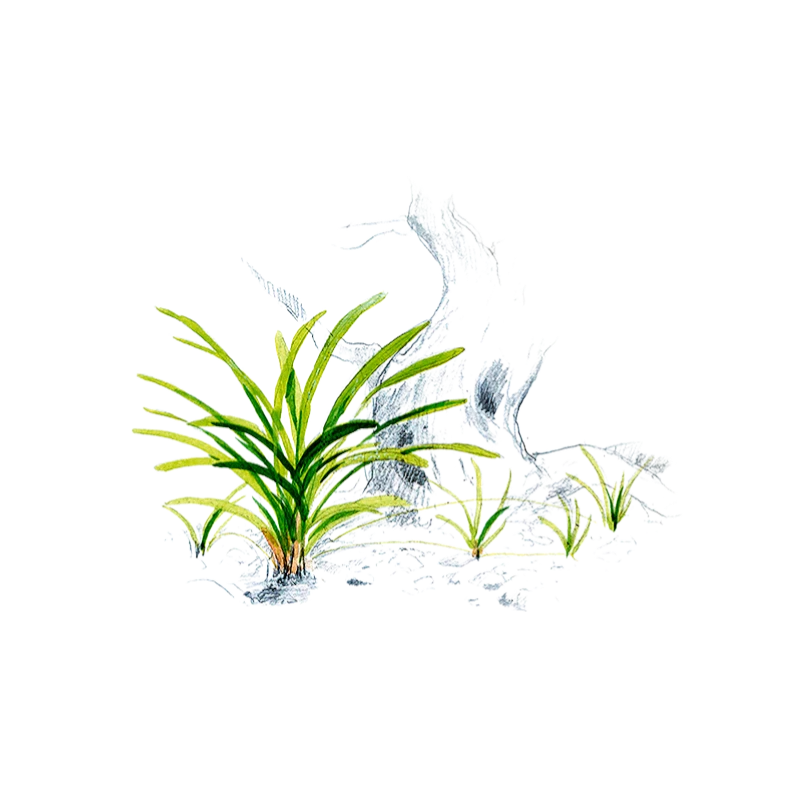
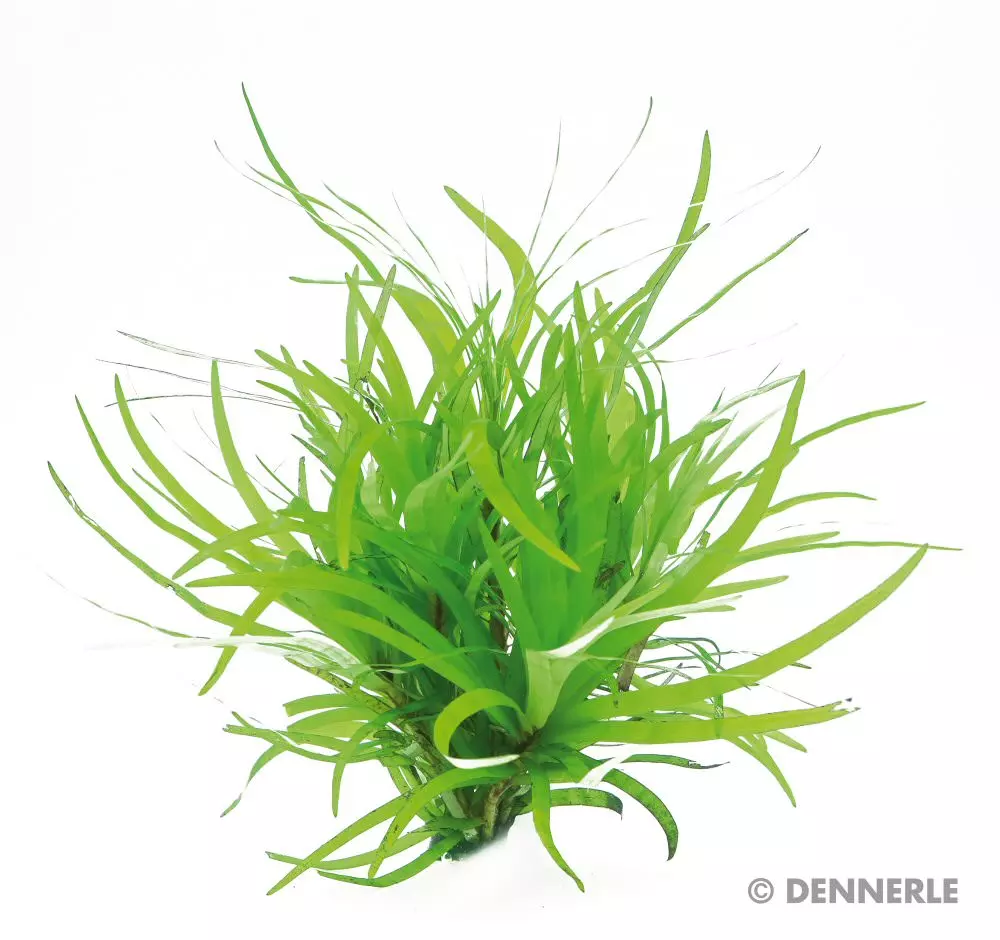
Saggitaria subulata - InVitro Sagittaria subulata is a versatile and easy-care aquarium plant that creates a harmonious overall picture both in the foreground and in the middle ground. With its narrow, grass-like leaves, it forms dense, natural carpets and brings lively structure to any aquarium. Under optimal conditions, the plant spreads via runners and quickly creates a dense growth. Depending on the placement and light conditions, it can vary its growth height - from low ground cover to taller, decorative accents in the background. The occasional flowering is particularly attractive in optimal conditions: Delicate, small flowers can appear above the surface of the water, adding an unusual touch to the aquarium. Advantages at a glance: Undemanding aquatic plant for beginners and professionals Forms dense lawns through natural runners Flexible growth height depending on location and care Can develop decorative flowers above the water surface Supplied free from snails, algae and parasites Product details: Name: Sagittaria subulataPlanting location: Foreground - middle groundOrigin: South America Growth: FastHeight: Up to 30 cm, depending on conditionsLight requirement: Medium to high CO₂ supply: not essential, but beneficial Propagation: by stolons, divisionDelivery form: InVitro (sterile packaging) Manufacturer: Aqua art

CHF 6.50

Eleocharis parvula Mini
🌱 Eleocharis parvula 'Mini' - Fine grass carpet for the foreground Ultra-compact ground cover for detailed aquascapes Eleocharis parvula 'Mini' from Aqua Art is a particularly low-growing variant of the well-known turf grass plant. It is ideal for nano aquariums and natural aquariums where a fine, even grass lawn is desired in the foreground. Due to its low height, the view of other design elements such as stones or wood is retained - ideal for modern Iwagumi layouts. As an in vitro plant, it is free from algae, pesticides and snails, making it ideal for sensitive aquarium inhabitants such as shrimps. ✅ Advantages at a glance Particularly compact & low growth Ideal for nano aquariums and foreground layouts Forms a dense, light green carpet of grass InVitro - sterile & shrimp-safe Easy to care for with CO₂ and light supply Perfect for Iwagumi and natural aquariums 📋 Product details Name: Eleocharis parvula 'Mini' Type: Ground cover / foreground plant Growth height: approx. 2-5 cm Light requirement: medium to high CO₂ supply: recommended Growth: medium Propagation: via runners Delivery form: In vitro cup (sterile) Manufacturer: Aqua Art 💡 Zoo Roco tip Divide the in-vitro cup into small portions and place them in nutrient-rich soil at regular intervals - this way Eleocharis 'Mini' grows together to form a dense, natural-looking carpet. Ideal in combination with light-colored substrates or high-contrast hardscapes. With Eleocharis parvula 'Mini' from Aqua Art, you can design the foreground of your aquarium precisely, naturally and richly detailed - perfect for creative aquascaping concepts.Customers also searched for: ground cover aquarium, foreground plant, InVitro plant, Aqua Art, grass carpet aquarium, aquascaping foreground, nano aquarium plants, CO₂ plants aquarium, fine aquarium plant

CHF 6.50

Eleocharis parvula
🌱 Eleocharis parvula - Fine ground cover for the natural aquarium Natural lawn effect in the foreground The dwarf needle sedge / Eleocharis parvula from Aqua Art is a popular foreground plant for natural aquariums and aquascapes. The fine, grass-like stems grow dense and low and form a dense, light green carpet of grass under optimal conditions. The plant is ideal for detailed layouts and looks particularly harmonious in open tanks with clear lines. Thanks to its undemanding nature, it is also suitable for beginners. With a supply of CO₂ and good lighting, it grows quickly and ensures a neat appearance in the tank. ✅ Advantages at a glance Forms a dense carpet of grass in the foreground Fine stems for a natural look Grows compact and low Ideal for nano aquariums & aquascapes Very easy to care for with CO₂ and light Shrimp-safe & pesticide-free (in vitro) 📋 Product details Name: Eleocharis parvula Type: Ground cover / foreground plant Origin: Europe/North America Growth height: approx. 3-10 cm Light requirement: medium to high CO₂ supply: recommended Growth: medium Propagation: via runners Delivery form: In vitro cup (sterile cultivation) Manufacturer: Aqua Art 💡 Zoo Roco tip Eleocharis parvula can be perfectly combined with stones or root wood to create natural-looking bank zones. Cut the plant into smaller clumps when planting so that the carpet can close evenly. Eleocharis parvula from Aqua Art is a finely structured, low-maintenance ground cover plant that transforms the aquarium into a near-natural underwater landscape.

CHF 6.50

Hygrophila sp. Araguaia
🌿 Hygrophila sp. 'Araguaia' InVitro Reddish-brown accent plant with unique growth habit Hygrophila sp. 'Araguaia' from Aqua Art is a particularly attractive, compact stem plant with a reddish-bronze color and finely branched growth. It is ideal for the foreground to midground and provides structured contrasts and warm color accents in aquascapes. This plant is one of the slow-growing Hygrophila species and can be easily shaped and thickened by regular pruning. Supplied as an in-vitro plant, it is free from algae, snails and pesticides - ideal for shrimp tanks and sensitive aquariums.✅ Advantages at a glance: Compact Hygrophila with reddish-bronze leaves InVitro - sterile, snail-free & pesticide-free Ideal for the foreground or middle ground Slow-growing - easy to shape and grow bushy Good effect with strong lighting & CO₂ supply Very decorative in natural aquariums and layouts with contrasting colors📋 Product details: Name: Hygrophila sp. 'Araguaia' Type: Stem plant Placement: Foreground to midground Growth height: approx. 5-15 cm Light requirement: medium to high CO₂ supply: recommended Growth: slow Delivery form: In vitro cup (sterile cultivated) Manufacturer: Aqua Art💡 Zoo Roco tip: Combine Hygrophila 'Araguaia' with light green plants such as Micranthemum or Hydrocotyle sp. 'Japan' - to show off the darker coloring particularly well. For a dense carpet, regular pruning is recommended.Hygrophila 'Araguaia' provides subtle color accents and fine structure in the lower section of the aquarium - ideal for sophisticated layouts and harmonious plant design.

CHF 6.50

Hydrocotyle verticillata
🌿 Hydrocotyle verticillata InVitro Whorled pennywort for the foreground Hydrocotyle verticillata from Aqua Art is a unique foreground plant with umbrella-shaped leaves that are reminiscent of small water lilies or parasols. This special leaf shape makes it a real eye-catcher in natural aquariums and aquascapes - especially in shallow tanks or detailed layouts. The plant remains compact, grows creeping across the bottom and is ideal for creative foreground or midground designs. Supplied as an in vitro plant, it is free from pesticides, algae and snails, making it ideal for shrimp tanks and sensitive aquarium inhabitants.✅ Advantages at a glance: Eye-catching umbrella-shaped leaves - natural look with design character InVitro - shrimp-safe, pesticide-free & algae-free Compact growth - perfect for the foreground Grows creeping & forms small groups Ideal for shallow tanks & creative aquascapes Undemanding & easy to care for📋 Product details: Name: Hydrocotyle verticillata Type: Ground cover / foreground plant Growth height: approx. 2-7 cm Light requirement: low to medium CO₂ supply: not essential, but beneficialpH value: 5 to 7 Growth: slow to medium Propagation: by runners, cuttings, division Delivery form: In vitro cup (sterile cultivation) Manufacturer: Aqua Art💡 Zoo Roco tip: Hydrocotyle verticillata looks particularly harmonious in combination with fine mosses or light-colored substrates. It is also very suitable for aquascaping and shallow-planted nano aquariums andcan also be kept emersed in Wabi-Kusa.

CHF 6.50

Eleocharis pusilla
Eleocharis pusilla InVitroDelicate ground cover for nano and natural aquariums Eleocharis pusilla from Aqua Art is a delicate, grass-like ground cover that looks particularly elegant in nano aquariums and delicate aquascapes. It grows significantly lower and finer than Eleocharis acicularis and forms dense, short grassy areas with a natural appearance. Thanks to in vitro cultivation, Eleocharis pusilla is free from pesticides, algae and snails, making it ideal for shrimp tanks and sensitive aquariums. The plant grows compactly, requires little care and spreads evenly through runners.✅ Advantages at a glance: Very fine ground cover with short, dense growth InVitro - sterile, shrimp-safe & pesticide-free Ideal for nano aquariums & detailed layouts Spreads through runners to form a carpet of grass Easy to care for - requires only medium light conditions Perfect for the foreground in aquascaping📋 Product details: Name: Eleocharis pusilla Type: Ground cover / foreground plant Growth height: approx. 3-5 cm Growth habit: grass-like, creeping Light requirement: medium to high CO₂ supply: recommended, but not essential Growth: slow to medium Propagation: by stolons Delivery form: In vitro cup (sterile cultivation) Manufacturer: Aqua Art💡 Zoo Roco tip: Divide the InVitro cup into small portions and place them in nutrient-rich soil with some space between them. This will create a dense, natural carpet of grass in just a few weeks. Ideal in combination with stones or root wood!Eleocharis pusilla is the perfect choice for detail-loving aquarium designers who value naturalness, delicacy and structure - even in small tanks.

CHF 6.50

Echinodorus quadricostatus tenellus
🌱 Echinodorus quadricostatus 'Tenellus' InVitro Grassy ground cover for your aquarium Echinodorus quadricostatus 'Tenellus ' - often referred to simply as Tenellus - is a popular ground cover for aquariums with a grassy appearance. The narrow, fresh green leaves quickly form dense plant carpets and are ideal for the foreground or midground. The plant is visually similar to Lilaeopsis or Eleocharis, but grows faster and is more robust. Aqua Art's in-vitro cultivation guarantees a snail and pesticide-free plant - perfect for shrimp tanks, aquascapes and sensitive animals. Tenellus also grows in medium light, spreads via runners and creates a natural "lawn effect" in the aquarium.✅ Advantages at a glance: Robust & fast-growing ground cover Fresh green for near-natural underwater landscapes InVitro - free from harmful substances, safe for shrimps Forms dense carpets quickly due to runners Easy to care for & adaptable - ideal for beginners Suitable for the foreground or middle ground📋 Product details: Name: Echinodorus quadricostatus 'Tenellus' Type: Ground cover / foreground plant Placement: Foreground to midground Growth height: approx. 5-10 cm Light requirement: medium CO₂ supply: recommended, but not essential Growth: medium to fast Propagation: via stolons Delivery form: In vitro cup (sterile cultivation) Manufacturer: Aqua Art💡 Zoo Roco tip: Place the plant in small portions with some space between them so that the runners can spread undisturbed. Regular trimming will keep the carpet compact and neat.

CHF 6.50

Bacopa myriophylloides Invitro
Invitro aquarium plant Bacopa myriophylloidesDelicate aquarium plant for the background Bacopa myriophylloides is an elegant stem plant with delicate, finely pinnate leaves - a real eye-catcher for the background of your aquarium. Its special structure brings lightness and movement to the layout and is ideal for aquascaping and natural aquariums. As a high-quality in vitro plant, it is free from algae, snails and pesticides, making it particularly safe for shrimps and sensitive tanks. With good lighting and CO₂ supply, Bacopa myriophylloides grows compactly and healthily - with a beautiful, delicate appearance. Advantages at a glance: ✅ Delicate stem plant with feathery leaves ✅ Ideal for the background & textured layouts ✅ InVitro - sterile, pesticide-free & shrimp-safe ✅ Healthy growth with light & CO₂ addition ✅ Perfect for aquascaping & natural aquariumsProduct details: Name: Bacopa myriophylloides Type: Stem plant Location in the aquarium: Background Growth height: approx. 30-50 cm Light requirement: Medium to high CO₂ supply: Recommended Delivery form: In vitro cup (grown sterile) Special feature: Very fine, decorative leaf structure

CHF 6.50

Salvinia auriculata (Salvinia auriculata)
Salvinia auriculataSalvinia Auriculata (Brazilian salvinia) is a floating plant native to South America. It grows moderately quickly so that its population can be controlled. Easy to grow. Absorbs nitrogen to combat algae. Propagates by spreading.Difficulty of cultivation: easy to mediumLight requirement: medium to highCO₂ requirement: lowHeight of the adult plant: 0.5 cmGrowth: moderate to fastTemperature: 22 - 24°CPlacement in the aquarium: SurfaceOrigin: South and Central AmericaCup diameter 6 cmSalvinia Auriculata (Brazilian Salvinia) is a floating ornamental plant. It is native to the calm, still waters of South and Central America. It can be found from Paraguay to Cuba. It owes its popularity above all to its original appearance. Its small oval leaves with a diameter of 10 mm cm are arranged opposite each other on an elongated leaf stalk. These leaves are covered with fine hairs that trap air bubbles, allowing them to float. Depending on the light intensity, they are wavy or flat. Salvinia forms a third type of underwater leaves on which the spores are deposited.Like all floating plants, Salvinia is recommended for shady waters . Its great appetite for nitrogen and phosphorus compounds makes this plant a good ally in the fight against algae. Salvinia has low light and nutrient requirements. It grows well in both moderate and strong light. As a floating plant, it does not require a substrate but draws all the necessary nutrients directly from the water. During the vegetation period, it reproduces by spreading, whereby the growth rate is moderate. This makes it easy to control its growth and remove excess plants. It grows to a length of 3-6 cm and likes warm, humid air, so it is advisable to use a glass or cover when growing it.It should be placed in such a way that no condensation falls on the plants. It adapts very quickly to the new parameters. However, it should be borne in mind that it will die if there is too little light. It thrives best in soft to medium-hard water at 22-24°C. The in vitro culture of plants is carried out in tissue culture laboratories. Thanks to the sterile production conditions, the cuttings are free from snails, algae or pathogens.Planting:The plant must be removed from the cup and thoroughly rinsed of the gel under running water. This is best done by placing the plant in a container of lukewarm water. Most of the gel will then fall off by itself. Place the plant on the surface of the water.

CHF 6.90

Micranthemum sp. 'Monte Carlo'
Micranthemum sp. 'Monte Carlo'Micranthemum sp. 'Monte Carlo' is a green plant that gets along with little light. It forms a green lawn in the aquarium. It can also be planted as an epiphyte on roots, ornaments or stones.Difficulty of cultivation: moderately demanding Light requirement: high CO₂ requirement: medium Height of mature plant: 2-10 cm Growth: medium Temperature: 23-28°C Placement in aquarium: in the foreground Origin: South America 6 cm cup diameter Micranthemum sp. 'Monte Carlo' (Micranthemum tweediei) is native to Argentina. It is a lawn plant with small, compact, round, light green leaves. In most cases, the leaves are 0.5-1 cm long. It is ideal fornano aquariums, but also for larger tanks. It forms a fast-growing carpet in the foreground of the aquarium. Under good conditions it spreads very quickly.Plant in small clumps close together or on roots or rocks. It floats well on substrate. When grown on decorative elements, it forms stems that hang down impressively. Pruning promotes density and growth of the plant. The care of Monte Carlo is not demanding. It consists of regular pruning with sharp scissors with curved blades.The cut longest branches can be planted in the ground as stems. Such a seedling will form roots and continue to grow.It also grows without additional carbon dioxide supply or macro- and micronutrient fertilizers. However, it should be remembered that it is a slow to moderate growth. To ensure optimal growth, the plant should receive good light conditions and additional CO₂.Fertile substrate and liquid fertilizer have a positive effect on the condition of the plant.Planting: The plant must be removed from the cup and thoroughly rinsed from the gel under running water. This is best done by placing the plant in a container of lukewarm water. Most of the gel will then fall off by itself. Divide the contents of the cup into 1-2 cm lumps and then place them at a small distance in the substrate or on the selected objects.

CHF 6.50

Myriophyllum mattogrossense
Myriophyllum MattogrossenseMyriophyllum Mattogrossense, also known as red columbine, is a decorative aquarium plant that is quite demanding.Growing difficulty: demandingLight requirements: strongCO₂ requirements: strongOutgrown plant height: up to 60 cmGrowth: fastTemperature: 24-28°CPlacement in aquarium: third levelOrigin: South AmericaCup diameter 6 cmMyriophyllum Mattogrossense or red coneflower is a rather demanding, although easy to grow tertiary plant. It is native to Brazil, more specifically to Mato Grosso in the Rio Amazon. It has long, brittle stems with pinnate, whorled leaves.The plant itself is reminiscent of dill in appearance. Under good conditions, it can bloom with small, red, single flowers. It needs a fertile, rich substrate and very intense lighting. Only then can it develop its full potential and show its beauty in the aquarium. It does not like coarse gravel, it grows much better in a fine but permeable substrate. Intensive CO₂ fertilization is advisable. Liquid fertilizer added to the water column will also improve the aesthetic qualities of the plant, which likes to make use of these resources. If it is well fertilized, it grows luxuriantly and the stems have a beautiful red color. It needs a long day, so the light should be on for at least 8-10 hours. It is very sensitive to the parameters that are not maintained. With regular water changes it grows vigorously and the leaves spread into green fans, while in old water the leaves become much smaller and unsightly. If you change the water every few months, you may lose the plant. Myriophyllum Mattogrossense thrives in both soft and hard water.pH 6-7.2.Temperature 24-28°C It is also important that you prune the Myriophyllum regularly. If the plant is not pruned, it will get very fine leaves, especially in the lower part, which will look very unflattering. Regular pruning of the tops helps to prevent this. The plant reproduces very easily, it is enough to plant the cut tip in fertile soil, and it will quickly form a rich, filamentous root system. Due to the need for fertilizer and the capriciousness of the plant, it is not recommended for beginners in aquaristics. The plant is grown in vitro and is free of snails, parasites and algae. A high quality gel was used as a nutrient solution for breeding, so it can quickly and easily adapt to new conditions..

CHF 6.50

Myriophyllum sp. 'Guyana'
Myriophyllum sp. 'Guyana Myriophyllum sp. 'Guyana is a dense plant for the second and third levels of an aquarium. It forms a dense green wall in the back of a small tank and provides an excellent hiding place for small, shy fish and shrimp species.Difficulty of growing: moderately demandingLight requirements: mediumCO₂ requirements: mediumHeight of mature plant: up to 30 cmGrowth: mediumTemperature: 23-27 °CPlacement in aquarium: Background or midground plantOrigin: South AmericaCup diameter 6 cm"Guyana" is an interesting cultivar of a coneflower well known to aquarists. It attains a very intense green coloration and forms a dense forest in the aquarium. It has beautiful decorative narrow leaves. Unique to it is that the plant remains bright green even in above-average light, while other paddlers turn red. Also, it grows relatively slowly and has short stems that branch easily. Thanks to its compact growth, it does well in nano aquariums. Guyana plant contrasts well with red plants, especially when planted as background for them.It requires fertilization with micro and macro elements, and it is also worth feeding it with CO₂ in gaseous form. It does not need a very fertile substrate, as it takes up most of its nutrients from groundwater. However, if you put fertilizer capsules or tablets under its roots, the plant will also benefit. You can propagate Myriophyllum very easily by cutting the plant to a length of about 5 cm and planting a new shoot in the substrate. The plant quickly sprouts new roots and begins to climb upwards.The delicate leafy leaves of the plant form a very dense clump in the aquarium, which immediately catches the eye. Myriophyllum sp. 'Guyana' is an ideal plant for aquarists who love nano tanks and delicate plants. The stems branch very easily and thicken into a showy thicket. Frequent shortening aids the branching process. In elaborately designed cubes, it is a real eye-catcher.In larger aquariums, there is a risk that Myriophyllum is hardly visible in the midst of larger-than-life plants, unless you plant it in dense clumps. The plant comes from an in vitro cultivation, which means that it is free from snails, parasites and algae. A high-quality gel was used as the culture medium, so it can quickly and easily adapt to the new conditions.Planting: The plant must be removed from the cup and thoroughly rinsed from the gel under running water. This is best done by placing the plant in a container of lukewarm water. Most of the gel will then fall off by itself. Divide the contents of the cup into 3-4 cm lumps and then place them in the substrate..

CHF 6.50

Customers also saw

Hygrophila corymbosa Thailand - Narrow-leaved giant hygro
Hygrophila corymbosa Thailand Narrow-leaved giant hygrophila max. growth height - 50 cm Country of origin   Suitability   Type   Family Acanthaceae Genus Hygrophila Propagation Cuttings, side shoots Growth rate fast pH 5 - 8 Water hardness 0 - 30 °dh Notes   The "Thailand" variety has the narrowest leaves of the three different H. corymbosa varieties. Under good lighting, the leaves turn a reddish brown colour, under normal lighting medium to light green. The small, purple-coloured flowers can also be observed in open aquaria. Typical of their emersed shoots is the hairiness of the stems and the generally firmer and stiffer growth. Hygrophila species are also well suited to paludariums and humid terrariums.

CHF 8.90

Eichhormia diversifolia In-Vitro
Eichhornia diversifolia max. growth height - 60 cm Country of origin Central America, South America Suitability  Community aquarium Type Stem plant Family Pontederiaceae Genus Eichhornia Propagation Cuttings Growth rate   pH 5 - 7 Water hardness 2 - 8 °dh Notes   Eichhornia diversifolia is a decorative stem plant from the water hyacinth family Pontederiaceae. The submerged shoots form approx. 10 cm long leaves on the stems. Eichhornia diversifolia grows relatively quickly and should therefore be trimmed back in good time. When the stems reach the water surface, the less decorative simple floating leaves develop. A good supply of nutrients and CO2 is absolutely essential for this beauty from South America. Slightly acidic to neutral water also encourages healthy and vigorous growth. Eichhornia diversifolia is one of the most magnificent stem plants and should therefore be used as a solitary plant in the centre or background of an underwater landscape. Aquatic plants in vitro In vitro plants are cultivated in the laboratory under sterile conditions. They are supplied in a 7cm closed container. The small plants are completely free from algae and snails and can be planted directly. This product group is ideal for smaller aquariums and nano cubes as well as for modern aquascaping. How demanding the respective plant is can easily be seen in the top right-hand corner of the packaging. Before planting, only the nutrient medium needs to be rinsed off and the plant portioned.

From CHF 11.50

Echinodorus argentinensis - Argentine frogspoon
Echinodorus argentinensis / Argentine frogspoon max. growth height - 60 cm Country of origin Argentina, Brazil, Uruguay Suitability Perch aquariumCommunity aquarium Type family Alismataceae Genus Echinodorus Propagation Adventitious plants on the flower stalk Growth rate medium pH 5 - 9 Water hardness 0 - 20 °dh Hints Beginner plant The distribution of sword plants extends from the USA to Argentina. E. argentinensis is one of the larger species and requires sufficient space in an underwater landscape. It is very suitable for open aquaria and its sturdy leaves look decorative above water. With a little patience, flowering shoots with white flowers will also form. A nutrient-rich substrate and medium to good lighting are required.

CHF 8.90

Aponogeton boivinianus
Aponogeton boivinianus - Large, knobbly water spike max. growth height - 60 cm Country of origin Madagascar Suitability Community aquarium Type Tuberous plant Family Aponogetonaceae Genus Aponogeton Propagation Seeds Growth rate fast pH 6 - 8 Water hardness 10 - 20 °dh Notes   Tuberous plant from the water spike family. It is one of the most beautiful Aponogeton species for aquariums. Its bright green and transparent leaves are striking. The leaf blades are also distinctly bullous. As soon as the plant stagnates in growth, a resting phase must be induced. Cool water and darkening are necessary. This is best achieved with a small separate aquarium for approx. 3-4 months. Afterwards, it is replanted in the underwater landscape.

CHF 8.90

Echinodorus grisebachii Bleherae - Large Amazon sword
Echinodorus grisebachii Bleherae Amazonas - Sword Plant max. growth height 60 - 80 cm Country of origin Brazil Suitability Perch aquarium, discus aquariumCommunity aquarium Type Rosette plant family Alismataceae Genus Echinodorus Propagation Adventive plants on the flower stalk Growth rate fast pH 5 - 9 Water hardness 10 - 20 °dh Notes   The large Amazonas sword plant is perhaps the most popular plant in the aquarium hobby. Its leaves are 3–6 cm wider than those of the ‘amazonicus’ variety, and the height of up to 60 cm makes this species appear even more dominant. Mature clumps, some with more than 50 leaves, are a striking feature. However, the substrate must be at least 10 cm deep for the root system to develop properly. Combined with Helanthium species (dwarf Echinodorus), beautiful South American underwater landscapes can be created.

CHF 8.90

Egeria densa "Dense" - Dense waterweed
Egeria densa "Dense-leaved" (Dense-leaved waterweed) max. growth height 60 - 80 cm Country of origin Argentina, Brazil, Uruguay Suitability Community aquarium, garden pond Type Stem plant Family Hydrocharitaceae Genus Egeria Propagation Cuttings Growth rate fast pH 5 - 9 Water hardness 0 - 30 °dh Notes   The waterweed, as it is known by its German trade name, already indicates its growth characteristics. Egeria densa is probably one of the best-growing plants of all and is completely unproblematic to cultivate. Native to south-east Brazil and Argentina, it is now naturalised on all continents. In the "dense-leaved" variety, the leaves on the stem are extremely dense and compact. It also grows very well planted or free-floating in a garden pond, but is only hardy to a limited extent.We make every effort to ensure that our plants arrive healthy and undamaged. Despite the greatest care, it can happen that plants are slightly damaged due to postage or other unforeseen events. This includes brown leaves as well as broken branches. We accept no liability for this.

From CHF 7.90

Lysimachia nummularia aurea - Golden creeping Jenny
Lysimachia nummularia aurea / Yellow Moneywort max. growth height - 40 cm Country of origin Europe, Japan, North America Suitability Community aquarium Type Stem plant Family Primulaceae Genus Lysimachia Propagation Cuttings Growth rate medium pH 6 - 8 Water hardness 10 - 20 °dh Notes   A beautiful and attractive colour variant of the pennywort is the variety 'Aurea'. The care requirements are identical to the green stem form, but the lighting should be somewhat stronger here. The yellow pennywort is one of the typical indicator plants that very quickly indicate a lack of nutrients with stagnation and stunted growth. In the aquarium, its yellow stems can be used to create beautiful harmonious colour accents and colour transitions.

From CHF 7.90