
Draco 24 - Spiders

Article no: draco24

CHF 16.80

Stock: 0

Ready for dispatch in 1-3 days, delivery time 7 working days

Delivery between Tuesday, 27 October and Wednesday, 28 October
Zahlungsarten
Product information "Draco 24 - Spiders"

Draco 24 - Spiders

Contents:

  • 2 Editorial
  • 4 Spiders - a look into strange worlds
    Kriton Kunz
  • 24 "Relics of prehistoric times" - arthropod spiders, wallpaper spiders and their relatives
    Thomas Ziegler & Boris F. Striffler
  • 32 wheel web spiders in the terrarium
    Timm Adam
  • 48 The genus Latrodectus - not just black widows
    Boris F. Striffler
  • 58 Colourful little predators - care and breeding of the lynx spider Peucetia madagascariensis
    Kriton Kunz
  • 62 water-hunting spiders of the family Ctenidae, Pisauridae and Trechaleidae
    Timm Adam
  • 70 Secret roommates in the house: from isopod hunters, hypnotisers and glue spitters
    Kriton Kunz
  • 80 With Piaroa Indians hunting the giant tarantula Theraphosa apophysis
    Boris F. Striffler & Barbara Zoller
  • 88 Book box
  • 93 Magazine
Composition
Feeding recommendation
Technical details
Size information

0 of 0 reviews

Give us a rating!

Share your experience with the product with other customers.


Suggested products

Handbook of food plants for tortoises and other reptiles
Handbook of forage plants 2nd revised editionMarion Minch is not only a successful breeder of diverse tortoises for many years, but also an excellent connoisseur of native wild herbs. She founded and runs samenkiste.de, which is well known to many tortoise keepers and nature lovers. Her name is inextricably linked with reptile care and species-appropriate nutrition for tortoises. Her handbook of food plants summarises the most important native food plants for herbivorous and omnivorous reptiles. She not only considers tortoises, but also iguanas, spiny-tailed dragons and even chameleons. From the basics of plant biology to native wild herbs to suitable food plants for hardy tropical reptile species, this comprehensive work provides the basis for species-appropriate keeping. In the expanded and supplemented 2nd edition, the plant section is divided according to flower colour. This makes it even easier to identify wild herbs. The work has also been supplemented with a wealth of additional information and many pictures.

CHF 46.50

Geckos
Geckos in the terrarium by Astrid FalkThe book offers a comprehensive introduction to geckos and their species-appropriate keeping in terrariums. It explains what you need to think about before buying a gecko and what preparations should be made. The book describes in detail how the terrarium is technically equipped and set up. The care of the animals, their special features and behaviour, their diet, reproduction and rearing of young animals are described, as well as diseases and husbandry problems with tried and tested suggestions for prevention and treatment. Individual gecko species that are particularly suitable for keeping and breeding in terrariums are portrayed in detail in the second part of the book.

CHF 28.50

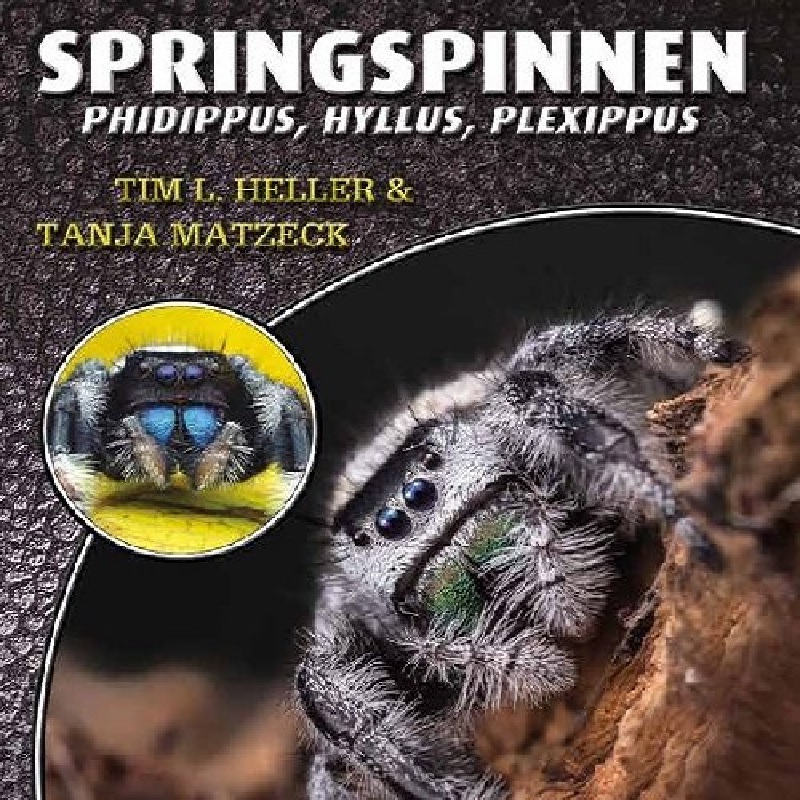
Jumping spiders Phidippus, Hyllus, Plexippus
Book Jumping Spiders - Phidippus, Hyllus & Plexippus A guide to keeping jumping spiders of the genera Phidippus, Hyllus & Plexippus. Who can resist the charm of jumping spiders? The childlike appearance of their expressive face simply leaves no one cold! In addition, their behavior is extremely exciting to observe, their colors are bright and their requirements for species-appropriate keeping are very easy to meet. No wonder these likeable jumpers are all the rage! This volume in the "Species by Species" series describes in detail what to look out for when buying and keeping them, introduces the most commonly kept species and color forms and provides plenty of tips on how to keep them successfully - so you can be sure they will breed well! Species by Species introduces you to the books in this series, which present the most popular terrarium animals. Each volume offers you detailed, practical care instructions and all the information you need to successfully breed your animals. All important questions from the required tank size to terrarium set-up, technical equipment, species-appropriate nutrition and disease prevention are answered with numerous tricks and tips. Experienced, long-standing breeders reveal how you can encourage the animals to reproduce and raise healthy young. All this in full color, generously illustrated and attractively designed - just about your terrarium animal - species by species

CHF 23.90

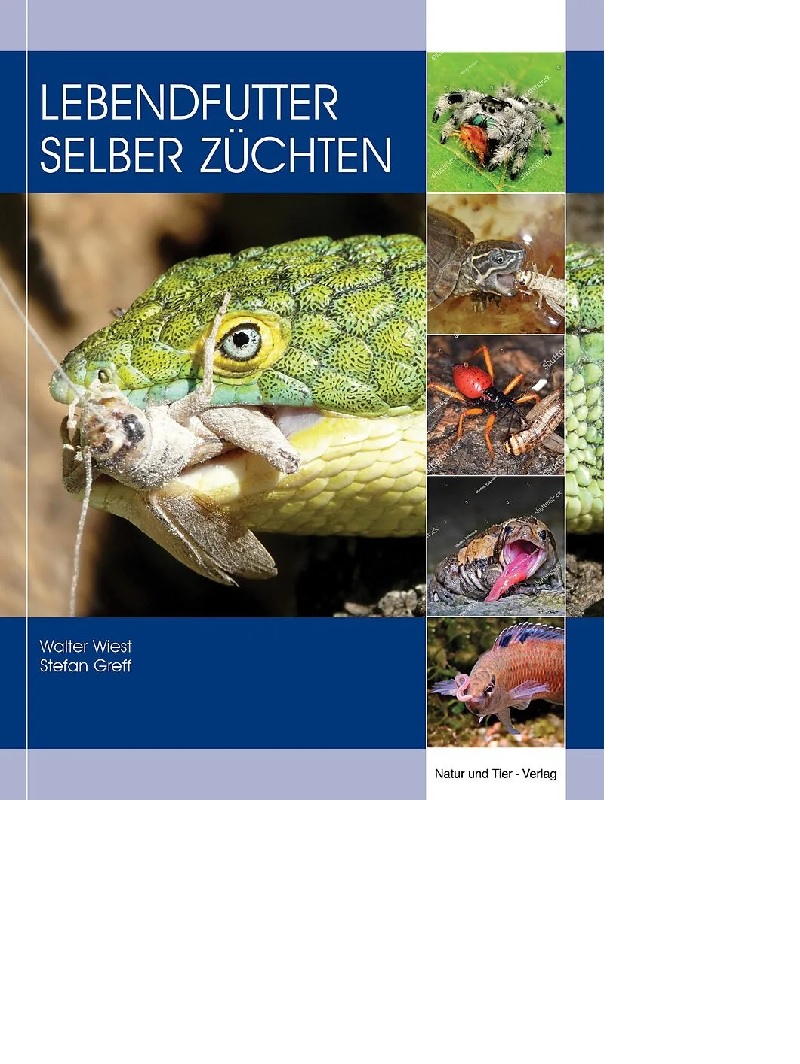
Book Breeding live food yourself
Book "Grow your own live food" - The perfect guide for pet owners Discover practical and detailed instructions on how you can easily breed food for your reptiles, birds, fish or other animals yourself in the book "Breeding live food yourself". With valuable tips on various food insects, their care and breeding, you can save money and ensure a species-appropriate diet for your pets. Contents of the book: Step-by-step instructions for breeding feeder insects Information on the best types of food for reptiles, birds and fish Care instructions and breeding conditions for various live food species Tips for sustainable and cost-effective food production Why breed your own live food? Get healthy, fresh food for your animals Save money and reduce dependence on pet shops Promote the health and well-being of your animals with species-appropriate food Whether you are a beginner or an experienced pet owner, this book provides you with everything you need to successfully breed live food yourself.

CHF 46.50

Marginata 69 - New Guinea tortoises
Marginata 69 - New Guinea tortoises – the genus ElseyaCover storyThe unrecognised beauties: New Guinea tortoises (Andreas S. Hennig)My experiences with Branderhorst's New Guinea tortoise, Elseya (Elseya) branderhorsti (Ouwens, 1914) (Andreas S. Hennig)Keeping and breeding of Rhodin's New Guinea tortoise, Elseya (Hanwarachelys) rhodini Thomson, Amepou, Anamiato & Georges, 2015 (Andreas S. Hennig)PortraitGeoemyda spengleri, Chinese serrated tortoise (Andreas S. Hennig)ReportageMacrochelys temminckii – Experiences and impressions with vulture tortoises part 2 (Reiner Praschag)KeepingAn alternative to year-round keeping of the Egyptian tortoise in the terrarium – my experiences with seasonal outdoor keeping of Testudo kleinmanni (Ricarda Schramm)EtymologySawbacks and living maps part 4: Graptemys gibbonsi, Pascagoula humpback tortoise (Holger Vetter)Classifieds & animal placement

CHF 16.50

The blue arrow frog
Tobias Eisenberg 64 Seiten 14,8 x 21 cm zahlreiche Farbfotos Inhalt: Der Blaue Pfeilgiftfrosch zählt mit Sicherheit zu den spektakulärsten Terrarientieren überhaupt. Aber nicht nur seine leuchtende Färbung und die stattliche Größe, sondern auch sein interessantes Verhalten machen ihn so attraktiv.Der erfahrene Terrarianer und auf Amphibien und Reptilien spezialisierte Tierarzt Tobias Eisenberg gibt Ihnen in diesem Ratgeber alle Informationen rund um die Lebensweise und die Terrarienhaltung der schönen Frösche und erklärt leicht nachvollziehbar, wie man die Tiere erfolgreich nachzüchtet und die Jungen aufzieht. Systematik und Körperbau Die faszinierende Biologie: Aus dem Leben der Blauen Pfeilgiftfrösche Alle Informationen zur artgerechten Haltung: Vom geeigneten Terrarium über Einrichtung und Technik bis hin zur Fütterung Erfolgreich nachzüchten: Paarungsstimulation, Aufzucht der Kaulquappen und Jungtiere Problemlösungen: Wie man die häufigsten Fehler bei der Pflege vermeidet, und wie man kranken Tieren helfen kann Brillante Fotos  

CHF 18.50

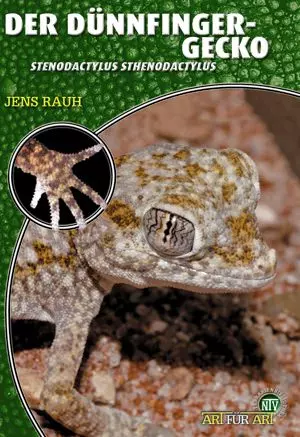
The thin-fingered gecko
All about the thin-fingered geckos by Jens Rauh 64 pages Format: 14.8 x 21 cm numerous colour photos Paperback Author Jens Rauh Contents: Foreword Species description Relationship Legal regulations Distribution and habitat Behaviour/Lifestyle Where do I buy my thin-fingered gecko? Transport and quarantine Socialisation The terrarium    The technique The facility Climate Care work Nutrition Health Requirements for breeding Mating behaviour Pregnancy and egg-laying Incubation Egg development and hatching Rearing the young Further information Further and used literature

CHF 21.90

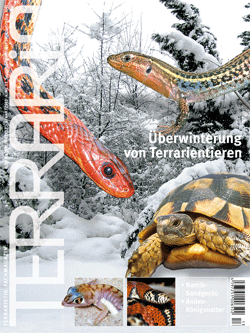
Terraria 13 - Overwintering of terrarium animals
Terraria 13 - Hibernation of terrarium animals Breeding the palmatogecko from the NamibKeeping and reproducing the Andean kingsnake Contents: 2 Editorial by Heiko Werning4 Magazine Dangerous animals in Saarland / Zoo Days in Frankfurt / Liability for escaped pets / Climbing ability of snakes at different temperatures / First imports of vipers12 TERRAglobal The finest hour of Bolivian television: Herpetologist on Canal 21 by Martin Jansen The discovery of a new species by Karl-Heinz Switak 16 Cover story: Hibernation of terrarium animals Hibernation – Adaptations to cold climatic conditions by Beat Akeret23 Hibernation of reptiles and amphibians in the outdoor terrarium by Martin Hallmen32 The refrigerator method by Hans-Dieter Philippen37 Hibernation of turtles in the cellar light well by Xaver Wapelhorst 40 Hibernation in tarantulas Hans-Werner Auer44 Grey giants among themselves – of leopard tortoises and elephants in the Addo Elephant National Park, South Africa Part 2: Size and population ecology by Michael Wirth54 Lampropeltis triangulum andesianus – rare terrarium jewel with a dubious reputation Part 1: Biology and keeping by Thorsten Schmidt60 On keeping and breeding the palmatogecko Pachydactylus rangei Andersson, 1908 by Sebastian Schenk & Sebastian Wolf66 Frog die-off in the hotspot – a case study in eastern Brazil by Dennis Rödder70 Travel Costa Rica’s Hitoy Cerere, the gateway to the land of Sibú by Ivonne Meuche82 New species Leaf-fingered geckos of the genus Phyllodactylus/ Three tree frogs from southern Brazil84 Among researchers Bolivia: still a “terra incognita” of herpetology by Martin Jansen88 Test run Irrigation systems by Kriton Kunz94 Eye-catcher A turtle paradise – from the garden to the bathroom by Kriton Kunz99 Near you103 Preview104 Incubator The child does not speak by Heiko Werning

CHF 12.00

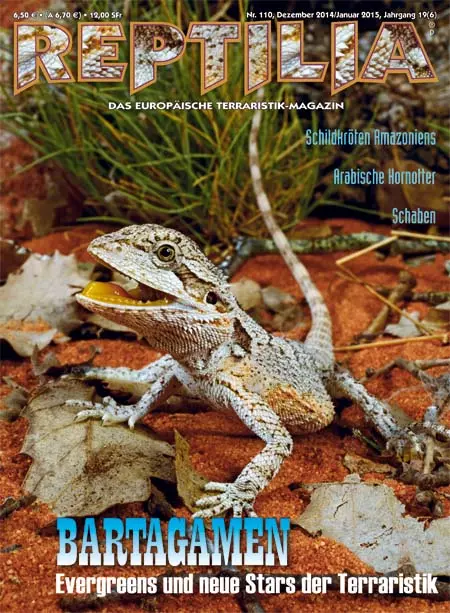
Reptilia 110 - Bearded dragons
Reptilia 110 - Bearded dragons Amazonian turtlesArabian horned viperCockroaches Contents:Cover story: Bearded dragons – evergreens and new stars of the terrarium hobbyBearded dragons are still the most popular lizards for keeping in terrariums and can be recommended to beginners without hesitation. We provide the necessary tools and an initial overview of keeping these likeable creatures. But even “old hands” will get their money’s worth: we present new findings on life expectancy and introduce a “new” species of bearded dragon, Pogona minor, which is now making a strong push onto the market. EditorialMagazineDATES WESTERN HERP PERSPECTIVESThe business with fearB. Love Photo storyStill ideal terrarium animals even for beginners: bearded dragonsM. Rogner GallerySkin(e) couture for dragonsB. Trapp Keeping and breedingOn the potential life expectancy of bearded dragons (Pogona vitticeps)P. M. Müller  Keeping and breedingA new dragon conquers the world: Pogona minor in the terrariumH. Werning Keeping and breedingKeeping and breeding the Arabian horned viper (Cerastes gasperetii gasperetii)A. Schmid HerpetofaunaEncounters with turtles in the Venezuelan state of Amazonas. Part 1: Aquatic turtlesM. Heart ReportageCockroaches. Feared and lovedS. Schorn ServiceLibraryALSO NEAR YOU JourneyOf snakes, toads and crocodiles in the tropical “Top End” of Australia. A travel and study reportM. Mayer PREVIEW BRUTKASTEN Cats in the cooking pot!H. Werning

CHF 12.00

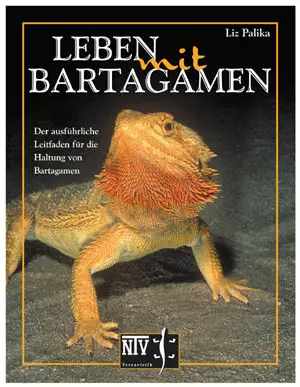
NTV, Life with bearded dragons
NTV Life with Bearded Dragons ISBN: 978-3-931587-72-7 Liz Palika 208 pages 72 illustrations Format: 16.8 x 21.8 cm Contents: You simply have to like bearded dragons. Their somewhat bizarre appearance, their endearing nature and their uncomplicated care put these mini dragons right at the top of the popularity scale. Liz Palika not only vividly describes their successful care and breeding, but also shows these attractive animals from a completely new, surprising and very personal perspective.  What you need to consider when choosing and purchasing a bearded dragon What kind of animal is a bearded dragon, how does it "work"? Keeping bearded dragons appropriately as pets: The right terrarium, furnishings and technology Body language and behaviour Successful breeding: Requirements, sex diagnosis, incubation of the eggs and rearing of the young Training bearded dragons Problem solutions: Prophylaxis and therapy of illnesses Lots of very personal tips & tricks from the author's wealth of experience

CHF 28.90

Marginata 25 - Cyrenaica tortoises
Marginata 25 - Cyrenaica tortoises South African beaked tortoise part 3Argentine tortoisesSea turtles Contents: EditorialMagazineDatesREPORTAGEThe Cyrenaica tortoise (Testudo graeca cyrenaica)Alex PiehBREEDINGKeeping and breeding of the Cyrenaica tortoise (Testudo graeca cyrenaica) in an indoor terrariumBastian EsserBREEDINGOutdoor keeping and breeding of the Cyrenaica tortoise (Testudo graeca cyrenaica)Angelica H.POSTERThe Chaco flatback tortoise Acanthochelys pallidipectoris (Freiberg, 1945)Hans - Dieter PhilippenREPORTAGEThe African beaked tortoise (Chersina angulata). Part 3: Predators and other threats Michael WirthREPORTAGEThreats, protection and utilisation of sea turtles. Part 5: Conservation concepts and ways to sustainably utilise sea turtles Gerald & Christa BenyrBREEDINGKeeping and breeding the rarely kept Argentine tortoise (Trachemys d. dorbigni) Volker NathsBook tipClassifiedsSubscription & ServiceRegional guide

CHF 16.50

The bearded dragon
All about bearded dragons by Peter Maria Müller 168 pages 155 colour photos, maps, tables, drawings Hardcover Format: 17.5 x 23.2 Author Peter Maria Müller Publisher NTV Contents: Hardly any other reptile is as popular with terrarium keepers as the bearded dragon Pogona vitticeps. It owes its success in the terrarium hobby not least to its interesting appearance, exciting behaviour and its calm and very trusting nature. Its husbandry requirements are easy to fulfil, and so it is bred by the thousands every year, making it easy to obtain and also ideal as a terrarium animal for beginners.Their close relatives such as the black-earth bearded dragon (Pogona henrylawsoni) or – although much rarer – Mitchell's bearded dragon (Pogona mitchelli) are also becoming increasingly popular.Peter Maria Müller, himself an experienced breeder of bearded dragons, gives you a detailed introduction to all representatives of the genus and their habitats. An identification key helps, you to differentiate between the individual species. In addition, all important aspects of keeping bearded dragons are explained in a comprehensive and easy-to-understand manner, such as decision-making aids before buying, handling the animals, sex determination, species-appropriate care and nutrition, possible diseases and, finally, successful breeding. Over 150 brilliant colour photos bring you closer to the world of bearded dragons and show the fascination of these popular lizards.

CHF 21.90