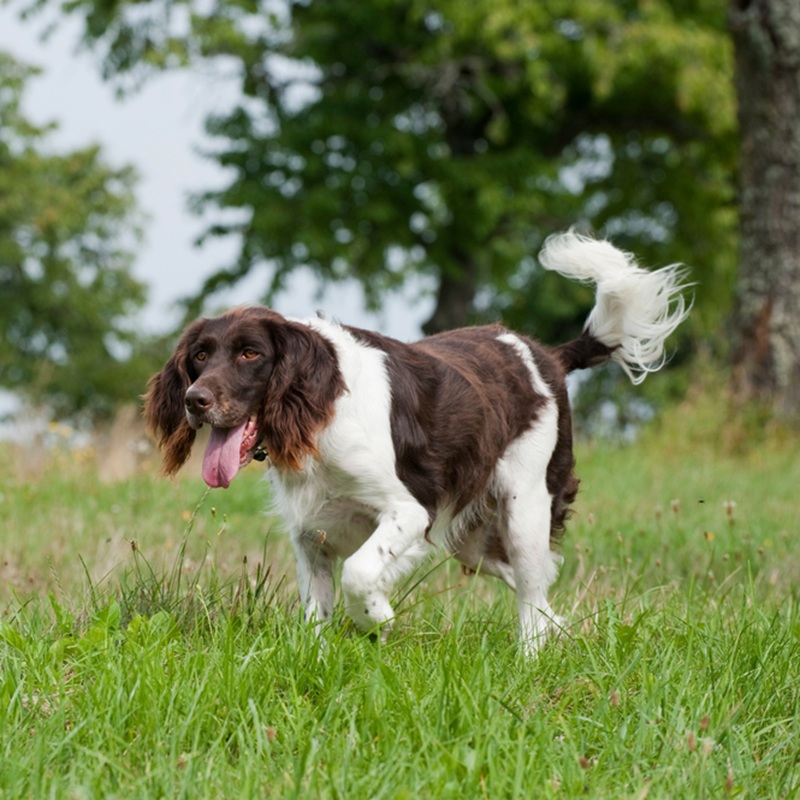
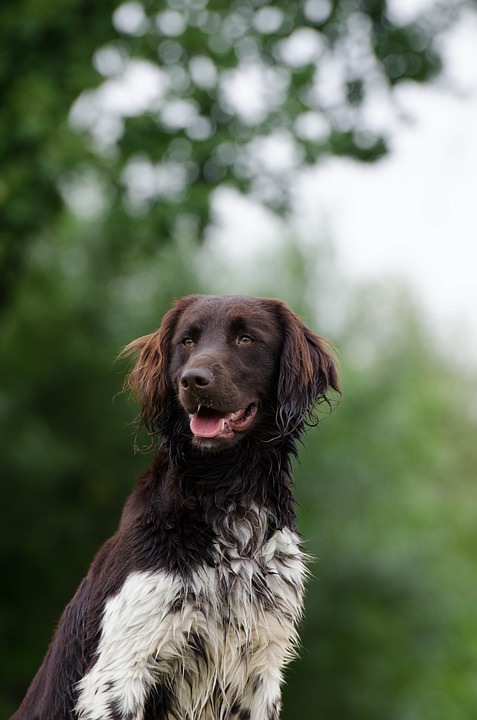


Continental Dwarf Spaniel
FCI standard number: 77
Country of origin: Belgium and France
Classification: FCI Group 9, Section 10, Continental Dwarf Spaniel and others, without working test
Height at withers bitch: approx. 28 cm
Height at withers male: approx. 28 cm
Weight bitch: approx. 2.5-5 kg
Weight male dog: approx. 2.5-4.5 kg
Coat color: All colors are permitted on a white background, whereby white should predominate on the body
Coat texture: Long, silky, fine, slightly wavy, without undercoat, with rich feathering on ears, legs and tail
Neck circumference: approx. 20-28 cm
The Continental Miniature Spaniel
History of the Continental Dwarf Spaniel
The Continental Miniature Spaniel is one of the old European society dogs. Small spaniels of this type were popular in aristocratic courts for many centuries and can be seen in numerous historical paintings. Today there are two varieties within the same breed, namely the Papillon with erect ears and the Phalène with drooping ears. The FCI lists Belgium and France together as the countries of origin.
Appearance
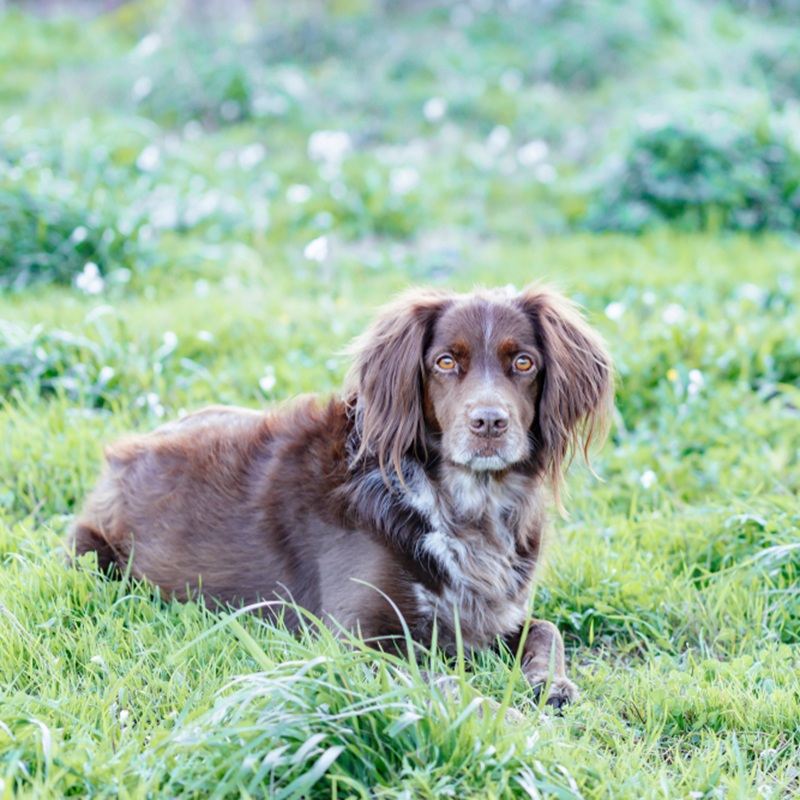
Body shape: The Continental Miniature Spaniel is a small, harmoniously built, elegant and lively dog. Its body is slightly longer than tall, but fine and not weak. Typical are the fine bone structure, the proud posture and the light, graceful movement.
Coat: The coat is long, fine and silky with beautiful feathering. Particularly striking are the heavily furred ears and the richly feathered, high carried tail. In the Papillon, the large pricked ears contribute significantly to the typical butterfly-like expression.
Nature/character
The Continental Miniature Spaniel is considered to be cheerful, attentive, clever and very people-oriented. They are usually lively, charming and eager to learn, often with a surprising amount of temperament for their size. Many dogs of this breed are affectionate and alert without being as heavy or rough as larger companion dogs.
Grooming
Grooming is generally manageable, but requires regularity. The silky coat should be brushed several times a week to prevent matting, especially on the ears, pants and tail. In addition, teeth, eyes, ears, claws and paws should be checked regularly. As the breed is small, dental care also plays a particularly important role.
Health
The Continental Miniature Spaniel is generally considered to be a fairly robust small breed, but health problems can occur depending on the lineage. These include patellar luxation, eye diseases and dental problems. Responsible breeding, regular veterinary checks and good weight management are important.
Training
Training is often successful because the breed is intelligent, attentive and closely oriented towards people. Loving consistency, early socialization and clear rules are important. Despite its small size, the dog should not be pampered, because even a small, very intelligent companion dog needs orientation and meaningful activity. With positive reinforcement, the Continental Miniature Spaniel usually learns very quickly.
What are the special features of this breed?
What is special about this breed is the combination of its very small size, great elegance and amazing intelligence. The Continental Miniature Spaniel is not just a lap dog, but often an alert, agile and very adaptive companion. The two ear variants Papillon and Phalène, which belong to the same FCI breed, are also striking. The Papillon in particular is immediately unmistakable due to its butterfly-like ears.
Suitable for first-time dog owners?
Yes, in principle the Continental Miniature Spaniel is often well suited to first-time dog owners. They are usually friendly, smart and easy to train. However, despite its small size, it must be taken seriously, trained consistently and not overprotected. The breed usually does very well in a calm, loving and structured home.
Family dog or not?
Yes, in principle the Continental Miniature Spaniel can be a good family dog. They are affectionate, playful and like to be close to their humans. It is particularly well suited to families who treat a small dog with respect. Care should be taken with very small children due to their delicate stature.
Login
Suggested products