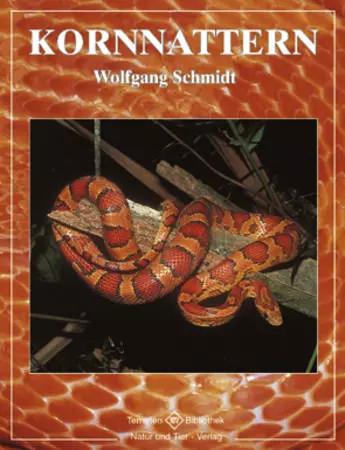

NTV corn snakes

Article no: BZ-1293113

CHF 21.90

Stock: 1

Available, delivery time: 1-3 days

Delivery between Tuesday, 21 April and Wednesday, 22 April
Zahlungsarten
Product information "NTV corn snakes"

All about corn snakes

  • 88 Seiten
  • 62 Abbildungen
  • Format: 16,8 x 21,8 cm
  • Autor Wolfgang Schmidt

Inhalt:

Kornnattern gehören schon seit jeher zu den beliebtesten Terrarientieren. Nahezu jeder engagierte Terrarianer hat sie schon kennen gelernt. Doch woher kommt das starke Interesse gerade an dieser Kletternatter? Die Antwort liegt sicherlich in erster Linie im Wesen der Schlange begründet. Als besonders friedfertige Natur ist sie daher nicht nur dem fortgeschrittenen Terrarianer zu empfehlen, sondern sie eignet sich auch ausgezeichnet für den Einstieg in die Terraristik.
Der Autor geht intensiv auf die Pflege und Zucht der Tiere ein, spart aber auch Themen wie Krankheiten und deren Behandlung nicht aus. Neben den drei Unterarten stellt er Farbformen vor, die sich mittlerweile auch hierzulande grosser Beliebtheit erfreuen.

Composition
Feeding recommendation
Technical details
Size information

0 of 0 reviews

Give us a rating!

Share your experience with the product with other customers.


Suggested products

Handbook of food plants for tortoises and other reptiles
Handbook of forage plants 2nd revised editionMarion Minch is not only a successful breeder of diverse tortoises for many years, but also an excellent connoisseur of native wild herbs. She founded and runs samenkiste.de, which is well known to many tortoise keepers and nature lovers. Her name is inextricably linked with reptile care and species-appropriate nutrition for tortoises. Her handbook of food plants summarises the most important native food plants for herbivorous and omnivorous reptiles. She not only considers tortoises, but also iguanas, spiny-tailed dragons and even chameleons. From the basics of plant biology to native wild herbs to suitable food plants for hardy tropical reptile species, this comprehensive work provides the basis for species-appropriate keeping. In the expanded and supplemented 2nd edition, the plant section is divided according to flower colour. This makes it even easier to identify wild herbs. The work has also been supplemented with a wealth of additional information and many pictures.

CHF 46.50

Geckos
Geckos in the terrarium by Astrid FalkThe book offers a comprehensive introduction to geckos and their species-appropriate keeping in terrariums. It explains what you need to think about before buying a gecko and what preparations should be made. The book describes in detail how the terrarium is technically equipped and set up. The care of the animals, their special features and behaviour, their diet, reproduction and rearing of young animals are described, as well as diseases and husbandry problems with tried and tested suggestions for prevention and treatment. Individual gecko species that are particularly suitable for keeping and breeding in terrariums are portrayed in detail in the second part of the book.

CHF 28.50

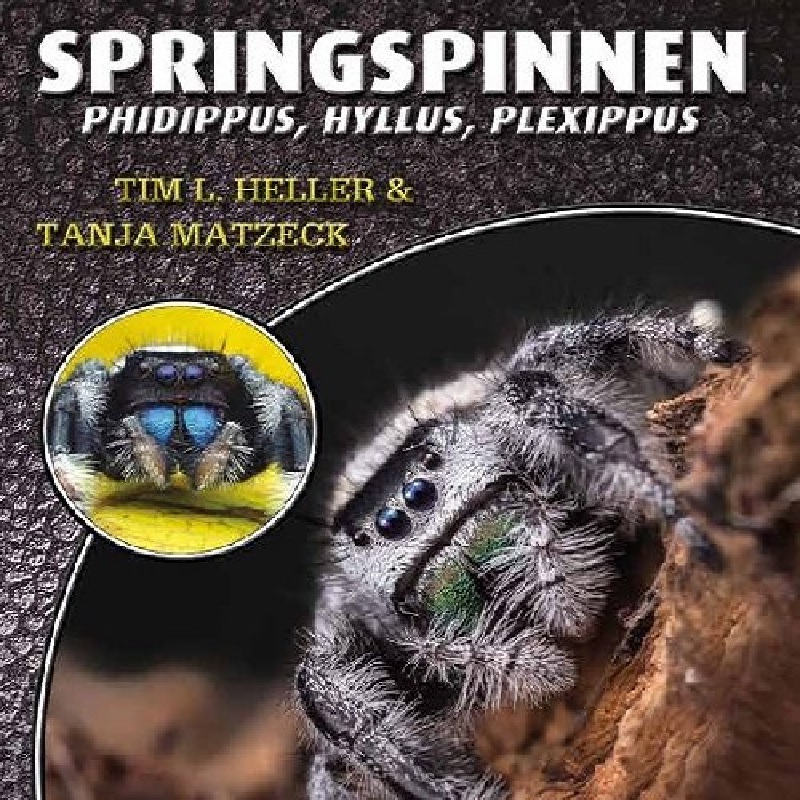
Jumping spiders Phidippus, Hyllus, Plexippus
Book Jumping Spiders - Phidippus, Hyllus & Plexippus A guide to keeping jumping spiders of the genera Phidippus, Hyllus & Plexippus. Who can resist the charm of jumping spiders? The childlike appearance of their expressive face simply leaves no one cold! In addition, their behavior is extremely exciting to observe, their colors are bright and their requirements for species-appropriate keeping are very easy to meet. No wonder these likeable jumpers are all the rage! This volume in the "Species by Species" series describes in detail what to look out for when buying and keeping them, introduces the most commonly kept species and color forms and provides plenty of tips on how to keep them successfully - so you can be sure they will breed well! Species by Species introduces you to the books in this series, which present the most popular terrarium animals. Each volume offers you detailed, practical care instructions and all the information you need to successfully breed your animals. All important questions from the required tank size to terrarium set-up, technical equipment, species-appropriate nutrition and disease prevention are answered with numerous tricks and tips. Experienced, long-standing breeders reveal how you can encourage the animals to reproduce and raise healthy young. All this in full color, generously illustrated and attractively designed - just about your terrarium animal - species by species

CHF 23.90

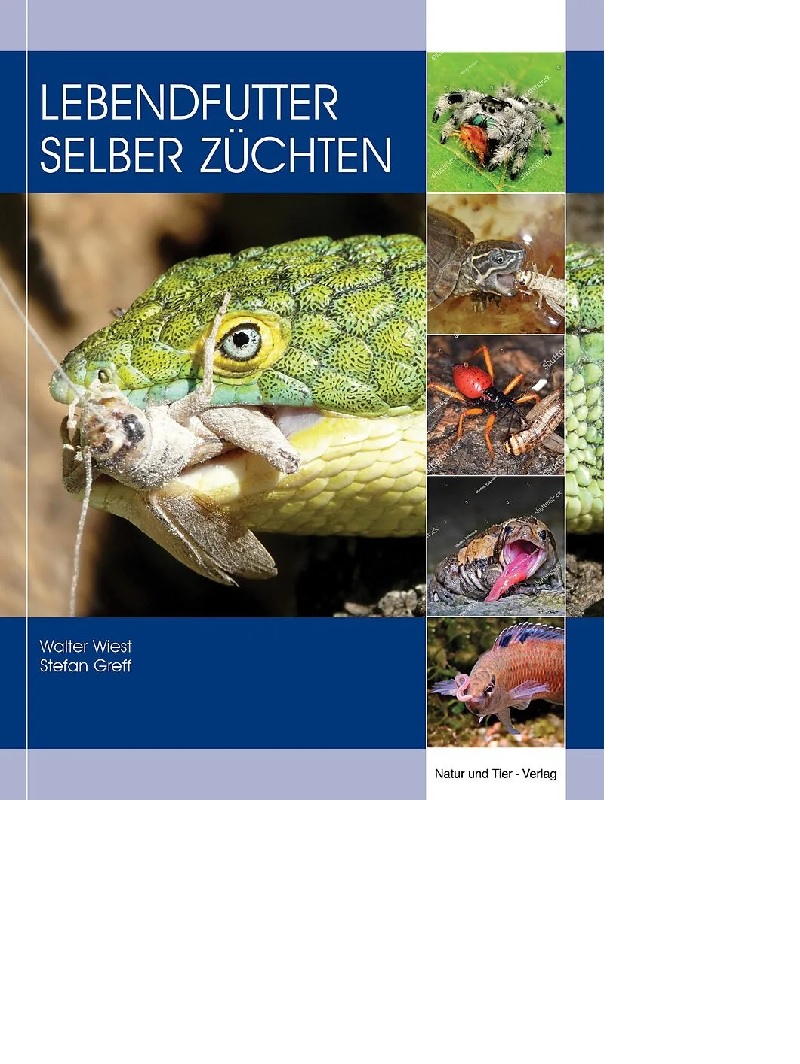
Book Breeding live food yourself
Book "Grow your own live food" - The perfect guide for pet owners Discover practical and detailed instructions on how you can easily breed food for your reptiles, birds, fish or other animals yourself in the book "Breeding live food yourself". With valuable tips on various food insects, their care and breeding, you can save money and ensure a species-appropriate diet for your pets. Contents of the book: Step-by-step instructions for breeding feeder insects Information on the best types of food for reptiles, birds and fish Care instructions and breeding conditions for various live food species Tips for sustainable and cost-effective food production Why breed your own live food? Get healthy, fresh food for your animals Save money and reduce dependence on pet shops Promote the health and well-being of your animals with species-appropriate food Whether you are a beginner or an experienced pet owner, this book provides you with everything you need to successfully breed live food yourself.

CHF 46.50

Marginata 69 - New Guinea tortoises
Marginata 69 - New Guinea tortoises – the genus ElseyaCover storyThe unrecognised beauties: New Guinea tortoises (Andreas S. Hennig)My experiences with Branderhorst's New Guinea tortoise, Elseya (Elseya) branderhorsti (Ouwens, 1914) (Andreas S. Hennig)Keeping and breeding of Rhodin's New Guinea tortoise, Elseya (Hanwarachelys) rhodini Thomson, Amepou, Anamiato & Georges, 2015 (Andreas S. Hennig)PortraitGeoemyda spengleri, Chinese serrated tortoise (Andreas S. Hennig)ReportageMacrochelys temminckii – Experiences and impressions with vulture tortoises part 2 (Reiner Praschag)KeepingAn alternative to year-round keeping of the Egyptian tortoise in the terrarium – my experiences with seasonal outdoor keeping of Testudo kleinmanni (Ricarda Schramm)EtymologySawbacks and living maps part 4: Graptemys gibbonsi, Pascagoula humpback tortoise (Holger Vetter)Classifieds & animal placement

CHF 16.50

Reptilia 100 - Dream terrariums
Reptilia 100 - Dream terrariums Rainbow boaChanging leavesHelmeted tree frog Contents: What could be more fitting for the 100th issue of our magazine, than to showcase the very best the hobby has to offer: dream terrariums! We show you the most extraordinary tanks owned by private keepers, and they’ll leave you speechless. We’ve also included building guides with plenty of ideas so that you too can make your dream of the perfect terrarium a reality. EDITORIALMAGAZINEDATES AROUND THE WORLD IN 5 YEARSThe end is nearA. Pachmann PHOTOREPORTAGEDream terrariums REPORTAGEPack your swimming trunks – a visit to Georg Reitmaier’s superlative terrariumH. Werning TERRARIUM PRACTICE“A Dream comes true”. Building a terrarium for keeping Morelia boeleniM. Uhlhaas, P. Pohlscheid & L. Schilling TERRARIUM PRACTICEJewels in stainless steel. Building a terrarium for poison dart frogs. Part 1: Planning, construction and manufactureM. Schulte REPORTAGEThe first world championship in terrascapingL. Barkam Readers’ competition“Your dream terrarium” KEEPING AND BREEDINGOn the knowledge, care and breeding of the Yucatán shovel-headed tree frog Triprion petasatusT. Eisenberg KeepingKeeping and care of changing leaves, using Phyllium siccifolium from the Philippines as an exampleM. Friend REPORTAGEFringed-finger lizards (Acanthodactylus) in the wild and in the terrarium. Part 7: The Acanthodactylus-erythrurus group and conclusionU. Schlüter KEEPING AND BREEDINGOn the biology and care of the Guyana rainbow boa (Epicrates maurus guyanensis)M. Schwederski & L. Trutnau Animals of our homelandThe European pond turtleR. Leptien WESTERN HERP PERSPECTIVESThe safe world syndrome – protection from everything and everyoneB. Love TIPS AND TRICKSSUBSCRIPTION & SERVICETest runALSO NEAR YOU JourneyAdventure holiday in the PhilippinesM. Gaulke PREVIEW BRUTKASTENI would even let myself be locked up for the REPTILIA – part 2H. Werning

CHF 12.00

Reptilia 94 - Terrarium photography
  Philippinen-KrokodilCumberland-SchmuckschildkröteHalsbandleguane im Freilandterrarium Inhalt: Die Terraristik bietet eine unendliche Fülle wunderbarer Fotomotive, ein Eldorado für Hobby-Fotografen! Und wohl jeder Halter hat den Wunsch, seine Pfleglinge, seine Nachzuchten und seine Anlage im Bild festzuhalten. Zumal Fotografieren nie einfacher war als heute, wo jedes Telefon die schnelle Aufnahme erlaubt, die dann direkt ins virtuelle Fotoalbum auf Facebook hochgeladen werden kann, wo alle Freunde sie anschauen können.Profi-Fotograf Benny Trapp aber gibt zahlreiche Tipps und Tricks, wie Sie zu Bildern kommen, bei denen garantiert jeder den „Gefällt mir“-Button drückt, ganz gleich, ob Sie mit einer Kompaktkamera oder einer hochwertigen Spiegelreflexkamera arbeiten. EDITORIALMAGAZINTERMINEIN 5 JAHREN UM DIE WELT Menschen und SchildkrötenA. PachmannWESTERN HERP PERSPECTIVESBörsenbesuch down under B. LoveFOTOSTORYBild schön! Fotografie von Terrarientieren K. KunzPRAXISTerrarientiere fotografieren. Einsatz von Licht und Blitz bei SpiegelreflexkamerasB. TrappPRAXISTipps für bessere Bilder mit KompaktkamerasB. TrappHALTUNG UND VERMEHRUNGPhilippinenkrokodile (Crocodylus mindorensis) im Aquarium des Kölner Zoos. Teil 1: Erfahrungen mit „Off-Exhibit“- Haltung einer der am stärksten bedrohten Krokodilarten der Welt T. Ziegler, R. Sommerlad, W. Brass, K. van der Straeten, D. Karbe & A. RauhausHERPETOFAUNAAuf dem Weg ins All. Die Welt der Buchstaben-Schmuckschildkröte, Trachemys scripta Teil 4: Cumberland- und Südtexas-Schmuckschildkröte A. S. HennigWIRBELLOSEDie Isles of Scilly. Ein Paradies nicht nur für Phasmidenfreunde H.-J. LuefHALTUNG UND VERMEHRUNGErfahrungen mit der Haltung von Halsbandleguanen im FreilandterrariumM. DieckmannTIERE UNSERER HEIMATDie AspisviperR. LeptienBIBLIOTHEKTIPPS & TRICKSTESTLAUFABO & SERVICEAUCH IN IHRER NÄHEREISEThe Rock. Die Herpetofauna GibraltarsU. SchlüterVORSCHAUBRUTKASTENIguana chilenaH. Werning  

CHF 12.00

Reptilia 08 - Grasping frogs
Reptilia 08 - Grasping frogsDay geckos on the MascarenesRoyal pythonArizonaContents:Page 2 - EditorialPage 3 - Letters to the editorPage 5 - MagazinePage 14 - Western Herp Perspectives: Albino turtles, by B. LovePage 16 - Photo report: Griffin frogs, by C. ProyPage 23 - Report: Sleepyheads - Maci frogs, by Dr H. HermannPage 28 - Keeping and breeding: Keeping and breeding the red-eyed frog, by H. Birkhahn and K. WassmannPage 33 - Travelogue: Arizona, by H. WerningPage 39 - Portrait and poster: Laudakia stellio, by D. Modry and P. NecasPage 43 - Report: The genus Neurergus - Fascinating mountain stream salamanders, by S. Steinfartz and G. SchultschickPage 49 - Keeping and breeding: Keeping and breeding the royal python, by W. WenglerPage 54 - Report: Day geckos on the Mascarene Islands, by G. TrautmannPage 60 - Herpetology and culture: The reptile cult in the realm of the pharaohs, by L. Batista Carissimi-PrioriPage 69 - Reptilia on the road: Zoo-Aquarium in Berlin, by H. WerningPage 74 - Advice and actionPage 77 - LibraryPage 80 - Incubator: Glossary by H. Evers

CHF 9.80

Reptilia 75 - Morocco
Reptilia 75 - Morocco FAQ Terrarium lightingTransport of terrarium animalsPenguins and beaked-breasted tortoises Contents: Morocco - so close to Europe, and yet a completely different world. Culturallyof course, but also in its animal world the country withits vast deserts and the mighty Atlas Mountains is of particular interest. Arabia expert and spinytail researcher ThomasWilms introduces you to Morocco, its spectacular landscapes and the very special herpetofauna. Stephanie de Pury, Sascha Esser and Michel Aymerich report on their exciting search for the lizard snake there, Rolf Leptien has travelled to the south of the country, and finally Hemmo Nickel portrays the remarkable scorpions of Morocco. 2 EDITORIAL3 MAGAZINE11 DATES14 WESTERN HERP PERSPECTIVES            The "crisis" of the Florida soft-shelled turtle            by B. Love16 PHOTOSTORY            Morocco            Treasure trove in north-west Africa            by T. Wilms24 TRAVEL            Morocco: In search of             the lizard snake            by S. de Pury, S. Esser & M. Aymerich32 TRAVEL            On an excursion to the south of Morocco            by R. Leptien38 REPORTAGE            The scorpions of Morocco            Part 1            by H. Nickel, J. Hornung & M. Koch47 PORTRAIT and POSTER            Uroplatus giganteus            by P. Schönecker51 HERPETOFAUNA            The Big Bend National Park and its             reptiles. Part 2: Snakes            by P. M. Kornacker & U. Dederichs59 TERRARIUM PRACTICE             Animal-friendly transport of reptiles            by S. Knauf66 HERPETOFAUNA            African beauty among penguins            Ecological relationships of the             beaked-breasted tortoise in             the Cape of South Africa            by M. Wirth79 FAQ – Frequently Asked Questions            Terrarium lighting – Part 1            by I. Kober & U. Geissel86  ALSO NEAR YOU91  SUBSCRIPTION & SERVICE94  PREVIEW96  BRUTKASTEN            Travel snippets from the Caribbean – Part 2            by H. Werning

CHF 12.00

Reptilia 48 - Dwarf chameleons
Reptilia 48 Dwarf Chameleons Rail turtlesEl SalvadorRing-tailed boas Contents: 2 EDITORIAL 4 MAGAZINE 12 DATES 16 WESTERN HERP PERSPECTIVESThe Cutsby B. Love 18 PHOTO REPORTAGE Mysterious mini-dragons – The ground and stub-tailed chameleons of the genera Brookesia and Rhampholeonby P. Necas and W. Schmidt 28 KEEPING AND BREEDINGKeeping and breeding of the short-tailed chameleon Rhampholeon brevicaudatus? by N. Lutzmann, S. Esser, A. Flamme & H. Schneider 34 HERPETOFAUNAThe low-frequency vibration of chameleons – New findings about a peculiar behaviour by N. Lutzmann 38 REPORTAGEPiggyback to the weddingWhy do some female chameleons carry the males on their backs? by N. Lutzmann 41 REPORTAGEThe desert in your own house by H. Zorn 45 TRAVELEl Imposible – The impossible is possibleThe national park "El Imposible" in El Salvador by T. Leenders 51 PORTRAIT AND POSTERMantis religiosaby B. Trapp 56 HERPETOFAUNAComments on the current situation of the rail turtles Podocnemis expansa and Podocnemis unifilis in Boliviaby J. Knaak 65 KEEPING AND BREEDINGThe ring-tailed boa (Corallus annulatus annulatus)A little-known jewel in the terrarium by S. Wirz 72 REPORTAGEEndemic terrestrial salamanders of the Italian mainlandby F. Pasmans and S. Bogaerts 80 REPORTAGEPlanning and construction of a reptile zoo: "Reptilium - Terrarium and Desert Zoo" in Landau - Part 3: The Openingby H. Werning 90 LIBRARY 91 CLASSIFIEDS 96 RAT & TAT 104 GLOSSA family history. Part 2by H. Werning

CHF 11.20

Bede your hobby chameleons
Bede - Your Hobby Chameleons Rolf Müller and Ulrike Walbröl have been successfully breeding chameleons for years. As members of the DGHT’s Chameleon Working Group and contact persons for the Chameleon Hotline, they are thoroughly familiar with the problems faced by beginners in chameleon keeping. Here, they have brought together their knowledge and experience for the first time and, in collaboration with Dominik Kieselbach, have created a book for beginners unlike any other previously available on the German market.

CHF 23.50

The corn snake
All about corn snakes from Kriton Kunz 64 Seiten 14,8 x 21 cm zahlreiche Farbfotos Autor Kriton Kunz Inhalt: Vielleicht der Klassiker der Terraristik schlechthin ist die Kornnatter. Sie vereint in sich alle Eigenschaften, die eine Schlange zu einem geeigneten und auch dem Einsteiger empfehlenswerten Pflegling machen: Wunderschöne Färbung, attraktive Farbvarianten, ruhiges, umgängliches Wesen und leichte Haltbarkeit. Damit Sie Ihre Kornnattern vom ersten Tag an richtig und artgerecht pflegen können, vermittelt Ihnen Kriton Kunz, REPTILIA-Redakteur und erfahrener Schlangenhalter, in diesem Band der Reihe „Art für Art“ ausführlich und leicht verständlich alles, was Sie für die erfolgreiche Haltung dieser faszinierenden Art wissen müssen. Selbstverständlich erfahren Sie auch, wie Sie Ihre Tiere zur Vermehrung bringen, die Eier ausbrüten und die Jungtiere aufziehen können. Systematik und Körperbau Die faszinierende Biologie: Aus dem Leben der Kornnatter Alle Informationen zur artgerechten Haltung: Vom geeigneten Terrarium über Einrichtung und Technik bis hin zur Fütterung Erfolgreich nachzüchten: Paarungsstimulation, Inkubation der Eier und Aufzucht der Jungtiere Problemlösungen: Wie man die häufigsten Fehler bei der Pflege vermeidet, und wie man kranken Tieren helfen kann Brillante Fotos

CHF 21.90