Small poodle

FCI standard number: 172

Country of origin: France

Classification: FCI Group 9, Section 2, Poodle

Height at withers bitch: over 35 cm up to 45 cm

Height at withers male: over 35 cm up to 45 cm

Weight bitch: approx. 8-12 kg

Weight male dog: approx. 8-12 kg

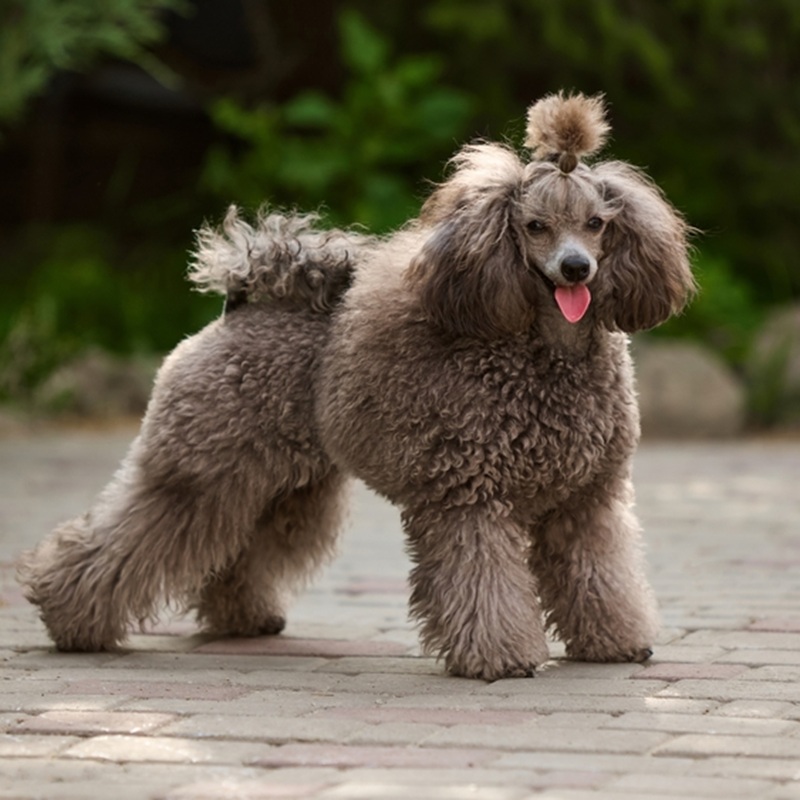
Coat color: Black, white, brown, grey, fawn and other colors and multi-colors covered by the standard according to the FCI standard version

Coat texture: Abundant, fine, woolly and curly or corded, dense and without natural shedding as in many other breeds

Neck circumference: approx. 28-38 cm - please always measure the collar on the dog

Product information "Small poodle"

Small Poodle

History of the Poodle

The poodle is one of the old European dog breeds and was originally used as a water dog. It was strongly influenced and further developed in France in particular, which is why France is now considered the country of origin. Over time, the larger working dog developed into different size variants, including the small poodle. Later, the poodle became known primarily as an intelligent companion, show and family dog.

Appearance

Body shape: The Small Poodle has a harmonious, elegant and well-proportioned build. It appears neither clumsy nor fragile, but lively, proud and agile. Typical are the rather square overall impression, the fine but not weak bone structure and a springy, light movement.

Coat: The coat is one of the most striking characteristics of the breed. It is dense, fine and strongly curled or formed in cords. The Small Poodle usually sheds very little, but needs regular and careful grooming.

Nature/character

The Small Poodle is considered to be very intelligent, attentive, playful and people-oriented. They learn quickly, enjoy working with their people and are often extremely adaptable. Many small poodles are friendly, alert and sensitive without being overly nervous. Thanks to their intelligence and keen powers of observation, they often react very clearly to the mood and everyday life of their caregivers.

Grooming

Grooming is more complex than many people initially think. The coat must be regularly brushed, combed and cut or clipped at sensible intervals so that it does not become matted. Ears, claws, teeth and eyes should also be checked regularly. Because the coat sheds so little, loose wool often gets caught in the coat and must be actively removed.

Health

The small poodle is generally considered to be a fairly robust and long-lived variety. Nevertheless, attention should be paid to responsible breeding. Depending on the line, patella problems, eye diseases, dental problems or hereditary diseases can play a role. Regular veterinary checks, good weight management and a reputable breeding base are important.

Training

The small poodle is generally very easy to train. It learns quickly, is attentive and often wants to work closely with its owner. It responds best to friendly, clear and consistent training. Harsh methods are unsuitable because many Poodles react sensitively. With early socialization, variety and meaningful mental activity, the small poodle usually develops into a very pleasant companion.

What are the special features of this breed?

What is special about this breed is the combination of intelligence, elegance and a great love of learning. The small poodle is usually much more than just a pretty companion dog. They are often very attentive, athletic and versatile, for example in everyday life, dog sports or mental tasks. They also have a special coat that sheds very little but requires a lot of grooming.

Suitable for first-time dog owners?

Yes, the small poodle is often very suitable for first-time dog owners. They are usually smart, cooperative and easy to train. The important thing is not to underestimate them. Even a small to medium-sized poodle needs training, activity and regular grooming. If you are prepared to do this, you will often find a very pleasant beginner's dog.

Family dog or not?

Yes, the small poodle is generally a very good family dog. They are usually friendly, playful and closely bonded to their humans. They generally feel very comfortable in a family with loving consistency, sufficient activity and respectful treatment. Due to its adaptability, it often suits both active families and quieter households.


Composition
Feeding recommendation
Technical details
Size information

0 of 0 reviews

Give us a rating!

Share your experience with the product with other customers.


Suggested products

Icelandic dog
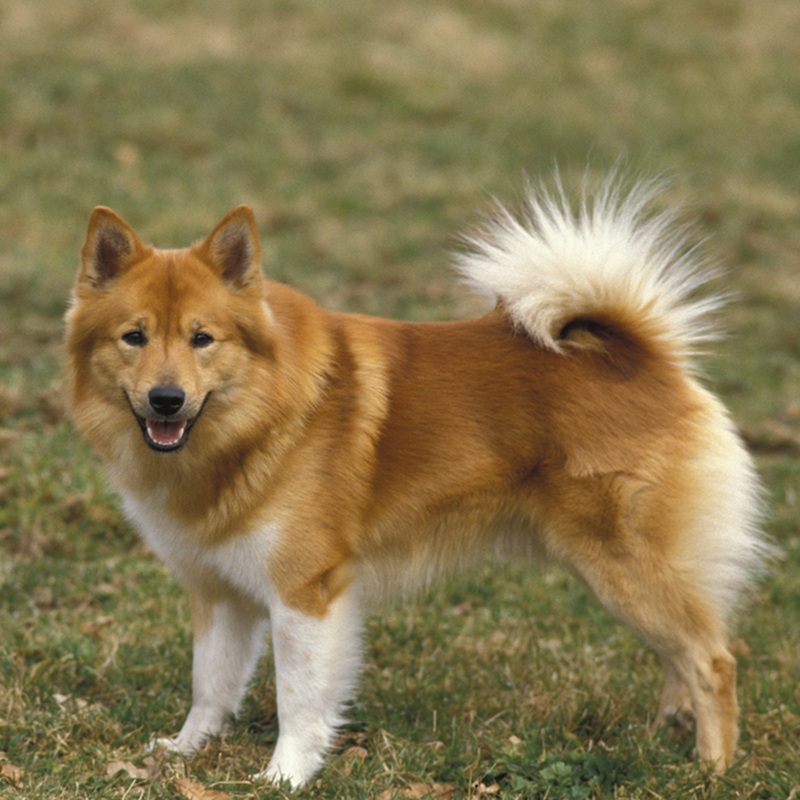
The Icelandic Hound History of the Icelandic Hound The Icelandic Hound is the only recognized dog breed in Iceland. Its ancestors probably came to Iceland with the Vikings and were used there for centuries as versatile herding and farm dogs. The harsh climate and work with sheep and on remote farms had a strong influence on the breed. To this day, the Icelandic Hound is regarded as an original, robust Nordic herding spitz. Appearance Body shape: The Icelandic Hound is of medium size, rectangular in build and strong without appearing heavy. Typical features are the upright ears, the tail curled over the back and the alert, friendly expression. It appears agile, sure-footed and robust. Coat: The coat is very dense and weatherproof. There is a short-haired and a long-haired variety, both with a dense undercoat. The coat reliably protects against wetness, wind and cold and is therefore very well suited to the breed's origins. Nature/character The Icelandic Hound is considered to be cheerful, attentive, friendly and self-confident. It is very people-oriented, curious and usually open in contact. At the same time, it is alert and often barks, which is typical of a Hütespitz. He is usually affectionate, playful and cooperative with his family. Grooming Despite its abundance, the coat is usually quite easy to care for as long as it is brushed regularly. However, a lot of hair accumulates during the shedding period, so daily brushing and combing is advisable. Ears, claws, teeth and paws should also be checked regularly. Health The Icelandic Hound is generally considered to be a robust and hardy breed. Nevertheless, as with any breed, attention should be paid to responsible breeding, good weight management and regular veterinary checks. As with other medium-sized dogs, joint or eye problems can play a role in individual lines, even though the breed as a whole is considered to be comparatively pristine and functional. Training Training is often easy because the Icelandic Hound is usually cooperative, intelligent and people-oriented. However, it is important to steer their pronounced barking tendencies in a sensible direction right from the start. He needs clear rules, friendly consistency, early socialization and sufficient mental and physical activity. With suitable exercise, it is generally a pleasant and active companion. What are the special features of this breed? What is special about this breed is its original character as a Nordic Hütespitz. The Icelandic Hound is the only recognized dog breed in Iceland and is very alert, loves to move and loves to bark. Its friendly openness, robustness and often very good adaptation to active family life are also typical. The combination of spitz type, herding behavior and cheerful temperament makes him special. Suitable for first-time dog owners? Yes, the Icelandic Hound is often well suited to committed first-time dog owners. They are usually friendly, eager to learn and cooperative. However, you should not underestimate their barking nature and their need for exercise and activity. If you are prepared to put some effort into training and exercise, this breed can do very well. Family dog or not? Yes, the Icelandic Hound is generally a very good family dog. They are usually friendly, playful, affectionate and like to be close to their humans. They are particularly well suited to active families who enjoy exercising together and have a lively, attentive dog. However, because of his barking and temperament, he also needs clear structures in everyday family life.
 
Pomeranian
Miniature Spitz - Pomeranian Characteristics Body shape: The height at the withers and the length of the dog are equal: square Fox-like head Pointed ears, close together Short and straight back Coat: Thick coat Various coat colour variations Character of the Miniature SpitzThe Miniature Spitz is a cheerful, lively dog known for its liveliness. As a rule, it gets on very well with children and loves to play with them.They are very intelligent dogs and are very capable of learning, which are neither aggressive nor fearful.This little four-legged friend should not be left alone for too long, as it needs a lot of affection and is a very affectionate dog. Due to its weather-resistant nature and good alertness, the Miniature Spitz is also suitable as a guard dog. TrainingThis dog breed is considered easy to train – nevertheless, training should not be neglected.
 
Great Dane
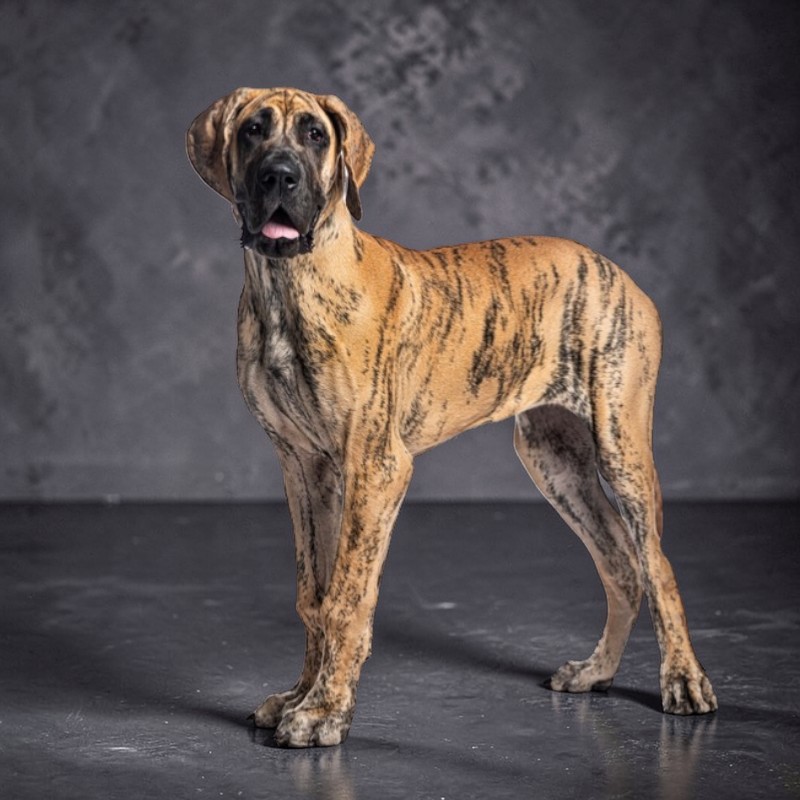
The Great DaneHistory of the Scottish TerrierThe FCI standard names the old Bullenbeisser as well as Hatz and Saur males as the forerunners of the Great Dane, i.e. strong and agile dogs that were used for hunting game. These types later developed into today's uniformly standardised Great Dane.AppearanceBody shape: The Great Dane is a very large, powerful yet elegant dog with a proud bearing. It should appear harmoniously proportioned and well-muscled – not clumsy.Coat: The coat is short and low-maintenance, lies close to the body and has a sheen.Nature and characterTypical of the "gentle giant": friendly, people-orientated and usually quiet in the house, but at the same time alert. Due to its size, good behaviour is particularly important, because even "naughty friendliness" quickly becomes impractical in everyday life.GroomingThe short coat only needs regular brushing/rubbing. More effort is often required for the surrounding area: ears, claws and teeth, but above all everyday management (car, stairs, space requirements, suitable lead/harness size). Many Doggers also drool more than other breeds.HealthImportant issues with the Dogger are above all: Gastric torsion (GDV/Bloat): large, deep-chested dogs like the Dogger are particularly at risk; it is an emergency. Heart disease, especially dilated cardiomyopathy (DCM), is described more frequently in Great Danes. Hip dysplasia (and joint stress in general in giant breeds) is also a relevant issue.EducationCalm, friendly and consistently trained. Practise early on: walking on a lead, greeting without jumping up, impulse control and staying alone in a relaxed manner. Because of their size, it is better to train good manners immediately than to "train them off" later.What are the special features of this breed?Extreme space and strength factor: everyday life must be suitable for Great Danes (living space, car, transport, stairs). "Gentle giant", but not automatically uncomplicated: Needs clear rules and good socialisation. Health management (especially GDV/heart/joints) plays a major role for many owners.Suitable for first-time dog owners?Conditional. If you get help (dog school), train consistently and really want to take on the responsibility of a giant breed (costs, handling, health), it can work. Without structure it quickly becomes difficult.Family dog or not?Yes, often - with conditions. In a calm, well-organised family, the Dogger can be very affectionate and child-friendly. Retreats, respectful children and a daily routine that takes size and health into account are important.
 
Irish Wolfhound
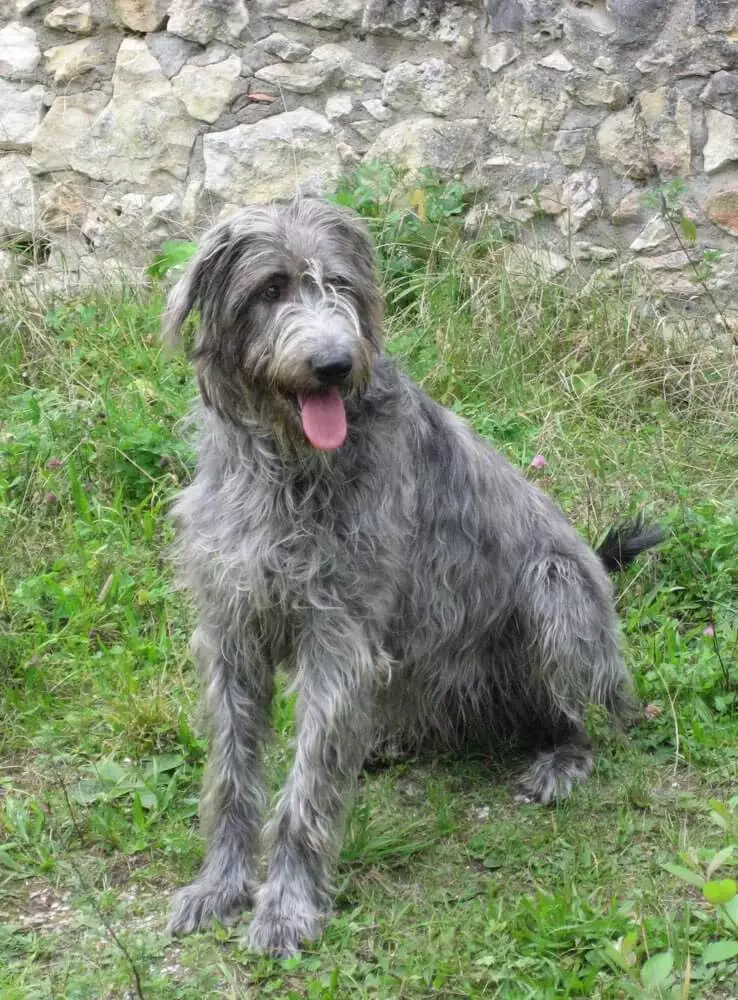
Irish Wolfhound - Irish Wolfhound History of the Scottish Terrier The Irish Wolfhound is one of the oldest known types of sighthound. Its ancestors were valued very early on in Ireland as great hunting and war dogs. Later, the population declined sharply and the breed was systematically rebuilt in the 19th century. A decisive role was played by Capt. G. A. Graham, who consolidated the modern breed with a few remaining dogs of the old type and with Deerhound blood, among other things. The Irish Wolfhound thus also became a symbol of Irish cultural history. Appearance Body shape: The Irish Wolfhound is a very large, imposing yet elegant dog. It should not be as massive as a Great Dane, but more powerful than a Deerhound. Its build is muscular, long-lined and harmonious, with a head and neck carried high and, overall, a light, active gait. Coat: The coat is rough, hard and weather-resistant. Particularly distinctive is the somewhat shaggy hair above the eyes and on the muzzle. Several colour variations are permitted, including grey, brindle, red, black, white and fawn. Nature/character The Irish Wolfhound is considered to be friendly, calm, dignified and people orientated. A famous description of their character is the phrase "a lamb at home and a lion on the hunt". In everyday life, many representatives of the breed show a gentle, patient and rather sensitive demeanour. Despite their size, they are not usually nervous or constantly alert dogs, but rather calm companions with a close bond to their humans. Grooming Grooming is generally straightforward, although the wiry coat should be brushed regularly. Loose hair and dirt can usually be removed easily. In addition, ears, claws, teeth and paws should be checked regularly. Due to their enormous body size, care should also be taken to provide a suitable lying surface, exercise that is easy on the joints and a suitable body weight. Health Like many very large dog breeds, the Irish Wolfhound also has special health characteristics. Important features include attention to heart problems, bone disease, gastric torsion and joint-related stresses. Growth as a young dog must also be well monitored so that bones and joints are not overloaded. Overall, the breed is considered to be comparatively sensitive in terms of size, and life expectancy is often shorter than with smaller breeds. Education Training should be loving, calm and consistent. The Irish Wolfhound is usually sensitive and does not respond well to harshness. Early socialisation, good leash training and basic signals that are safe for everyday use are important, as even a young dog develops enormous strength. Because of its sighthound background, the recall should also be carefully developed. With patience and fair leadership, the breed is generally easy to control. What are the special features of this breed? The most striking feature of the Irish Wolfhound is of course its enormous size. The Irish Wolfhound is one of the largest dog breeds in the world. Despite this impressive appearance, it is often gentle, calm and very affectionate. At the same time, it has typical sighthound characteristics, i.e. a certain hunting instinct, dignity, sensitivity and sometimes also a quiet independence. They need a lot of space in everyday life, good management and an awareness that even normal movements of such a large dog can develop a lot of strength. Suitable for first-time dog owners? Rather limited. Although the Irish Wolfhound can be friendly and good-natured in character, its size, strength and special health requirements do not make it the easiest breed to start with. However, a very well-informed and responsible first-time dog owner can get on well with this breed with plenty of preparation, suitable support and sufficient space. Family dog or not? Yes, in principle the Irish Wolfhound can be a very good family dog. It is often gentle, patient and closely bonded to its people. It usually feels at home in a calm, responsible family with sufficient space and understanding for its needs. Because of its size, however, it should always be closely supervised around small children, simply because such a large dog can be unintentionally very physical.
 
Pekingese
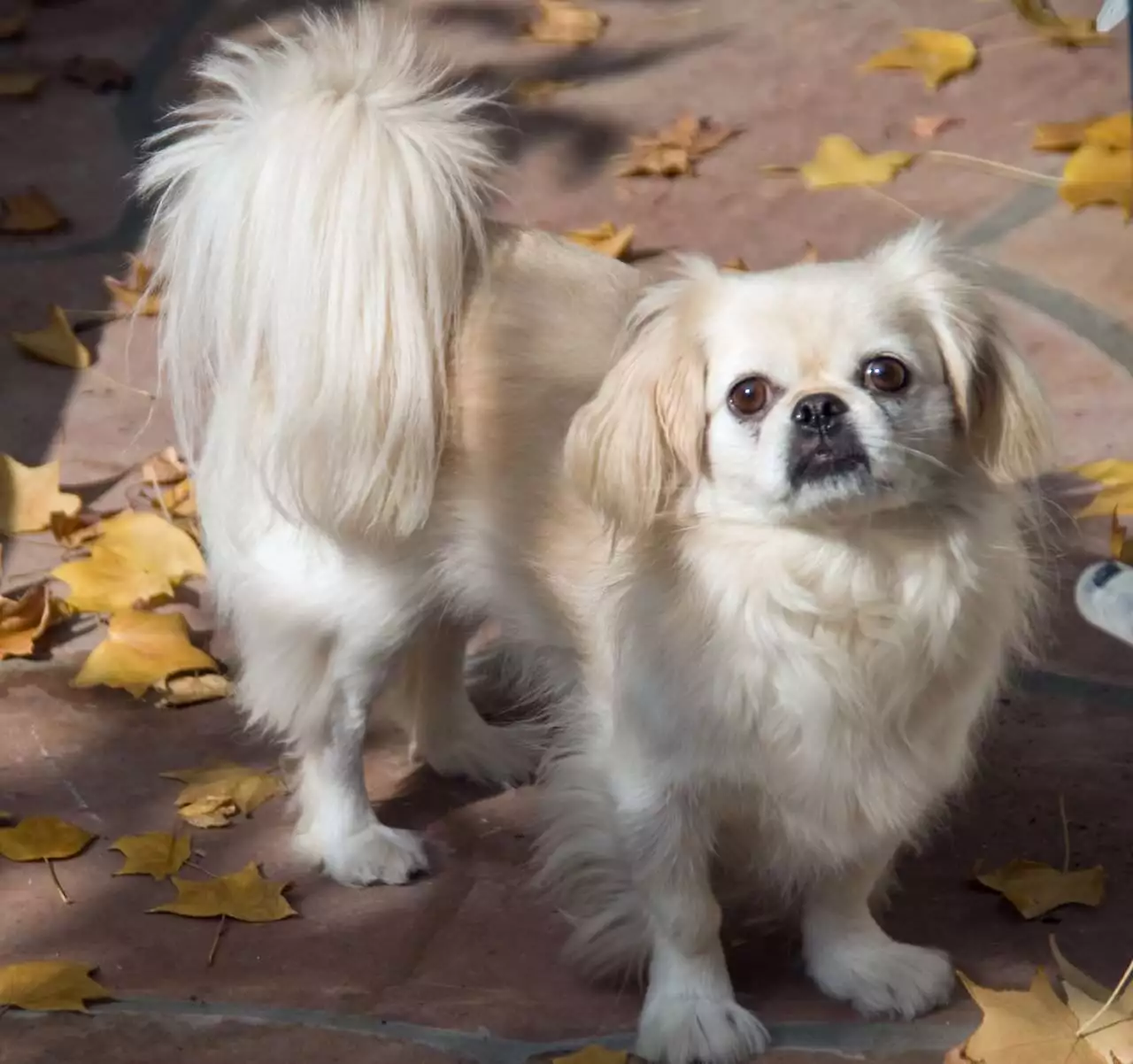
The PekingeseHistory of the Scottish TerrierThe Pekingese originates from China and is one of the old Asian social dogs. Long before our era, there were depictions of small dogs that resembled today's Pekingese. In China, the breed was closely associated with the imperial court and later became popular in Europe. Great Britain strongly influenced its further development and is listed as a patron country by the FCIAppearanceBody shape: The Pekingese is small, compact and surprisingly heavy for its size. Typical features include a broad, rather flat head, a short muzzle, large dark eyes and an overall lion-like expression. Despite its small size, it should appear dignified, robust and not dainty. Coat: The coat is of medium length, straight and very abundant, without completely covering the body. Particularly striking are the mane around the neck and shoulders, as well as the feathering on the ears, legs, tail and toes. The wide range of acceptable colours makes the breed visually quite versatile. Nature/characterThe Pekingese is considered courageous, self-confident, dignified and often quite independent. It is usually closely bonded to its carers, but is often more reserved than impetuous towards strangers. Its large presence in a small space is typical. It often appears more serious and independent than many other small companion dogs. This character assessment is a technical derivation from the breed type, standard and breed description.GroomingGrooming is time-consuming and requires regularity. The long coat should be brushed and combed thoroughly to prevent matting. Eyes, skin folds, ears, claws and teeth should also be checked regularly. Careful grooming is particularly important in the facial area. This practical grooming assessment is a professional deduction from the coat type and body structure. HealthHealth is particularly important for the Pekingese. The short head shape can be associated with breathing problems, sensitivity to heat and other everyday stresses. The eyes, skin folds and spine also deserve attention. This is why very responsible breeding with a view to functionality and resilience is particularly important. EducationThe Pekingese needs friendly, clear and consistent leadership. It is intelligent, but often also wilful and not simply pleasing. Therefore, despite its small size, it should be taken seriously and given reliable rules. With early socialisation and calm consistency, he usually develops into a pleasant companion dog. What are the special features of this breed?What is special about this breed is the combination of its lion-like appearance, old imperial court history and very self-confident demeanour. The Pekinese is not a typical submissive small dog, but often a dignified, courageous and independent companion. It is precisely this mixture of small size and big personality that makes him so special. Suitable for first-time dog owners?Conditional. A calm and well-informed first-time dog owner can get on well with a Pekingese. However, the breed is not completely uncomplicated because it can be independent, high-maintenance and more demanding in terms of health than many other small dogs.Family dog or not?Conditionally yes. The Pekingese can be a good family dog if its independence is respected and it is treated with consideration. It is often particularly well suited to quiet households. It is usually less comfortable in very turbulent families or with boisterous behaviour. 
 
Fox Terrier
The Fox TerrierHistoryClassic British hunting terrier. It was developed for work on and near the foxhole and largely shares its roots with the smooth-haired Fox Terrier.AppearanceActive, lively and full of substance in a small space. The standard emphasises balance, strength and an overall very functional appearance. Body shape: Short-backed, well-proportioned, athletic and enduring. The VDH traditionally compares him to a small hunting horse: covering a lot of ground, compact and ready to perform. Coat: The most distinctive feature is the harsh wire coat. It requires considerably more grooming than the smooth-haired Fox Terrier; trimming instead of clipping is usually necessary for a correct coat.Nature/CharacterVery spirited, courageous, alert, intelligent and adventurous. The VDH generally describes Fox Terriers as shrewd, charming and highly passionate about hunting. Grooming The Wirehaired Fox Terrier requires more grooming than the smooth-haired. Regular brushing and professional trimming are important to keep the structure and skin healthy.HealthAs with the smooth-haired, health depends greatly on the breeding line. For the Wirehaired Fox Terrier, it is especially important to pay attention to reputable breeding with traceable health care. In general, issues such as joints, eyes or skin are observed in terriers depending on the line.TrainingHe is clever and learns quickly, but also tests boundaries. Early, fair and consistent training is important, as is good socialisation and management of the hunting instinct.What are the special features of this breed?The Wirehaired Fox Terrier combines the typical terrier character with the distinctive harsh coat. He is often extremely lively, eager to work and not suited to a passive lifestyle.Suitable for first-time dog owners?Rather only to a limited degree. His temperament, hunting instinct and coat care make him more demanding than many other small dogs.Family dog or not?Yes, with the right people. In an active family with clear rules, training and exercise he can be a great companion. Without leadership and activity, he quickly becomes a handful.
 
Cavalier King Charles Spaniel
Cavalier King Charles Spaniel profileHistory of the Cavalier King Charles SpanielThe Cavalier King Charles Spaniel is a British companion spaniel, bred as a friendly companion dog and closely related to the classic spaniel types from Great Britain.AppearanceBody shape: You get a small, active and graceful dog with a balanced build and gentle expression. Coat The coat is a trademark: silky, longer, with feathering on ears, chest, legs, paws and tail; it should not be trimmed.Temperament and characterThe standard describes the Cavalier as adventurous, affectionate and absolutely fearless, cheerful and friendly, without quarrelsomeness and without a tendency to nervousness.GroomingYou should brush the coat regularly to keep it free of tangles, especially on the ear feathers, chest and "pants". In addition, routine care should be given to ears, claws and teeth, as small companion dogs are often more sensitive in these areas.HealthTwo issues are particularly well known in this breed: myxomatous mitral valve disease (common and typical of the breed) and chiari-like malformation/syringomyelia (a neurological problem that is more common in the breed). When choosing a breeder, make sure that the examinations are transparent and discuss preventive care (heart check/echo, neurological examination in the event of symptoms) with your vet.TrainingThey usually do well with friendly consistency and reward training. Early socialization, calm development of staying alone and a recall suitable for everyday use are useful so that the dog also remains responsive outside.What special features does this breed haveThe Cavalier is often a very affectionate "close-to-you" dog that likes to be everywhere. At the same time, you should take heart health and possible neurological abnormalities seriously and manage stress and weight well.Suitable for first-time dog owners?Often yes: If you train them consistently but in a friendly manner and keep an eye on health issues (especially heart health), the breed is often well suited to first-time owners.Family dog or not?In many cases, yes: Cavaliers are usually considered to be very friendly and fond of children if you train them calmly and the dog gets enough closeness, exercise and clear rules.
 
Irish Terrier
The Irish Terrier History of the Irish Terrier The Irish Terrier is considered to be one of the oldest Irish terrier breeds. Before the 1880s, the coat color was not yet uniform; in addition to red dogs, there were also black and tan and brindle animals. Towards the end of the 19th century, the red coat color became established. Originally, the breed was a versatile farm dog that was used as a guard dog, companion dog and hunting dog. Appearance Body shape: The Irish Terrier is active, lively, tall and wiry. He should have a lot of substance, but not appear clumsy or heavy. Typical is his elegant, fast and enduring appearance with an athletic line. Coat: The coat is hard, wiry and lies close to the body. It should offer protection and be weatherproof. There is usually a slightly longer beard on the muzzle, which gives the face the typical terrier-like expression. In terms of colour, the Irish Terrier is recognized in various shades of red. Nature/character The Irish Terrier is considered courageous, spirited, loyal and people-oriented. In the standard, it is described as good-natured and affectionate towards people, but at the same time very brave and defensive when challenged. His self-confident, alert and lively nature is typical. Grooming Grooming is generally straightforward, but the wiry coat needs regular attention. Brushing alone is often not enough, as dead hair often has to be removed from rough-haired breeds. Trimming is usually advisable to keep the coat in good condition. Ears, claws, teeth and paws should also be checked regularly. Health The Irish Terrier is generally regarded as a robust and hardy breed. Nevertheless, as with any breed, attention should be paid to responsible breeding, good weight management and regular veterinary check-ups. Depending on the line, occasional skin problems, eye problems or other hereditary diseases can play a role, but overall the breed is not considered to be heavily overbred. Training Training should be clear, fair and consistent. The Irish Terrier is intelligent and capable of learning, but has an independent character typical of terriers. It therefore needs early socialization, reliable rules and calm, confident leadership. Harsh methods are unsuitable because they often encourage resistance rather than trust. What are the special features of this breed? What is special about this breed is the mixture of elegance, courage and temperament. The Irish Terrier is not a quiet, comfortable dog, but a self-confident companion with a strong character. He has a lot of personality, is alert and often closely bonded to his people. His striking red, wiry coat and energetic appearance make him very distinctive. Suitable for first-time dog owners? Conditionally. A committed first-time dog owner can get on well with an Irish Terrier if they are prepared for consistent training, terrier character and sufficient activity. However, the breed is not completely uncomplicated because it can be independent, courageous and sometimes quite temperamental. Family dog or not? Yes, in principle the Irish Terrier can be a good family dog. They are people-oriented, loyal and often very affectionate. They are best suited to active families who enjoy a lively, self-confident dog and can provide clear rules. Because of its temperament and its typical terrier independence, good training is particularly important.
 
Small poodle
Small Poodle History of the Poodle The poodle is one of the old European dog breeds and was originally used as a water dog. It was strongly influenced and further developed in France in particular, which is why France is now considered the country of origin. Over time, the larger working dog developed into different size variants, including the small poodle. Later, the poodle became known primarily as an intelligent companion, show and family dog. Appearance Body shape: The Small Poodle has a harmonious, elegant and well-proportioned build. It appears neither clumsy nor fragile, but lively, proud and agile. Typical are the rather square overall impression, the fine but not weak bone structure and a springy, light movement. Coat: The coat is one of the most striking characteristics of the breed. It is dense, fine and strongly curled or formed in cords. The Small Poodle usually sheds very little, but needs regular and careful grooming. Nature/character The Small Poodle is considered to be very intelligent, attentive, playful and people-oriented. They learn quickly, enjoy working with their people and are often extremely adaptable. Many small poodles are friendly, alert and sensitive without being overly nervous. Thanks to their intelligence and keen powers of observation, they often react very clearly to the mood and everyday life of their caregivers. Grooming Grooming is more complex than many people initially think. The coat must be regularly brushed, combed and cut or clipped at sensible intervals so that it does not become matted. Ears, claws, teeth and eyes should also be checked regularly. Because the coat sheds so little, loose wool often gets caught in the coat and must be actively removed. Health The small poodle is generally considered to be a fairly robust and long-lived variety. Nevertheless, attention should be paid to responsible breeding. Depending on the line, patella problems, eye diseases, dental problems or hereditary diseases can play a role. Regular veterinary checks, good weight management and a reputable breeding base are important. Training The small poodle is generally very easy to train. It learns quickly, is attentive and often wants to work closely with its owner. It responds best to friendly, clear and consistent training. Harsh methods are unsuitable because many Poodles react sensitively. With early socialization, variety and meaningful mental activity, the small poodle usually develops into a very pleasant companion. What are the special features of this breed? What is special about this breed is the combination of intelligence, elegance and a great love of learning. The small poodle is usually much more than just a pretty companion dog. They are often very attentive, athletic and versatile, for example in everyday life, dog sports or mental tasks. They also have a special coat that sheds very little but requires a lot of grooming. Suitable for first-time dog owners? Yes, the small poodle is often very suitable for first-time dog owners. They are usually smart, cooperative and easy to train. The important thing is not to underestimate them. Even a small to medium-sized poodle needs training, activity and regular grooming. If you are prepared to do this, you will often find a very pleasant beginner's dog. Family dog or not? Yes, the small poodle is generally a very good family dog. They are usually friendly, playful and closely bonded to their humans. They generally feel very comfortable in a family with loving consistency, sufficient activity and respectful treatment. Due to its adaptability, it often suits both active families and quieter households.
 
Boston Terrier
Boston Terrier profileHistory of the Boston TerrierThe Boston Terrier originated in the USA as a companion dog. It was developed specifically as a compact, friendly companion dog and is now primarily known as a family and city dog.AppearanceBody shape: You will get a compact, short-backed, well-balanced dog with a "square" overall impression. Bone structure and musculature should match the weight so that the dog does not appear coarse or thin. Coat: The coat is short and close lying, with the typical "Tuxedo" markings (white markings) that are particularly characteristic of the Boston Terrier.Nature and characterAs a rule, you will meet a friendly, lively and very people-oriented dog with a good temperament and a great willingness to learn. Many Boston Terriers are playful, affectionate and like close family ties.GroomingGrooming is usually uncomplicated: regular brushing is often sufficient. Routine checks of eyes, ears, claws and teeth are more important, as the large eyes can be sensitive and small breeds benefit from dental care.HealthYou should pay particular attention to issues related to the short nose of this breed: Respiratory problems and heat sensitivity occur. Eye problems are also frequently mentioned; depending on the dog, knee problems (patellar luxation) can also play a role.TrainingYou can make good progress with friendly consistency and reward-based training. As some Boston Terriers react sensitively, a calm, clear structure of rules and signals suitable for everyday use (lead walking, calmness, staying alone) works particularly well.What special features does this breed haveThe Boston Terrier is a compact companion dog with a lot of charm, often very social and suitable for the city. At the same time, you should take their brachycephalic head shape seriously: Good management is important in heat, high humidity or heavy exercise.Suitable for first-time dog owners?Often yes: if you train consistently, in a friendly manner and keep an eye on health and heat issues, the breed can be very suitable for first-time owners.Family dog or not?In many cases, yes: Boston Terriers are often considered child-friendly and family-oriented as long as you actively instill rules, calmness and respectful behavior (especially due to their small size).
 
Keeshond
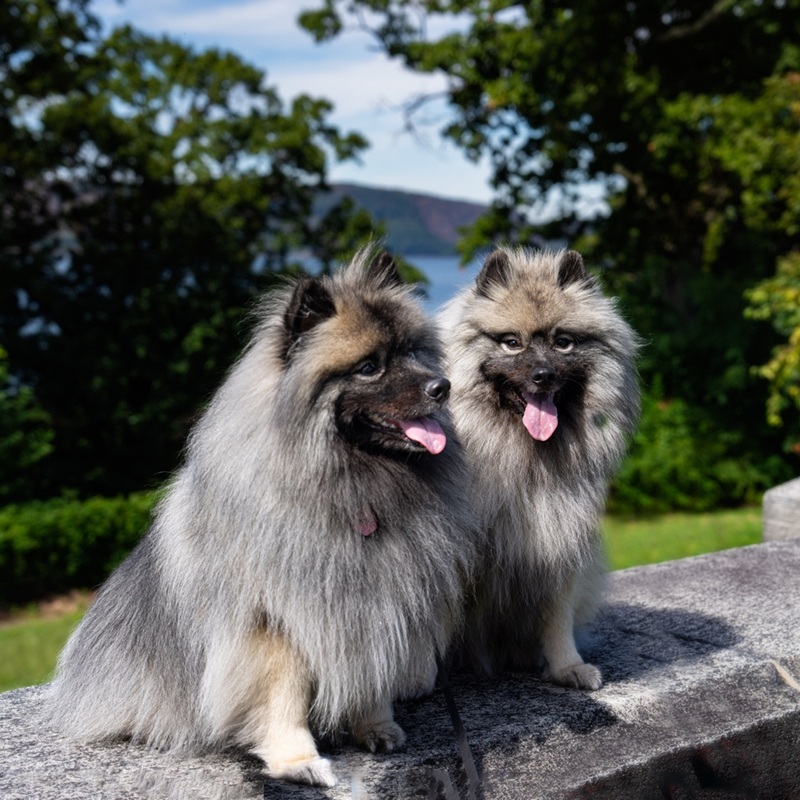
Wolfspitz - KeeshondHistory of the Scottish TerrierThe Wolfsspitz belongs to the German Spitz family and is considered a very old Central European breed. According to the FCI, the German Spitz descends from the Stone Age Torfhund and later the Pfahlbauspitz; in non-German-speaking countries, the Wolfsspitz is also known as the Keeshond.AppearanceThe Wolfsspitz is the largest representative of the German Spitz types. It is characterised by its luxuriant, protruding coat, the strong collar around the neck, the bushy tail carried over the back and the fox-like head with small, close-set ears. Body shape: Compact, harmonious, with a square build and upright, alert appearance.Coat: Very rich, weatherproof and stands out clearly due to the dense undercoat; mane, trousers and bushy tail are particularly striking. Nature/characterThe Wolfsspitz is considered to be alert, lively, very affectionate and extremely watchful. The VDH describes it as a social dog with a close family bond; at the same time, it is a typical guard and companion dog, which attentively reports its home and surroundings.GroomingDespite its thick coat, the Wolfsspitz is considered comparatively easy to care for if it is brushed thoroughly on a regular basis. The coat is functional, dense and often quite dirt-repellent, but requires considerably more grooming, especially when the coat changes.HealthThe FCI standard emphasises that only functionally and clinically healthy, breed-typical dogs should be used for breeding. In practice, this means that attention should be paid to serious breeding, documented health care and good general care. The standard itself does not provide a detailed list of typical breed diseases. EducationThe Wolfsspitz is intelligent and capable of learning, but needs clear, friendly and consistent leadership. Because it can be alert and independent, early socialisation, good everyday rules and controlled handling training with stimuli and visitors are particularly important. What are the special features of this breed?Its strong vigilance, its close bond with the family, its often good local loyalty and its distinctive, lion-like pointed coat are special. Unlike some hunting dogs, the Wolfsspitz is often easier to control in everyday life, but can be quite eager to bark if its alertness is not properly controlled. The VDH Breed Council expressly emphasises the statement on the Wolfspitz's local loyalty and the lack of or low hunting instinct.Suitable for first-time dog owners?Yes, often well suited. The Wolfsspitz can be a good choice for motivated beginners because it is people-orientated, suitable for everyday use and basically easy to handle. However, you should be able to deal with alertness, possible alert behaviour and consistent training. Family dog or not?Yes, very often a good family dog. The VDH expressly describes the Wolfsspitz as a social dog with a close family bond; several VDH sources emphasise it as an affectionate, friendly and alert family companion dog. It is usually very suitable for close involvement in everyday life.
 
Shiba Inu
The Shiba InuHistory of the Scottish TerrierThe Shiba Inu is a very old, original Japanese breed. Its natural habitat was in the mountainous areas around the Sea of Japan. There it was used for hunting birds and small game. The name Shiba originally refers to something small, i.e. a small dog. Over the course of time, the breed became rarer, but was later deliberately preserved and particularly valued in Japan.AppearanceBody shape: The Shiba Inu is a small to medium-sized, well-proportioned, compact and muscular dog. It appears alert, agile and self-assured. Typical features include the wedge-shaped head, the small triangular pricked ears and the tail carried curled over the back or in a sickle shape. Coat: The coat is double-layered. The outer coat is rather hard and straight, the undercoat soft and very dense. Overall, the coat provides good protection against the weather and looks clean, neat and functional.Nature/characterThe Shiba Inu is considered to be alert, courageous, lively and very independent. They can be loyal and affectionate towards familiar people, but often rather reserved towards strangers. Many Shibas are intelligent and clean, but at the same time strong-willed and not always keen to please their humans.GroomingGrooming is usually uncomplicated in everyday life. Regular brushing, about once or twice a week, is often sufficient. However, the Shiba Inu sheds much more when its coat changes, so more frequent brushing is advisable. Overall, the breed is considered to be rather clean.HealthThe Shiba Inu is basically a robust breed, but some health problems do occur. These include allergies, patellar luxation, hip dysplasia and hypothyroidism. Hereditary eye diseases can also play a role. Careful breeding selection and preventive examinations are therefore important.EducationTraining a Shiba Inu requires patience, consistency and a good feel for its character. He learns quickly, but is often independent and likes to test boundaries himself. Pressure or harshness usually achieves little with this breed. Calm, fair and clear training with positive reinforcement works best. Early socialisation and a reliable recall are very important, as many Shibas are motivated to hunt.What are the special features of this breed?The Shiba Inu is characterised by its strong self-confidence, its independence and its often cat-like cleanliness. Many animals show a very individual temperament and like to decide for themselves what they find useful. They also have the typical fox-like appearance with erect ears, curled tail and expressive gaze. Some Shibas are also known for the so-called Shiba cry, a conspicuous sound when they are very angry or upset.Suitable for first-time dog owners?Rather only to a limited extent. A Shiba Inu can also live well with beginners, but is usually not one of the easiest breeds to start with. Its independence, hunting instinct and often low desire to please make training and everyday management more demanding than with many more co-operative breeds. If you prepare well, remain clear and patient and train consistently, you can still get on well with him.Family dog or not? Yes, but not automatically for every family. In a calm, respectful and structured family, the Shiba Inu can be a good companion. However, it is not usually a dog that wants to cuddle all the time or go along with everything calmly. Fair behaviour, clear rules and children who respect his boundaries are important. Then it can prove to be a loyal and pleasant family dog.