
Rodentia 79 - Degus

Article no: rodentia79

CHF 11.50

Stock: 0

Ready for dispatch in 1-3 days, delivery time 7 working days

Delivery between Tuesday, 28 April and Wednesday, 29 April
Zahlungsarten
Product information "Rodentia 79 - Degus"

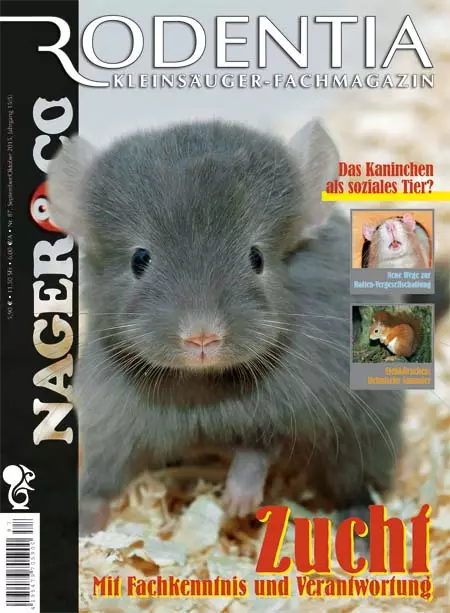
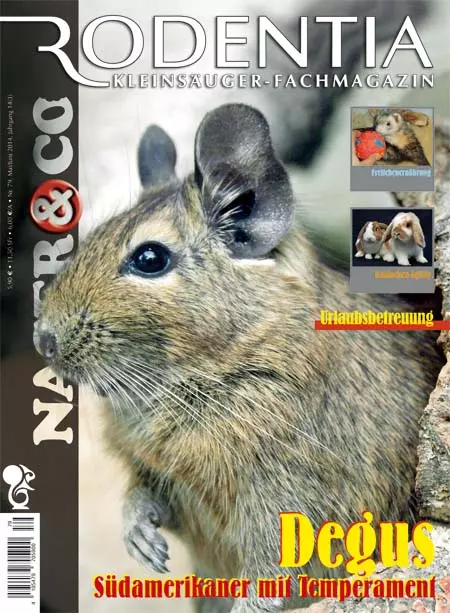
Rodentia 79 - Degus

Ferret nutrition
Rabbit Agility

Contents:

Cover story: Degus. South Americans with temperament
For a long time, degus were overshadowed by gerbils, hamsters and the like, but in the meantime they have conquered a permanent place in the enclosures of many small mammal lovers. Reason enough for us to put the spirited rodents from the Chilean Andes at the centre of our cover story. In this issue of RODENTIA Nager & Co. you can find out what you need to bear in mind when keeping these South American rodents, which are related to guinea pigs, if you want to keep and feed them in a species-appropriate way.

Editorial
Worth knowing
Tips and dates

Title
Half a century: The degu as a pet
Ralf Sistermann  

Title         
My life with degus. Many years of experience with the lively South Americans
Therese Isler       

Title         
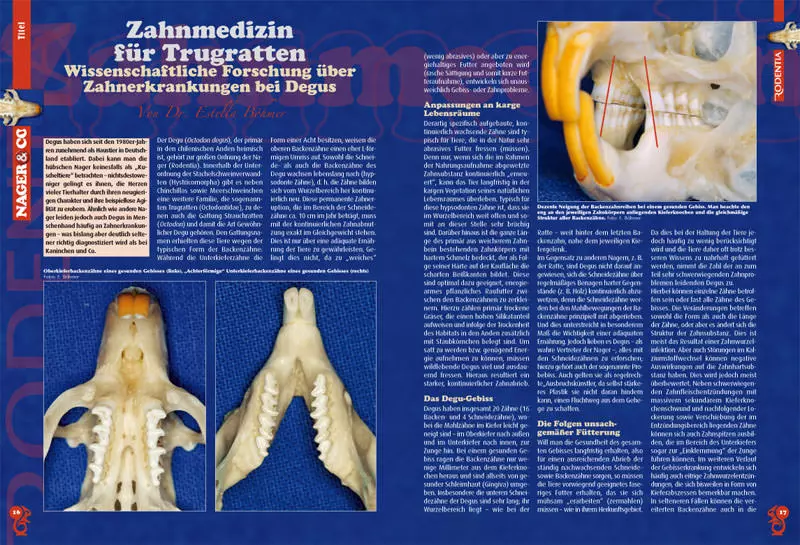
Dentistry for deer rats. Scientific research on dental diseases in degus
Dr Estella Böhmer        

Title         
Species community en miniature. The socialisation of degus with other species
Caroline Altmayer          

Behaviour 
Social skills of guinea pigs. Survivalists in every group
Petra Gemeinhardt        

People and animals 
Off on holiday! Holiday care for rabbits and guinea pigs   
Sonja Tschöpe   

Keeping    
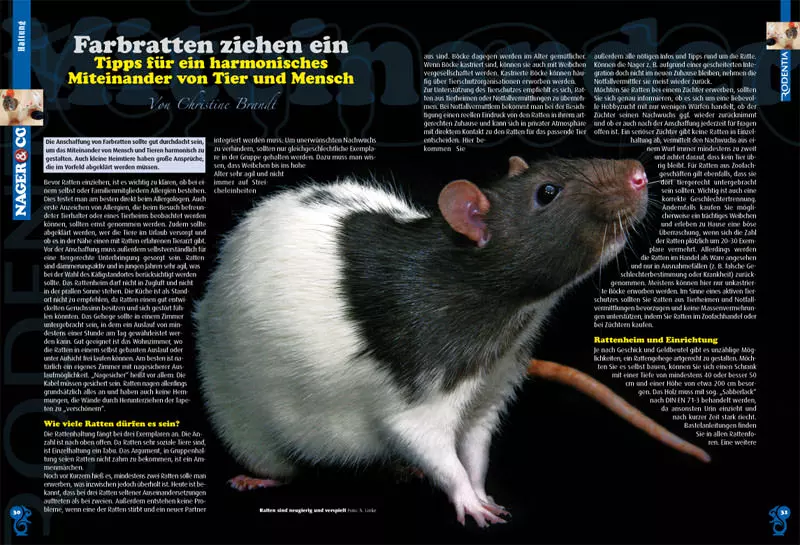
Colour rats move in. Tips for a harmonious coexistence of animals and humans
Christine Brandt 

Keeping    
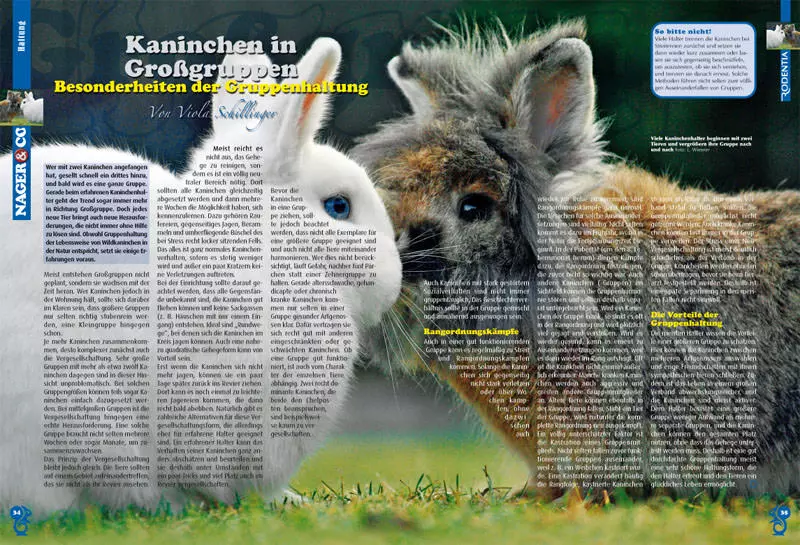
Rabbits in large groups. Special features of group housing
Viola Schillinger

Nutrition
Feeding predators – but how? Feeding ferrets correctly
Sabine Humburg

Bookworm  

People and animals 
When long-eared animals shake a leg. Rabbit-friendly agility and rabbit dancing
Rike Daetz         

service     

Keeping    
House-training for rabbits. A question of education?
Sara Roller         

Medicine   
Head tilt in rabbits
Dr med. vet. Barbara Glöckner

Consultation with Prof Dr Michael Fehr
Internet forums       
Preview 

Last but not least     
Paula at full throttle. Episode 14: The hairstyle fits
Kathrin Aretz

Composition
Feeding recommendation
Technical details
Size information

1 of 1 reviews

4 out of 5 stars


0%

100%

0%

0%

0%


Give us a rating!

Share your experience with the product with other customers.


10 August 2018 19:09

Interesting, insightful...

Interesting, informative magazine

Suggested products
Curious guinea pigs - guide to species-appropriate husbandry
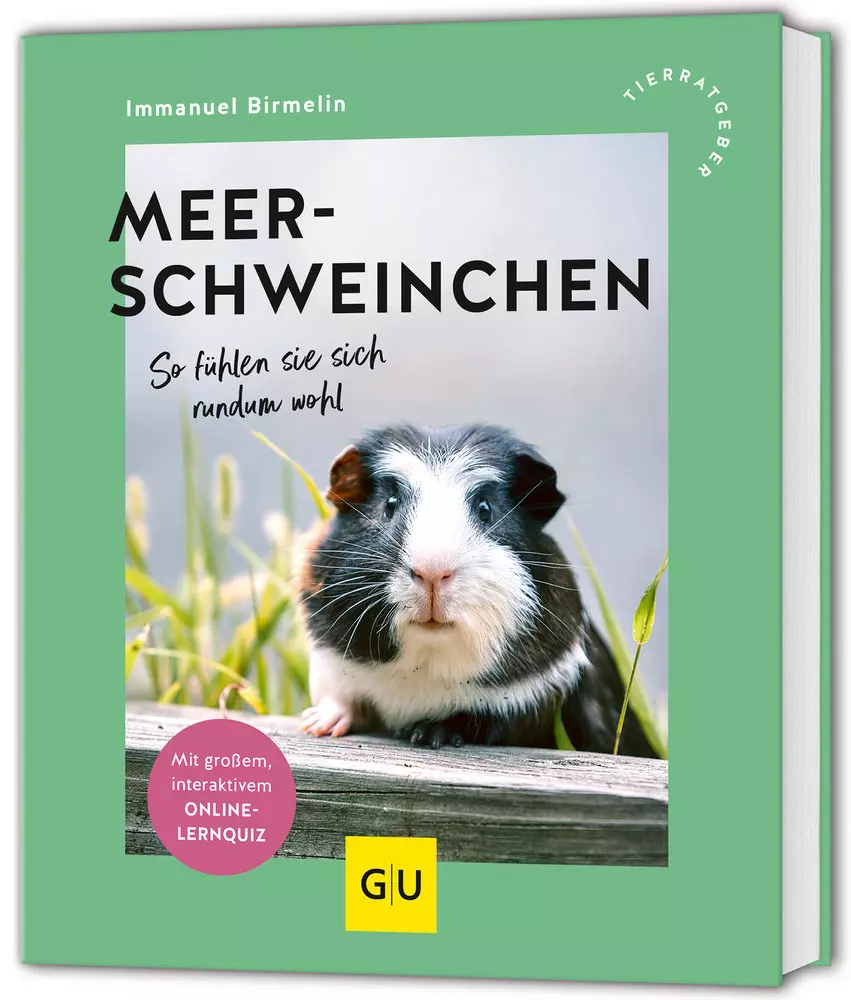
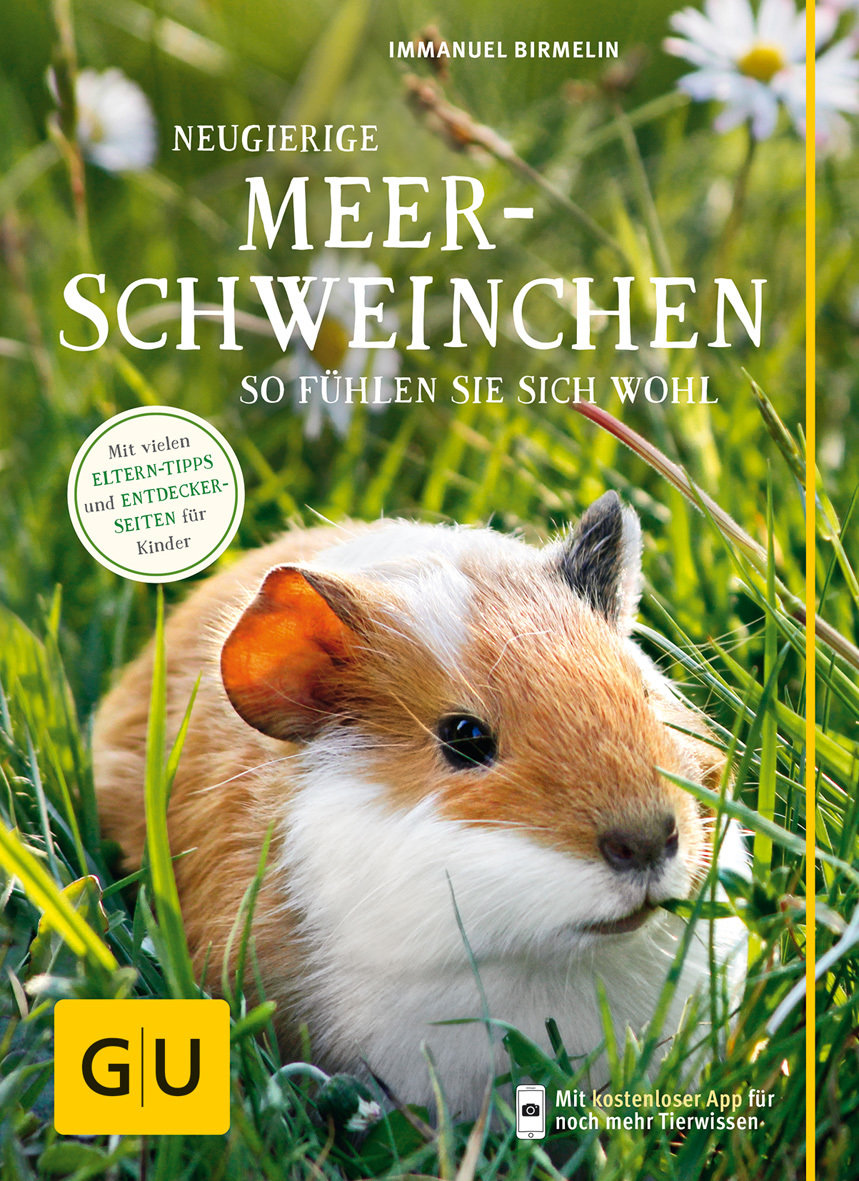
GU Curious guinea pigs - how they feel at home This guide shows what guinea pigs need to feel comfortable in everyday family life - from the right equipment to meaningful activities. With tips for parents and discovery pages, knowledge is conveyed in a way that is easy to understand and suitable for everyday use. Important features Practical guinea pig guide from the GU small animals series With quick start pages, infographics and discovery pages (observation tips/small experiments) Contains tips for parents on how to handle children correctly with the animal Extra: reference to the free GU Pet Plus app Important advantages Helps you to avoid husbandry mistakes so that guinea pigs show typical behavior and feel safe Supports species-appropriate, family-friendly husbandry with clear step-by-step information Promotes activity and observation - ideal if children are to be actively involvedGuinea pigs appear uncomplicated - but in order for them to remain really trusting and show their typical, lively behavior, they need suitable housing conditions. This is exactly where "Curious Guinea Pigs" from the GU Small Animals series comes in: The guide bundles knowledge about a fulfilling guinea pig life and makes it so easy to understand that it can be implemented immediately in everyday life. The author, Dr. Immanuel Birmelin, a well-known behavioral researcher, shares his experiences from years of keeping and researching guinea pigs and explains what is important in practice. You will receive guidance on key topics such as equipment, care and activity - the very things that determine whether your animals feel safe and become active. The book is particularly family-friendly, with quick-start pages for a quick introduction and infographics that show important information at a glance. There are also discovery pages with observation tips and small ideas that encourage children (and adults) to understand guinea pigs better - instead of just "having" them. In addition, tips for parents help children to treat the animals correctly and respectfully. Zoo-Roco tip Guinea pigs are very much group animals: plan the housing from the outset so that your animals have social contact, opportunities to retreat and something to do. If you are unsure whether your enclosure, structure or feeding is suitable, make a note of your questions as you read - this way you can implement the tips in your home.

CHF 21.50

GU Guinea pigs
Guinea pigs - How to make them feel good all roundBlurbEverything beginners and real guinea pig fans need to know about keeping and the special needs of these lively rodents.needs of these lively rodents - so that animals and humans feel at home together under one roof.SummaryAll the basics and practical tips from the experts - for happy rodents Guinea pigs are mainly cute, but boring? Not at all! These little South Americans like to go on voyages of discovery and are also really clever. They love company and prove to be real chatterboxes, squeaking and cooing to keep in constant contact with their conspecifics. In the new, completely revised GU Animal Guide to Guinea Pigs, renowned behavioral scientist Dr. Immanuel Birmelin explains what these cute rodents need to feel completely at ease. Whether it's cage equipment, nutrition, care or health: you will learn everything you need to know about keeping guinea pigs in a species-appropriate way in a quick, clear and entertaining way. There are also numerous tips on how to keep the animals moving in an outdoor enclosure in the home, on the balcony or in the garden and provide plenty of variety in your guinea pigs' everyday lives.Sound expert knowledge:Renowned behaviorist Dr. Immanuel Birmelin explains everything you need to know about guinea pigs, their adorable quirks and how to keep and care for them appropriately. Varied activities: With lots of tips for an exciting and healthy guinea pig life - indoors and outdoors. Practical instructions: With easy-to-understand instructions and practical tips, the book helps you to better understand the needs of guinea pigs and provide them with a home in which they feel completely at ease.

CHF 18.50

Hamster
Hamsters - How to make them feel good all roundBlurbEverything beginners and hamster fans need to know about keeping these small rodents and their special needs - so that animals and humans feel at home together under one roof Summary So your hamster feels completely at ease. Hamsters are real night owls: they only really come to life when it gets dark. Then they climb, burrow and of course "hamster" for all they're worth. In the new, completely revised GU hamster pet guide, you will learn what your hamster needs to feel completely at ease - how to acclimatize it step by step, what it likes and what keeps it healthy and how to satisfy its strong urge to move. You will find lots of ideas for exciting activities and find out how the hamster house and enclosure should look and be equipped to meet the needs of these small rodents. The guide is rounded off with tried and tested tips on selection and purchase, offspring, illnesses and veterinary emergencies. Behavioral scientist Peter Fritzsche also explains typical animal behavior. You can then test your hamster knowledge in the large online hamster quiz and be well prepared for the arrival of your new pet.Comprehensive hamster care: Find out how to keep your hamster happy and healthy from settling in to species-appropriate keeping.Creative activity ideas: Discover numerous ideas on how to encourage your nocturnal hamster's strong urge to move in a sensible and exciting way.Expert knowledge and practical tips: The guide offers practical tips on selection, care and emergencies as well as an online quiz to test and expand your hamster knowledge.

CHF 18.50

Djungarian dwarf hamsters
The Djungarian dwarf hamsterPhodopus sungorus from Zachrau AndreaBlurbThe Djungarian dwarf hamster is one of the smallest pets in the world and takes hearts by storm with its beady eyes, loyal gaze and soft fur. In this guide, you will learn all about the dwarf hamster's distribution and habitat, as well as everything you need to know about enclosure size, furnishings and food. Read everything you need to know to better understand the behaviour of these small rodents and how to prevent diseases. Summary The Djungarian dwarf hamster is one of the smallest pets in the world and takes hearts by storm with its beady eyes, loyal gaze and soft fur. In this guide by Andrea Zachrau, you will learn about the dwarf hamster's distribution and habitat as well as everything you need to know about enclosure size, furnishings and food. Read everything you need to know to better understand the behaviour of these small rodents and how to prevent diseases. Each volume offers you detailed, practical care instructions and you will find all the information you need to successfully breed your animals. All the important questions, from housing to furnishings, technical equipment, species-appropriate nutrition and disease prevention, are answered with numerous tricks and tips. Experienced, long-standing breeders reveal how you can encourage the animals to reproduce and raise the young in good health, all in full colour, generously illustrated and attractively designed - species by species.

CHF 21.50

Guinea pigs
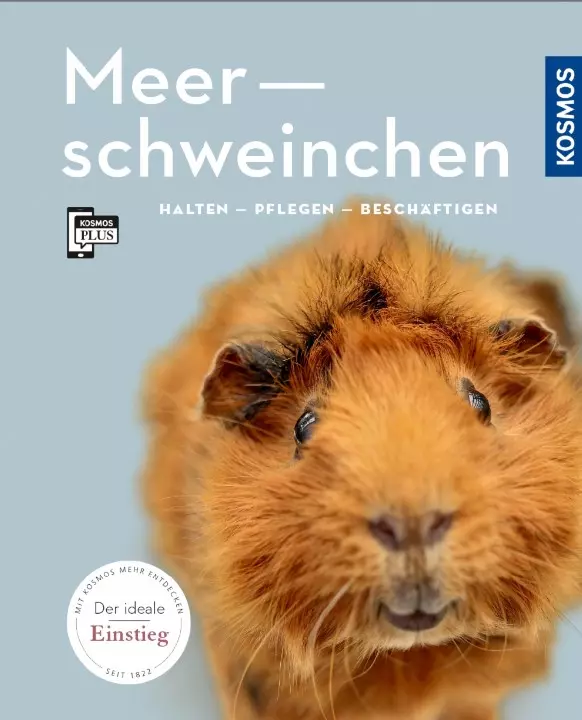
Guinea pigs keeping, caring for and keeping activefrom Beck AngelaBlurbA life in pairs or in a small group, a nice enclosure and daily free run make guinea pigs happy. Optimum husbandry, a healthy diet and an understanding of their nature provide security in their daily life together. A wealth of play ideas provides variety and strengthens the relationship between humans and animals. Everything that is important for species-appropriate keeping: from the selection and housing of guinea pigs to feeding, care and activity. The plus to the book: the free KOSMOS PLUS app with additional information and films.

CHF 14.50

Dwarf rabbit
Dwarf rabbitkeeping, caring for and keeping active from Beck AngelaBlurbPlenty of space to hop around, dig and make hooks, a life in pairs or in a group - that's what makes dwarf rabbits happy. Optimum husbandry, a healthy diet and an understanding of their nature provide security in their daily life together. Many play ideas provide variety and strengthen the relationship between humans and animals. Everything that is important for species-appropriate keeping: from the selection and housing of dwarf rabbits to feeding, care and activity. The plus to the book: the free KOSMOS PLUS app with additional information and films.

CHF 14.50

Atlas plants for pets
Can my cat eat daisies? Is it safe if my Wellensitticham Ficus nibbles? Broken down by wild plants, house and garden plants, fodder plants, herbs, poisonous and medicinal plants are described with which pet animals may come into contact. With advice for individual species.

CHF 21.90

The Persian gerbil
The Persian gerbil book Among the many gerbil species, Persian gerbils are something very special. Their graceful appearance and highly interesting behaviour make the "Persians", as they are affectionately called by many owners, fascinating pets. Due to their curiosity and open-mindedness towards humans, they are also real "heartbreakers" Unfortunately, there is hardly any literature on keeping and breeding these beady-eyed rodents. Author Anne Weber is editor-in-chief of the small mammal specialist magazine RODENTIA and summarises her many years of experience with the care and breeding of "Persians" here. Benefit from her practical tips and detailed husbandry descriptions so that you can enjoy your Persian gerbils right from the start! Contents:Biology,Acquisition,Husbandry,Food and water,Keeping healthy,Fun and games,Offspring

CHF 21.50

Rodentia 01 - Chinchillas
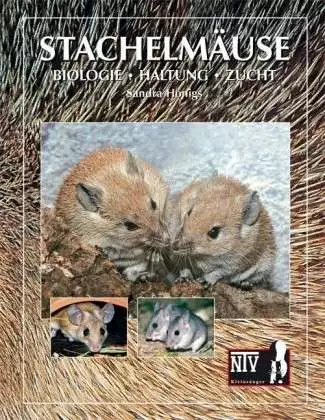
Rodentia 01 - Chinchillas Guinea pigs in the gardenDegus and their relativesSee the most beautiful rats Contents: 2 INTERN 3 EDITORIAL AND ADVISORY BOARD 5 INTERESTING FACTS 11 legal 12 Dates & TIPS 15 MY STORY: Refined guinea pig, by Marion Zeddies 16 PHOTOstory: Chinchillas, by Christian Brüggemann 23 KEEPING AND BREEDING: The keeping of chinchillas, by Anke Suchy 28 REISE: Amy and the chinchillas, by Dr Martina Raffel 34 KEEPING AND BREEDING: Chinchilla colour breeding, by Rebecca Schmidt 38 BIOLOGY: Chinchilla genetics, by Christian Brüggemann 39 POSTER: The Campbell dwarf hamster, by Christian Brüggemann 43 HEIMISCHE TIERWELT: The brown hare gives up the spoons, by Christian Brüggemann 46 REPORTAGE: Guinea pigs in the garden, by Iris Küster 51 KEEPING AND BREEDING: The breeding of Virginia opossums, by Dirk Fußbahn 54 REPORTAGE: See the most beautiful: Rat exhibitions in Germany, by Simone Grigat 58 KEEPING AND BREEDING: Together they are strong: spiny mice, by Frank Böhme & Peter Kneisel 61 KEEPING AND BREEDING: Degus and their relatives, by Sabine Gehrsitz 64 KEEPING AND BREEDING: Persian gerbil, by Michael Herting 66 ZOOLOGISCHE GÄRTEN: The Zoo of Small Mammals: Tierpark Berlin, by Christian Kern 70 SPRECHSTUNDE: Anaesthesia in small rodents and rabbits, by Andreas Küster 73 SCIENCE: What kind of house does the mouse want?, by Lars Lewejohann 76 MAUSKLICK 77 RAT & TAT 78 BOOK REVIEW 80 snickers' wild life: Wild Westphalia, by Christian Brüggemann

CHF 9.80

Rodentia 92 - Long-eared giants
Rodentia 92 - Long-eared Giants Long-eared Giants – Caring for Large Rabbit Breeds The most popular rabbits in German households are the so-called "colour dwarfs"—these small-eared rabbits weigh no more than 1.5 kg and are therefore particularly suitable for keeping indoors. However, in addition to the dwarf rabbits, there is a "colourful" variety of rabbit breeds of all sizes and with different coat types: with a body weight of over 7 kg, German Giants, for example, are among the largest rabbit breeds in the world. In the next main topic of RODENTIA Nager & Co., we want to focus on the fascinating variety of larger rabbit breeds—with exciting articles all about keeping, care, and breeding of "long-eared giants". Contents RODENTIA 92 4          Editorial 5          Worth Knowing 12        Tips and Dates     14        Title                 When the Ears are Larger             Origin and History of Giant Rabbits             by Kerstin Han                                18        Title                 Everything a Size Bigger             Requirements of Large Rabbit Breeds             by Kathrin Hentzschel 22        Title                 Of the Love for Spotted Long-Ears             Interview with Pedigree Rabbit Breeder Jens Jadischke             by Anne Weber        26        Title                 Nutrition of Large Rabbit Breeds             Special Requirements of German Giants and Co.             by Viola Schillinger  29        Reportage                   When is an Animal "Used"?             Legal Matters When Buying Animals              by Sabine Zeh and Dietrich Rössel 33        Keeping                       Happiness is ...             Tips for Keeping Guinea Pigs             by Dr. Marion Reich 37        Commentary                 The "Bad Breeders"             Exotics in Animal Welfare              A Commentary by Christine Nößler           40        Biology                      The Whiskers of Mice and Rats             or: How Does the World Feel?             by Susanne Günther 46        Exotics News 47        Rare Breeding Success in Pied Desert Shrews                         by Matthias Willberg 50        A Home for Strong Diggers             Construction and Structuring of Skunk Enclosures             by Hannes Lüke 55        Service            57        Native Animal World             Always Trouble with the Neighbours              The Brown Rat Draws a Conclusion about Its Life with Humans             by Kerstin Han         60        Medicine                      My Rodent Is Ill              The Patient at Home             by Isabel Müller                   64        Internet Forums  65        Preview        66        Last but Not Least                        Little Rabbit Püppi             Diva Tantrum             by Kathrin Aretz

CHF 11.50

Rodentia 71 - Dipodids
Rodentia 71 - Jumping Mice White-eared opossumHibernation of prairie dogs Contents: Cover story: Jumping miceJaculus jaculus, the Small Desert Jerboa, is THE jumping mouse par excellence – and the only representative of the Dipodidae family to have established itself for some time now in the terrariums of European small mammal enthusiasts. While successful breeding of J. jaculus is now regularly achieved, rearing Greater Desert Jerboas (Jaculus orientalis) remains tricky, whereas it has not yet been successful in other highly interesting species such as the Four-toed Jerboa (Allactagatetradactyla) or the Baluchistan Dwarf Jumping Mouse (Salpingotus michaelis). The title animals of the next issue of RODENTIA Exoten have therefore still kept many secrets to themselves – one reason why we are putting the Dipodidae family, which by the way also includes the lesser-known birch mice and jumping mice, at the centre of our next issue. ContentsInternalMagazineDates & Tips Photo storyJumping mice – Quirky hoppersBjörn Jordan Breeding  Successful breeding of the Small Desert Jerboa (Jaculus jaculus)Björn Jordan BiologyThe Long-eared Jerboa, Euchoreutes naso – an insectivorous rodent of Central AsiaDr. Annegret Stubbe, Prof. Dr. Michael Stubbe, Nyamsuren Batsajchan, Prof. Dr. Ravchig Samjaa, Ellen Driechciarz & René Driechciarz Keeping          Tricky Jewels – Jumping mice at the Berlin Zoo     Klaus Rudloff Keeping    A legend without a happy end. Keeping the Baluchistan Dwarf Jumping MouseRalf Sistermann Keeping & Breeding         Big leaps. Keeping and breeding of the Greater Desert JerboaRalf Sistermann Reportage  The Natural History Museum of London. A mecca for nature loversSandra Honigs PortraitThe arctic fox (Vulpes lagopus)Kathrin Aretz Keeping and breeding  From the lives of “Gurt” and “Schnalle”. Successful breeding of Southern Three-banded Armadillos (Tolypeutes matacus) in the “Prof. Brandes House” of Dresden ZooAnne Weber KeepingRest in peace. Various methods of hibernation of black-tailed prairie dogsRalf Sistermann Subscription & Service BreedingGenets – Pure breeding with difficultiesRalf Sistermann BiologyLoss of habitat and isolation. The Brush-tailed Rock-wallaby (Petrogale penicillata) in its fight for survivalBirgit Braun BiologyThe true prehensile-tailed porcupine – Quirky rodent from South AmericaKathrin Aretz Keeping and breeding“Heidi’s” little cousin – the white-bellied opossumRalf Sistermann Expedition RodentiaThe call of the indri. A journey through the national parks of MadagascarPeter Stange Classified ads/Internet forums for small mammal keepers Preview Animal & HonestAn armadillo, an armadillo!Christian Ehrlich

CHF 18.50

Rodentia 72 - Animal Hoarding
Rodentia 72 - Animals Hoarding Fun and games for rabbitsNutrition for coloured rats Contents: Cover story: Animals HoardingRecently, there have been more and more reports of what is known as "Animals Hoarding", where animals of various species are collected and then kept in catastrophic conditions due to the excessive demands on the animal hoarder. More and more often, animal welfare organisations have to intervene in such cases and take on hamsters, guinea pigs, rats and other small mammals. But what are the causes of this pathological passion for collecting on the part of individuals? In the cover story of the next issue of RODENTIA – Nager & Co., we will get to the bottom of this question and at the same time try to point out possible solutions. EditorialWorth knowingTips and dates My StoryOld hare and young hopperKerstin Han TitleA path without a way out? Why people become animal hoarders – and how they can be helpedKerstin Han TitleHamsters in distress. Two examples of Animals HoardingGudrun Cappeller  TitleAnimals Hoarding  "scientifically" illuminated. Figures, data, facts?Ralf Sistermann BehaviourBilateral relationships. Socialisation of gerbilsRalf Sistermann   CareWhat ferrets need. Small predators with big demands  Sabine Humburg HomemadeFunny Bunny. Fun and games for rabbitsKarina Niemeczyk  Animal portraitThe dwarf fox rabbit. (Oryctolagus cuniculusf. dom.)#Kathrin Aretz     NutritionIndoor fresh food: new indoor food plants for chinchillas and degus. Part 1David Küpfer CareThe Asian chipmunk (Eutamias sibiricus) in outdoor husbandryVirginia Lauterbach     Active reader NutritionSet the table! Feeding coloured rats in an animal-friendly wayStefanie Hotze    Service CareFree range for guinea pigs. More variety in the free runDr. Marion Reich BehaviourClicker training for everyone! Part 2: Handling trainingBina Lunzer MedicineDiseases of the female rabbitDr. med. vet. Jennifer Nehls Consultation with Prof. Dr. Michael Fehr Internet forums Preview Last but not leastPaula at full throttle. Episode 9: Child in the houseKathrin Aretz

CHF 10.90

Customers also saw

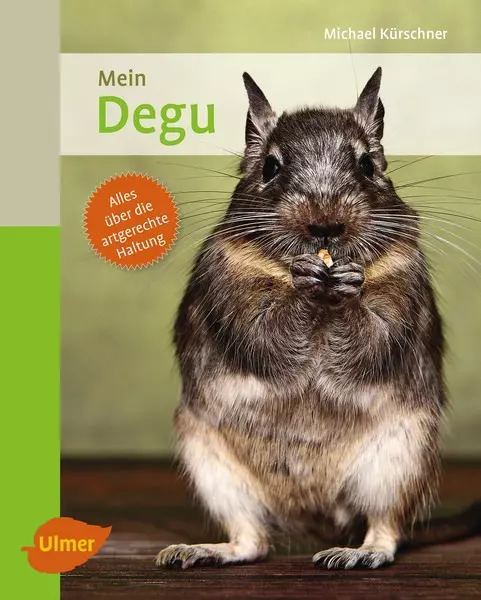
Ulmer My Degu - Michael Kürschner
My degu home. A guide to species-appropriate keeping. Origin Classification Considerations before buying Acquisition Care and housing Attitude Nutrition Behaviour Health Breeding ... It never gets boring or monotonous with degus! Degus are extremely active contemporaries who give their owners a lot of pleasure. However, they are not undemanding pets - a sound basic knowledge of keeping degus is important to keep these rodents fit and healthy. This guide answers all your questions about degus: from buying them to keeping them appropriately, caring for them, feeding them, their behaviour, how to keep your degus healthy and how to create a varied and species-appropriate enclosure for your degus.Michael KürschnerMichael Kürschner is an animal book author specialising in small mammals and dogs. He discovered degus in 1989. He is still fascinated by these small rodents, with whom there is never a dull moment.

CHF 10.90

Cork Trunk - decorative item
Variant: Cork Trunk 1
Cork Trunk from HOBBY This cork trunk is available in three sizes, has a natural look and is suitable for both aquarium and terrarium inhabitants.The Cork Trunk in a natural cork look with hiding places for aquarium and terrarium inhabitants.It is almost indistinguishable from real cork and is ideal for the natural design of aquariums and terrariums. Due to its structure, it promotes the natural behaviour of the animals.This decorative item is very durable and is an absolute eye-catcher in any aquarium or terrarium. Equally suitable for aquariums and terrariums looks deceptively real thanks to its particularly natural appearance does not affect the chemistry or clarity of the water easy to clean Sizes:Cork Trunk 1 = 9.5 x 7 x 33.5 cmCork Trunk 2 = 9.5 x 6.5 x 21 cmCork Trunk 3 = 14 x 11.5 x 51 cm

Variants from CHF 17.90
CHF 19.90

Degu
The degu Degus originate from Chile and are found in the high plateaus and low mountain ranges of Chile at altitudes up to 1,200 metres. They prefer open landscapes that are easy to survey.Degus are very social animals and live in family groups of 5 to 12 animals. These include several males, which live together in harmony and defend the "family territory" against neighbouring degu groups.Degus mark their territory with scent marks from urine. For example, they mark stones or the sand bathing area. Females often give birth in the same underground nest. This results in all the young having the same nest scent and therefore being suckled indiscriminately by any female. Degu care: A commercially available cage is not suitable for housing degus. On the one hand, a great deal of bedding would fall out, as degus love to dig and naturally throw the bedding around. On the other hand, the commercially available small animal enclosures have a plastic base tray, which a degu can gnaw through in a very short time. We recommend a small animal aviary, as this best meets the requirements of degus. As an alternative, an aquarium/terrarium can also be chosen.Whether aquarium, terrarium or room aviary, the main deciding factor is above all the species-appropriate size of the accommodation. In general, it is said that the size for the base area of the accommodation should be 100x50cm if you keep two degus. But the principle always applies: the bigger, the better! Then the animals have more space to move and run around, and a larger home can also be made much more attractive.Degus must have a digging layer of 30cm of bedding available. Legal requirements: Enclosure at least 100x50x70cm for 5 animals (not our recommendation) Bedding height 30cm Hiding places for all animals Coarse-structured food: hay or straw fresh branches Sand bath Group housing Cage equipment includes: Thick branches for walking on and gnawing Stones for sharpening claws Sleeping houses as vantage points: Wooden houses are unsuitable due to the degus’ strong gnawing drive. Bricks stacked on top of each other, covered above with a large stone slab (e.g. slate), are better. But pay attention to safety, because a collapse could injure your degu. Perches as viewing points and to enlarge the floor area of the cage Sand bath: Like a chinchilla, a degu also needs a regular sand bath to clean its coat. Once a day, you should give it about 15 minutes for this. Therefore, leave a place in the terrarium free where you can place the bath. Do not leave the "bathtub" in there all the time as it will become dirty too quickly. If you use a wire cage, you could get a chinchilla bathtub to hang in, as these are equipped with a removable lid. Water bowl: Nipple drinkers are not particularly suitable as they are made of plastic and, in the presence of a degu, they leak very quickly. The very sturdy hard plastic drinkers are also not particularly suitable for degus. Also, they are difficult to fix in a terrarium. So better use a stone bowl as well. Change water regularly Food bowl: Ideally a heavy porcelain bowl that cannot be pushed or knocked over. But it should not be too small so that several degu group members can feed from it at the same time. Placing the bowl on the floor is not advisable, as degus love to scratch and dig. It is best to place it on the sleeping house roof so that dirt does not get in so quickly. Food: When buying food, the general rule is that you should buy a maximum of 2 - 3 months’ supply, otherwise the vitamin content will decrease rapidly. Get used to a regular rhythm for feeding. Your pet will get used to the times very quickly and will soon look forward to them. Basic foodDegus are given a special degu food mix. RoughageHay: Make sure your animals always have enough hay in the cage. In the wild, they mainly eat meagre food such as grasses or bark. Therefore, hay is actually closest to their natural diet. Degus eat correspondingly large amounts of it. It also serves as nesting material. Green foodAs a general rule, green food must always be thoroughly washed and then carefully dried.Vegetables: carrots, cauliflower, cucumber, lettuceNatural food: in the form of branches (only hardwood such as some from fruit trees, beech, birch or hazelnut), do not collect near busy roads.Degus are prone to diabetes. Even small amounts of fruit can already cause diabetes. Please only feed vegetables and herbs! TreatsTo satisfy the degus’ urge to gnaw, they are regularly given fresh twigs, which are very happily accepted. The bark provides every degu with a tasty change. You will also find plenty of treats in pet stores. With various dried herbs and special degu snacks, you can spoil your degus! Breeding: If you want to breed degus, here you will find the most important facts that you should be familiar with before starting breeding. Sexual maturity: This occurs in females at about two months of age, in males at about three months. However, it may also occur later, for which individual differences may be responsible.  Gestation period: It lasts about three months. That is quite a long time for such a small animal. Even guinea pigs have a shorter gestation period. But degu young are already well developed at birth. They are hairy and have their eyes half or fully open, in contrast to mouse or hamster young, which are born naked and blind.  Number: A litter usually consists of four to six young. However, there are also huge litters with up to ten young. These are rather rare and usually only grow up so large if there is a second lactating female present, as degu females only have eight teats.  Regular costs (per month/for 2 animals): Food: approx. Fr.30.-- Bedding and hay: approx. Fr. 50.-- Vet: The more animal-friendly and cleaner the keeping, the less likely a visit to the vet will be necessary. Nevertheless, you must always expect that an animal may become ill and thus incur additional costs. Before deciding on degus, you should definitely have read a relevant specialist book.The following applies to all animal keeping: Children (including adolescents) must be guided, supervised and checked by parents. Children should know that animals are not toys!For questions and problems, our trained team at Zoo Roco is at your disposal. They can advise you professionally on all questions.
 
Moderna transport box Top Runner
Size (1): L | Size (4): L
Top Runner transport box for rodents, cats and small dogs Constant flow of fresh air through the many openings With an easy to carry handle Easy to clean with warm soapy water High-quality plastic for long-lasting use Top opening Extra opening flap in the lid Transparent lid maximises comfort Dimensions Medium L 38.4 x W 28.9 x H 25.2 cmDimensions Large L 47.8 x W 36.3 x H 31.3 cm Colour: Grey

CHF 17.90