Icelandic dog
The Icelandic Hound
History of the Icelandic Hound
The Icelandic Hound is the only recognized dog breed in Iceland. Its ancestors probably came to Iceland with the Vikings and were used there for centuries as versatile herding and farm dogs. The harsh climate and work with sheep and on remote farms had a strong influence on the breed. To this day, the Icelandic Hound is regarded as an original, robust Nordic herding spitz.
Appearance
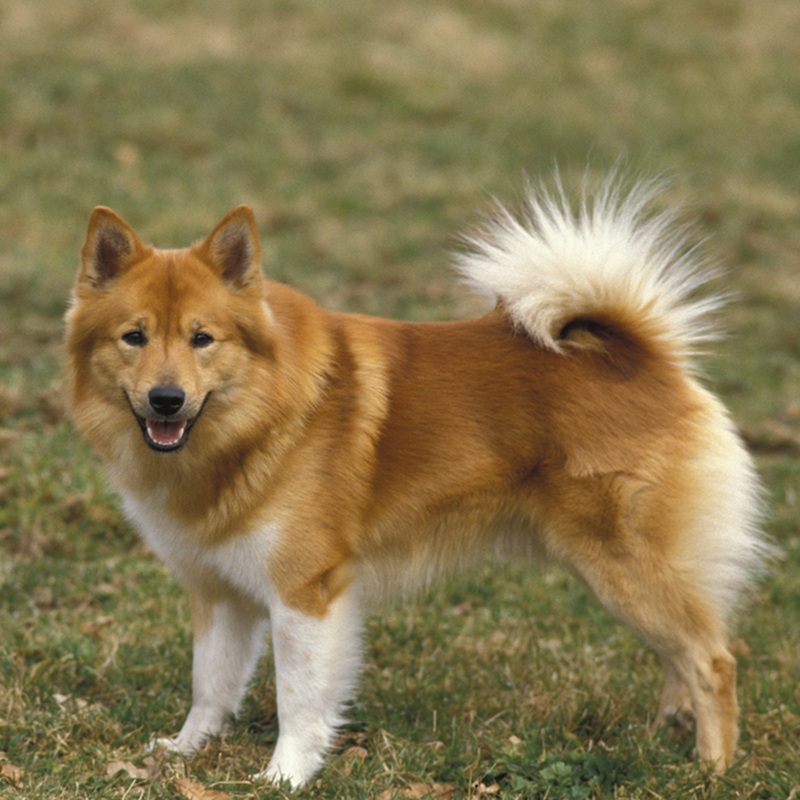
Body shape: The Icelandic Hound is of medium size, rectangular in build and strong without appearing heavy. Typical features are the upright ears, the tail curled over the back and the alert, friendly expression. It appears agile, sure-footed and robust.
Coat: The coat is very dense and weatherproof. There is a short-haired and a long-haired variety, both with a dense undercoat. The coat reliably protects against wetness, wind and cold and is therefore very well suited to the breed's origins.
Nature/character
The Icelandic Hound is considered to be cheerful, attentive, friendly and self-confident. It is very people-oriented, curious and usually open in contact. At the same time, it is alert and often barks, which is typical of a Hütespitz. He is usually affectionate, playful and cooperative with his family.
Grooming
Despite its abundance, the coat is usually quite easy to care for as long as it is brushed regularly. However, a lot of hair accumulates during the shedding period, so daily brushing and combing is advisable. Ears, claws, teeth and paws should also be checked regularly.
Health
The Icelandic Hound is generally considered to be a robust and hardy breed. Nevertheless, as with any breed, attention should be paid to responsible breeding, good weight management and regular veterinary checks. As with other medium-sized dogs, joint or eye problems can play a role in individual lines, even though the breed as a whole is considered to be comparatively pristine and functional.
Training
Training is often easy because the Icelandic Hound is usually cooperative, intelligent and people-oriented. However, it is important to steer their pronounced barking tendencies in a sensible direction right from the start. He needs clear rules, friendly consistency, early socialization and sufficient mental and physical activity. With suitable exercise, it is generally a pleasant and active companion.
What are the special features of this breed?
What is special about this breed is its original character as a Nordic Hütespitz. The Icelandic Hound is the only recognized dog breed in Iceland and is very alert, loves to move and loves to bark. Its friendly openness, robustness and often very good adaptation to active family life are also typical. The combination of spitz type, herding behavior and cheerful temperament makes him special.
Suitable for first-time dog owners?
Yes, the Icelandic Hound is often well suited to committed first-time dog owners. They are usually friendly, eager to learn and cooperative. However, you should not underestimate their barking nature and their need for exercise and activity. If you are prepared to put some effort into training and exercise, this breed can do very well.
Family dog or not?
Yes, the Icelandic Hound is generally a very good family dog. They are usually friendly, playful, affectionate and like to be close to their humans. They are particularly well suited to active families who enjoy exercising together and have a lively, attentive dog. However, because of his barking and temperament, he also needs clear structures in everyday family life.
Login
Suggested products




Customers also saw