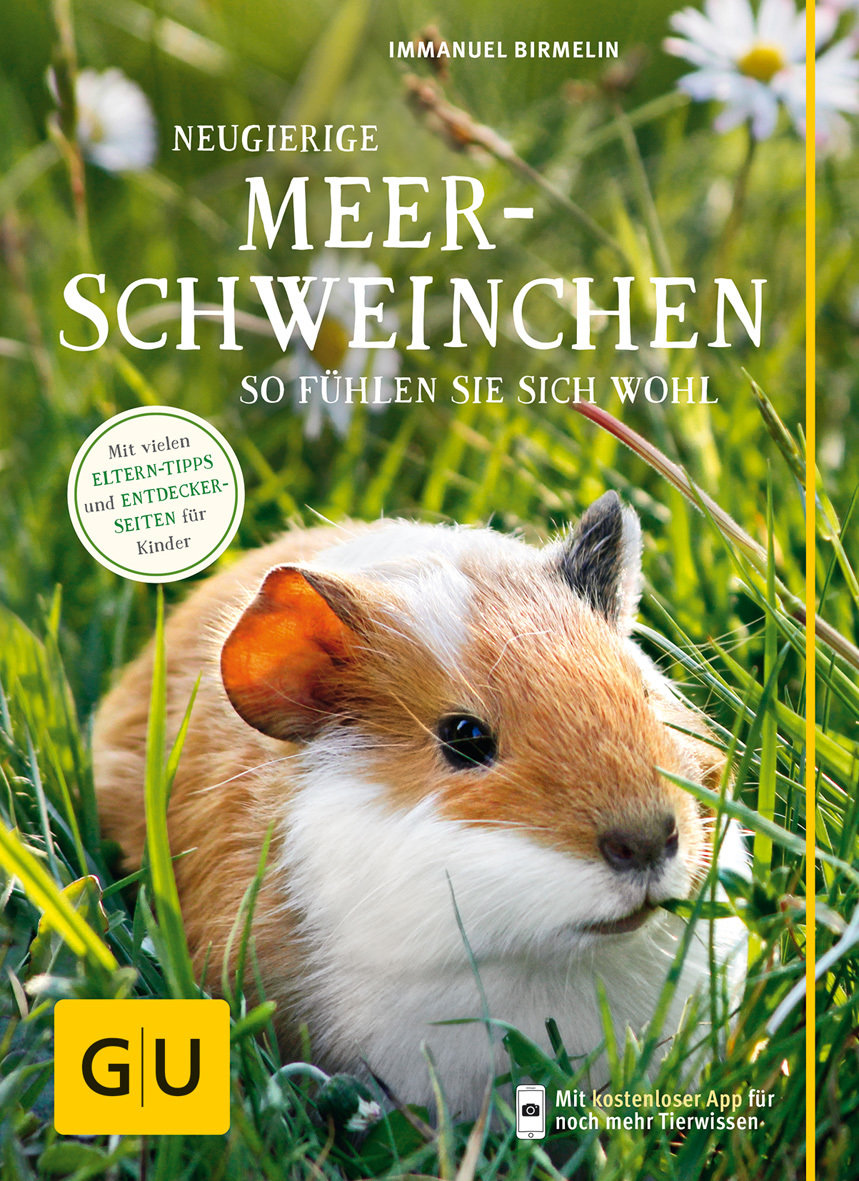
GU Curious guinea pigs - how they feel at home
This guide shows what guinea pigs need to feel comfortable in everyday family life - from the right equipment to meaningful activities. With tips for parents and discovery pages, knowledge is conveyed in a way that is easy to understand and suitable for everyday use.
Important features
Practical guinea pig guide from the GU small animals series
With quick start pages, infographics and discovery pages (observation tips/small experiments)
Contains tips for parents on how to handle children correctly with the animal
Extra: reference to the free GU Pet Plus app
Important advantages
Helps you to avoid husbandry mistakes so that guinea pigs show typical behavior and feel safe
Supports species-appropriate, family-friendly husbandry with clear step-by-step information
Promotes activity and observation - ideal if children are to be actively involvedGuinea pigs appear uncomplicated - but in order for them to remain really trusting and show their typical, lively behavior, they need suitable housing conditions. This is exactly where "Curious Guinea Pigs" from the GU Small Animals series comes in: The guide bundles knowledge about a fulfilling guinea pig life and makes it so easy to understand that it can be implemented immediately in everyday life.
The author, Dr. Immanuel Birmelin, a well-known behavioral researcher, shares his experiences from years of keeping and researching guinea pigs and explains what is important in practice. You will receive guidance on key topics such as equipment, care and activity - the very things that determine whether your animals feel safe and become active. The book is particularly family-friendly, with quick-start pages for a quick introduction and infographics that show important information at a glance. There are also discovery pages with observation tips and small ideas that encourage children (and adults) to understand guinea pigs better - instead of just "having" them. In addition, tips for parents help children to treat the animals correctly and respectfully.
Zoo-Roco tip
Guinea pigs are very much group animals: plan the housing from the outset so that your animals have social contact, opportunities to retreat and something to do. If you are unsure whether your enclosure, structure or feeding is suitable, make a note of your questions as you read - this way you can implement the tips in your home.
Hamsters - How to make them feel good all roundBlurbEverything beginners and hamster fans need to know about keeping these small rodents and their special needs - so that animals and humans feel at home together under one roof Summary So your hamster feels completely at ease. Hamsters are real night owls: they only really come to life when it gets dark. Then they climb, burrow and of course "hamster" for all they're worth. In the new, completely revised GU hamster pet guide, you will learn what your hamster needs to feel completely at ease - how to acclimatize it step by step, what it likes and what keeps it healthy and how to satisfy its strong urge to move. You will find lots of ideas for exciting activities and find out how the hamster house and enclosure should look and be equipped to meet the needs of these small rodents. The guide is rounded off with tried and tested tips on selection and purchase, offspring, illnesses and veterinary emergencies. Behavioral scientist Peter Fritzsche also explains typical animal behavior. You can then test your hamster knowledge in the large online hamster quiz and be well prepared for the arrival of your new pet.Comprehensive hamster care: Find out how to keep your hamster happy and healthy from settling in to species-appropriate keeping.Creative activity ideas: Discover numerous ideas on how to encourage your nocturnal hamster's strong urge to move in a sensible and exciting way.Expert knowledge and practical tips: The guide offers practical tips on selection, care and emergencies as well as an online quiz to test and expand your hamster knowledge.
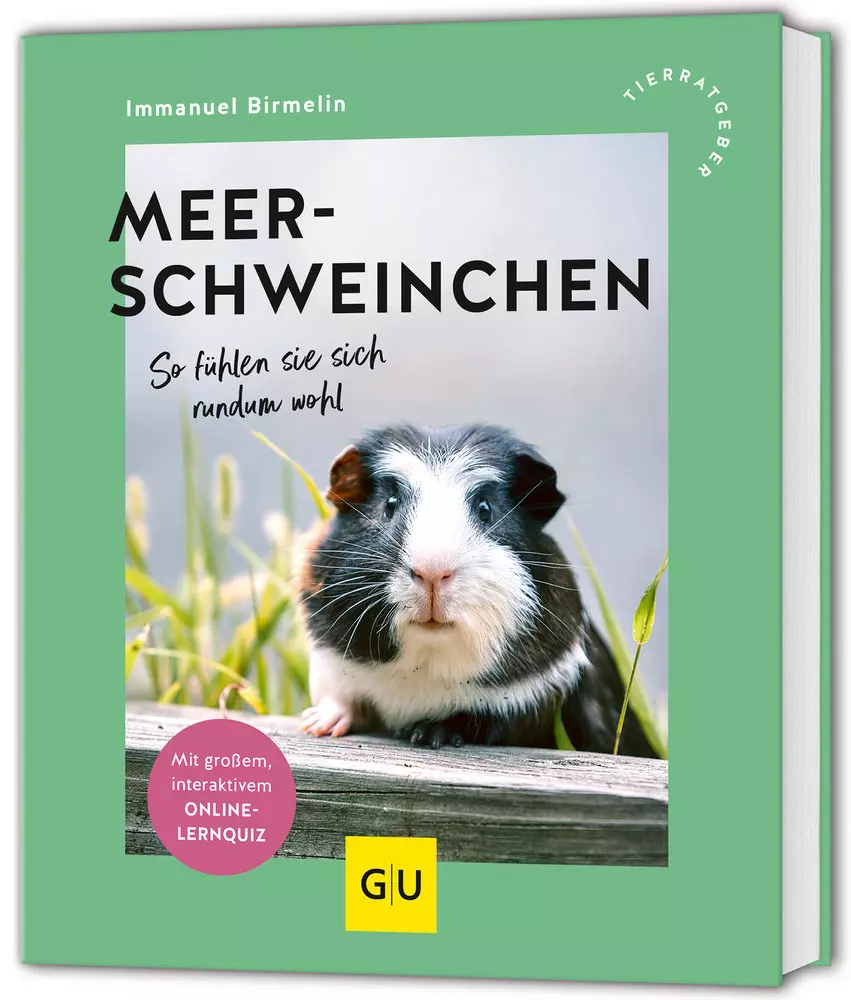
Guinea pigs - How to make them feel good all roundBlurbEverything beginners and real guinea pig fans need to know about keeping and the special needs of these lively rodents.needs of these lively rodents - so that animals and humans feel at home together under one roof.SummaryAll the basics and practical tips from the experts - for happy rodents
Guinea pigs are mainly cute, but boring? Not at all! These little South Americans like to go on voyages of discovery and are also really clever. They love company and prove to be real chatterboxes, squeaking and cooing to keep in constant contact with their conspecifics.
In the new, completely revised GU Animal Guide to Guinea Pigs, renowned behavioral scientist Dr. Immanuel Birmelin explains what these cute rodents need to feel completely at ease. Whether it's cage equipment, nutrition, care or health: you will learn everything you need to know about keeping guinea pigs in a species-appropriate way in a quick, clear and entertaining way. There are also numerous tips on how to keep the animals moving in an outdoor enclosure in the home, on the balcony or in the garden and provide plenty of variety in your guinea pigs' everyday lives.Sound expert knowledge:Renowned behaviorist Dr. Immanuel Birmelin explains everything you need to know about guinea pigs, their adorable quirks and how to keep and care for them appropriately.
Varied activities: With lots of tips for an exciting and healthy guinea pig life - indoors and outdoors.
Practical instructions: With easy-to-understand instructions and practical tips, the book helps you to better understand the needs of guinea pigs and provide them with a home in which they feel completely at ease.
Guinea pigs keeping, caring for and keeping activefrom Beck AngelaBlurbA life in pairs or in a small group, a nice enclosure and daily free run make guinea pigs happy. Optimum husbandry, a healthy diet and an understanding of their nature provide security in their daily life together. A wealth of play ideas provides variety and strengthens the relationship between humans and animals.
Everything that is important for species-appropriate keeping: from the selection and housing of guinea pigs to feeding, care and activity. The plus to the book: the free KOSMOS PLUS app with additional information and films.
Dwarf rabbitkeeping, caring for and keeping active from Beck AngelaBlurbPlenty of space to hop around, dig and make hooks, a life in pairs or in a group - that's what makes dwarf rabbits happy. Optimum husbandry, a healthy diet and an understanding of their nature provide security in their daily life together. Many play ideas provide variety and strengthen the relationship between humans and animals.
Everything that is important for species-appropriate keeping: from the selection and housing of dwarf rabbits to feeding, care and activity. The plus to the book: the free KOSMOS PLUS app with additional information and films.
The Djungarian dwarf hamsterPhodopus sungorus from Zachrau AndreaBlurbThe Djungarian dwarf hamster is one of the smallest pets in the world and takes hearts by storm with its beady eyes, loyal gaze and soft fur. In this guide, you will learn all about the dwarf hamster's distribution and habitat, as well as everything you need to know about enclosure size, furnishings and food. Read everything you need to know to better understand the behaviour of these small rodents and how to prevent diseases.
Summary
The Djungarian dwarf hamster is one of the smallest pets in the world and takes hearts by storm with its beady eyes, loyal gaze and soft fur. In this guide by Andrea Zachrau, you will learn about the dwarf hamster's distribution and habitat as well as everything you need to know about enclosure size, furnishings and food. Read everything you need to know to better understand the behaviour of these small rodents and how to prevent diseases. Each volume offers you detailed, practical care instructions and you will find all the information you need to successfully breed your animals. All the important questions, from housing to furnishings, technical equipment, species-appropriate nutrition and disease prevention, are answered with numerous tricks and tips. Experienced, long-standing breeders reveal how you can encourage the animals to reproduce and raise the young in good health, all in full colour, generously illustrated and attractively designed - species by species.
Can my cat eat daisies? Is it safe if my Wellensitticham Ficus nibbles? Broken down by wild plants, house and garden plants, fodder plants, herbs, poisonous and medicinal plants are described with which pet animals may come into contact. With advice for individual species.
The Persian gerbil book Among the many gerbil species, Persian gerbils are something very special. Their graceful appearance and highly interesting behaviour make the "Persians", as they are affectionately called by many owners, fascinating pets. Due to their curiosity and open-mindedness towards humans, they are also real "heartbreakers" Unfortunately, there is hardly any literature on keeping and breeding these beady-eyed rodents. Author Anne Weber is editor-in-chief of the small mammal specialist magazine RODENTIA and summarises her many years of experience with the care and breeding of "Persians" here. Benefit from her practical tips and detailed husbandry descriptions so that you can enjoy your Persian gerbils right from the start! Contents:Biology,Acquisition,Husbandry,Food and water,Keeping healthy,Fun and games,Offspring
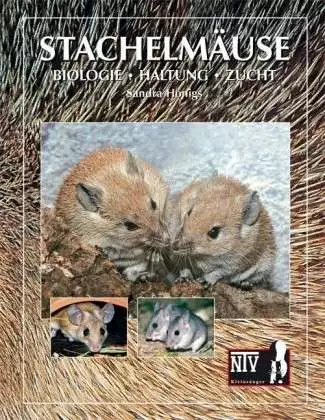
NTV Spiny mice by Sandra Honigs
80 pages
82 colour photos
Format: 16.8 x 21.8 cm
Contents:
Spiny mice are in vogue: More and more animal lovers are becoming interested in these interesting rodents with their unusual appearance and exciting family behaviour.Sandra Honigs, a qualified biologist and well-known rodent expert, provides the reader of this guidebook with everything worth knowing about the biology, keeping and breeding of the various spiny mouse species in an easy-to-understand and extremely expert manner.
Press reviews:
This book serves as a treasure trove of information on this rodent genus for both novice and advanced spiny mouse keepers. It offers a wealth of useful knowledge on the biology, species-appropriate keeping and breeding of the eight most commonly kept spiny mouse species.
Brilliantly illustrated and of consistently high quality! Divided into diverse chapters ranging from social behaviour to breeding.
Zoologischer Zentral Anzeiger 3/2009
Rodentia 64 - Alternative therapies for rabbitsSecoundhand ChinchillasRat bucksEarly castration for guinea pigsContents:Cover story: Alternative therapies for rabbitsThe demand for alternative healing methods as a supplement to conventional medicine is increasing more and more in animal husbandry. Depending on the type of illness and especially in the case of behavioural problems, many rabbit owners now seek advice from a veterinary practitioner. Alternative treatment methods such as homeopathy, homotoxicology, Bach flowers, Söll salts, acupuncture, phytotherapy, colour light therapy and animal communication are intended to help where conventional veterinary medicine may have reached its limits. Although the effect of alternative medical therapies has not yet been scientifically proven, many pet owners have found that they can contribute to a patient's recovery. The cover story of the next issue of RODENTIA - Nager & Co. will therefore focus on various alternative forms of therapy for rabbits - from the perspective of a veterinary surgeon as well as reports from rabbit owners.EditorialWorth knowingTips and datesMy StoryA wild bunny in distress part 2Cornelia DunkerTitleAlternative therapies for rabbits. Gentle support of the healing powersSonja Tschöpe TitleNaturopathy and alternative medicine for rabbits. Alternative therapies at a glanceKathrin AretzTitle Conventional medicine and/or alternative therapies? From the perspective of veterinary medicineProf Dr Michael FehrAttitudeHomage to rat bucks. Rodents with that certain somethingNadine Markert reportage 110 years Bergzoo Halle (Saale). A portraitAnne Weber Animal portraitThe Dzungarian dwarf hamster in Mandarin Ralf SistermannBehaviourSocialisation of problem mice. Instructions for difficult cases Christine NößlerHealth Early castration of guinea pigs. Pros and consSabrina HerrmannAttitudeAn animal-friendly degu home. What degus really needDagmar Lorenz & Sabine GötzServicesAnimal welfareSecond-hand chinchillas. Small "emergency furs" big time Aleksandra JakubiakBookwormHealthViral and bacterial infections in hamstersDr med. vet. Jennifer NehlsConsultation with Prof Dr Michael FehrActive readerClassifieds/Internet forums Preview Last but not leastPaula at full throttle. Episode 4: Aiming highKathrin Aretz
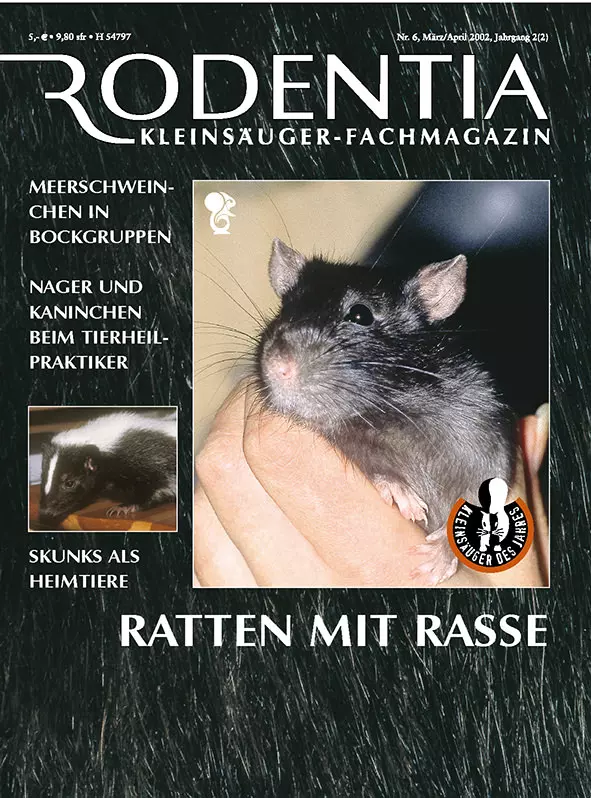
Rodentia 06 - Rats with Breed
Guinea pigs in buck groupsRodents and rabbits at the veterinary naturopathSkunks as pets
Contents:
2 - Internal
3 - External
5 - Interesting facts
11 - New on the market
12 - Dates and tips
15 - My Story: A Doc for 'Mr Neo', by Chrstine Breitkopf
16 - Photostory: Rats with 'Breed', by Christian Ehrlich and Olaf Schwerdtfeger
22 - Current: The 'Federal German Standard for Coloured Rats', by Jessica Nowacki
27 - Keeping and breeding: Rat breeding with 'Heart and Mind', by Simone Grigat
31 - Biology: Theory of heredity in rats, by Olaf Schwerdtfeger
33 - Travel: Mammals between fire and water (Part 2), by Christian Neumann
39 - Poster: The Multi-striped Grass Mouse, by Christian Ehrlich
43 - Keeping and breeding: Male Friendship - Buck keeping in guinea pigs, by Elke Lösch
46 - Keeping and breeding: Mouse meal, by Doris Heinz
49 - Native wildlife: Hedgehogs in the house after hibernation, by Sigrun Goroncy
52 - Current: Breeding guinea pigs: Tans and Foxes, by Gaby Prust
56 - Medicine: Rodents and rabbits at the veterinary naturopath, by Nicola Traeger
60 - Keeping and breeding: A skunk in the house, by Peter Schreier
64 - Science: Fascination with mouse lemurs, by Petra Lahann
67 - Zoological Gardens: Moscow Zoo Park, by Christian Kern
70 - Consultation: Abscesses in guinea pigs and rabbits, by Andreas Küster
72 - Classified ad
74 - Book review
75 - Legal
78 - Also in your neighbourhood
80 - Snickers' Wildlife: Happy Birthday, Snickers, by Christian Ehrlich
And here is an overview of the contents:Photostory: Rats with “Breed”Our big photostory this time shows you the beauty of the not so long popular pet rat in all the pretty colour types and markings that now exist. RODENTIA editor Christian Ehrlich and Olaf Schwerdtfeger also look at the young history of the rat as a pet and point out the latest developments in “Breed” breeding. A feast for the eyes for all lovers of these intelligent rodents! Rat breeding with “Heart and Mind” – The practice of breeding coloured ratsUnfortunately, rats in particular are repeatedly kept and “produced” under unacceptable conditions. Simone Grigat describes in her article on the breeding idea of the “1st Rat Breeding Association in Germany e. V.” (RZV) what a responsible rat breeding system looks like. What qualifications must the breeder have, what is the breeding regulation and breeding licence, registration and protection contract, and why is breeding to order sensible? The author gives detailed answers to all these and more questions and thus paints the picture of an exemplary concept. Genuine rat friends will not want to miss this article!The “Federal German Standard for Coloured Rats”Anyone who wants to breed particularly beautiful animals that meet genetically defined standards in addition to the aims of responsible breeding outlined above will find this article by Jessica Nowacki just right. All the coat variations and colour types mentioned in the German standard of the “1st Rat Breeding Association in Germany e. V.” (RZV) are presented in detail and with wonderful photos, making all rat fans' hearts beat faster! Of course, marking variants, Guide Standard Class and New Varieties are not to be missed. In short: Here you will find everything you need to know for targeted breeding!Male Friendship – On keeping guinea pig bucksPoor guinea pig bucks, what bad things are said about them: They are “urine sprayers”, a nuisance for sensitive noses, eager to bite and not very tame. But Elke Lösch explains how such prejudices came about and why they are by no means true. The author gives tips on what to look out for when setting up the cage in principle and especially what special features should not be ignored in a “male flat”. Her hints for keeping a whole group of bucks make you really curious to observe such “male friendships” among guinea pigs yourself – no fear of males!The hedgehog in the house after hibernationMalnourished hedgehogs should be helped through the cold season in the house. But that's not all: just as important as correct overwintering is to provide hedgehogs with species-specific care after waking up from hibernation. Sigrun Goroncy explains when and with which types of food to start feeding the little spiny knights, points out possible sources of mistakes and offers detailed advice on where it is best to release the hedgehog back into the wild – and above all, where this should not be done under any circumstances. Simply a must-read for all those who really care about these cute little fellows! Rodents and rabbits at the veterinary naturopathAnimal naturopaths and natural remedies – can they be used for rodents?The health of our animals is the most important thing for all of us when keeping our beloved pets. If, despite the best care, one of our fluffy housemates falls ill, good advice is expensive. Phytotherapy, acupuncture, Bach flower therapy, homoeopathy – such alternative methods are increasingly being offered by vets and animal naturopaths. Hocus pocus or a serious form of therapy? The veterinary naturopath Nicola Traeger goes into detail about these and other aspects of modern veterinary medicine and explains how the methods mentioned work, which can be useful for treating your rabbits or rodents. Particularly interesting are the author's tips on how to judge whether your veterinary naturopath really is competent!The skunk in the house – Skunks are becoming increasingly popular as pets“Skunks” in this country have long since ceased to suffer from their once bad reputation, but it is becoming more and more widely known what pleasant and interesting housemates these small predators are. RODENTIA author Peter Schreier, who has long been involved with skunks, first introduces you to the systematics and biology of these animals, before going into detail with words and pictures about keeping and breeding the neatly “dressed” striped skunks. The skunk – still an exotic, but certainly every bit as fascinating and pretty a pet!
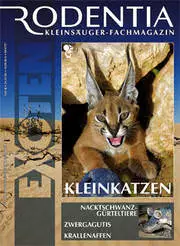
Rodentia 53 - Small cats
Bare-tailed armadilloDwarf agutisClawed monkeys
Contents:
Internal
Magazine
Dates & tips
Photo story
So much for small – Small cats
vy Ralf Sistermann
Biology
Velvet paws of the desert – The small cats of the Arabian Peninsula
vy Bjön Jordan
Biology and keeping
The Asian golden cat (Catopuma temminckii) – Little-known “Lord of all cats”
by Sarah Richter
Biology and keepingThe rusty-spotted cat (Prionailurus rubiginosus) – A cat species rarely kept in zoos
vy Anni Fuchs
Biology
The black-footed cat – A cat with a stubborn head
by Dr Alexander Sliwa
Reportage
“Flying dwarf otter” or: a zoo visit with veterinary students
by Susanne Scholz
Biology
Wetlands in Bogotá. The habitat of the Bogata guinea pig
by Karin Osbahr
Portrait
Eurasian harvest mouse (Micromys minutus)
by Anne Weber
Keeping
For the monkey. Building an enclosure for marmosets
by Sandra Zettner
Domestic wildlife
The nutria (Myogaster coypus Molina, 1782) – A South American conquers Europe
by Andreas Schüring
Reportage
A country full of contrasts – Ecuador between tradition and commerce
vy Marta Cadena Arias
Biology
The gardeners of the rainforest – Dwarf agutis at Aquazoo-Löbbecke Museum Düsseldorf
by Dipl.-Biol. Sandra Honigs
Keeping and breeding
In the shadow of prominent hamster relatives: the Chinese striped hamster (Cricetulus griseus)
by Anne Weber
Biology
Mongooses with stripes – The banded mongoose. Part 1: Way of life and behaviour
by Ralf Sistermann
Keeping and breeding
Funny companions for the terrarium – Cactus mice (Peromyscus eremicus)
by Christine Danzl
Expedition
Rare observations in the nocturnal savannah: the night armadillo (Cabassous unicinctus)
vy Christian Neumann
Classifieds
Subscription & Service
Internet forums for small mammal keepers
Preview
Bokito’s wild life
All paws full
by Steffi Leitner
CHF 18.50
❅
❆
❅
❆
❅
❆
❅
❆
❅
❆
❅
❆
This website uses cookies to ensure the best experience possible. More information...