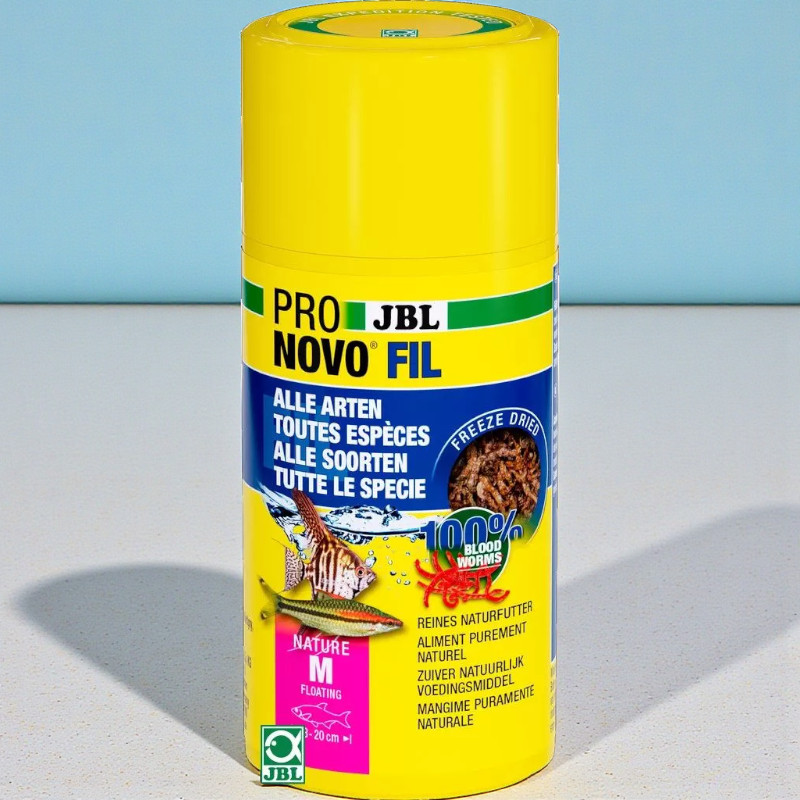
Product information "JBL Pronovo FIL Nature M"
JBL Pronovo FIL Nature
Red mosquito larvae as a tasty treat for all ornamental fish from 3 to 10
- Freeze-dried red midge larvae (larvae of the sugar midge, Chironomidae) as an ideal food supplement for healthy ornamental fish
- Red midge larvae are very rich in nutrients and form the basis of the diet of many fish species in the wild
- Alternative to live and frozen food: Supplementary nutrition for tropical freshwater fish. Drying process conserves nutrients
- No water turbidity: Better water quality due to better digestibility of the food, which reduces fish excrement
- Scope of delivery: Original sealed, airtight and lightproof, recyclable tin with dosing aid in the lid
Red midge larvae are the ideal food for strengthening fish. Mosquito larvae sometimes occur in large numbers and are a main food source for many fish species in the wild. They are NOT the larvae of mosquitoes (Culicidae).
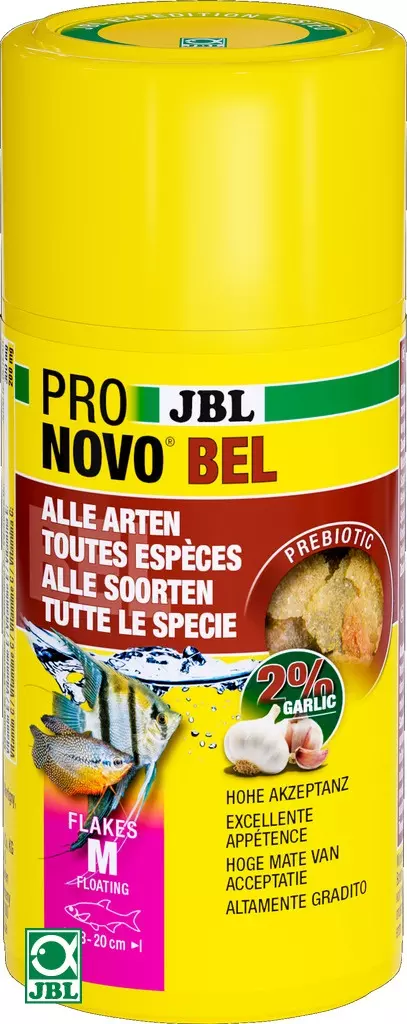
Ideally you should find a staple food for your ornamental fish, e.g. JBL PRONOVO BEL and supplement it with a second staple food such as JBL PRONOVO COLOR. Alternate with treats and supplements such as JBL PRONOVO SPIRULINA or JBL PRONOVO FIL, FEX, DAPH or ARTEMIO. This ensures a varied diet for the fish being kept.
Food size/mouth size:
It may sound banal, but it is important that the food size matches the mouth size of the fish. Not all fish are able to bite off larger chunks of food. The fish size to which the food size matches is written on all JBL food cans at the bottom left of the front of the label.
There is hardly any freshwater fish that will not eat red mosquito larvae unless they are too large for its mouth (e.g. neon tetras). East African cichlids from Lake Malawi and Lake Tanganyika should NEVER be fed with red mosquito larvae. For reasons still unknown, they do not tolerate red mosquito larvae. White or black mosquito larvae, on the other hand, pose no problems for the cichlids from the two lakes.