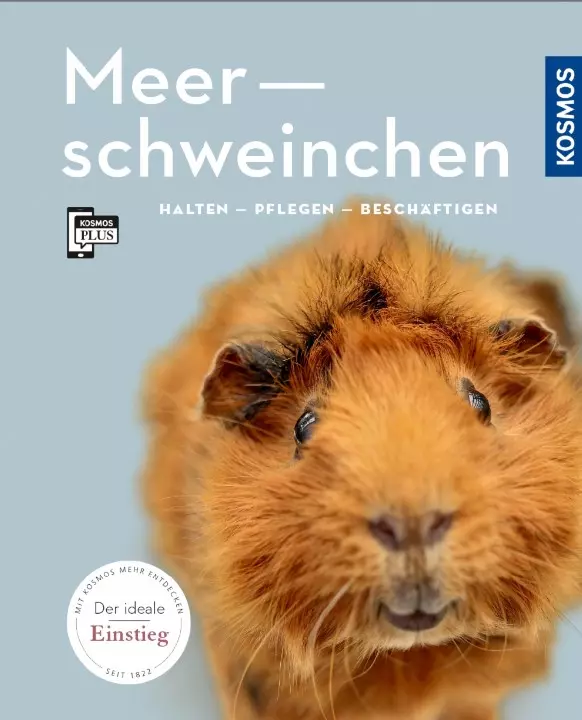
Plenty of space to hop around, dig and make hooks, a life in pairs or in a group - that's what makes dwarf rabbits happy. Optimum husbandry, a healthy diet and an understanding of their nature provide security in their daily life together. Many play ideas provide variety and strengthen the relationship between humans and animals.
Everything that is important for species-appropriate keeping: from the selection and housing of dwarf rabbits to feeding, care and activity. The plus to the book: the free KOSMOS PLUS app with additional information and films.
Composition
Feeding recommendation
Technical details
Size information
0 of 0 reviews
Give us a rating!
Share your experience with the product with other customers.
Login
No reviews found. Go ahead and share your findings with others.
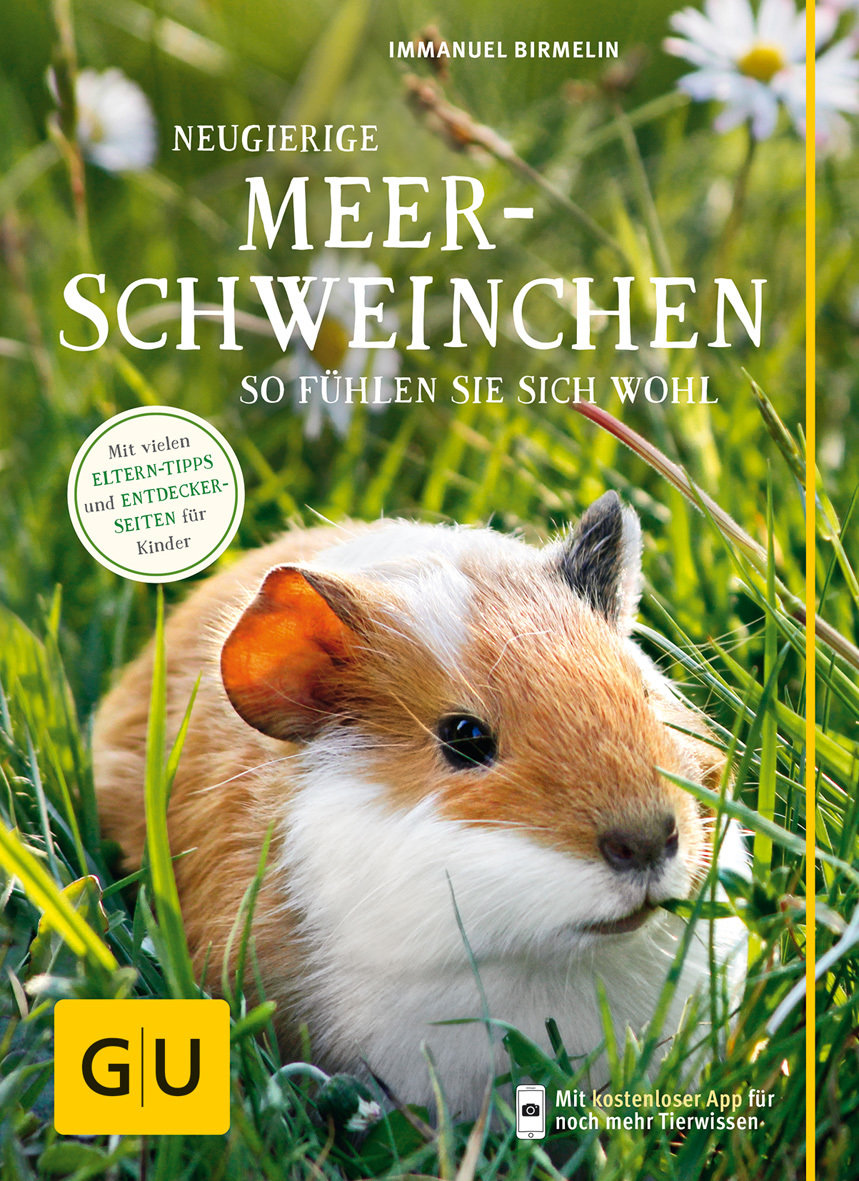
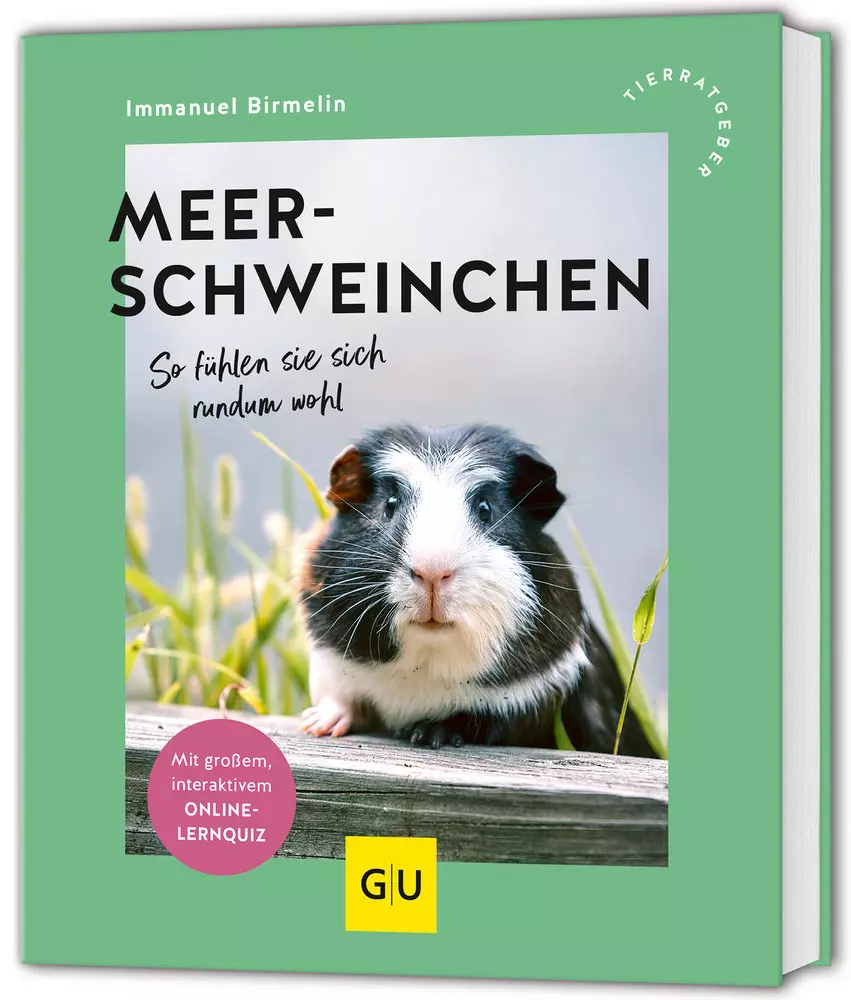
GU Curious guinea pigs - how they feel at home
This guide shows what guinea pigs need to feel comfortable in everyday family life - from the right equipment to meaningful activities. With tips for parents and discovery pages, knowledge is conveyed in a way that is easy to understand and suitable for everyday use.
Important features
Practical guinea pig guide from the GU small animals series
With quick start pages, infographics and discovery pages (observation tips/small experiments)
Contains tips for parents on how to handle children correctly with the animal
Extra: reference to the free GU Pet Plus app
Important advantages
Helps you to avoid husbandry mistakes so that guinea pigs show typical behavior and feel safe
Supports species-appropriate, family-friendly husbandry with clear step-by-step information
Promotes activity and observation - ideal if children are to be actively involvedGuinea pigs appear uncomplicated - but in order for them to remain really trusting and show their typical, lively behavior, they need suitable housing conditions. This is exactly where "Curious Guinea Pigs" from the GU Small Animals series comes in: The guide bundles knowledge about a fulfilling guinea pig life and makes it so easy to understand that it can be implemented immediately in everyday life.
The author, Dr. Immanuel Birmelin, a well-known behavioral researcher, shares his experiences from years of keeping and researching guinea pigs and explains what is important in practice. You will receive guidance on key topics such as equipment, care and activity - the very things that determine whether your animals feel safe and become active. The book is particularly family-friendly, with quick-start pages for a quick introduction and infographics that show important information at a glance. There are also discovery pages with observation tips and small ideas that encourage children (and adults) to understand guinea pigs better - instead of just "having" them. In addition, tips for parents help children to treat the animals correctly and respectfully.
Zoo-Roco tip
Guinea pigs are very much group animals: plan the housing from the outset so that your animals have social contact, opportunities to retreat and something to do. If you are unsure whether your enclosure, structure or feeding is suitable, make a note of your questions as you read - this way you can implement the tips in your home.
Hamsters - How to make them feel good all roundBlurbEverything beginners and hamster fans need to know about keeping these small rodents and their special needs - so that animals and humans feel at home together under one roof Summary So your hamster feels completely at ease. Hamsters are real night owls: they only really come to life when it gets dark. Then they climb, burrow and of course "hamster" for all they're worth. In the new, completely revised GU hamster pet guide, you will learn what your hamster needs to feel completely at ease - how to acclimatize it step by step, what it likes and what keeps it healthy and how to satisfy its strong urge to move. You will find lots of ideas for exciting activities and find out how the hamster house and enclosure should look and be equipped to meet the needs of these small rodents. The guide is rounded off with tried and tested tips on selection and purchase, offspring, illnesses and veterinary emergencies. Behavioral scientist Peter Fritzsche also explains typical animal behavior. You can then test your hamster knowledge in the large online hamster quiz and be well prepared for the arrival of your new pet.Comprehensive hamster care: Find out how to keep your hamster happy and healthy from settling in to species-appropriate keeping.Creative activity ideas: Discover numerous ideas on how to encourage your nocturnal hamster's strong urge to move in a sensible and exciting way.Expert knowledge and practical tips: The guide offers practical tips on selection, care and emergencies as well as an online quiz to test and expand your hamster knowledge.
Guinea pigs - How to make them feel good all roundBlurbEverything beginners and real guinea pig fans need to know about keeping and the special needs of these lively rodents.needs of these lively rodents - so that animals and humans feel at home together under one roof.SummaryAll the basics and practical tips from the experts - for happy rodents
Guinea pigs are mainly cute, but boring? Not at all! These little South Americans like to go on voyages of discovery and are also really clever. They love company and prove to be real chatterboxes, squeaking and cooing to keep in constant contact with their conspecifics.
In the new, completely revised GU Animal Guide to Guinea Pigs, renowned behavioral scientist Dr. Immanuel Birmelin explains what these cute rodents need to feel completely at ease. Whether it's cage equipment, nutrition, care or health: you will learn everything you need to know about keeping guinea pigs in a species-appropriate way in a quick, clear and entertaining way. There are also numerous tips on how to keep the animals moving in an outdoor enclosure in the home, on the balcony or in the garden and provide plenty of variety in your guinea pigs' everyday lives.Sound expert knowledge:Renowned behaviorist Dr. Immanuel Birmelin explains everything you need to know about guinea pigs, their adorable quirks and how to keep and care for them appropriately.
Varied activities: With lots of tips for an exciting and healthy guinea pig life - indoors and outdoors.
Practical instructions: With easy-to-understand instructions and practical tips, the book helps you to better understand the needs of guinea pigs and provide them with a home in which they feel completely at ease.
Guinea pigs keeping, caring for and keeping activefrom Beck AngelaBlurbA life in pairs or in a small group, a nice enclosure and daily free run make guinea pigs happy. Optimum husbandry, a healthy diet and an understanding of their nature provide security in their daily life together. A wealth of play ideas provides variety and strengthens the relationship between humans and animals.
Everything that is important for species-appropriate keeping: from the selection and housing of guinea pigs to feeding, care and activity. The plus to the book: the free KOSMOS PLUS app with additional information and films.
The Djungarian dwarf hamsterPhodopus sungorus from Zachrau AndreaBlurbThe Djungarian dwarf hamster is one of the smallest pets in the world and takes hearts by storm with its beady eyes, loyal gaze and soft fur. In this guide, you will learn all about the dwarf hamster's distribution and habitat, as well as everything you need to know about enclosure size, furnishings and food. Read everything you need to know to better understand the behaviour of these small rodents and how to prevent diseases.
Summary
The Djungarian dwarf hamster is one of the smallest pets in the world and takes hearts by storm with its beady eyes, loyal gaze and soft fur. In this guide by Andrea Zachrau, you will learn about the dwarf hamster's distribution and habitat as well as everything you need to know about enclosure size, furnishings and food. Read everything you need to know to better understand the behaviour of these small rodents and how to prevent diseases. Each volume offers you detailed, practical care instructions and you will find all the information you need to successfully breed your animals. All the important questions, from housing to furnishings, technical equipment, species-appropriate nutrition and disease prevention, are answered with numerous tricks and tips. Experienced, long-standing breeders reveal how you can encourage the animals to reproduce and raise the young in good health, all in full colour, generously illustrated and attractively designed - species by species.
Can my cat eat daisies? Is it safe if my Wellensitticham Ficus nibbles? Broken down by wild plants, house and garden plants, fodder plants, herbs, poisonous and medicinal plants are described with which pet animals may come into contact. With advice for individual species.
The Persian gerbil book Among the many gerbil species, Persian gerbils are something very special. Their graceful appearance and highly interesting behaviour make the "Persians", as they are affectionately called by many owners, fascinating pets. Due to their curiosity and open-mindedness towards humans, they are also real "heartbreakers" Unfortunately, there is hardly any literature on keeping and breeding these beady-eyed rodents. Author Anne Weber is editor-in-chief of the small mammal specialist magazine RODENTIA and summarises her many years of experience with the care and breeding of "Persians" here. Benefit from her practical tips and detailed husbandry descriptions so that you can enjoy your Persian gerbils right from the start! Contents:Biology,Acquisition,Husbandry,Food and water,Keeping healthy,Fun and games,Offspring
Rodentia 01 - Chinchillas
Guinea pigs in the gardenDegus and their relativesSee the most beautiful rats
Contents:
2 INTERN
3 EDITORIAL AND ADVISORY BOARD
5 INTERESTING FACTS
11 legal
12 Dates & TIPS
15 MY STORY: Refined guinea pig, by Marion Zeddies
16 PHOTOstory: Chinchillas, by Christian Brüggemann
23 KEEPING AND BREEDING: The keeping of chinchillas, by Anke Suchy
28 REISE: Amy and the chinchillas, by Dr Martina Raffel
34 KEEPING AND BREEDING: Chinchilla colour breeding, by Rebecca Schmidt
38 BIOLOGY: Chinchilla genetics, by Christian Brüggemann
39 POSTER: The Campbell dwarf hamster, by Christian Brüggemann
43 HEIMISCHE TIERWELT: The brown hare gives up the spoons, by Christian Brüggemann
46 REPORTAGE: Guinea pigs in the garden, by Iris Küster
51 KEEPING AND BREEDING: The breeding of Virginia opossums, by Dirk Fußbahn
54 REPORTAGE: See the most beautiful: Rat exhibitions in Germany, by Simone Grigat
58 KEEPING AND BREEDING: Together they are strong: spiny mice, by Frank Böhme & Peter Kneisel
61 KEEPING AND BREEDING: Degus and their relatives, by Sabine Gehrsitz
64 KEEPING AND BREEDING: Persian gerbil, by Michael Herting
66 ZOOLOGISCHE GÄRTEN: The Zoo of Small Mammals: Tierpark Berlin, by Christian Kern
70 SPRECHSTUNDE: Anaesthesia in small rodents and rabbits, by Andreas Küster
73 SCIENCE: What kind of house does the mouse want?, by Lars Lewejohann
76 MAUSKLICK
77 RAT & TAT
78 BOOK REVIEW
80 snickers' wild life: Wild Westphalia, by Christian Brüggemann
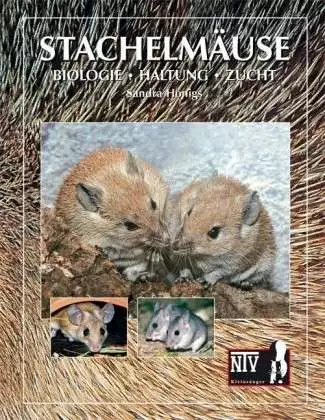
NTV Spiny mice by Sandra Honigs
80 pages
82 colour photos
Format: 16.8 x 21.8 cm
Contents:
Spiny mice are in vogue: More and more animal lovers are becoming interested in these interesting rodents with their unusual appearance and exciting family behaviour.Sandra Honigs, a qualified biologist and well-known rodent expert, provides the reader of this guidebook with everything worth knowing about the biology, keeping and breeding of the various spiny mouse species in an easy-to-understand and extremely expert manner.
Press reviews:
This book serves as a treasure trove of information on this rodent genus for both novice and advanced spiny mouse keepers. It offers a wealth of useful knowledge on the biology, species-appropriate keeping and breeding of the eight most commonly kept spiny mouse species.
Brilliantly illustrated and of consistently high quality! Divided into diverse chapters ranging from social behaviour to breeding.
Zoologischer Zentral Anzeiger 3/2009
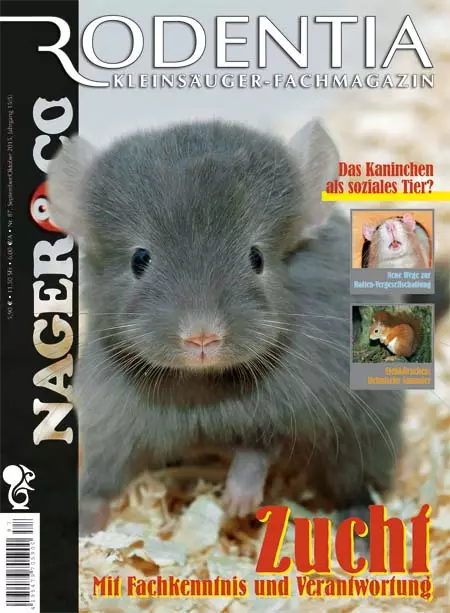
Rodentia 87 - Breeding - with expertise and responsibility
Social behaviour of rabbits
Contents:
Breeding – with expertise and responsibilityThe topic of "breeding" is a controversial issue among small mammal enthusiasts: Aren't there already too many unwanted rats, rabbits, guinea pigs and the like in animal shelters and emergency centres? Shouldn’t breeding be avoided altogether? In the cover story of this issue of RODENTIA – Nager & Co. we want to look at these questions a little more closely. After all, there are significant differences between random "multiplication" and "breeding" with expertise. Breeding small animals responsibly – that is only possible with extensive expertise, planning and personal commitment. In this issue, dear readers, you will gain an insight into the breeding of different species.
EditorialWorth knowingTips and dates
Title Breeding – With expertise and responsibilityAnne Weber
Title The breeding of the Mongolian gerbil. A hobby with great responsibilityRalf Sistermann
Title The dwarf ram Angora rabbit. On the origin of a new rabbit breedKai Sander
Title Colour and pattern mutations. A genetic code for the degu (Octodon degus Molina 1782)Stefan Kräh
Keeping Thinking outside the box. New methods of rat integrationAnna Jedamczyk
Behaviour The rabbit as a social animal? Myths and truths about social behaviour in group housingViola Schillinger
Domestic animal world Forgetful? No way. The squirrel clears up prejudices Kerstin Han
Service
Behaviour How tame do guinea pigs become? Appropriate acclimatisation and help for anxietyClaudia Mesterheide
People and animals Ferrets at school. A thing of (im-)possibility?! Vanessa Passlack
Medicine Tumour formation in guinea pigsProf. Dr. Michael Fehr
Internet forums Preview
Last but not least Little rabbit Püppi. The building projectKathrin Aretz
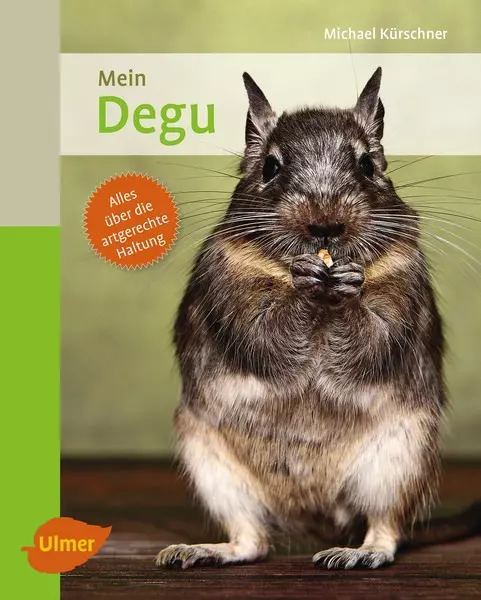
My degu home. A guide to species-appropriate keeping.
Origin
Classification
Considerations before buying
Acquisition
Care and housing
Attitude
Nutrition
Behaviour
Health
Breeding
...
It never gets boring or monotonous with degus! Degus are extremely active contemporaries who give their owners a lot of pleasure. However, they are not undemanding pets - a sound basic knowledge of keeping degus is important to keep these rodents fit and healthy. This guide answers all your questions about degus: from buying them to keeping them appropriately, caring for them, feeding them, their behaviour, how to keep your degus healthy and how to create a varied and species-appropriate enclosure for your degus.Michael KürschnerMichael Kürschner is an animal book author specialising in small mammals and dogs. He discovered degus in 1989. He is still fascinated by these small rodents, with whom there is never a dull moment.
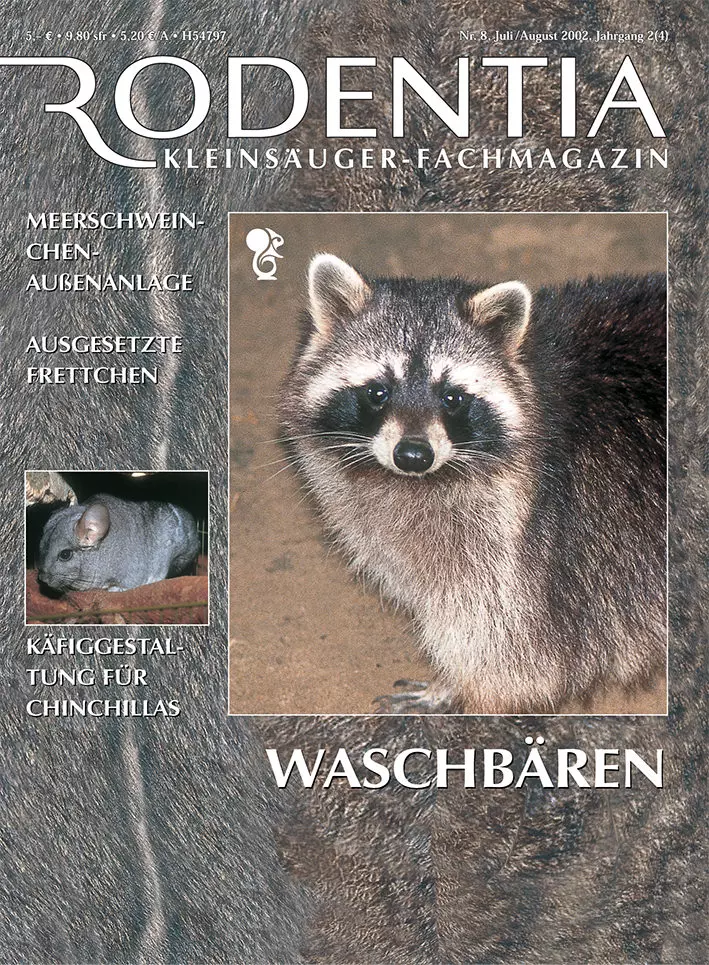
Rodentia 08 - Raccoons
Guinea pig outdoor enclosureRat seniorsCage design for chinchillas
Contents:
The cover story of the new RODENTIA is the raccoon. The brilliantly illustrated photo story by RODENTIA editor Christian Ehrlich shows the cute little fellows in all their facets. And, of course, the author introduces the systematics and biology of the small bears, which have now also established themselves as new residents in our forests and cities.This article by Ingo Bartussek, which is also highly interesting from a cultural and historical point of view, is dedicated to the triumphal march of the raccoon: Raccoons: A New Citizen Conquers the Old World is the title of his article. The author explains what the strange name of the raccoon (also in many other languages!) is actually all about, goes into the fate of the animals as involuntary fur suppliers and reveals how the raccoon was able to make the giant leap across the pond and spread so quickly in this country. And finally, Bartussek offers exciting insights into the private lives of the fluffy little bears – the fascinating photos alone are a feast for the eyes!In her article The bear in my life – keeping and breeding raccoons, Dana Nährig shows that it is not only possible to care for and breed these charming little bears under species-appropriate conditions, but that they are also a lot of fun. The two raccoon babies taken in as orphans quickly took their place in the author's life. You should not miss her exciting experiences with the animals and the description of the beautiful breeding success!An absolute dream destination for every nature lover: Borneo – island of dwarves and giants. Dr Eckehard Grimmberger takes you on a journey to the third largest island in the world and whisks you away to the tropical atmosphere of the steaming lowland rainforest with its incredible abundance of species. In addition to such extraordinary animals as the lantern-bearer cicada, the flying frog or the hornbill, Borneo also has plenty of mammalian delicacies to offer. You can read about these fascinating species in this report!One of the most important aspects in the keeping of small mammals is certainly the species-appropriate cage – a topic that RODENTIA has already addressed several times. This time, Gisela Lenski writes about an imaginative chinchilla cage design. Her tip for success: tubes and branches for a natural cage atmosphere. The author describes in detail how you can transform a cage desert into a thriving chinchilla paradise with simple means and how the animals reward this with their varied behaviour. If you want to give your chinchillas the best possible care, this article is simply a must-read!And since, as mentioned, the form of husbandry is of the utmost importance, here is another excellent suggestion: Gina Alt's article is all about beautiful living... Natural outdoor enclosures for guinea pigs. The author imagined what a guinea pig would want its home to look like and set up a suitable outdoor enclosure – with great success! Here you can find out in detail how to design such an outdoor enclosure and what you should definitely think about. So that the friends of coloured mice don't miss out and because all good things come in threes, here as the next example of an imaginative form of husbandry is a surprising and very creative idea of how to provide your small rodents with a species-appropriate environment including an adventure playground: "Little house with plot" for the mouse. This article by Ingrid Rogalla is about keeping coloured mice in an open environment. The author describes everything that goes to make up such a mouse castle, how to plan and set it up and its immense advantages, but does not conceal possible disadvantages – an extremely practical article, just typical of RODENTIA.The best way to keep your animals healthy is to care for them optimally and not give diseases a chance in the first place. This also includes regularly checking them for early symptoms of illness, as serious diseases are all too often detected too late – with fatal consequences. Rodent TÜV – The daily and weekly health check by Christian Ehrlich shows you what you need to look out for. With these tips from the RODENTIA editor, you too can make sure your pets stay healthy!Finally, our science report deals with marmots from the Ice Age. Daniela C. Kalthoff reports astonishing facts about the friendly rodents, which in those days still inhabited the plains. From fossils of Ice Age marmots, the author reconstructs the former distribution areas and introduces forms that are now extinct. From the remains found, it is even possible to reconstruct the animals' way of life – an exciting article for all true rodent fans!The ever-popular RODENTIA sections are of course included in this issue, from New on the Market to Dates, Tips, Classifieds and the poster (this time with the golden spiny mouse) to Advice & Action or the adventures of the editorial prairie dog Snickers
CHF 9.80
❅
❆
❅
❆
❅
❆
❅
❆
❅
❆
❅
❆
This website uses cookies to ensure the best experience possible. More information...