Product information "JR Grainless Mixed Drops for rodents and rabbits 140g"
JR Grainless Mixed Drops
Supplementary feedingstuff for rodents and dwarf rabbits
The perfect treat for all rodents. They are of course 100% grain-free and free of additives such as sugar or honey. Dandelion, carrot, beetroot and herb drops all in one pack.
Grünhopper Adult - Complete feed for dwarf rabbits
The flavour of lush meadows and selected herbs makes every rodent happy. Our all-round healthy Grünhopper Adult is a compound feed that guarantees a species-appropriate diet free from grain and molasses. Numerous types of grasses and herbs are perfectly balanced with our unique bark and root mixture. These typical rodent ingredients prevent obesity and, thanks to their structure, ensure important tooth wear and a stable immune system.
Composition: Meadow herbs and meadow grasses*, parsley, pea flakes, carob, carrots, mulberry leaves, nettle leaves, alfalfa, cornflowers, parsnip, oak bark, dandelion root, rosemary, fennel, liquorice root, marshmallow root, cold-pressed linseed oil, willow leaves, red clover *creeping grass, meadow foxtail, meadow fescue, red fescue, sheep's fescue, woolly meadow grass, red clover, ribwort plantain, willow plantain, fencing vetch, crested wheatgrass, meadow grass, swede clover, common yarrow, meadow cumin, meadow chervil, common bedstraw, meadow knapweed, annual panicle, switch grass, timothy, reed canary grass, cinquefoil, red bentgrass, meadow sage, wild carrot, white clover
many different meadow herbs and grasses for a healthy and species-appropriate diet
fresh grass and herb scent
Pleasantly fluffy food in environmentally friendly and handy packaging
natural, recognisable structure for a good immune system and functioning intestinal flora
Optimum supply of vitamins and minerals
free from grain, molasses and artificial additives
Supplement to feed with hay and fresh greenery
Compound feed for pets, feeding recommendation: 20-30g/kg body weight
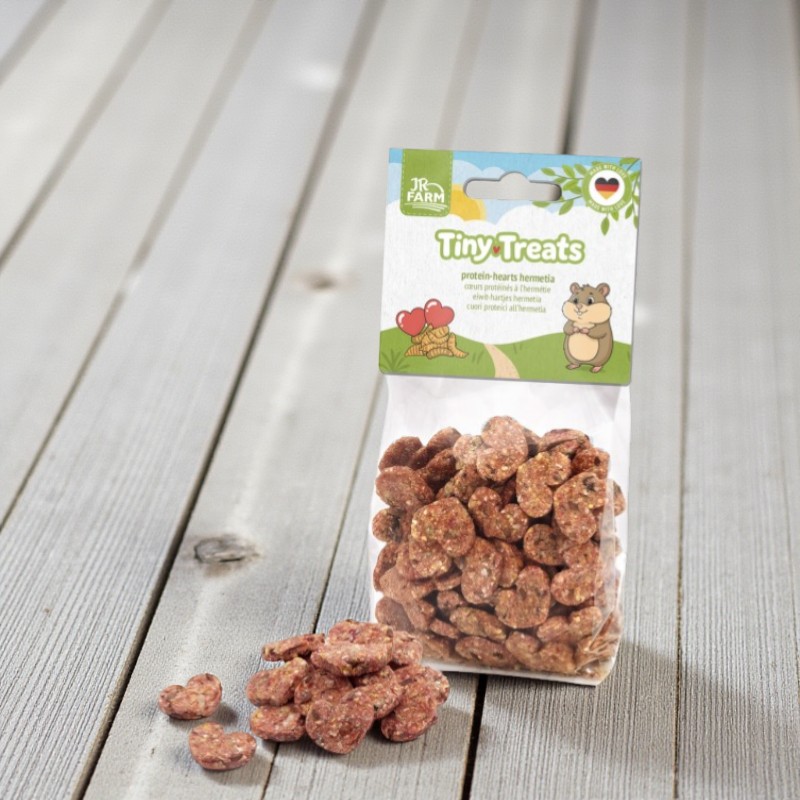
JR FARM Tiny Treats Protein-Hearts HermetiaHeart-shaped snack with hermetia larvae for mixed-fed rodentsJR FARM Tiny Treats Protein Hearts Hermetia bring hearty snacking pleasure to your small rodent's everyday life: crunchy hearts with hermetial larvae (5%) as a natural source of protein - combined with cereals, seeds and vegetables such as carrot and beet. Ideal as an energy-rich snack between meals, as a reward or as a small activity.Properties & advantages at a glanceCrunchy protein hearts - snack fun with a delicious structureWith hermetical larvae (5%) - natural source of protein for mixed-fed rodentsWith seeds & vegetables - including linseed, carrot and beetIdeal as a reward - for hand feeding, training and activitySupplementary feed for mixed-fed rodentsContent: 100 gWhich animals are the hearts suitable for?The Protein Hearts are suitable for mixed-fed rodents - i.e. animal species that consume animal protein (e.g. insects) as well as plant-based food. These include in particularratsHamsters (golden hamsters and dwarf hamsters)Mice (e.g. colored mice)Gerbils (gerbils)Chipmunks and other omnivorous rodent speciesNote: This snack is not suitable for purely herbivorous small mammals (e.g. rabbits or guinea pigs) due to the insect content. Please also note: The product contains peanuts.Zoo-Roco tip:
Hide 1-2 Protein Hearts in a cardboard roll or between hay/bedding: This turns the reward into a little search game that keeps your animals busy and encourages their natural instinct to explore.
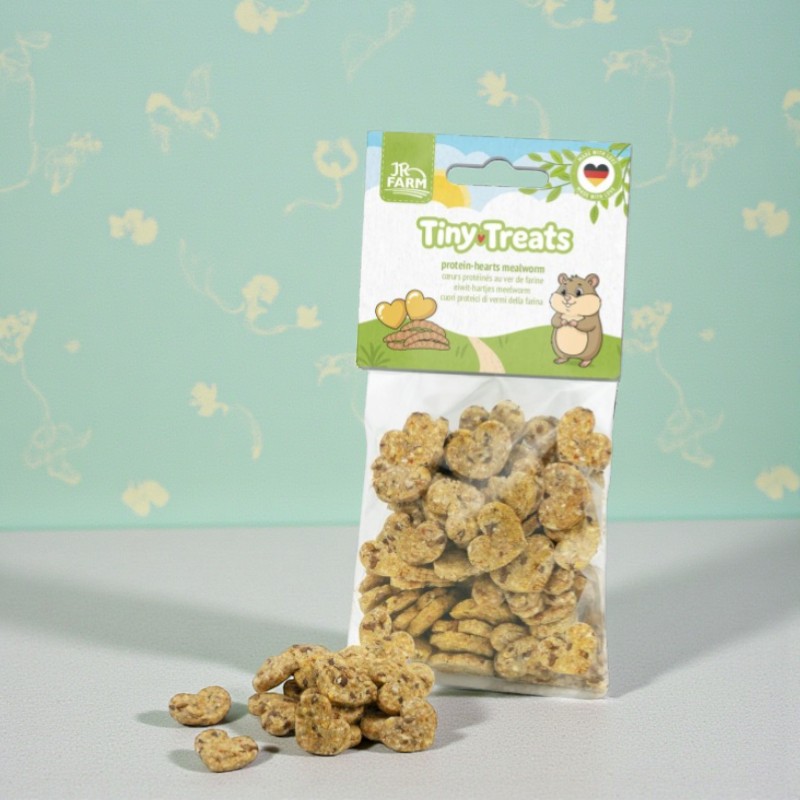
JR FARM Tiny Treats Protein-Hearts Mealworm Heart-shaped snack with mealworms for mixed-fed rodentsJR FARM Tiny Treats Protein Hearts Mealworm provide hearty snacking pleasure in a small format: the crunchy little hearts combine selected cereal and seed ingredients with mealworms (5%) - a natural source of protein for small omnivores. Ideal as an energy-rich snack for curious explorers and as a tasty reward between meals.Properties & advantages at a glanceCrunchy protein hearts - delicious snack with extra varietyWith mealworms (5%) - natural source of protein for mixed-fed rodentsWith seeds & vegetables - including linseed and carrotsIdeal as a reward - for training, hand feeding or activitySupplementary feed for mixed-fed rodentsContent: 100 gSuitable for which animals?Protein Hearts are suitable for mixed-fed rodents - i.e. species that eat animal protein (e.g. insects) as well as plant-based food. These include in particularratsHamsters (golden hamsters and dwarf hamsters)Mice (e.g. colored mice)Gerbils (gerbils)Chipmunks and other omnivorous rodent speciesNote: This snack is not suitable for purely herbivorous small mammals (e.g. rabbits or guinea pigs) due to the mealworms it contains. Please also note: The product contains peanuts.Zoo-Roco tip: Use the Protein Hearts as a "jackpot" reward for tame rats or to build up the confidence of hamsters and mice: a little heart from your hand can positively link handling - and at the same time provide extra activity.
Back Zoo Nature Arabic Gum Binding AgentGum arabic comes from trees of the Acacia genus and is also known as acacia gum. Gum arabic is a natural binding agent for gluing seeds into snacks. Gum arabic is often confused with resin, but it is not. Resin is not soluble in water, but gum is. Gum arabic is 100% natural and completely biodegradable. Adhesive for making snacksfor rodents and birds100% naturalcolorless, tasteless and odorless250g bagAn important part of the diet of birds and rodents is the addition of fruit, nuts, vegetables, flowers and insects in addition to seeds. Many seed mixtures lack these important nutritional components. With the Arabic Gum you can mix different products and then process them into a snack.Instructions for use:Take a small amount of Arabic gum and slowly add some water, stir until it becomes a sticky mass. Make sure that it does not become too runny, at most syrupy.You can then mix the gum arabic with the snacks or food. A thin layer is sufficient, do not use too much gum arabic, otherwise it will also take longer to dry.Now the mixture is ready to be processed. You can form balls or fill the mixture into pine cones, for example.Then let them dry well! When it is dry and hard, the snack can be fed.
Back Zoo Nature Fruit Cups MixTreats for birds and rodentsvarious flavor cupsstrawberry, melon, banana, yoghurt, honey and orangeBag with 6 fruit cups The fruit cups are very popular with birds such as parakeets, parrots, lories, fruit-eaters and tropical birds. Rodents also like to eat them. A real treat!One bag contains 6 cups in 6 different flavors: Strawberry, melon, banana, yogurt, honey and orange.Feeding recommendation: 1 to a maximum of 3 fruit cups per week, depending on the size of the bird/rodent.
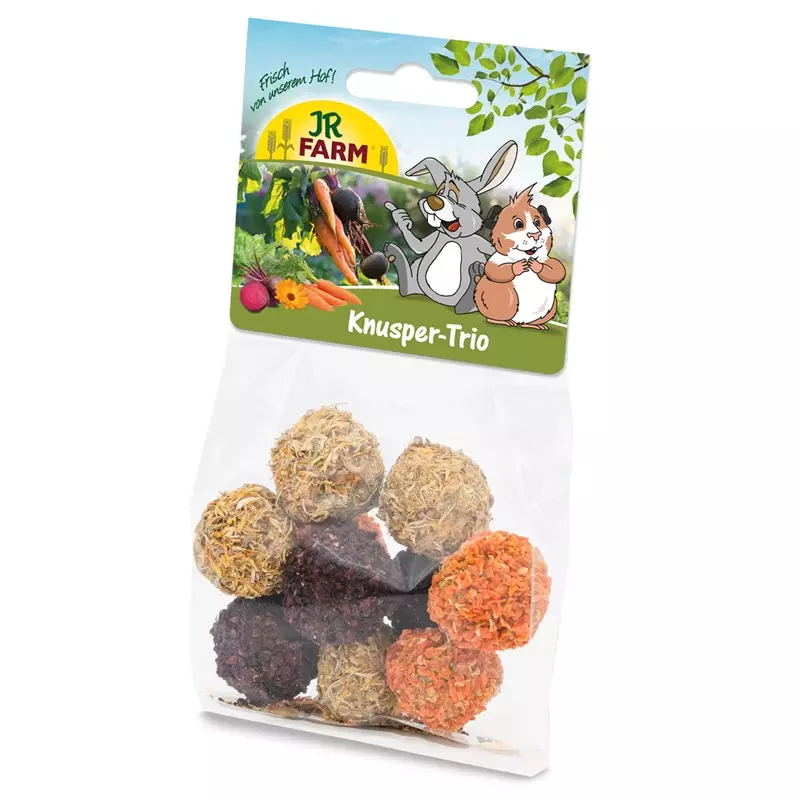
JR Farm Crunchy TrioWin the hearts of your rodents and rabbits with the Crunchy Trio bales.
The round treats offer rodents and dwarf rabbits a balanced combination of varied taste and important nutrients. They are lovingly handmade by forming a mixture of high-fiber alfalfa, beta-carotene rich carrots and corn into a ball and tantalizingly coated with crunchy carrot pieces, beetroot or soothing marigold flowers. These treats not only offer a wide range of flavors for your little fur friends, but also support their tooth wear, eyesight and digestion. The clever ball shape also encourages them to move around as they let the crunchy balls slide around while they nibble. And all without artificial colors or additives!
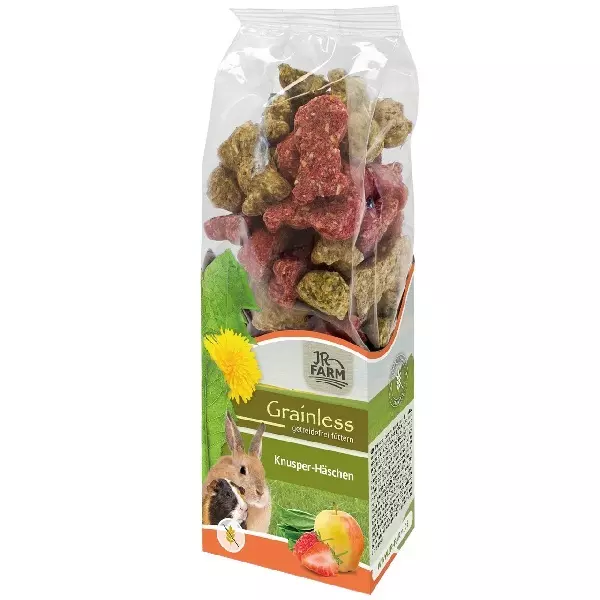
JR Grainless Crispy BunniesFunny bunnies in three aromatic flavours invite dwarf rabbits and small animals to enjoy a natural and grain-free snack.The little bunnies, based on protein-rich pea flakes, are refined with fruity apple, iron-rich spinach and tasty strawberry. With these you can offer your little furry friends healthy and handy treats every day.In addition to a tasty nibbling fun, the animals are supplied with valuable vitamins, minerals and fibre, which promote muscle development and blood formation and have a beneficial effect on the digestive organs. Nibbling on the crunchy bunnies also promotes natural tooth abrasion of the lifelong growing teeth.Content: 150 g
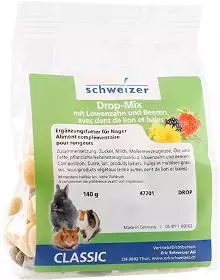
Dropmix with dandelions and berries
The little snack for your rodent friends.
Inside these Droplets your rodent will eat his daily ration of vitamins. With the drops natural Nutrients and building blocks your rodent will gain a stronger bone structure as well as a beautiful fur.
Composition: Milk and milk products, oils, fats, grain, fruit(berries), plant based Products (dandelions) and honey
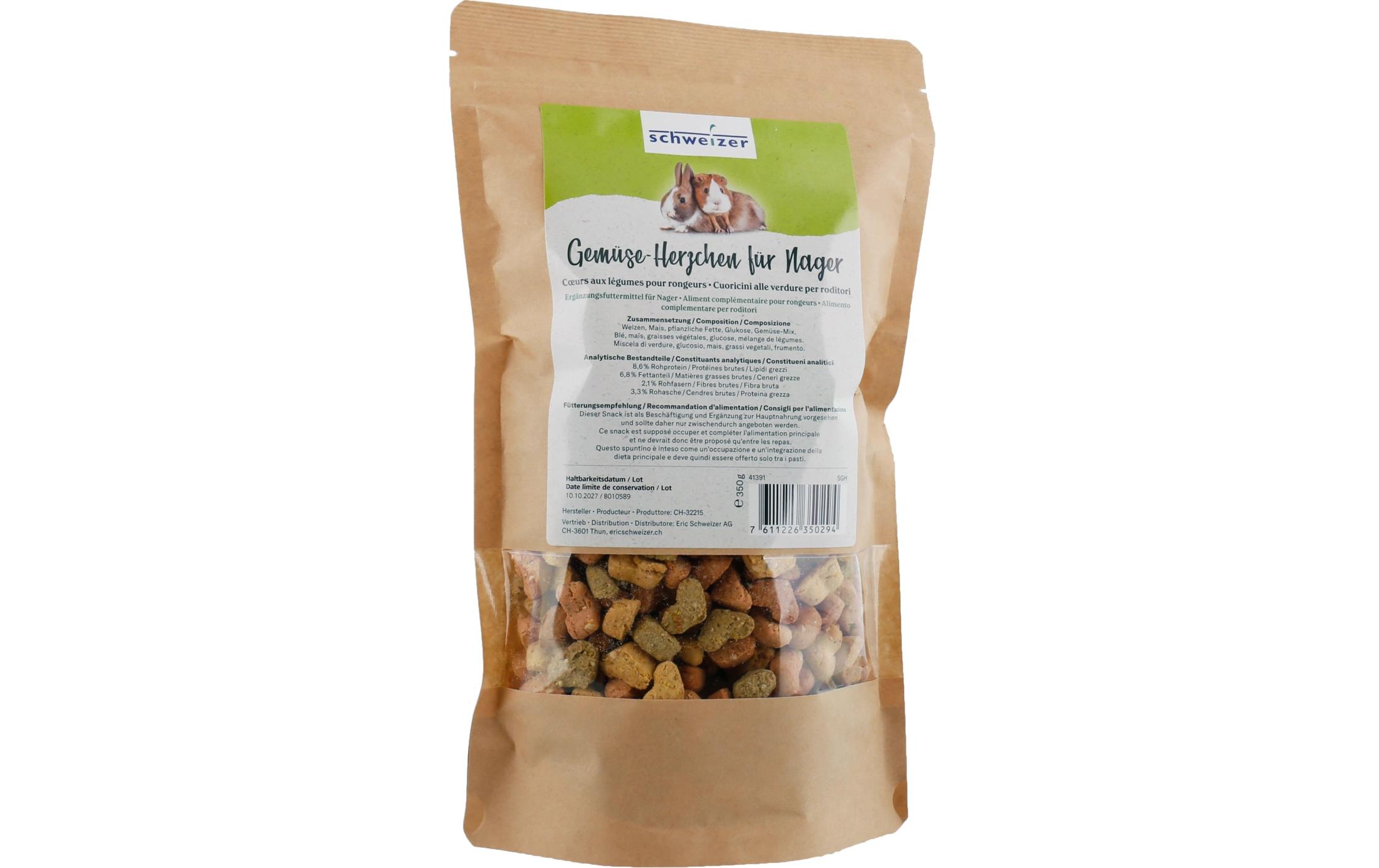
Vegetable-Hearts for rodents 160g from Eric Schweizer
Der Knabber-Traum für alle Nager aus einer köstlichen Rezeptur.
geeignet für Zwergkaninchen, Meerschweinchen, Hamster, Mäuse, Ratten und Degus
Zusammensetzung:Weizen, Mais, pflanzliche Fette, Glukose und Gemüsemix.
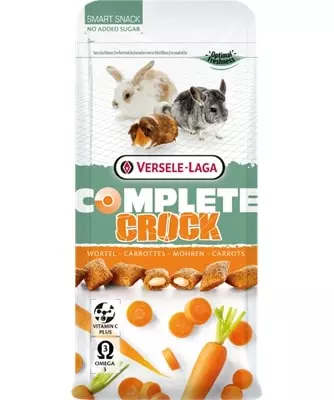
Versele Laga Crock Complete Carrot
a tasty and healthy snack for rabbits and various rodents
The crunchy shell fulfils the gnawing instinct and the soft carrot filling is enriched with vitamins and omega-3 fatty acids.
Feeding guide: Covers up to 25% of daily nutritional requirements.
Composition: Cereals, oils and fats (omega-3 fatty acids), vegetable by-products, vegetables (carrots), milk and milk products, minerals.
Analytical constituents: Vitamin A 10,000 IU/kg, Vitamin D3 300 IU/kg, Vitamin E 1,130 mg/kg, Vitamin C 1,250 mg/kg.
Versele Laga Crock Complete Herbs 50g
a tasty and healthy snack for rabbits and various rodents
The crunchy shell fulfils the gnawing instinct and the soft herbal filling is enriched with vitamins and omega-3 fatty acids.
Feeding guide: Covers up to a maximum of 25% of daily nutritional needs.
Composition: Cereals, oils and fats (omega-3 fatty acids), vegetable by-products, alfalfa, milk and milk products, minerals.
Analytical constituents: Vitamin A 10,000 IU/kg, Vitamin D3 300 IU/kg, Vitamin E 1,130 mg/kg, Vitamin C 1,250 mg/kg.
Versele Laga Crock Complete Cheese (50g)
a tasty and healthy snack for various omnivorous rodents
The crunchy shell satisfies the gnawing instinct and the soft filling made from dairy products is enriched with vitamins and omega-3 fatty acids.
Feeding guide: Covers up to a maximum of 25% of daily nutritional requirements.
Composition: Cereals, oils and fats (omega-3 fatty acids), vegetable by-products, vegetables (carrots), milk and milk products, minerals.
Analytical constituents: Vitamin A 10,000 IU/kg, Vitamin D3 3.00 IU/kg, Vitamin E 1,130 mg/kg, Vitamin C 1,250 mg/kg.
chinchillaNative to:Chinchillas are native to the Andes in South America. Once living in their millions in the rugged, rocky mountainous regions, they were hunted so much for their dense and soft fur that they were almost wiped out.Description and nature:Chinchillas are rodents. Their close relatives are guinea pigs. Chinchillas are nocturnal animals and, to the regret of small children, are not cuddly and cuddly animals, so this should be borne in mind when buying one. Their standard colour is light grey to dark grey, with a lightened to white coat on the belly. The following colour variations have also been created through breeding: White, silver, black velvet (black), beige, brown, brown velvet and violet. The size of a chinchilla is about 25 - 35 cm and the tail 15 - 20 cm, the weight is 400 - 600 grams. These animals can reach a very high age for a rodent, up to 20 years as a pet.Care:Chinchillas are kept as pets in pairs or groups. They need company to feel really comfortable. That's why you should never keep just one animal. It is best to buy two females that have grown up together or a mother and daughter. Two male chinchillas do not get along.If you decide on a pair, you need to bear in mind that there will be offspring. If this is undesirable, find a small animal vet or veterinary clinic to have the male neutered.As chinchillas are very active animals, a chinchilla home needs to be very large. Large indoor aviaries are best.The cage should be equipped with plenty of perches. Sleeping houses, cork tubes and climbing branches should also be included. As chinchillas have a strong gnawing instinct, the furnishings need to be replaced often.A sand bath with special sand is a must for chinchillas. Otherwise their fine fur would soon become greasy and sticky.The cage should be placed in a quiet place so that the animals are not disturbed during the day.Legal requirements:
Enclosure min. 100x50x150cm for 2 animals (not our recommendation!)
Retreats for all animals
Three-dimensional furniture, perches
Coarse-textured food: hay or straw
fresh branches
Sand bath
Group or pair keeping
Cage equipment includes:
Bedding and hay
Various sleeping houses made of wood or cork
Perches
Sand bath
Food bowl, hay rack and drinking bottle
Food:Chinchillas need special food. Their main diet consists of coarse hay and various herbs. A special feed mixture for chinchillas can also be fed. Only ever feed fresh fruit and vegetables in very small quantities - risk of diarrhoea! Special supplementary feed is available as a treat and dessert. Chinchillas are very susceptible to intestinal disorders, so rapid changes of food should be avoided.Fresh water should always be available.Breeding:Chinchillas become sexually mature at around 4 to 5 months. The average gestation period is 111 days. They usually give birth to 1 - 4 young and can become pregnant 3 times a year. The young are born fully developed, hairy and with open eyes. They are not placed in a nest, but on the bare ground. At birth, the young weigh approx. 35-50 grams and eat solid food within the first few days of life. At the age of 30 days they weigh around 151 grams, at three months 350 grams and at seven months the chinchillas have reached their adult weight. The young animals should not be separated from their mother before eight weeks, as they are still suckling.How much does a chinchilla cost as a pet (approximate monthly average for 2 animals):
Food: approx. Fr. 40.--
Bedding and hay: approx. CHF 25.
Vet: The more species-appropriate and cleaner the husbandry, the less likely it is that you will have to visit the vet. Nevertheless, you must always be prepared for the fact that an animal may fall ill and incur additional costs.
Before you decide to buy chinchillas, you should definitely read a specialised book.Chinchillas are not cuddly animals and are therefore unsuitable for small children. They do not like to be stroked or carried around. The following applies to all animals: children (including adolescents) must be supervised and controlled by their parents. Children should know that animals are not toys!Our trained team at Zoo Roco is on hand to answer any questions or resolve any issues. They can provide expert advice on all matters.