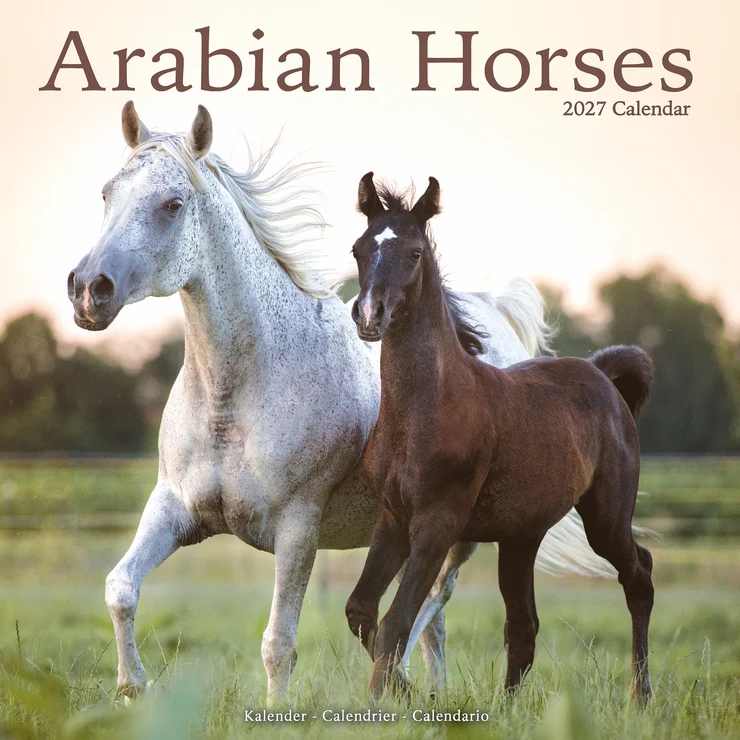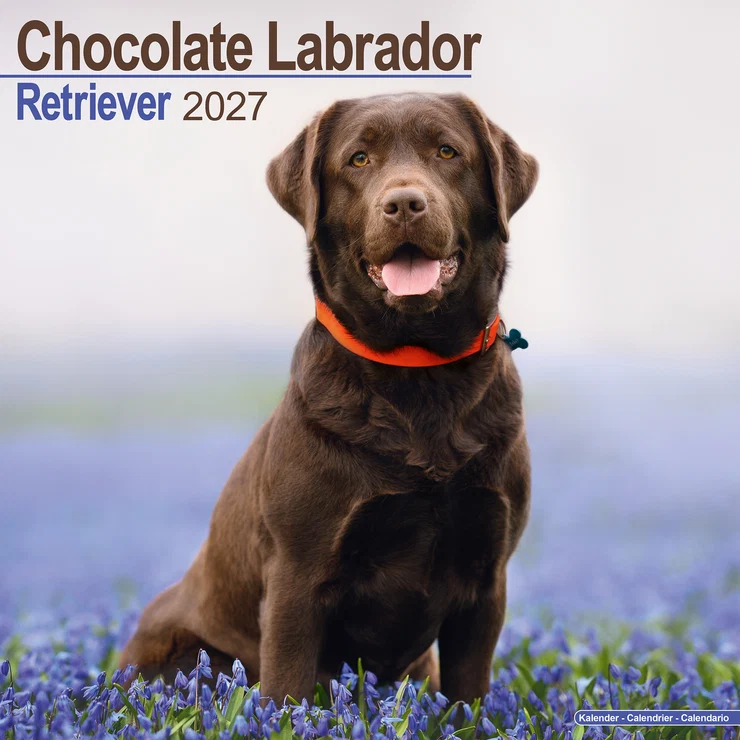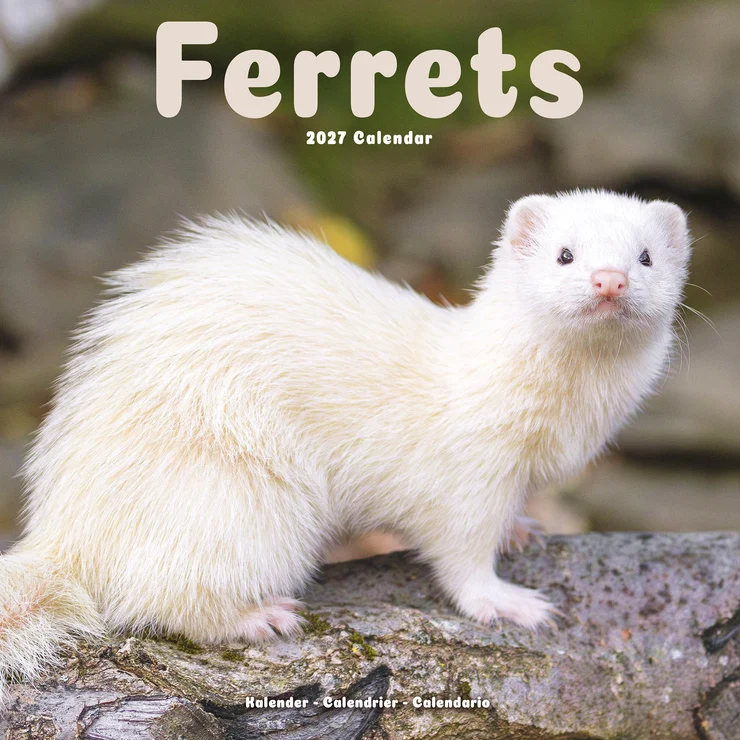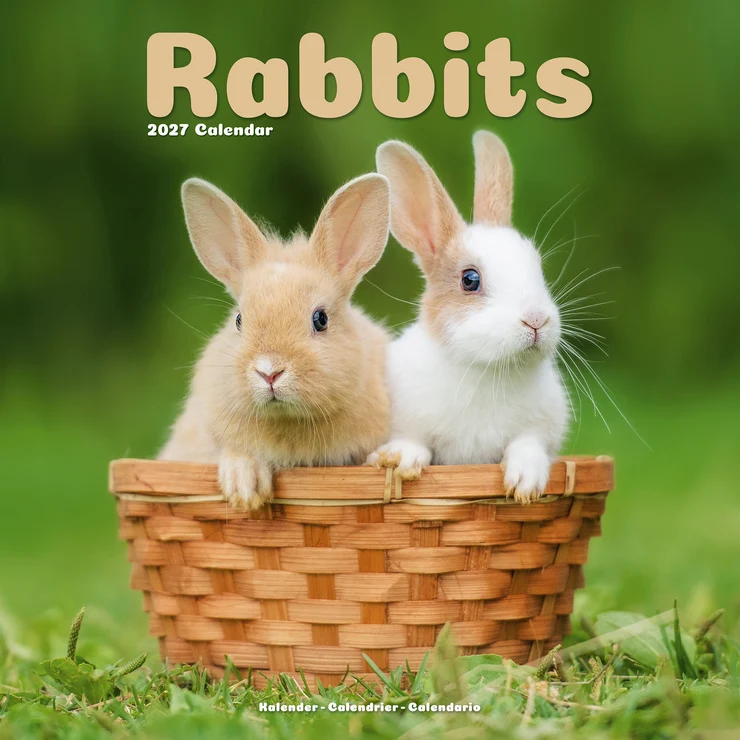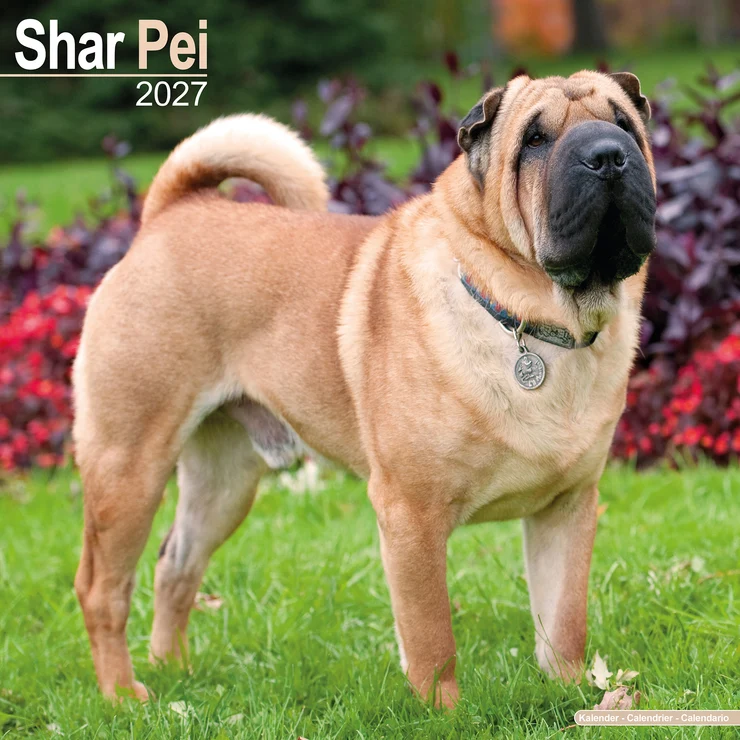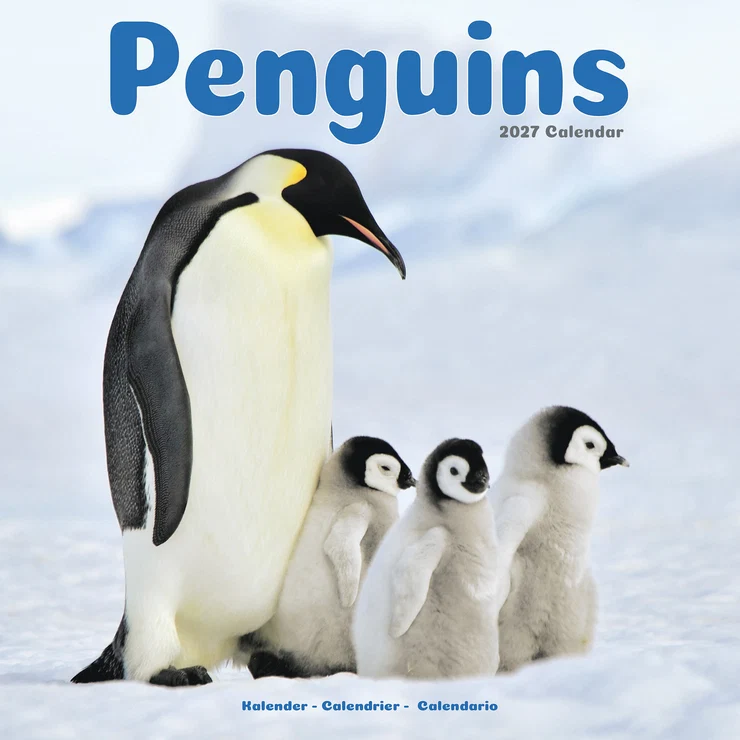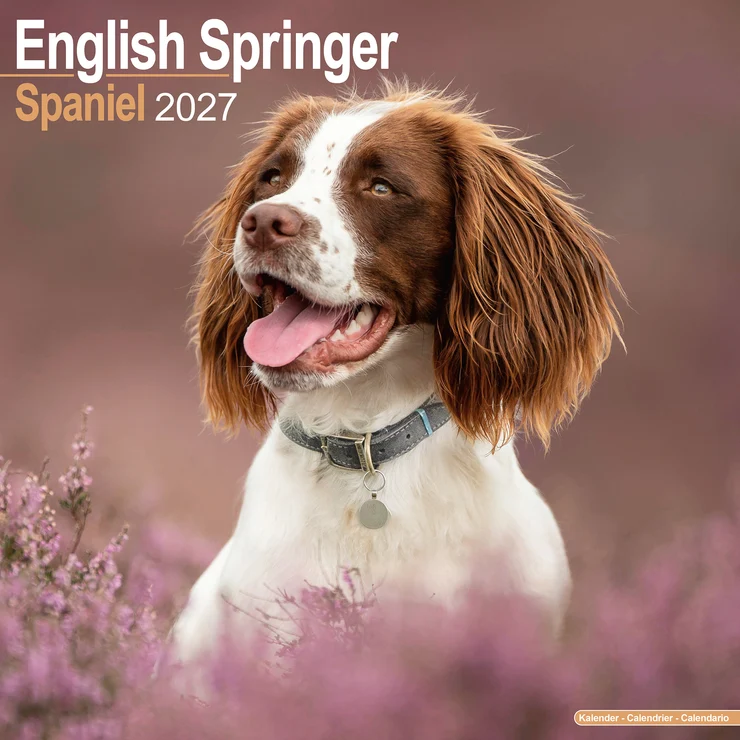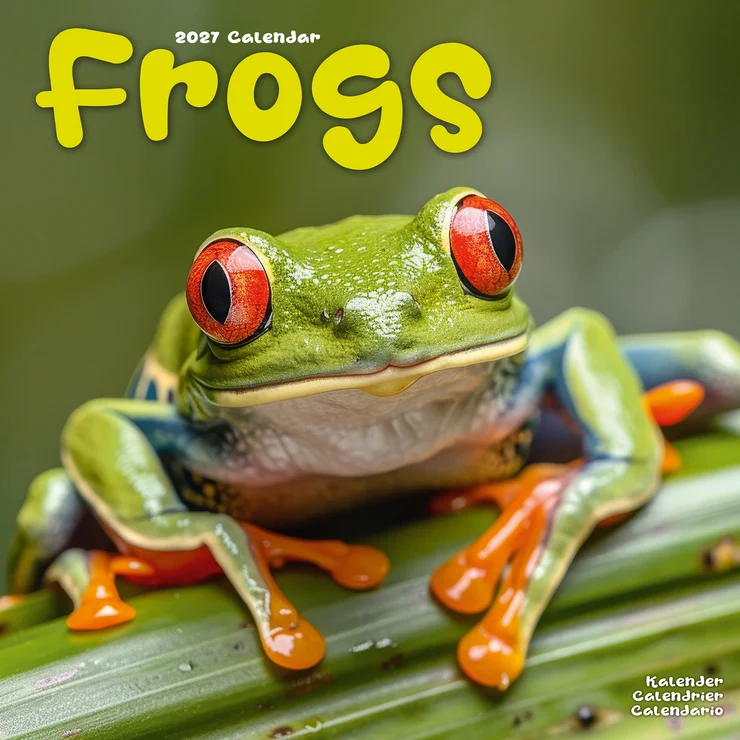
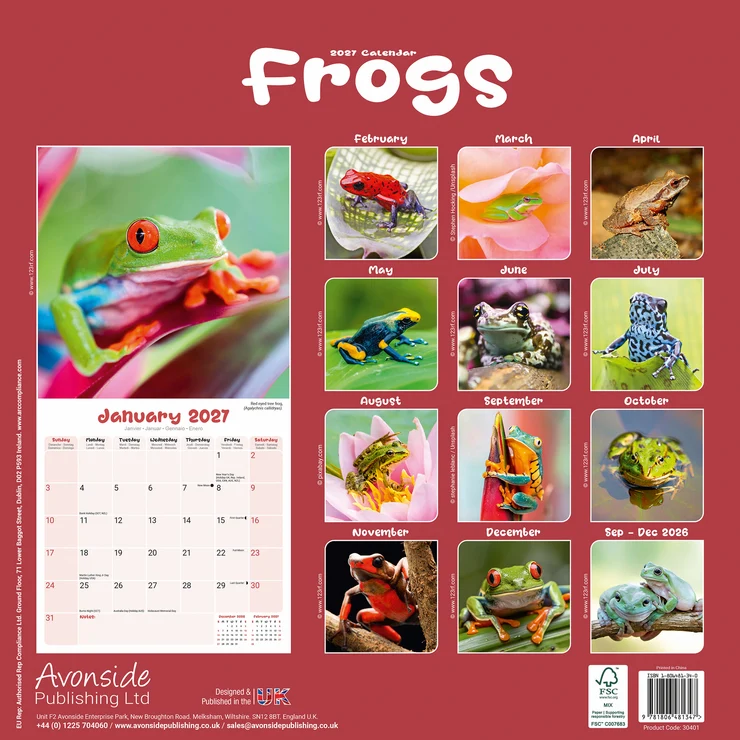
Calendar 2026 Frogs - Frogs

Article no: SY-30401W.23

CHF 19.90

Stock: 0

This article is currently not available

Product information "Calendar 2026 Frogs - Frogs"

Annual calendar with 13 photographs

one picture per month + cover picture

Format closed approx. 30.5 × 30.5 cm
Format unfolded on the wall: approx. 61 × 30.5 cm

Alphabet : F
Composition
Feeding recommendation
Technical details
Size information

0 of 0 reviews

Give us a rating!

Share your experience with the product with other customers.


Suggested products

Advent calendar "Gourmet-Mix" by Martin Rütter
Advent calendar from dog professional Martin RütterWith the Martin Rütter "Gourmet Mix" Advent calendar, you can give your faithful companion a little bit of joy every day. Behind the 24 little doors awaits an exclusive selection of our most popular snacks - from water buffalo to lamb and chicken to fine cheese treats.A varied treat that your dog is guaranteed to love! Our high-quality snacks not only impress with their delicious taste, but also with their excellent digestibility. As with all FRESCO products: 100% natural, 100% fresh.Perfect as a small reward during the Advent season or as a special surprise at Christmas.The Martin Rütter Advent Calendar "Gourmet Mix " - the tastiest anticipation of the festive season - for your dog and for both of you!

CHF 24.90

Advent calendar "Monoprotein Horse" by Martin Rütter
Advent calendar from dog expert Martin RütterThe best Advent for your four-legged friend starts now! With the Martin Rütter Advent calendar for dogs, you can give your faithful companion a little treat every day.Behind the 24 little doors await carefully selected treats made from 100% monoprotein horse - our most popular snacks, delicious in taste and particularly well tolerated. Ideal for sensitive dogs and allergy sufferers - and perfect as a small reward during the Advent season or as a festive surprise at Christmas.Naturally in proven FRESCO quality: 100 % natural, 100 % fresh.The Martin Rütter Advent calendar - the best way to enjoy the anticipation of Christmas together!

CHF 24.90

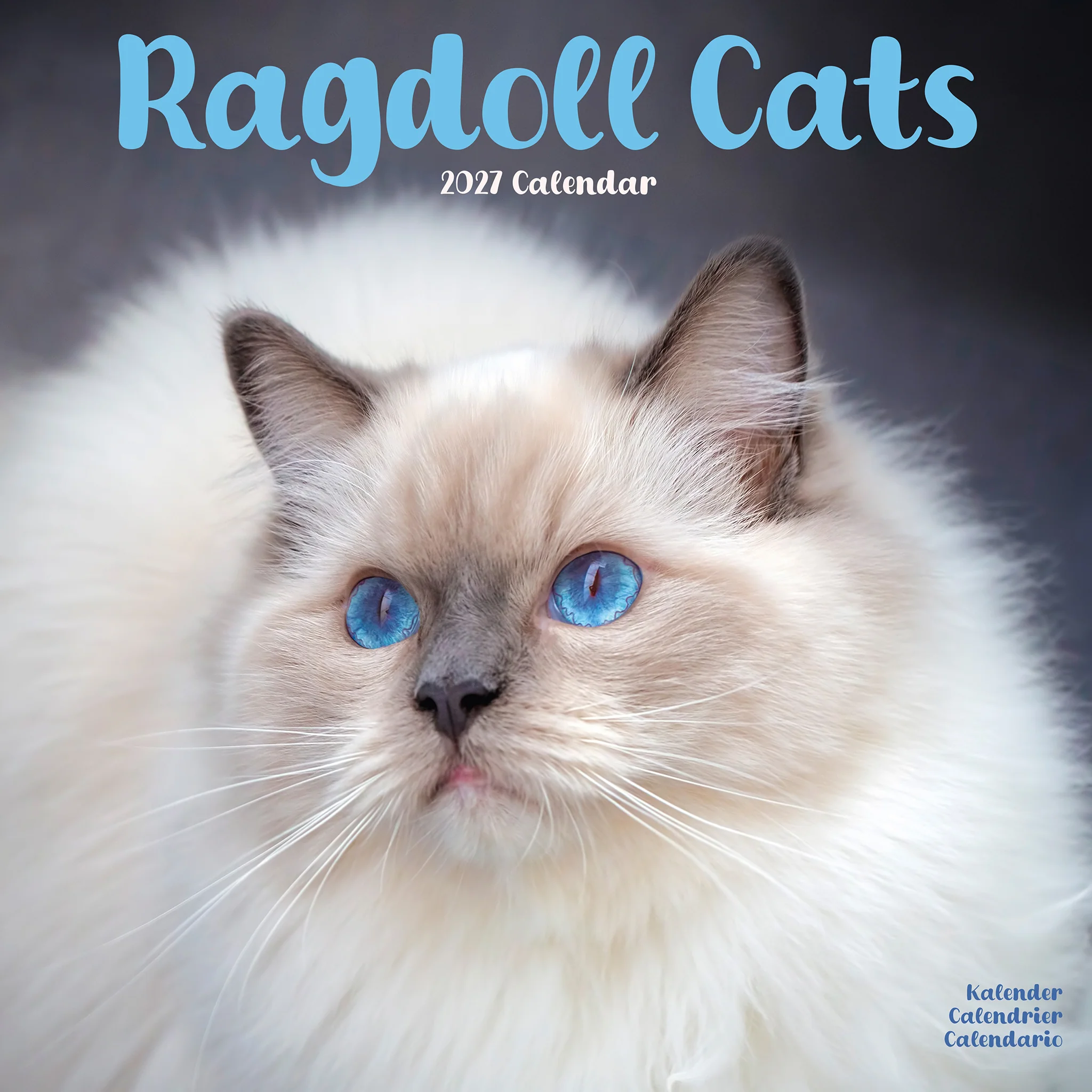
Calendar 2026 - Ragdoll Cats
Annual calendar with 13 photographs one picture per month + cover pictureFormat closed approx. 30.5 × 30.5 cm Format unfolded on the wall: approx. 61 × 30.5 cm

CHF 19.90

Calendar 2026 Lop-Eared Rabbits - Aries rabbits
Annual calendar with 13 photographs one picture per month + cover picture Format closed approx. 30.5 × 30.5 cm Format unfolded on the wall: approx. 61 × 30.5 cm

CHF 19.90

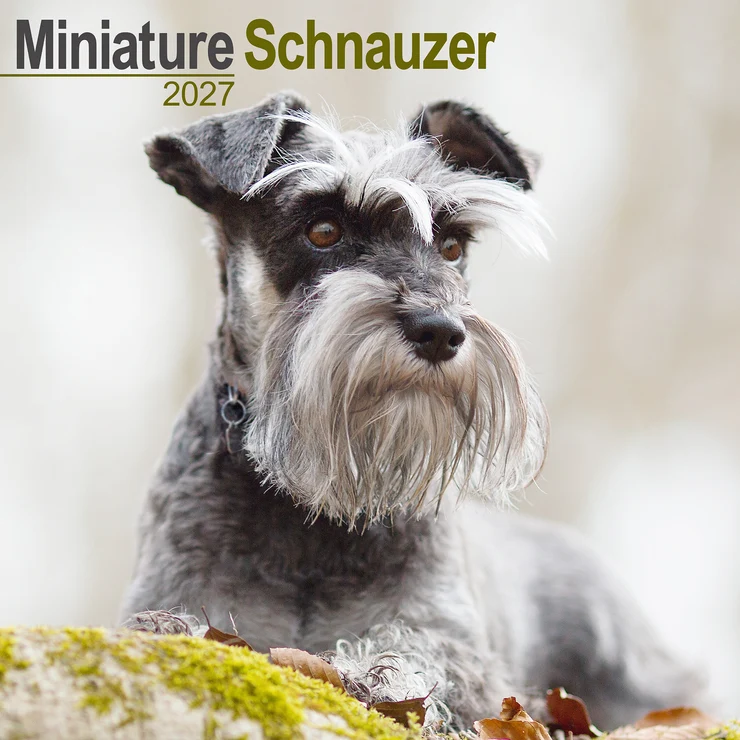
Calendar 2026 Miniature Schnauzer - Miniature Schnauzer
Annual calendar with 13 photographs one picture per month + cover picture Format closed approx. 30.5 × 30.5 cm Format unfolded on the wall: approx. 61 × 30.5 cm

CHF 19.90

Calendar 2026 Welsh Springer Spaniel
Annual calendar with 13 photographs one picture per month + cover picture Format closed approx. 30.5 × 30.5 cm Format unfolded on the wall: approx. 61 × 30.5 cm FCI standard no.: 126 Patronage: Great BritainFCI classification: Group 8: Retrieving dogs - Stöberhunde - WasserhundeSection 2: Stöberhunde

CHF 19.90

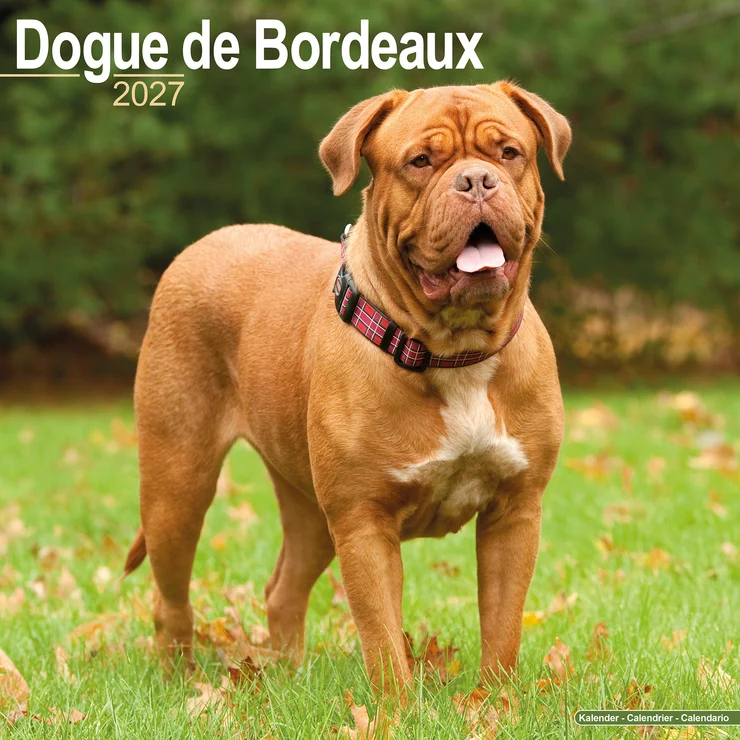
Calendar 2026 Dogue de Bordeaux - Dogue de Bordeaux
Annual calendar with 13 photographs one picture per month + cover picture Format closed approx. 30.5 × 30.5 cm Format unfolded on the wall: approx. 61 × 30.5 cm FCI standard no.: 116 Patronage: FranceFCI classification: Group 2: Pinscher and Schnauzer - Molossoid - Swiss Mountain and Cattle DogsSection 2: Molossoid, Mastiff-type dogs, without working test

CHF 19.90

Calendar 2026 Belgian Shepherd Dog - Belgian Shepherd Dog
Annual calendar with 13 photographs one picture per month + cover picture Format closed approx. 30.5 × 30.5 cm Format unfolded on the wall: approx. 61 × 30.5 cm FCI standard no.: 15 Patronage: Belgium FCI classification: Group 1: Herding and driving dogs (excluding Swiss Mountain and Cattle Dogs)Section 1: Sheepdogs, with working testalso known as Chien de Berger Belge, Mechelse Herdershond, Mechelaar The Belgian Shepherd Dog is divided into 4 types: Groenendael (long-haired black) Laekenois (rough-haired) Malinois (short-haired) Tervueren (long-haired, reddish-brown, fawn, black and tan)

CHF 19.90

Calendar 2026 Wolf - Wolves - Wolves
Annual calendar with 13 photographs one picture per month + cover picture Format closed approx. 30.5 × 30.5 cm Format unfolded on the wall: approx. 61 × 30.5 cm

CHF 19.90

Calendar 2026 French Bulldog - French Bulldog
Annual calendar with 13 photographs one picture per month + cover picture Format closed approx. 30.5 × 30.5 cm Format unfolded on the wall: approx. 61 × 30.5 cm FCI standard no.: 101 Patronage: FranceFCI classification: Group 9: Companion and companion dogsSection 11: Small mastiff-type dogsThe Bully is also known as Bouledogue francais

CHF 19.90

Calendar 2026 Macaws - Macaws - Macaws
Annual calendar with 13 photographs one picture per month + cover picture Format closed approx. 30.5 × 30.5 cm Format unfolded on the wall: approx. 61 × 30.5 cm

CHF 19.90

Calendar 2026 American Pit Bull Terrier
Annual calendar with 13 photographs one picture per month + cover picture Format closed approx. 30.5 × 30.5 cm Format unfolded on the wall: approx. 61 × 30.5 cm no FCI recognized dog breed Alternative names: APBT, Pit Bull, Pitbull

CHF 19.90

Customers also saw

Indian mudskippers (Periophthalmus novemradiatus)
Periophthalmus novemradiatus - The Indian mudskipperOrigin & habitatThe Indian mudskipper (Periophthalmus novemradiatus) originates from the coastal regions of South Asia, particularly India, Sri Lanka and Bangladesh. Its favourite habitat is mangrove forests, brackish water zones, muddy estuaries and intertidal zones. Here it finds ideal conditions to live between water and land.AppearanceThis unusual fish has an elongated, scale-covered body, which is usually grey-brownish in colour and can be covered with small, shimmering spots. Particularly striking are its protruding eyes, which sit high up on the head and can be moved independently of each other - a perfect adaptation to life outside the water. Males also have a more conspicuous dorsal fin, which they raise for courtship.SizePeriophthalmus novemradiatus is one of the smaller mudskipper species. Adults reach a length of around 6 to 10 centimetres.Life expectancyIn suitable husbandry or under natural conditions, an Indian mudskipper can live for around 3 to 5 years. Factors such as water quality, diet and habitat play an important role here.LifestyleThe Indian mudskipper is diurnal and semi-aquatic, which means that it spends most of its time out of the water. Thanks to its powerful pectoral fins, it can "jump" and move on wet mud. It uses both its gills and a special skin respiration system to breathe as long as the skin remains moist. Mudskippers are territorial and can be quite aggressive towards conspecifics.Unique characteristicsAmphibious lifestyle: One of the few fish that can actively move around on land.Eyes like a chameleon: Their eyes can rotate independently of one another – a great advantage for navigation and hunting prey.Jumping & Climbing: Despite their small size, they can jump surprisingly far and even climb roots or stones.Skin and mucous membrane respiration: Like amphibians, the mudskipper can also absorb oxygen through its moist skin and the mucous membranes in its mouth and throat. However, this epidermal respiration only works as long as the skin is well moistened – which is why the mudskipper relies on a humid environment or frequent periods in the water.Keeping in a paludariumA paludarium - a combination of aquarium and terrarium - is ideal for keeping the Indian mudskipper in a species-appropriate way. This should offer both a water area and sufficient land area with a moist, muddy or sandy substrate.SetupLand area: At least half of the paludarium should consist of dry, slightly damp sand on which the animals can walk and jump. Fine aquarium sand or a clay-sand mixture works well.Aquarium section: Shallow and warm (24–28°C), with slightly brackish water (salinity approx. 5–15 g/L), as the animals originate from brackish water zones.Hiding places & climbing opportunities: Roots, stones or mangrove roots provide shelter and climbing opportunities.Plants: Saltwater-tolerant plants or artificial alternatives can be used – a robust setup is important, as the fish dig.TidesA particularly natural paludarium offers a simulated ebb and flow of the tide. This can be controlled using pumps or a timer: At high tide, the water area fills slowly and provides access for swimming. At low tide, the water level drops and more land becomes accessible. This corresponds to the natural behaviour of the animals and significantly stimulates their activity.General conditionsLighting: Daylight simulation with UV components is recommended.Humidity: High, ideally between 70–90%.Cover: The paludarium should be well covered, as mudskippers are excellent climbers and can escape quickly.Created with ChatGPT – revised by Zoo Roco

CHF 1,000.00