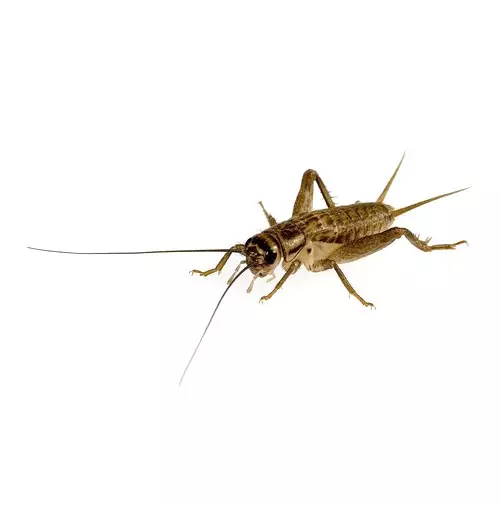
Cricket (Acheta domesticus) large / adult

Article no: FT-205

CHF 26.00

Stock: 0

Ready for dispatch in 1-3 days, delivery time 10 working days

Delivery between Tuesday, 5 May and Wednesday, 6 May
Contents Food animals
Zahlungsarten
Product information "Cricket (Acheta domesticus) large / adult"

Cricket (Acheta domesticus) large (adult)

The cricket is the standard food insect that no reptile lover should be without.

  • Food animal for reptiles, amphibians and birds
  • average size
  • large - adult

The cricket is the standard food insect that no reptile lover should be without. Its average size, simple behaviour and relatively high resistance make it extremely popular.

It is accepted by almost every reptile that also feeds on straight-winged insects. As crickets are also found in Central Europe, they are also easy to transport in the cold season without any significant losses. Bird lovers also mainly use crickets to raise their brood of birds.

Order by Sunday evening - delivery on Thursday

Orders received by Sunday evening will be dispatched by A Mail on Wednesday or Thursday.
Please enter a recipient address where the parcel can be delivered.

We accept no responsibility for parcels that are delivered late or collected late.
When it is cold, many insects go into torpor - but the animals recover after a few hours. If it is very cold, we recommend that you order the heat cushion as an extra, as this provides some protection against losses during the winter months.

The live crickets in the shop are only available at this price on Wednesdays - the prices per tin are otherwise Fr. 1.00 per tin higher, as we also feed and care for the crickets.

Even with the greatest care, it can happen that feed animals die due to temperature fluctuations or unpredictable events. We accept no liability for this.

Quantity: approx. 500pcs
Composition
Feeding recommendation
Technical details
Size information

15 of 15 reviews

4.8 out of 5 stars


93%

0%

0%

7%

0%


Give us a rating!

Share your experience with the product with other customers.


3 May 2025 14:30

Highly recommended

Great quality delivery always fresh and super packed very nice customer service

2 April 2025 15:42

Everything is fine, gladly again.

Tip top, good quality and a good quantity. And all well packaged and delivered quickly.

27 February 2023 05:19

Better from Zoo rocko than qualipet

They all arrived very lively to nd were very fit

1 October 2021 06:55

Très bien

Très bien

9 June 2021 07:31

A good product

A good product

11 March 2021 12:45

Je recommande

Emballage et envois parfait. Animaux en très bonne santé. Parfait!

10 February 2021 15:58

Very satisfied

Very satisfied

12 January 2021 20:21

Fast delivery. The animals were sent with a

Fast delivery. The animals were sent with a heat pad, which is why they all arrived alive. I have already ordered again and am looking forward to the delivery.

27 November 2020 06:30

Excellente qualité

Excellente qualité

2 October 2020 00:22

Parfait !

Parfait !

Suggested products

Drosophila mite separator
Drosophila Mite Separator The Drosophila mite separator is a practical aid for the hygienic preparation of feeder insects. It reliably separates mites from Drosophila (food flies) before they are fed to reptiles, amphibians or other insectivores. This reduces the risk of mite transmission and supports clean feeding. Product features - at a glance - Effectively separates mites from Drosophila - Facilitates the hygienic preparation of feeding flies - Reduces the risk of mite transmission - Quick and easy to use - Suitable for daily feeding - Ideal for terrariums and breeding - Reusable and easy to clean The Drosophila mite separator was specially developed to separate mites from the Drosophila before feeding. Especially in terrariums and insect breeding, mites can multiply quickly and be unintentionally transferred to terrariums. (Food mites do not go to terrarium animals such as reptiles and amphibians) By using the mite separator, the food flies can be hygienically prepared before feeding. The Drosophila are separated, while mites remain in the container or are separated out. This contributes to cleaner feeding and the well-being of the animals. The mite separator is easy to use, quickly ready for use and is suitable for both hobby keepers and professional breeders. Zoo Roco tip Use the mite separator regularly, especially with freshly purchased or home-bred Drosophila. Clean the tool after use to prevent mites from accumulating again.

CHF 9.90

Repto tweezers stainless steel black
Repto Stainless Steel Tweezers  - Precise Tool for Terrarium Care and Decoration The Repto Stainless Steel Tweezers are an indispensable tool for all reptile keepers who value precision and comfort. With these high-quality tweezers, you can feed your animals safely and accurately, place decorations precisely and keep the terrarium clean and tidy. The rust-free stainless steel ensures a long service life and high resistance, even under humid conditions in the terrarium. Advantages at a glance: Precise handling: Ideal for targeted feeding of reptiles such as geckos, snakes or spiders, without direct contact with the food. Versatile use: Perfect for precise placement of decorative elementsEasy cleaning: The smooth stainless steel surface is easy to clean, so you can keep your terrarium hygienically clean at all times. Durable and robust: Made from rust-free stainless steel, the tweezers offer high resistance to moisture and other environmental conditions in the terrarium. Ergonomic handle: The non-slip handle ensures comfortable handling and enables precise control, even for longer applications. Versatile applications: Feeding: With the Repto Stainless Steel Tweezers, you can feed your reptiles safely and hygienically without having direct contact with the food. These tweezers are particularly useful for carnivorous reptiles that prefer live food such as insects. Placing decorations: Place plants or other decorative elements in your terrarium with the utmost precision. The tweezers help to optimally design the structure of your animals’ habitat Cleaning and care: Effortlessly remove leftover food, dirt or dead plants from your terrarium. The Repto Stainless Steel Tweezers enable thorough cleaning even in hard-to-reach corners.Zoo Roco Tips:Use the Repto Stainless Steel Tweezers for precise and hygienic feeding of your reptiles, especially for animals that are sensitive to human contact. The tweezers are also helpful when decorating your terrarium, allowing you to place plants safely and accurately. Be sure to clean the tweezers regularly to maintain hygiene in the terrarium.

From CHF 11.90

Zophobas - Zophobas morio
Variant: Tin - approx. 40g | Variant (1): Tin - approx. 40g
Zophobas as food animals / food insectsZophobas are very popular with larger lizards and make a great change to the reptile's daily routine. NO staple food a great change high nutrient content Zophobas are not suitable as a staple food, but should only be fed as a variety. The nutrient content of zophobas is higher than that of mealworms. Make sure that the Zophobas are not in the terrarium for long! A pupated Zophobas can harm a young, small or sick animal!   Feed the Zophobas a varied diet: peppers, lettuce, dandelion, apples, pears, melons, berries, courgettes, turnips and also fish food or wholemeal flakes are eaten. Remember that only a well-fed feeder animal will produce a high-quality meal.Order by Sunday evening - delivery on ThursdayOrders received by Sunday evening will be dispatched by A Mail on Wednesday or Thursday.Please enter a recipient address where the parcel can be delivered.We accept no responsibility for parcels that are delivered late or collected late.The live crickets in the shop are only available at this price on Wednesdays - the prices per tin are otherwise Fr. 1.00 per tin higher, as we also feed and care for the crickets.Even with the greatest care, it can happen that feed animals die due to temperature fluctuations or unpredictable events. We accept no liability for this. 

CHF 3.50

Buffalo worms / grain mould beetle larvae
Contents Food animals: approx. 50g tin
Buffalo worms / cereal mould beetle larvae (Alphitobius diaperinus) Cereal mould beetle larvae, also buffalo worms called, are another type of beetle larvae that are fed both to terrarium animals and to soft-eating birds. for smaller reptiles and birds 1-1.2cm Cereal mould beetle larvae, also called buffalo worms, are another type of beetle larvae that are fed both to terrarium animals and to soft-eating birds. The buffalo worm only grows to about 10 to 12 mm long and is therefore mainly of interest for smaller animals. Cereal mould beetle larvae are also known as pests in Central Europe. However, they do not like cold temperatures and should also be stored at about 20 degrees C. As the animals are very active and therefore have a high metabolism, the worms should be fed regularly with flour and fruit during storage, otherwise the animals lose a lot of weight and also pupate quickly. Order by Sunday evening - delivery on ThursdayOrders received by Sunday evening will be dispatched on Wednesday or Thursday by A Mail.Please provide a recipient address where the package can be delivered.We accept no responsibility for packages delivered late or collected late. The live feeder animals in the shop are only available at this price on Wednesday - prices per tub are otherwise Fr. 1.00 per tub higher, as we also feed and care for the feeder animals.

CHF 4.90

Mealworms (Tenebrio molitor) mini
Contents Food animals: approx. 50g tin
Mealworms mini (Tenebrio molitor) The mealworm (Tenebrio molitor) is actually the beetle larva of the meal beetle. It hatches from an egg and, after moulting several times, grows to a size of approx. 25 mm. For birds in small quantities also for reptiles The mealworm is actually the beetle larva of the meal beetle. It hatches from an egg and, after moulting several times, grows to a size of approx. 25 mm. Finally, the beetle larva pupates, from which another beetle emerges. Mealworms are among the oldest commercially bred feeder animals. They are relatively easy to breed and are produced in large quantities. Mealworms are actually pests, mainly known from grain mills, as the larvae prefer to feed on flour or its by-products. As it is not possible to use insecticides in mills, it is difficult to control them if infested. Mealworms are classic food for soft-feeding birds. For this purpose, hundreds of tonnes of the beetle larvae are produced in Europe every year. A bird's stomach is well prepared for this type of food. A mealworm consists mainly of a hard, chitinous shell and, due to its rather simple diet, contains only a few nutrients. However, the stomach of a reptile is not well prepared for these conditions. If too many or only mealworms are fed to reptiles, deficiency symptoms or obesity may occur. It can also be seen from the faecal residues of the animals that mealworms are only insufficiently digested. Feeding the mealworms with vegetables or fruit before feeding them only results in a certain vitaminisation, which could also be achieved by dusting the beetle larvae with a vitamin preparation. The high fat content of the mealworms is another reason why the larvae should only be given to reptiles as supplementary food. For many bird enthusiasts, however, they are the basic food for their pets and are mainly bred for this purpose. At temperatures below 10 degrees C. the animals become motionless but are not dead. This can be used to advantage for storage. At temperatures of 6-8 degrees C. the animals can be stored for several weeks without food.Order by Sunday evening - delivery on Thursday Orders received by Sunday evening will be sent by A-Post on Wednesday or Thursday.Please provide a recipient address where the parcel can be delivered.We accept no responsibility for parcels that are delivered late or collected late. The live feeder animals in the shop are only available at this price on Wednesdays - otherwise the price per tin is Fr. 1.00 higher per tin, as we also feed and care for the feeder animals. Even with the greatest care, it may happen that feeder animals die due to temperature fluctuations or unpredictable events. We accept no liability for this.  

CHF 4.50

Mealworms (Tenebrio molitor)
Contents Food animals: approx. 50g tin
Mealworms - Tenebrio molitor The mealworm (Tenebrio molitor) is one of the oldest commercially bred feeder animals. They are relatively easy to breed. For birds in small quantities also for reptiles The mealworm is actually the beetle larva of the meal beetle. It hatches from an egg and grows to a size of approx. 25 mm after moulting several times. Eventually the beetle larva pupates, from which a beetle emerges again. Mealworms are among the oldest commercially bred feeder animals. They are relatively easy to breed and are produced in large quantities. Mealworms are actually pests which are mainly known from grain mills, as the larvae prefer to feed on flour or its waste products. As it is not possible to use insecticides in mills, an infestation is difficult to control. Mealworms are a classic food for soft-feeding birds. Hundreds of tons of these beetle larvae are produced throughout Europe every year for this purpose. A bird's stomach is well adapted to this type of food. A mealworm consists largely of a hard, chitinous shell and, due to its fairly simple diet, contains few nutrients. The stomach of a reptile, on the other hand, is not well adapted to these conditions. If too many or only mealworms are fed to reptiles, deficiency symptoms or obesity can occur. You can also see from the animals' faeces that mealworms are only poorly digested. Feeding mealworms with vegetables or fruit before feeding only has the effect of a certain vitaminization, which could also be achieved by dusting the beetle larvae with a vitamin preparation. The high fat content of mealworms is another reason why the larvae should only be given to reptiles as supplementary food. For many bird lovers, however, they represent the staple food of their favourites and this is mainly what they are bred for. At temperatures below 10 degrees C. the animals become motionless but are not dead. This can be utilised for storage. At temperatures of 6-8 degrees C. the animals can be stored for several weeks without food.Order by Sunday evening - delivery on ThursdayOrders received by Sunday evening will be sent by A-Post on Wednesday or Thursday.Please provide a recipient address where the parcel can be delivered.We accept no responsibility for parcels that are delivered late or collected late. The live feeder animals in the shop are only available at this price on Wednesdays - prices per tin are otherwise Fr. 1.00 per tin higher, as we also feed and care for the feeder animals.  Even with the greatest care, it can happen that feeder animals die due to temperature fluctuations or unpredictable events. We accept no liability for this.

CHF 3.90

Giant mealworms (Tenebrio molitor)
Contents Food animals: approx. 50g tin
Giant mealworms - Tenebrio molitorThe mealworm (Tenebrio molitor) - mealworms are classic food for soft-feeding birds. For birds also available in small quantities for reptiles Giant mealworms are mealworms in which a special breeding method causes the larvae to pupate much later. As a result, the larvae become much larger and almost reach the size of Zophobas. Nutritional values, storage and all other parameters correspond to those of normal mealworms.We obtain the giant mealworms from a breeder of fishing bait. Substances that may affect the pupation of the animals may have been used in the breeding of the worms.The mealworm is actually the larva of the mealworm beetle. It hatches from an egg and grows to a size of approx. 25 mm after moulting several times. Finally, the beetle larva pupates, from which another beetle emerges. Mealworms are among the oldest commercially bred food animals. They are relatively easy to breed and are produced in large numbers. Mealworms are actually pests that are mainly known from grain mills, as the larvae prefer to feed on flour or its waste products. As it is not possible to use insecticides in mills, it is difficult to deal with an infestation.Mealworms are classic food for soft-feeding birds. Hundreds of tonnes of the beetle larvae are produced for this purpose throughout Europe every year. A bird's stomach is well prepared for this type of food. A mealworm consists mainly of a hard, chitinous shell and has few nutrients due to its rather simple diet. However, a reptile's stomach is poorly prepared for these conditions. If too many or only mealworms are fed to reptiles, deficiency symptoms or obesity can occur. It can also be recognised from the animals' faecal residues that mealworms are not digested properly. Feeding mealworms with vegetables or fruit before feeding them only has the effect of a certain vitaminisation, which could also be achieved by pollinating the beetle larvae with a vitamin preparation. The high fat content of mealworms is another reason why the larvae should only be given to reptiles as supplementary food.For many bird lovers, however, they are the staple food of their favourites and are mainly bred for this purpose. At temperatures below 10 degrees C. the animals become motionless but are not dead. This can be utilised for storage. At temperatures of 6-8 degrees C. the animals can be stored for several weeks without food.Order by Sunday evening - delivery on ThursdayOrders received by Sunday evening will be dispatched by A Mail on Wednesday or Thursday.Please enter a recipient address where the parcel can be delivered.We accept no responsibility for parcels that are delivered late or collected late.The live food animals in the shop are only available at this price on Wednesdays - the prices per tin are otherwise CHF 1.00 per tin higher, as we also feed and care for the food animals. Even with the greatest care, it can happen that feed animals die due to temperature fluctuations or unpredictable events. We accept no liability for this. 

CHF 3.90

Steppe crickets (Gryllus assimilis) subadult
Contents Food animals: approx. 35stk / Dose
Steppe crickets (Gryllus assimilis) Steppe cricket (Gryllus assimilis) is one of the most commonly fed feeder insects. the most frequently fed feeder insect larger feeder insect for reptiles and amphibians also for ornamental birds subadult The steppe cricket is one of the most commonly fed feeder insects. Their calm nature and rather impressive size make them a favoured meal for almost every insect-eating reptile and also many soft-feeding birds. Steppe crickets come from the subtropical climate zones of South America. The females can reach a total length of up to 35 mm, the males are slightly smaller. The chocolate-brown colouring of the adult animals clearly distinguishes them from Mediterranean crickets, which are deep black. The steppe cricket is noticeable to terrarium keepers due to the relatively quiet calling of the males and their low jumping power.In contrast to the Mediterranean cricket, the steppe cricket is not as productive. Breeding the animals also takes a little longer than with the Mediterranean cricket. Shipping of the animals is possible all year round. In summer, care should be taken to ensure that the animals are not exposed to excessive heat, as crickets generate considerable body heat when highly active. If this is not sufficiently dissipated, it can cause damage. In turn, this fact is helpful in winter as the generated body heat, in combination with winter packaging, allows them to withstand lower temperatures during shipping.As the crickets are offered in various sizes, they are not only suitable for large lizards. Indeed, many keepers of medium-sized lizards such as leopard geckos, collared lizards, half-grown bearded dragons or similar have recognised a major advantage in steppe crickets. Medium-sized animals of this species are similar in size to, for example, adult house crickets or short-winged crickets. However, as they are not yet adult, they do not yet have any wings. Thus, the often annoying chirping of the males is omitted. Order by Sunday evening - delivery on Thursday Orders received by Sunday evening will be dispatched by A Mail on Wednesday or Thursday.Please provide a recipient address where the parcel can be delivered.We accept no responsibility for parcels that are delivered late or collected late.In cold weather, many insects fall into torpor - however, the animals recover after a few hours. If it is very cold, we recommend that you order the heat pad as an extra, as this is a certain protection against losses during the winter months. The live feeder insects in the shop are only available at this price on Wednesdays - otherwise the prices per tub are Fr. 1.00 per tub higher, as we also feed and care for the feeder insects.   Even with the greatest care, it can happen that feeder insects die due to temperature fluctuations or unpredictable events. We accept no liability for this.  

CHF 3.50

Fruit flies (Drosophila melanogaster)
Fruit flies - Drosophila melanogaster Fruit flies are the smallest flies that are commercially grown as food animals.However, these flies were originally bred for genetic research because the reproduction duration of the fly is very short. To the animals to better affairs, copies were bred with crippled wings. This flies have lost their ability to fly. Gladly will Drosophila to amphibians, reptiles and small offspring of young spiders, but also fed on small ornamental birds. Even with the greatest care, it can happen that food animals die as a result of temperature fluctuations or incalculable events. We assume no liability for this.

CHF 5.90

Steppe cricket (Gryllus assimilis) small
Contents Food animals: approx. 70stk / Dose
Steppe crickets (Gryllus assimilis) The steppe cricket (Gryllus assimilis) is one of the most commonly fed feeder insects. the most frequently fed feeder animal larger feeder animal for reptiles and amphibians also for ornamental birds small The steppe cricket is one of the most commonly fed feeder insects. Their calm nature and impressive size make them a preferred meal for almost every insect-eating reptile and also for many soft-feeding birds. Steppe crickets originate from the subtropical climate zones of South America. Females can reach a total length of up to 35 mm, while the males are slightly smaller. The chocolate-brown colouring of the adult animals makes them clearly distinguishable from Mediterranean crickets, which are deep black. Steppe crickets are particularly noticeable to terrarium keepers due to the males' relatively quiet calling and low jumping ability.In contrast to the Mediterranean cricket, the steppe cricket is not as productive. Raising these animals also takes a little longer than with Mediterranean crickets.The animals can be shipped all year round. In summer, care must be taken to ensure that the animals are not exposed to excessive heat, as crickets generate considerable intrinsic heat when particularly active. If this is not sufficiently dissipated, it can cause damage. On the other hand, this is an advantage in winter, as the intrinsic heat in combination with winter packaging enables them to withstand lower temperatures during shipping.Since the crickets are offered in different sizes, they are not just suitable for large lizards. In fact, many owners of medium-sized lizards such as leopard geckos, collared iguanas, juvenile bearded dragons, etc., have recognised a significant benefit in steppe crickets. Medium-sized animals of this species are similar in size to, for example, adult house crickets or short-winged crickets. However, as they are not yet adult, they do not have wings. This means the often bothersome chirping of the males is eliminated. Order by Sunday evening – delivery on ThursdayOrders received by Sunday evening will be shipped on Wednesday or Thursday by A-Post.Please provide a delivery address at which the parcel can be delivered.We accept no responsibility for parcels delivered late or collected late.In cold conditions, many insects enter a state of torpor—but the animals usually recover after a few hours. If it is very cold, we recommend ordering the heat pad as an addition; this offers some protection against losses during the winter months. The live feeder animals in the shop are only available at this price on Wednesdays—the price per tub is otherwise Fr. 1.00 higher per tub, as we also feed and care for the feeder animals.   Even with the greatest care, it can happen that feeder animals die due to temperature fluctuations or unpredictable events. We accept no liability for this.  

CHF 3.50

Two-spotted crickets (Gryllus bimaculatus) small
Contents Food animals: approx. 70stk / Dose
Two-spotted crickets (Gryllus bimaculatus) Two-spotted crickets (Gryllus bimaculatus), also known as Mediterranean or banana crickets, are found mainly in the Mediterranean region. They can grow slightly larger than steppe crickets and, unlike them, are black in colour. for reptiles and amphibians larger than the steppe crickets small Two-spotted crickets, also known as Mediterranean or banana crickets, are found mainly in the Mediterranean region. They can grow slightly larger than steppe crickets and, unlike them, are black in colour. As this insect species must overwinter, it is ideally equipped for shipping in winter and is also considered resistant to cold temperatures. Otherwise, the species is comparable with the steppe crickets. Order by Sunday evening - delivery on ThursdayOrders received by Sunday evening will be dispatched by A Mail on Wednesday or Thursday.Please leave a recipient address where the parcel can also be delivered.We accept no responsibility for parcels that are delivered late or collected late. The live feeder animals in the shop are only available at this price on Wednesday - the prices per tin are otherwise Fr. 1.00 more per tin, as we also feed and care for the feed animals.

CHF 3.50

Earthworm (Lumbricus terrestris) 10 Pieces
Earthworm (Lumbricus terrestris) - 10 Pieces also for fishing animal food popular Check out until Sunday evening - delivered on Thursday Orders placed until Sunday evening with us will be shipped on Wednesday or Thursday by priority mail.We ask you to pay a recipient's address to which the package can also be delivered.We assume no responsibility for packages delivered too late or be picked up too late.

CHF 4.50

Customers also saw

Cricket (Acheta domesticus) large / adult

Contents Food animals: approx. 40 pcs / can
Cricket (Acheta domesticus) large (adult)The cricket is the standard food insect that no reptile lover should be without. Food animal for reptiles, amphibians and birds average size large - adult The cricket is the standard food insect that no reptile lover should be without. Its average size, simple behaviour and relatively high resistance make it extremely popular.It is accepted by almost every reptile that also feeds on straight-winged insects. As crickets are also found in Central Europe, they are also easy to transport in the cold season without any significant losses. Bird lovers also mainly use crickets to raise their brood of birds.Order by Sunday evening - delivery on ThursdayOrders received by Sunday evening will be dispatched by A Mail on Wednesday or Thursday.Please enter a recipient address where the parcel can be delivered.We accept no responsibility for parcels that are delivered late or collected late.When it is cold, many insects go into torpor - but the animals recover after a few hours. If it is very cold, we recommend that you order the heat cushion as an extra, as this provides some protection against losses during the winter months.The live crickets in the shop are only available at this price on Wednesdays - the prices per tin are otherwise Fr. 1.00 per tin higher, as we also feed and care for the crickets.Even with the greatest care, it can happen that feed animals die due to temperature fluctuations or unpredictable events. We accept no liability for this.

CHF 3.50