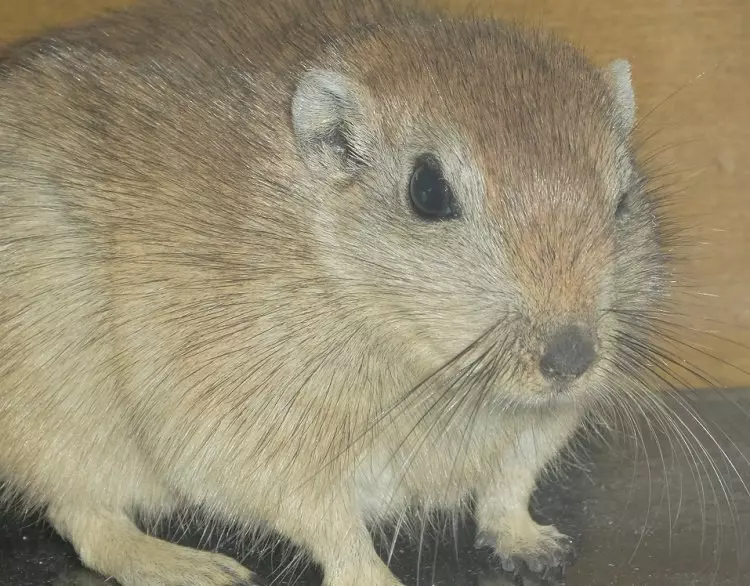
Degu
Profile
| Home: | Chile |
| Age expectation: | 4-5 years |
| Sexual maturity: | 2-3 months |
| Gestation period: | 3 months |
| Social behaviour: | Group animal |
| Diet: | Hay, seeds, green food, branches, water |
The degu
Degus originate from Chile and are found in the high plateaus and low mountain ranges of Chile at altitudes up to 1,200 metres. They prefer open landscapes that are easy to survey.
Degus are very social animals and live in family groups of 5 to 12 animals. These include several males, which live together in harmony and defend the "family territory" against neighbouring degu groups.
Degus mark their territory with scent marks from urine. For example, they mark stones or the sand bathing area.
Females often give birth in the same underground nest. This results in all the young having the same nest scent and therefore being suckled indiscriminately by any female.
Degu care:
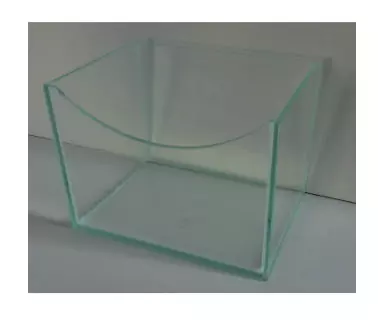
A commercially available cage is not suitable for housing degus. On the one hand, a great deal of bedding would fall out, as degus love to dig and naturally throw the bedding around. On the other hand, the commercially available small animal enclosures have a plastic base tray, which a degu can gnaw through in a very short time. We recommend a small animal aviary, as this best meets the requirements of degus. As an alternative, an aquarium/terrarium can also be chosen.
Whether aquarium, terrarium or room aviary, the main deciding factor is above all the species-appropriate size of the accommodation. In general, it is said that the size for the base area of the accommodation should be 100x50cm if you keep two degus. But the principle always applies: the bigger, the better! Then the animals have more space to move and run around, and a larger home can also be made much more attractive.
Degus must have a digging layer of 30cm of bedding available.
Legal requirements:
- Enclosure at least 100x50x70cm for 5 animals (not our recommendation)
- Bedding height 30cm
- Hiding places for all animals
- Coarse-structured food: hay or straw
- fresh branches
- Sand bath
- Group housing
Cage equipment includes:
- Thick branches for walking on and gnawing
- Stones for sharpening claws
- Sleeping houses as vantage points: Wooden houses are unsuitable due to the degus’ strong gnawing drive. Bricks stacked on top of each other, covered above with a large stone slab (e.g. slate), are better. But pay attention to safety, because a collapse could injure your degu.
- Perches as viewing points and to enlarge the floor area of the cage
- Sand bath: Like a chinchilla, a degu also needs a regular sand bath to clean its coat. Once a day, you should give it about 15 minutes for this. Therefore, leave a place in the terrarium free where you can place the bath. Do not leave the "bathtub" in there all the time as it will become dirty too quickly. If you use a wire cage, you could get a chinchilla bathtub to hang in, as these are equipped with a removable lid.
- Water bowl: Nipple drinkers are not particularly suitable as they are made of plastic and, in the presence of a degu, they leak very quickly. The very sturdy hard plastic drinkers are also not particularly suitable for degus. Also, they are difficult to fix in a terrarium. So better use a stone bowl as well. Change water regularly
- Food bowl: Ideally a heavy porcelain bowl that cannot be pushed or knocked over. But it should not be too small so that several degu group members can feed from it at the same time. Placing the bowl on the floor is not advisable, as degus love to scratch and dig. It is best to place it on the sleeping house roof so that dirt does not get in so quickly.
Food:
When buying food, the general rule is that you should buy a maximum of 2 - 3 months’ supply, otherwise the vitamin content will decrease rapidly. Get used to a regular rhythm for feeding. Your pet will get used to the times very quickly and will soon look forward to them.
- Basic food
Degus are given a special degu food mix. - Roughage
Hay: Make sure your animals always have enough hay in the cage. In the wild, they mainly eat meagre food such as grasses or bark. Therefore, hay is actually closest to their natural diet. Degus eat correspondingly large amounts of it. It also serves as nesting material. - Green food
As a general rule, green food must always be thoroughly washed and then carefully dried.
Vegetables: carrots, cauliflower, cucumber, lettuce
Natural food: in the form of branches (only hardwood such as some from fruit trees, beech, birch or hazelnut), do not collect near busy roads.
Degus are prone to diabetes. Even small amounts of fruit can already cause diabetes. Please only feed vegetables and herbs! - Treats
To satisfy the degus’ urge to gnaw, they are regularly given fresh twigs, which are very happily accepted. The bark provides every degu with a tasty change. You will also find plenty of treats in pet stores. With various dried herbs and special degu snacks, you can spoil your degus!
Breeding:
If you want to breed degus, here you will find the most important facts that you should be familiar with before starting breeding.
 |
Sexual maturity: This occurs in females at about two months of age, in males at about three months. However, it may also occur later, for which individual differences may be responsible. |
| Gestation period: It lasts about three months. That is quite a long time for such a small animal. Even guinea pigs have a shorter gestation period. But degu young are already well developed at birth. They are hairy and have their eyes half or fully open, in contrast to mouse or hamster young, which are born naked and blind. | |
| Number: A litter usually consists of four to six young. However, there are also huge litters with up to ten young. These are rather rare and usually only grow up so large if there is a second lactating female present, as degu females only have eight teats. |
Regular costs (per month/for 2 animals):
- Food: approx. Fr.30.--
- Bedding and hay: approx. Fr. 50.--
- Vet: The more animal-friendly and cleaner the keeping, the less likely a visit to the vet will be necessary. Nevertheless, you must always expect that an animal may become ill and thus incur additional costs.
Before deciding on degus, you should definitely have read a relevant specialist book.
The following applies to all animal keeping: Children (including adolescents) must be guided, supervised and checked by parents. Children should know that animals are not toys!
For questions and problems, our trained team at Zoo Roco is at your disposal. They can advise you professionally on all questions.
Login
Suggested products







Customers also saw