

Rat
Profile
| Home: | Asia |
| Age expectation: | 2-4 years susceptible to cancer |
| Sexual maturity: | 50-70 days |
| Gestation period: | 21 days |
| Social behaviour: | Group animal, Twilight and nocturnal |
| Nutrition: | Food mix for coloured rats, insects, seeds, millet, herbs and flowers |
Rat
The Norway rat originally comes from China.
In the wild, rats live in colonies, in a so-called rat burrow. In this underground burrow, various burrows are created for different needs (sleeping and recreation room, storage and toilet chamber, burrow for rearing the young together).
domestication:
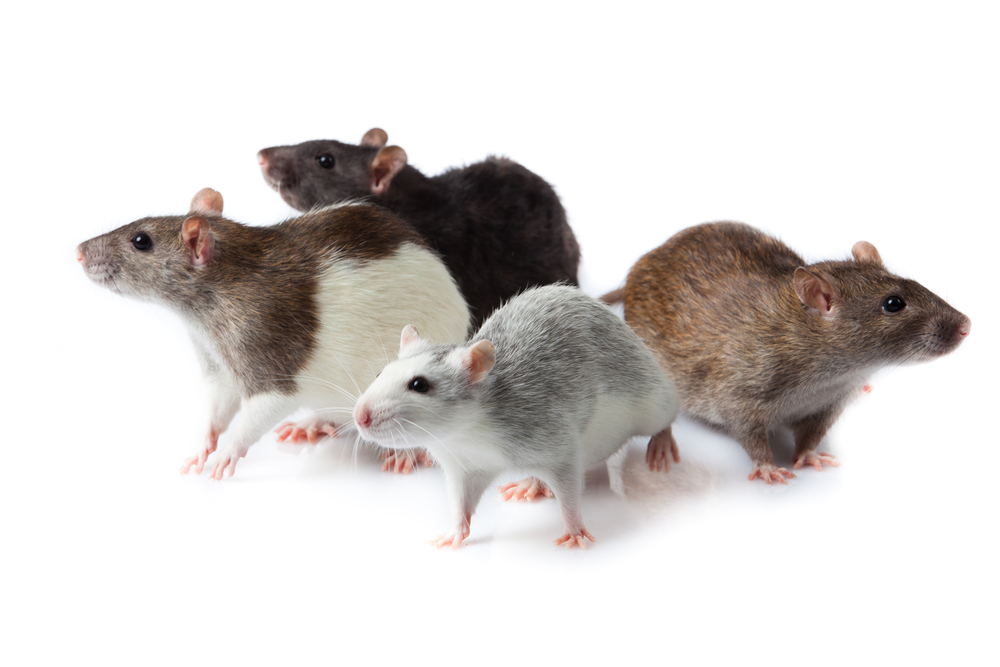
The coloured rat is descended from the Norway rat. It was first recorded in Europe in the 10th century. It used to be assumed that the Norway rat migrated to Europe from China via Russia and then Norway.
However, rats have effectively travelled around the world as stowaways on ships or other means of transport and can now be found everywhere.
Rats are of great importance worldwide as pest rodents and disease carriers (plague, rabies...).
Keeping:
Rats are social rodents and must be kept at least in pairs. However, larger, same-sex groups can also live in a large rodent enclosure or aviary.
The minimum size is 100x50x70cm for five animals. The rats can be offered daily exercise.
Many different materials can be offered as bedding, such as hemp, maize husks or linen. Low-dust but absorbent and odour-binding bedding is recommended.
No burrowing layer is required, but rats also like to nest in the substrate.
Each animal must be provided with a place to retreat to and suitable material to pad the houses.
The enclosure can be furnished in a varied way with ladders, natural branches, lianas and seat boards.
Rats mark their territory with urine and their scent glands. As this has a strong odour, the cage must be cleaned out twice a week. The enclosures should not be cleaned with strong-smelling chemicals as the animals will mark them more strongly.
Legal regulations:
- Enclosure min. 100x50cm for 2 animals
- Hiding places for all animals
- Coarse-textured food: hay or straw
- fresh branches
Nutrition:
Rats are omnivores and therefore have a varied diet:
- Commercially available feed mixture for coloured rats
- Insects such as crickets, multi-worms
- Curd or yoghurt
- Boiled eggs
- rat meat
- seeds
- rat millet
- Herbs and flowers
- Hay or straw
- Fruit, vegetables and berries
- fresh branches
- fresh water daily
Breeding data:
Newborn rats are naked and blind. The fur growth of the young animals begins from the 2nd day. The ears open after 3 to 4 days and the eyes after 13 to 16 days.
To prevent uncontrolled reproduction, males must be neutered or separated from their mother and sisters before they reach sexual maturity. Early castration is possible from the sixth week.
Regular costs (per month):
- Food: approx. Fr. 20.--
- Bedding and hay: approx. Fr. 40.--
- Vet: The more species-appropriate and cleaner the husbandry, the less likely it is that you will have to visit the vet. Nevertheless, you must always be prepared for the fact that an animal may fall ill and incur additional costs.
Before you decide on a rat, you should definitely have read a relevant specialist book.
The following applies to all animal husbandry: Children (including adolescents) must be guided, supervised and controlled by their parents. Children should know that animals are not toys!
Our trained team is available to assist you with any questions or issues at Zoo Roco. They can provide you with expert advice on all matters.
Login
Suggested products







Customers also saw
