
Guinea pig
Profile
| Home: | South America |
| Age expectation: | 6-8 years |
| Sexual maturity: | Male: 5 weeks Female: from 21 days |
| Gestation period: | 65 days Number of young/litter: 1-6 young, nest fledglings |
| social behaviour: | Group animal, diurnal |
| Nutrition: | Hay, seeds, vegetables, fruit, vitamin C !, water |
The guinea pig
The original home of the guinea pigs is South America, where they live in rock caves. The Incas used them as a source of meat. Dutch merchants brought them to Europe by sea. Because their squeaking reminded them of piglets, they called the small animals guinea pigs.
Keeping:
Guinea pigs are herd animals. In order to feel really comfortable, they need company. Therefore, you should never keep just a single animal. Females, or neutered males with females, get on best. Two males can only be kept together if neutered early. A mixed pair ensures constant offspring.
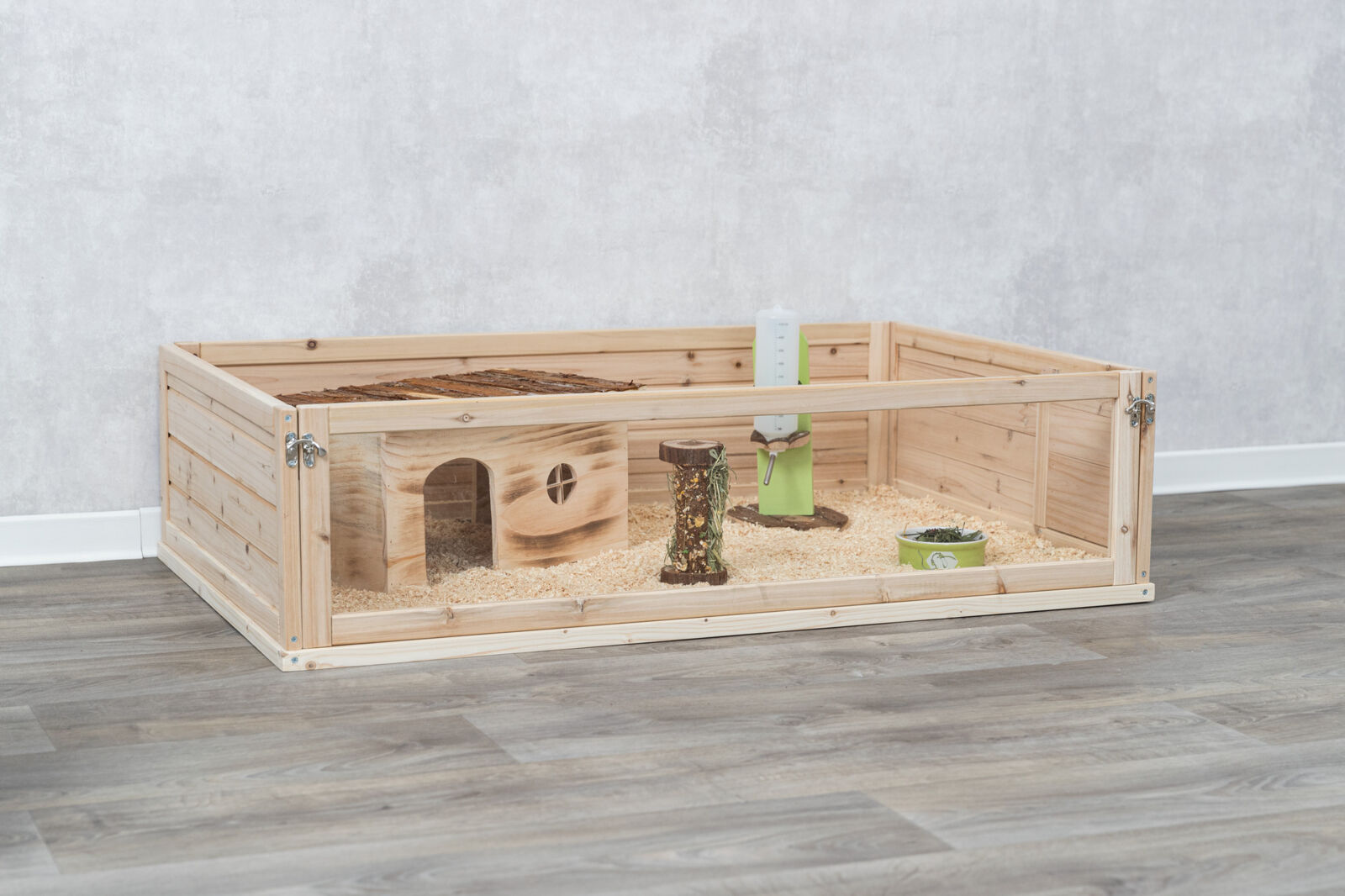
For the residents to feel comfortable, a guinea pig home can never be big enough. The cage size for two animals should not be smaller than 140x60cm. However, there are also very nice enclosures with a size of 150x75cm.
The cage should be equipped with hiding places so that the animals can retreat at any time. This should be respected, and the animals should not be torn from their sleep or taken out indiscriminately. The more additional levels and hiding caves the home contains, the more comfortable its residents feel.
Legal regulations:
- Enclosure at least 100x50cm for 2 animals (we do not recommend this at all!)
- Hiding places for all animals (thus, at least 1 shelter per animal)
- Coarse-structured food: hay or straw
- fresh branches
- Vitamin C
The cage equipment includes:
- Bedding
- Hay and straw
- various hiding places made of wood or cork,
- Levels to enlarge the area of the cage
- Food bowl and drinking bottle
Food:
To stay healthy, guinea pigs – like other living creatures – depend on a varied diet.
Guinea pigs are pure vegetarians. A large part of their food consists of good, mould-free hay, which should always be available. In addition, they require food from various seeds, fruits and vegetables. The ready-made food offered in pet shops contains all essential nutrients. Supplementary feed can bring variety into the guinea pigs’ menu.
Guinea pigs are especially happy about fresh food like fruit, carrots or dandelions. Make sure that the fresh food is unsprayed. The greens should always be fresh, but never wet. Guinea pigs easily get diarrhoea.
Guinea pigs have a high requirement for vitamin C. Therefore, vitamin drops should be added to the drinking water daily.
Guinea pigs should have fresh water available every day.
Regular monthly costs:
- Food: approx. Fr. 20.--
- Bedding and hay: approx. Fr. 30.--
- Vet: The more species-appropriate and clean the keeping, the less often you will have to go to the vet. Nevertheless, you must always expect that an animal may become ill and then cause additional costs.
Before you decide for guinea pigs, you should definitely have read a suitable specialist book.
The following applies to every animal keeping: Children must be guided, supervised and controlled by parents. Children must learn that an animal has its own needs and habits and to respect this. Parents should be aware that they are the ones who are responsible for the animal.
For questions and problems, our trained team at Zoo Roco is available to help you. They can give you expert advice on any questions.
Login
Suggested products








Customers also saw