Chinchilla

Profile

Home: South America, Andes
Age expectation: 15-20 years
Sexual maturity: 4-6 months
Gestation period: 111 days
social behaviour: Group animal, crepuscular and nocturnal
Diet: Hay, seeds, water
Product information "Chinchilla"

chinchilla

Native to:

Chinchillas are native to the Andes in South America. Once living in their millions in the rugged, rocky mountainous regions, they were hunted so much for their dense and soft fur that they were almost wiped out.

Description and nature:

Chinchillas are rodents. Their close relatives are guinea pigs. Chinchillas are nocturnal animals and, to the regret of small children, are not cuddly and cuddly animals, so this should be borne in mind when buying one. Their standard colour is light grey to dark grey, with a lightened to white coat on the belly. The following colour variations have also been created through breeding: White, silver, black velvet (black), beige, brown, brown velvet and violet. The size of a chinchilla is about 25 - 35 cm and the tail 15 - 20 cm, the weight is 400 - 600 grams. These animals can reach a very high age for a rodent, up to 20 years as a pet.

Care:

Chinchillas are kept as pets in pairs or groups. They need company to feel really comfortable. That's why you should never keep just one animal.
It is best to buy two females that have grown up together or a mother and daughter. Two male chinchillas do not get along.

If you decide on a pair, you need to bear in mind that there will be offspring. If this is undesirable, find a small animal vet or veterinary clinic to have the male neutered.

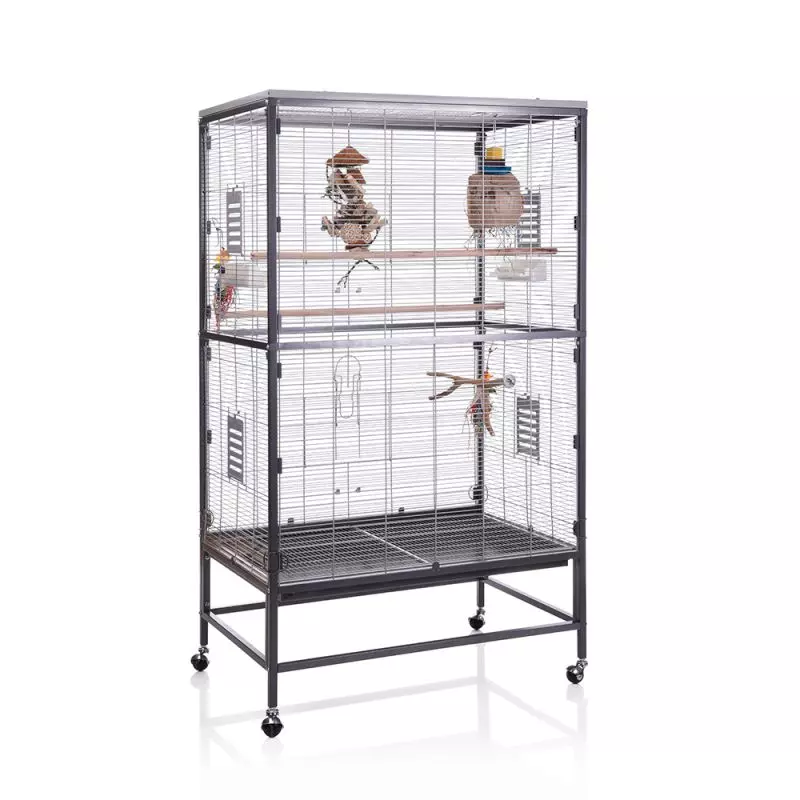
As chinchillas are very active animals, a chinchilla home needs to be very large. Large indoor aviaries are best.
The cage should be equipped with plenty of perches. Sleeping houses, cork tubes and climbing branches should also be included. As chinchillas have a strong gnawing instinct, the furnishings need to be replaced often.
A sand bath with special sand is a must for chinchillas. Otherwise their fine fur would soon become greasy and sticky.
The cage should be placed in a quiet place so that the animals are not disturbed during the day.

Legal requirements:

  • Enclosure min. 100x50x150cm for 2 animals (not our recommendation!)
  • Retreats for all animals
  • Three-dimensional furniture, perches
  • Coarse-textured food: hay or straw
  • fresh branches
  • Sand bath
  • Group or pair keeping

Cage equipment includes:

  • Bedding and hay
  • Various sleeping houses made of wood or cork
  • Perches
  • Sand bath
  • Food bowl, hay rack and drinking bottle

Food:

Chinchillas need special food. Their main diet consists of coarse hay and various herbs. A special feed mixture for chinchillas can also be fed. Only ever feed fresh fruit and vegetables in very small quantities - risk of diarrhoea! Special supplementary feed is available as a treat and dessert. Chinchillas are very susceptible to intestinal disorders, so rapid changes of food should be avoided.
Fresh water should always be available.

Breeding:

Chinchillas become sexually mature at around 4 to 5 months. The average gestation period is 111 days. They usually give birth to 1 - 4 young and can become pregnant 3 times a year. The young are born fully developed, hairy and with open eyes. They are not placed in a nest, but on the bare ground. At birth, the young weigh approx. 35-50 grams and eat solid food within the first few days of life. At the age of 30 days they weigh around 151 grams, at three months 350 grams and at seven months the chinchillas have reached their adult weight. The young animals should not be separated from their mother before eight weeks, as they are still suckling.

How much does a chinchilla cost as a pet (approximate monthly average for 2 animals):

  • Food: approx. Fr. 40.--
  • Bedding and hay: approx. CHF 25.
  • Vet: The more species-appropriate and cleaner the husbandry, the less likely it is that you will have to visit the vet. Nevertheless, you must always be prepared for the fact that an animal may fall ill and incur additional costs.

Before you decide to buy chinchillas, you should definitely read a specialised book.

Chinchillas are not cuddly animals and are therefore unsuitable for small children. They do not like to be stroked or carried around. The following applies to all animals: children (including adolescents) must be supervised and controlled by their parents. Children should know that animals are not toys!

Our trained team at Zoo Roco is on hand to answer any questions or resolve any issues. They can provide expert advice on all matters.

Composition
Feeding recommendation
Technical details
Size information

0 of 0 reviews

Give us a rating!

Share your experience with the product with other customers.


Suggested products

Chipmunks
Chipmunks Chipmunks have a length of 9 - 15cm depending on type. The bushy, strongly hairy tail measures approx. 10cm.The colour of the chipmunks is grey - black, with dark stripes running from the head over the back.Like hamsters, chipmunks have large cheek pockets and collect food for emergency supplies. Attitude: Chipmunks are very active and enjoy movement. Therefore, one should provide them with a large, escape-proof room aviary as a home. With the size of the cage applies: The larger - the better and more species-appropriate! In addition, keeping pairs is not possible in aviaries that are too small, as the animals cannot avoid each other. Usually the male is bitten.A keeping outside is possible. However, the chipmunks then hibernate. Belongs to the cage equipment: bedding hay branches for climbing various hiding places made of wood or cork sleeping cabins - budgerigar boxes are the best choice. nest material - hay or hamster cotton. Under no circumstances should synthetic cotton wool be used. sand bath food bowl and drinking bottle Food: To stay healthy, chipmunks - like other living creatures - depend on a varied diet.The ready-made food offered in pet shops ensures a balanced basic diet. With the supplementary food you can add variety to the menu.Strip-croissants are not pure vegetarians in contrast to dwarf rabbits and guinea pigs. Therefore you should offer them a piece of egg or a little quark from time to time. Thus the need of animal protein is covered.The chipmunk is particularly happy about fruit and berries. Make sure that the fresh food is unsprayed. The cage should be checked daily for spoiled fresh food so that the squirrel does not eat moldy food and fruit flies do not form.Chipmunks also need fresh water every day. Breeding: Breeding chipmunks is not easy. It is usually difficult to put together a harmonising pair. In addition, the mating season often only takes place in the spring months.Usually the female is too aggressive and dominant. It even happens that the males are bitten to death.The females have a gestation period of 30 - 35 days. The two to eight young are blind and naked, and it takes almost three weeks for them to open their eyes. After another two weeks they start to eat solid food and after about eight weeks they are so self-sufficient that they can be separated from their mother. Regular costs per month: Food: approx. Fr. 15.-- Bedding and hay: approx. Fr. 30.-- Veterinarian: The more species-appropriate and clean the keeping, the less likely it is to go to the veterinarian. Nevertheless one must always count on the fact that an animal can become ill also once and then causes additional costs. Before you decide for chipmunks, you should absolutely have read an appropriate technical book.For each animal husbandry applies: Children (also young people) must be instructed, supervised and controlled by the parents. Children should know that animals are not toys!Our trained Zoo Roco team is available to answer any questions you may have. They can advise you professionally in all questions.
 
Striped grass mouse
Grass striped mouseEven self-confessed mouse haters can hardly resist the charm of this fascinating little rodent: striped mice are a real rodent gem Juwel.However, they are not suitable for petting. However, they are interesting to watch and their daytime activity appeals to the observer.Native to:The zebra mouse originally comes from North Africa: Senegal, Tanzania, Morocco, Algeria, Tunisia and Sudan.The striped mouse (Lemniscomys barbarus) lives in the open grasslands of Africa and belongs to the group of grass mice. The names "zebra mouse" or "zebra grass mouse" are also commonly used. However, its fur pattern is more similar to that of a wild boar than the vertical black and white pattern of zebras. It is more likely to be regarded as the "gazelle" among mice, as it is adapted to running fast. When running fast, only two toes of the front feet and three of the hind feet touch the ground. The long graceful legs and the laterally flattened body also no longer correspond to the original mouse type.The colouring of the zebra mouse is a delightful blend of mass tone brown mixed under the black stripes, The stripes go from the head to the rump over the back and sides of the striped mouse. Their tail is as long as the body (sometimes longer). Be careful, the tail is very delicate and fragile!Striped mouse care:Striped mice are best kept in a terrarium that cannot be big enough. In a large terrarium (100 x 50 x 45 cm), the animals are also much more active and can be seen more often, although they can generally be provided with more hiding places. Breeding is also not easy and is only possible in a large container. Sand is recommended as a substrate. Striped mice always deposit their practically odourless urine in the same corner, and their droppings are also dry and odourless. Striped mouse terrariums can therefore even be integrated into the "parlour" as decorative showpieces. The animals love elevated points (stones, roots), but do not climb properly. They build up a firm alternation at the bottom, which they keep scrupulously clean. Disturbing stalks, stones and seed pods are swept away with sideways sweeping movements of the front feet. After creating a new change, the mice sometimes run back and forth on it for several minutes to trample the ground and test the "race track". Striped mice are sensitive to the cold, which is why they love the radiant heat of terrarium lighting, but will ignore heating lamps. Caves are only visited when they are very disturbed, otherwise the animals build hay nests above ground, but preferably under a root. Even the finest stalks of hay are torn apart during nest building, so that the finished nest resembles a ball of loose hair.The best way to pick up a zebra mouse is to "scoop it up" with your hands. Do not try to pick up a striped mouse by the tail, otherwise the tail will break off and not grow back.Cage equipment includes: Sand as a substrate Hay, straw, Various shelters made of wood or cork, branches for climbing Stones Nest material - hay (do not use hamster wool!) Food bowl and drinking bottle Furnishings should not be made of plastic, as the mice will chew everything up.Food:Conventional food mixtures for small rodents are not suitable for striped mice. Budgerigar and canary food is readily accepted. Oat flakes and sunflower seeds can be added, but only with caution: overfeeding can easily lead to obesity. A good nutrient-rich meadow hay is part of the diet, even if it is used more for nest building. Millet and mealworms are tasty treats. Striped mice are picky when it comes to green food, but they all like cucumber and chicory. If cucumber is fed, fresh water, which should otherwise always be available, can be omitted.The striped mouse food should be supplemented with a mineral stone and vitamin pot or MuckiVit.Breeding:Breeding the striped mouse is not easy. One explanation sometimes given is that striped mice are extremely sensitive to inbreeding, as all the animals available in Europe are descended from a few imported specimens. Despite regular mating, litters are rather rare. The mating prelude begins with the rutting female constantly running around. The female regularly stops at the same spot and allows a male to ride up. During the chase, the animals emit loud, choppy cries - a clear indication of broodiness, as the animals are otherwise completely silent. Striped mice react very sensitively to nest checks. This may be one reason why the gestation period has not yet been precisely determined. The literature gives a gestation period of between 20 and 28 days.In striped mice, the females are more aggressive than the males. Adult sexually mature females are sometimes so incompatible with each other that they can engage in prolonged chases and bites. Only their own offspring are an exception. It is therefore advisable to keep a pair plus any offspring.For your information - we do not have any striped mice for sale. However, we can provide you with some on request.Before you decide on striped mice, you should definitely have read a relevant specialist book.The following applies to all animal husbandry: Children (including adolescents) must be guided, supervised and controlled by their parents. Children should know that animals are not toys!Our trained team is available to assist you with any questions or issues at Zoo Roco. They can provide you with expert advice on all matters.
 
Dwarf rabbit
Dwarf rabbits The dwarf rabbit is descended from the European wild rabbit. Over the centuries, it has spread throughout Europe from its original home on the Iberian Peninsula. Their habitat is grassland and scrubland, where the animals live in groups. Brown hares and rabbits are not, as is often assumed, related to each other.The dwarf rabbit was bred out of the ermine rabbit breed. Different breeding forms: Dwarf rabbit Lionhead Dwarf lop Care: Dwarf rabbits can live up to eight years if cared for well. If you decide on two, you should be aware that you are responsible for the animals for their entire lives.Dwarf rabbits are sociable animals by nature. One option is to choose two females – ideally from the same litter. However, even these may fight one another after reaching sexual maturity. Two males will always fight.A good option is a pair, provided the male has been neutered.Dwarf rabbits must be kept together from a young age. Introducing a second rabbit to one that is already older is very difficult and requires a lot of patience.Housing rabbits indoors requires plenty of space, as they need a large cage. The smallest cage recommended for rabbits with lots of freedom of movement is 140x66cm. This cage must still be equipped with shelves and hiding places. If the space is too small, dwarf rabbits often become aggressive, as they defend their "small" territory. If you have enough space, you should buy a cage measuring 150x75cm.It is also possible to keep dwarf rabbits outdoors. A house where they can take shelter in rain and cold – combined with an outdoor run – meets the rabbits’ natural needs. Beware: rabbits dig deep tunnels and holes – the run should be escape-proof. Legal requirements: Legal requirements: • minimum base area (depending on weight and number of rabbits) from 0.34 m2, i.e. 80 cm x 42.5 cm, minimum height 40 cm or 50 cm• Bedding• darkened area as a retreat for all rabbits• Gnawing materials such as soft wood or fresh branches• Nest chambers for heavily pregnant does with suitable nesting material• nursing females must be able to withdraw from their young into another section or onto a raised level• Pairs or group housing The cage should be equipped with: Bedding Hay various shelters made of wood or cork, Shelves to increase the area of the cage Food bowl and drinking bottle Food: To stay healthy, rabbits – like other living creatures – rely on a varied diet.The ready-mix food and hay offered in pet shops ensures a balanced basic diet. By adding supplementary food, you can bring variety to the menu for dwarf rabbits. A salt and mineral stone provides the rabbit with essential minerals.Fresh food, such as fruit, carrots or dandelion is especially enjoyed by rabbits. Never feed cabbage or raw beans – cabbage causes bloating (and raw beans are poisonous). Make sure that the fresh food is free from pesticides.A rabbit's liquid needs are not met by green food alone. They need fresh water every day, ideally provided in an automatic waterer. Ongoing costs (per month/for 2 rabbits): Food: approx. Fr. 20.-- Bedding and hay: approx. Fr. 50.-- Vet: The more appropriate and clean the housing, the less likely a trip to the vet will be needed. Nevertheless, you must always be prepared that your rabbit may become ill and may incur additional costs. Before you decide on keeping dwarf rabbits, you should definitely read an appropriate specialist book.For all pet keeping: children must be guided, supervised, and monitored by parents. Children should know that animals are not toys!If you have any questions or problems, our trained team at Zoo Roco is at your disposal. They can provide expert advice on all matters.
 
Degu
The degu Degus originate from Chile and are found in the high plateaus and low mountain ranges of Chile at altitudes up to 1,200 metres. They prefer open landscapes that are easy to survey.Degus are very social animals and live in family groups of 5 to 12 animals. These include several males, which live together in harmony and defend the "family territory" against neighbouring degu groups.Degus mark their territory with scent marks from urine. For example, they mark stones or the sand bathing area. Females often give birth in the same underground nest. This results in all the young having the same nest scent and therefore being suckled indiscriminately by any female. Degu care: A commercially available cage is not suitable for housing degus. On the one hand, a great deal of bedding would fall out, as degus love to dig and naturally throw the bedding around. On the other hand, the commercially available small animal enclosures have a plastic base tray, which a degu can gnaw through in a very short time. We recommend a small animal aviary, as this best meets the requirements of degus. As an alternative, an aquarium/terrarium can also be chosen.Whether aquarium, terrarium or room aviary, the main deciding factor is above all the species-appropriate size of the accommodation. In general, it is said that the size for the base area of the accommodation should be 100x50cm if you keep two degus. But the principle always applies: the bigger, the better! Then the animals have more space to move and run around, and a larger home can also be made much more attractive.Degus must have a digging layer of 30cm of bedding available. Legal requirements: Enclosure at least 100x50x70cm for 5 animals (not our recommendation) Bedding height 30cm Hiding places for all animals Coarse-structured food: hay or straw fresh branches Sand bath Group housing Cage equipment includes: Thick branches for walking on and gnawing Stones for sharpening claws Sleeping houses as vantage points: Wooden houses are unsuitable due to the degus’ strong gnawing drive. Bricks stacked on top of each other, covered above with a large stone slab (e.g. slate), are better. But pay attention to safety, because a collapse could injure your degu. Perches as viewing points and to enlarge the floor area of the cage Sand bath: Like a chinchilla, a degu also needs a regular sand bath to clean its coat. Once a day, you should give it about 15 minutes for this. Therefore, leave a place in the terrarium free where you can place the bath. Do not leave the "bathtub" in there all the time as it will become dirty too quickly. If you use a wire cage, you could get a chinchilla bathtub to hang in, as these are equipped with a removable lid. Water bowl: Nipple drinkers are not particularly suitable as they are made of plastic and, in the presence of a degu, they leak very quickly. The very sturdy hard plastic drinkers are also not particularly suitable for degus. Also, they are difficult to fix in a terrarium. So better use a stone bowl as well. Change water regularly Food bowl: Ideally a heavy porcelain bowl that cannot be pushed or knocked over. But it should not be too small so that several degu group members can feed from it at the same time. Placing the bowl on the floor is not advisable, as degus love to scratch and dig. It is best to place it on the sleeping house roof so that dirt does not get in so quickly. Food: When buying food, the general rule is that you should buy a maximum of 2 - 3 months’ supply, otherwise the vitamin content will decrease rapidly. Get used to a regular rhythm for feeding. Your pet will get used to the times very quickly and will soon look forward to them. Basic foodDegus are given a special degu food mix. RoughageHay: Make sure your animals always have enough hay in the cage. In the wild, they mainly eat meagre food such as grasses or bark. Therefore, hay is actually closest to their natural diet. Degus eat correspondingly large amounts of it. It also serves as nesting material. Green foodAs a general rule, green food must always be thoroughly washed and then carefully dried.Vegetables: carrots, cauliflower, cucumber, lettuceNatural food: in the form of branches (only hardwood such as some from fruit trees, beech, birch or hazelnut), do not collect near busy roads.Degus are prone to diabetes. Even small amounts of fruit can already cause diabetes. Please only feed vegetables and herbs! TreatsTo satisfy the degus’ urge to gnaw, they are regularly given fresh twigs, which are very happily accepted. The bark provides every degu with a tasty change. You will also find plenty of treats in pet stores. With various dried herbs and special degu snacks, you can spoil your degus! Breeding: If you want to breed degus, here you will find the most important facts that you should be familiar with before starting breeding. Sexual maturity: This occurs in females at about two months of age, in males at about three months. However, it may also occur later, for which individual differences may be responsible.  Gestation period: It lasts about three months. That is quite a long time for such a small animal. Even guinea pigs have a shorter gestation period. But degu young are already well developed at birth. They are hairy and have their eyes half or fully open, in contrast to mouse or hamster young, which are born naked and blind.  Number: A litter usually consists of four to six young. However, there are also huge litters with up to ten young. These are rather rare and usually only grow up so large if there is a second lactating female present, as degu females only have eight teats.  Regular costs (per month/for 2 animals): Food: approx. Fr.30.-- Bedding and hay: approx. Fr. 50.-- Vet: The more animal-friendly and cleaner the keeping, the less likely a visit to the vet will be necessary. Nevertheless, you must always expect that an animal may become ill and thus incur additional costs. Before deciding on degus, you should definitely have read a relevant specialist book.The following applies to all animal keeping: Children (including adolescents) must be guided, supervised and checked by parents. Children should know that animals are not toys!For questions and problems, our trained team at Zoo Roco is at your disposal. They can advise you professionally on all questions.
 
Guinea pig
The guinea pig The original home of the guinea pigs is South America, where they live in rock caves. The Incas used them as a source of meat. Dutch merchants brought them to Europe by sea. Because their squeaking reminded them of piglets, they called the small animals guinea pigs. Keeping: Guinea pigs are herd animals. In order to feel really comfortable, they need company. Therefore, you should never keep just a single animal. Females, or neutered males with females, get on best. Two males can only be kept together if neutered early. A mixed pair ensures constant offspring.For the residents to feel comfortable, a guinea pig home can never be big enough. The cage size for two animals should not be smaller than 140x60cm. However, there are also very nice enclosures with a size of 150x75cm.The cage should be equipped with hiding places so that the animals can retreat at any time. This should be respected, and the animals should not be torn from their sleep or taken out indiscriminately. The more additional levels and hiding caves the home contains, the more comfortable its residents feel. Legal regulations: Enclosure at least 100x50cm for 2 animals (we do not recommend this at all!) Hiding places for all animals (thus, at least 1 shelter per animal) Coarse-structured food: hay or straw fresh branches Vitamin C The cage equipment includes: Bedding Hay and straw various hiding places made of wood or cork, Levels to enlarge the area of the cage Food bowl and drinking bottle Food: To stay healthy, guinea pigs – like other living creatures – depend on a varied diet.Guinea pigs are pure vegetarians. A large part of their food consists of good, mould-free hay, which should always be available. In addition, they require food from various seeds, fruits and vegetables. The ready-made food offered in pet shops contains all essential nutrients. Supplementary feed can bring variety into the guinea pigs’ menu.Guinea pigs are especially happy about fresh food like fruit, carrots or dandelions. Make sure that the fresh food is unsprayed. The greens should always be fresh, but never wet. Guinea pigs easily get diarrhoea.Guinea pigs have a high requirement for vitamin C. Therefore, vitamin drops should be added to the drinking water daily.Guinea pigs should have fresh water available every day. Regular monthly costs: Food: approx. Fr. 20.-- Bedding and hay: approx. Fr. 30.-- Vet: The more species-appropriate and clean the keeping, the less often you will have to go to the vet. Nevertheless, you must always expect that an animal may become ill and then cause additional costs. Before you decide for guinea pigs, you should definitely have read a suitable specialist book.The following applies to every animal keeping: Children must be guided, supervised and controlled by parents. Children must learn that an animal has its own needs and habits and to respect this. Parents should be aware that they are the ones who are responsible for the animal.For questions and problems, our trained team at Zoo Roco is available to help you. They can give you expert advice on any questions.
 
Fat sand rat
Fat sand rat - Psammomys obesus The fat sand rat is, despite its name, neither a rat nor fat. It belongs to the gerbil family and lives in the sandy deserts from Algeria to Saudi Arabia. It is active both during the day and night. Note: Fat sand rats can become very tame towards their owner, but due to the special diet and the somewhat more demanding husbandry, these animals are not suitable for beginners. Description: The body length of a fat sand rat is approx. 14-20cm plus a tail of approx. 10-15cm. The weight is about 100-200g. A fat sand rat can reach an age of 5 years if kept well and appropriately for its species. Husbandry: Fat sand rats are very sociable rodents and should never be kept alone. At least two animals should be kept together.The enclosure should provide a lot of space, therefore it should not be less than 120x60x120cm. The fat sand rats require warmth, or sunlight lamps.The animals are very susceptible to stress and if there is too little peace and continuous stress, the animals can, in the worst case, die. Legal requirements: Enclosure at least 120x60x120cm for 2 animals Hiding places for all animals (therefore at least 1 hiding place per animal) coarse structured food: hay or straw fresh branches Furnishings: The furnishings should be well designed and there should be plenty of climbing opportunities. Fat sand rats do not dig tunnels as strongly as gerbils, but they still need a bedding height of 30cm so they can dig their sleeping chambers. Levels and many hiding places are essential. Even though fat sand rats gnaw rather less, opportunities for gnawing should still be offered. At a glance: suitable and burrowable bedding - 30cm high sand bath hay and straw - also serves as nesting material climbing and activity opportunities retreat options for all animals levels (if not already in the terrarium) food and water bowl warmth, or sunlight lamps Diet and food: The diet of fat sand rats is more demanding than that of gerbils, as the animals are absolute dietary specialists. They feed mainly on leaves, succulents, salt-containing stems and goosefoot plants. Sugar is taboo for fat sand rats, because like the degu, they are prone to diabetes and can die from it.The most suitable food for fat sand rats is degu food. It contains no sugar and consists of many herbs and some grains.Certain types of vegetables may be offered and are also very well accepted. Suitable vegetables are... Chinese cabbage iceberg lettuce chicory broccoli, courgette and cucumber Not suitable are... carrots cabbage varieties all fruit Considerations before acquisition: As already mentioned above, fat sand rats are not animals for beginners due to the special diet and more demanding husbandry. There should be enough space to offer the rodents a species-appropriate home. The terrarium must not be placed in direct sunlight and should be in a quiet place so that the animals can have their rest periods. The life expectancy is approx. 5 years. During this time you have full responsibility for the animals.Before you decide on these interesting animals, seek advice and allow yourself enough time for the decision. Fat sand rats are not suitable for children.For every kind of animal husbandry: Children (including adolescents) must be instructed, supervised and monitored by their parents. Children should know that animals are not toys!For questions and problems, our trained team at Zoo Roco is at your disposal. They can advise you professionally on all matters.
 
Rat
Rat The Norway rat originally comes from China.In the wild, rats live in colonies, in a so-called rat burrow. In this underground burrow, various burrows are created for different needs (sleeping and recreation room, storage and toilet chamber, burrow for rearing the young together). domestication: The coloured rat is descended from the Norway rat. It was first recorded in Europe in the 10th century. It used to be assumed that the Norway rat migrated to Europe from China via Russia and then Norway.However, rats have effectively travelled around the world as stowaways on ships or other means of transport and can now be found everywhere.Rats are of great importance worldwide as pest rodents and disease carriers (plague, rabies...). Keeping: Rats are social rodents and must be kept at least in pairs. However, larger, same-sex groups can also live in a large rodent enclosure or aviary. The minimum size is 100x50x70cm for five animals. The rats can be offered daily exercise. Many different materials can be offered as bedding, such as hemp, maize husks or linen. Low-dust but absorbent and odour-binding bedding is recommended. No burrowing layer is required, but rats also like to nest in the substrate. Each animal must be provided with a place to retreat to and suitable material to pad the houses. The enclosure can be furnished in a varied way with ladders, natural branches, lianas and seat boards. Rats mark their territory with urine and their scent glands. As this has a strong odour, the cage must be cleaned out twice a week. The enclosures should not be cleaned with strong-smelling chemicals as the animals will mark them more strongly. Legal regulations: Enclosure min. 100x50cm for 2 animals Hiding places for all animals Coarse-textured food: hay or straw fresh branches Nutrition: Rats are omnivores and therefore have a varied diet: Commercially available feed mixture for coloured rats Insects such as crickets, multi-worms Curd or yoghurt Boiled eggs rat meat seeds rat millet Herbs and flowers Hay or straw Fruit, vegetables and berries fresh branches fresh water daily Breeding data: Newborn rats are naked and blind. The fur growth of the young animals begins from the 2nd day. The ears open after 3 to 4 days and the eyes after 13 to 16 days.To prevent uncontrolled reproduction, males must be neutered or separated from their mother and sisters before they reach sexual maturity. Early castration is possible from the sixth week. Regular costs (per month): Food: approx. Fr. 20.-- Bedding and hay: approx. Fr. 40.-- Vet: The more species-appropriate and cleaner the husbandry, the less likely it is that you will have to visit the vet. Nevertheless, you must always be prepared for the fact that an animal may fall ill and incur additional costs. Before you decide on a rat, you should definitely have read a relevant specialist book.The following applies to all animal husbandry: Children (including adolescents) must be guided, supervised and controlled by their parents. Children should know that animals are not toys! Our trained team is available to assist you with any questions or issues at Zoo Roco. They can provide you with expert advice on all matters.
 
Gerbil
Gerbil Gerbils are very sociable animals. In their original home, the Mongolian steppe, they live in large family groups. Mongolian gerbils live in dry steppe areas, where it can get very cold in winter (down to -40 °C) and very warm in summer (up to +50 °C), in underground burrows with several tunnels and chambers. They are active during the day and at night, and have one of their resting phases at the time of the greatest midday heat. Resting and waking periods alternate several times a day. Keeping: Gerbils should never be kept alone. They need fellow gerbils to feel comfortable. Gerbils kept individually often sit listlessly in the corner and remain shy. Only when in pairs or groups do they feel secure, are terribly curious and trusting.It is best to keep two or more animals of the same sex. A male and female pair gets on very well, but then numerous offspring can be expected.The main activity of gerbils is digging! Therefore, the best cage is a large aquarium with a mesh cover. As gerbils should be given plenty of bedding for digging, a mesh cage is not particularly suitable. The cage equipment includes: Bedding at least 30cm deep so the gerbils can fulfil their digging needs Hay Various shelter options made of wood or cork, branches for climbing Sand bath Food bowl and drinking bottle The furnishings should not be made of plastic, as gerbils will gnaw everything. Legal regulations: Enclosure at least 100x50cm for 2 animals Bedding / digging layer 25cm Hay and straw Hiding places for all animals Nesting material Sand bath Gnawing objects such as softwood or fresh branches Group housing Food: To stay healthy, gerbils - like other living creatures - depend on a varied diet.The balanced basic diet is ensured by the ready-made food offered in pet shops.Fresh foods such as fruit, carrots or dandelion can also be given to gerbils from time to time. The cage should be checked daily for spoiled fresh food so that the gerbils do not eat mouldy food. To wear down their teeth, gerbils always need some hard bread. Hay serves not only as nesting material, but is also partly eaten.Fresh water should always be available to gerbils. The commercially available small animal drinkers are recommended, as an open water bowl is quickly filled with bedding. Gerbils do not drink much, but it is not true that they can do completely without fluids. Regular costs (per month/for 2 animals): Food: approx. Fr.15.-- Bedding and hay: approx. Fr. 20.-- Veterinarian: The more species-appropriate and clean the keeping, the less often a visit to the vet threatens. Nevertheless, you must always expect that an animal can become ill at any time and will then incur additional costs. Before you decide on gerbils, you should definitely have read a relevant specialist book. For any animal keeping applies: Children (including adolescents) must be guided, supervised and controlled by their parents. Children should know that animals are not toys!For questions and problems, our trained team at Zoo Roco is available to you. They can provide you with expert advice in all matters.
 
Rat
Ratten sind sehr lebhaft, neugierig und unternehmungslustig. Doch nicht allen gefallen diese Nagetiere. Die Einen finden sie bezaubernd und elegant und bewundern ihre Intelligenz. Die Anderen fürchten sich vor ihnen, finden sie unheimlich oder gar eklig wegen des langen, nackten Schwanzes.Ratten werden sehr zutraulich. Doch es gibt auch Ratten, bei denen eine Zähmung etwas Geduld braucht.Ratten sind sowohl für grössere Kinder (ab etwa 12 Jahren), als auch für tierliebende Erwachsene gut geeignet. Trotzdem sollte man immer bedenken, dass nicht alle Menschen vorurteilsfrei auf Ratten zugehen können. Dafür sollte man als Rattenhalter Verständnis aufbringen.Ist die ganze Familie mit den neuen Hausgenossen einverstanden, werden die Farbratten viel Freude bereiten. Man sollte Kindern die Versorgung der Ratten nicht ganz allein überlassen und auch ein Auge darauf haben, dass sie nicht allzu viel Unsinn mit ihren kleinen Freunden anstellen.Bei guter Pflege können Ratten über 3 Jahre alt werden. Haltung: Ratten  brauchen unbedingt Gesellschaft. Deshalb sollte man  2 oder mehr gleichgeschlechtliche Tiere halten. Zwei fremde Weibchen lassen sich in der Regel ohne grössere Probleme aneinander gewöhnen. Männchen vertragen sich meist nur, wenn sie miteinander aufgewachsen sind, es sei denn sie sind kastriert.Auf die Haltung eines Paares sollte verzichtet werden (ausser man lässt das Männchen kastrieren). Denn Ratten bringen bis zu 20 Junge pro Wurf auf die Welt und meistens findet man nicht für alle Jungtiere einen guten Platz.Ratten brauchen viel Bewegung. Sie wollen klettern und spielen, aber auch buddeln und wühlen. Für 2 Ratten sollte der Käfig mindestens 100x50x70cm gross sein. Je grösser desto besser und desto schöner und phantasievoller kann man den Käfig auch einrichten.Wenn man den Ratten nicht täglich Auslauf geben kann, sollte man sich eine grosse Voliere anschaffen, damit die Tiere genug Bewegung haben. Wer jedoch zu wenig Zeit hat seine Ratten zu beschäftigen, sollte im Interesse der Tiere doch lieber auf die Rattenhaltung verzichten. Zur Käfigausstattung gehört: Einstreu mind. 15cm tief, damit die Ratte ihre Grabbedürfnisse ausleben kann Heu verschiedene Unterschlupfmöglichkeiten aus Holz oder Kork, Etagen, um die Fläche des Käfigs zu vergrössern Futternapf und Trinkflasche Futter: Als Allesfresser stellen Ratten eigentlich keine besonderen Ansprüche. Was uns Menschen schmeckt, schmeckt ihnen auch. Ob es ihnen bekommt, ist die andere Frage.Als Grundfutter erhalten Ratten eine spezielle Futtermischung, die genau auf die Bedürfnisse der Tiere zugeschnitten ist. Zur Ergänzung kann man ihnen frisches Obst oder Gemüse anbieten. Joghurtdrops oder Nüsse kann man als Belohnung einfach zwischendurch geben. Es gibt zudem viele verschiedene Zusatzfutter, die als Dessert oder Leckerbissen gerne gefressen werden.Um ihre Zähne abzunutzen brauchen die Ratten immer etwas Hartes zum Knabbern.Besonders wichtig ist, dass die Tiere immer genug frisches Wasser haben. Ratten müssen oft und viel trinken. Hier empfehlen sich Flaschentränken, die man im Gitter einhängen kann. Regelmässige Kosten (im Monat/bei 2 Tieren): Futter: ca. Fr.15.-- Einstreu und Heu: ca. Fr. 30.-- Tierarzt: Je artgerechter und sauberer die Haltung, desto seltener droht der Gang zum Tierarzt. Dennoch muss man immer damit rechnen, dass ein Tier auch einmal krank werden kann und dann zusätzliche Kosten verursacht. Bevor Sie sich für Ratten entscheiden, sollten Sie unbedingt ein entsprechendes Fachbuch gelesen haben.Für jede Tierhaltung gilt: Kinder (auch Jugendliche) müssen von den Eltern angeleitet, beaufsichtigt und kontrolliert werden. Kinder sollen wissen, dass Tiere keine Spielzeuge sind!Für Fragen und Probleme steht Ihnen unser ausgebildetes Team im Zoo Roco zur Verfügung. Es kann Sie in allen Fragen fachgerecht beraten.
 
Acacia rat
Acacia rat Acacia rats originate from Africa. They inhabit the savannahs and live in acacia trees.Acacia rats owe their name to the fact that they are found almost exclusively in the upper regions of acacias. Studies have shown that they are probably specialised in this tree species and a few others. This is where most of their lives take place. Only in exceptional cases do the animals leave the trees to flee across the ground. Biology: The genus Thallomys comprises a total of four species. In addition to the true acacia rat (Thallomys paedulcus), the black-tailed acacia rat (Thallomys nigricauda), the Shortridge’s acacia rat (Thallomys shortridgei) and the Loring’s acacia rat (Thallomys loringi) also belong to the genus of these African tree dwellers. However, Thallomys paedulcus and Thallomys nigricauda were categorised as one species until 1988. Keeping: Acacia rats are very social and must be kept in groups. Both female and male groups can be kept together.A mixed group leads to offspring - and you should consider in advance where you can give the young animals.A large terrarium or an aviary is best suited as a cage. The dimensions of 100x50cm and a height of at least 80cm should not be undercut - however, the animals love to climb, so an aviary of 160-180cm is recommended.The animals spend little time on the ground, so there is no need for a digging layer, just a bedding of sand or soil covering the ground.With lots of branches and hideaways, the cage can be furnished very diversely. Our acacia rats love the coconuts and snuggle up together in them as a group.Ideas for furnishing: Branches (also very attractive with the branches of the corkscrew hazel) Coconuts on ropes Nesting boxes (e.g. budgerigar nesting box) Ropes Suspension bridges Grass nests Nesting material - hay, leaves Food: To stay healthy, acacia rats – like other living beings – depend on a varied diet.As basic feed, a mixture for dwarf hamsters or an exotic food can be offered. In addition, various herbs and flower mixtures are very important, as is the requirement for protein, which can be covered by dried or live food insects.Fresh fruit and also vegetables can be offered to acacia rats. Try out what the animals like, as this can vary greatly.Fruit: bananas, melons, grapes and sultanas, various berriesVegetables: carrots, cucumbers, but also fresh herbs or dandelion can be fed.  Breeding: Breeding acacia rats is relatively easy.  In the wild, acacia rats breed only in the rainy season – in captivity, all year round.After a gestation period of 24 days, the mother gives birth to two to four young, although most litters consist of two young. For the first three weeks, the young attach themselves to the mother’s teats for suckling and are also transported in this way.The young are suckled for about 30 days. The parent animals defend their young very strongly and warn with a chattering of their teeth. The animals should stay with the parents for ten weeks, as the young learn essential social behaviours during this time.Acacia rats can become tame, but they are not cuddly animals and are above all suitable for observation. Regular monthly costs: Food depending on size of group: approx. CHF 30.-- Bedding: approx. CHF 20.-- Vet: The more species-appropriate and cleaner the keeping, the less likely a visit to the vet will be necessary. However, you must always expect that an animal may become ill and incur additional costs. Before you decide on acacia rats, you should definitely have read an appropriate specialist book.For all animal keeping: children must be guided, supervised and controlled by their parents. Children must learn that an animal has its own needs and way of life and to respect this. Parents should be aware that it is they who are responsible for the animal.If you have any questions or problems, our trained team at Zoo Roco is at your disposal. They can provide you with expert advice on all matters.
 
Hamster
The hamsterHamsters live in self-dug burrows in steppes and semi-deserts from Southern Europe to East Asia. Hamsters have a great urge to move, as hamsters often travel several kilometres in the wild in search of food. Golden hamsters are solitary animals and defend their territory against other hamsters. Males and females only meet during the mating season.Description:The body length of a golden hamster is approx. 15cm. The stubby tail measures only about 10 to 15 mm. The weight is 130 to 180 grams. Breeding has resulted in many colour variations. There are white, cream, cinnamon, black, grey and all variations of pied.Hamster care:You should provide a hamster with a large cage.We recommend a glass container measuring 100x40cm for hamsters.This allows you to fulfil the 15 cm of bedding required by the Animal Welfare Act.The hamster cage should be set up so that the hamster can dig and climb. The absolute minimum size for a hamster cage is approx. 70x40cm. However, the hamster cage must be equipped with shelves and climbing facilities so that the hamster can fulfil its great urge to move. The larger the hamster cage, the better. After all, we prefer to live in a multi-room flat rather than a studio!The cage should be located in a place where the hamster can sleep undisturbed during the day - but where it won't disturb anyone at night with its lively behaviour.Hamster accessories / Cage equipment: Bedding at least 15cm deep so that the hamster can fulfil its digging needs Hay Play opportunities Various shelters made from wood or cork Sand bath Hamster toilet Nest material - hay or hamster wool. Under no circumstances should synthetic cotton wool be used Food bowl and drinking bottle Legal requirements: Enclosure min. 60x30cm (not our recommendation!) Hiding places Digging layer 15cm Climbing possibilities Nest material Gnawing objects such as softwood or fresh branches Individual housing Hamster food:To stay healthy, hamsters - like other living creatures - need a varied diet.The main food offered in pet shops ensures a balanced basic diet. You can add variety to your golden hamster's menu with additional food.Unlike dwarf rabbits and guinea pigs, golden hamsters are not pure vegetarians. You should therefore offer them a piece of egg or a little quark from time to time. This will fulfil their need for animal protein.Hamsters particularly enjoy fresh food such as fruit, carrots or dandelions. Make sure that the fresh food is unsprayed. The cage should be checked daily for spoilt fresh food so that the hamster does not eat mouldy food. Although hamsters cover most of their fluid requirements with green food, they also need fresh water every day.Breeding details:At around two months of age, hamsters are capable of reproducing and can be used for breeding. You put a male and a female together, observe whether they get along and then leave them to their happiness for a few days. Then separate them again.The female is provided with sufficient padding material, which is made into a nest. After a gestation period of just 18 days, the female hamster gives birth to five to ten naked and blind young, each weighing just two grams. Once a female has given birth, she should not be disturbed in the early stages, otherwise she may kill and eat her litter.The young open their eyes at ten days old. At three to four weeks, they are already independent enough to make their way through life on their own.We do not recommend breeding the animals, this is only information about reproduction!How much does a hamster cost (per month): Food: approx. Fr. 15.-- Bedding and hay: approx. CHF 30. Vet: The more species-appropriate and cleaner your hamster is kept, the less likely it is to need a visit to the vet. Nevertheless, you must always bear in mind that a hamster can fall ill and incur additional costs. Things to consider before buying:Due to its nocturnal activity, the golden hamster is not an animal for small children. Hamsters sleep during the day and only wake up in the evening when small children have to go to bed. Repeated disturbances from sleep lead to illness and biting in hamsters in the long term.Hamsters are therefore only suitable for older schoolchildren, teenagers and working people.The life expectancy of rodents is 2 to 3 years. During this time, you are responsible for this little guy.Before you decide to buy a golden hamster, you should definitely read a specialised book.The following applies to all animal husbandry: Children (including adolescents) must be guided, supervised and controlled by their parents. Children should know that animals are not toys!Our trained team is available to assist you with any questions or issues at Zoo Roco. They can provide you with expert advice on all matters.
 
Dwarf hamster
The rabbit (lepus) Area of origin Dwarf rabbits are originally descended from wild rabbits, which have spread from the Iberian Peninsula across almost the entire world. Habitat The wild rabbit's original habitat is grassland and scrubland, where the animals live in large groups consisting of several males and females. They build underground burrow systems and feed on herbs and grasses. The wild colour is grey-brown. Housing Ideally, rabbits should be kept in enclosures where they can jump, hop, gnaw and dig. If possible, rabbits should be given at least one hour of exercise in the room or in the garden every day. The enclosure should be dry, like their natural habitat. Rabbits are not loners, but love the company of other rabbits. As a rule, siblings get along very well, two males tend to get along less well. Depending on space available, group housing is recommended, as this corresponds to the origin of the wild rabbit.Rabbits love a well-structured cage with hurdles, tunnels, a bridge, a hay rack, a digging box and various obstacles. There are almost no limits to your imagination when it comes to furnishing an enclosure. Please note that rabbits need a darkened area so that they can retreat. Enclosure (minimum legal requirement) For balcony or indoor housing, the largest possible enclosure, possibly with a second level; minimum legal floor space (depending on the weight and number of animals) from 0.34m2, i.e. for example 80 x 42.5cm, minimum height 40cm or 50cm.We generally recommend offering the animals more space than the minimum legal requirements. Food The main food for rabbits is hay. Their diet is generally rich in crude fibre. Rabbits also really enjoy variety with grasses, vegetables and fruit. Fresh branches must always be available so that the teeth, which grow continuously, can be sufficiently worn down. Rabbits need fresh water available to them every day. Care Cleanliness prevents most diseases. This means rinsing the water and food bowls daily with hot water. Furthermore, a dry home is essential for the rabbit. A thorough cleaning should take place once a week, and particularly soiled areas can be cleaned in between. The enclosure must not be exposed to draughts. It is also important to check the claws, if they are too long they must be trimmed. With a well-structured cage, normal wearing usually takes place, making claw trimming unnecessary.
 

Customers also saw

Hamster
The hamsterHamsters live in self-dug burrows in steppes and semi-deserts from Southern Europe to East Asia. Hamsters have a great urge to move, as hamsters often travel several kilometres in the wild in search of food. Golden hamsters are solitary animals and defend their territory against other hamsters. Males and females only meet during the mating season.Description:The body length of a golden hamster is approx. 15cm. The stubby tail measures only about 10 to 15 mm. The weight is 130 to 180 grams. Breeding has resulted in many colour variations. There are white, cream, cinnamon, black, grey and all variations of pied.Hamster care:You should provide a hamster with a large cage.We recommend a glass container measuring 100x40cm for hamsters.This allows you to fulfil the 15 cm of bedding required by the Animal Welfare Act.The hamster cage should be set up so that the hamster can dig and climb. The absolute minimum size for a hamster cage is approx. 70x40cm. However, the hamster cage must be equipped with shelves and climbing facilities so that the hamster can fulfil its great urge to move. The larger the hamster cage, the better. After all, we prefer to live in a multi-room flat rather than a studio!The cage should be located in a place where the hamster can sleep undisturbed during the day - but where it won't disturb anyone at night with its lively behaviour.Hamster accessories / Cage equipment: Bedding at least 15cm deep so that the hamster can fulfil its digging needs Hay Play opportunities Various shelters made from wood or cork Sand bath Hamster toilet Nest material - hay or hamster wool. Under no circumstances should synthetic cotton wool be used Food bowl and drinking bottle Legal requirements: Enclosure min. 60x30cm (not our recommendation!) Hiding places Digging layer 15cm Climbing possibilities Nest material Gnawing objects such as softwood or fresh branches Individual housing Hamster food:To stay healthy, hamsters - like other living creatures - need a varied diet.The main food offered in pet shops ensures a balanced basic diet. You can add variety to your golden hamster's menu with additional food.Unlike dwarf rabbits and guinea pigs, golden hamsters are not pure vegetarians. You should therefore offer them a piece of egg or a little quark from time to time. This will fulfil their need for animal protein.Hamsters particularly enjoy fresh food such as fruit, carrots or dandelions. Make sure that the fresh food is unsprayed. The cage should be checked daily for spoilt fresh food so that the hamster does not eat mouldy food. Although hamsters cover most of their fluid requirements with green food, they also need fresh water every day.Breeding details:At around two months of age, hamsters are capable of reproducing and can be used for breeding. You put a male and a female together, observe whether they get along and then leave them to their happiness for a few days. Then separate them again.The female is provided with sufficient padding material, which is made into a nest. After a gestation period of just 18 days, the female hamster gives birth to five to ten naked and blind young, each weighing just two grams. Once a female has given birth, she should not be disturbed in the early stages, otherwise she may kill and eat her litter.The young open their eyes at ten days old. At three to four weeks, they are already independent enough to make their way through life on their own.We do not recommend breeding the animals, this is only information about reproduction!How much does a hamster cost (per month): Food: approx. Fr. 15.-- Bedding and hay: approx. CHF 30. Vet: The more species-appropriate and cleaner your hamster is kept, the less likely it is to need a visit to the vet. Nevertheless, you must always bear in mind that a hamster can fall ill and incur additional costs. Things to consider before buying:Due to its nocturnal activity, the golden hamster is not an animal for small children. Hamsters sleep during the day and only wake up in the evening when small children have to go to bed. Repeated disturbances from sleep lead to illness and biting in hamsters in the long term.Hamsters are therefore only suitable for older schoolchildren, teenagers and working people.The life expectancy of rodents is 2 to 3 years. During this time, you are responsible for this little guy.Before you decide to buy a golden hamster, you should definitely read a specialised book.The following applies to all animal husbandry: Children (including adolescents) must be guided, supervised and controlled by their parents. Children should know that animals are not toys!Our trained team is available to assist you with any questions or issues at Zoo Roco. They can provide you with expert advice on all matters.
 
Degu
The degu Degus originate from Chile and are found in the high plateaus and low mountain ranges of Chile at altitudes up to 1,200 metres. They prefer open landscapes that are easy to survey.Degus are very social animals and live in family groups of 5 to 12 animals. These include several males, which live together in harmony and defend the "family territory" against neighbouring degu groups.Degus mark their territory with scent marks from urine. For example, they mark stones or the sand bathing area. Females often give birth in the same underground nest. This results in all the young having the same nest scent and therefore being suckled indiscriminately by any female. Degu care: A commercially available cage is not suitable for housing degus. On the one hand, a great deal of bedding would fall out, as degus love to dig and naturally throw the bedding around. On the other hand, the commercially available small animal enclosures have a plastic base tray, which a degu can gnaw through in a very short time. We recommend a small animal aviary, as this best meets the requirements of degus. As an alternative, an aquarium/terrarium can also be chosen.Whether aquarium, terrarium or room aviary, the main deciding factor is above all the species-appropriate size of the accommodation. In general, it is said that the size for the base area of the accommodation should be 100x50cm if you keep two degus. But the principle always applies: the bigger, the better! Then the animals have more space to move and run around, and a larger home can also be made much more attractive.Degus must have a digging layer of 30cm of bedding available. Legal requirements: Enclosure at least 100x50x70cm for 5 animals (not our recommendation) Bedding height 30cm Hiding places for all animals Coarse-structured food: hay or straw fresh branches Sand bath Group housing Cage equipment includes: Thick branches for walking on and gnawing Stones for sharpening claws Sleeping houses as vantage points: Wooden houses are unsuitable due to the degus’ strong gnawing drive. Bricks stacked on top of each other, covered above with a large stone slab (e.g. slate), are better. But pay attention to safety, because a collapse could injure your degu. Perches as viewing points and to enlarge the floor area of the cage Sand bath: Like a chinchilla, a degu also needs a regular sand bath to clean its coat. Once a day, you should give it about 15 minutes for this. Therefore, leave a place in the terrarium free where you can place the bath. Do not leave the "bathtub" in there all the time as it will become dirty too quickly. If you use a wire cage, you could get a chinchilla bathtub to hang in, as these are equipped with a removable lid. Water bowl: Nipple drinkers are not particularly suitable as they are made of plastic and, in the presence of a degu, they leak very quickly. The very sturdy hard plastic drinkers are also not particularly suitable for degus. Also, they are difficult to fix in a terrarium. So better use a stone bowl as well. Change water regularly Food bowl: Ideally a heavy porcelain bowl that cannot be pushed or knocked over. But it should not be too small so that several degu group members can feed from it at the same time. Placing the bowl on the floor is not advisable, as degus love to scratch and dig. It is best to place it on the sleeping house roof so that dirt does not get in so quickly. Food: When buying food, the general rule is that you should buy a maximum of 2 - 3 months’ supply, otherwise the vitamin content will decrease rapidly. Get used to a regular rhythm for feeding. Your pet will get used to the times very quickly and will soon look forward to them. Basic foodDegus are given a special degu food mix. RoughageHay: Make sure your animals always have enough hay in the cage. In the wild, they mainly eat meagre food such as grasses or bark. Therefore, hay is actually closest to their natural diet. Degus eat correspondingly large amounts of it. It also serves as nesting material. Green foodAs a general rule, green food must always be thoroughly washed and then carefully dried.Vegetables: carrots, cauliflower, cucumber, lettuceNatural food: in the form of branches (only hardwood such as some from fruit trees, beech, birch or hazelnut), do not collect near busy roads.Degus are prone to diabetes. Even small amounts of fruit can already cause diabetes. Please only feed vegetables and herbs! TreatsTo satisfy the degus’ urge to gnaw, they are regularly given fresh twigs, which are very happily accepted. The bark provides every degu with a tasty change. You will also find plenty of treats in pet stores. With various dried herbs and special degu snacks, you can spoil your degus! Breeding: If you want to breed degus, here you will find the most important facts that you should be familiar with before starting breeding. Sexual maturity: This occurs in females at about two months of age, in males at about three months. However, it may also occur later, for which individual differences may be responsible.  Gestation period: It lasts about three months. That is quite a long time for such a small animal. Even guinea pigs have a shorter gestation period. But degu young are already well developed at birth. They are hairy and have their eyes half or fully open, in contrast to mouse or hamster young, which are born naked and blind.  Number: A litter usually consists of four to six young. However, there are also huge litters with up to ten young. These are rather rare and usually only grow up so large if there is a second lactating female present, as degu females only have eight teats.  Regular costs (per month/for 2 animals): Food: approx. Fr.30.-- Bedding and hay: approx. Fr. 50.-- Vet: The more animal-friendly and cleaner the keeping, the less likely a visit to the vet will be necessary. Nevertheless, you must always expect that an animal may become ill and thus incur additional costs. Before deciding on degus, you should definitely have read a relevant specialist book.The following applies to all animal keeping: Children (including adolescents) must be guided, supervised and checked by parents. Children should know that animals are not toys!For questions and problems, our trained team at Zoo Roco is at your disposal. They can advise you professionally on all questions.
 
Dwarf hamster
The rabbit (lepus) Area of origin Dwarf rabbits are originally descended from wild rabbits, which have spread from the Iberian Peninsula across almost the entire world. Habitat The wild rabbit's original habitat is grassland and scrubland, where the animals live in large groups consisting of several males and females. They build underground burrow systems and feed on herbs and grasses. The wild colour is grey-brown. Housing Ideally, rabbits should be kept in enclosures where they can jump, hop, gnaw and dig. If possible, rabbits should be given at least one hour of exercise in the room or in the garden every day. The enclosure should be dry, like their natural habitat. Rabbits are not loners, but love the company of other rabbits. As a rule, siblings get along very well, two males tend to get along less well. Depending on space available, group housing is recommended, as this corresponds to the origin of the wild rabbit.Rabbits love a well-structured cage with hurdles, tunnels, a bridge, a hay rack, a digging box and various obstacles. There are almost no limits to your imagination when it comes to furnishing an enclosure. Please note that rabbits need a darkened area so that they can retreat. Enclosure (minimum legal requirement) For balcony or indoor housing, the largest possible enclosure, possibly with a second level; minimum legal floor space (depending on the weight and number of animals) from 0.34m2, i.e. for example 80 x 42.5cm, minimum height 40cm or 50cm.We generally recommend offering the animals more space than the minimum legal requirements. Food The main food for rabbits is hay. Their diet is generally rich in crude fibre. Rabbits also really enjoy variety with grasses, vegetables and fruit. Fresh branches must always be available so that the teeth, which grow continuously, can be sufficiently worn down. Rabbits need fresh water available to them every day. Care Cleanliness prevents most diseases. This means rinsing the water and food bowls daily with hot water. Furthermore, a dry home is essential for the rabbit. A thorough cleaning should take place once a week, and particularly soiled areas can be cleaned in between. The enclosure must not be exposed to draughts. It is also important to check the claws, if they are too long they must be trimmed. With a well-structured cage, normal wearing usually takes place, making claw trimming unnecessary.
 
Sand bath for rodents from glass
Size (1): S | Size (6): S
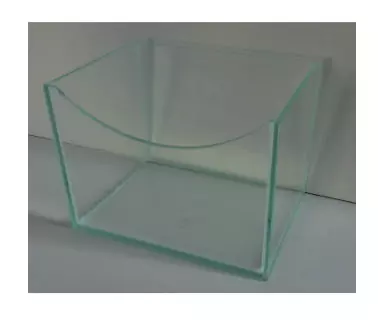
Glass sand bath for rodents The hygienic sand bath is easy to clean and is open at the top so that no dust can accumulate. As it is made of glass, it cannot be gnawed on and is therefore durable. easy to clean open at the top, so no dust can build up when bathing made of glass - therefore it cannot be gnawed on Sizes: S  = 15x15x10cm suitable for dwarf hamsters, coloured mice M = 20x15x15cm suitable for hamsters, gerbils L = 30x20x20cm suitable for degu

CHF 19.90

Aviary Paradiso
Color (1): Antique/Platinum | Size (1): 90 | Size (4): 90
Paradiso aviary from Montana with flat roof Dream enclosure in three sizes - suitable for zebra finches, budgerigars, canaries, agapornids, large parakeets Paradiso 90: External dimensions: 91x60x160cmInternal dimensions: approx. 85x55x132cm with two front doors Acrylic protection Grid spacing 10 mm Grid thickness: 2 mm Weight: 40.0 kg This aviary is suitable for: 2-8 finches 2-6 canaries 2-6 budgerigars 2-4 agapornids Paradiso 120: External dimensions: 120x80x180 cm Internal dimensions: approx. 115x75x144 cm with two front doors Acrylic protection Grid spacing 10 mm Grid thickness: 2 mm Weight: 60.0 kg This aviary is suitable for: 2-12 finches 2- 10 canaries 2-10 budgerigars 2-6 agapornids 4 large parakeets up to cockatiel size Paradiso 150: External dimensions: 150x65x161 cmInternal dimensions: approx. 145x60x120 cm with four front doors Acrylic protection Grid spacing 10 mm Grid thickness: 2 mm Weight: 65.0 kg This aviary is suitable for: 2-12 finches 2- 10 canaries 2-10 budgerigars 2-6 agapornids 4 large parakeets up to cockatiel size Swiss animal welfare legislation contains legal provisions governing the animal-friendly keeping of and the handling of birds. The following regulations apply to all bird species: social species must be kept socially (no solitary keeping) the enclosures must meet the minimum sizes = minimum requirements all birds must be offered the opportunity to bathe the enclosures must be structured with a variety of springy perches of different thicknesses and alignments, with one third of the volume remaining free of structures all birds must be provided with suitable sand for ingestion the private keeping of certain bird species is subject to approval (wild animal keeping permit) the keeping of parrots on stands and the keeping of song canaries in Harz cages is prohibited the use of sand sleeves as a cover for perches is prohibited for finches: minimum enclosure floor area for 4 birds: 0.24 m2 (e.g. 60 cm x 40 cm) minimum height 50 cm for parrots: minimum enclosure floor area for 4 small parakeets and agapornids 0.24 m2 (e.g. 60 cm x 40 cm), minimum height 50 cm minimum enclosure floor area for 6 medium-sized parakeets up to cockatiel size 0.5 m2 (e.g. 100 cm x 50 cm), minimum height 60 cm

CHF 325.00

Chipmunks
Chipmunks Chipmunks have a length of 9 - 15cm depending on type. The bushy, strongly hairy tail measures approx. 10cm.The colour of the chipmunks is grey - black, with dark stripes running from the head over the back.Like hamsters, chipmunks have large cheek pockets and collect food for emergency supplies. Attitude: Chipmunks are very active and enjoy movement. Therefore, one should provide them with a large, escape-proof room aviary as a home. With the size of the cage applies: The larger - the better and more species-appropriate! In addition, keeping pairs is not possible in aviaries that are too small, as the animals cannot avoid each other. Usually the male is bitten.A keeping outside is possible. However, the chipmunks then hibernate. Belongs to the cage equipment: bedding hay branches for climbing various hiding places made of wood or cork sleeping cabins - budgerigar boxes are the best choice. nest material - hay or hamster cotton. Under no circumstances should synthetic cotton wool be used. sand bath food bowl and drinking bottle Food: To stay healthy, chipmunks - like other living creatures - depend on a varied diet.The ready-made food offered in pet shops ensures a balanced basic diet. With the supplementary food you can add variety to the menu.Strip-croissants are not pure vegetarians in contrast to dwarf rabbits and guinea pigs. Therefore you should offer them a piece of egg or a little quark from time to time. Thus the need of animal protein is covered.The chipmunk is particularly happy about fruit and berries. Make sure that the fresh food is unsprayed. The cage should be checked daily for spoiled fresh food so that the squirrel does not eat moldy food and fruit flies do not form.Chipmunks also need fresh water every day. Breeding: Breeding chipmunks is not easy. It is usually difficult to put together a harmonising pair. In addition, the mating season often only takes place in the spring months.Usually the female is too aggressive and dominant. It even happens that the males are bitten to death.The females have a gestation period of 30 - 35 days. The two to eight young are blind and naked, and it takes almost three weeks for them to open their eyes. After another two weeks they start to eat solid food and after about eight weeks they are so self-sufficient that they can be separated from their mother. Regular costs per month: Food: approx. Fr. 15.-- Bedding and hay: approx. Fr. 30.-- Veterinarian: The more species-appropriate and clean the keeping, the less likely it is to go to the veterinarian. Nevertheless one must always count on the fact that an animal can become ill also once and then causes additional costs. Before you decide for chipmunks, you should absolutely have read an appropriate technical book.For each animal husbandry applies: Children (also young people) must be instructed, supervised and controlled by the parents. Children should know that animals are not toys!Our trained Zoo Roco team is available to answer any questions you may have. They can advise you professionally in all questions.
 
Fat sand rat
Fat sand rat - Psammomys obesus The fat sand rat is, despite its name, neither a rat nor fat. It belongs to the gerbil family and lives in the sandy deserts from Algeria to Saudi Arabia. It is active both during the day and night. Note: Fat sand rats can become very tame towards their owner, but due to the special diet and the somewhat more demanding husbandry, these animals are not suitable for beginners. Description: The body length of a fat sand rat is approx. 14-20cm plus a tail of approx. 10-15cm. The weight is about 100-200g. A fat sand rat can reach an age of 5 years if kept well and appropriately for its species. Husbandry: Fat sand rats are very sociable rodents and should never be kept alone. At least two animals should be kept together.The enclosure should provide a lot of space, therefore it should not be less than 120x60x120cm. The fat sand rats require warmth, or sunlight lamps.The animals are very susceptible to stress and if there is too little peace and continuous stress, the animals can, in the worst case, die. Legal requirements: Enclosure at least 120x60x120cm for 2 animals Hiding places for all animals (therefore at least 1 hiding place per animal) coarse structured food: hay or straw fresh branches Furnishings: The furnishings should be well designed and there should be plenty of climbing opportunities. Fat sand rats do not dig tunnels as strongly as gerbils, but they still need a bedding height of 30cm so they can dig their sleeping chambers. Levels and many hiding places are essential. Even though fat sand rats gnaw rather less, opportunities for gnawing should still be offered. At a glance: suitable and burrowable bedding - 30cm high sand bath hay and straw - also serves as nesting material climbing and activity opportunities retreat options for all animals levels (if not already in the terrarium) food and water bowl warmth, or sunlight lamps Diet and food: The diet of fat sand rats is more demanding than that of gerbils, as the animals are absolute dietary specialists. They feed mainly on leaves, succulents, salt-containing stems and goosefoot plants. Sugar is taboo for fat sand rats, because like the degu, they are prone to diabetes and can die from it.The most suitable food for fat sand rats is degu food. It contains no sugar and consists of many herbs and some grains.Certain types of vegetables may be offered and are also very well accepted. Suitable vegetables are... Chinese cabbage iceberg lettuce chicory broccoli, courgette and cucumber Not suitable are... carrots cabbage varieties all fruit Considerations before acquisition: As already mentioned above, fat sand rats are not animals for beginners due to the special diet and more demanding husbandry. There should be enough space to offer the rodents a species-appropriate home. The terrarium must not be placed in direct sunlight and should be in a quiet place so that the animals can have their rest periods. The life expectancy is approx. 5 years. During this time you have full responsibility for the animals.Before you decide on these interesting animals, seek advice and allow yourself enough time for the decision. Fat sand rats are not suitable for children.For every kind of animal husbandry: Children (including adolescents) must be instructed, supervised and monitored by their parents. Children should know that animals are not toys!For questions and problems, our trained team at Zoo Roco is at your disposal. They can advise you professionally on all matters.