
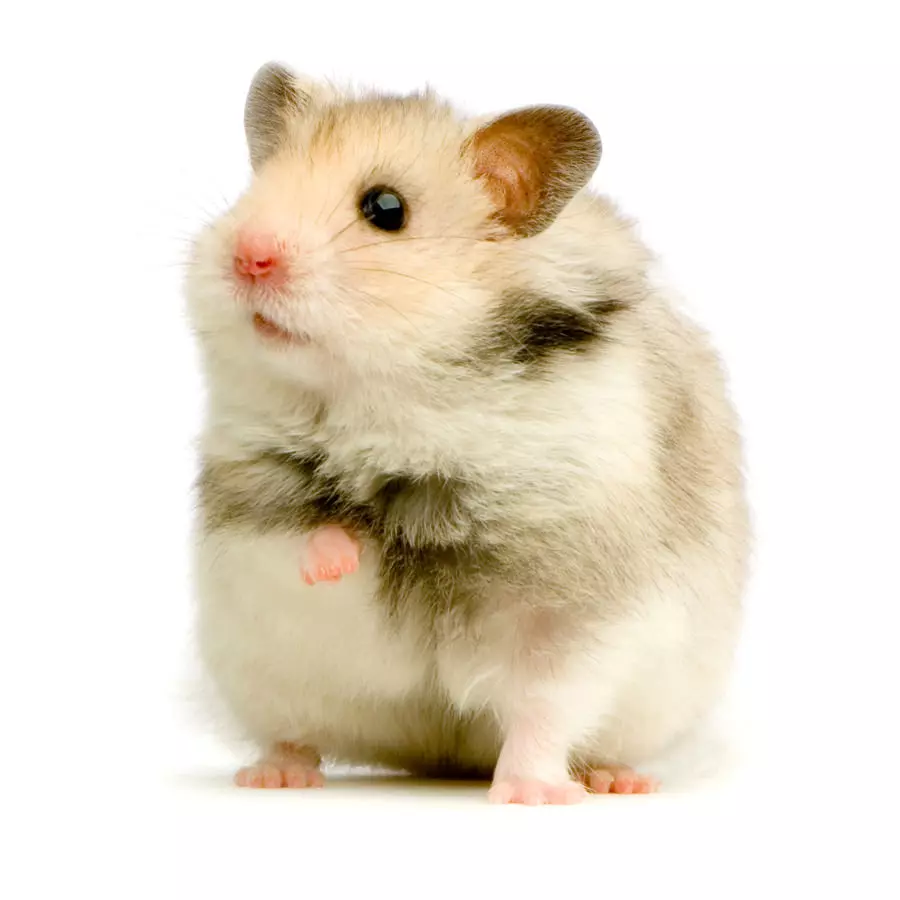
Hamster
Profile
| Home: | Syria |
| Age expectation: | approx. 2 years |
| Sexual maturity: | approx. 6-8 weeks |
| Gestation period: | 16-18 days |
| social behaviour: | Loners, Twilight and nocturnal |
| Nutrition: | Cereals, seeds, nuts, grains, hay, herbs, vegetables and fruit, quark, hard-boiled egg, water |
The hamster
Hamsters live in self-dug burrows in steppes and semi-deserts from Southern Europe to East Asia. Hamsters have a great urge to move, as hamsters often travel several kilometres in the wild in search of food. Golden hamsters are solitary animals and defend their territory against other hamsters. Males and females only meet during the mating season.
Description:
The body length of a golden hamster is approx. 15cm. The stubby tail measures only about 10 to 15 mm. The weight is 130 to 180 grams. Breeding has resulted in many colour variations. There are white, cream, cinnamon, black, grey and all variations of pied.
Hamster care:
You should provide a hamster with a large cage.
We recommend a glass container measuring 100x40cm for hamsters.
This allows you to fulfil the 15 cm of bedding required by the Animal Welfare Act.
The hamster cage should be set up so that the hamster can dig and climb. The absolute minimum size for a hamster cage is approx. 70x40cm. However, the hamster cage must be equipped with shelves and climbing facilities so that the hamster can fulfil its great urge to move. The larger the hamster cage, the better. After all, we prefer to live in a multi-room flat rather than a studio!
The cage should be located in a place where the hamster can sleep undisturbed during the day - but where it won't disturb anyone at night with its lively behaviour.
Hamster accessories / Cage equipment:
- Bedding at least 15cm deep so that the hamster can fulfil its digging needs
- Hay
- Play opportunities
- Various shelters made from wood or cork
- Sand bath
- Hamster toilet
- Nest material - hay or hamster wool. Under no circumstances should synthetic cotton wool be used
- Food bowl and drinking bottle
Legal requirements:
- Enclosure min. 60x30cm (not our recommendation!)
- Hiding places
- Digging layer 15cm
- Climbing possibilities
- Nest material
- Gnawing objects such as softwood or fresh branches
- Individual housing
Hamster food:
To stay healthy, hamsters - like other living creatures - need a varied diet.
The main food offered in pet shops ensures a balanced basic diet. You can add variety to your golden hamster's menu with additional food.
Unlike dwarf rabbits and guinea pigs, golden hamsters are not pure vegetarians. You should therefore offer them a piece of egg or a little quark from time to time. This will fulfil their need for animal protein.
Hamsters particularly enjoy fresh food such as fruit, carrots or dandelions. Make sure that the fresh food is unsprayed. The cage should be checked daily for spoilt fresh food so that the hamster does not eat mouldy food. Although hamsters cover most of their fluid requirements with green food, they also need fresh water every day.
Breeding details:
At around two months of age, hamsters are capable of reproducing and can be used for breeding. You put a male and a female together, observe whether they get along and then leave them to their happiness for a few days. Then separate them again.
The female is provided with sufficient padding material, which is made into a nest. After a gestation period of just 18 days, the female hamster gives birth to five to ten naked and blind young, each weighing just two grams. Once a female has given birth, she should not be disturbed in the early stages, otherwise she may kill and eat her litter.
The young open their eyes at ten days old. At three to four weeks, they are already independent enough to make their way through life on their own.
We do not recommend breeding the animals, this is only information about reproduction!
How much does a hamster cost (per month):
- Food: approx. Fr. 15.--
- Bedding and hay: approx. CHF 30.
- Vet: The more species-appropriate and cleaner your hamster is kept, the less likely it is to need a visit to the vet. Nevertheless, you must always bear in mind that a hamster can fall ill and incur additional costs.
Things to consider before buying:
Due to its nocturnal activity, the golden hamster is not an animal for small children. Hamsters sleep during the day and only wake up in the evening when small children have to go to bed. Repeated disturbances from sleep lead to illness and biting in hamsters in the long term.
Hamsters are therefore only suitable for older schoolchildren, teenagers and working people.
The life expectancy of rodents is 2 to 3 years. During this time, you are responsible for this little guy.
Before you decide to buy a golden hamster, you should definitely read a specialised book.
The following applies to all animal husbandry: Children (including adolescents) must be guided, supervised and controlled by their parents. Children should know that animals are not toys!
Our trained team is available to assist you with any questions or issues at Zoo Roco. They can provide you with expert advice on all matters.
Login
Suggested products






Customers also saw

