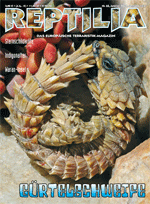
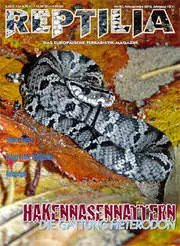
Reptilia 81 - Hognose snakes

Article no: reptilia81

CHF 12.00

Stock: 0

This article is currently not available

Product information "Reptilia 81 - Hognose snakes"

Reptilia 81 - Hook-nosed snakes

Samar cobra
Pantanal flatback turtle
Galápagos

Contents:

The hook-nosed snakes of the genus Heterodon are currently experiencing an unimagined terraristic boom. Previously rather underappreciated, various very attractive colour forms have recently been bred, and this has led to a real boom. But even the normally coloured animals – and the natural spectrum of the eastern hook-nosed snake in particular covers an extremely wide range of colours – are extremely lovable terrarium pets.
We present all species in detail, offer detailed breeding reports even on rarer forms, and a splendidly illustrated overview of current developments in colour variety breeding is of course also included.

EDITORIAL

MAGAZINE
DATES

PHOTOSTORY
Hooked on Hogs! Hooked on hook-nosed snakes
by K. Kunz

KEEPING AND REPRODUCTION
The Western hook-nosed snake of North America "trend snake"
by B. Bumgardner

HERPETOFAUNA
Unleashed East! – The Eastern hook-nosed snake, Heterodon platirhinos
by L. Spinner

KEEPING AND REPRODUCTION
Small but mighty! The Southern hook-nosed snake
by K. Kunz & N. Nickel

HERPETOFAUNA
The Pantanal flatback turtle, Acanthochelys macrocephala – A turtle that still raises many questions
by T. & S. Vinke

PORTRAIT AND POSTER
Gekko gecko (Linnaeus, 1758). Tokay gecko
von M. Gaulke

TRAVEL
In the footsteps of Darwin through South America
Part 4: Galápagos – The Darwin Archipelago
by H. Werning

KEEPING AND REPRODUCTION
Keeping and breeding Samar cobra (Naja samarensis)
by C. Frömberg

KEEPING AND REPRODUCTION
Sicarius terrosus in the terrarium
by R. Hübers

ANIMALS OF OUR HOME
The forest lizard
by R. Leptien

WESTERN HERP PERSPECTIVES
The big frost
by B. Love

LIBRARY
Book review: Fläschendräger & Wijffel (2009): Anolis
by U. Bartelt

SUBSCRIPTION & SERVICE
ALSO NEAR YOU
PREVIEW

BRUTKASTEN
Alone among sheep. Part 1
by H. Werning
Composition
Feeding recommendation
Technical details
Size information

0 of 0 reviews

Give us a rating!

Share your experience with the product with other customers.


Customers also bought

Reptilia 65 - Girdled lizards
Reptilia 65 - Girdled TailStar tortoiseIndigo snakeMonitor IslandContents: 2 EDITORIAL 3 READER LETTERS 4 MAGAZINE 12 DATES 14 WESTERN HERP PERSPECTIVESA country tripFrom B. Love 16 PHOTO REPORTAGEBelt-tailed lizards – the genus CordylusBy H. Schwier 24 KEEPING AND REPRODUCTIONDwarf Belted Tails: keeping and Breeding of Cordylus tropidosternum(Cope, 1869)From P. Fritz 32 KEEPING AND REPRODUCTIONCordylus mossambicus FitzSimons, 1958A persistent and interesting keeperFrom H.-P. Berghof 40 HERPETOFAUNAThe giant belted skink Cordylus giganteus – unique and mysterious at the same timeFrom H. Schwier 45 REPORTAGEThe radiated tortoise of Madagascar -an armoured beautyFrom J. Hammer 51 PORTRAIT AND POSTERPhilothamnus punctatusFrom M. Dobiey 56 KEEPING AND REPRODUCTIONNewts of the genus Paramesotriton- The Vietnamese and Laotian warty newtsFrom P. Bachhausen 64 KEEPING AND REPRODUCTIONDrymarchon couperi – the Eastern Indigo SnakeFrom N. Miele 72 TRAVELThe island of the monitor lizardsFrom A. Gumprecht 88 FAQ - FREQUENTLY ASKED QUESTIONSCorn snakesBy K. Kunz 92 REPORTAGESerpentário SanmaruFrom M. Junge 95 LIBRARY 104 BRUTKASTEN Chicken heart, be braveBy H. Werning

CHF 11.20

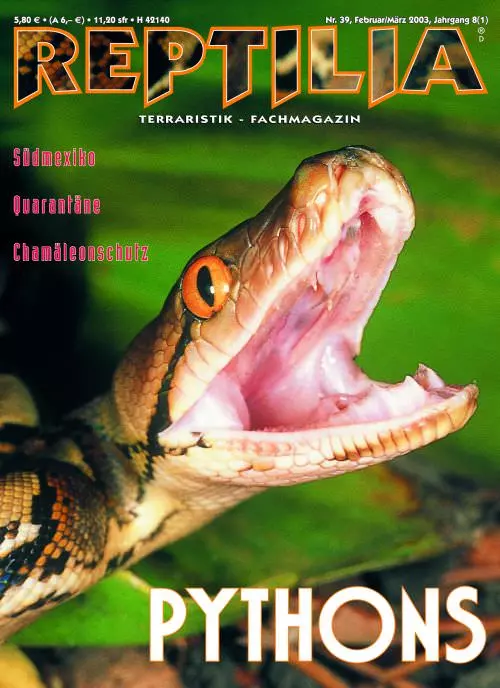
Reptilia 39 - Pythons
Reptilia 39 - Pythons Southern MexicoQuarantineChameleon protection Contents: 2 EDITORIAL 3 READER LETTERS 7 MAGAZINE 17 DATES 20 WESTERN HERP PERSPECTIVESNew citizenby B. Love 22 PHOTO REPORTAGE Pythonsby V. Franz 30 KEEPING AND BREEDINGMorelia spilota – Keeping and breeding the Diamond Python by U. Amundsen 34 KEEPING AND BREEDINGPython anchietae – Keeping and breeding the Angolan Python by V. Franz 37 REPORTAGEFascination record snake. Part 1: From childhood dream to research by H. Bellosa 40 TRAVELSouthern Mexicoby S. Vogler 51 PORTRAIT AND POSTERGeochelone nigraby H. Werning 56 REPORTAGEChamaeleo africanus in Europe: On a conservation project to preserve a reptile species threatened with extinction in Europeby B. Trapp 62 HerpetofaunaContribution to the knowledge and first report on breeding the Vietnamese swamp turtle, Mauremys annamensis (SIEBENROCK, 1903)by M. Schilde 66 REPORTAGEHow should a professional quarantine be carried out?by T. Eisenberg 72 REPORTAGEFire-bellied newts of the genus Cynops. Part 2: Breeding and newt registerby P. Bachhausen 78 REPORTAGEWith pencil and ink: treasures conjured on paperby R. Fenske 88 CLASSIFIED ADS 90 RAT & TAT 93 LIBRARY 104 GLOSSState guest in Chileby H. Werning

CHF 11.20

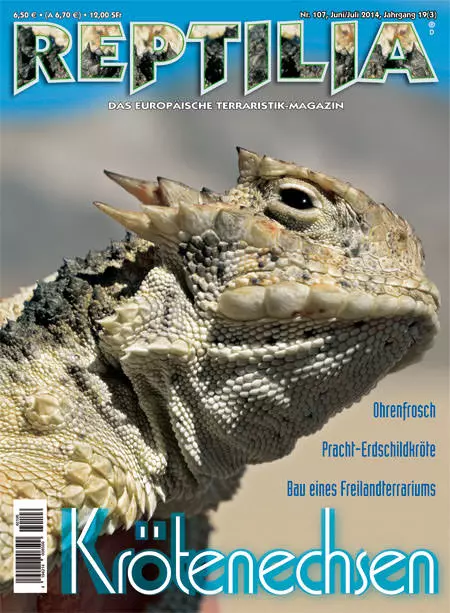
Reptilia 107 - Toad lizards
Reptilia 107 Toad lizards Eared frogMagnificent tortoiseConstruction of an outdoor terrarium Contents:Cover story: Toad lizardsThe bizarre toad lizards of the genus Phrynosoma are among the almost legendary terrarium animals. Every reptile lover is probably enchanted by the appearance of these small North American iguanas, but they have a reputation for being impossible to keep. However, more and more dedicated terrarium keepers are succeeding not only in keeping these food specialists for many years, but also in breeding them successfully. We provide an overview of the genus, discuss the problem of feeding these animals and provide two examples of successful keeping and breeding. EditorialMAGAZINEDATES WESTERN HERP PERSPECTIVESThe invisible ark B. Love PHOTOSTORYToad lizards – a (very good) freak of natureH. Werning REPORTAGEConsiderations on the diet of toad lizardsB. Fabian KEEPING AND BREEDINGKeeping and breeding the giant toad lizard (Phrynosoma asio) in the terrariumK. Haase KEEPINGPhrynosoma orbiculare – a toad lizard  from the highlands in captive careK. Haase KEEPINGThe eared frog, a little-known guest in the terrariumP. Janzen KEEPING AND BREEDINGSilent observers – on the lifestyle and keeping of the Central American magnificent tortoiseL. Spinner PracticeConstruction of an outdoor enclosure for emerald lizardsM. Herz TEST RUNSuccessful combination of terrarium and rackK. Kunz ANIMALS OF OUR HOMEThe spadefoot toadR. Leptien LIBRARYSERVICEALSO NEAR YOU TRAVELTerra incognita in the middle of Madagascar's rice fields – the herpetofauna of BetaolanaS. Wolf PREVIEW BRUTKASTEN Tangimangi – or: Take what you need!M. Zawadzki 

CHF 12.00

Reptilia 06 - Mimicry - The perfect deception
Reptilia 06 - Mimicry - The perfect illusion MaltaBuilding polystyrene terrariumsNutrition of tortoises Contents: Page 2 - EditorialPage 3 - Letters to the editorPage 5 - MagazinePage 11 - DatesPage 14 - Western Herp Perspectives: The Queen of Snakes, by B. LovePage 16 - Photo reportage: Mimicry, by L. AissefairePage 24 - Report: Mimicry - Saving energy through camouflage, by Dr M. GaulkePage 32 - Keeping and breeding: Like a leaf in the wind. The walking leaf Phyllum celebicum in the terrarium, by H. FischerPage 38 - Travelogue: Temples, disc-tongued frogs and reptiles – impressions of a trip to Malta, by U. SchlüterPage 43 - Photographic profile: Reptiles and amphibians in the Du Tsingy de Bamaraha nature reserve (West Madagascar), by G. Hallmann, E. Hoffmann, J. Krüger, P. Schlagböhmer and G. TrautmannPage 47 - Portrait and poster: Gastrotheca riobambae, by H. WerningPage 51 - Report: Nutrition of European tortoises, Part 2, by Dr C. DennertPage 59 - Keeping and breeding: A mini-crocodile for the paludarium – The keeled skink Tropidophorus grayi, by U. DostPage 64 - Terrarium practice: Styrofoam terrariums, by D. HasselbergPage 69 - Herpetofauna: The Bismarck Dwarf Python Liasis boa – keeping and breeding a colourful giant snake, by V. FranzPage 72 - Herpetology and culture: Snakes go to school – Part 2, by M. HallmenPage 81 - Reptilia on the road: Zoo Berlin-Friedrichsfelde, by H. WerningPage 84 - Advice and HelpPage 90 - LibraryPage 96 - Satire: Something different, by A. Scheffler

CHF 9.80

Reptilia 49 - Food animal breeding
Reptilia 49 - Food animal breedingScorpion crust lizardSpotted pythonChinese mountain dragonContents: 2 EDITORIAL 4 READER LETTERS 5 MAGAZINE 14 DATES 18 WESTERN HERP PERSPECTIVESHurricane Sale in Floridaby B. Love 20 PHOTO REPORTAGE Breeding food animals yourself - a problem?by F. Bruse & H. Werning 27 REPORTAGEEfficient and productive cricket breeding by F. Bruse 33 REPORTAGEBreeding the chocolate cockroach (Shellfordella tartara) by F. Bruse 36 REPORTAGEA simple Drosophila breeding project by F. Bruse 40 HERPETOFAUNANotes on the Motagua lizard (Cnemidophorus motaguae) by U. Schlüter 43 TRAVELHerpetological observations and more from Gambia by U. Thieme 51 PORTRAIT AND POSTERGeoclemys hamiltoniby H. - D. Philippen 56 KEEPING AND BREEDINGKeeping and Breeding the Chinese Mountain Agame (Japalura splendida) by H. Schradin 68 HERPETOFAUNADendrobates pumilioThe strawberry frog on the Bocas Islands by B. Schwarz 72 KEEPING AND BREEDING The black Mexican chain snake (Lampropeltis getula nigrita in the terrariumby M. Thums 79 REPORTAGEAntaresia maculosa (PETERS, 1873)Spotted pythonby D. Hasselberg 85 CLASSIFIED ADS 90 RAT & TAT 93 LIBRARY 104 GLOSSESIn search of Uracentron azureumPart 1by H. Werning

CHF 11.20

Reptilia 72 - Grasshoppers, crickets, house crickets
Reptilia 72 - Grasshoppers, Crickets, House Crickets Jamaican AnoleIndochinese Hinged TurtleSunglow Boas Contents: 2    EDITORIAL 4    REPORTAGE      Potential Dangers of Giant Snakes      by B. Akeret 13  MAGAZINE 21  DATES 24  PHOTOSTORY      Crickets and Grasshoppers      by F. Tomasinelli 32  REPORTAGE      Grasshoppers:      Defence and Survival      by F. Tomasinelli 36  KEEPING AND BREEDING      The Egyptian Migratory Locust     Anacridium aegyptium     by A. Mangoni 40  REPORTAGE      Lord of the Bugs      Visiting Europe’s Largest       Breeding Facility for Feeder Insects      by H. Werning 54  HERPETOFAUNA      The European Tree Frog (Hyla arborea)      “Frog of the Year” in the “Year of the       Frog 2008”      by A. Kwet, A. Nöllert & A. Geiger 64  KEEPING AND BREEDING      Successful Keeping and Offspring of      Cistoclemmys (galbinifrons) bouretti,      the Indochinese Hinged Turtle      by W. & K. Heuberger 73  TRAVEL/KEEPING AND BREEDING      Jamaica, its Iguanas and the      Giant Anole Anolis garmani      by T. Baum 81  KEEPING AND BREEDING      And the Sun Rises … the Sunglow Boa      by R. Ihle & J. Bergman 86  WESTERN HERP PERSPECTIVES      A Turtle Story      by B. Love 91  LIBRARY 104 BRUTKASTEN      Thoughts on the Day of Milk Suffering      by H. Werning

CHF 12.00

Suggested products

Handbook of food plants for tortoises and other reptiles
Handbook of forage plants 2nd revised editionMarion Minch is not only a successful breeder of diverse tortoises for many years, but also an excellent connoisseur of native wild herbs. She founded and runs samenkiste.de, which is well known to many tortoise keepers and nature lovers. Her name is inextricably linked with reptile care and species-appropriate nutrition for tortoises. Her handbook of food plants summarises the most important native food plants for herbivorous and omnivorous reptiles. She not only considers tortoises, but also iguanas, spiny-tailed dragons and even chameleons. From the basics of plant biology to native wild herbs to suitable food plants for hardy tropical reptile species, this comprehensive work provides the basis for species-appropriate keeping. In the expanded and supplemented 2nd edition, the plant section is divided according to flower colour. This makes it even easier to identify wild herbs. The work has also been supplemented with a wealth of additional information and many pictures.

CHF 46.50

Geckos
Geckos in the terrarium by Astrid FalkThe book offers a comprehensive introduction to geckos and their species-appropriate keeping in terrariums. It explains what you need to think about before buying a gecko and what preparations should be made. The book describes in detail how the terrarium is technically equipped and set up. The care of the animals, their special features and behaviour, their diet, reproduction and rearing of young animals are described, as well as diseases and husbandry problems with tried and tested suggestions for prevention and treatment. Individual gecko species that are particularly suitable for keeping and breeding in terrariums are portrayed in detail in the second part of the book.

CHF 28.50

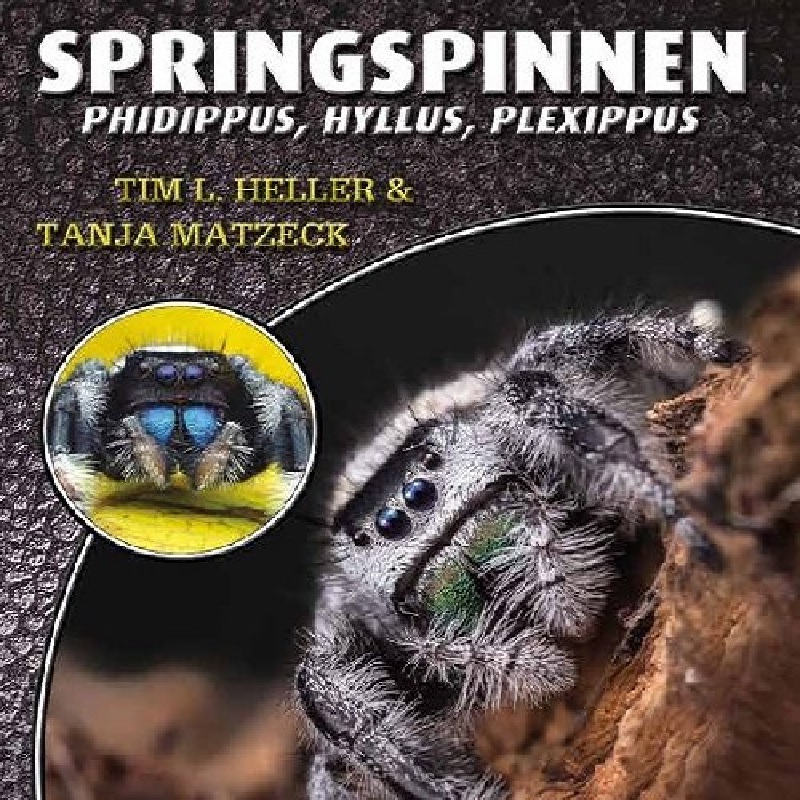
Jumping spiders Phidippus, Hyllus, Plexippus
Book Jumping Spiders - Phidippus, Hyllus & Plexippus A guide to keeping jumping spiders of the genera Phidippus, Hyllus & Plexippus. Who can resist the charm of jumping spiders? The childlike appearance of their expressive face simply leaves no one cold! In addition, their behavior is extremely exciting to observe, their colors are bright and their requirements for species-appropriate keeping are very easy to meet. No wonder these likeable jumpers are all the rage! This volume in the "Species by Species" series describes in detail what to look out for when buying and keeping them, introduces the most commonly kept species and color forms and provides plenty of tips on how to keep them successfully - so you can be sure they will breed well! Species by Species introduces you to the books in this series, which present the most popular terrarium animals. Each volume offers you detailed, practical care instructions and all the information you need to successfully breed your animals. All important questions from the required tank size to terrarium set-up, technical equipment, species-appropriate nutrition and disease prevention are answered with numerous tricks and tips. Experienced, long-standing breeders reveal how you can encourage the animals to reproduce and raise healthy young. All this in full color, generously illustrated and attractively designed - just about your terrarium animal - species by species

CHF 23.90

Book Breeding live food yourself
Book "Grow your own live food" - The perfect guide for pet owners Discover practical and detailed instructions on how you can easily breed food for your reptiles, birds, fish or other animals yourself in the book "Breeding live food yourself". With valuable tips on various food insects, their care and breeding, you can save money and ensure a species-appropriate diet for your pets. Contents of the book: Step-by-step instructions for breeding feeder insects Information on the best types of food for reptiles, birds and fish Care instructions and breeding conditions for various live food species Tips for sustainable and cost-effective food production Why breed your own live food? Get healthy, fresh food for your animals Save money and reduce dependence on pet shops Promote the health and well-being of your animals with species-appropriate food Whether you are a beginner or an experienced pet owner, this book provides you with everything you need to successfully breed live food yourself.

CHF 46.50

Marginata 69 - New Guinea tortoises
Marginata 69 - New Guinea tortoises – the genus ElseyaCover storyThe unrecognised beauties: New Guinea tortoises (Andreas S. Hennig)My experiences with Branderhorst's New Guinea tortoise, Elseya (Elseya) branderhorsti (Ouwens, 1914) (Andreas S. Hennig)Keeping and breeding of Rhodin's New Guinea tortoise, Elseya (Hanwarachelys) rhodini Thomson, Amepou, Anamiato & Georges, 2015 (Andreas S. Hennig)PortraitGeoemyda spengleri, Chinese serrated tortoise (Andreas S. Hennig)ReportageMacrochelys temminckii – Experiences and impressions with vulture tortoises part 2 (Reiner Praschag)KeepingAn alternative to year-round keeping of the Egyptian tortoise in the terrarium – my experiences with seasonal outdoor keeping of Testudo kleinmanni (Ricarda Schramm)EtymologySawbacks and living maps part 4: Graptemys gibbonsi, Pascagoula humpback tortoise (Holger Vetter)Classifieds & animal placement

CHF 16.50

Reptilia 18 - Mimesis
Reptilia 18 - MimesisMaltaBuilding polystyrene terrariumsNutrition of tortoisesContents:Page 2 - EditorialPage 3 - Letters to the editorPage 5 - MagazinePage 11 - DatesPage 14 - Western Herp Perspectives: The Queen of Snakes, by B. LovePage 16 - Photo reportage: Mimicry, by L. AissefairePage 24 - Report: Mimicry - Saving energy through camouflage, by Dr M. GaulkePage 32 - Keeping and breeding: Like a leaf in the wind. The changing leaf Phyllum celebicum in the terrarium, by H. FischerPage 38 - Travelogue: Temples, disc tongues and reptiles - impressions of a trip to Malta, by U. SchlüterPage 43 - Photographic profile: Reptiles and amphibians in the Du Tsingy de Bamaraha nature reserve (western Madagascar), by G. Hallmann, E. Hoffmann, J. Krüger, P. Schlagböhmer and G. TrautmannPage 47 - Portrait and poster: Gastrotheca riobambae, by H. WerningPage 51 - Report: Nutrition of European tortoises, Part 2, by Dr C. DennertPage 59 - Keeping and breeding: A miniature microcodile for the paludarium - The keel skink Tropidophorus grayi, by U. DostPage 64 - Terrarium practice: Styrofoam terrariums, by D. HasselbergPage 69 - Herpetofauna: The Bismarck dwarf python Liasis boa - keeping and reproducing a colourful giant snake, by V. FranzPage 72 - Herpetology and culture: Snakes go to school - Part 2, by M. HallmenPage 81 - Reptilia on the road: Berling-Friedrichsfelde Zoo, by H. WerningPage 84 - Advice and actionPage 90 - LibraryPage 96 - Glossary: Something different, by A. Scheffler

CHF 9.80

Draco 11 - Day geckos
Draco 11 - Day geckos Contents: 2 Editorial 4 day geckos of the genus PhelsumaJens Krüger 20 A terrarium for PhelumenHartmut Lipp 27 On the diet of day geckos of the genus Phelsuma Gerhard Hallmann 30 Group keeping and socialisation of PhelsumaHartmut Lipp 38 Phelsuma berghofi Krüger, 1996Biology, care and reproductionHand Peter Berghof 43 Experiences in the care and breeding of Phelsuma hielscheri Rösler, Obst & Seipp, 2001 from Isalo National Park Hans Peter Berhof & Roland Gebhard 47 On the keeping and breeding of Phelsuma inexpectata Mertens, 1966Oliver Pürkel 51 Taxonomy, care and breeding of the subspecies of Phelsuma lineata Hartmut Lipp 58 Selective colour breeding in Phelsuma madagascariensis grandis Rudolf Gerhardt 61 It doesn’t always have to be green – the less colourful representatives of the genus Phelsuma Hand Peter Berghof 68 Phelsums on Mauritius – A situation study Holger Schneider 77 To Madagascar – For the sake of day geckos Klaus Liebel & Wolfgang Schmidt 85 Book box 91 Magazine

CHF 16.80

Reptilia 38 - Tarantulas in terrariums
Reptilia 38 - Tarantulas in the terrariumGreen iguana in a greenhouseFire-bellied newtsEarth pythonContents: 2 EDITORIAL 3 READER LETTERS 7 MAGAZINE 15 DATES 16 WESTERN HERP PERSPECTIVES The hymn of natural terrariumsfrom B. Love 18 PHOTO REPORTAGE Large, hairy spiders - An introduction to the Theraphosidae familyby F. Tomasinelli 26 KEEPING AND BREEDINGBreeding of tarantulas with special consideration of their way of life in the wildby B. F. Striffler 32 KEEPING AND BREEDINGThe ‘Malaysian Earth Tiger’ – Keeping and Breeding the Asian Tarantula Cyriopagopus thorelliby F. de Vita & F. Tomasinelli 36 KEEPING AND BREEDINGPoecilotheria subfusca POCOCK, 1895: Group housing and breedingby B. F. Striffler 42 TRAVELAdventure Oman Mountainsby R. Leptien 51 PORTRAIT AND POSTERAzemiops feaeby A. Gumprecht 56 REPORTAGEA life like in paradise - experiences with keeping a green iguana in a tropical hallby C. Ströhlein, idea-Schmetterlings-Paradies Neuenmarkt 61 HERPTOFAUNAThe fire-bellied newts of the genus CynopsPart 1: Keeping and speciesby P. Bachhausen 68 KEEPING AND BREEDINGObservations on the ecology and terrarium husbandry of the Eastern lizard snake, Malpolon monspessulanus insignitus Geoffroy, 1827by H. Esterbauer 74 HERPTOFAUNAThe Burrowing Python (Calabaria reinhardtii)by S. Seidel 78 REPORTAGEThe school vivariumPart 3: Behavioural practical course for a biology classby M. Hallmen 85 RAT & TAT 87 CLASSIFIED ADS 92 LIBRARY 104 GLOSSESFeed animal breeding magazineby N. Nadolny This issue of your specialist terrarium magazine REPTILIA is dedicated to tarantulas. Alongside a photo feature richly illustrated with impressive photographs, which provides an overview of the family of these popular animals, there are expert and detailed reports on keeping and breeding them. The focus is on the magnificent Poecilotheria species, which – unusually for tarantulas – can almost without exception be kept in groups, as well as the “Malaysian Earth Tiger” Cyriopagopus thorelli. The article by B. Striffler on the breeding of tarantulas, with particular attention to their natural behaviour, also deserves special mention. Here you will discover interesting facts that you will search for in vain in standard books on tarantulas, and which will enable you to draw valuable conclusions regarding husbandry and breeding conditions.Spectacular finds and a life-threatening attack - the result of the exciting travelogue Adventure Oman, which you should not miss. After the brilliant photos of the extremely rarely shown venomous snake Azemiops feae comes a report on an unusual way of keeping the green iguana that could not be more exemplary.Extremely colourful animals that can reach a great age when kept properly are the fire-bellied newts of the genus Cynops, which newt expert P. Bachhausen presents to you in detail through text and images.Observing animals in the wild not only provides fascinating insights into their way of life, but also makes it easy to draw conclusions about the successful care and breeding of these species. The proof of this simple yet effective strategy: the article by H. Esterbauer on the ecology and terrarium husbandry of the Eastern lizard snake, Malpolon monspessulanus insignitus.In this issue of REPTILIA, we are also able to present one of the first reports on the breeding of the unusual ground python Calabaria reinhardtii. S. Seidel, who achieved this success, describes in detail here, amongst other things, the husbandry conditions that stimulated his animals to mate.In the last part of his article on the school vivarium, M Hallmen finally reports on the concrete possibilities that arise from keeping animals in the classroom.As always, REPTILIA once again offers you the full range of comprehensive services: events, classifieds, the magazine featuring interesting facts about Hobby, advice and practical tips, and the library are all included, as is the column, this time offering a satirical take on RODENTIA, the specialist magazine on small mammals published by Natur und Tier Verlag.

CHF 11.20

Thick-toed geckos
All about the fat-fingered geckos by Mirko Barts 61 pages 14.8 x 21 cm 45 colour photos 2nd edition Author Mirko Barts Publisher NTV Contents: Fat-fingered geckos have been on the rise for years. Their attractive appearance, their endearing nature and the low demands they place on keeping in the terrarium have quickly boosted their popularity. The experienced and successful terrarium keeper Mirko Barts covers in this book of the “Species by Species” series the species-appropriate keeping and care of fat-fingered geckos in every detail, from correct housing to healthy feeding. And of course, this guide also tells you how to breed your geckos, incubate the eggs and raise the tiny young. Systematics and body structure The fascinating biology: From the life of the fat-fingered geckos All information on species-appropriate keeping: from suitable terrarium to equipment and technology to feeding Successful breeding: Mating stimulation, incubation of the eggs and raising the young Problem solving: How to avoid the most common mistakes in care and how to help sick animals Brilliant photos

CHF 21.90

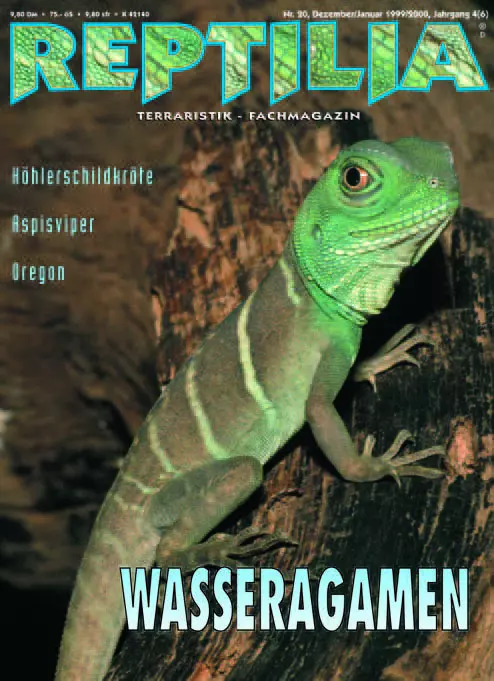
Reptilia 20 - Water dragons
Reptilia 20 - Water dragons Charcoal tortoiseAspis viperOregon Contents: Page 2 - EditorialPage 3 - Letters to the editorPage 6 - MagazinePage 13 - DatesPage 14 - Western Herp Perspectives: a childhood with box turtles, by B. LovePage 15 - Photo report: Water dragons, by. H. WerningPage 22 - Report: Observations of Physignathus concincinus in Thailand and Laos, by S. and U. MantheyPage 24 - Keeping and breeding: 15 years with water dragons, by H. WerningPage 32 - Report: The Australian water dragon Physignathus lesueurii lesueurii, by B. LangerwerfPage 40 - Journey: On tailed amphibian excursions in northern Oregon. Part 1: From the Columbia River Gorge to the north coast, by H. WallaysPage 47 - Portrait and poster: Tribolonotus gracilis, by U. DostPage 51 - Report: the alpine viper Vipera aspis atra, by W. StrassmannPage 56 - Report: Biology, distribution and conservation of the charcoal tortoise Geochelone carbonaria, by M. Merchàn, A. M. Fidalgo and C. PérezPage 64 - Keeping and breeding: Keeping and breeding of some Andean keel-tailed iguanas (Stenocercus) from the Peruvian highlands. Part 2, by U. SchlüterPage 68 - Report: Insects in the terrarium. Part 2, by H. FischerPage 80 - Reptilia on the road: Vivarium Darmstadt, by A. HauschildPage 83 - Advice and actionPage 89 - LibraryPage 96 - Gloss: The crisis in statutory health insurance for reptiles and amphibians, Part 1, by M. Vanselow

CHF 9.80

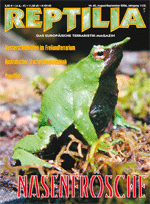
Reptilia 60 - Darwin's frogs
Reptilia 60 - Nose frogs Aquatic turtles in the outdoor terrariumAustralian spiny-tailed skinkMauritius Contents: 4 EDITORIAL 5 MAGAZINE 12 DATES 15 PHOTO REPORTAGEFrom Darwin's treasure trove: Nose frogs By H. Werning 22 KEEPING AND BREEDINGThe breeding of the nose frogRhinderma darwinii for more than twodecadesBy K. Busse 30 REPORTAGEThe REPTILIA project "Nose Frogs":Field studies on Rhinodermadarwinii, the Darwin's frogBy P. Ulmer 39 REPORTAGEHalf-swimmers in sight? The search for Rhinoderma rufum continues.By M. Solé 43 TRAVELMauritius for beginnersBy M. Rogner 51 PORTRAIT AND POSTERMontivipera xanthinaBy N. Stümpel & B. Trapp 55 KEEPING AND BREEDINGOn keeping and breeding the Australianspiny-tailed skink Egernia stokesii stokesii (Gray, 1845), with notes on feeding-management. Part 1By S. Knauf 62 PRACTICEUse of a conservatory as a terrarium-location for a desert terrariumPart 2: The inhabitants: Tympanocryptis tetra-porophora (Lucas & Frost, 1895)By T. Ackermann 68 PRACTICE North American aquatic turtles in the outdoor terrarium Part 1: General remarksBy A. S. Hennig 72 HERPETOFAUNASand lovers - The psammophilous snakesof North AfricaBy U. Schlüter 86 FAQ - FREQUENTLY ASKED QUESTIONSAcquisition of tarantulasBy K. Kunz 90 LIBRARY 100 WESTERN HERP PERSPECTIVESAlterna feverBy B. Love 104 INCUBATOR"How do you even get something like this"?By H. Werning

CHF 11.20

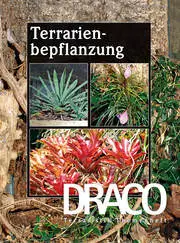
Draco 41 - Terrarium planting
Draco 41 - Terrarium plantingContents:EditorialTerrarium plantsBeat AkeretPlants in aquaterrariumsBeat SchmitterA touch of the Mediterranean - planting outdoor enclosures for Mediterranean tortoisesMichael WirthSucculents and other plants for the dry terrariumBeat AkeretClimbing plants and epiphytes - character plants in the forest terrariumBeat AkeretArtificial plants in the terrariumRoger AeberhardHerbs, grasses, houseplants, whatever is beautiful should grow in the tank - selected examples of planted terrariumsBeat Akeret

CHF 18.40

Customers also saw

Elastupor
Petfactory Elastupor Elastupor is a specially developed adhesive, ideal for creating creating landscapes as well as back and side walls in terrariums. This product is free from solvents and is characterized by its excellent excellent adhesion properties. After curing, Elastopur is Elastopur is completely safe for humans and animals. for bonding various materialsfor building back wallsfor sealing waterfalls (waterproof)mixed with soil or gravel to create backwallsThe basic color of Elastopur is grey and can be dyed with the colors of Reptyflex.Application:Always wear gloves when processingOne can is sufficient for approximately one square meterprocess within 45 minutes after mixing Hardened after approx. 12 hours and completely dry after 12 daysOnly use animals after two weeksIn contrast to epoxy resin, Elastopur remains slightly elastic even after drying. This means that there are no cracks in the back walls in the event of impacts.

CHF 29.90