Draco 41 - Terrarium planting

Article no: draco41

CHF 18.40

Stock: 0

Ready for dispatch in 1-3 days, delivery time 7 working days

Delivery between Tuesday, 12 May and Wednesday, 13 May
Zahlungsarten
Product information "Draco 41 - Terrarium planting"

Draco 41 - Terrarium planting

Contents:

Editorial

Terrarium plants
Beat Akeret

Plants in aquaterrariums
Beat Schmitter

A touch of the Mediterranean - planting outdoor enclosures for Mediterranean tortoises
Michael Wirth

Succulents and other plants for the dry terrarium
Beat Akeret

Climbing plants and epiphytes - character plants in the forest terrarium
Beat Akeret

Artificial plants in the terrarium
Roger Aeberhard

Herbs, grasses, houseplants, whatever is beautiful should grow in the tank - selected examples of planted terrariums
Beat Akeret

Composition
Feeding recommendation
Technical details
Size information

0 of 0 reviews

Give us a rating!

Share your experience with the product with other customers.


Customers also bought

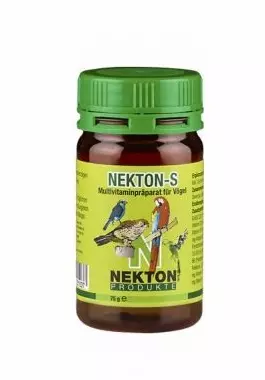
Nekton S - Multivitamin preparation
Weight: 35g
Nekton S - Multivitamin supplement for all bird species Supports the development of metabolic processes Increases the utilisation of all ingested nutrients Promotion of general health Strengthens the body's defences For daily supplementation This basic supplement for all bird species contains all the essential vitamins, amino acids, minerals and trace elements required for a long and healthy life. Daily supplementation is strongly recommended as a preventative measure, as a deficiency in these nutrients is usually difficult to detect in birds or is identified too late. With Nekton S, you can counteract nutrient deficiencies and a large proportion of all illnesses. Composition:Dextrose, calcium carbonate, silicic acid Feeding guide:1g = 1 level measuring spoon Nekton S to 250ml water or 100g soft food. Nekton S is given as a dietary supplement to be added daily to the drinking water. The balanced mixture is readily and happily accepted by birds.

CHF 7.80

Reptilia 40 - Terrarium Planting
Reptilia 40 - Terrarium Planting MarajóCopperheadFrogs of Costa Rica Contents: 2 EDITORIAL 3 READER LETTERS 7 MAGAZINE 17 DATES 20 WESTERN HERP PERSPECTIVESA juvenile snake hunting fiascoby B. Love 22 PHOTO REPORTAGE Terrarium plantingby B. Akeret 31 REPORTAGEPlanting of desert terrariums by B. Akeret 36 REPORTAGEPlanting an epiphyte branch for the terrarium by B. & W. Schwarz 40 REPORTAGECarnivorous plants in the terrarium by A. Glück 47 HERPETOFAUNABiology and distribution of Podocnemis vogli in Venezuelaby M. Merchán, A. M. Fidalgo & C. Pérez 51 PORTRAIT AND POSTERWrestling match in the rainforestby M. Ruckgaber 56 HUSBANDRY AND BREEDINGThe copperhead (Agkistrodon contortrix) – a “beginner's” snake?by D. Schmidt 65 HUSBANDRY AND BREEDINGHusbandry and breeding of Sind rock geckos, Cyrtopodion kachhensis (STOLICKA, 1872)by U. Schlüter 69 REPTORTAGEIn search of frogs in Costa Ricaby T. Eisenberg 75 TRAVELMarajó – Hot and humid Amazon paradiseby L. Dirksen 84 CLASSIFIEDS 90 TIPS & TRICKS 93 LIBRARY 104 GLOSSELiving in scalesby L. Hogeback

CHF 11.20

Reptilia 117 - Amphibian Rarities
Reptilia 117 - Amphibian raritiesFlooridaNight lizardIberian adderContents: Cover story: Amphibian raritiesIn all amphibian groups there are species which, for various reasons, are not kept as frequently in terrariums as fire salamanders, dyer frogs etc.: some species are only imported rarely and in small numbers, some have no lobby, others are highly sought after but not easy to breed.In the cover story of this issue of REPTILIA, we present such rarities in detail - with captivating photos and detailed reports on extremely pleasing breeding successes. We also visit a project in South America in which species sought after by terrarists are selectively propagated - and which simultaneously promotes science, nature conservation and environmental education.EditorialMAGAZINEDATES WESTERN HERP PERSPECTIVESThe fate of books, part 1B. LovePhoto storyAmphibian raritiesK. KunzKeeping and breedingCharming little fellows: Keeping and breeding Riobamba pouched frogs (Gastrotheca riobambae)D. SchmidtKeeping and breedingBreeding a Ryabov’s Phantom Moss Frog (Theloderma ryabovi) in a terrariumE. RyboltovskyReportageSustainable marketing of frogs for terraristics in EcuadorS. CondeKeeping and breedingKeeping and breeding the Iberian viper (Vipera seoanei)A. SchmidServicesKeeping and breedingCare and breeding of the night lizard Lepidophyma smithiG. KöhlerReportageTuataras. The living fossils of New ZealandO. DrewesAlso in your neighbourhoodJourneyThe great trek. Part 1: Melting Pot South FloridaH. WerningPreviewIncubatorNobody warns you about this before you have childrenH. Werning

CHF 12.00

Nekton Rep Calcium + D3
Rep Calcium +D3 Nekton Rep Calcium + D3 is a high-quality calcium supplement for reptiles and amphibians that supports optimal bone and muscle development. Enriched with vitamin D3, it promotes the absorption of calcium in the body and thus contributes to a healthy skeletal structure and an intact metabolism. Especially for reptiles kept in terrariums, a regular supply of calcium and vitamin D3 is crucial to avoid deficiency symptoms such as bone softening or deformities. The powder is easy to dose and can be sprinkled directly over the food or added to the drinking water. Nekton Rep Calcium + D3 is an ideal supplement for all reptile species that have an increased need for calcium, such as tortoises, geckos and agamas. Advantages: Optimum calcium supply: Promotes healthy bone and skeletal development and supports the muscular system. Enriched with vitamin D3: Improves calcium absorption in the body and ensures optimum utilization. Prevents deficiency symptoms: Reduces the risk of calcium deficiencies that can lead to health problems. Easy to use: The powder is easy to dose and can be added directly to the feed or drinking water. High-quality composition: Specially developed for the needs of reptiles and amphibians. Zoo Roco tips: Correct dosage: Pay attention to the recommended dosage depending on the species and age of the animal to avoid overdosing. Combine with UVB lighting: Vitamin D3 needs UVB radiation to be optimally processed. So provide good UVB lighting in the terrarium to maximize the effect of Nekton Rep Calcium + D3. Feeding frequency: Sprinkle the calcium supplement 2-3 times a week on the food or in the drinking water, depending on the animal's needs. Combination with other supplements: In some cases, it may be useful to combine Nekton Rep Calcium + D3 with other nutrients your pet needs, especially if a special diet is required.

From CHF 5.90

Reptilia 123 - Planting of poison dart frog terrariums
Reptilia 123 - Planting of poison dart frog terrariums Contents: Cover story: Planting poison dart frog terrariumsPoison dart frog terrariums can be real gems. Not only because of the "jewels from the rainforest" themselves – but also because of the rainforest around them. Poison dart frogs come to us from biotopes that are also home to countless attractive tropical plants, many of which are available to us and can be cultivated excellently. The experienced terrarium plant specialist Beat Akeret explains in the cover story of this REPTILIA exactly which plants are suitable for poison dart frog terrariums, so that these not only look great and meet the needs of the frogs, but even conjure up an authentic Latin American rainforest section in the living room.Also in REPTILIA No. 123Keeping and breeding one of the most mystical reptiles of all: the Bornean earless monitor in the terrariumDanger in the magic of blossoms: crab spidersThe great trek 3: with REPTILIA editor-in-chief Heiko Werning from coast to coast through the south of the USAand much more 4          editorial             6          MAGAZINE             14        DATES             16        WESTERN HERP PERSPECTIVES                                    Only in America                                    By B. Love             18        PHOTOSTORY                                    Plants in the poison dart frog terrarium                                    By B. Akeret             26        Terrarium technology                                    Plant care in the poison dart frog terrarium                                    Basic considerations                                    By B. Akeret             32        plants                                    Suitable plants for poison dart frog terrariums                                    By B. Akeret             44        KEEPING AND BREEDING                                    Notes on keeping and breeding of the earless monitor, Lanthanotus borneensis                                    By M. Zollweg & R. Seipp             54        Terrarium technology                                    Even more light                                    Comments by S. Wunderlich and O. Fischer             61        SERVICE             64        travel                                    The great trek                                    Part 3: Georgia on my Mind                                    By H. Werning             76        ALSO NEAR YOU             80        PREVIEW             82        INCUBATOR                                     If this sets a precedent                                    Part 2                                    By H. Werning

CHF 13.50

Oak leaves decorative foliage 1 liter
The Pet Factory - Decorative foliage The Pet Factory decorative foliage - holm oak leaves for natural decoration of terrariums. Oak leaves for terrariums pH lowering in aquariumsFood for shrimps for rearing poison dart frog tadpoles has an antifungal and disinfecting effect also as decoration for small mammal terrariums 1 liter corresponds to approx. 15 grams When used in aquariums, the pH-reducing properties must be taken into account and the foliage can also be used for breeding poison dart frog tadpoles. Decorative foliage has an antifungal and disinfecting effect. Tip:It is also ideal as decoration for small mammal terrariums, as it is only gnawed on a little. It simply does not taste good!

CHF 4.60

Suggested products

Handbook of food plants for tortoises and other reptiles
Handbook of forage plants 2nd revised editionMarion Minch is not only a successful breeder of diverse tortoises for many years, but also an excellent connoisseur of native wild herbs. She founded and runs samenkiste.de, which is well known to many tortoise keepers and nature lovers. Her name is inextricably linked with reptile care and species-appropriate nutrition for tortoises. Her handbook of food plants summarises the most important native food plants for herbivorous and omnivorous reptiles. She not only considers tortoises, but also iguanas, spiny-tailed dragons and even chameleons. From the basics of plant biology to native wild herbs to suitable food plants for hardy tropical reptile species, this comprehensive work provides the basis for species-appropriate keeping. In the expanded and supplemented 2nd edition, the plant section is divided according to flower colour. This makes it even easier to identify wild herbs. The work has also been supplemented with a wealth of additional information and many pictures.

CHF 46.50

Geckos
Geckos in the terrarium by Astrid FalkThe book offers a comprehensive introduction to geckos and their species-appropriate keeping in terrariums. It explains what you need to think about before buying a gecko and what preparations should be made. The book describes in detail how the terrarium is technically equipped and set up. The care of the animals, their special features and behaviour, their diet, reproduction and rearing of young animals are described, as well as diseases and husbandry problems with tried and tested suggestions for prevention and treatment. Individual gecko species that are particularly suitable for keeping and breeding in terrariums are portrayed in detail in the second part of the book.

CHF 28.50

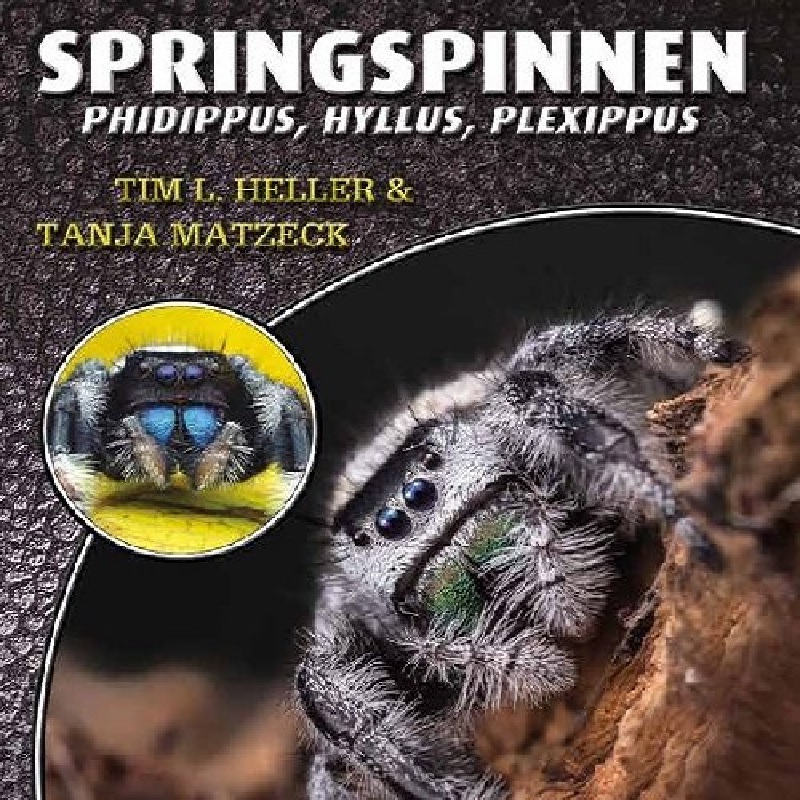
Jumping spiders Phidippus, Hyllus, Plexippus
Book Jumping Spiders - Phidippus, Hyllus & Plexippus A guide to keeping jumping spiders of the genera Phidippus, Hyllus & Plexippus. Who can resist the charm of jumping spiders? The childlike appearance of their expressive face simply leaves no one cold! In addition, their behavior is extremely exciting to observe, their colors are bright and their requirements for species-appropriate keeping are very easy to meet. No wonder these likeable jumpers are all the rage! This volume in the "Species by Species" series describes in detail what to look out for when buying and keeping them, introduces the most commonly kept species and color forms and provides plenty of tips on how to keep them successfully - so you can be sure they will breed well! Species by Species introduces you to the books in this series, which present the most popular terrarium animals. Each volume offers you detailed, practical care instructions and all the information you need to successfully breed your animals. All important questions from the required tank size to terrarium set-up, technical equipment, species-appropriate nutrition and disease prevention are answered with numerous tricks and tips. Experienced, long-standing breeders reveal how you can encourage the animals to reproduce and raise healthy young. All this in full color, generously illustrated and attractively designed - just about your terrarium animal - species by species

CHF 23.90

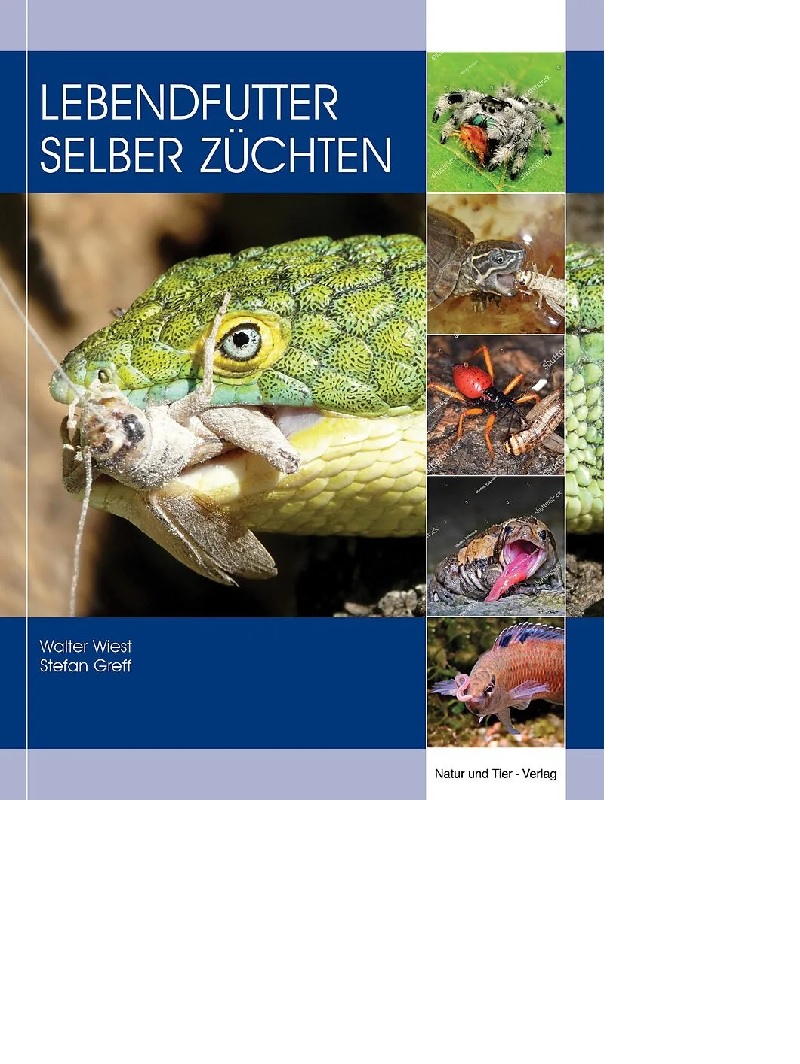
Book Breeding live food yourself
Book "Grow your own live food" - The perfect guide for pet owners Discover practical and detailed instructions on how you can easily breed food for your reptiles, birds, fish or other animals yourself in the book "Breeding live food yourself". With valuable tips on various food insects, their care and breeding, you can save money and ensure a species-appropriate diet for your pets. Contents of the book: Step-by-step instructions for breeding feeder insects Information on the best types of food for reptiles, birds and fish Care instructions and breeding conditions for various live food species Tips for sustainable and cost-effective food production Why breed your own live food? Get healthy, fresh food for your animals Save money and reduce dependence on pet shops Promote the health and well-being of your animals with species-appropriate food Whether you are a beginner or an experienced pet owner, this book provides you with everything you need to successfully breed live food yourself.

CHF 46.50

Marginata 69 - New Guinea tortoises
Marginata 69 - New Guinea tortoises – the genus ElseyaCover storyThe unrecognised beauties: New Guinea tortoises (Andreas S. Hennig)My experiences with Branderhorst's New Guinea tortoise, Elseya (Elseya) branderhorsti (Ouwens, 1914) (Andreas S. Hennig)Keeping and breeding of Rhodin's New Guinea tortoise, Elseya (Hanwarachelys) rhodini Thomson, Amepou, Anamiato & Georges, 2015 (Andreas S. Hennig)PortraitGeoemyda spengleri, Chinese serrated tortoise (Andreas S. Hennig)ReportageMacrochelys temminckii – Experiences and impressions with vulture tortoises part 2 (Reiner Praschag)KeepingAn alternative to year-round keeping of the Egyptian tortoise in the terrarium – my experiences with seasonal outdoor keeping of Testudo kleinmanni (Ricarda Schramm)EtymologySawbacks and living maps part 4: Graptemys gibbonsi, Pascagoula humpback tortoise (Holger Vetter)Classifieds & animal placement

CHF 16.50

Reptilia 99 - Saving energy in terraristics
Reptilia 99 - Saving energy in terraristics Red-backed spiderIncubation of monitor lizard eggsHind Indian hinged tortoise Contents: EDITORIALMAGAZINE AROUND THE WORLD IN 5 YEARSWaiting with turtlesA. Pachmann DATES WESTERN HERP PERSPECTIVESAgainst winter depressionB. Love PHOTOREPORTAGEEnergy revolution in the terrarium. Ideas and suggestions on how to reduce power consumption and energy costs when keeping terrarium animalsB. Akeret REPORTAGEAmphibians and reptiles in the energy-saving house. Opportunities and possibilities of the Renewable Energy Sources Act for terrarium husbandryT. Eisenberg REPORTAGELarge terrariums for giant snakes and saving energy – a contradiction?S. Müller KEEPING AND BREEDINGKeeping and breeding the red-backed spider (Latrodectus hasselti)M. Schmidt HERPETOFAUNAFringed-finger lizards (Acanthodactylus) in the wild and in the terrarium. Part 6: The Acanthodactylus-boskianus groupU. Schlüter REPRODUCTIONOn the incubation of clutches of Varanus kingorum, King's dwarf monitorR. Vitt REPORTAGELooking for snakes on a family holiday. A drama in three actsT. Schmidt REPORTAGEThe tortoises of Kalogria (Peloponnese)M. Rogner ANIMALS OF OUR HOMEThe grass frogR. Leptien Test runLibrarySUBSCRIPTION & SERVICEALSO NEAR YOU TRAVELVisiting Cuora galbinifrons on Hainan, ChinaT. Blanck PREVIEW BRUTKASTEN I would even let myself be locked up for REPTILIA – Part 1H. Werning

CHF 12.00

Draco 22 - Bearded dragons
Draco 22 - Bearded dragons Contents: 2 Editorial 4 Bearded dragons – the genus Pogona (STORR, 1982)Peter M. Müller 20 Basics of keeping Pogona vitticepsThomas Wilms & Karsten Grießhammer 28 Bearded Dragon FAQ (Frequently Asked Questions)Peter M. Müller & Renate Kohlmeyer 38 Presentation of a community facility for keeping Australian lizards at Reptilium LandauThomas Wilms 47 Observations on East Australian bearded dragonsGunther Schmida 55 Experiences in the care and breeding of Lawson’s dwarf bearded dragon (Pogona henrylawsoni (WELLS & WELLINGTON, 1985)Dieter Ruf 63 On the ecology and natural history of the dwarf bearded dragon (Pogona minor in the Great Victoria Desert (Australia)Eric. R. Pianka 67 Care and breeding of Mitchell’s bearded dragon Pogona mitchelli (BADHAM, 1976) Norbert Schuster 74 Bearded dragons in veterinary practiceJutta Wiechert 84 Book box 94 Magazine

CHF 16.80

Reptilia 27 - Anolis
Reptilia 27 - Anolis Curly-haired tarantulaCape CobraPhilippines Contents: 2 Editorial 3 letters to the editor 4 Lookup 5 Magazine 10 dates 14 Western Herp Perspectives: The aisle phenomenon, by B. Love 16 Photo reportage: Anolis, by L. Wijffels 22 Herpetofauna: The stretchable throat skin of the Anolis, by L. Wijffels 35 Herpetofauna: On the variation of "Le Roquet", the Anolis of Martinique, by L. Wijffels 44 Report: Anolis blanquillanus and Anolis onca. Two interesting skinks from the islands off Venezuela, by A. Flaschendräger 49 Obituary: In memory of Leo C. M. Wijffels, by A. Flaschendräger 51 Portrait and poster: Ctenosaura flavodorsalis, by T. Eisenberg 55 Journey: A visit to the Philippine rainforest, by Dr M. Gaulke 64 Keeping and breeding: Keeping and breeding the Indian star tortoise, by K. Gärtner 69 Terraristics: Building a snake enclosure, Part 3: Experiences, by M. Hallmen 74 Care and Breeding: The Cape Cobra Naja nivea, Care and Reproduction, by W. Strassmann 77 Herpetofauna: Curly Hair – Lovely Creatures, The tarantula Brachypelma albopilosa in the terrarium, by H. Fischer 82 Reptilia on the road: De Oliemeulen zoo and reptile house in Tilburg/Netherlands, by A. Hauschild 94 Advice and action 96 Library 104 Glossary: Anaconda! (Part 2), by H. Werning

CHF 9.80

Reptilia 85 - Snake-necked tortoises
Reptilia 85 - Snake-necked tortoisesCrocodile-tailed crested lizardBreeding of the king pythonPristidactylus valeriaeContents:The snake-necked turtles include such popular species for the aquaterrarium as the Australian representatives of the genus Chelodina or the pointed-headed turtles of the genus Emydura, but also the bizarre Mata-Mata from the waters of Amazonia or the funny toad-headed turtles of the genus Phrynops. In our cover story, we introduce you to this exciting family of turtles with lots of brilliant photos and portray some particularly interesting species in detail.Table of contentsEDITORIALMAGAZINEEcotourism de luxe: End of the chameleon conservation project in the Peloponnese?H. WerningSancho, the illegal immigrant - what to do when exotic animals are found?S. SchletchSkin-eating blind worms bred for the first timeA. Kupfer & S. ReinhardWESTERN HERP PERSPECTIVESConfusing species protectionBill LovePHOTOSTORY Snake-necked tortoises J. ValverdeKEEPING AND REPRODUCTIONThe Argentine snake-necked tortoise(Hydromedusa tectifera) - observations in biotope and terrarium D. FabiusKEEPING AND REPRODUCTION Keeping and breeding of the broad-breasted snapping turtle, Myuchelys latisternum(Elseya latisternum) H. ProkopTRAVEL Cave dwellers in the PhilippinesM. GaulkePORTRAIT AND POSTER Telescopus fallax (Fleischmann 1831). European cat snakeK. Ehrlich & B. TrappHERPETOFAUNA A conservation project for the Valeria large-headed iguana, Pristidactylus valeriae - with the support of REPTILIA B. CamousseigtKEEPING AND REPRODUCTION Versatile favourites. Experiences with Royal PythonsM. BorerKEEPING AND REPRODUCTION News on sex determination of the crocodile-tailed humpback lizard, Shinisaurus crocodilurus M. ZollwegHERPETOFAUNA Basking sites on mangrove biotopes of Phelsuma robertmertensi Meier, 1980 on the Comorian island of Mayotte P. KrauseANIMALS OF OUR HOMEA snake that is not a snake: the slow wormR. LeptienLIBRARYSUBSCRIPTION & SERVICEALSO NEAR YOUPREVIEWBRUTKASTENBag magicM. ZawadzkiDATESHeiko WerningWESTERN HERP PERSPECTIVESConfusing species protectionB. Love

CHF 12.00

Reptilia 04 - Bird spiders
Reptilia 04 - Tarantulas SkinkThailandMysticism & superstition Contents: Page 2 - EditorialPage 3 - Letters to the editorPage 6 - MagazinePage 17 - Photo reportage: Tarantulas, by P. KlaasPage 23 - Keeping and reproduction: Keeping and breeding tarantulas, by P. KlaasPage 26 - Terraristics and law: Legal issues in keeping spiders and scorpions, by D. RösselPage 27 - Report: A feast of tarantulas, by R. WestPage 30 - Psychology: Arachnophobia, by L. HogebackPage 33 - Travelogue: Thailand - Mecca of herpetological tourism, by J. BergadáPage 37 - Travelogue: The snake farm of Bangkok, by J. ViaderPage 39 - Portrait and poster: Chondropython viridis, by M. Aresté and J. L. FarriolsPage 43 - Herpetofauna: Skinks, by P. Gassner and A. HauschildPage 50 - Reptilia on the road: Terrarium displays, by H. WerningPage 54 - Terraristics and law: Snake keeping in residential property and tenancy law, by D. RösselPage 57 - Herpetology and Culture: Magic and Superstition, Part 1: Turtles and Amphibians, by L. B. Carissimi-PriorPage 62 - Terraristics: Egg-laying problems with tortoises, by E. MeierPage 69 - Supplement: Venomous snakesPage 74 - Advice and actionPage 76 - LibraryPage 80 - Incubator: Glossary by H. Werning

CHF 9.80

Draco 27 - Highland
Draco 27 - HighlandContents: 2 Editorial 4 Mountains and highlands - reptiles and amphibians in an extreme habitat Heiko Werning & Claudia Wolf 28 New Zealand - the discovery of new geckos at the end of the worldRonald Coleman 32 Giant toads and co. in the highlands of south-west ChinaKlaus Detlef Kühnel 36 Rwenzori - in search of amphibians in the mountains of the moonKatharina C. Wollenberg & Stefan Lötters 40 The keeping of highland chameleonsAndreas Böhle 45 chameleons in the Oster Usambara Mountains in northern TanzaniaWerner & Yvonne Lantermann 49 Spanish adders are also poisonous ...Axel Kwet 54 In search of mountain lizards in three continents Wolfgang Bischoff 74 Life, care and breeding of the alligator skink Mesaspis moreletii (Bocourt, 1871)Uwe Schlüter 81 Magazine

CHF 18.40

Draco 24 - Spiders
Draco 24 - Spiders Contents: 2 Editorial 4 Spiders - a look into strange worlds Kriton Kunz 24 "Relics of prehistoric times" - arthropod spiders, wallpaper spiders and their relativesThomas Ziegler & Boris F. Striffler 32 wheel web spiders in the terrariumTimm Adam 48 The genus Latrodectus - not just black widowsBoris F. Striffler 58 Colourful little predators - care and breeding of the lynx spider Peucetia madagascariensisKriton Kunz 62 water-hunting spiders of the family Ctenidae, Pisauridae and TrechaleidaeTimm Adam 70 Secret roommates in the house: from isopod hunters, hypnotisers and glue spittersKriton Kunz 80 With Piaroa Indians hunting the giant tarantula Theraphosa apophysisBoris F. Striffler & Barbara Zoller 88 Book box 93 Magazine

CHF 16.80