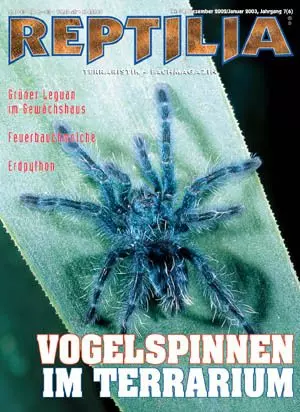
Reptilia 38 - Tarantulas in terrariums

Article no: reptilia38

CHF 11.20

Stock: 0

This article is currently not available

Product information "Reptilia 38 - Tarantulas in terrariums"

Reptilia 38 - Tarantulas in the terrarium

Green iguana in a greenhouse
Fire-bellied newts
Earth python

Contents:

  • 2 EDITORIAL
  • 3 READER LETTERS
  • 7 MAGAZINE
  • 15 DATES
  • 16 WESTERN HERP PERSPECTIVES
    The hymn of natural terrariums
    from B. Love
  • 18 PHOTO REPORTAGE
    Large, hairy spiders - An introduction to the Theraphosidae family
    by F. Tomasinelli
  • 26 KEEPING AND BREEDING
    Breeding of tarantulas with special consideration of their way of life in the wild
    by B. F. Striffler
  • 32 KEEPING AND BREEDING
    The ‘Malaysian Earth Tiger’ – Keeping and Breeding the Asian Tarantula Cyriopagopus thorelli
    by F. de Vita & F. Tomasinelli
  • 36 KEEPING AND BREEDING
    Poecilotheria subfusca POCOCK, 1895: Group housing and breeding
    by B. F. Striffler
  • 42 TRAVEL
    Adventure Oman Mountains
    by R. Leptien
  • 51 PORTRAIT AND POSTER
    Azemiops feae
    by A. Gumprecht
  • 56 REPORTAGE
    A life like in paradise - experiences with keeping a green iguana in a tropical hall
    by C. Ströhlein, idea-Schmetterlings-Paradies Neuenmarkt
  • 61 HERPTOFAUNA
    The fire-bellied newts of the genus Cynops
    Part 1: Keeping and species
    by P. Bachhausen
  • 68 KEEPING AND BREEDING
    Observations on the ecology and terrarium husbandry of the Eastern lizard snake, Malpolon monspessulanus insignitus Geoffroy, 1827
    by H. Esterbauer
  • 74 HERPTOFAUNA
    The Burrowing Python (Calabaria reinhardtii)
    by S. Seidel
  • 78 REPORTAGE
    The school vivarium
    Part 3: Behavioural practical course for a biology class
    by M. Hallmen
  • 85 RAT & TAT
  • 87 CLASSIFIED ADS
  • 92 LIBRARY
  • 104 GLOSSES
    Feed animal breeding magazine
    by N. Nadolny

This issue of your specialist terrarium magazine REPTILIA is dedicated to tarantulas. Alongside a photo feature richly illustrated with impressive photographs, which provides an overview of the family of these popular animals, there are expert and detailed reports on keeping and breeding them. The focus is on the magnificent Poecilotheria species, which – unusually for tarantulas – can almost without exception be kept in groups, as well as the “Malaysian Earth Tiger” Cyriopagopus thorelli. The article by B. Striffler on the breeding of tarantulas, with particular attention to their natural behaviour, also deserves special mention. Here you will discover interesting facts that you will search for in vain in standard books on tarantulas, and which will enable you to draw valuable conclusions regarding husbandry and breeding conditions.

Spectacular finds and a life-threatening attack - the result of the exciting travelogue Adventure Oman, which you should not miss.
After the brilliant photos of the extremely rarely shown venomous snake Azemiops feae comes a report on an unusual way of keeping the green iguana that could not be more exemplary.
Extremely colourful animals that can reach a great age when kept properly are the fire-bellied newts of the genus Cynops, which newt expert P. Bachhausen presents to you in detail through text and images.
Observing animals in the wild not only provides fascinating insights into their way of life, but also makes it easy to draw conclusions about the successful care and breeding of these species. The proof of this simple yet effective strategy: the article by H. Esterbauer on the ecology and terrarium husbandry of the Eastern lizard snake, Malpolon monspessulanus insignitus.
In this issue of REPTILIA, we are also able to present one of the first reports on the breeding of the unusual ground python Calabaria reinhardtii. S. Seidel, who achieved this success, describes in detail here, amongst other things, the husbandry conditions that stimulated his animals to mate.
In the last part of his article on the school vivarium, M Hallmen finally reports on the concrete possibilities that arise from keeping animals in the classroom.
As always, REPTILIA once again offers you the full range of comprehensive services: events, classifieds, the magazine featuring interesting facts about Hobby, advice and practical tips, and the library are all included, as is the column, this time offering a satirical take on RODENTIA, the specialist magazine on small mammals published by Natur und Tier Verlag.

Composition
Feeding recommendation
Technical details
Size information

0 of 0 reviews

Give us a rating!

Share your experience with the product with other customers.


Suggested products

Handbook of food plants for tortoises and other reptiles
Handbook of forage plants 2nd revised editionMarion Minch is not only a successful breeder of diverse tortoises for many years, but also an excellent connoisseur of native wild herbs. She founded and runs samenkiste.de, which is well known to many tortoise keepers and nature lovers. Her name is inextricably linked with reptile care and species-appropriate nutrition for tortoises. Her handbook of food plants summarises the most important native food plants for herbivorous and omnivorous reptiles. She not only considers tortoises, but also iguanas, spiny-tailed dragons and even chameleons. From the basics of plant biology to native wild herbs to suitable food plants for hardy tropical reptile species, this comprehensive work provides the basis for species-appropriate keeping. In the expanded and supplemented 2nd edition, the plant section is divided according to flower colour. This makes it even easier to identify wild herbs. The work has also been supplemented with a wealth of additional information and many pictures.

CHF 46.50

Geckos
Geckos in the terrarium by Astrid FalkThe book offers a comprehensive introduction to geckos and their species-appropriate keeping in terrariums. It explains what you need to think about before buying a gecko and what preparations should be made. The book describes in detail how the terrarium is technically equipped and set up. The care of the animals, their special features and behaviour, their diet, reproduction and rearing of young animals are described, as well as diseases and husbandry problems with tried and tested suggestions for prevention and treatment. Individual gecko species that are particularly suitable for keeping and breeding in terrariums are portrayed in detail in the second part of the book.

CHF 28.50

Jumping spiders Phidippus, Hyllus, Plexippus
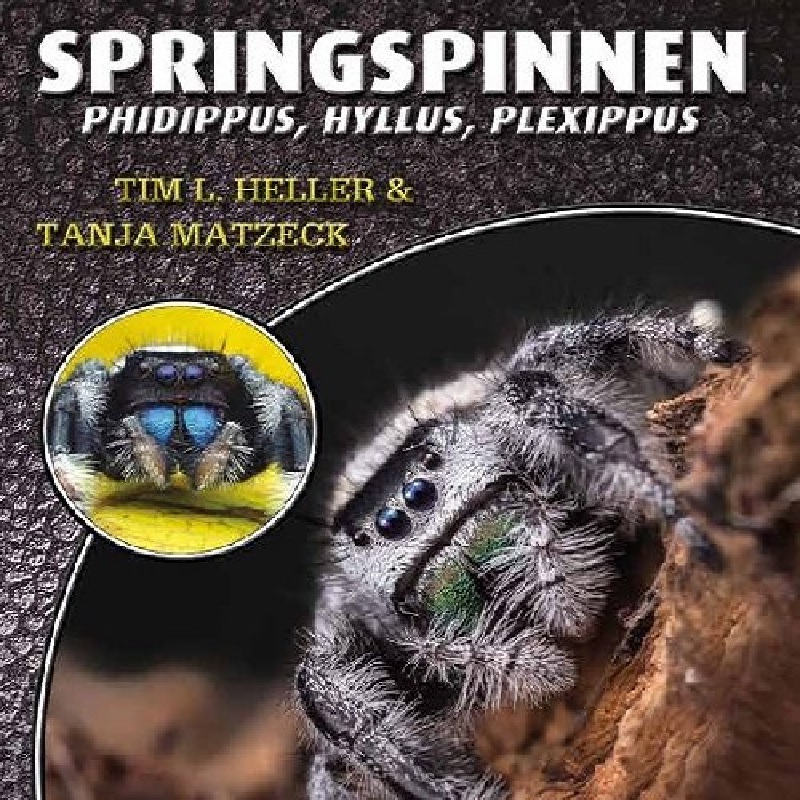
Book Jumping Spiders - Phidippus, Hyllus & Plexippus A guide to keeping jumping spiders of the genera Phidippus, Hyllus & Plexippus. Who can resist the charm of jumping spiders? The childlike appearance of their expressive face simply leaves no one cold! In addition, their behavior is extremely exciting to observe, their colors are bright and their requirements for species-appropriate keeping are very easy to meet. No wonder these likeable jumpers are all the rage! This volume in the "Species by Species" series describes in detail what to look out for when buying and keeping them, introduces the most commonly kept species and color forms and provides plenty of tips on how to keep them successfully - so you can be sure they will breed well! Species by Species introduces you to the books in this series, which present the most popular terrarium animals. Each volume offers you detailed, practical care instructions and all the information you need to successfully breed your animals. All important questions from the required tank size to terrarium set-up, technical equipment, species-appropriate nutrition and disease prevention are answered with numerous tricks and tips. Experienced, long-standing breeders reveal how you can encourage the animals to reproduce and raise healthy young. All this in full color, generously illustrated and attractively designed - just about your terrarium animal - species by species

CHF 23.90

Book Breeding live food yourself
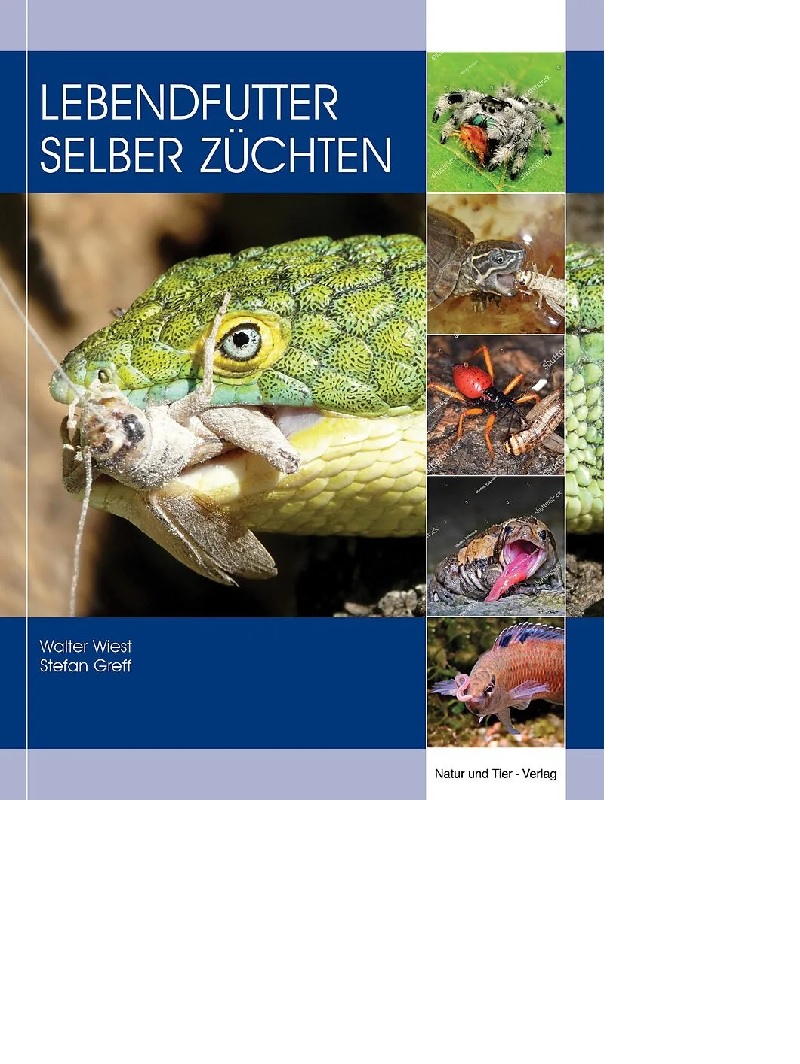
Book "Grow your own live food" - The perfect guide for pet owners Discover practical and detailed instructions on how you can easily breed food for your reptiles, birds, fish or other animals yourself in the book "Breeding live food yourself". With valuable tips on various food insects, their care and breeding, you can save money and ensure a species-appropriate diet for your pets. Contents of the book: Step-by-step instructions for breeding feeder insects Information on the best types of food for reptiles, birds and fish Care instructions and breeding conditions for various live food species Tips for sustainable and cost-effective food production Why breed your own live food? Get healthy, fresh food for your animals Save money and reduce dependence on pet shops Promote the health and well-being of your animals with species-appropriate food Whether you are a beginner or an experienced pet owner, this book provides you with everything you need to successfully breed live food yourself.

CHF 46.50

Marginata 69 - New Guinea tortoises
Marginata 69 - New Guinea tortoises – the genus ElseyaCover storyThe unrecognised beauties: New Guinea tortoises (Andreas S. Hennig)My experiences with Branderhorst's New Guinea tortoise, Elseya (Elseya) branderhorsti (Ouwens, 1914) (Andreas S. Hennig)Keeping and breeding of Rhodin's New Guinea tortoise, Elseya (Hanwarachelys) rhodini Thomson, Amepou, Anamiato & Georges, 2015 (Andreas S. Hennig)PortraitGeoemyda spengleri, Chinese serrated tortoise (Andreas S. Hennig)ReportageMacrochelys temminckii – Experiences and impressions with vulture tortoises part 2 (Reiner Praschag)KeepingAn alternative to year-round keeping of the Egyptian tortoise in the terrarium – my experiences with seasonal outdoor keeping of Testudo kleinmanni (Ricarda Schramm)EtymologySawbacks and living maps part 4: Graptemys gibbonsi, Pascagoula humpback tortoise (Holger Vetter)Classifieds & animal placement

CHF 16.50

NTV - The dyeing dart frog
The Dyer Frog by Dirk Wagner 64 pages Format: 14.8 x 21 cm 67 colour photos Contents: Foreword Relationship Description Distribution, habitat and way of life Colour forms Care Socialisation Poison Species protection Acquisition Transport and quarantine The terrarium Terrarium technology Light Warmth Water and humidity Furnishing and planting Food Care work Health Breeding Further information Literature

CHF 18.50

Terraria 10 - Boa Constrictor
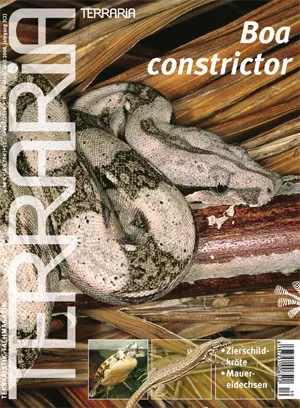
Terraria 10 - Boa ConstrictorOrnamental turtleWall LizardContents:2 EditorialKriton KunzTOPIC4 Boa babies - Tips and tricksErika & Hermann Stöckl 14 "imperator" versus "constrictor" - On the ecology and distribution of selected local forms of Boa constrictor in VenezuelaChristian Neumann 20 Inclusion Body Disease,IBD, "Boa-Aids") of the giant snakes Udo Hetzel 24 Leopard Boa, Stars & Stripes and Co - The colour and pattern variations of the dark Mexican boa Boa constrictor imperator Hans-Jörg Winner SCIENCE29 new speciesAxel Kwet40 The fern stick insect Oreophoetes peruana (Saussure, 1868)?and their diet in the terrarium, special terrariums and plantingTimm Adam54 The princess among the turtles is asking for it:Keeping and breeding the southern ornamental turtle Chrysemys picta dorsalisAndreas S. Hennig63 Wall lizards in the Ruhr areaUwe SchlüterTRAVEL69 On the road in the south of the PhilippinesMaren GaulkeTERRARIUM PRACTICE83 Test runBug Stop/Kricket KeeperKriton Kunz85 Prelude Care and breeding of Asian house geckosMatthias Jurczyk89 Eye-catcherAn ark for native amphibians and reptilesAxel Kwet93 Also near you 96 TERRAnetTerrarium constructionKriton Kunz98 TERRAglobalLife underground ... until the rain comesMirco SoléLima - or: All beginnings are difficultMaik Dobiey104 TERRAwinn

CHF 12.00

Reptilia 76 - Poisonous snakes of Europe
Reptilia 76 - Venomous Snakes of Europe PantanalFringed FingersArgentine Tortoises Contents: Venomous snakes are undoubtedly some of the most fascinating andattractive species in the snake fauna of Europe. Horned viper, asp viper, adder & co. impress with their aesthetics as well as with their sophisticated survival strategies. Mario Schweiger is one of the best experts on these reptiles and presents to youin REPTILIA the European venomous snake faunain detail and up to date. And for terrarium keepers, the report on the many years of successful breeding of Vipera ammodytes should be a particular highlight. Table of Contents:2 EDITORIAL3 MAGAZINE11 DATES14 PHOTOSTORY The Venomous Snakes of Europe An Overview of the Species and Remarks on Individual Taxa by M. Schweiger26 KEEPING AND BREEDING Keeping, Breeding and Rearing of the European Horned Viper Vipera ammodytesby M. Schweiger34 HERPETOFAUNA The Black Adders of the Northern Black Forest by M. Wirth41 KEEPING AND BREEDING Findings on Reproduction of the Argentine Tortoise, Chelonoides chilensis, under Human Care by T. & S. Vinke47 PORTRAIT and Poster Anolis sagrei by H. Werning52 HERPETOFAUNA Fringed-fingered Lizards (Acanthodactylus) in the Wild and in the Terrarium Part 4: The Acanthodactylus-pardalis- Group by U. Schlüter61 TRAVEL A Piece of Paradise. The Pouso Alegre in the Brazilian Pantanal from the Perspective of a Reptile Enthusiast. Part 1 by M. Hallmen70 REPORTAGE The Scorpions of Morocco Part 2 by H. Nickel, J. Hornung & M. Koch77 Library 82 WESTERN HERP PERSPECTIVES Which Venomous Snake is Best for Beginners? by B. Love84 ALSO NEAR YOU89 SUBSCRIPTION & SERVICE91 FAQ – Frequently Asked Questions Terrarium Lighting – Part 2 by I. Kober & U. Geissel94 PREVIEW96 INCUBATOR In the Wild Wedding. An Eastern in Two Parts for Three Young Men “of Southern Appearance”, a Reptile Researcher and a Cockroach Part 1 by H. Werning

CHF 12.00

GU, Turtles
GU Aquatic turtles Interesting facts about keeping aquatic and pond turtles 64 pages with numerous colour photos Paperback 8th edition Author Hartmut Wilke Swamp and water turtles have existed on our planet for around 250 million years, and therefore resemble relics from a time long past. This fact and their unique and sometimes very exotic appearance are just two of many factors that explain the steady growth of their fan base, which includes biologist Hartmut Wilke. He has been gathering knowledge about these reptiles for over 20 years and has compiled his concentrated knowledge and practical tips on keeping tortoises for you in this guide. This makes it easy for you to cater to the individual needs of your tortoises so that they stay fit and healthy. With optimal care, nothing stands in the way of a lifelong and happy friendship between you and your pet!

CHF 12.90

Draco 19 - Madagascar
Draco 19 - Madagascar Contents: 2 Editorial 4 The herpetofauna of Madagascar:Diversity, way of life and endangermentFrank Glaw 22 Journey to the east of MadagascarSebastian Wolf 30 Masoala – The eye of the forestNicolá Lutzmann 37 Mysterious Madagascar boas: Sanzinia & Acrantophis Frank Glaw & Kathrin Glaw 44 On the road in the “Reserve Speziale” of AnkaranaHans-Peter Berghof 50 In search of chameleons along the Route National 2 from Antananarivo to the east coast near Ambila-LemaitsoNicolá Lutzmann, Guy Kremer, Nico van Steendam & Achim Flamme 56The gecko genera of MadagascarPatrick Schönecker & Andreas Böhle 68 Biology, care and breeding of the short-headed day gecko (Phelsuma breviceps) BOETTGER, 1894 Patrick Schönecker 7 The “Madagascan poison dart frogs”– Keeping and breeding of Mantella Hartmut Lipp 82 A journey through the Madagascan highlandsAndreas Böhle 90 Magazine

CHF 16.80

Terraria 53 - The European pond turtle
Terraria 53 - The European pond turtle Newly described reptiles 2014Vietnamese moss frogContents: Cover story: Reptile of the year 2015 – the European pond turtle The only turtle in Central Europe is the reptile of the year! As a characteristic animal of the native herpetofauna, the species also enjoys a lot of sympathy among the general public. The next issue of TERRARIA/elaphe is dedicated to various aspects of this highly endangered species. We present the European pond turtle in a detailed portrait, provide insights into a current reintroduction project and report on keeping and breeding in private hands. Territorial HerpetoramaAspidoscelis neavesi – a running lizard is the first reptile species created in a laboratory / Spiny devil: The meowing night frog / Colour change in chameleons through photonic crystals / Synanthrope: The crocodiles of Nîmes / Leaf climber: Award-winning lizard Cover storyFrom fasting food to reptile of the year 2015 – the European pond turtleAxel Kwet, Uwe Fritz, Andreas Nöllert, Richard Podloucky & Norbert Schneeweiss Many years of experience in keeping and breeding the European pond turtle. Part 1: Keeping, designing an outdoor enclosure, feedingBernd Wolff A reintroduction project for the European pond turtle and the problem of abandoned pond turtles from private keepingFlorian Brandes & Martina Anne-Claire Meeske PanoramaThe island of lost salamanders: On the herpetofauna of the Honduran Isla del TigreAlexander Gutsche Reptile and amphibian fauna of the Quinta do Barranco da Estrada in Portugal's Alentejo – a travelogueWerner & Yvonne Lantermann Research New speciesList of reptiles newly described in 2014 Axel Kwet Salamandra Terrarium husbandryWhy vivaristics is indispensable now and in the future Jens Crueger, Peter Sound & Christina-Johanne Schröder Let's get started!The Vietnamese moss frog (Theloderma corticale) on the riseKriton Kunz Nature and species conservation Field notesRare amphibians in the canton of Lucerne I: Italian tree frog (Hyla intermedia) in blueUrs & Heidi Jost Rare amphibians in the canton of Lucerne II: Common frog (Rana temporaria) in whiteUrs & Heidi Jost Subscription & ServiceAlso in your neighbourhoodPreview Incubator Always eat chalkHeiko Werning 

CHF 12.00

Draco 23 - Tree Frogs
Draco 23 - Tree frogs Contents: 2 Editorial      4 Tree frogs (Hylidae) – systematic reorganisation of an amphibian family Axel Kwet   26 The family Hylidae - Tabular overviewAxel Kwet  40 The tree frogs of a Peruvian communityAndreas Schlüter  48 Coral fingers and co. – observations on the Australian hylids of the genus LitoriaGunther Schmida  56 Reproduction variants for tree frogs in the terrariumPeter Janzen     60 Adorable barkers in the terrarium From the Caroline tree frog, Hyla cinerea (Schneider, 1799)Kriton Kunz     66 On keeping, care and reproduction of the tree hole toad tree frog, Trachycephalus resinifictrix  (Goeldi, 1907) in the Reptilium LandauThomas Wilms, Birgit Kügelgen & Tobias Schreckenbach       73 Keeping and breeding Smilisca phaeotaPeter Janzen  76 Central and South American tree glue frogs(Dendropsophus-leucophyllatus group) Karl-Heinz Jungfer  82 The coral-fingered tree frog (Litoria caerulea) and the golden tree frog (Litoria aurea) – two favourites of terrarium keepersNiklaus Meyer & Andrea Meyer  88 Book box  94 Magazine

CHF 16.80