4 On the systematics and biology of giant snakes (Boidae), by Dr L. Dirksen & M. Auliya
20 Quo vadis, keeping boids in human hands, by Dr H. D. Lehmann
26 record specimens and man-eaters, by Dr L. Dirksen
32 Notes on the green tree python Morelia viridis(SCHLEGEL 1872) - population-related variants, care and breeding, by A. Kirschner & H. Abend
40 Quo vadis, Boa regia, by A. Kirschner
43 The King Python (SHAW 1802), by A. Kirschner
48 Destination: Down under - The giant snakes of Australia, by V. Franz
56 KLeine Riesenschlangen - Care and breeding of sand boas in the terrarium, by H. Seufer
68 Experiences with rarely kept Corallus species Corallus annulatus annulatus, Corallus hortulanus hortulanus and Corallus hortulanus ruschenbergeria, by S. Wirz
78 Book box
93 Magazine
Composition
Feeding recommendation
Technical details
Size information
0 of 0 reviews
Give us a rating!
Share your experience with the product with other customers.
Login
No reviews found. Go ahead and share your findings with others.
Handbook of forage plants 2nd revised editionMarion Minch is not only a successful breeder of diverse tortoises for many years, but also an excellent connoisseur of native wild herbs. She founded and runs samenkiste.de, which is well known to many tortoise keepers and nature lovers. Her name is inextricably linked with reptile care and species-appropriate nutrition for tortoises. Her handbook of food plants summarises the most important native food plants for herbivorous and omnivorous reptiles. She not only considers tortoises, but also iguanas, spiny-tailed dragons and even chameleons. From the basics of plant biology to native wild herbs to suitable food plants for hardy tropical reptile species, this comprehensive work provides the basis for species-appropriate keeping. In the expanded and supplemented 2nd edition, the plant section is divided according to flower colour. This makes it even easier to identify wild herbs. The work has also been supplemented with a wealth of additional information and many pictures.
Geckos in the terrarium by Astrid FalkThe book offers a comprehensive introduction to geckos and their species-appropriate keeping in terrariums. It explains what you need to think about before buying a gecko and what preparations should be made. The book describes in detail how the terrarium is technically equipped and set up. The care of the animals, their special features and behaviour, their diet, reproduction and rearing of young animals are described, as well as diseases and husbandry problems with tried and tested suggestions for prevention and treatment. Individual gecko species that are particularly suitable for keeping and breeding in terrariums are portrayed in detail in the second part of the book.
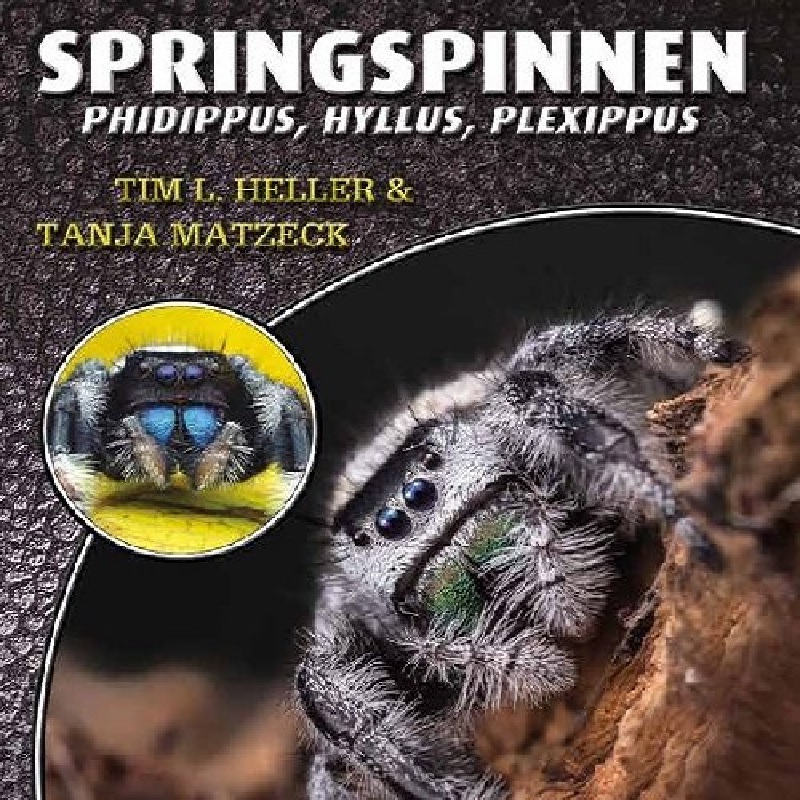
Book Jumping Spiders -
Phidippus, Hyllus & Plexippus
A guide to keeping jumping spiders of the genera Phidippus, Hyllus & Plexippus. Who can resist the charm of jumping spiders? The childlike appearance of their expressive face simply leaves no one cold! In addition, their behavior is extremely exciting to observe, their colors are bright and their requirements for species-appropriate keeping are very easy to meet. No wonder these likeable jumpers are all the rage!
This volume in the "Species by Species" series describes in detail what to look out for when buying and keeping them, introduces the most commonly kept species and color forms and provides plenty of tips on how to keep them successfully - so you can be sure they will breed well!
Species by Species introduces you to the books in this series, which present the most popular terrarium animals. Each volume offers you detailed, practical care instructions and all the information you need to successfully breed your animals.
All important questions from the required tank size to terrarium set-up, technical equipment, species-appropriate nutrition and disease prevention are answered with numerous tricks and tips.
Experienced, long-standing breeders reveal how you can encourage the animals to reproduce and raise healthy young.
All this in full color, generously illustrated and attractively designed - just about your terrarium animal - species by species
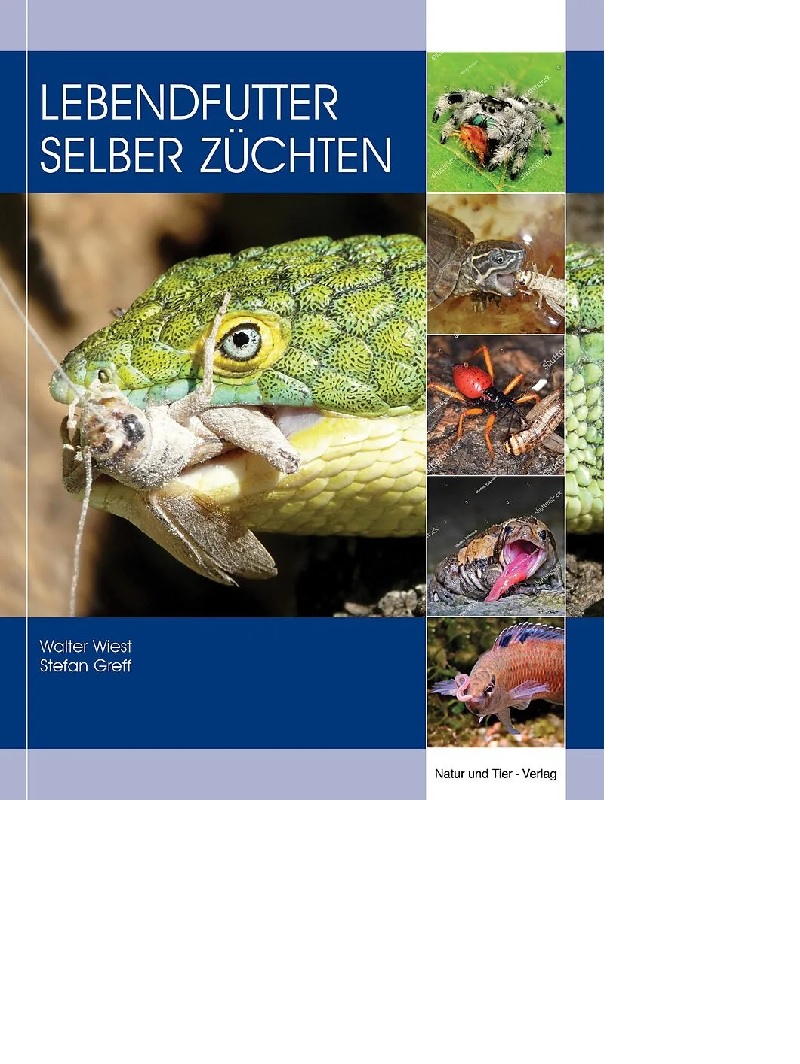
Book "Grow your own live food" - The perfect guide for pet owners
Discover practical and detailed instructions on how you can easily breed food for your reptiles, birds, fish or other animals yourself in the book "Breeding live food yourself". With valuable tips on various food insects, their care and breeding, you can save money and ensure a species-appropriate diet for your pets.
Contents of the book:
Step-by-step instructions for breeding feeder insects
Information on the best types of food for reptiles, birds and fish
Care instructions and breeding conditions for various live food species
Tips for sustainable and cost-effective food production
Why breed your own live food?
Get healthy, fresh food for your animals
Save money and reduce dependence on pet shops
Promote the health and well-being of your animals with species-appropriate food
Whether you are a beginner or an experienced pet owner, this book provides you with everything you need to successfully breed live food yourself.
Marginata 69 - New Guinea tortoises – the genus ElseyaCover storyThe unrecognised beauties: New Guinea tortoises (Andreas S. Hennig)My experiences with Branderhorst's New Guinea tortoise, Elseya (Elseya) branderhorsti (Ouwens, 1914) (Andreas S. Hennig)Keeping and breeding of Rhodin's New Guinea tortoise, Elseya (Hanwarachelys) rhodini Thomson, Amepou, Anamiato & Georges, 2015 (Andreas S. Hennig)PortraitGeoemyda spengleri, Chinese serrated tortoise (Andreas S. Hennig)ReportageMacrochelys temminckii – Experiences and impressions with vulture tortoises part 2 (Reiner Praschag)KeepingAn alternative to year-round keeping of the Egyptian tortoise in the terrarium – my experiences with seasonal outdoor keeping of Testudo kleinmanni (Ricarda Schramm)EtymologySawbacks and living maps part 4: Graptemys gibbonsi, Pascagoula humpback tortoise (Holger Vetter)Classifieds & animal placement
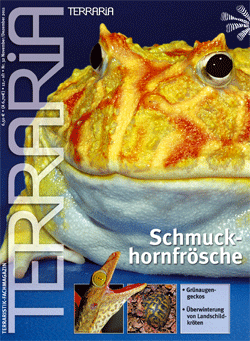
Terraria 32 - Ornamental horned frogsGreen-eyed geckosHibernation of tortoisesContents:They seem to be all about their mouths: horned frogs do not captivate with delicate forms, but rather, alongside their colourful splendour, simply through their presence. They are frogs with character. These perennial favourites in the terrarium world are now also being bred in diverse, very attractive forms. Whilst the number of species in the terrarium has remained very limited for decades, new and exciting species have finally made their way into the ‘Hobby’ in recent times. In our cover story, we introduce you to the attractive representatives of this genus, describe in detail their care and breeding, and discuss current developments. EditorialAxel KwetMagazineNational Breeders’ Expo in Daytona Beach, Florida/Cannibalism in the tree-dwelling toad-leaved frog, Trachycephalus resinifictrix/Giant catch in the Philippines: the world’s largest crocodile/Rescue from an uncomfortable prison/A tiger python that fasted for four and a half years/Legal notice/Recently, at the zooTERRAglobalBarely described - and already almost extinct? Mirco Solé Cover story Jewelled horn frogs - big mouth and what's behind it!Stefan Hochenegger & Kriton KunzKeeping and breeding the Brazilian horned frog, Ceratophrys aurita Fernando LicitraKeeping and breeding the Argentine horned frog, Ceratophrys ornata Erich HirtenlehnerThe world’s longest insect in a terrarium? Keeping and breeding Phobaeticus serratipes and other large stick insects Timm AdamThe turtle year. Outdoor biology and husbandry of European tortoises over the course of the year Part 5: November/December: Hibernation and hibernation Michael WirthExperiences with Smith’s Green-eyed Gecko, Gekko smithii Ingo KoberCare and breeding of the banded spitting cobra, Naja nigricincta nigricinctaMichael KreuzerJourneyUSA - In search of reptiles in the national parks of the West David PrötzelNew speciesTwo new reptiles from Madagascar: a colourful skink and a bizarre leaf-tailed gecko Axel KwetAmong explorers On the hunt for frogs and toads in the outback of the Australian Kimberley Ligia Pizzatto & Camila BothSubscription & ServiceEye-catcherDesert life in the Allgäu - the "Desert Life" by Susan and Werner Kalopp Heiko WerningNear youPreview IncubatorTouristic in the jungle part 2: Cool editor, cooler frog Heiko Werning
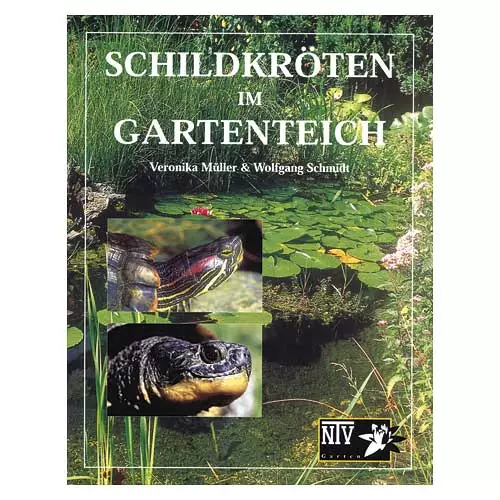
NTV, Schildkröten im Gartenteich - Hier werden Wasserschildkröten vorgestellt welche im Gartenteich gehalten werden können.
112 Seiten
88 Abbildungen
Format: 16,8 x 21,8 cm
Autor Veronika Müller und Wolfgang Schmidt
Verlag NTV
Inhalt:
Schildkröten im Gartenteich? Sicher haben auch Sie sich schon gefragt, ob es nicht möglich ist, eine Schildkröte im Gartenteich zu pflegen. Es ist möglich!In diesem Buch werden u. a. alle Wasserschildkrötenarten vorgestellt, die auch ganzjährig im Garten leben können. Sie finden wertvolle Tips zur Gestaltung des Schildkröten-Biotops, zur Fütterung, zur Vergesellschaftung der Tiere sowie zum Thema Überwinterung. Was tun, wenn Ihre Schildkröte Eier legt? Was geschieht, wenn einmal ein Tier krank wird? Auch auf diese Fragen gehen die Autoren in eigenen Kapiteln ausführlich ein.Es gibt viele Bücher über Schildkröten. Das Buch 'Schildkröten im Gartenteich' befasst sich erstmals ausschliesslich mit den Arten, die auch im Freien gepflegt werden können. Geschrieben für den Natur- und Tierfreund, ist es ein wertvoller Leitfaden für die richtige Pflege von Wasserschildkröten.
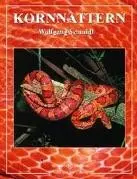
All about corn snakes from Wolfgang Schmidt
88 Seiten
62 Abbildungen
Format: 16,8 x 21,8 cm
Autor Wolfgang Schmidt
Inhalt:
Kornnattern gehören schon seit jeher zu den beliebtesten Terrarientieren. Nahezu jeder engagierte Terrarianer hat sie schon kennen gelernt. Doch woher kommt das starke Interesse gerade an dieser Kletternatter? Die Antwort liegt sicherlich in erster Linie im Wesen der Schlange begründet. Als besonders friedfertige Natur ist sie daher nicht nur dem fortgeschrittenen Terrarianer zu empfehlen, sondern sie eignet sich auch ausgezeichnet für den Einstieg in die Terraristik.Der Autor geht intensiv auf die Pflege und Zucht der Tiere ein, spart aber auch Themen wie Krankheiten und deren Behandlung nicht aus. Neben den drei Unterarten stellt er Farbformen vor, die sich mittlerweile auch hierzulande grosser Beliebtheit erfreuen.
Über den Autor:
Wolfgang Schmidt, Jahrgang 1962, ist verheiratet und hat zwei Kinder. Seit seinem 12. Lebensjahr hält und züchtet er erfolgreich die verschiedensten Amphibien und Reptilienarten. Durch seine zahlreichen Bücher und Zeitschriftenpublikationen auf dem Gebiet der Herpetologie und Terrarienkunde ist der Autor einem breiten Publikum als Fachmann bekannt, der seine Leser in fundierter und dennoch leicht verständlicher Form von seinem reichen Erfahrungsschatz profitieren lässt.
Terraria 58 – ‘Amazonas’ setupsNewly described amphibians 2015Responsible venomous snake careContents:Cover story: Amazonian setups – AmazonasTerritorialHerpetoramaSalamander in amber - a spectacular findCultural successor: Crocodile in the AllgäuThorn devils: confusion of names for African toadsInvasive red-cheeked tortoise spreads its wingsBlattsteiger: A dead man helps the survivors - with a turtleLookupCover storyNatural habitats at Wilhelma: a living, man-made ‘Amazonas’ biotopeIsabel Koch & Björn SchäferThe Amazon House at Dortmund Zoo: Territory of the green iguanasSimone KarlowskiThe Guiana dragon tree (Dracaena guianensis) at Schönbrunn ZooDoris Preininger, Manuela Sirny, Eveline Dungl & Anton WeissenbacherPanoramaRio Douro - The Grand Canyon of PortugalRudolf MalkmusResearchNew speciesList of new amphibians described in 2015Axel KwetUnknown invaders: the African clawed frog in EuropeJohn Measey, Thierry Backeljau, Anthony Herrel, Rui Rebeio & Dennis RödderSalamandraTerraristicsA checklist of safety precautions when keeping venomous snakesGerald BenyrImportant and invasive infectious diseases in amphibians: chytrid mycosis and ranavirus infectionsRachel E. Marschang, Kim Oster Heckers & Janosch Dietz Nature and species conservationField notesLight at the end of the tunnelUte Nüsken & Christoph LeebAutumn mating of grass snakesBenny TrappThe dice snake (Natrix tesselata) at the reintroduction site in Knorre near Meissen: current situation and a look back at the floods of June 2013Peter Strasser & Torsten PetersTerrarino - the children's page The spring frogsAlexa SabarthSubscription & ServiceAlso in your neighbourhoodPreviewIncubator In praise of bondageHeiko Werning
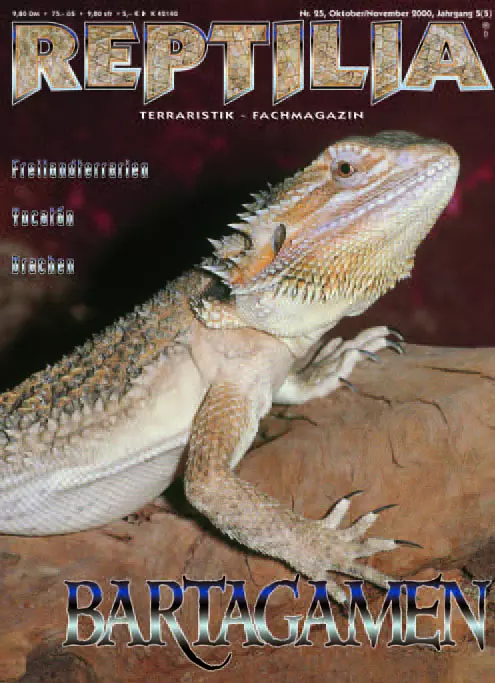
Reptilia 25 - Bearded dragons
Outdoor terrariumsYucatánDragons
Contents:
2 Editorial
4 Letters to the Editor
8 Magazine
16 Dates
20 Western Herp Perspectives: Road Cruising - in search of reptiles and amphibians by car
22 Photo report: The bearded dragons, by A. Hauschild
28 Keeping and breeding: An evergreen: Bearded dragons in the terrarium, by A. Hauschild
33 Herpetofauna: Behaviour and interaction of my bearded dragons (Pogona vitticeps) in the terrarium, by R. Kohlmeyer
39 Report: Bearded dragon fever, by B. Love
43 Journey: Travelling in the realm of the Maya, by L. Barkam and H. Werning
51 Portrait and poster: Trapelus pallidus, by L. Rifai and D. Modry
56 Herpetofauna: Notes on Boiga nigriceps(GÜNTHER, 1863)
62 Report: To Madagascar - for the turtles?, by W. Schmidt and K. Liebel
68 Keeping and breeding: Dendrobates azureus, a blue jewel in the terrarium, U. Dost
73 Terraristics: Building a snake enclosure, Part 1: Basic considerations, by M. Hallmen
78 Herpetology and culture: 'In caves lives the dragon's old brood', a look at the ideas of dragons in East and West, Part 1, by K. Kunz
87 Advice and action
91 Library
104 Gloss: Dead texts don't talk, by L. Hogeback
Marginata 46 - The European pond turtle
Moorish tortoiseTurtles of Montenegro
Contents:
EditorialMagazineTOPICThe keeping and breeding of European pond turtlesMichael RichterTOPICThe European pond turtle in Switzerland – the story of a return Markus Kutzli & Hans Peter SchaffnerTOPICIn-situ conservation and nest guardians. The Emys wild population in Austria is well looked afterMaria SchindlerTOPIC17 years of the pond turtle conservation programme in Hesse Matthias Kuprian, Silke Schweitzer, Rudolf Wicker, Michael Homeier, Olaf Homeier, Matthias Mähn & Sibylle WinkelPORTRAITTestudo graeca Linnaeus, 1758 – Moorish tortoise Benny TrappTRAVELTurtles at the foot of the black mountains Mario SchweigerSubscription & ServiceRegional guide
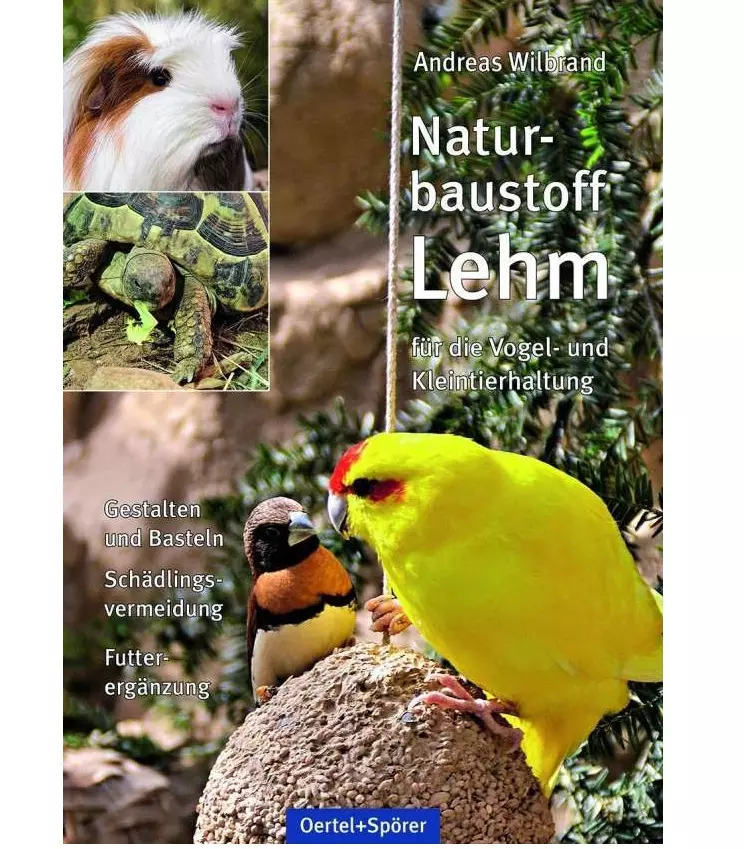
Natural building material clay for keeping birds and small animals
The first clay DIY book for animal lovers - a practical guide with simple instructions, new ideas and health tips!
Designing and crafting
Pest prevention
Feed supplement
Clay is the oldest and most universal building material in the world. The animal world has been demonstrating for millions of years how it can be used to build safe dwellings. And humans also utilised this building material a long time ago and even created huge and artistic buildings from it.
Clay can also be used perfectly for our pets. Building projects for animal housing of all kinds, landscaping in terrariums, soil construction for aquariums, pest control in aviaries, pigeon coops and stables - this book will show you how to do all this and what you need for it.Clay is not only a building material that can almost always be reused, but also contributes to the health of humans and animals. Clay binds toxins, displaces pests and is suitable as a fertiliser. For this reason, the health maintenance of our protégés through clay is also described in detail
CHF 27.90
❅
❆
❅
❆
❅
❆
❅
❆
❅
❆
❅
❆
This website uses cookies to ensure the best experience possible. More information...