The redknee tarantula

Article no: 978-3-937285-10-8

CHF 21.90

Stock: 0

Ready for dispatch in 1-3 days, delivery time 14 working days

Delivery between Tuesday, 19 May and Wednesday, 20 May
Zahlungsarten
Product information "The redknee tarantula"

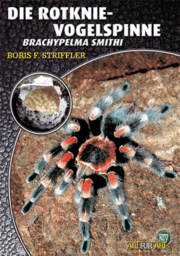
All about the redknee tarantula (Brachypelma smithi) from Boris F. Striffler

  • 64 Seiten
  • 14,8 x 21 cm
  • zahlreiche Farbfotos
  • Taschenbuch
  • Autor Boris F. Striffler
  • Verlag NTV

Inhalt:

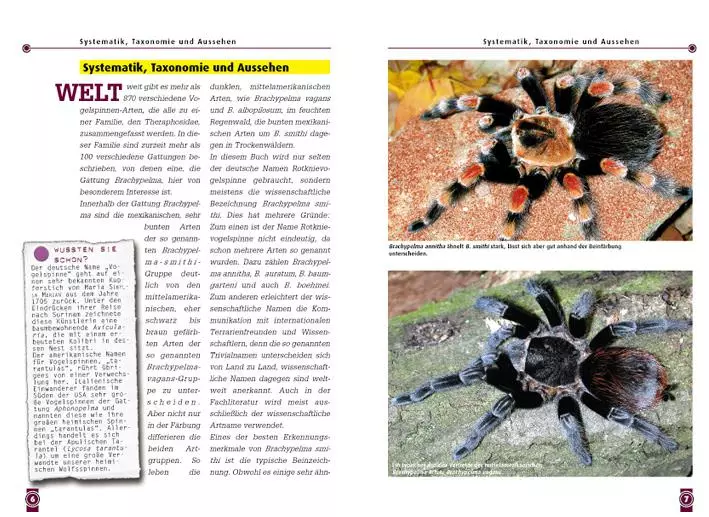
Die Rotknie-Vogelspinne ist sicherlich nicht nur die bekannteste Vogelspinne, sondern auch eine der schönsten. Aber nicht nur ihre attraktive Färbung und das eindrucksvolle Äussere, sondern auch ihr ruhiges Wesen und die leichte Haltbarkeit machten diese Art zu einem der begehrtesten Terrarienpfleglinge überhaupt.
Boris F. Striffler beschäftigt sich seit langem wissenschaftlich und als Terrarianer mit Vogelspinnen. In diesem Band der Reihe „Art für Art“ geht er im Detail und leicht verständlich auf sämtliche wissenswerten Aspekte der Haltung und Pflege von Rotknie-Vogelspinnen ein. Und selbstverständlich vermittelt er Ihnen auch, wie Sie Ihre Lieblinge zur Vermehrung bringen und die Jungspinnen aufziehen können.

  • Systematik und Körperbau
  • Die faszinierende Biologie: Aus dem Leben der Rotknie-Vogelspinne
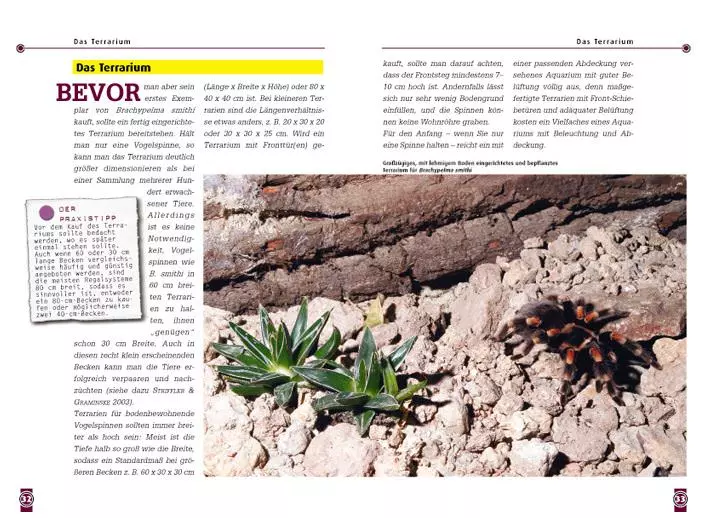
  • Alle Informationen zur artgerechten Haltung: Vom geeigneten Terrarium über Einrichtung und Technik bis hin zur Fütterung
  • Erfolgreich nachzüchten: Paarungsstimulation, verschiedene Methoden zur Eizeitigung und Aufzucht der Jungtiere
  • Problemlösungen: Wie man die häufigsten Fehler bei der Pflege vermeidet, und wie man kranken Tieren helfen kann
  • Brillante Fotos
Composition
Feeding recommendation
Technical details
Size information

0 of 0 reviews

Give us a rating!

Share your experience with the product with other customers.


Suggested products

Handbook of food plants for tortoises and other reptiles
Handbook of forage plants 2nd revised editionMarion Minch is not only a successful breeder of diverse tortoises for many years, but also an excellent connoisseur of native wild herbs. She founded and runs samenkiste.de, which is well known to many tortoise keepers and nature lovers. Her name is inextricably linked with reptile care and species-appropriate nutrition for tortoises. Her handbook of food plants summarises the most important native food plants for herbivorous and omnivorous reptiles. She not only considers tortoises, but also iguanas, spiny-tailed dragons and even chameleons. From the basics of plant biology to native wild herbs to suitable food plants for hardy tropical reptile species, this comprehensive work provides the basis for species-appropriate keeping. In the expanded and supplemented 2nd edition, the plant section is divided according to flower colour. This makes it even easier to identify wild herbs. The work has also been supplemented with a wealth of additional information and many pictures.

CHF 46.50

Geckos
Geckos in the terrarium by Astrid FalkThe book offers a comprehensive introduction to geckos and their species-appropriate keeping in terrariums. It explains what you need to think about before buying a gecko and what preparations should be made. The book describes in detail how the terrarium is technically equipped and set up. The care of the animals, their special features and behaviour, their diet, reproduction and rearing of young animals are described, as well as diseases and husbandry problems with tried and tested suggestions for prevention and treatment. Individual gecko species that are particularly suitable for keeping and breeding in terrariums are portrayed in detail in the second part of the book.

CHF 28.50

Jumping spiders Phidippus, Hyllus, Plexippus
Book Jumping Spiders - Phidippus, Hyllus & Plexippus A guide to keeping jumping spiders of the genera Phidippus, Hyllus & Plexippus. Who can resist the charm of jumping spiders? The childlike appearance of their expressive face simply leaves no one cold! In addition, their behavior is extremely exciting to observe, their colors are bright and their requirements for species-appropriate keeping are very easy to meet. No wonder these likeable jumpers are all the rage! This volume in the "Species by Species" series describes in detail what to look out for when buying and keeping them, introduces the most commonly kept species and color forms and provides plenty of tips on how to keep them successfully - so you can be sure they will breed well! Species by Species introduces you to the books in this series, which present the most popular terrarium animals. Each volume offers you detailed, practical care instructions and all the information you need to successfully breed your animals. All important questions from the required tank size to terrarium set-up, technical equipment, species-appropriate nutrition and disease prevention are answered with numerous tricks and tips. Experienced, long-standing breeders reveal how you can encourage the animals to reproduce and raise healthy young. All this in full color, generously illustrated and attractively designed - just about your terrarium animal - species by species

CHF 23.90

Book Breeding live food yourself
Book "Grow your own live food" - The perfect guide for pet owners Discover practical and detailed instructions on how you can easily breed food for your reptiles, birds, fish or other animals yourself in the book "Breeding live food yourself". With valuable tips on various food insects, their care and breeding, you can save money and ensure a species-appropriate diet for your pets. Contents of the book: Step-by-step instructions for breeding feeder insects Information on the best types of food for reptiles, birds and fish Care instructions and breeding conditions for various live food species Tips for sustainable and cost-effective food production Why breed your own live food? Get healthy, fresh food for your animals Save money and reduce dependence on pet shops Promote the health and well-being of your animals with species-appropriate food Whether you are a beginner or an experienced pet owner, this book provides you with everything you need to successfully breed live food yourself.

CHF 46.50

Marginata 69 - New Guinea tortoises
Marginata 69 - New Guinea tortoises – the genus ElseyaCover storyThe unrecognised beauties: New Guinea tortoises (Andreas S. Hennig)My experiences with Branderhorst's New Guinea tortoise, Elseya (Elseya) branderhorsti (Ouwens, 1914) (Andreas S. Hennig)Keeping and breeding of Rhodin's New Guinea tortoise, Elseya (Hanwarachelys) rhodini Thomson, Amepou, Anamiato & Georges, 2015 (Andreas S. Hennig)PortraitGeoemyda spengleri, Chinese serrated tortoise (Andreas S. Hennig)ReportageMacrochelys temminckii – Experiences and impressions with vulture tortoises part 2 (Reiner Praschag)KeepingAn alternative to year-round keeping of the Egyptian tortoise in the terrarium – my experiences with seasonal outdoor keeping of Testudo kleinmanni (Ricarda Schramm)EtymologySawbacks and living maps part 4: Graptemys gibbonsi, Pascagoula humpback tortoise (Holger Vetter)Classifieds & animal placement

CHF 16.50

Geyr's spiny-tailed lizard
All about the Gery's spiny-tailed lizard from Beate Löhr 62 pages 14.8 x 21 cm numerous color photos 2nd Edition Author Beate Löhr Publisher NTV Content:Geyr's spiny-tailed lizard is a terrarium care that attracts animal lovers right off the bat. Attractive coloring and prehistoric appearance quickly give rise to the desire to cultivate this lovable lizard in the home terrarium.And that is certainly not rocket science, if one observes the practical instructions for their care and breeding, presented the expert Beate Löhr in this volume of the series "Art for Art". Of course, the author also explains how to stimulate the beautiful lizards for mating, how to incubate the eggs and raise the cute boys.Systematics and physique The fascinating biology: From the life of Geyr's spiny-tailed lizard All information on the species-appropriate attitude: From the suitable terrarium over equipment and technology up to the feeding Successfully breeding: mating stimulation, incubation of the eggs and breeding of the young Troubleshooting: How to avoid the most common mistakes in care, and how to help sick animals Brilliant photos

CHF 21.90

Draco 47 - Scorpions
Draco 47 - Scorpions Contents: Editorial Scorpions – hunters of the nightBoris F. StrifflerKeeping and breeding scorpions of the genus Tityus in the terrariumMichael Seiter African giant scorpions of the genus Pandinus – more than just the emperor scorpionBoris F. StrifflerKeeping and rearing two Parabuthus speciesHeiko WehnerNorth African scorpionsBoris F. StrifflerThe moment of birth: rare insights into the brood care of Diplocentrus lindoKriton KunzThe scorpions of Europe – Euscorpius, Buthus & Co.Boris F. StrifflerScorpions as dangerous animals – the national regulationsLawyer Dietrich Rössel The Instituto Butantan – Institute of PoisonsBoris F. Striffler

CHF 18.40

Draco 04 - Iguanas
Draco 04 - Iguanas Contents: Page content 2 Editorial 4 Iguanas, by H. Werning 18 Sex differences in iguanas, by U. Schlüter 29 Islands - Hot spots of biodiversity as habitat of a unique iguana fauna, by M. Monzel 38 About the iguanas of Madagascar, by W. Schmidt and K. Liebel 44 Desert keel-tailed iguanas from Peru, by U. Schlüter 50 Keeping, breeding and care of Anolis cybotes, by M. Rogner 54 The desert iguana Dipsosaurus dorsalis: lifestyle, keeping and breeding, by H. Wölfel 62 Care of green iguanas, by G. Köhler 70 Psychogenic egg-laying difficulties in a green iguana (Iguana iguana rhinolopha), by J. Rauh 73 Iguana farming, by G. Köhler 79 Book box 93 Magazine

CHF 14.90

Reptilia 21 - Terrarium equipment
Reptilia 21 - Terrarium equipment Sand ottersPhrynops Dahli - a rare tortoise from ColombiaSkolopender - Schnapps and scorpion snacks Contents: Page 2 - EditorialPage 3 - Letters to the editorPage 6 - MagazinePage 13 - DatesPage 16 - Western Herp Perspectives: Broadening horizons abroad, by B. LovePage 18 - Photo report: The biotope in the living room, by J. RauhPage 24 - Report: An uncomplicated indoor terrarium, by M. SchmidtPage 29 - Report: Artificial rocks in the terrarium, by H. Zwartepoorte and M. VriesPage 33 - Report: Substrates and back wall design, by J. RauhPage 40 - Journey: On a tail lizard excursion in northern Oregon. Part 2: From the coast to Eugene, by H. WallaysPage 47 - Portrait and poster: Chlamydosaurus kingii, by M. Aresé and J. L. FarriolsPage 51 - Report: The sand adder Vipera ammodytes, by P. Katke and B. TrappPage 58 - Keeping and breeding: Keeping and breeding of some Andean keel-tailed iguanas (Stenocercus) from the Peruvian highlands. Part 3, by U. SchlüterPage 63 - Herpetofauna Phrynops dahli - A little known turtle species from the Caribbean coast of Colombia, by J. L. de la Osa VelásquezPage 68 - Keeping and breeding: Rare in the terrarium: The desert dragon Trapelus mutabilis, by H. D. MüllerPage 73 - Report: A drink with a bite and the liver with a sting, by I. and B. FritzschePage 80 - REPTILIA on the road: Reptile Zoo Iguana in Visslingen/NL, by A. HauschildPage 83 - Advice and actionPage 89 - LibraryPage 96 - Glossary: The crisis of statutory health insurance for reptiles and amphibians, by M. Vanselow

CHF 9.80

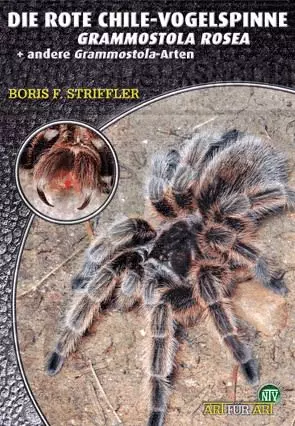
NTV Grammostola rosea
NTV - Grammostola rosea The red chile tarantula is one of the common interested tarantulas. It is brownish to gray and her calm demeanor, it becomes a super spider beginners. Boris F. Striffler 64 pages 14.8 x 21cm many color photo   Table of Contents foreword systematology spread endangering anatomy moult way of life Gift and stinging hairs purchase The terrarium care proliferation Hibernation summary thanks Further information Used and further reading

CHF 18.50

Bede your hobby chameleons
Bede - Your Hobby Chameleons Rolf Müller and Ulrike Walbröl have been successfully breeding chameleons for years. As members of the DGHT’s Chameleon Working Group and contact persons for the Chameleon Hotline, they are thoroughly familiar with the problems faced by beginners in chameleon keeping. Here, they have brought together their knowledge and experience for the first time and, in collaboration with Dominik Kieselbach, have created a book for beginners unlike any other previously available on the German market.

CHF 23.50

Terraria 40 - Night-active Geckos
Terraria 40 - Nocturnal Geckos Majorca midwife toadEnclosure of tortoise outdoor enclosures Contents: Cover story: Nocturnal Geckos Nocturnal geckos are among the most popular terrarium animals of all. In the cover story of this issue of TERRARIA/elaphe, we take an in-depth look at the biology, care and breeding of three representatives of this vast group: the house geckos of the genus Hemidactylus, often scorned as “feed geckos”; the impressive green-eyed gecko Gekko siamensis; and finally the eye-spotted arched-toed gecko (Cyrtodactylus peguensis). TerritorialHerpetorama Cover storyHalf-finger geckos: Hemidactylus. The misunderstood genusBernd-Michael Zwanzig & Wolfgang Grossmann Keeping and breeding of Cyrtodactylus peguensisSiriporn Maier Experiences with the Thai green-eyed gecko, Gekko siamensisIngo Kober Panorama TerraglobalReptile search with obstacles - Part 1Joachim Bulian Pond frogs, pond newts, alpine newts. “Quantitative” side notes from our own gardenWerner & Yvonne Lantermann The herpetofauna of the Portuguese Star MountainsRudolf Malkmus Research New speciesList of amphibians newly described in 2012Axel Kwet Salamandra TerraristicsClassic. The smooth clawed frog Setting boundaries with understanding. The enclosure of an outdoor enclosure for European tortoisesPeter Buchert HomerangeIn snake country – A visit to Yvonne and Thomas KlesiusHeiko Werning Nature and species conservationField notes. Eyes bigger than the mouth – unsuccessful prey-catching attempt of a fire-bellied toadStefan Meyer Smooth newt or hybrid newt?Wolf-Rüdiger Grosse & Holger Wawrzyniak The Majorca midwife toad (Alytes muletensis). A fossil from the Ice AgeAxel Hilger MissingTurkestan angular-toothed newt (Hynobius turkestanicus)Alexander Gutsche Subscription & ServiceAlso in your neighbourhood GalleryWilly Wolterstorff – “Father of the newts” Preview IncubatorThe beagle of terraristicsJörg Hofmann

CHF 12.00