NTV - Terrarium technology

Article no: 978-3-86659-243-8

CHF 37.90

Stock: 0

Ready for dispatch in 1-3 days, delivery time 14 working days

Delivery between Tuesday, 19 May and Wednesday, 20 May
Zahlungsarten
Product information "NTV - Terrarium technology"

Book Terrarium Technology - Ingo Kober & Uwe Geissel

  • 248 pages
  • numerous illustrations
  • Format: 17.5 x 23.2 cm, hardcover

Contents:

A comprehensive book on all aspects of terrarium technology, from lighting and UV irradiation to heating mats and sprinkler systems.
Practical, easy to understand, up-to-date. For all those seeking guidance in the large market of terrarium equipment. Written by two scientists who work in technical professions and can therefore professionally present the complex interrelationships, but who are passionate terrarium keepers as a hobby and know exactly what is important when caring for your animals.

  • What are LED lamps good for?
  • Which light do terrarium animals prefer?
  • How do I ensure the UV supply?
  • How many lamps do I need for which terrariums?
  • How do I operate a waterfall?
  • When should I use nebulisers?

Foreword

Environmental requirements of terrarium animals
    Terrarium animals are wild animals in human care
    Environmental parameters

Basic considerations on terrarium technology

Terrarium types
    Dry terrariums
        General considerations
        Terrestrial care animals
        Arboreal care animals
        Rock wall-dwelling care animals
        Nocturnal pets
    Humid terrariums
        General considerations
        Soil-dwelling caretakers of the forest interior
        Tree and forest edge dwellers
        Bank and water dwellers
        Variations on a theme
    Terrariums for highland dwellers
        General considerations
        Highland rainforest/cloud forest terrarium
        Highland dry terrarium

Light
    The origin of light
        Temperature radiators
        Luminescence
        Fluorescence
        Gas discharge
    The different types of light: invisible and visible light
        Infrared light (IR) (wavelength µm– nm)
        Visible light (VIS) (– nm)
        Ultraviolet light (UV)
    Types of light spectrum
        Continuous spectrum
        Line spectrum
    The technical parameters of light
        Orientation of light sizes towards humans
        Parameters for describing light
                Luminous flux
                Light intensity
                Luminance of a light source
                Luminance of an object that is not self-luminous
                Illuminance (brightness)
                Colour temperature (light temperature)
                Colour rendering
    Light propagation
            Point-shaped light sources
            Rod-shaped light sources
    Sunlight
        The alteration of light by the atmosphere
        Consequences for the alteration of light colour during the day
        Consequences for the alteration of UV radiation during the day
        Night light or moonlighting
    The subjective perception of light
        Colour sensation
        White balance
        Colour saturation and contrast
        Sensation of brightness
        Colour perception
        Flickering
        Conclusion

Basics of lighting technology
    Use of reflectors
        Beam angle: spot and flood
        Degree of reflection
        Light distribution
        Luminaire efficiency
    Mounting the luminaires
        Alignment
    Uniformity of lighting – the difference between
    natural sunlight and artificial lighting
    Power consumption
        The relationship between power consumption and heat
        Saving energy by sensibly selecting the lighting
    Luminaires and lamps
        Protection types
        Light efficiency
        Markings on lighting equipment
    Light sources at a glance
        Incandescent bulbs
        Halogen lamps
        Fluorescent lamps
        Energy-saving lamps and compact fluorescent lamps
        Mercury vapour lamps
        Metal halide lamps
        Mixed light lamps
        LEDs

Lamps for the terrarium
    Temperature radiators
        Incandescent bulbs
        Halogen lamps
        Halogen-IRC lamps
        Low-voltage halogen
        High-voltage halogen
        Halogen work lamps
    Discharge lamps
        A brief overview of the various types of
        discharge lamps
        Ballasts: EVG, VVG, KVG
        Mercury vapour lamps
        Metal halide lamps
        Mixed light lamps
        Fluorescent lamps
        Compact fluorescent lamps and energy-saving lamps
        LEDs
    All light sources at a glance
    Light and vitamins
        What are vitamins?
        A vitamin with a special role
        Terrarium technology and vitamin D synthesis
        Which and how much UV-B does my terrarium animal need?
        How long must irradiation last?
        Safety net: supplementation with vitamin D
        UV lamps and UV emitters
            UV lamps for short-term irradiation or for large terrariums
            UV lamps for all-day irradiation
            Do-it-yourself UV emitters
            UV incandescent or UV neodymium lamps
            UV-C emitters

Heating of terrariums
    Heat
        Heat radiation (infrared radiation)
        Heat transfer
        Cold and cold radiation
        Thermal conductivity
        Heat capacity
        Sensation of warmth
        Insulation
    Heat balance in the terrarium
        Where is heat lost in the terrarium?
        Cooling speed in the evening
    Heating technology for the terrarium
        Heating by thermal conduction
            Heating cables and heating mats
            Heating stones
            Heating with ballasts
        Heating with radiant heat
            Infrared heaters
            Low-light radiant heaters - inexpensive DIY
            Terrarium heater
            Heat wave heating
            Heat radiation of other light sources

Water in the terrarium
    Spraying systems
        General preliminary considerations
        Irrigation systems from the pet store
        Irrigation systems from the garden centre
        DIY
    Fog systems
        General considerations
        Mininebler or room humidifier? Which fogger for which purpose?
        Mounting
        Operation and maintenance
    Drainage
    Waterfalls and streams
        General considerations
        Complete systems
        DIY
        Centrifugal pumps
        Flow pumps
        Air lifters
        Aquarium air pumps
    Filters for the water section in the terrarium
        Nitrate filter
        Vodka filter
        Sulphur filter
        Filter substrates
        DIY filters
        The use of ozone in larger water sections
    Air humidity in the flat – mould and correct ventilation

Measuring, controlling, regulating
    Control of temperature, humidity and brightness in the terrarium
        Measuring temperature
        Types of thermometers
        Measuring humidity
        Measuring brightness
        Measuring UV light
    Controlling and regulating in the terrarium
        Timers
        Regulation of the technology in the terrarium
        The optimal terrarium regulation

Saving with terrarium technology
    Saving energy in the terrarium
    Buying used equipment
        Electrical devices
        Luminaires

Safety
    Electrical safety
    Residual current device (RCD) – FI switch
    Fire detector

Further information

Bibliography

Composition
Feeding recommendation
Technical details
Size information

0 of 0 reviews

Give us a rating!

Share your experience with the product with other customers.


Suggested products

Handbook of food plants for tortoises and other reptiles
Handbook of forage plants 2nd revised editionMarion Minch is not only a successful breeder of diverse tortoises for many years, but also an excellent connoisseur of native wild herbs. She founded and runs samenkiste.de, which is well known to many tortoise keepers and nature lovers. Her name is inextricably linked with reptile care and species-appropriate nutrition for tortoises. Her handbook of food plants summarises the most important native food plants for herbivorous and omnivorous reptiles. She not only considers tortoises, but also iguanas, spiny-tailed dragons and even chameleons. From the basics of plant biology to native wild herbs to suitable food plants for hardy tropical reptile species, this comprehensive work provides the basis for species-appropriate keeping. In the expanded and supplemented 2nd edition, the plant section is divided according to flower colour. This makes it even easier to identify wild herbs. The work has also been supplemented with a wealth of additional information and many pictures.

CHF 46.50

Geckos
Geckos in the terrarium by Astrid FalkThe book offers a comprehensive introduction to geckos and their species-appropriate keeping in terrariums. It explains what you need to think about before buying a gecko and what preparations should be made. The book describes in detail how the terrarium is technically equipped and set up. The care of the animals, their special features and behaviour, their diet, reproduction and rearing of young animals are described, as well as diseases and husbandry problems with tried and tested suggestions for prevention and treatment. Individual gecko species that are particularly suitable for keeping and breeding in terrariums are portrayed in detail in the second part of the book.

CHF 28.50

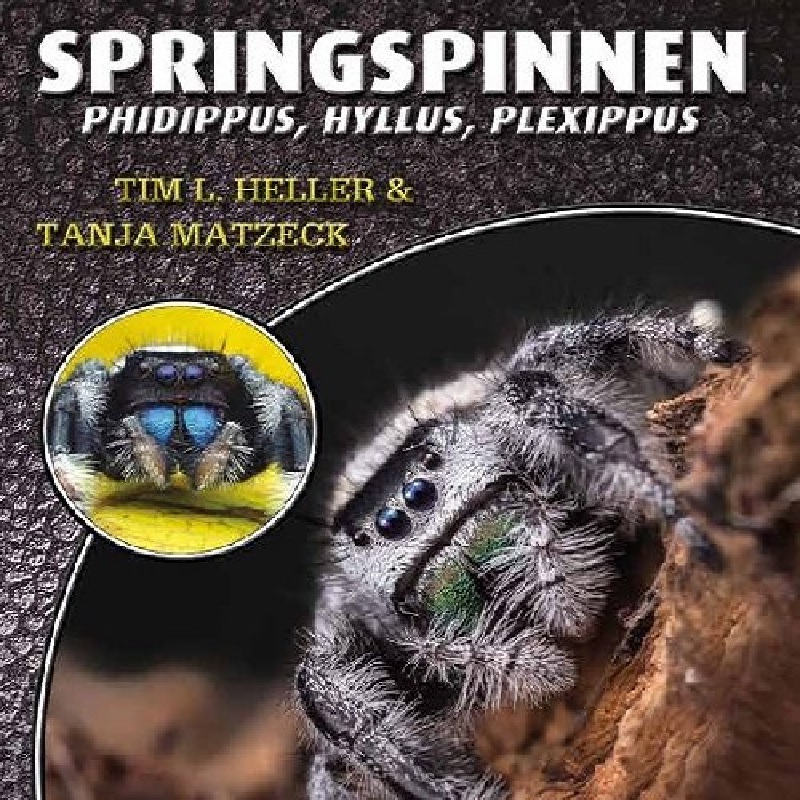
Jumping spiders Phidippus, Hyllus, Plexippus
Book Jumping Spiders - Phidippus, Hyllus & Plexippus A guide to keeping jumping spiders of the genera Phidippus, Hyllus & Plexippus. Who can resist the charm of jumping spiders? The childlike appearance of their expressive face simply leaves no one cold! In addition, their behavior is extremely exciting to observe, their colors are bright and their requirements for species-appropriate keeping are very easy to meet. No wonder these likeable jumpers are all the rage! This volume in the "Species by Species" series describes in detail what to look out for when buying and keeping them, introduces the most commonly kept species and color forms and provides plenty of tips on how to keep them successfully - so you can be sure they will breed well! Species by Species introduces you to the books in this series, which present the most popular terrarium animals. Each volume offers you detailed, practical care instructions and all the information you need to successfully breed your animals. All important questions from the required tank size to terrarium set-up, technical equipment, species-appropriate nutrition and disease prevention are answered with numerous tricks and tips. Experienced, long-standing breeders reveal how you can encourage the animals to reproduce and raise healthy young. All this in full color, generously illustrated and attractively designed - just about your terrarium animal - species by species

CHF 23.90

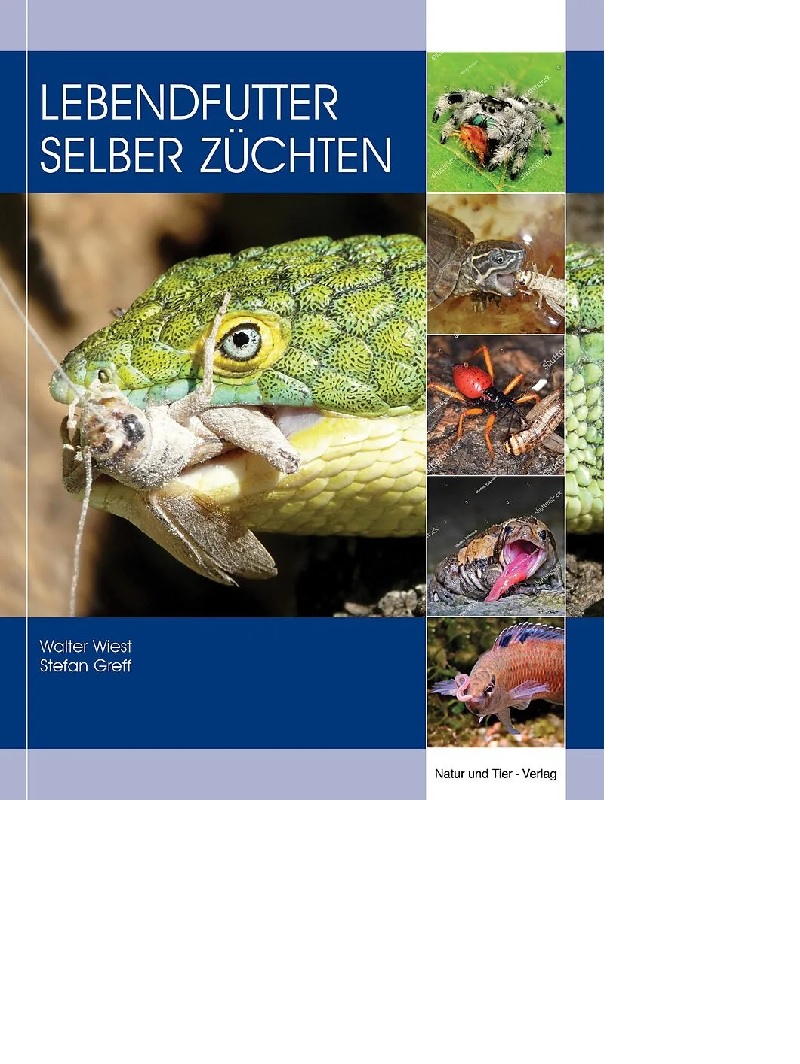
Book Breeding live food yourself
Book "Grow your own live food" - The perfect guide for pet owners Discover practical and detailed instructions on how you can easily breed food for your reptiles, birds, fish or other animals yourself in the book "Breeding live food yourself". With valuable tips on various food insects, their care and breeding, you can save money and ensure a species-appropriate diet for your pets. Contents of the book: Step-by-step instructions for breeding feeder insects Information on the best types of food for reptiles, birds and fish Care instructions and breeding conditions for various live food species Tips for sustainable and cost-effective food production Why breed your own live food? Get healthy, fresh food for your animals Save money and reduce dependence on pet shops Promote the health and well-being of your animals with species-appropriate food Whether you are a beginner or an experienced pet owner, this book provides you with everything you need to successfully breed live food yourself.

CHF 46.50

Marginata 69 - New Guinea tortoises
Marginata 69 - New Guinea tortoises – the genus ElseyaCover storyThe unrecognised beauties: New Guinea tortoises (Andreas S. Hennig)My experiences with Branderhorst's New Guinea tortoise, Elseya (Elseya) branderhorsti (Ouwens, 1914) (Andreas S. Hennig)Keeping and breeding of Rhodin's New Guinea tortoise, Elseya (Hanwarachelys) rhodini Thomson, Amepou, Anamiato & Georges, 2015 (Andreas S. Hennig)PortraitGeoemyda spengleri, Chinese serrated tortoise (Andreas S. Hennig)ReportageMacrochelys temminckii – Experiences and impressions with vulture tortoises part 2 (Reiner Praschag)KeepingAn alternative to year-round keeping of the Egyptian tortoise in the terrarium – my experiences with seasonal outdoor keeping of Testudo kleinmanni (Ricarda Schramm)EtymologySawbacks and living maps part 4: Graptemys gibbonsi, Pascagoula humpback tortoise (Holger Vetter)Classifieds & animal placement

CHF 16.50

Reptilia 99 - Saving energy in terraristics
Reptilia 99 - Saving energy in terraristics Red-backed spiderIncubation of monitor lizard eggsHind Indian hinged tortoise Contents: EDITORIALMAGAZINE AROUND THE WORLD IN 5 YEARSWaiting with turtlesA. Pachmann DATES WESTERN HERP PERSPECTIVESAgainst winter depressionB. Love PHOTOREPORTAGEEnergy revolution in the terrarium. Ideas and suggestions on how to reduce power consumption and energy costs when keeping terrarium animalsB. Akeret REPORTAGEAmphibians and reptiles in the energy-saving house. Opportunities and possibilities of the Renewable Energy Sources Act for terrarium husbandryT. Eisenberg REPORTAGELarge terrariums for giant snakes and saving energy – a contradiction?S. Müller KEEPING AND BREEDINGKeeping and breeding the red-backed spider (Latrodectus hasselti)M. Schmidt HERPETOFAUNAFringed-finger lizards (Acanthodactylus) in the wild and in the terrarium. Part 6: The Acanthodactylus-boskianus groupU. Schlüter REPRODUCTIONOn the incubation of clutches of Varanus kingorum, King's dwarf monitorR. Vitt REPORTAGELooking for snakes on a family holiday. A drama in three actsT. Schmidt REPORTAGEThe tortoises of Kalogria (Peloponnese)M. Rogner ANIMALS OF OUR HOMEThe grass frogR. Leptien Test runLibrarySUBSCRIPTION & SERVICEALSO NEAR YOU TRAVELVisiting Cuora galbinifrons on Hainan, ChinaT. Blanck PREVIEW BRUTKASTEN I would even let myself be locked up for REPTILIA – Part 1H. Werning

CHF 12.00

Draco 22 - Bearded dragons
Draco 22 - Bearded dragons Contents: 2 Editorial 4 Bearded dragons – the genus Pogona (STORR, 1982)Peter M. Müller 20 Basics of keeping Pogona vitticepsThomas Wilms & Karsten Grießhammer 28 Bearded Dragon FAQ (Frequently Asked Questions)Peter M. Müller & Renate Kohlmeyer 38 Presentation of a community facility for keeping Australian lizards at Reptilium LandauThomas Wilms 47 Observations on East Australian bearded dragonsGunther Schmida 55 Experiences in the care and breeding of Lawson’s dwarf bearded dragon (Pogona henrylawsoni (WELLS & WELLINGTON, 1985)Dieter Ruf 63 On the ecology and natural history of the dwarf bearded dragon (Pogona minor in the Great Victoria Desert (Australia)Eric. R. Pianka 67 Care and breeding of Mitchell’s bearded dragon Pogona mitchelli (BADHAM, 1976) Norbert Schuster 74 Bearded dragons in veterinary practiceJutta Wiechert 84 Book box 94 Magazine

CHF 16.80

Reptilia 27 - Anolis
Reptilia 27 - Anolis Curly-haired tarantulaCape CobraPhilippines Contents: 2 Editorial 3 letters to the editor 4 Lookup 5 Magazine 10 dates 14 Western Herp Perspectives: The aisle phenomenon, by B. Love 16 Photo reportage: Anolis, by L. Wijffels 22 Herpetofauna: The stretchable throat skin of the Anolis, by L. Wijffels 35 Herpetofauna: On the variation of "Le Roquet", the Anolis of Martinique, by L. Wijffels 44 Report: Anolis blanquillanus and Anolis onca. Two interesting skinks from the islands off Venezuela, by A. Flaschendräger 49 Obituary: In memory of Leo C. M. Wijffels, by A. Flaschendräger 51 Portrait and poster: Ctenosaura flavodorsalis, by T. Eisenberg 55 Journey: A visit to the Philippine rainforest, by Dr M. Gaulke 64 Keeping and breeding: Keeping and breeding the Indian star tortoise, by K. Gärtner 69 Terraristics: Building a snake enclosure, Part 3: Experiences, by M. Hallmen 74 Care and Breeding: The Cape Cobra Naja nivea, Care and Reproduction, by W. Strassmann 77 Herpetofauna: Curly Hair – Lovely Creatures, The tarantula Brachypelma albopilosa in the terrarium, by H. Fischer 82 Reptilia on the road: De Oliemeulen zoo and reptile house in Tilburg/Netherlands, by A. Hauschild 94 Advice and action 96 Library 104 Glossary: Anaconda! (Part 2), by H. Werning

CHF 9.80

Reptilia 85 - Snake-necked tortoises
Reptilia 85 - Snake-necked tortoisesCrocodile-tailed crested lizardBreeding of the king pythonPristidactylus valeriaeContents:The snake-necked turtles include such popular species for the aquaterrarium as the Australian representatives of the genus Chelodina or the pointed-headed turtles of the genus Emydura, but also the bizarre Mata-Mata from the waters of Amazonia or the funny toad-headed turtles of the genus Phrynops. In our cover story, we introduce you to this exciting family of turtles with lots of brilliant photos and portray some particularly interesting species in detail.Table of contentsEDITORIALMAGAZINEEcotourism de luxe: End of the chameleon conservation project in the Peloponnese?H. WerningSancho, the illegal immigrant - what to do when exotic animals are found?S. SchletchSkin-eating blind worms bred for the first timeA. Kupfer & S. ReinhardWESTERN HERP PERSPECTIVESConfusing species protectionBill LovePHOTOSTORY Snake-necked tortoises J. ValverdeKEEPING AND REPRODUCTIONThe Argentine snake-necked tortoise(Hydromedusa tectifera) - observations in biotope and terrarium D. FabiusKEEPING AND REPRODUCTION Keeping and breeding of the broad-breasted snapping turtle, Myuchelys latisternum(Elseya latisternum) H. ProkopTRAVEL Cave dwellers in the PhilippinesM. GaulkePORTRAIT AND POSTER Telescopus fallax (Fleischmann 1831). European cat snakeK. Ehrlich & B. TrappHERPETOFAUNA A conservation project for the Valeria large-headed iguana, Pristidactylus valeriae - with the support of REPTILIA B. CamousseigtKEEPING AND REPRODUCTION Versatile favourites. Experiences with Royal PythonsM. BorerKEEPING AND REPRODUCTION News on sex determination of the crocodile-tailed humpback lizard, Shinisaurus crocodilurus M. ZollwegHERPETOFAUNA Basking sites on mangrove biotopes of Phelsuma robertmertensi Meier, 1980 on the Comorian island of Mayotte P. KrauseANIMALS OF OUR HOMEA snake that is not a snake: the slow wormR. LeptienLIBRARYSUBSCRIPTION & SERVICEALSO NEAR YOUPREVIEWBRUTKASTENBag magicM. ZawadzkiDATESHeiko WerningWESTERN HERP PERSPECTIVESConfusing species protectionB. Love

CHF 12.00

Reptilia 04 - Bird spiders
Reptilia 04 - Tarantulas SkinkThailandMysticism & superstition Contents: Page 2 - EditorialPage 3 - Letters to the editorPage 6 - MagazinePage 17 - Photo reportage: Tarantulas, by P. KlaasPage 23 - Keeping and reproduction: Keeping and breeding tarantulas, by P. KlaasPage 26 - Terraristics and law: Legal issues in keeping spiders and scorpions, by D. RösselPage 27 - Report: A feast of tarantulas, by R. WestPage 30 - Psychology: Arachnophobia, by L. HogebackPage 33 - Travelogue: Thailand - Mecca of herpetological tourism, by J. BergadáPage 37 - Travelogue: The snake farm of Bangkok, by J. ViaderPage 39 - Portrait and poster: Chondropython viridis, by M. Aresté and J. L. FarriolsPage 43 - Herpetofauna: Skinks, by P. Gassner and A. HauschildPage 50 - Reptilia on the road: Terrarium displays, by H. WerningPage 54 - Terraristics and law: Snake keeping in residential property and tenancy law, by D. RösselPage 57 - Herpetology and Culture: Magic and Superstition, Part 1: Turtles and Amphibians, by L. B. Carissimi-PriorPage 62 - Terraristics: Egg-laying problems with tortoises, by E. MeierPage 69 - Supplement: Venomous snakesPage 74 - Advice and actionPage 76 - LibraryPage 80 - Incubator: Glossary by H. Werning

CHF 9.80

Draco 27 - Highland
Draco 27 - HighlandContents: 2 Editorial 4 Mountains and highlands - reptiles and amphibians in an extreme habitat Heiko Werning & Claudia Wolf 28 New Zealand - the discovery of new geckos at the end of the worldRonald Coleman 32 Giant toads and co. in the highlands of south-west ChinaKlaus Detlef Kühnel 36 Rwenzori - in search of amphibians in the mountains of the moonKatharina C. Wollenberg & Stefan Lötters 40 The keeping of highland chameleonsAndreas Böhle 45 chameleons in the Oster Usambara Mountains in northern TanzaniaWerner & Yvonne Lantermann 49 Spanish adders are also poisonous ...Axel Kwet 54 In search of mountain lizards in three continents Wolfgang Bischoff 74 Life, care and breeding of the alligator skink Mesaspis moreletii (Bocourt, 1871)Uwe Schlüter 81 Magazine

CHF 18.40

Draco 24 - Spiders
Draco 24 - Spiders Contents: 2 Editorial 4 Spiders - a look into strange worlds Kriton Kunz 24 "Relics of prehistoric times" - arthropod spiders, wallpaper spiders and their relativesThomas Ziegler & Boris F. Striffler 32 wheel web spiders in the terrariumTimm Adam 48 The genus Latrodectus - not just black widowsBoris F. Striffler 58 Colourful little predators - care and breeding of the lynx spider Peucetia madagascariensisKriton Kunz 62 water-hunting spiders of the family Ctenidae, Pisauridae and TrechaleidaeTimm Adam 70 Secret roommates in the house: from isopod hunters, hypnotisers and glue spittersKriton Kunz 80 With Piaroa Indians hunting the giant tarantula Theraphosa apophysisBoris F. Striffler & Barbara Zoller 88 Book box 93 Magazine

CHF 16.80