NTV - The African dwarf frog

Article no: BZ-1293106

CHF 19.90

Stock: 0

Ready for dispatch in 1-3 days, delivery time 14 working days

Delivery between Tuesday, 19 May and Wednesday, 20 May
Zahlungsarten
Product information "NTV - The African dwarf frog"
Kriton Kunz
  • 62 Seiten
  • 14,8 x 21 cm
  • zahlreiche Farbfotos

Inhalt:

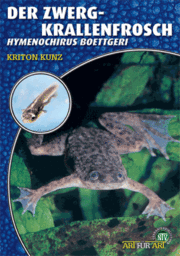
Vielleicht die liebenswertesten Pfleglinge im Aquarium sind Zwergkrallenfrösche. Dem heiteren Anblick einer munter und etwas tollpatschig durchs Becken rudernden Schar dieser kleinen Fröschchen vermag sich wohl niemand zu entziehen. Da es sich außerdem um äußerst pflegeleichte Tiere handelt, kann man diese netten Amphibien auch dem Einsteiger empfehlen.
REPTILIA-Redakteur Kriton Kunz hielt als Kind bereits seine ersten Zwergkrallenfrösche und züchtet sie seit Jahren regelmäßig erfolgreich nach. Praxisnah und kompetent, aber jederzeit leicht verständlich geht er detailliert auf alle Aspekte rund um Haltung und Pflege der reizenden Kerlchen ein und verrät Ihnen überdies, wie man Zwergkrallenfrösche zur Paarung bewegt und ihre Kaulquappen sowie die Jungtiere aufzieht.

  • Systematik und Körperbau
  • Die faszinierende Biologie: Aus dem Leben der Zwergkrallenfrösche
  • Alle Informationen zur artgerechten Haltung: Vom geeigneten Aquarium über Einrichtung und Technik bis hin zur Fütterung
  • Erfolgreich nachzüchten: Paarungsstimulation, Aufzucht der Kaulquappen und Jungtiere
  • Problemlösungen: Wie man die häufigsten Fehler bei der Pflege vermeidet, und wie man kranken Tieren helfen kann
  • Brillante Fotos
Composition
Feeding recommendation
Technical details
Size information

0 of 0 reviews

Give us a rating!

Share your experience with the product with other customers.


Suggested products

Handbook of food plants for tortoises and other reptiles
Handbook of forage plants 2nd revised editionMarion Minch is not only a successful breeder of diverse tortoises for many years, but also an excellent connoisseur of native wild herbs. She founded and runs samenkiste.de, which is well known to many tortoise keepers and nature lovers. Her name is inextricably linked with reptile care and species-appropriate nutrition for tortoises. Her handbook of food plants summarises the most important native food plants for herbivorous and omnivorous reptiles. She not only considers tortoises, but also iguanas, spiny-tailed dragons and even chameleons. From the basics of plant biology to native wild herbs to suitable food plants for hardy tropical reptile species, this comprehensive work provides the basis for species-appropriate keeping. In the expanded and supplemented 2nd edition, the plant section is divided according to flower colour. This makes it even easier to identify wild herbs. The work has also been supplemented with a wealth of additional information and many pictures.

CHF 46.50

Geckos
Geckos in the terrarium by Astrid FalkThe book offers a comprehensive introduction to geckos and their species-appropriate keeping in terrariums. It explains what you need to think about before buying a gecko and what preparations should be made. The book describes in detail how the terrarium is technically equipped and set up. The care of the animals, their special features and behaviour, their diet, reproduction and rearing of young animals are described, as well as diseases and husbandry problems with tried and tested suggestions for prevention and treatment. Individual gecko species that are particularly suitable for keeping and breeding in terrariums are portrayed in detail in the second part of the book.

CHF 28.50

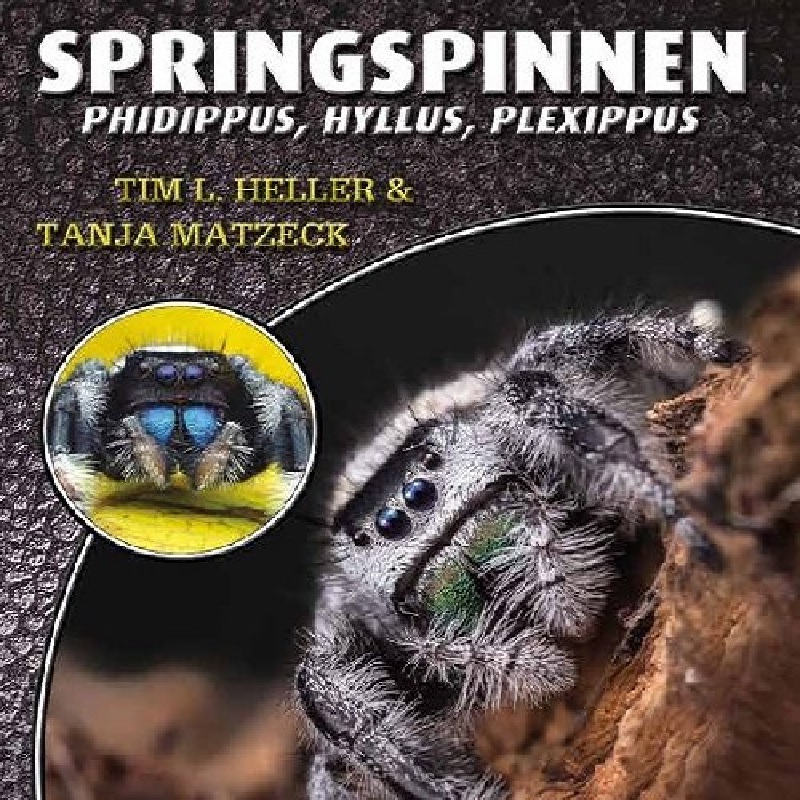
Jumping spiders Phidippus, Hyllus, Plexippus
Book Jumping Spiders - Phidippus, Hyllus & Plexippus A guide to keeping jumping spiders of the genera Phidippus, Hyllus & Plexippus. Who can resist the charm of jumping spiders? The childlike appearance of their expressive face simply leaves no one cold! In addition, their behavior is extremely exciting to observe, their colors are bright and their requirements for species-appropriate keeping are very easy to meet. No wonder these likeable jumpers are all the rage! This volume in the "Species by Species" series describes in detail what to look out for when buying and keeping them, introduces the most commonly kept species and color forms and provides plenty of tips on how to keep them successfully - so you can be sure they will breed well! Species by Species introduces you to the books in this series, which present the most popular terrarium animals. Each volume offers you detailed, practical care instructions and all the information you need to successfully breed your animals. All important questions from the required tank size to terrarium set-up, technical equipment, species-appropriate nutrition and disease prevention are answered with numerous tricks and tips. Experienced, long-standing breeders reveal how you can encourage the animals to reproduce and raise healthy young. All this in full color, generously illustrated and attractively designed - just about your terrarium animal - species by species

CHF 23.90

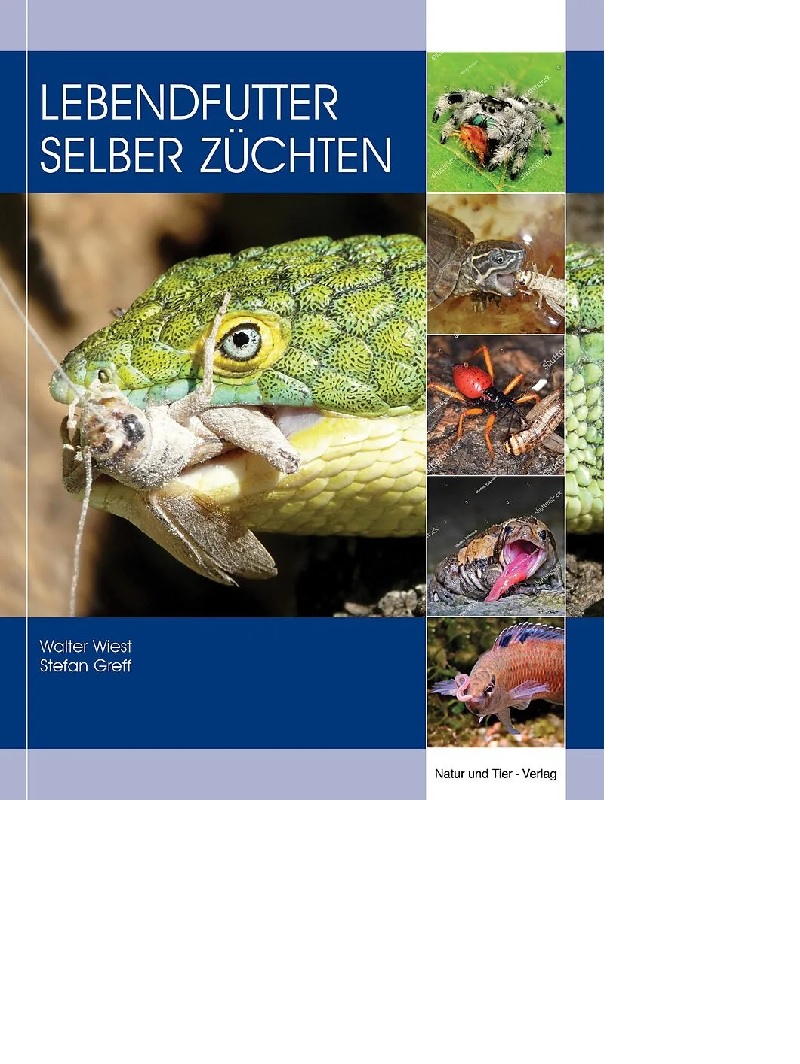
Book Breeding live food yourself
Book "Grow your own live food" - The perfect guide for pet owners Discover practical and detailed instructions on how you can easily breed food for your reptiles, birds, fish or other animals yourself in the book "Breeding live food yourself". With valuable tips on various food insects, their care and breeding, you can save money and ensure a species-appropriate diet for your pets. Contents of the book: Step-by-step instructions for breeding feeder insects Information on the best types of food for reptiles, birds and fish Care instructions and breeding conditions for various live food species Tips for sustainable and cost-effective food production Why breed your own live food? Get healthy, fresh food for your animals Save money and reduce dependence on pet shops Promote the health and well-being of your animals with species-appropriate food Whether you are a beginner or an experienced pet owner, this book provides you with everything you need to successfully breed live food yourself.

CHF 46.50

Marginata 69 - New Guinea tortoises
Marginata 69 - New Guinea tortoises – the genus ElseyaCover storyThe unrecognised beauties: New Guinea tortoises (Andreas S. Hennig)My experiences with Branderhorst's New Guinea tortoise, Elseya (Elseya) branderhorsti (Ouwens, 1914) (Andreas S. Hennig)Keeping and breeding of Rhodin's New Guinea tortoise, Elseya (Hanwarachelys) rhodini Thomson, Amepou, Anamiato & Georges, 2015 (Andreas S. Hennig)PortraitGeoemyda spengleri, Chinese serrated tortoise (Andreas S. Hennig)ReportageMacrochelys temminckii – Experiences and impressions with vulture tortoises part 2 (Reiner Praschag)KeepingAn alternative to year-round keeping of the Egyptian tortoise in the terrarium – my experiences with seasonal outdoor keeping of Testudo kleinmanni (Ricarda Schramm)EtymologySawbacks and living maps part 4: Graptemys gibbonsi, Pascagoula humpback tortoise (Holger Vetter)Classifieds & animal placement

CHF 16.50

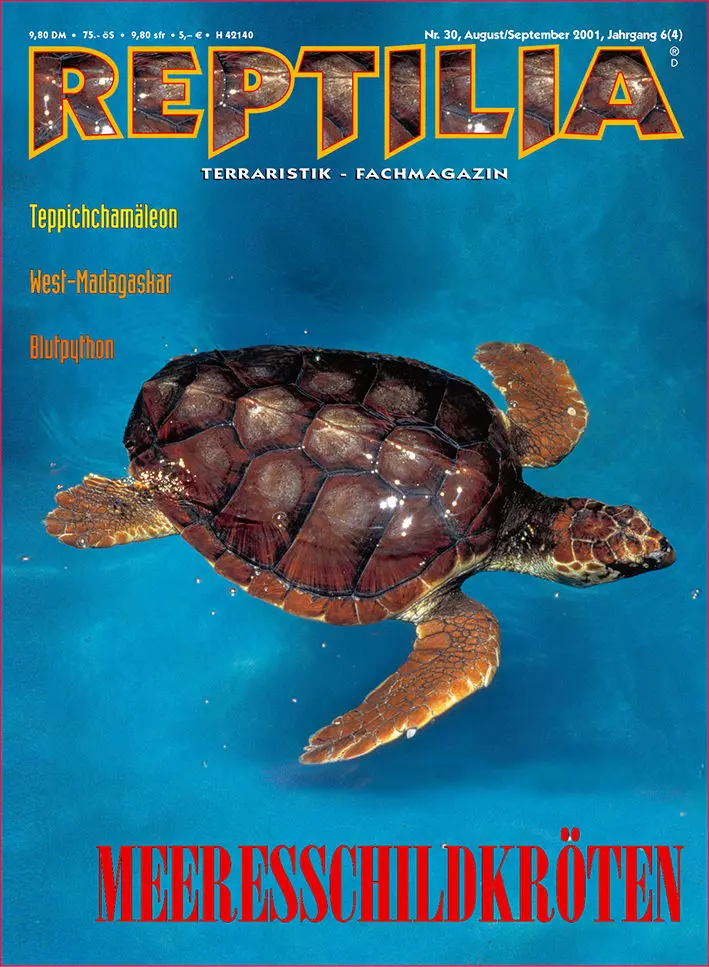
Reptilia 30 - Sea turtles
Reptilia 30 - Sea turtlesCarpet chameleonWest MadagascarBlood pythonContents: 2 Editorial 3 letters to the editor 7 Magazine 20 dates 24 Western Herp Perspectives, Hybrid Mania, by B. Love 26 Photo reportage: Sea turtles, by J. Vasconcelos Péres 32 Report: The diving behaviour of sea turtles, A brief overview, by J.D.R. Houghton 36 Report: Encounter with the loggerhead turtle (Caretta caretta) in the southern Aegean 40 Herpetofauna: The species of sea turtles, by J. Vasconcelos Péres 46 Care and Breeding: Forbidden Beauty – On the Spotted, Blood or Short-tailed Python Python curtus (Schöegel 1872), by A. Kirschner 51 Portrait and poster: Pelobates syriacus, by B. Trapp 55 Husbandry and Breeding: Experiences in the care and breeding of the carpet chameleon Furcifer lateralis, by U. & K. Dost 61 Herpetofauna: Luminous tejus? The dwarf tejus of the genus Proctoporus. With notes on luminescent organs in lizards, by U. Schlüter 65 Terraristics: Sitting in a glass house... The greenhouse as an interesting option for keeping snakes, by U. Strathemann 69 Herpetoculture: Devilish, divine snake. Aspects of snake symbolism from a psychological perspective. Part 1: Snake fear, snake cult, the image of the snake in the Bible, by K. Kunz 74 Journey: Journey to the Central West of Madagascar, by K. Liebel & W. Schmidt 88 Classifieds 92 Advice and action 95 Library 104 Glossary, I am a punk band, by H. Werning

CHF 9.80

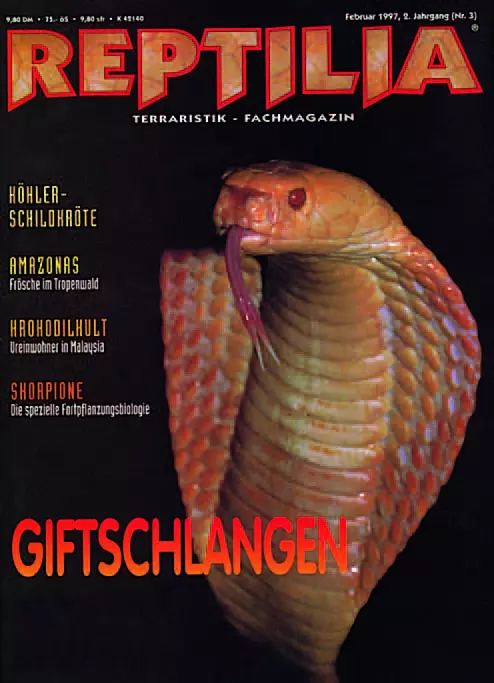
Reptilia 03 - Poisonous snakes
Reptilia 03 - Venomous snakesCave turtleAmazonas - Frogs in the tropical forestCrocodile cult - Aborigines in MalaysiaScorpions - The special reproductive biologyContents:Page 2 - EditorialPage 3 - Letters to the editorPage 6 - MagazinePage 17 - Photo report: Venomous snakes, by E. Barcenas and J. GuañabensPage 24 - Herpetofauna: Crotalus adamanteus, by J. BergadáPage 27 - Terraristics: Keeping venomous snakes, by P. LammersPage 30 - Herpetology and medicine: Venomous effects, by Dr M. Korthals AltesPage 33 – Travel report: Amazonas: In search of Dendrobates galactonotus, by B. PieperPage 39 - Portrait and poster: Salamandra salamandra, by M. Aresté and J. L. FarriolsPage 43 - Herpetofauna: How scorpions ensure their reproduction, by Dr D. MahsbergPage 49 - Herpetology and ecology: Toad migrations by A. de Saint-PaulPage 53 - Herpetofauna: Geochelone carbonaria, by S. MétraillerPage 56 - Herpetofauna: Toad lizards, by B. BaurPage 60 - Species and nature conservation: The extinction of reptiles and amphibians, by M. Viader StaubPage 71 - Herpetology and culture: The crocodile people of Malaysia, by Dr C. López del CastilloPage 74 - Advice and actionPage 75 - LibraryPage 80 - Incubator: Glossary by H. Werning

CHF 9.80

Marginata 47 - Turtles of Mexico
Marginata 47 - Turtles of Mexico Rarities from VietnamSearching for turtles in the PeloponneseLeatherback turtle EditorialMagazineTOPICThe turtles of MexicoMaik ShieldsTOPICThe pointed-snouted turtle. A small aquatic turtle for the terrarium Maik ShieldsTOPICSalvin's cross-breasted tortoise. An interesting species from MexicoMaik ShieldsTOPICThe Nayarit tortoise in nature and culture Fabio CupulPORTRAITDermochelys coricea Vandelli, 1761. Leatherback turtleKriton KunzTRAVELMorea – in search of turtles and other reptiles in the west of the Peloponnese (1) Axel KwetTRAVELIn search of the "shy beauty" and the "cave turtles" Torsten Blanck, Sebastian Braun, Timothy McCormack, Hoang Van Ha, Nguyen Tai Thang, Nguyen Van Luc & Minh LeSubscription & ServiceRegional guide

CHF 16.50

Terraria 07 - South American tortoises
Terraria 07 - South American tortoises Contents: 2 Editorial Kriton Kunz TITLE TOPIC 4 • The tortoises of South America Hans - Dieter Philippen 10 • Farming and protection of red-footed tortoises (Chelonoides carbonaria) in Venezuela Christian Neumann & Saúl Gutiérrez 15 • Aspiration and Reality: On the naturalistic husbandry and breeding of the red-footed tortoise (Chelonoidis carbonaria) Christian Neumann 22 • Experiences with the husbandry and breeding of the yellow-footed tortoise Lies Niessen SCIENCE 27 Herpetorama Lizard taxonomy / spider venoms 29 New species Elseya albagula / dendrobatids & Hypsiboas from Guyana / microteiids from Amazonia 32 Among researchers Of snake skinks and other “herps” – Experiences during an internship semester on the Peloponnese Michael Stadler & Philipp Herrmann 36 Snakes, dragons, crocodiles – on the trail of reptilian creatures in Mayan symbolism Kriton Kunz 44 The venomous snakes of Kakamega Forest in Kenya Maik Dobiey 54 Lifestyle, care and breeding of the giant Ameiva (Ameiva ameiva ameiva) from Guyana Uwe Schlüter 63 Borneo crested lizards (Bronchocela cristatella) in the terrarium – difficult and delicate? Lutz Baedermann Journey 68 In the mountain forests of Mount Kinabalu/Borneo. Part II Rudolf Malkmus TERRARIUM PRACTICE 82 Test run Novel heater / thermostat with dimming 84 Prelude Nutrition of Mediterranean tortoises Mats Blohm 88 Eye-catcher A new enclosure for dyeing poison frogs Peter Janzen 92 Also in your area 95 TERRAnet Mediterranean tortoises / praying mantises 97 TERRAglobal In the village of the queens Joachim Bulian Perils of a herpetologist Manuel Acevedo 104 TERRAwinn

CHF 11.20

Terraria No. 36 - Breeding of giant snakes
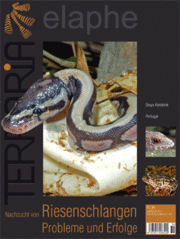
  Grays KielskinkPortugal Inhalt: Titelthema: Nachzucht von Riesenschlangen – Probleme und ErfolgeViele Vertreter der Riesenschlangen sind in der Natur besonders gefährdet, gleichzeitig gehören sie zu den beliebtesten Pfleglingen in unseren Terrarien. Wir wagen eine Bestandsaufnahme: Wie sieht es aus mit diesen faszinierenden Reptilien in der Terraristik? Außerdem berichtet Michèl Kroneis über immer wiederkehrende Probleme beim Schlupf Grüner Baumpythons, Ralf Mößle über die erfolgreiche Terrarien-Nachzucht der größten Schlange überhaupt, der Grünen Anakonda. TerritorialHerpetoramaTitelthemaRiesenschlangenhaltung im Lauf der Zeit Hans-Dieter PhilippenHaltung, Pflege und Zucht der Großen Anakonda (Eunectes murinus) Ralf MößleDer Grüne Baumpython: vom mysteriösen Absterben schlupfreifer Jungtiere Michél KroneisPanoramaTerraglobalMedizin-Echsen Fabio Cupul Knapp am Tod vorbei. Teil 1Joachim BulianTerarristik – ein brandgefährliches HobbyStephan MüllerHerpetologische Streifzüge durch die Montados PortugalsRudolf MalkmusForschungNeue ArtenAus eins mach drei: zwei neue Arten bei den afrikanischen Gelenkschildkröten Axel KwetUnter Forschern Die Stecknadel im Heuhaufen – auf Schlangensuche im Nationalpark Ulu Temburong, Brunei Silke Schweiger & Thomas WampulaStammesgeschichte der Froschgattung Gephyromantis in Madagaskar Nathalie KaffenbergerSalamandraTerraristikKlassiker. Die SteppenschildkröteGrays Kielskink (Tropidophorus grayi Günther, 1861) Maren GaulkeSoziale Vogelspinnen aus Afrika Ingo Wendt, Frank Schneider & Boris F. StrifflerWeitere Beobachtungen zum Geschlechtsdimorphismus bei der Bergbachmolchart Neurergus crocatus Jürgen FleckNatur- und ArtenschutzFeldnotizen. Ameise versus JungkröteJörg Rozycki Tote Eidechsennatter in Spähhaltung Axel KwetGriechische Teichmolche in Österreich. Bereicherung oder Bedrohung? Hans-Jürgen LuefVermisstDelcourts Riesengecko (Hoplodactylus delcourti)Auch in Ihrer NäheAbo & ServiceGalerieVerschwenderische SchönheitVorschauBrutkastenFamilienausflug, Teil 2Heiko Werning  

CHF 12.00

Reptilia 94 - Terrarium photography
  Philippinen-KrokodilCumberland-SchmuckschildkröteHalsbandleguane im Freilandterrarium Inhalt: Die Terraristik bietet eine unendliche Fülle wunderbarer Fotomotive, ein Eldorado für Hobby-Fotografen! Und wohl jeder Halter hat den Wunsch, seine Pfleglinge, seine Nachzuchten und seine Anlage im Bild festzuhalten. Zumal Fotografieren nie einfacher war als heute, wo jedes Telefon die schnelle Aufnahme erlaubt, die dann direkt ins virtuelle Fotoalbum auf Facebook hochgeladen werden kann, wo alle Freunde sie anschauen können.Profi-Fotograf Benny Trapp aber gibt zahlreiche Tipps und Tricks, wie Sie zu Bildern kommen, bei denen garantiert jeder den „Gefällt mir“-Button drückt, ganz gleich, ob Sie mit einer Kompaktkamera oder einer hochwertigen Spiegelreflexkamera arbeiten. EDITORIALMAGAZINTERMINEIN 5 JAHREN UM DIE WELT Menschen und SchildkrötenA. PachmannWESTERN HERP PERSPECTIVESBörsenbesuch down under B. LoveFOTOSTORYBild schön! Fotografie von Terrarientieren K. KunzPRAXISTerrarientiere fotografieren. Einsatz von Licht und Blitz bei SpiegelreflexkamerasB. TrappPRAXISTipps für bessere Bilder mit KompaktkamerasB. TrappHALTUNG UND VERMEHRUNGPhilippinenkrokodile (Crocodylus mindorensis) im Aquarium des Kölner Zoos. Teil 1: Erfahrungen mit „Off-Exhibit“- Haltung einer der am stärksten bedrohten Krokodilarten der Welt T. Ziegler, R. Sommerlad, W. Brass, K. van der Straeten, D. Karbe & A. RauhausHERPETOFAUNAAuf dem Weg ins All. Die Welt der Buchstaben-Schmuckschildkröte, Trachemys scripta Teil 4: Cumberland- und Südtexas-Schmuckschildkröte A. S. HennigWIRBELLOSEDie Isles of Scilly. Ein Paradies nicht nur für Phasmidenfreunde H.-J. LuefHALTUNG UND VERMEHRUNGErfahrungen mit der Haltung von Halsbandleguanen im FreilandterrariumM. DieckmannTIERE UNSERER HEIMATDie AspisviperR. LeptienBIBLIOTHEKTIPPS & TRICKSTESTLAUFABO & SERVICEAUCH IN IHRER NÄHEREISEThe Rock. Die Herpetofauna GibraltarsU. SchlüterVORSCHAUBRUTKASTENIguana chilenaH. Werning  

CHF 12.00

The spiny-tailed monitor
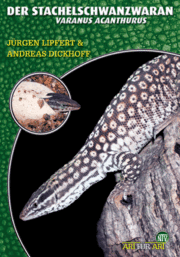
All about the spiny-tailed monitor by Jürgen Lipfert & Andreas Dickhoff 64 pages Format: 14.8 x 21 cm numerous colour photos 2nd edition Author Andreas Dickhoff and Jürgen Lipfert Publisher NTV Contents: Andreas Dickhoff and Jürgen Lipfert have been studying spiny-tailed monitor lizards for many years. In this book, they cover all aspects of keeping and species-appropriate care of these exciting lizards and show you how to breed your animals, incubate the eggs and raise the young. Systematics and body structure The fascinating biology: From the life of the spiny-tailed monitor lizard All information on species-appropriate keeping: from suitable terrariums to equipment and technology to feeding Successful breeding: Mating stimulation, incubation of the eggs and rearing the young Solutions to problems: How to avoid the most common mistakes in care and how to help sick animals Brilliant photos

CHF 21.90

Customers also saw

Live food - swimming shrimps (Palaemonetes varians)
Live food - swimming shrimps (Palaemonetes varians) Swimming shrimp have a very high tolerance for salinity and other water values. These shrimp grow to a maximum size of 3.5 cm and can live both in lake and fresh water.If they are not eaten, they do not cause any damage in the aquarium.Optimum storage temperature: 5-8°CShelf life: approx. 10 days Live food is the most natural way of feeding ornamental fish. No other food is as wholesome. With all essential vitamins, minerals and nutrients stimulates the hunting instinct promotes vitality With special scientific knowledge, many years of experience and a high level of technical effort, Poseidon Aquaculture has developed special procedures to breed various types of live feed of the highest quality.Continuous quality controls guarantee premium quality live food. Orders received by Sunday evening will be sent by A Mail on Thursday. Even with the greatest care, it can happen that feed animals die due to temperature fluctuations or incalculable events. We do not assume any liability for this.

CHF 4.90

Terraria 04 - Strawberry Poison Frog
Terraria 04 - Strawberry Frogs Green water dragonPatagonia Contents: 2 EditorialMatthias SchmidtTOPIC 3 • Diverse like no other: the strawberry frogKarl-Heinz Jungfer 12 • In search of strawberry frogs in Costa Rica and PanamaPeter Janzen 17 • Strawberry frogs and their poison Dietrich Mebs 22 • Keeping and breeding the strawberry frog (Oophaga pumilio)Peter Janzen & Manfred SalewskiSCIENCE 28 New speciesList of new amphibian and reptile species described in 2006Axel Kwet 40 Ornate tortoises – the genus Pseudemys Gray, 1844Part 3: Keeping, reproduction, literatureAndreas S. Hennig 47 Pointed snakes (genus Oxybelis Wagler, 1830) in the terrariumAndreas Hohmeister 54 Keeping and breeding the green water dragon(Physignathus cocincinus)Kerstin Franke 63 Lycosa erythrognatha – Keeping and breeding the red pine tarantulaThomas Bamann68 TRAVELThrough the vastness of PatagoniaHeiko WerningTERRARIUM PRACTICE 81 Test runAlternative terrarium types from the pet tradeKriton Kunz 86 Prelude Keeping and breeding the colourful masked iguana(Leiocephalus personatus)Julius Kramer 89 Eye-catcherKellerkinder – of geckos, turtles and a touch of South AfricaMike Zawadzki 93 Also in your neighbourhood 96 TERRAnetAdders and vipers / African tarantulas 97 TERRAglobalSpectacular frog migration in Kakadu National ParkKarl H. SwitakFatal – the call of the TokehMark Auliya & Chris Shepherd 104 TERRAwinn

CHF 11.20

Ulmer, Salamander and newts
Ulmer , Salamanders and newts – Everything about these fascinating creatures 96 pages 58 colour photos, 19 drawings hardback 1st edition Author Kurt Rimpp Ulmer Eugen Verlag A piece of the primeval world in the terrarium? Amphibians such as the axolotl, tiger salamander and alpine newt are the descendants of primeval amphibians that have survived to this day. In this book, you will find out how they can be kept optimally in the terrarium and what there is to observe and discover. Tips and advice provide information on the following important points: Where and how do amphibians live in nature? Considerations before purchase  Terrarium and furnishings Care and hibernation  Health and nutrition  A portrait of suitable species

CHF 26.90