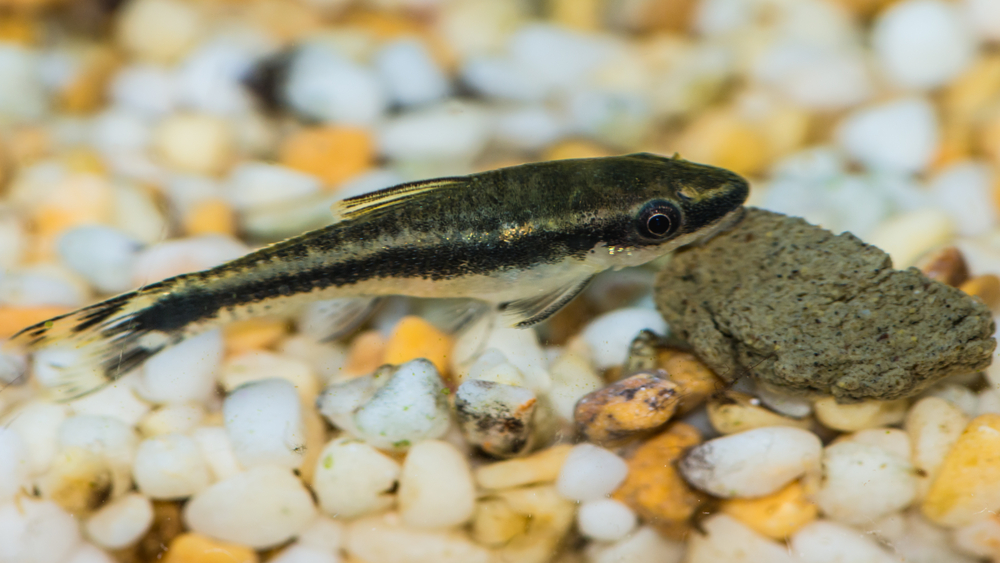
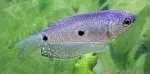
Longitudinally striped lattice-barred loricariid catfish
Otocinclus vittatus
Profile
The Otocinclus is a schooling fish and should always be kept in groups of at least 6–10 individuals. Profile
Family: Loricariidae (Loricariidae)
Home: South America – especially Brazil, Peru, Colombia in smaller rivers & tributaries.
Synonyms: dwarf suckermouth catfish, ear lattice loricariid catfish, Oto, Otocinclus affinis (common but incorrect trade name)
First introduction: Established in the aquarium hobby since the 1970s.
Size: 3.5–5 cm
Sexual differences: Females are often rounder and larger. Males remain smaller and slimmer Differences subtle → best recognised in a group
Diet: Mainly plant-based Algae growth (biofilm) Special food for growth eaters Vegetables: cucumber, courgette, spinach Only little protein food – sensitive to incorrect diet
Temperature: 22–28 °C
Tank size: From 60 litres, larger is better as they are very social.
Water values: pH: 6.0–7.5
Longitudinally striped lattice-barred loricariid catfish
Area of origin
Otocinclus vittatus lives in clear, oxygen-rich waters of the Amazon and Orinoco regions. Mostly in shallow river zones with dense vegetation, plenty of plants and roots.
Species
The genus Otocinclus includes around 19 species. Many look very similar. The species frequently offered in the pet trade include
- Otocinclus vittatus
- Otocinclus macrospilus
- Otocinclus affinis (usually misnamed - true species rare)
- Otocinclus cocama (Zebra Otocinclus - rare)
Social behaviour
Extremely peaceful. Very social - active and relaxed in groups. Shy when kept alone. Ideal for community tanks with small, calm fish. Perfect algae eaters (especially green algae & growth)
Keeping conditions
Well-planted aquarium with plenty of surfaces to graze on. Not a newer, "sterile" aquarium - need biofilm! Soft to medium-hard water. High oxygen levels. No aggressive co-inhabitants. Caution with medication → sensitive to chemicals
Breeding
Rare in the aquarium, but possible. Group spawners. Males engage in courtship → Females attach eggs to discs and plants. Parents occasionally eat eggs. Juveniles require the finest growth food / spirulina-based powdered food. Very sensitive rearing.
Bpeculiarities
One of the best algae eaters for small aquaria. Very peaceful and ideal for shrimp tanks (does not eat juveniles). Very sensitive during transport and acclimatisation. Needs stable water values and regular feeding with green food. Must be kept in groups.
Conclusion
Otocinclus vittatus is an extremely peaceful, useful and social dwarf catfish that is particularly well suited to planted, quiet aquaria. It is an excellent algae eater, but needs stable water values, good acclimatisation and always a group. Properly cared for, it is a valuable and friendly helper in the aquarium.
If you have any questions or problems, our trained team at Zoo Roco is here to help. They can provide expert advice on all matters.
Login
Suggested products






Customers also saw