Beagle

FCI standard number: 161

Country of origin: Great Britain

Classification: FCI Group 6 (running dogs, sweating dogs and related breeds)

Height at withers female: 33-40 cm

Height at withers male: 33-40 cm

Weight female: often approx. 9.1-10.4 kg

Weight male: often approx. 10.0-11.3 kg

Coat colour: e.g. tricolour (black, tan, white), lemon and white, red and white, black and white, also all white; others mentioned in the standard

Coat texture: short, dense, weather-resistant

Neck circumference: often around 35 cm, heavier Beagles can be longer; please measure on the dog.

Product information "Beagle"

Beagle profile


History of the Beagle

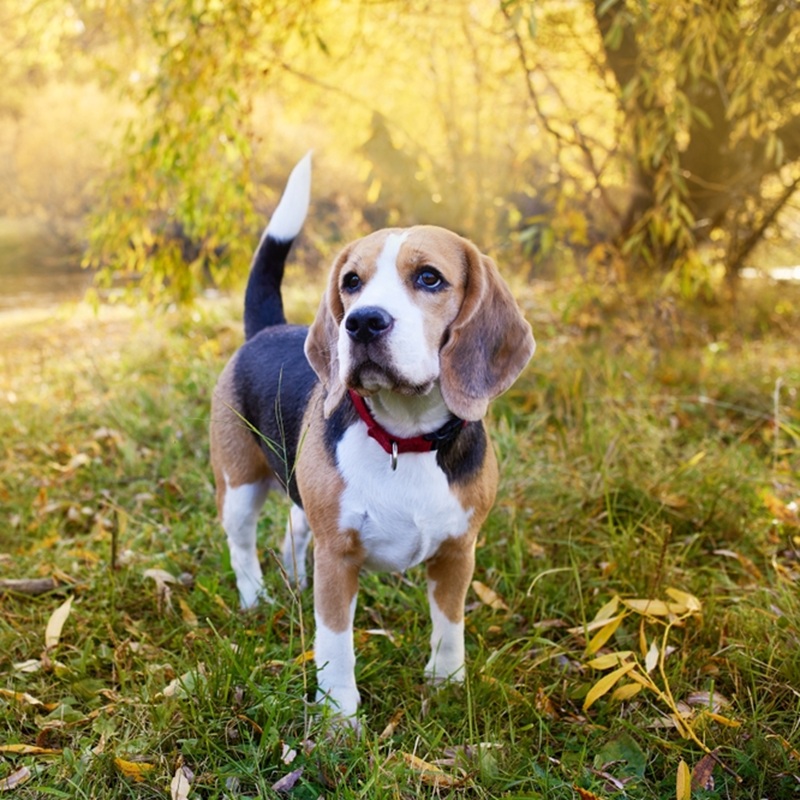
The FCI standard describes the Beagle as a running dog from Great Britain, which traditionally hunts in packs and mainly follows the hare hunt over its nose.


Appearance

Body shape: You get a strong, compact running dog that looks athletic without appearing coarse. Coat: Short-haired, dense and practical in everyday life, as it sheds dirt and weather well. Temperament and


character

The Beagle is considered cheerful, attentive, intelligent and friendly, with no signs of aggression or fearfulness, although the nose often leads the way in everyday life.


Grooming

They usually require little grooming (regular brushing is sufficient), but their ears, claws and teeth should be checked consistently, as the drooping ears can require care. Health Frequently mentioned conditions include hypothyroidism, allergies, epilepsy and back problems such as IVDD; ear problems are also an issue that you should keep an eye on.


Training

The best way to achieve your goal with Beagles is through calm consistency, clear rules and reward training. Realistically, management often helps with recall (drag line, secured free-running zones) because smells can be a strong motivator.


What special features does this breed have

The Beagle is a pronounced "nose dog" and likes to work persistently on tracks. At the same time, it can have a clear "voice", which is important in noisy living situations.


Suitable for first-time dog owners?

Yes, often yes, if you have patience, consistency and a desire for nose work and do not expect the recall to be a matter of course.


Family dog or not?

In many cases, yes: Beagles are usually friendly and social, fit in well with active families, but need clear rules and enough activity to keep them relaxed in everyday life.

Composition
Feeding recommendation
Technical details
Size information

0 of 0 reviews

Give us a rating!

Share your experience with the product with other customers.


Suggested products

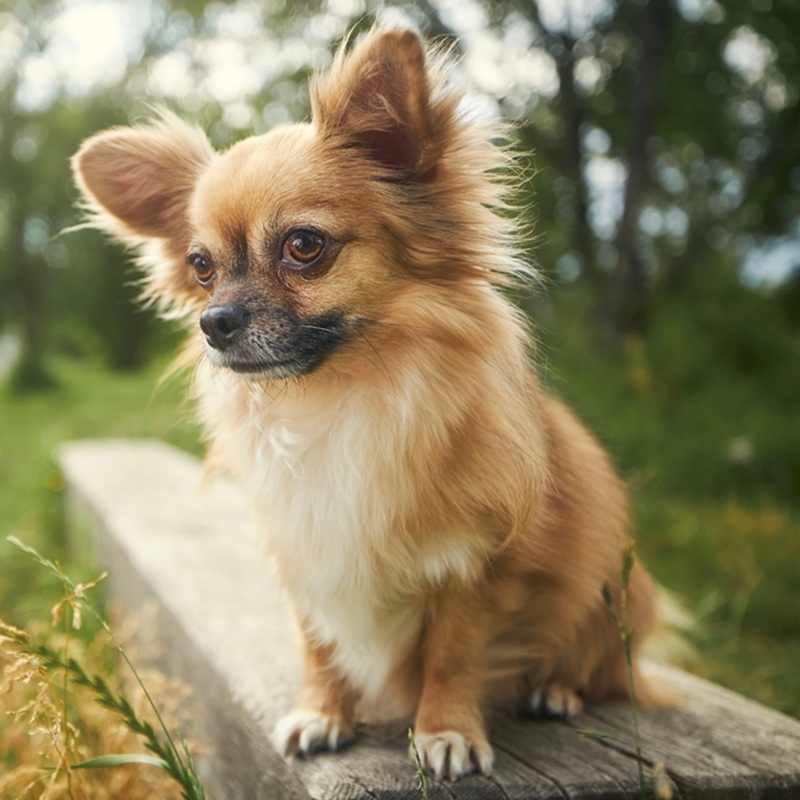
Chihuahua
Chihuahua shorthair or longhair profileHistory of the ChihuahuaThe Chihuahua is considered a very old breed from Mexico and bears the name of the Mexican state of Chihuahua. In older descriptions, the connection to the "Techichi", a small type of dog from pre-Columbian times, is often mentioned.AppearanceBody shape: They get a very small, compact dog with an alert expression and large ears. The "apple head" (domed skull) is typical of the Chihuahua. Coat: The coat of the shorthair is smooth and close-lying. Longhairs are longer, silky and show feathering (e.g. on ears and tail), without a "flowing" coat.Nature and characterMany Chihuahuas are very affectionate, attentive and courageous in appearance. They are often closely attached to their caregiver and can be reserved towards strangers if they do not establish socialization and calmness early on.GroomingGrooming is usually straightforward: short-haired Chihuahuas often only need occasional brushing, while long-haired Chihuahuas should be brushed more regularly to prevent tangles. Consistent dental care is also worthwhile, as small breeds are more prone to dental problems.HealthYou should pay particular attention to typical breed issues such as patellar luxation, tracheal collapse, dental problems, hypoglycemia (especially in very small, young dogs) as well as hydrocephalus and an open fontanel.TrainingThe best way forward is with friendly consistency and reward training. Important early on: house-training routine, calm development of staying alone, leash training (without pulling on the neck, better well-fitting harness) and clear boundary management so that the dog does not "control everything".What special features does this breed haveThe Chihuahua is a real companion dog: very small, often very people-oriented and likes to be everywhere. At the same time, it is physically more sensitive than many larger dogs (cold, falls, overloading), which is why you should give more thought to protection, weight and a safe environment.Suitable for first-time dog owners?Often yes, if you remain consistent, take small dog issues seriously (teeth, heat/cold, safety) and work on socialization and calmness early on. If you want a dog that is "automatically inconspicuous" without training, it can be difficult despite its size.Family dog or not?This may be suitable if children are calm and considerate and you consistently avoid falls, picking up and rough play. In very turbulent households, management is important so that the small dog is not overwhelmed or injured.
 
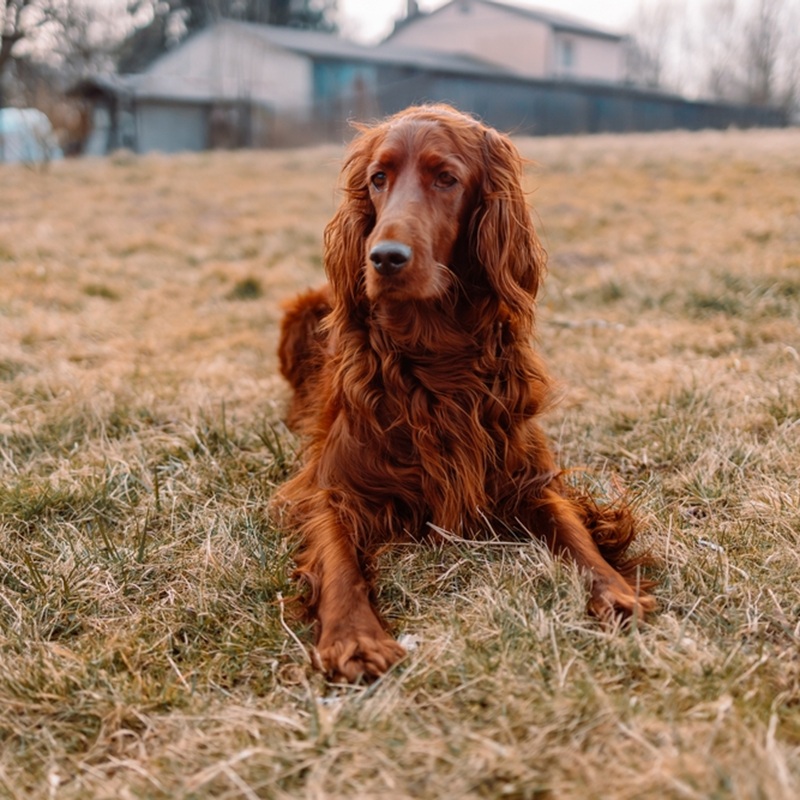
Irish Setter
The Irish Setter History The Irish Setter, or more precisely the Irish Red Setter, was bred in Ireland as a hunting dog for bird hunting. The breed originated from the Irish Red and White Setter and solid red dogs and was already clearly recognisable as a separate type in the 18th century. The Irish Red Setter Club was founded in 1882 and published a breed standard in 1886; later, field trials and working guidelines were also established. Appearance Body shape: The Irish Setter is an elegant, athletic and well-balanced dog with a lean, athletic build. It appears capable, agile and enduring, without appearing heavy or coarse. Typical features include a deep chest, good musculature and an overall harmonious, racy appearance. Coat: The coat is one of the breed’s most striking features. It is red to chestnut, smooth to slightly wavy and lies close to the body. On the ears, chest, belly, legs and tail, it displays distinct, silky feathering. Nature/character The Irish Setter is considered to be friendly, intelligent, lively and very people orientated. He is alert, spirited and full of drive, but at the same time usually affectionate and closely attached to his family. His cheerful, open nature is typical. Due to his hunting disposition, he brings a lot of energy, joy of movement and often also a clear will to track and search. Grooming Grooming is generally manageable, but should be done regularly. The silky feathering on the ears, chest, belly, legs and tail in particular must be brushed to prevent matting. In addition, ears, paws, claws and teeth should be checked, especially after walks in tall grass, woods or fields. Health The Irish Setter is generally regarded as an active and powerful breed, but certain health problems can occur. These include hip dysplasia and various eye diseases such as progressive retinal atrophy. As with other athletic, larger dogs, responsible breeding, a healthy body weight and sensibly monitored growth are also important. Education Training should be friendly, clear and consistent. The Irish Setter is smart and eager to learn, but also temperamental and easily distracted, especially when game odours or movement stimuli come into play. Early socialisation, recall training and a good balance of exercise, nose work and mental exercise are particularly important. Harsh methods do not suit this sensitive, people-orientated breed.  What are the special features of this breed? What is special about the Irish Setter is the combination of elegance, passion for hunting and a cheerful temperament. It is not a cosy companion dog, but an enduring, very active dog with a real working disposition. At the same time, he is often extremely charming, playful and friendly towards people. His bright red coat also makes him instantly recognisable. Suitable for first-time dog owners? Conditional. A committed first-time dog owner can get on well with an Irish Setter if there is enough time, willingness to exercise and willingness to learn. However, the breed is not always easy because it needs a lot of exercise, consistent training and good management of the hunting instinct. If you are looking for a calm, undemanding beginner's dog, an Irish Setter is usually not the best choice. Family dog or not? Yes, in principle the Irish Setter can be a very good family dog. He is usually friendly, affectionate and playful and often seeks to be close to his humans. They are best suited to active families who spend a lot of time outdoors and enjoy keeping a lively and active dog busy. Without sufficient exercise and activity, he often becomes unbalanced in everyday life.
 
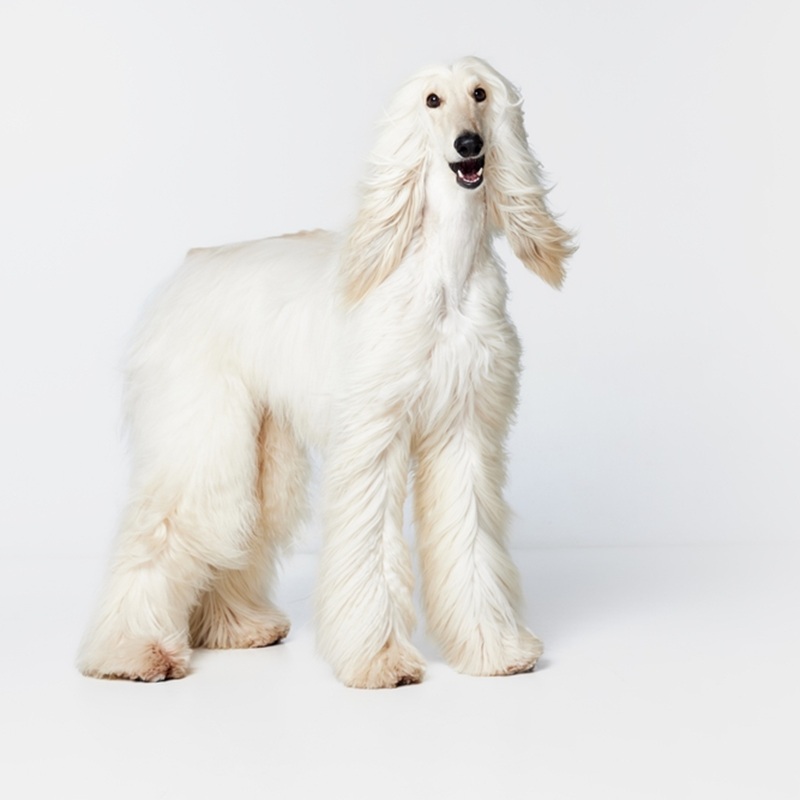
Afghan Hound
The Afghan HoundHistory of the Afghan SighthoundVery old sighthound breed from Afghanistan, originally used for hunting (sight hunters) in mountainous/rough regions; in Europe the Afghan Hound became particularly well known and further established in the early 20th century.AppearanceBody shape: large, elegant, tall, strong and athletic with an "aristocratic" expression; the ring-shaped curved tail is also typical.Coatvery long and fine, with a distinctive "hairstyle" (ears/legs very hairy), plus often a shorter "saddle" on the back.Temperament/characterDistant and dignified towards strangers, loyal to the family, sensitive and independent ("not always wanting to please").GroomingVery high. Regular (often daily) brushing/de-matting and frequent bathing are realistic, otherwise the fine hair will quickly become matted. Plus: ear care (long ears increase the risk of moisture/dirt).HealthFrequently mentioned topics: Hip dysplasia, cataract/eye problems, hypothyroidism. Typical for sighthounds: More sensitive to anesthesia (low body fat percentage) and increased risk of bloat/gastric torsion due to deep chest.TrainingConsistent, calm leadership and positive reinforcement are important; recall/leash walking can be challenging due to hunting instinct/independence (safety: fenced areas, drag line).Special features of the breedExtremely striking, long silky coat (grooming is the "dealbreaker" no. 1). Sprinter at heart: needs safe opportunities to race (e.g. sighthound sport/lure coursing), otherwise he quickly becomes unbalanced. Sensitive + independent: not the "always-listening" dog.Suitable for first-time dog ownersRather limited. If you have the time/desire for a lot of grooming and approach training in a patient, structured and sighthound-friendly way, it can work - but overall the breed is often recommended for more experienced owners.Family dog or not?Yes, but with restrictions: Often very good with their own family, yet rather sensitive and not "robust". Depending on the dog/family routine, it can be more difficult with (small, noisy) children; calm handling and places to retreat to are important.
 
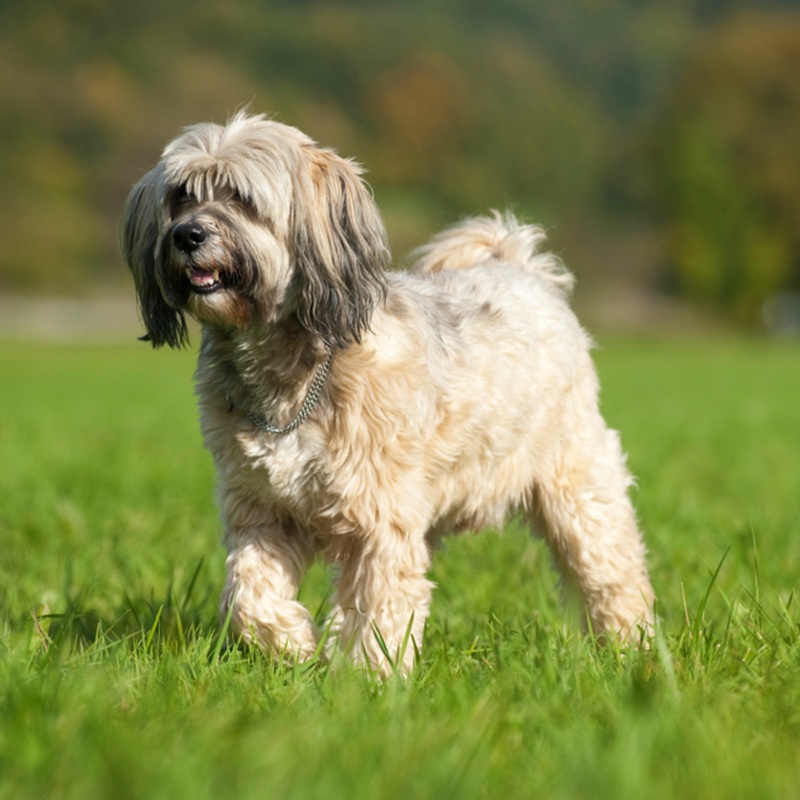
Bolonka Zwetna
Profile Bolonka ZwetnaHistory of the Bolonka ZwetnaThe Bolonka Zwetna is a small companion dog from Russia. According to the VDH, the first standard was created and confirmed in the 1960s, after which the breed continued to develop as a colored lapdog type.AppearanceBody shape: You will get a small, compact dog that looks rather square and should be sturdily built despite its miniature size. Coat: The long coat falls in waves or curls and is the most striking feature of the breed.Nature and characterMany Bolonkas are cheerful, affectionate and very people-oriented. They often don't like to be left alone, but they like to be everywhere in everyday life.GroomingYou should brush and comb the coat regularly to prevent it from matting, especially on the ears, armpits, belly and "pants". A regular grooming routine is more important than infrequent "big jobs".HealthAs a small breed, the Bolonka is often considered to be quite robust, but breed-typical issues such as patellar problems (patella) and tartar in small dogs are something you should keep an eye on (preventive breeding and dental care help).TrainingThey usually do well with friendly consistency and reward training. Because Bolonkas are very people-oriented, bonding often works easily, but early training for staying alone and everyday calmness is important.What special features does this breed haveThe Bolonka is a typical companion dog: small, likes to be close to its body and is often very focused on its owner. This makes it a great everyday partner, but can lead to problems when left alone without training.Suitable for first-time dog owners?Often yes, if you allow time for closeness, grooming and consistent basic training. It is particularly important that you clearly establish topics such as staying alone, leash training and rules in the household right from the start.Family dog or not?As a family dog, it can be a good fit if children are calm and considerate with a small dog. In very wild households, management is important so that the dog is not overwhelmed.
 
Greater Swiss Mountain Dog
The Greater Swiss Mountain Dog Its history The Greater Swiss Mountain Dog originates from Switzerland and is one of the old farm and working dogs of the Alpine region. It was formerly used as a guard dog, draught dog and herding dog. For a long time, the breed was considered to have almost disappeared until it was specifically promoted again at the beginning of the 20th century. Today, it is mainly kept as a family, guard and companion dog. Appearance Body shape: Strong, large, muscular and harmoniously built. The body is slightly longer than high, with a broad chest, strong back and powerful limbs. Despite its mass, it does not appear clumsy, but expressive and resilient. Coat: The coat is dense, weatherproof and easy to care for. Typical is the tricolored pattern with black base color, rust-red markings on the cheeks, above the eyes, on the chest and legs as well as white markings on the head, chest, paws and tip of the tail. Temperament/character The Greater Swiss Mountain Dog is considered to be self-confident, calm, attentive and people-oriented. He is very loyal to his family and usually shows a balanced, friendly nature. He is often alert and reserved towards strangers, without unnecessary aggression. He has a mind of his own, but is reliable and loyal when well bonded. Grooming Grooming is generally uncomplicated. Regular brushing is usually sufficient, but more frequent brushing is recommended during the shedding season. Ears, claws and teeth should be checked and groomed. Because of its size, care should also be taken to ensure that it has a suitable weight and is exercised in a way that is easy on the joints. Health Like many large dog breeds, the Greater Swiss Mountain Dog can also be prone to joint problems such as hip dysplasia and elbow dysplasia. Gastric torsion is also an important issue, which is why feeding and exercise should be well coordinated. Reputable breeding, controlled growth at a young age and a healthy body weight are particularly important. Training Training should be calm, clear and consistent. Harsh methods are unsuitable, as the breed can react sensitively to unfair treatment. The Greater Swiss Mountain Dog learns well, but needs a close bond, patience and confident leadership. Early socialization is important so that it reacts calmly and confidently to environmental stimuli. What are the special features of this breed? This breed has a lot of strength, size and alertness. A Greater Swiss Mountain Dog is not a dog to be kept on the side. It needs plenty of space, a close family bond and people who can lead it reliably. Its mixture of calmness and protective instinct is also typical. Many representatives of the breed mature rather late and appear youthful for a long time. Due to their size, they can be very physically present in everyday life, which should not be underestimated. Suitable for first-time dog owners? Conditionally. For motivated and well-informed first-time dog owners, the breed may be possible, but it is not the easiest choice. Their size, strength, independence and protectiveness require good, consistent training and a great sense of responsibility. If you have little dog experience, you should prepare yourself intensively and ideally work with a dog school or trainer. Family dog or not? Yes, the Greater Swiss Mountain Dog is generally a good family dog. He is affectionate, loyal and usually very close to his caregivers. They can be friendly and patient with children. Because of its size and strength, however, it should always be handled under supervision. It is particularly suitable for families who have enough space, time and understanding for a large, hard-working and alert dog.
 
Small poodle
Small Poodle History of the Poodle The poodle is one of the old European dog breeds and was originally used as a water dog. It was strongly influenced and further developed in France in particular, which is why France is now considered the country of origin. Over time, the larger working dog developed into different size variants, including the small poodle. Later, the poodle became known primarily as an intelligent companion, show and family dog. Appearance Body shape: The Small Poodle has a harmonious, elegant and well-proportioned build. It appears neither clumsy nor fragile, but lively, proud and agile. Typical are the rather square overall impression, the fine but not weak bone structure and a springy, light movement. Coat: The coat is one of the most striking characteristics of the breed. It is dense, fine and strongly curled or formed in cords. The Small Poodle usually sheds very little, but needs regular and careful grooming. Nature/character The Small Poodle is considered to be very intelligent, attentive, playful and people-oriented. They learn quickly, enjoy working with their people and are often extremely adaptable. Many small poodles are friendly, alert and sensitive without being overly nervous. Thanks to their intelligence and keen powers of observation, they often react very clearly to the mood and everyday life of their caregivers. Grooming Grooming is more complex than many people initially think. The coat must be regularly brushed, combed and cut or clipped at sensible intervals so that it does not become matted. Ears, claws, teeth and eyes should also be checked regularly. Because the coat sheds so little, loose wool often gets caught in the coat and must be actively removed. Health The small poodle is generally considered to be a fairly robust and long-lived variety. Nevertheless, attention should be paid to responsible breeding. Depending on the line, patella problems, eye diseases, dental problems or hereditary diseases can play a role. Regular veterinary checks, good weight management and a reputable breeding base are important. Training The small poodle is generally very easy to train. It learns quickly, is attentive and often wants to work closely with its owner. It responds best to friendly, clear and consistent training. Harsh methods are unsuitable because many Poodles react sensitively. With early socialization, variety and meaningful mental activity, the small poodle usually develops into a very pleasant companion. What are the special features of this breed? What is special about this breed is the combination of intelligence, elegance and a great love of learning. The small poodle is usually much more than just a pretty companion dog. They are often very attentive, athletic and versatile, for example in everyday life, dog sports or mental tasks. They also have a special coat that sheds very little but requires a lot of grooming. Suitable for first-time dog owners? Yes, the small poodle is often very suitable for first-time dog owners. They are usually smart, cooperative and easy to train. The important thing is not to underestimate them. Even a small to medium-sized poodle needs training, activity and regular grooming. If you are prepared to do this, you will often find a very pleasant beginner's dog. Family dog or not? Yes, the small poodle is generally a very good family dog. They are usually friendly, playful and closely bonded to their humans. They generally feel very comfortable in a family with loving consistency, sufficient activity and respectful treatment. Due to its adaptability, it often suits both active families and quieter households.
 
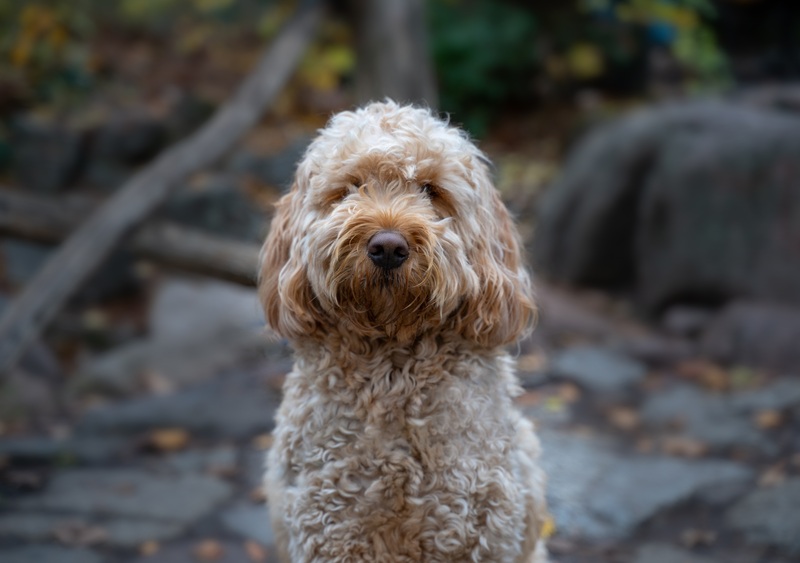
Labradoodle
The Labradoodle History of the Scottish Terrier The Labradoodle originated in Australia from the deliberate mating of Labrador Retrievers and Poodles. The aim was to create an intelligent, friendly companion dog that was as allergy-friendly as possible. This later developed into the Australian Labradoodle, for which breeding associations now work with their own pedigrees, health programmes and standards. At the same time, these associations themselves emphasise that the Australian Labradoodle is still seen as a breed in development and is not recognised by the FCI or AKC. Appearance Body type: The Labradoodle does not have a globally standardised build, as it is not an FCI-recognised breed with a binding standard. Depending on the line, it may look more like a retriever, a poodle, or a mix of both. Many Labradoodles are medium to large in size, athletic, well-proportioned and quite agile. In the case of the Australian Labradoodle, breeding focuses specifically on achieving as balanced and family-friendly an appearance as possible. Coat: The coat is one of the most striking features. It can be soft, fleece-like, wavy or curly. Breeders often advertise minimal shedding, but coat texture and hair can vary significantly depending on the mating. Particularly with non-standardised Labradoodles, the coat is less predictable than with recognised breeds. Nature/character Labradoodles are often considered to be friendly, people orientated, smart and eager to learn. Many are described as outgoing, social and approachable. However, their temperament is not quite as predictable as that of a long-established breed, as temperament and characteristics can vary depending on the parents and breeding line. In the Australian Labradoodle in particular, the aim is to produce a social, trainable dog that is suitable for everyday use. Grooming Grooming depends heavily on the coat type. Wavy and curly Labradoodles in particular need regular brushing and combing to prevent the coat from matting. Many dogs also need to be professionally cut or trimmed. Ears, claws, teeth and eyes should also be checked regularly. The often dense, soft coat in particular can require more care than many people initially expect. Health The health situation depends heavily on the quality of the breeding. Reputable associations for the Australian Labradoodle require health examinations such as hip and elbow assessments, DNA profiles and other tests for breeding animals. Nevertheless, depending on the line and parent animals, problems can occur that are also known from Labradors or Poodles, such as joint problems, eye diseases or other hereditary issues. Because the Labradoodle is not a uniformly regulated FCI breed standard, careful selection of the breed is particularly important. Education Labradoodles are often easy to train because they are smart, people-orientated and eager to learn. They benefit from friendly, clear and consistent leadership. Early socialisation, basic signals suitable for everyday use and sufficient mental and physical activity are important. Underchallenge can quickly lead to undesirable behaviour in intelligent, active dogs.  What are the special features of this breed? The most special feature is that although the Labradoodle is very well known, it is not an FCI-recognised breed with a uniform worldwide standard. This means that size, coat, temperament and health predictability can vary more than with established breeds. Although there are organised breeding associations with standards and health rules for the Australian Labradoodle, the population is still described as a breed in development. It is precisely this mixture of popularity, variability and partially controlled further development that makes the Labradoodle special. Suitable for first-time dog owners? Yes, a Labradoodle can often be suitable for first-time dog owners if it comes from responsible breeding and its needs are taken seriously. Many Labradoodles are friendly, co-operative and suitable for everyday life. However, it should not be underestimated that energy levels, coat care and character can vary significantly depending on the line. This is why it is particularly important to choose a reputable breeder. Family dog or not? Yes, the Labradoodle is very often kept as a family dog. Many representatives are friendly, social and very people orientated. They are particularly well suited to families who have time for training, activity and grooming. However, because the Labradoodle is not a standardised FCI breed, it is worth taking a particularly close look at the lineage, parents and breeding.
 
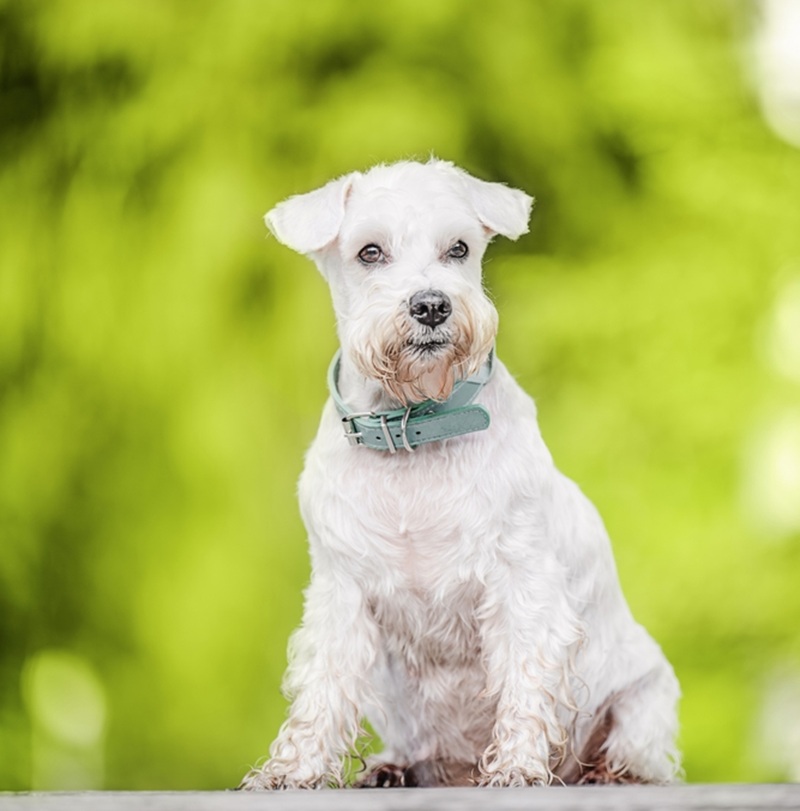
Miniature Schnauzer
The Miniature SchnauzerHistory of the Scottish TerrierThe Miniature Schnauzer originated around the turn of the century in the Frankfurt am Main area and was initially known as the rough-haired Miniature Pinscher. The aim was to create a small dog with the character and appearance of the Schnauzer, without dwarf-like exaggerations.AppearanceThe Miniature Schnauzer is a small, strong, stocky rather than slender, rough-coated dog. It is said to be the miniature version of the Schnauzer and appears alert, robust and compact. Body shape: Squarely built, with the height at the withers roughly corresponding to the body length; strong, compact and well proportioned.Coat: Wiry, dense and weatherproof, with a distinctive beard and bushy brows. Nature/characterThe Miniature Schnauzer is considered to be smart, lively, alert and fearless. The FCI describes it analogously with the characteristics of the Schnauzer in a small form: benign, playful, spirited and alert.GroomingThe coat needs regular brushing and, in this breed, usually also professional trimming to maintain the typical wiry structure. The beard, eyebrows and legs require additional grooming because dirt easily accumulates there. HealthThe FCI standard requires functionally and clinically healthy breeding animals. The Miniature Schnauzer is generally considered to be a fairly robust small dog, but responsible breeding is important as always. The standard itself does not give a detailed list of typical breed diseases.EducationThe Miniature Schnauzer is eager to learn and attentive, but needs clear, friendly consistency. Because of its alertness and self-confident terrier temperament, you should work on socialisation, leash training and controlled alert behaviour at an early age.What are the special features of this breed?His distinctive Schnauzer head with beard and brows, wiry coat and mixture of small size and great self-confidence are what make him special. He is not a fragile lap dog, but an alert, robust and rather present companion dog.Suitable for first-time dog owners?Yes, often well suited. The Miniature Schnauzer can be very suitable for motivated beginners because it is manageable, intelligent and suitable for everyday use. However, you should be prepared to deal with its alertness, temperament and grooming requirements.Family dog or not?Yes, in many cases a good family dog. He is affectionate, lively and robust enough for an active everyday life, as long as he is treated with respect and kept busy in a meaningful way. They usually do well in families with clear rules and regular grooming.
 
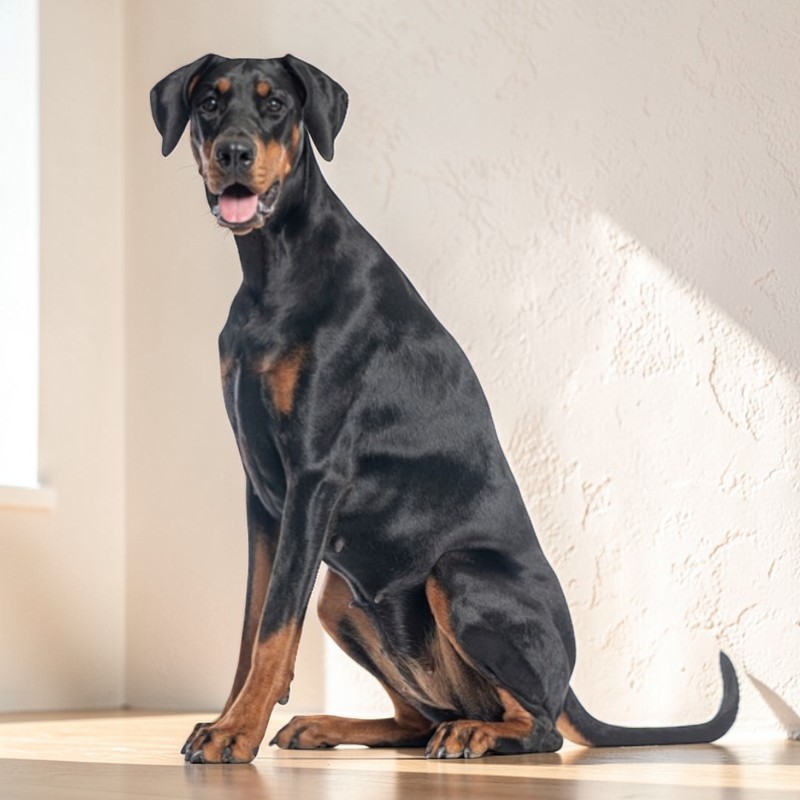
Doberman
The DobermanHistory of the Scottish TerrierThe Dobermann is the only German dog breed to be named after its first known breeder: Friedrich Louis Dobermann. In the 19th century, the breed was developed as a vigilant, sharp and resilient guard and working dog and was later also used as a police and service dog.AppearanceBuild: medium to large, strong, muscular and at the same time very elegant. Typical are the proud posture, the clear lines and the athletic, almost square build. He appears powerful, determined and very present.Coat: The coat is very easy to care for because it is short and smooth. It provides less protection against the cold than densely coated breeds with an undercoat, which is why many Dobermans are more sensitive in winter or when wet.Nature/characterAccording to the FCI, the Doberman should have a friendly and peaceful disposition, be very affectionate in the family, with a medium temperament, medium keenness, good manageability, willingness to work, self-confidence and fearlessness. The VDH also describes him as intelligent, attentive, robust and loyal; he is often initially reserved towards strangers.GroomingGrooming is uncomplicated; regular brushing and the usual claw, ear and dental care are usually sufficient. Exercise, activity and close social contact are more important for the Doberman than grooming. They are athletic and want to be challenged both physically and mentally.HealthHeart health and responsible breeding are particularly important for this breed. Frequently mentioned issues are dilated cardiomyopathy (DCM), von Willebrand's disease (vWD) and hip dysplasia (HD); VDH breeder websites mention heart examinations, genetic tests and HD examinations, among other things. Thyroid problems are also mentioned as a typical breed issue.EducationThe Doberman is very capable of learning and eager to work, but needs expert, calm and consistent leadership. His strength, alertness and sensitivity need to be channelled in the right direction. With fair training, early socialisation and clear rules, he is usually a very reliable partner.What are the special features of this breed?The Dobermann combines elegance, speed, alertness and a high willingness to work like hardly any other breed. He usually bonds very closely to his humans, is alert and quick to react, but also sensitive and not made for a side-by-side attitude. He needs closeness, structure and meaningful tasks.Suitable for first-time dog owners?Rather no. The VDH expressly describes it as not a four-legged friend for beginners because it is demanding and needs expert training. Dedicated beginners with very good guidance could keep him, but overall he is better suited to experienced dog owners.Family dog or not?Yes, in principle - but only if kept appropriately. The FCI standard expressly states that it should also be particularly suitable as a family dog. The VDH describes it as a loyal family dog with a close bond, high adaptability and good tolerance towards children. However, this requires good socialisation, sufficient exercise and competent training.
 
Australian Cattle Dog
Profile Australian Cattle DogHistory of the Australian Cattle DogThe Australian Cattle Dog was developed in Australia specifically for hard work with cattle: What was needed was an enduring, strong dog that could also control and drive difficult cattle. The standard describes the development from crosses of working collies with the Dingo, later with other influences.AppearanceBody shape: It is a strong, compact, symmetrically built working dog. He appears very muscular, agile and enduring without being clumsy.Coat: The coat is short to medium length, dense and weatherproof, with a distinct undercoat.Temperament and characterThe standard describes him as very intelligent, alert, courageous and reliable. At the same time, he is naturally suspicious of strangers and has a strong protective instinct.GroomingThe coat is generally easy to care for, but should be brushed more frequently when changing coat to remove undercoat. Overall, it needs much more attention than "hair care".HealthTypical issues mentioned are hip dysplasia and eye problems such as progressive retinal atrophy (PRA) and a genetic tendency to deafness.EducationHe is very capable of learning, but he needs clear rules, early socialization and meaningful tasks. Without guidance, he may try to "do" moving things (this includes nipping at heels), which must be properly trained early on, especially with children.What special features does this breed haveHe is a real working dog in family format: extremely persistent, clever, often very closely bonded to his caregiver and happiest when he is challenged physically and mentally on a daily basis.Suitable for first-time dog owners?Only to a limited extent. If you are really sporty, take training seriously and offer consistent activity, it can work. It is usually too demanding for "relaxed beginners" who are looking for an uncomplicated companion.Family dog or not?It can be a good family dog, but often more for active families with clear rules. Many descriptions emphasize that he can "herd" children and other animals if not trained early, and that he can be reserved towards strangers.
 
Greater Swiss Mountain Dog
The Gordon Setter History of the Scottish Terrier The Gordon Setter originates from Scotland and was bred there as an enduring hunting dog for bird hunting. The breed became particularly famous through the Duke of Gordon, who promoted it in the 18th and 19th centuries. The aim was to produce a powerful, elegant and robust setter with excellent tracking ability and close contact with humans. Today, the Gordon Setter is used both for hunting and as a sporting companion and family dog. Appearance Body shape: Strong, elegant and harmoniously built. The Gordon Setter is the heaviest of the setter breeds, but does not appear clumsy. He has a deep chest, a straight back and an overall athletic appearance. Coat: The coat is typically jet black with clearly defined chestnut-red markings. It is shorter on the head and the front of the legs, medium length on the body and clearly feathered on the ears, chest, belly, legs and tail. Nature/character The Gordon Setter is considered intelligent, loyal, sensitive and very people orientated. He is lively, attentive and eager to work, but often somewhat more serious and calm than other setters. He is very affectionate towards his family. Towards strangers he is usually more reserved than impetuous. He needs a close bond and feels most comfortable with clear, fair leadership. Grooming The coat needs regular grooming to prevent matting. Brushing several times a week is advisable, especially on the feathered areas. Ears, paws and teeth should also be checked. After walks in the woods and fields, it is important to check the coat and hangings for dirt, burrs or ticks. Health The Gordon Setter is generally considered a robust breed, but like many medium-sized to large dogs, it can be prone to hip dysplasia. Eye problems can also occur. Attention should also be paid to ear care, as the long hanging ears can favour inflammation. Responsible breeding, sufficient exercise and a balanced diet are important. Education Training should be loving, consistent and patient. The Gordon Setter is smart, but also sensitive and not suited to harsh methods. Its hunting disposition requires early training, especially in recall and impulse control. With good socialisation, clear rules and sensible exercise, he will develop into a reliable companion. What are the special features of this breed? The Gordon Setter has a great hunting instinct, stamina and a love of work. He is not a pure sofa dog, but needs both physical and mental activity. It is characterised by its close bond with its humans and its often somewhat more delicate, sensitive nature. Compared to other setters, he often appears somewhat more powerful, serious and calm, but still needs plenty of exercise and tasks. Suitable for first-time dog owners? Conditional. The Gordon Setter can be well suited to committed first-time dog owners with time, patience and a love of exercise. However, its hunting instinct, sensitivity and need for activity should not be underestimated. Without suitable exercise and consistent training, he can become difficult. Family dog or not? Yes, the Gordon Setter is basically a good family dog. He is affectionate, loyal and seeks to be close to his carers. In an active family with sufficient time, exercise and activity, he usually feels very comfortable. He can be friendly and patient with children, provided he is well socialised and treated with respect.
 
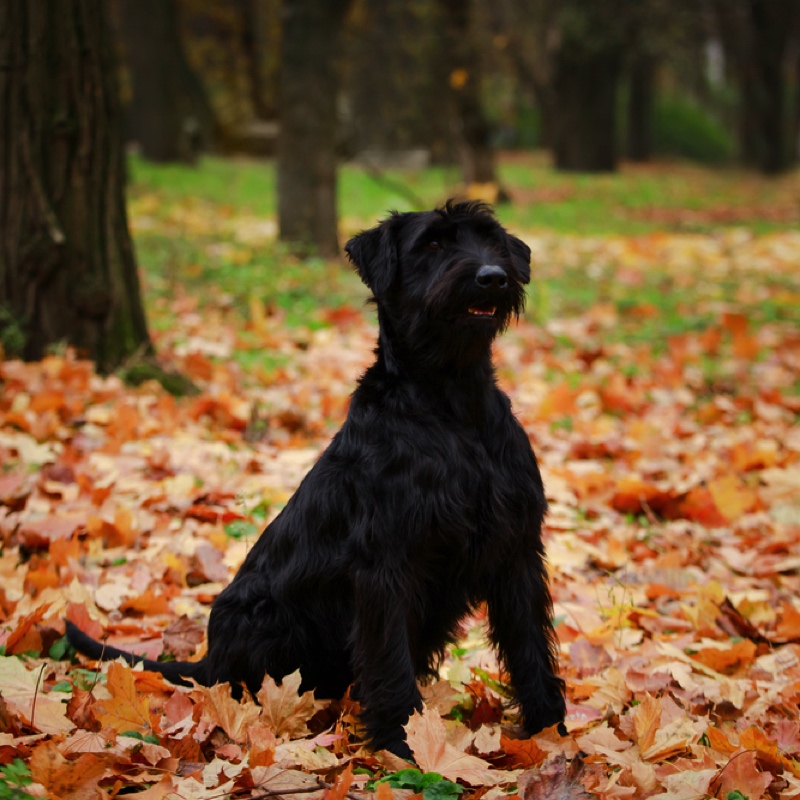
Giant Schnauzer
The Giant SchnauzerHistory of the Giant SchnauzerThe Giant Schnauzer originates from Germany. Originally, it was mainly used as a herding and farm dog in southern Germany. Around 1900, breeders recognized its suitability as a powerful working dog. It has been listed in the stud book since 1913 and was officially recognized as a service dog in 1925. AppearanceBody shape: The Giant Schnauzer is large, strong and compact rather than slender. It appears muscular, robust and alert, with an almost square format. Despite its strength, it should not appear clumsy, but harmonious and capable of working. Coat: The coat is typically schnauzer-like, wiry and hard. In addition, the distinctive bushy brows and the strong beard strongly characterize the expression of the breed. Pepper-salt, pure black with black undercoat and black-silver are permitted. Nature/characterThe Giant Schnauzer is considered to be self-confident, strong in character, alert and resilient. At the same time, it is described as benign, loyal and closely attached to its family. Its intelligence, trainability and high willingness to work are typical. It is precisely this mixture that makes him so interesting as a service and working dog.GroomingGrooming is more complex than it seems at first glance. The hard coat should be brushed regularly and dead hair must usually be removed by trimming to maintain the structure and function of the coat. In addition, ears, claws, teeth and paws should be checked regularly. HealthThe Giant Schnauzer is generally regarded as a hardy and efficient breed. Nevertheless, attention should be paid to responsible breeding. As with other large, athletic dogs, hip problems and other hereditary diseases can play a role, depending on the lineage. Controlled growth, good weight management and sensible physical exercise are also important. TrainingTraining should be clear, calm and consistent. The Giant Schnauzer is intelligent and capable of learning, but also self-confident and not simply eager to please. It needs early socialization, reliable rules and a meaningful task. Underchallenging or unclear leadership can quickly become problematic with this strong and alert breed. What are the special features of this breed?What makes this breed special is the combination of its striking Schnauzer appearance, strong personality and high working ability. The Giant Schnauzer is not only an impressive family dog, but also a versatile sporting, working and service dog. Its alertness, resilience and self-confidence make it special, but also require experienced and committed owners.Suitable for first-time dog owners?Only to a limited extent. A very committed and well-informed first-time dog owner can cope with a Giant Schnauzer, but the breed is not easy. Its size, strength, alertness and the need for clear guidance and activity make it more demanding than many typical beginner dogs.Family dog or not?Yes, in principle the Giant Schnauzer can be a good family dog. They are often loyal, affectionate and closely bonded to their humans. However, it is best suited to active, structured households that have time for training, activity and consistent leadership. It is not intended to be an uncomplicated dog for everyday life.
 

Customers also saw

Cavalier King Charles Spaniel
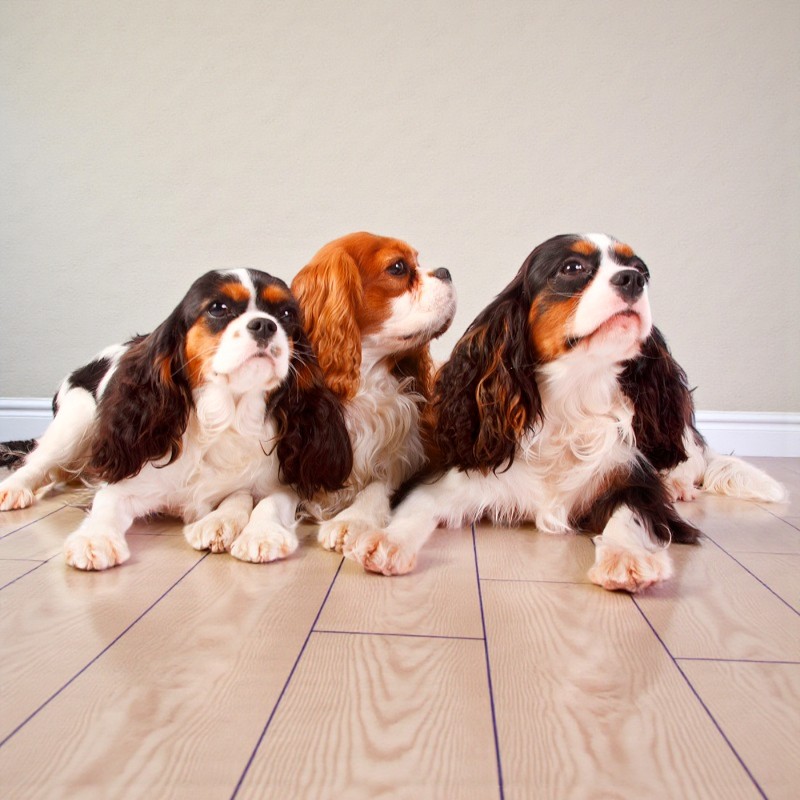
Cavalier King Charles Spaniel profileHistory of the Cavalier King Charles SpanielThe Cavalier King Charles Spaniel is a British companion spaniel, bred as a friendly companion dog and closely related to the classic spaniel types from Great Britain.AppearanceBody shape: You get a small, active and graceful dog with a balanced build and gentle expression. Coat The coat is a trademark: silky, longer, with feathering on ears, chest, legs, paws and tail; it should not be trimmed.Temperament and characterThe standard describes the Cavalier as adventurous, affectionate and absolutely fearless, cheerful and friendly, without quarrelsomeness and without a tendency to nervousness.GroomingYou should brush the coat regularly to keep it free of tangles, especially on the ear feathers, chest and "pants". In addition, routine care should be given to ears, claws and teeth, as small companion dogs are often more sensitive in these areas.HealthTwo issues are particularly well known in this breed: myxomatous mitral valve disease (common and typical of the breed) and chiari-like malformation/syringomyelia (a neurological problem that is more common in the breed). When choosing a breeder, make sure that the examinations are transparent and discuss preventive care (heart check/echo, neurological examination in the event of symptoms) with your vet.TrainingThey usually do well with friendly consistency and reward training. Early socialization, calm development of staying alone and a recall suitable for everyday use are useful so that the dog also remains responsive outside.What special features does this breed haveThe Cavalier is often a very affectionate "close-to-you" dog that likes to be everywhere. At the same time, you should take heart health and possible neurological abnormalities seriously and manage stress and weight well.Suitable for first-time dog owners?Often yes: If you train them consistently but in a friendly manner and keep an eye on health issues (especially heart health), the breed is often well suited to first-time owners.Family dog or not?In many cases, yes: Cavaliers are usually considered to be very friendly and fond of children if you train them calmly and the dog gets enough closeness, exercise and clear rules.
 
Jack Russell Terrier
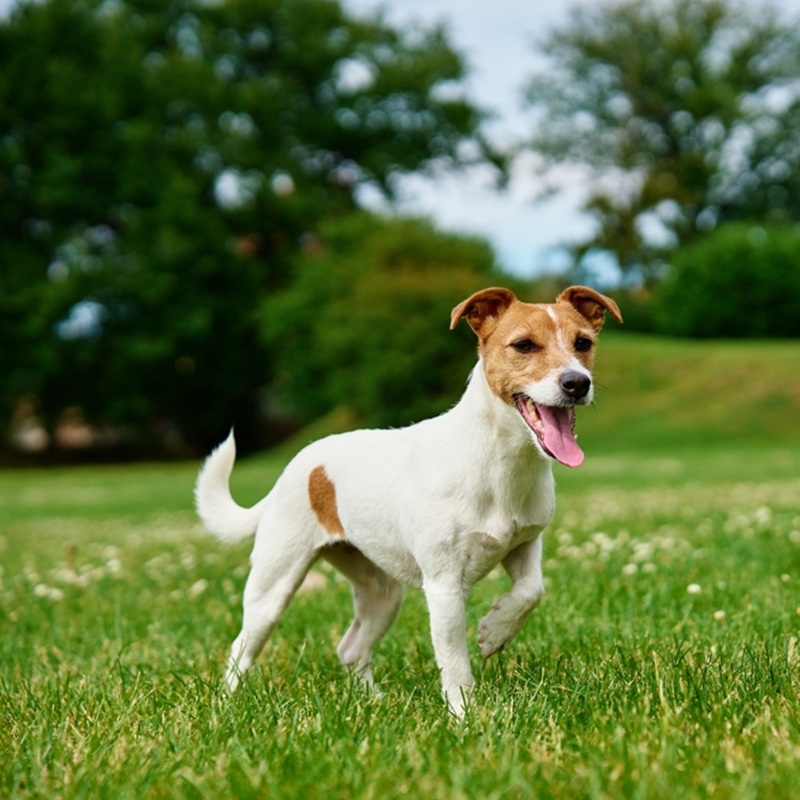
The Jack Russell Terrier History The Jack Russell Terrier goes back to the breeding work of the English reverend John Russell in the early 19th century. The aim was to create a small, hard-working terrier that could keep up with foxhounds and go to the den. These lines later developed into two similar but differently built types: the larger Parson Russell Terrier and the smaller, longer Jack Russell Terrier. The FCI lists Great Britain as the country of origin and Australia as the developing country of the breed. Appearance Body shape: The Jack Russell Terrier is a strong, active and rectangularly built working terrier. It should be agile, persistent and compact without appearing clumsy. Its good substance, lively charisma and functional build for working above and below ground are typical. Coat: The coat is weatherproof and can be smooth, rough or spiky. Typical is the predominantly white base colour with black or tan markings. The coat is functional and should protect the dog well at work. Nature/Character The Jack Russell Terrier is considered to be clever, smart, lively and very self-confident. He is alert, courageous and often surprisingly fearless for his size. At the same time, he is described as friendly and calm. His temperament, his eagerness to work and his typical terrier independence are typical. Grooming The grooming requirements are usually manageable. Smooth-haired dogs are particularly easy to care for, while rough-haired and spiky-haired varieties require a little more attention and often regular trimming. Ears, claws, teeth and paws should also be checked. Health The Jack Russell Terrier is generally regarded as a robust and hardy breed. Nevertheless, as with any breed, attention should be paid to responsible breeding, a healthy body weight and regular veterinary checks. Depending on the line, joint, eye or skin problems can occur. Training Training should be clear, fair and consistent. The Jack Russell Terrier is very intelligent and learns quickly, but also tests boundaries and has a strong mind of its own. Early socialisation, impulse control and appropriate exercise are particularly important. Harsh methods are unsuitable because they often create counter-pressure. What are the special features of this breed? What makes this breed special is its enormous energy in a small space. The Jack Russell Terrier is not a cosy small dog, but a real working terrier with a lot of temperament, courage and passion for hunting. He is often very resourceful, fast, persistent and mentally alert. It is this mixture of size, self-confidence and activity that makes him so distinctive. Suitable for first-time dog owners? Conditional. A committed and well-informed first-time dog owner can get on well with a Jack Russell Terrier if they have enough time, consistency and enjoy being active. However, the breed is not easy because it is temperamental, independent and quickly underchallenged. Family dog or not? Yes, the Jack Russell Terrier can basically be a good family dog. They are friendly, lively and often bond closely with their humans. However, they are best suited to active families who set clear rules and keep them physically and mentally busy. Without sufficient activity, he can quickly become exhausting in everyday life.
 
Cocker Spaniel
Cocker Spaniel profileHistory of the Cocker SpanielThe English Cocker Spaniel was bred to be a hunting dog and was traditionally used for hunting, including woodcock, from which the name "Cocker" is derived.AppearanceBody shape: You get a compact, athletic dog with a strong build designed for endurance and agility. Coat: The coat is of medium length, silky and with typical feathering. To keep it beautiful, it needs regular grooming, especially on the ears, chest and "pants".Nature and characterMany Cockers are cheerful, people-oriented, intelligent and eager to work. At the same time, they are often sensitive and, depending on their line and occupation, can quickly "turn on" if there is a lack of rest and structure.GroomingThey should be brushed regularly and knots untied early, especially on the ears and feathering. Ear care is also important because the long ears can promote ear infections.HealthTypical issues are ear problems as well as various hereditary diseases, which is why health examinations and proofs are very useful in breeding.EducationThey usually do very well with positive reinforcement, clear rules and consistent recall training. As many Cockers like to work with their nose, search games, retrieving and dummy training help to keep your dog balanced in everyday life.What special features does this breed haveThe Cocker is a search dog that loves to work: active and motivated outdoors, often pleasantly cuddly indoors when well exercised. The long, heavily feathered ears and the need for regular grooming and ear care are typical.Suitable for first-time dog owners?Often yes, if you are prepared to train consistently, groom regularly and keep the dog busy and mentally and physically active. If you are looking for a dog that "just works" without training and exercise, it may be more difficult.Family dog or not?In many cases, yes: many cockers are friendly, playful and fit well into active families, as long as exercise, activity and rest periods are right
 
Dachshund
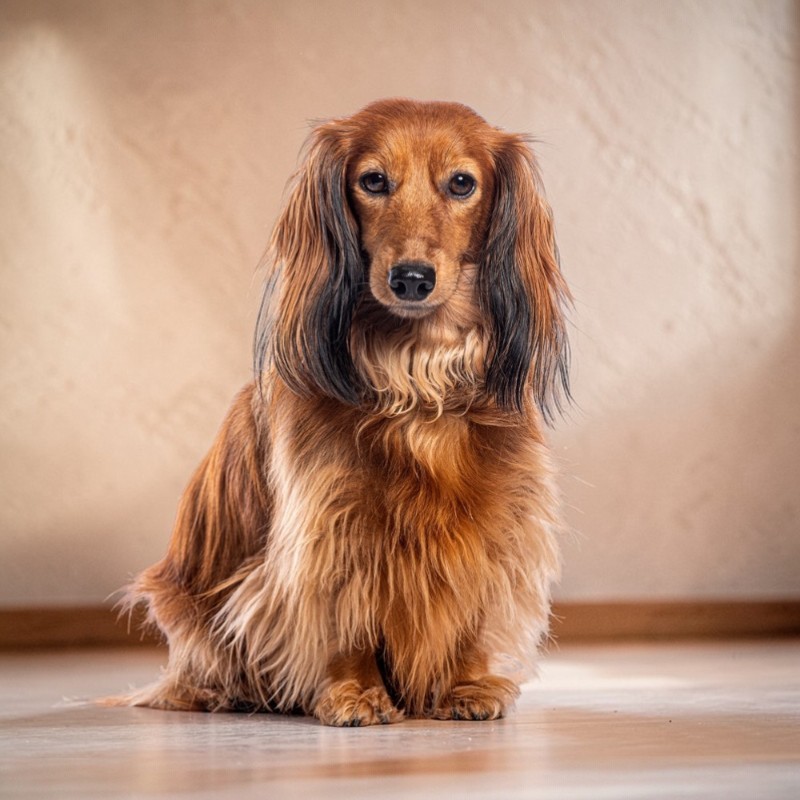
The Dachshund - Dachshund History of the DachshundThe Dachshund was bred in Germany as a hunting dog. Its physique is no "coincidence", but a tool: short-legged, long in the torso, very muscular and equipped with a lot of courage so that it could work under the ground and take defensive game such as the badger or the fox in the den. Over many decades, the now common varieties developed in three coat types and three sizes, so that the right dachshund could be used depending on the terrain, type of game and task.AppearanceBody shape: The Dachshund is low, elongated and yet compact. It appears strong and agile, with an alert expression and a self-confident demeanour. The distinct musculature is typical, because as a working dog it needs a lot of "body". A special feature of the Dachshund is that the sizes in the FCI standard are described by the chest circumference. Roughly speaking, there are standard, dwarf and rabbit dachshunds, which differ mainly in the size of their chest.Coat: There are three coat types in the Dachshund: the short-haired variety has a smooth, close-lying coat; the wire-haired variety has a wiry coat with a dense undercoat; and the long-haired variety has a softer, longer coat with feathering on the ears, chest and tail.Nature and characterDachshunds are often courageous, clever and very independent. This independence comes from their hunting role, where they have to make decisions in the den. At the same time, they can be very affectionate, but often have a mind of their own and like to test the rules. With people who lead in a friendly, clear and consistent manner, they develop into cheerful, alert companions with lots of personality.GroomingGrooming depends heavily on the type of coat. Short-haired Dachshunds are usually uncomplicated and mainly need occasional brushing and the usual grooming ritual for ears, claws and teeth. Long-haired dachshunds should be brushed regularly to prevent tangles from forming behind the ears, on the chest and on the "trousers". Rough-haired dachshunds often benefit from regular trimming to ensure that their coat remains functional and does not become matted. Regardless of the type of coat, it is particularly worthwhile ensuring that dachshunds have good body awareness: controlled stair climbing, no wild jumps from the sofa or bed and preferably work with ramps or low climbing aids, as their backs can be sensitive.HealthThe Dachshund's back is a central issue. The breed is considered to be significantly more susceptible to intervertebral disc disease (IVDD) than many other breeds, which can lead to severe pain or paralysis. Studies and analyses describe a relevant frequency depending on the variety; there are indications that certain varieties may be more affected than others. In practical terms, this means keeping slim, building up muscles, reducing jumping and lifting correctly (supporting the chest and hindquarters at the same time so that the back does not sag). These simple everyday measures are often cited as sensible preventative measures.EducationDachshunds are smart and independent. Training works best with clear rules, short exercises and positive rewards. Train recall and leash behaviour early on, take hunting instinct seriously (drag lead). Calmly control alertness and barking.What special features does the Dachshund have?Independent and "stubborn" in appearance: he thinks for himself and likes to make his own decisions - clear rules are important.Often has a pronounced hunting instinct: tracks, mouse holes and the smell of game are extremely exciting; recall needs training.Alert and eager to bark: many reliably report noises.Keep an eye on their back: Because of the long back, weight control, musculature and few jumps/steps are particularly important.Very people orientated: Many Dachshunds love closeness, but are not always "submissive".Suitable for first-time dog owners?Yes, but only to a limited extent. If you are prepared to train consistently (in a friendly but clear manner), establish a clean recall/leash and manage the hunting instinct, a Dachshund can be a good first dog. If you are looking for an "obedient" dog without discussion, it is often not ideal.Family dog or not?Yes - with conditions. It works well as a family dog if children are respectful, rules apply and the dog has places to retreat to. It is less suitable for very hectic households or rough children because it quickly becomes irritated and sets clear boundaries.