The Afghan Hound
History of the Afghan Sighthound
Very old sighthound breed from Afghanistan, originally used for hunting (sight hunters) in mountainous/rough regions; in Europe the Afghan Hound became particularly well known and further established in the early 20th century.
Appearance
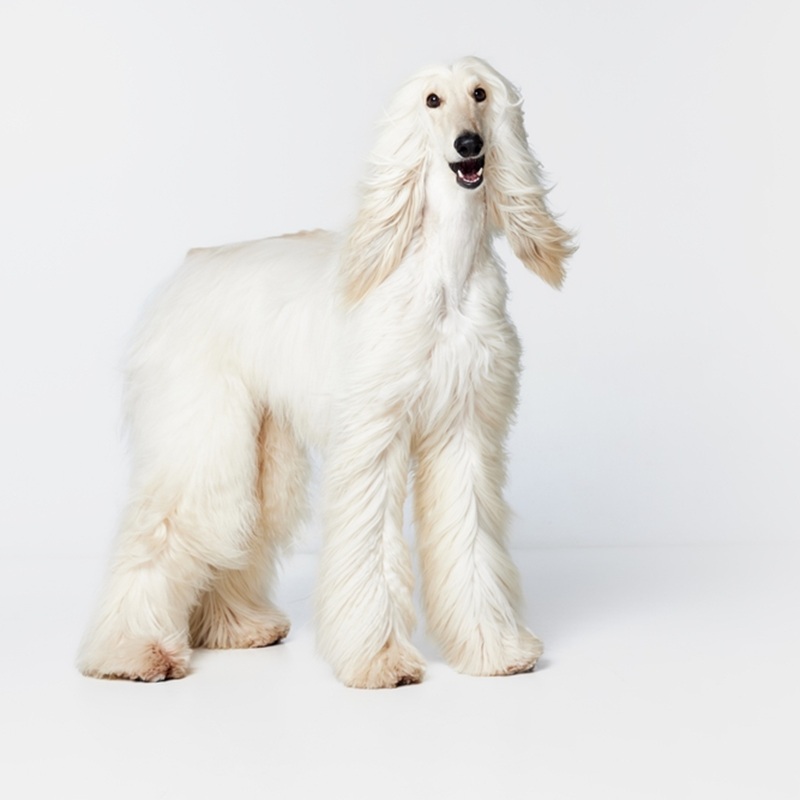
Body shape: large, elegant, tall, strong and athletic with an "aristocratic" expression; the ring-shaped curved tail is also typical.
Coat
very long and fine, with a distinctive "hairstyle" (ears/legs very hairy), plus often a shorter "saddle" on the back.
Temperament/character
Distant and dignified towards strangers, loyal to the family, sensitive and independent ("not always wanting to please").
Grooming
Very high. Regular (often daily) brushing/de-matting and frequent bathing are realistic, otherwise the fine hair will quickly become matted.
Plus: ear care (long ears increase the risk of moisture/dirt).
Health
Frequently mentioned topics: Hip dysplasia, cataract/eye problems, hypothyroidism.
Typical for sighthounds: More sensitive to anesthesia (low body fat percentage) and increased risk of bloat/gastric torsion due to deep chest.
Training
Consistent, calm leadership and positive reinforcement are important; recall/leash walking can be challenging due to hunting instinct/independence (safety: fenced areas, drag line).
Special features of the breed
Extremely striking, long silky coat (grooming is the "dealbreaker" no. 1).
Sprinter at heart: needs safe opportunities to race (e.g. sighthound sport/lure coursing), otherwise he quickly becomes unbalanced.
Sensitive + independent: not the "always-listening" dog.
Suitable for first-time dog owners
Rather limited. If you have the time/desire for a lot of grooming and approach training in a patient, structured and sighthound-friendly way, it can work - but overall the breed is often recommended for more experienced owners.
Family dog or not?
Yes, but with restrictions: Often very good with their own family, yet rather sensitive and not "robust". Depending on the dog/family routine, it can be more difficult with (small, noisy) children; calm handling and places to retreat to are important.