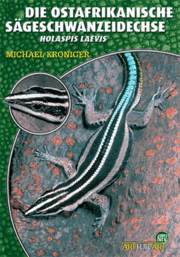
The East African saw-tailed lizard

Article no: 978-3-937285-17-7

CHF 21.90

Stock: 0

Ready for dispatch in 1-3 days, delivery time 14 working days

Delivery between Tuesday, 19 May and Wednesday, 20 May
Zahlungsarten
Product information "The East African saw-tailed lizard"

NTV The East African saw-tailed lizard

All about the East African saw-tailed lizard by Michael Kroninger

  • 61 pages
  • 14.8 x 21 cm
  • numerous colour photos
  • 1st edition
  • Author Michael Kroninger
  • Publisher NTV

Contents:

They are brightly coloured, the always agile and lively saw-tailed lizards. It's no wonder that they are currently becoming increasingly popular, as these endearing, attractive animals are not only highly interesting reptiles, but also very easy to care for.
Michael Kroninger is an experienced terrarium keeper and has been successfully breeding saw-tailed lizards for many years. In this volume of the "Species by Species" series, you will therefore find all the information you need for the species-appropriate care of these beautiful lizards. The fact that you will also learn how to breed your animals, hatch the eggs and raise the little ones makes this book an indispensable guide.

  • Systematics and body structure
  • The fascinating biology: From the life of the saw-tailed lizard
  • All information on species-appropriate keeping: from suitable terrariums to equipment and technology to feeding
  • Successful breeding: Mating stimulation, incubation of the eggs and rearing the young
  • Solutions to problems: How to avoid the most common mistakes in care and how to help sick animals
  • Brilliant photos
Composition
Feeding recommendation
Technical details
Size information

0 of 0 reviews

Give us a rating!

Share your experience with the product with other customers.


Suggested products

Handbook of food plants for tortoises and other reptiles
Handbook of forage plants 2nd revised editionMarion Minch is not only a successful breeder of diverse tortoises for many years, but also an excellent connoisseur of native wild herbs. She founded and runs samenkiste.de, which is well known to many tortoise keepers and nature lovers. Her name is inextricably linked with reptile care and species-appropriate nutrition for tortoises. Her handbook of food plants summarises the most important native food plants for herbivorous and omnivorous reptiles. She not only considers tortoises, but also iguanas, spiny-tailed dragons and even chameleons. From the basics of plant biology to native wild herbs to suitable food plants for hardy tropical reptile species, this comprehensive work provides the basis for species-appropriate keeping. In the expanded and supplemented 2nd edition, the plant section is divided according to flower colour. This makes it even easier to identify wild herbs. The work has also been supplemented with a wealth of additional information and many pictures.

CHF 46.50

Geckos
Geckos in the terrarium by Astrid FalkThe book offers a comprehensive introduction to geckos and their species-appropriate keeping in terrariums. It explains what you need to think about before buying a gecko and what preparations should be made. The book describes in detail how the terrarium is technically equipped and set up. The care of the animals, their special features and behaviour, their diet, reproduction and rearing of young animals are described, as well as diseases and husbandry problems with tried and tested suggestions for prevention and treatment. Individual gecko species that are particularly suitable for keeping and breeding in terrariums are portrayed in detail in the second part of the book.

CHF 28.50

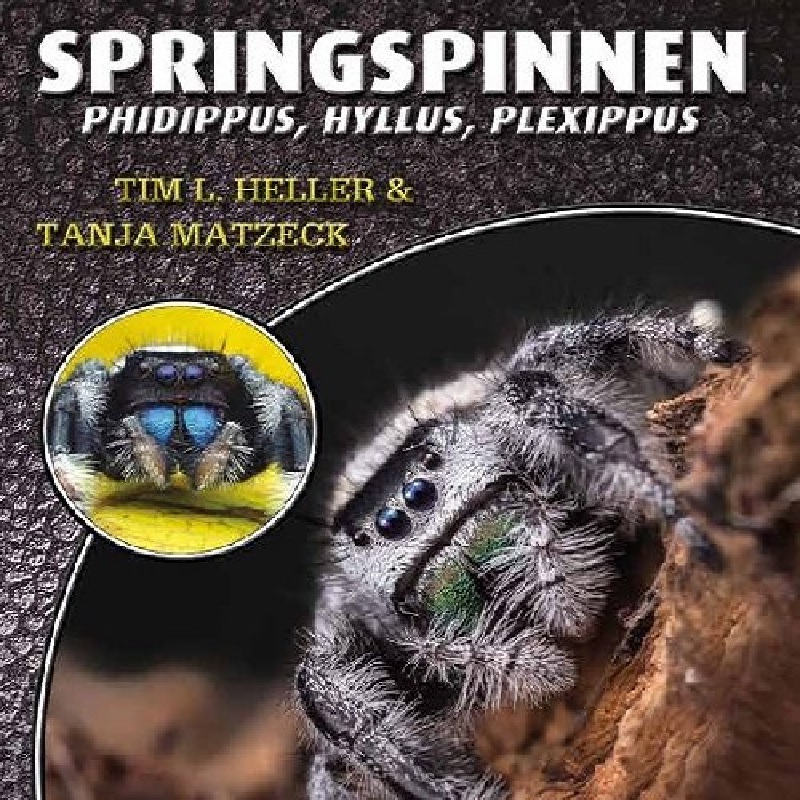
Jumping spiders Phidippus, Hyllus, Plexippus
Book Jumping Spiders - Phidippus, Hyllus & Plexippus A guide to keeping jumping spiders of the genera Phidippus, Hyllus & Plexippus. Who can resist the charm of jumping spiders? The childlike appearance of their expressive face simply leaves no one cold! In addition, their behavior is extremely exciting to observe, their colors are bright and their requirements for species-appropriate keeping are very easy to meet. No wonder these likeable jumpers are all the rage! This volume in the "Species by Species" series describes in detail what to look out for when buying and keeping them, introduces the most commonly kept species and color forms and provides plenty of tips on how to keep them successfully - so you can be sure they will breed well! Species by Species introduces you to the books in this series, which present the most popular terrarium animals. Each volume offers you detailed, practical care instructions and all the information you need to successfully breed your animals. All important questions from the required tank size to terrarium set-up, technical equipment, species-appropriate nutrition and disease prevention are answered with numerous tricks and tips. Experienced, long-standing breeders reveal how you can encourage the animals to reproduce and raise healthy young. All this in full color, generously illustrated and attractively designed - just about your terrarium animal - species by species

CHF 23.90

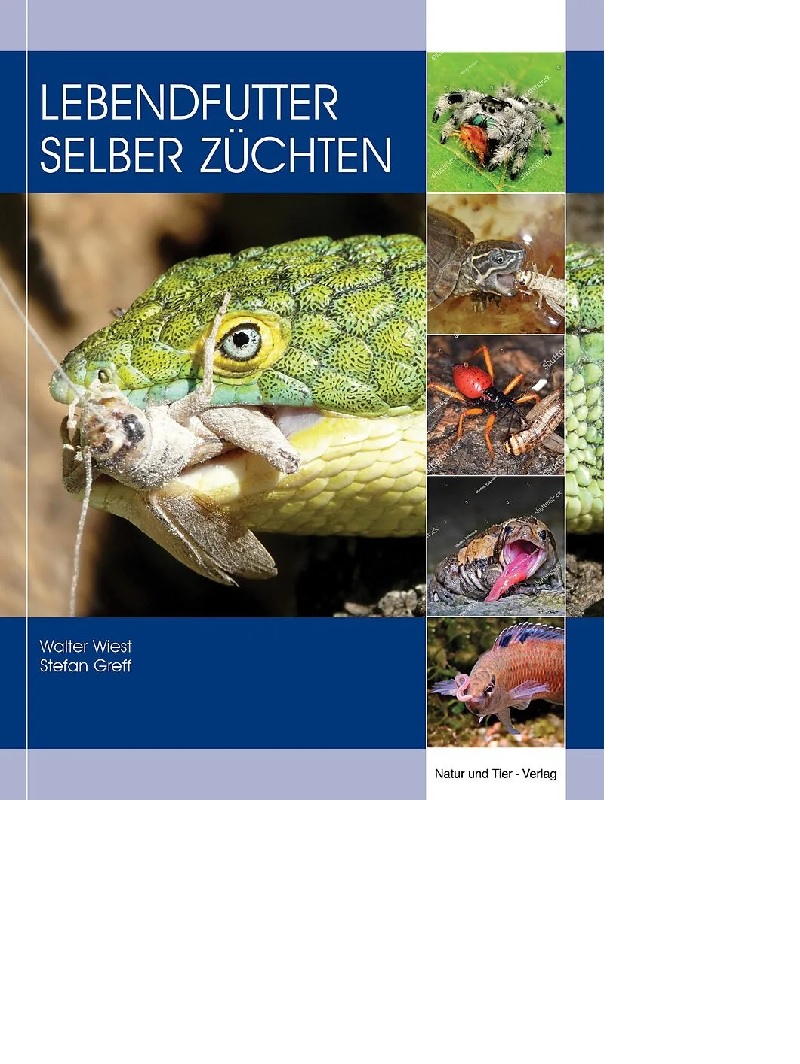
Book Breeding live food yourself
Book "Grow your own live food" - The perfect guide for pet owners Discover practical and detailed instructions on how you can easily breed food for your reptiles, birds, fish or other animals yourself in the book "Breeding live food yourself". With valuable tips on various food insects, their care and breeding, you can save money and ensure a species-appropriate diet for your pets. Contents of the book: Step-by-step instructions for breeding feeder insects Information on the best types of food for reptiles, birds and fish Care instructions and breeding conditions for various live food species Tips for sustainable and cost-effective food production Why breed your own live food? Get healthy, fresh food for your animals Save money and reduce dependence on pet shops Promote the health and well-being of your animals with species-appropriate food Whether you are a beginner or an experienced pet owner, this book provides you with everything you need to successfully breed live food yourself.

CHF 46.50

Marginata 69 - New Guinea tortoises
Marginata 69 - New Guinea tortoises – the genus ElseyaCover storyThe unrecognised beauties: New Guinea tortoises (Andreas S. Hennig)My experiences with Branderhorst's New Guinea tortoise, Elseya (Elseya) branderhorsti (Ouwens, 1914) (Andreas S. Hennig)Keeping and breeding of Rhodin's New Guinea tortoise, Elseya (Hanwarachelys) rhodini Thomson, Amepou, Anamiato & Georges, 2015 (Andreas S. Hennig)PortraitGeoemyda spengleri, Chinese serrated tortoise (Andreas S. Hennig)ReportageMacrochelys temminckii – Experiences and impressions with vulture tortoises part 2 (Reiner Praschag)KeepingAn alternative to year-round keeping of the Egyptian tortoise in the terrarium – my experiences with seasonal outdoor keeping of Testudo kleinmanni (Ricarda Schramm)EtymologySawbacks and living maps part 4: Graptemys gibbonsi, Pascagoula humpback tortoise (Holger Vetter)Classifieds & animal placement

CHF 16.50

Reptilia 81 - Hognose snakes
Reptilia 81 - Hook-nosed snakes Samar cobraPantanal flatback turtleGalápagos Contents: The hook-nosed snakes of the genus Heterodon are currently experiencing an unimagined terraristic boom. Previously rather underappreciated, various very attractive colour forms have recently been bred, and this has led to a real boom. But even the normally coloured animals – and the natural spectrum of the eastern hook-nosed snake in particular covers an extremely wide range of colours – are extremely lovable terrarium pets.We present all species in detail, offer detailed breeding reports even on rarer forms, and a splendidly illustrated overview of current developments in colour variety breeding is of course also included. EDITORIAL MAGAZINE DATES PHOTOSTORY Hooked on Hogs! Hooked on hook-nosed snakes by K. Kunz KEEPING AND REPRODUCTION The Western hook-nosed snake of North America "trend snake" by B. Bumgardner HERPETOFAUNA Unleashed East! – The Eastern hook-nosed snake, Heterodon platirhinos by L. Spinner KEEPING AND REPRODUCTION Small but mighty! The Southern hook-nosed snake by K. Kunz & N. Nickel HERPETOFAUNA The Pantanal flatback turtle, Acanthochelys macrocephala – A turtle that still raises many questions by T. & S. Vinke PORTRAIT AND POSTER Gekko gecko (Linnaeus, 1758). Tokay gecko von M. Gaulke TRAVEL In the footsteps of Darwin through South America Part 4: Galápagos – The Darwin Archipelago by H. Werning KEEPING AND REPRODUCTION Keeping and breeding Samar cobra (Naja samarensis) by C. Frömberg KEEPING AND REPRODUCTION Sicarius terrosus in the terrarium by R. Hübers ANIMALS OF OUR HOME The forest lizard by R. Leptien WESTERN HERP PERSPECTIVES The big frost by B. Love LIBRARYBook review: Fläschendräger & Wijffel (2009): Anolisby U. Bartelt SUBSCRIPTION & SERVICE ALSO NEAR YOU PREVIEW BRUTKASTEN Alone among sheep. Part 1 by H. Werning

CHF 12.00

Chimaira, Encyclopedia of turtles
Chimaira, encyclopaedia of turtlesThis encyclopaedia provides a comprehensive overview of recent turtles. For each species, the most important data on appearance and behaviour have been compiled; the authors were able to go into particular detail on remarkable aspects of morphology or biology, explain a recent discovery or a little-known observation. Endangerment and protection of the respective turtle species are dealt with in detail. The protection of species, but also the protection of habitats, which is just as important for the conservation of the species, are key motifs here. In this way, the threats to each species are systematically presented on the one hand, and the laws that have been passed to protect them and the protective measures that have been introduced to conserve them are listed on the other

CHF 63.50

Marginata 18 - Moorish Turtles
Marginata 18 - Moorish Tortoises Philippine Pond TurtleGalapagos Tortoise BreedingTortoise Genetics II Contents: 2EDITORIAL 3READERS' LETTERS 4MAGAZINE 8DATES 10REPORTAGEComments on the Iberian TortoiseHans - Dieter Philippen 16REPORTAGEObservations on Testudo graeca iberaPetr Velensky & Natasha Velenská 26REPORTAGE Sympatric occurrence of two forms of Testudo graeca in ArmeniaMarine Arakelyan, James F. Parham, Oguz Türkozan & Felix Danielyan 31 PORTRAITMeier's Three-striped Box Turtle (Cuora cyclornata meieri Blanck, McCord & Le, 2006)Hans - Dieter Philippen 35 REPORTAGELive food Part 1Hans - Dieter Philippen 39BREEDING IN HUMAN CAREObservations on the Indochinese Box Turtle Part 2Arwin & Irmhild Hiller 44REPORTAGEFrom the pea experiment to the decoding of the human genome – Genetics yesterday and today Part 2Jens R. Poschadel & Martin Platz 52 REPORTAGEInformation on the growth of Siebenrockiella leytensisSabine Schoppe 58 REPORTAGEAn early Easter blessing of eggs Samuel Furrer 60BOOK TIP 61CLASSIFIEDS 62 REGIONAL GUIDE

CHF 14.70

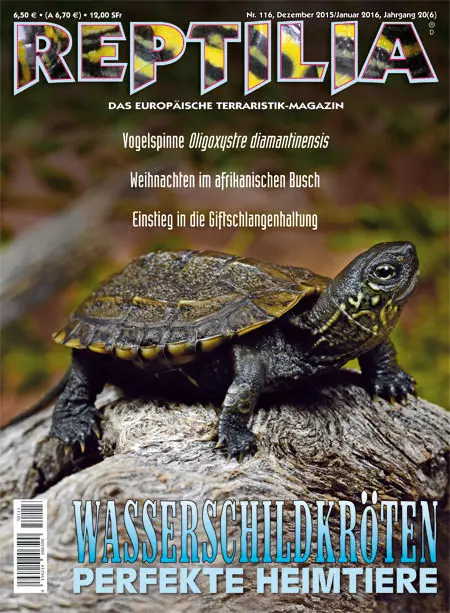
Reptilia 116 - Aquatic turtles - Perfect pets
Reptilia 116 - Aquatic turtles - Perfect pets Tarantula Oligoxystre diamantinensisChristmas in the African bushIntroduction to keeping venomous snakesContents: Cover story: Aquatic turtles – perfect petsAquatic turtles have enjoyed great popularity for decades. For a long time, however, small baby turtles were offered in pet shops for little money and ended up mainly with keepers who were not terrarium keepers and simply had no idea about these animals. The consequences are well known: overgrown red-eared sliders and other aquatic turtles that were abandoned or ended up in rescue centres. As a result, aquatic turtle keeping has fallen into disrepute. However, aquatic turtles are wonderful pets if you look after them properly and acquire the necessary expertise. We offer an overview of the species currently being kept and provide you with the tools you need to enjoy these charming turtles for a long time. EditorialMAGAZINEDATES WESTERN HERP PERSPECTIVESHerp photography goes crazyB. Love Photo storyFrequently kept aquatic turtle species – an overviewA. S. Hennig PracticeYellow stripes again and again …Information on the identification of commonly kept aquatic turtle speciesA. S. Hennig Keeping and breedingLarge salad with insect garnish. Nutritional advice for commonly kept ornamental, decorative and humpback turtlesA. S. Hennig Keeping and breedingFrom a five-mark piece to a soup plate. The successful rearing of aquatic turtlesA. S. Hennig Keeping and breedingNow also poisonous creatures! My introduction to keeping venomous snakesM. Hallmen Keeping and breedingOligoxystre diamantinensis. A gem in the middle of nowhere among the IschnocolinaeB. Rast & I. Wendt ServicesLIBRARYALSO NEAR YOU JourneyChristmas in the bush. Reptiles and more on Makutsi (South Africa)I. Kober PREVIEW BRUTKASTENLike a fish in waterH. Werning

CHF 12.00

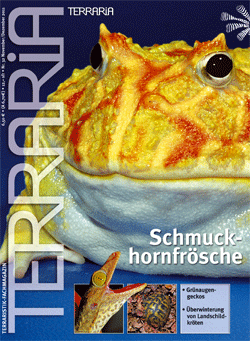
Terraria No. 32 - Ornate Horned Frogs
Terraria 32 - Ornamental horned frogsGreen-eyed geckosHibernation of tortoisesContents:They seem to be all about their mouths: horned frogs do not captivate with delicate forms, but rather, alongside their colourful splendour, simply through their presence. They are frogs with character. These perennial favourites in the terrarium world are now also being bred in diverse, very attractive forms. Whilst the number of species in the terrarium has remained very limited for decades, new and exciting species have finally made their way into the ‘Hobby’ in recent times. In our cover story, we introduce you to the attractive representatives of this genus, describe in detail their care and breeding, and discuss current developments. EditorialAxel KwetMagazineNational Breeders’ Expo in Daytona Beach, Florida/Cannibalism in the tree-dwelling toad-leaved frog, Trachycephalus resinifictrix/Giant catch in the Philippines: the world’s largest crocodile/Rescue from an uncomfortable prison/A tiger python that fasted for four and a half years/Legal notice/Recently, at the zooTERRAglobalBarely described - and already almost extinct? Mirco Solé Cover story Jewelled horn frogs - big mouth and what's behind it!Stefan Hochenegger & Kriton KunzKeeping and breeding the Brazilian horned frog, Ceratophrys aurita Fernando LicitraKeeping and breeding the Argentine horned frog, Ceratophrys ornata Erich HirtenlehnerThe world’s longest insect in a terrarium? Keeping and breeding Phobaeticus serratipes and other large stick insects Timm AdamThe turtle year. Outdoor biology and husbandry of European tortoises over the course of the year Part 5: November/December: Hibernation and hibernation Michael WirthExperiences with Smith’s Green-eyed Gecko, Gekko smithii Ingo KoberCare and breeding of the banded spitting cobra, Naja nigricincta nigricinctaMichael KreuzerJourneyUSA - In search of reptiles in the national parks of the West David PrötzelNew speciesTwo new reptiles from Madagascar: a colourful skink and a bizarre leaf-tailed gecko Axel KwetAmong explorers On the hunt for frogs and toads in the outback of the Australian Kimberley Ligia Pizzatto & Camila BothSubscription & ServiceEye-catcherDesert life in the Allgäu - the "Desert Life" by Susan and Werner Kalopp Heiko WerningNear youPreview IncubatorTouristic in the jungle part 2: Cool editor, cooler frog Heiko Werning

CHF 12.00

Draco 39 - European Snakes
Draco 39 - European Snakes Contents: Editorial The snake fauna of EuropeAndreas Schlüter Vipera ammodytes: on abnormal vipers and hybridsMario Schweiger The four-lined snake – Elaphe quatuorlineata (Lacépède, 1789)Sascha Esser The snakes of northern Spain - travel impressions from the Cantabrian Mountains and neighbouring areasGuido Kreiner European water snakes: Field observations, husbandry and breeding of Natrix natrix (Linnaeus, 1758), Natrix maura (Linnaeus, 1758) and Natrix tessellata (Laurenti, 1768)Michael Wirth & Rainer Hähnlein Queens of European snakes: Four-lined snake (Elaphe quatuorlineata), Aesculapian snake (Zamenis longissimus) and Leopard snake (Zamenis situla)Michael Wirth

CHF 18.40

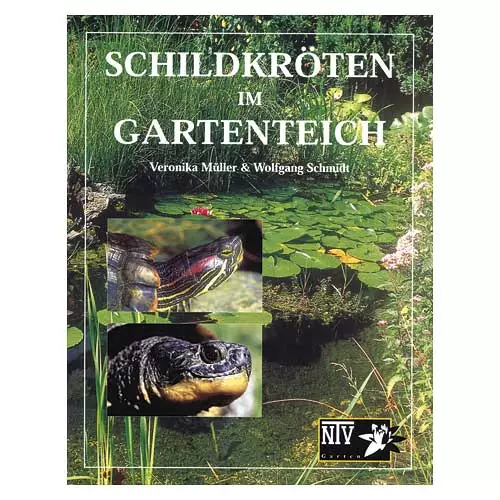
NTV, turtles in the garden pond
NTV, Schildkröten im Gartenteich - Hier werden Wasserschildkröten vorgestellt welche im Gartenteich gehalten werden können. 112 Seiten 88 Abbildungen Format: 16,8 x 21,8 cm Autor Veronika Müller und Wolfgang Schmidt Verlag NTV Inhalt: Schildkröten im Gartenteich? Sicher haben auch Sie sich schon gefragt, ob es nicht möglich ist, eine Schildkröte im Gartenteich zu pflegen. Es ist möglich!In diesem Buch werden u. a. alle Wasserschildkrötenarten vorgestellt, die auch ganzjährig im Garten leben können. Sie finden wertvolle Tips zur Gestaltung des Schildkröten-Biotops, zur Fütterung, zur Vergesellschaftung der Tiere sowie zum Thema Überwinterung. Was tun, wenn Ihre Schildkröte Eier legt? Was geschieht, wenn einmal ein Tier krank wird? Auch auf diese Fragen gehen die Autoren in eigenen Kapiteln ausführlich ein.Es gibt viele Bücher über Schildkröten. Das Buch 'Schildkröten im Gartenteich' befasst sich erstmals ausschliesslich mit den Arten, die auch im Freien gepflegt werden können. Geschrieben für den Natur- und Tierfreund, ist es ein wertvoller Leitfaden für die richtige Pflege von Wasserschildkröten.  

CHF 28.90

Customers also saw

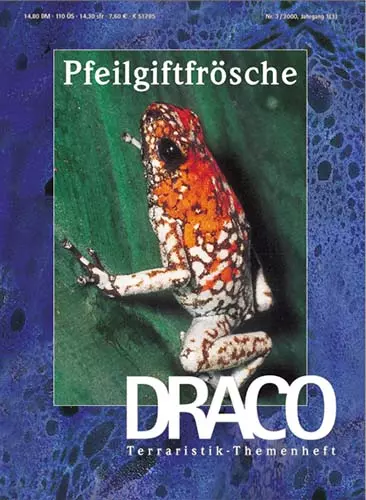
Draco 03 - Poison Arrow Frogs
Draco 03 - Poison dart frogs Contents: 2 Editorial 4 Poison dart frogs - An introduction to biology, systematics and distribution, by S. Lötters 16 Brood care in poison dart frogs, by A. Quiguango-Ubillus 24 Reproductive behaviour in poison dart frogs, by K.-H. Jungfer 29 The poison dart frogs of Bolivia and their distribution, by S. Lötters and S. Reichle 32 Poison dart frogs in the terrarium, by M. Schmidt 50 Building an artificial waterfall from polystyrene, by D. Löhmann 58 The Web-climbing Tree Frog - A small jewel from the rainforest, by H. Divossen 62 Keeping and breeding Dendrobates histrionicus, by E. Schoop 70 Colourful encounters in the Choco, by J. Stelder 73 Infectious diseases - a constant threat to dendrobatid keeping? by M. Mutschmann 83 Book box 89 Magazine

CHF 14.90