Terrarium types organised according to group characteristics
Pictograms for a quick overview
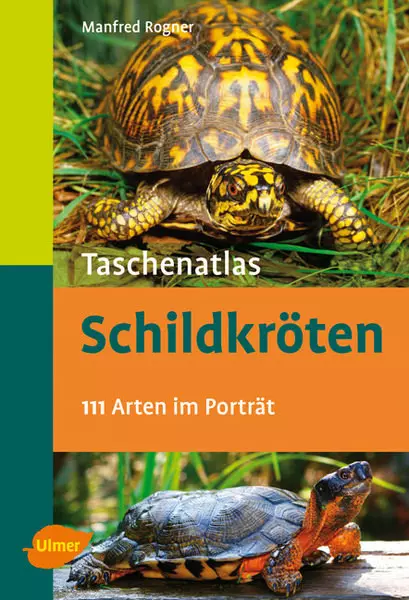
Detailed portraits of 111 commercially available turtle species inform you about their origin, appearance and all the important data on care in the terrarium. You will also learn everything you need to know about terrarium types, natural habitats and keeping conditions. Practical pictograms provide you with the most important information at a glance.
Composition
Feeding recommendation
Technical details
Size information
0 of 0 reviews
Give us a rating!
Share your experience with the product with other customers.
Login
No reviews found. Go ahead and share your findings with others.
Handbook of forage plants 2nd revised editionMarion Minch is not only a successful breeder of diverse tortoises for many years, but also an excellent connoisseur of native wild herbs. She founded and runs samenkiste.de, which is well known to many tortoise keepers and nature lovers. Her name is inextricably linked with reptile care and species-appropriate nutrition for tortoises. Her handbook of food plants summarises the most important native food plants for herbivorous and omnivorous reptiles. She not only considers tortoises, but also iguanas, spiny-tailed dragons and even chameleons. From the basics of plant biology to native wild herbs to suitable food plants for hardy tropical reptile species, this comprehensive work provides the basis for species-appropriate keeping. In the expanded and supplemented 2nd edition, the plant section is divided according to flower colour. This makes it even easier to identify wild herbs. The work has also been supplemented with a wealth of additional information and many pictures.
Geckos in the terrarium by Astrid FalkThe book offers a comprehensive introduction to geckos and their species-appropriate keeping in terrariums. It explains what you need to think about before buying a gecko and what preparations should be made. The book describes in detail how the terrarium is technically equipped and set up. The care of the animals, their special features and behaviour, their diet, reproduction and rearing of young animals are described, as well as diseases and husbandry problems with tried and tested suggestions for prevention and treatment. Individual gecko species that are particularly suitable for keeping and breeding in terrariums are portrayed in detail in the second part of the book.
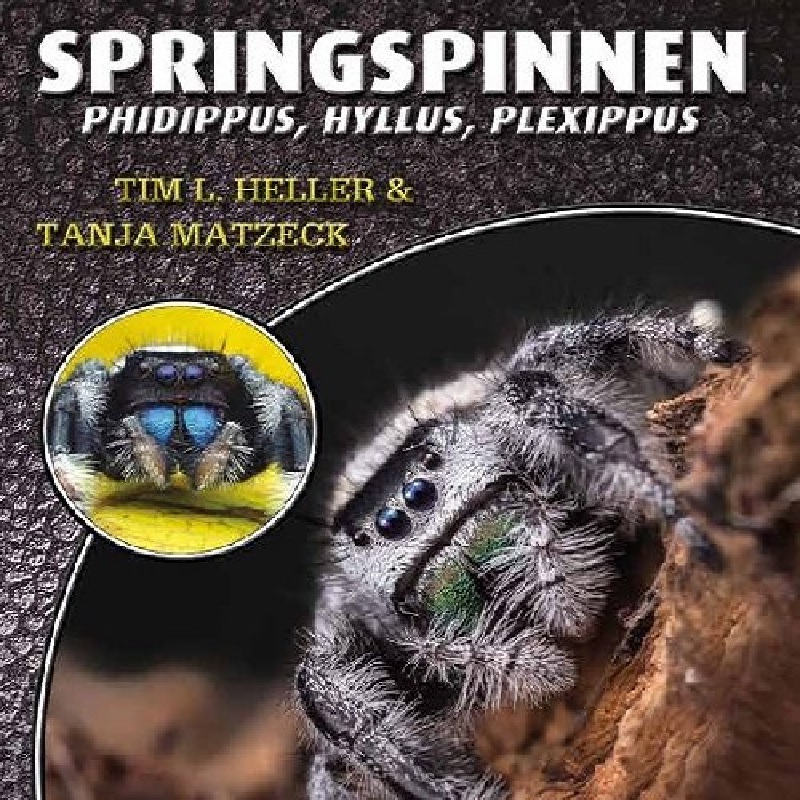
Book Jumping Spiders -
Phidippus, Hyllus & Plexippus
A guide to keeping jumping spiders of the genera Phidippus, Hyllus & Plexippus. Who can resist the charm of jumping spiders? The childlike appearance of their expressive face simply leaves no one cold! In addition, their behavior is extremely exciting to observe, their colors are bright and their requirements for species-appropriate keeping are very easy to meet. No wonder these likeable jumpers are all the rage!
This volume in the "Species by Species" series describes in detail what to look out for when buying and keeping them, introduces the most commonly kept species and color forms and provides plenty of tips on how to keep them successfully - so you can be sure they will breed well!
Species by Species introduces you to the books in this series, which present the most popular terrarium animals. Each volume offers you detailed, practical care instructions and all the information you need to successfully breed your animals.
All important questions from the required tank size to terrarium set-up, technical equipment, species-appropriate nutrition and disease prevention are answered with numerous tricks and tips.
Experienced, long-standing breeders reveal how you can encourage the animals to reproduce and raise healthy young.
All this in full color, generously illustrated and attractively designed - just about your terrarium animal - species by species
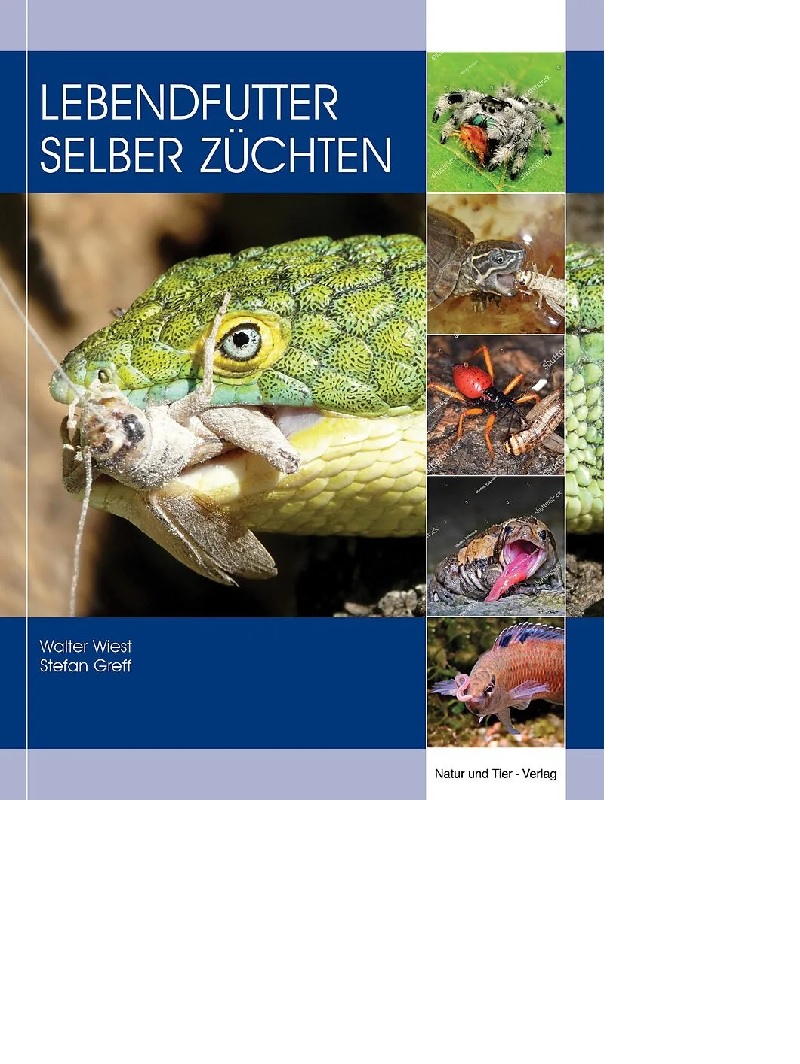
Book "Grow your own live food" - The perfect guide for pet owners
Discover practical and detailed instructions on how you can easily breed food for your reptiles, birds, fish or other animals yourself in the book "Breeding live food yourself". With valuable tips on various food insects, their care and breeding, you can save money and ensure a species-appropriate diet for your pets.
Contents of the book:
Step-by-step instructions for breeding feeder insects
Information on the best types of food for reptiles, birds and fish
Care instructions and breeding conditions for various live food species
Tips for sustainable and cost-effective food production
Why breed your own live food?
Get healthy, fresh food for your animals
Save money and reduce dependence on pet shops
Promote the health and well-being of your animals with species-appropriate food
Whether you are a beginner or an experienced pet owner, this book provides you with everything you need to successfully breed live food yourself.
Marginata 69 - New Guinea tortoises – the genus ElseyaCover storyThe unrecognised beauties: New Guinea tortoises (Andreas S. Hennig)My experiences with Branderhorst's New Guinea tortoise, Elseya (Elseya) branderhorsti (Ouwens, 1914) (Andreas S. Hennig)Keeping and breeding of Rhodin's New Guinea tortoise, Elseya (Hanwarachelys) rhodini Thomson, Amepou, Anamiato & Georges, 2015 (Andreas S. Hennig)PortraitGeoemyda spengleri, Chinese serrated tortoise (Andreas S. Hennig)ReportageMacrochelys temminckii – Experiences and impressions with vulture tortoises part 2 (Reiner Praschag)KeepingAn alternative to year-round keeping of the Egyptian tortoise in the terrarium – my experiences with seasonal outdoor keeping of Testudo kleinmanni (Ricarda Schramm)EtymologySawbacks and living maps part 4: Graptemys gibbonsi, Pascagoula humpback tortoise (Holger Vetter)Classifieds & animal placement
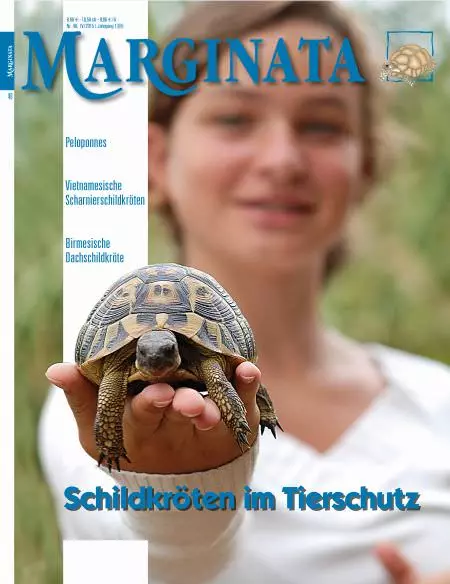
Marginata 48 - Turtles in animal welfarePeloponneseRarities from VietnamEuropean pond turtleTable of contents EditorialMagazineTOPIC"Chelonia" - Germany's largest turtle sanctuaryPatrick BoncourtTOPICSanctuary for tortoises in Stuttgart - a feel-good garden for tortoises Humans and animalsNicole Gehringer & Thomas SchällingTOPICTurtle animal welfare Supersize - the Phoenix Herpetological SocietyHeiko WerningPORTRAITEmys orbicularis (Linnaeus, 1758) European pond turtle, East Mediterranean pond turtleBenny Trapp TRAVELIn search of the "shy beauty" and the "Cave turtles" (2)Torsten Blanck, Sebastian Braun, Timothy McCormack, Hoang Van Ha, Nguyen Tai Thang, Nguyen Van Luc & Minh LeSCIENCETrachemys emolli or T. grayi in Honduras? Alexander GutscheTRAVELMorea - in search of turtles and other reptiles in the West the Peloponnese (2)Axel KwetSubscription & ServiceRegional guide
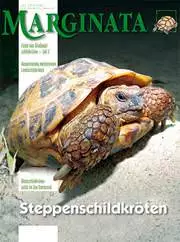
Marginata 41 - Steppe tortoisesKeeping and breeding big-headed tortoises part 3Wintering of Mediterranean tortoisesForest tortoise breeding at Dortmund ZooContents:EditorialMagazineDatesPHOTOSTORYNews about steppe tortoisesHans - Dieter PhilippenKEEPING AND BREEDINGKeeping and breeding of the steppe tortoise in the Alpine regionWilli HoferBREEDINGNature-identical carapace proportions and shapes in the breeding of steppe tortoisesPetr Velensky & Natasha VelenskaHOLDINGWintering of steppe tortoises and European tortoisesThorsten GeierPORTRAITChinese three-keeled turtle. Chinemys[Mauremys] reevesii (Grey, 1831)Hans - Dieter PhilippenBREEDINGBig-headed tortoises in nature and human care. Part 3Reiner PraschagBREEDINGKeeping and breeding the red-headed box turtle (Podocnemis erythrocephala) Part 2David DrajeskeKEEPING AND BREEDINGBreeding of forest tortoises at Dortmund ZooSimone Karlowski & Stephanie ZechREPORTAGEThe European Studbook Foundation: off to new shores!Henk ZwartepoorteREPORTAGESurprising observation of charcoal tortoisesSusanne VogelBook tipSubscription & ServiceRegional guide
Terraria 62 - Unusual Food Animals
Campbell’s Tree Lizard
Succulents
Contents:
Cover Story: Unusual Food Animals
A healthy diet plays a decisive role in the successful care and breeding of our terrarium animals. The famous mealworm as a standard food is far from sufficient. Fortunately, specialist retailers now offer a wide range of suitable food insects such as house crickets, crickets, flies or cockroaches, which are available all year in any quantity. However, many pets also like to eat food animals outside the mainstream and some specialists are even dependent on a special diet for their well-being. In this issue of TERRARIA/elaphe, we take a closer look at some of these little-known, rather unusual food animals such as field slugs, woodlice, moth flies or a small-growing fruit fly variant.
3 Territorial
8 Herpetorama
Results of the 17th CITES Conference in Johannesburg – new regulations for some reptiles and amphibians
Synanthrope: Creeping Schnapps
Leaf Climber: Wasted “Time”
Thorny Devil: A Rural Keel-Tailed Iguana
Cover Story
14 Food Animals
A perennial topic in terraristics
Krition Kunz
20 Slippery Snacks
Breeding and use of the Mediterranean field slug as live food
Frank Täufer
25 Woodlice as Food Animals
Dominik Hoffses
30 A Small-Growing Variant of the Fruit Fly: Drosophila melanogaster “Ant”
Boris Stockmann
34 A Frog Farm for Feeding Reptiles and Amphibians: the Painted Disk-Tongued Frog (Discoglossus pictus)
Frank Pasmans, Sergé Bongaerts & An Martel
39 Moth Flies
A new food animal for small nocturnal hunters
Ingo Fritzsche
Panorama
42 Snake searching in the Ecuadorian Chocó rainforest
Daniel Jestrzemski
Research
50 New Species
A new slender boa from the Bahamas: the Conception Silver Boa (Chilabothrus argentum)
Axel Kwet
A new Borneo bush frog from Mt. Kinabalu
Axel Kwet
52 Among Researchers
The Comoros, a forgotten hotspot of diversity
Oliver Hawlitschek
56 Salamandra
Terraristics
60 Ant plants, leaf cacti and other succulent epiphytes for the terrarium
Beat Akeret
Nature and Species Conservation
70 Field Notes
Grass snake eating
Günther Vater
The feeding behaviour of the wall lizard Part 2
Malte Hornig
72 Project to protect the critically endangered tree lizard Abronia campbelli in eastern Guatemala
Brad Lock & Mónica Torres
84 Terrarino – the children’s page
The fire salamander – not a lucky animal
Alexa Sabarth
81 Subscription & Service
86 Also in your area
88 Preview
90 Incubator
No mercy for Mouse Z
Part 2
Heiko Werning
Reptilia 49 - Food animal breedingScorpion crust lizardSpotted pythonChinese mountain dragonContents:
2 EDITORIAL
4 READER LETTERS
5 MAGAZINE
14 DATES
18 WESTERN HERP PERSPECTIVESHurricane Sale in Floridaby B. Love
20 PHOTO REPORTAGE Breeding food animals yourself - a problem?by F. Bruse & H. Werning
27 REPORTAGEEfficient and productive cricket breeding
by F. Bruse
33 REPORTAGEBreeding the chocolate cockroach (Shellfordella tartara)
by F. Bruse
36 REPORTAGEA simple Drosophila breeding project
by F. Bruse
40 HERPETOFAUNANotes on the Motagua lizard (Cnemidophorus motaguae)
by U. Schlüter
43 TRAVELHerpetological observations and more from Gambia
by U. Thieme
51 PORTRAIT AND POSTERGeoclemys hamiltoniby H. - D. Philippen
56 KEEPING AND BREEDINGKeeping and Breeding the Chinese Mountain Agame (Japalura splendida) by H. Schradin
68 HERPETOFAUNADendrobates pumilioThe strawberry frog on the Bocas Islands by B. Schwarz
72 KEEPING AND BREEDING The black Mexican chain snake (Lampropeltis getula nigrita in the terrariumby M. Thums
79 REPORTAGEAntaresia maculosa (PETERS, 1873)Spotted pythonby D. Hasselberg
85 CLASSIFIED ADS
90 RAT & TAT
93 LIBRARY
104 GLOSSESIn search of Uracentron azureumPart 1by H. Werning
The 130-page book about dyer frogs describes the popular amphibians and shows the different colour variations.
130 pages
many colour photos
Hardcover
Bestseller
Authors Peter Janzen and Wolfgang Schmidt
Publisher Herpeton
The dyer frogs, Dendrobates tinctorius in Latin, are among the most popular frogs in the terrarium hobby. The book describes their way of life, care, breeding and colour varieties. The book is supplemented with many photos.
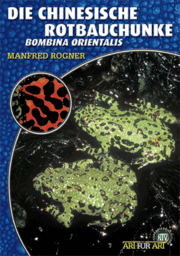
The oriental firebelly toad by Manfred Rogner
64 Seiten
14,8 x 21 cm
zahlreiche Farbfotos
Inhalt:
Wenn man einem Einsteiger eine attraktive, interessante und dazu auch noch leicht haltbare Amphibienart empfehlen wollte, stünde die Chinesische Rotbauchunke mit Sicherheit ganz oben auf der Liste. Darum ist diese bunte, muntere Art seit langem zu Recht äußerst beliebt. Der erfahrene Terrarianer Manfred Rogner hält und züchtet seit Jahren Chinesische Rotbauchunken und kennt sich mit diesen Tieren bestens aus. Darum kann er Ihnen in diesem Buch fachkundig, aber leicht nachvollziehbar alle wichtigen Aspekte der Pflege dieser ganz besonderen Amphibien vermitteln und Ihnen auch Insider-Tipps an die Hand geben, wie Sie Ihre Unken zur Vermehrung bringen und die Kaulquappen sowie die Jungunken aufziehen können.
Systematik und Körperbau
Die faszinierende Biologie: Aus dem Leben der Chinesischen Rotbauchunke
Alle Informationen zur artgerechten Haltung: Vom geeigneten Terrarium über Einrichtung und Technik bis hin zur Fütterung
Erfolgreich nachzüchten: Paarungsstimulation, Aufzucht der Kaulquappen und der jungen Unken
Problemlösungen: Wie man die häufigsten Fehler bei der Pflege vermeidet, und wie man kranken Tieren helfen kann
Brillante Fotos
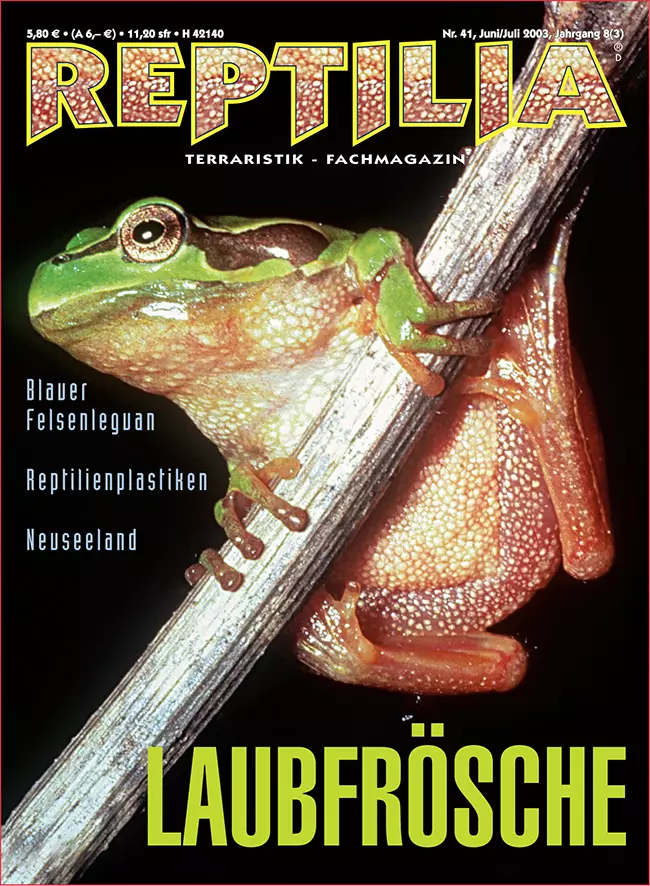
Reptilia 41 - Tree frogs
Blue rock iguanaReptile sculpturesNew Zealand
Contents:
2 EDITORIAL
3 READER LETTERS
5 MAGAZINE
15 DATES
18 WESTERN HERP PERSPECTIVESAbout taming terrarium animalsby B. Love
22 PHOTO REPORTAGETree frogsby M. S. Staniszewski
28 REPORTAGEThe tree frogs of the genus Hyla in Venezuela
by C. M. Barrio Amorós
33 REPORTAGETree frogs in northern Australia
by B. Akeret
40 REPORTAGEThe toad tree frogs of the genus Phrynohyas in the Brazilian coastal rainforest
by A. Kwet
45 HERPETOCULTUREOf bronze reptiles and colourful repro-sculpturesby U. Krabbe-Paulduro & E. Paulduro
51 PORTRAIT AND POSTERTestudo marginataby B. Trapp
56 TRAVEL100% Pure New Zealand?by M. Gaulke & A. Altenbach
65 KEEPING AND BREEDINGThe copperhead (Agkistrodon contortrix) – a “beginner’s” snake? Part 2by D. Schmidt
72 KEEPING AND BREEDINGPetrosaurus thalassinus (COPE, 1863) – the Blue rock iguana.Care, keeping and breedingby A. Dickhoff
84 SMALL ADS
88 ADVICE & SUPPORT
92 LIBRARY
104 ESSAYA REPTILIA romance (para Kriton)by H. Werning
CHF 11.20
❅
❆
❅
❆
❅
❆
❅
❆
❅
❆
❅
❆
This website uses cookies to ensure the best experience possible. More information...