Herpeton, Fire belly newts

Article no: CZ-AB10536

CHF 28.90

Stock: 0

Ready for dispatch in 1-3 days, delivery time 14 working days

Delivery between Tuesday, 19 May and Wednesday, 20 May
Zahlungsarten
Product information "Herpeton, Fire belly newts"

Herpeton - Fire-bellied newts

With this book, the authors draw on their over 20 years of experience with various fire-bellied newt species to provide beginners and advanced keepers with instructions on how to keep and breed their animals professionally

Contents:

Systematics, habitats, way of life, appearance, behaviour, acquisition of animals, stocking density, acclimatisation, socialisation, capture and temporary housing, aquaria (size, cover, aquarium technology, location, equipment, rearing tanks, aqua-terraria and paludaria, terraria, plants for fire-bellied newt tanks, care and water changes, overview of food animals, life expectancy, hibernation, egg laying and egg development, housing of eggs, larval development, housing of larvae, rearing of metamorphosed juveniles, problems with breeding, diseases, species descriptions, (Cynops ensicauda, Cynops pyrrhogaster, Cynops orientalis), and much more.

Composition
Feeding recommendation
Technical details
Size information

0 of 0 reviews

Give us a rating!

Share your experience with the product with other customers.


Suggested products

Handbook of food plants for tortoises and other reptiles
Handbook of forage plants 2nd revised editionMarion Minch is not only a successful breeder of diverse tortoises for many years, but also an excellent connoisseur of native wild herbs. She founded and runs samenkiste.de, which is well known to many tortoise keepers and nature lovers. Her name is inextricably linked with reptile care and species-appropriate nutrition for tortoises. Her handbook of food plants summarises the most important native food plants for herbivorous and omnivorous reptiles. She not only considers tortoises, but also iguanas, spiny-tailed dragons and even chameleons. From the basics of plant biology to native wild herbs to suitable food plants for hardy tropical reptile species, this comprehensive work provides the basis for species-appropriate keeping. In the expanded and supplemented 2nd edition, the plant section is divided according to flower colour. This makes it even easier to identify wild herbs. The work has also been supplemented with a wealth of additional information and many pictures.

CHF 46.50

Geckos
Geckos in the terrarium by Astrid FalkThe book offers a comprehensive introduction to geckos and their species-appropriate keeping in terrariums. It explains what you need to think about before buying a gecko and what preparations should be made. The book describes in detail how the terrarium is technically equipped and set up. The care of the animals, their special features and behaviour, their diet, reproduction and rearing of young animals are described, as well as diseases and husbandry problems with tried and tested suggestions for prevention and treatment. Individual gecko species that are particularly suitable for keeping and breeding in terrariums are portrayed in detail in the second part of the book.

CHF 28.50

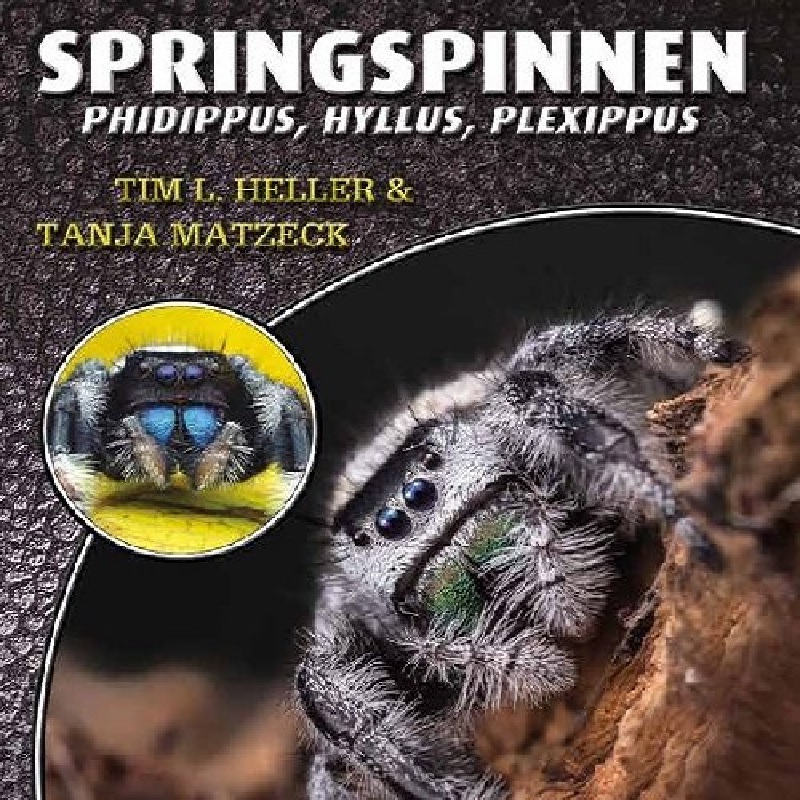
Jumping spiders Phidippus, Hyllus, Plexippus
Book Jumping Spiders - Phidippus, Hyllus & Plexippus A guide to keeping jumping spiders of the genera Phidippus, Hyllus & Plexippus. Who can resist the charm of jumping spiders? The childlike appearance of their expressive face simply leaves no one cold! In addition, their behavior is extremely exciting to observe, their colors are bright and their requirements for species-appropriate keeping are very easy to meet. No wonder these likeable jumpers are all the rage! This volume in the "Species by Species" series describes in detail what to look out for when buying and keeping them, introduces the most commonly kept species and color forms and provides plenty of tips on how to keep them successfully - so you can be sure they will breed well! Species by Species introduces you to the books in this series, which present the most popular terrarium animals. Each volume offers you detailed, practical care instructions and all the information you need to successfully breed your animals. All important questions from the required tank size to terrarium set-up, technical equipment, species-appropriate nutrition and disease prevention are answered with numerous tricks and tips. Experienced, long-standing breeders reveal how you can encourage the animals to reproduce and raise healthy young. All this in full color, generously illustrated and attractively designed - just about your terrarium animal - species by species

CHF 23.90

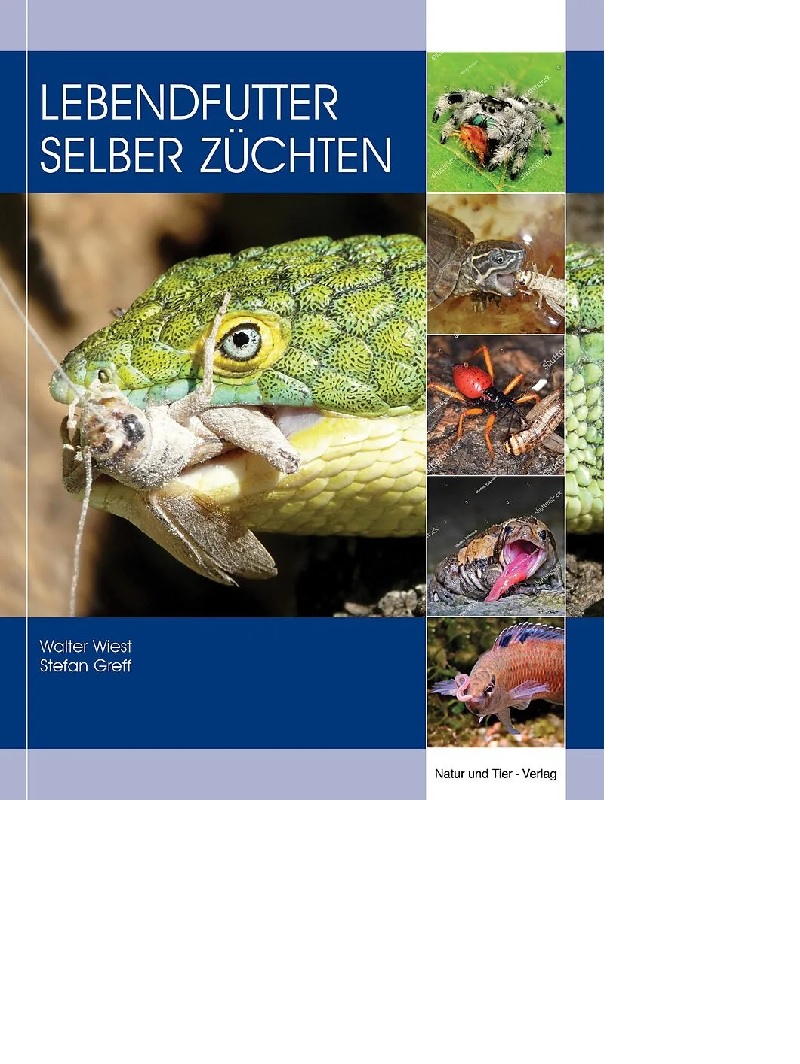
Book Breeding live food yourself
Book "Grow your own live food" - The perfect guide for pet owners Discover practical and detailed instructions on how you can easily breed food for your reptiles, birds, fish or other animals yourself in the book "Breeding live food yourself". With valuable tips on various food insects, their care and breeding, you can save money and ensure a species-appropriate diet for your pets. Contents of the book: Step-by-step instructions for breeding feeder insects Information on the best types of food for reptiles, birds and fish Care instructions and breeding conditions for various live food species Tips for sustainable and cost-effective food production Why breed your own live food? Get healthy, fresh food for your animals Save money and reduce dependence on pet shops Promote the health and well-being of your animals with species-appropriate food Whether you are a beginner or an experienced pet owner, this book provides you with everything you need to successfully breed live food yourself.

CHF 46.50

Marginata 69 - New Guinea tortoises
Marginata 69 - New Guinea tortoises – the genus ElseyaCover storyThe unrecognised beauties: New Guinea tortoises (Andreas S. Hennig)My experiences with Branderhorst's New Guinea tortoise, Elseya (Elseya) branderhorsti (Ouwens, 1914) (Andreas S. Hennig)Keeping and breeding of Rhodin's New Guinea tortoise, Elseya (Hanwarachelys) rhodini Thomson, Amepou, Anamiato & Georges, 2015 (Andreas S. Hennig)PortraitGeoemyda spengleri, Chinese serrated tortoise (Andreas S. Hennig)ReportageMacrochelys temminckii – Experiences and impressions with vulture tortoises part 2 (Reiner Praschag)KeepingAn alternative to year-round keeping of the Egyptian tortoise in the terrarium – my experiences with seasonal outdoor keeping of Testudo kleinmanni (Ricarda Schramm)EtymologySawbacks and living maps part 4: Graptemys gibbonsi, Pascagoula humpback tortoise (Holger Vetter)Classifieds & animal placement

CHF 16.50

Bugs No. 05 - Scorpions of North Africa
Bugs No. 05 - Scorpions of North AfricaTrapdoor spidersPhyllium monteithiSnails of CubaThe cover story of Bugs No. 5 takes us to the arid zones of North Africa and the scorpions that live there. Despite their potent venom, some of these survival artists are very popular with invertebrate enthusiasts and are real treasures for nano terrariums. We introduce you to these fascinating predators and explain what you need to know to keep them successfully and, above all, safely. Table of contentsEditorialFacetsDatesFlown inCover storyScorpions of North Africa in focusAndroctonus liouvilleiHottentotta gentili and H. franzwerneriFledgedViñales, an Eldorado for snail loversIn the crosshairsPoecilotheria ornata from Sri LankaCultureThe Maquech: A beetle as a living broochKeeping & BreedingAustralia's Changing LeafKeeping & BreedingThe Giant Marbled Wood CockroachKeeping & BreedingPeacock eye moths in the terrariumReportageThe fascinating life of trapdoor spidersBook scorpionAlso in your neighbourhoodPotter beeFeeding method for young mantidsKids CornerVisitors from prehistoric timesShowcaseCatching and preserving dragonfliesService & ImprintPreviewMetamorphosesActors!

CHF 12.00

Reptilia 123 - Planting of poison dart frog terrariums
Reptilia 123 - Planting of poison dart frog terrariums Contents: Cover story: Planting poison dart frog terrariumsPoison dart frog terrariums can be real gems. Not only because of the "jewels from the rainforest" themselves – but also because of the rainforest around them. Poison dart frogs come to us from biotopes that are also home to countless attractive tropical plants, many of which are available to us and can be cultivated excellently. The experienced terrarium plant specialist Beat Akeret explains in the cover story of this REPTILIA exactly which plants are suitable for poison dart frog terrariums, so that these not only look great and meet the needs of the frogs, but even conjure up an authentic Latin American rainforest section in the living room.Also in REPTILIA No. 123Keeping and breeding one of the most mystical reptiles of all: the Bornean earless monitor in the terrariumDanger in the magic of blossoms: crab spidersThe great trek 3: with REPTILIA editor-in-chief Heiko Werning from coast to coast through the south of the USAand much more 4          editorial             6          MAGAZINE             14        DATES             16        WESTERN HERP PERSPECTIVES                                    Only in America                                    By B. Love             18        PHOTOSTORY                                    Plants in the poison dart frog terrarium                                    By B. Akeret             26        Terrarium technology                                    Plant care in the poison dart frog terrarium                                    Basic considerations                                    By B. Akeret             32        plants                                    Suitable plants for poison dart frog terrariums                                    By B. Akeret             44        KEEPING AND BREEDING                                    Notes on keeping and breeding of the earless monitor, Lanthanotus borneensis                                    By M. Zollweg & R. Seipp             54        Terrarium technology                                    Even more light                                    Comments by S. Wunderlich and O. Fischer             61        SERVICE             64        travel                                    The great trek                                    Part 3: Georgia on my Mind                                    By H. Werning             76        ALSO NEAR YOU             80        PREVIEW             82        INCUBATOR                                     If this sets a precedent                                    Part 2                                    By H. Werning

CHF 13.50

Terraria 47 - European vipers
Terraria 47 - European vipers Abronia in GuatemalaNew reptiles 2013 Contents:The venomous snakes on our doorstep are one of the most fascinating nature experiences for most reptile lovers. We present the species with the usual splendid pictures by photographer Benny Trapp, dedicate ourselves to the protection of the rare meadow viper and introduce the mountain viper and the milo viper in detailed articles. TerritorialHerpetorama Cover storyEuropean vipersBenny Trapp The Hungarian meadow viper – long protected, yet highly endangeredHans-Jürgen Luef The Milos viper, Macrovipera schweizeri, an endemic of the CycladesGuido Kreiner In search of mountain vipers (Montivipera xanthina) in north-eastern Greece Part 1Michael Wirth PanoramaTree snakes of the genus Abronia in GuatemalaChristian Ariano-Sánchez Bulgaria in May. Excursions through a natural outdoor terrariumPeter Kattke Research New speciesList of reptiles newly described in 2013Axel Kwet Salamandra TerraristicsThe chytrid fungus and terraristicsBenedikt R. Schmidt Also in your neighbourhoodNature and species conservation Field notesObservations of active midwife toads in FebruaryKlemens Fritz Fire salamander in the tyre trapRudolf Malkmus  GalleryHerpetology always in view. Historical wall charts for educational purposesMichael Markert, Uwe Hossfeld, Günter Stephan & Alexander Kupfer Subscription & ServicePreview Incubator Packing stationHeiko Werning

CHF 12.00

NTV, Nutrition of land tortoises
NTV Nutrition of tortoises 144 pages 113 colour photos 27 tables 17 graphics Author Dr Carolin Dennert Format: 16.8 x 21.8 cm  Contents: Tortoises are popular pets. However, these seemingly robust reptiles place high demands on their diet. The popular European tortoises in particular often unintentionally fall victim to inadequate feeding and the wrong food. But the increasingly popular tropical tortoise species also have very specific requirements, which can differ significantly from those of their European relatives. Carolin Dennert is a vet and committed tortoise keeper. For many years, she has focussed on the nutrition and nutrition-related diseases of reptiles, both scientifically and in veterinary practice.This book is the first to present the basics of tortoise nutrition in an understandable way, as well as all common food plants and feedstuffs. The correct supply of vitamins and minerals is discussed in detail, as well as nutrition-related diseases and treatment options. Information on the correct feeding of the individual tortoise species rounds off this special work. The nutrient content of all common food plants and the correct dosage of commercially available vitamin and mineral supplements can be found in an extensive appendix of tables.

CHF 35.90

Tortoises Volume 3 - Outdoor enclosures
Outdoor enclosures for European tortoises A guide to natural husbandry in your own garden – 14–99 years Fortunately, the design of natural enclosures for European tortoises has increasingly become a focus for many tortoise owners in recent years. The tortoises’ natural habitat should serve as a model for keeping them in your own garden. The third volume in the series ‘Guide to Keeping European Tortoises’ deals with the topic of outdoor enclosures. In this book, authors Torsten Kiefer and Thorsten Geier share their many years of experience in designing tortoise enclosures. Taking nature as a model, this book provides a wealth of information on enclosure size, fencing and creating as diverse an environment as possible. The topic of cold frames and greenhouses is also presented in detail, including the necessary equipment. Furthermore, there is extensive information on food and enclosure plants (as well as unsuitable or poisonous plants) and a description of various enclosures for breeding, balcony enclosures, emergency enclosures, etc. Numerous photos showcase outdoor enclosures of all kinds and are intended to provide inspiration for your own garden. Other topics include accidents in enclosures, protection against predators and common mistakes in tortoise enclosures. This book aims to highlight the importance of natural husbandry in outdoor enclosures and to present the ‘European tortoises’ (Hobby) from a very special perspective. A book packed with ideas for designing outdoor enclosures.

CHF 28.90

Terraria 50 - Monitor lizards in the terrarium
Terraria 50 - Monitor lizards in a terrariumDrinking behaviour of snakesAndaman lizardsContents:Cover story: Monitor lizards and terrariumsMany monitor lizards are among the most sought-after species in the terrarium hobby. Hobby keepers have made a decisive contribution to our knowledge of these charismatic lizards, discovering species and describing their behaviour. Some island monitor lizards are considered endangered and their trade represents a risk factor. At the same time, breeding successes are now also regularly achieved with rare species. In the cover story of the upcoming TERRARIA/elaphe, we will be focussing on the many facets of the mutual relationship between monitor lizards and terraristics.TerritorialHerpetoramaCover storyHistory of keeping monitor lizards in Germany and SchweizerBeat AkeretThe blue monitor lizard. The incredible story of the discovery of Varanus macraeiManfred Reisinger7 years of keeping and breeding the Blue-spotted Tree Monitor (Varanus macraei) at Cologne Zoo: A look back and a look aheadAnna Rauhaus, Lorraine Gutjahr, Johannes Oberreuter & Thomas ZieglerFirst evidence of parthenogenesis in Varanus rainerguentheri, a Pacific monitor lizard from the indicus groupJulian GrabbePanoramaThe Andaman Islands - A little known animal paradiseGernot VogelResearchNew speciesConfusion about new vulture turtlesAxel KwetNew wolf tooth snake from CambodiaAxel KwetAmong researchersA road in the primary rainforest - a small cause with a big effectRudolf MalkmusHerat: We meet again. As a lecturer in a war zonePhilipp WagnersSalamandraTerraristicsLook smart, snake keeper Observations on the drinking behaviour of snakesRalf HöroldAlso in your neighbourhoodNature and species conservationField notesCrow catches grass snakeRalf GramlichGrass frog cannibals in the spawning watersAxel KwetSubscription & ServiceThe introduced wall lizards of KamenzDieter GramentzPreviewIncubator ElvisHeiko Werning

CHF 12.00

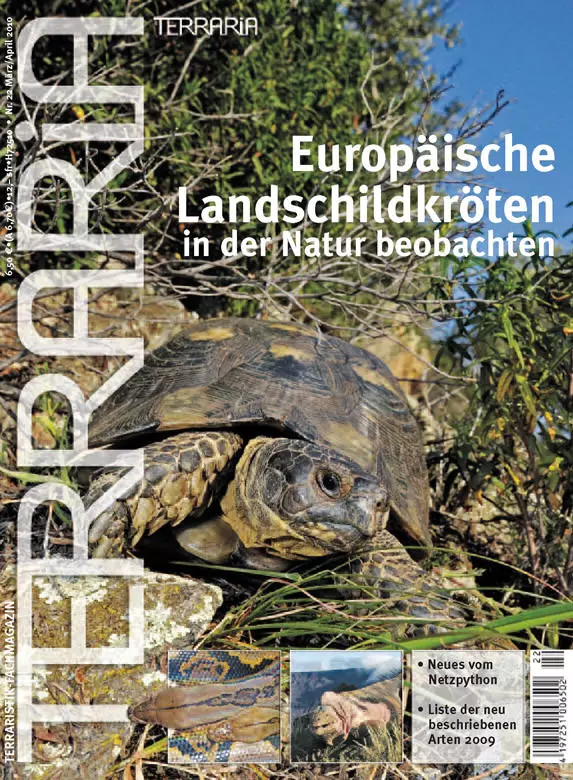
Terraria No. 29 - Incubators for reptile eggs
Schildkrötenjahr: Europäische Landschildkröten im Mai und JuniFreilandterrarien fit für den Sommer machen Inhalt: Ein Schlüsselmoment bei der Nachzucht eierlegender Reptilien ist die Bebrütung der Gelege. Umso wichtiger ist es, Inkubatoren zur Verfügung zu haben, die sowohl die Temperatur als auch die relative Luftfeuchtigkeit zuverlässig regeln. Gerade rechtzeitig zur Nachzuchtsaison 2011 stellen wir Ihnen die verschiedenen Funktionsprinzipien von Brutkästen ausführlich vor, geben Tipps zu den diversen Brutsubstraten und haben die gängigsten Inkubator-Modelle für Sie auf Herz und Nieren geprüft. EditorialMagazinSuche nach verschwundenen Amphibien: vier von 100 Arten wiederentdeckt / Nachschlag / Schlangentagung / Paarung der Gelbgrünen Zornnatter (Hierophis viridiflavus) auf Malta / Rechtliches / Riskante Beute TERRAglobalStrandvergnügen und PazifikleguaneMaik Dobiey Bromelienfrösche – jede NachtMirco Solé TitelthemaEntwicklungsgeschichte der Reptilienzucht und -inkubation – Ein nicht nur historischer ÜberblickHans-Dieter Philippen TestlaufInkubatoren Kriton Kunz SchrankbrüterKriton Kunz Vor- und Nachteile verschiedener InkubationssubstrateHans-Dieter Philippen Das Schildkrötenjahr. Freilandbiologie und Haltung europäischer Landschildkröten über den Jahreslauf. Teil 2: Mai bis Juni – Fortpflanzungszeit Michael Wirth Rhacophorus – Die fliegenden Frösche von Borneo J. Maximilian Dehling Renovierung der Abdeckung des Freilandterrariums für Strumpfbandnattern Helmut Kreyerhoff Reise Die Herpetofauna des westlichen Hohen Atlas in Marokko Uwe Schlüter Abo & Service Neue ArtenListe der im Jahr 2010 neu beschriebenen Reptilien Axel Kwet BlickfangEin Keller voller KGV – und Asseln Michael Wirth In Ihrer Nähe Vorschau Brutkasten Schlimme Nächte: Guayaquil Teil 1: Wir Topchecker-TouristenHeiko Werning

CHF 12.00