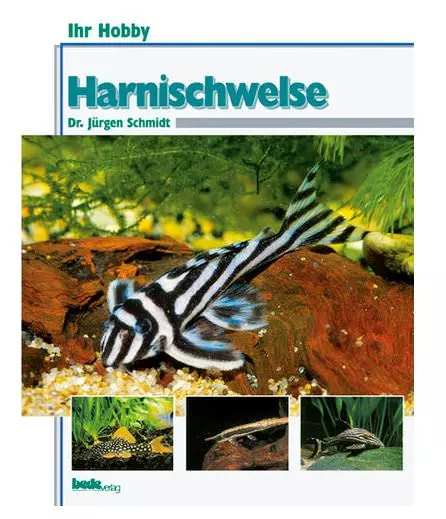
Your Hobby Armoured catfish - 80 fascinating pages about armoured catfish
80 pages
70 colour pictures
hardback
Author Dr Jürgen Schmidt
Publisher Bede at Ulmer
The Loricariidae family is one of the 35 catfish families. The more than 700 described species can be divided into five subfamilies. The lively aquaristic interest since 1988 has ensured that over 400 forms of loricariids have been imported as new or apparently new species. These catfish belong to numerous different genera and subfamilies, but most of them fall into the popular aquarium subfamily Ancistrinae.
Composition
Feeding recommendation
Technical details
Size information
0 of 0 reviews
Give us a rating!
Share your experience with the product with other customers.
Login
No reviews found. Go ahead and share your findings with others.
Primordial Crayfish PrimerPrehistoric crabs lived on our planet before the dinosaurs. They have the fascination of living fossils. The rapid development from an inconspicuous egg from dry earth to an archaic-looking creature has fascinated Kai Alexander Quante since his childhood. Today the aquarist is a recognised expert and experienced practitioner in the field of ecology, aquarium equipment, breeding, care, reproduction and socialisation of prehistoric crayfish in the aquarium. In addition to the well-known brine shrimp Artemia (also known as fish food), the author shows in this practical handbook how to keep, breed and feed prehistoric crustaceans in an aquarium world that will delight young and old.
Practical Aquarium HandbookWell-maintained aquariums give us an insight into the fascinating underwater world. To ensure that everything runs smoothly in the "mini biotopes" and that the inhabitants feel at home, aquarium expert Ulrich Schliewen provides expert information on the natural habitats and interesting behaviour of the fish in the standard reference book, Praxishandbuch Aquarium. Everything important about water and technology is explained in an easy-to-understand way. Topics such as decoration and planting, set-up and care, socialising fish as well as reproduction and breeding leave no questions unanswered. The comprehensive portrait section with over 400 species of fish, amphibians and invertebrates provides an excellent overview and opens up a wide range of possible combinations for your dream aquarium. Extras: "Nano aquariums - small fish in mini tanks" and "Getting started in marine aquariums - a home for Nemo". Many practical tips, checklists, tables, tests and special elements such as the Quickfinder (knowledge from A to Z at a glance, with topic-related chapter references), question-and-answer pages (practical knowledge transfer), science-and-practice pages (up-to-date specialist knowledge, practical for all aquarists, whether beginners or advanced) and the "What to do if ..." section (expert help with everyday problems). (competent help with everyday problems) make the book an indispensable standard work for every aquarist.
Hobby: Catfish by Dr Jürgren SchmidtThere are many small species of catfish, some of which are currently available in specialised shops. These include a large number of highly interesting species. They really bring life into the aquarium during feeding and especially at night. The interested aquarist will not miss it when the lights go out in the evening. Catfish are simply fascinating. Contents: -The catfish aquarium -The reproduction of catfish - Species section.
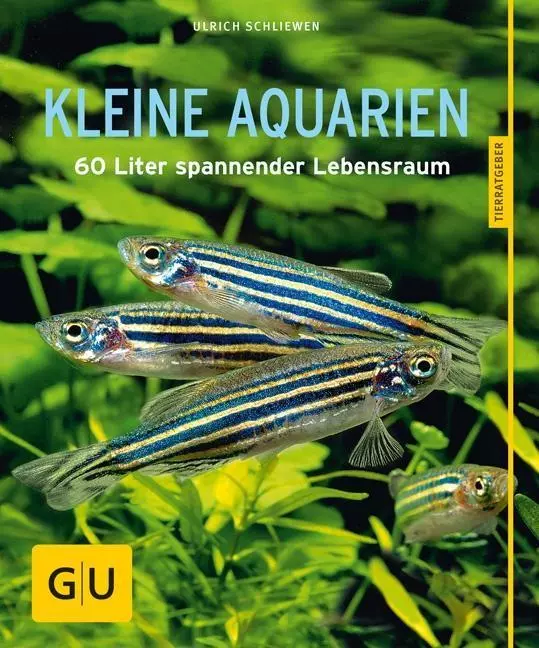
Small aquariums - Underwater world in miniature format
64 pages
color illustrations
practical tips
Author Ulrich Schliewen
Publisher GU
Underwater world in miniature: Small aquariums are particularly popular because they also fit into the smallest apartment. The first guide on this topic shows which fish and plants are suitable for small pools of up to 60 cm in length and are comfortable together. With many practical tips on the right equipment of the aquarium and the proper care of its inhabitants.
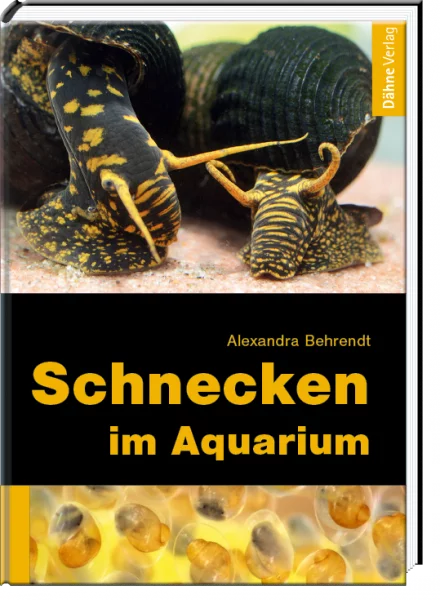
Snails in the aquarium - All important information about snails in your freshwater aquarium
160 pages
200 colour illustrations
hardback
1st edition
Author Alexandra Behrendt
Publisher Dähne Verlag
Systematics and anatomy
Genus and species
Aquarium
Diseases
etc.
With the shrimp boom, many different snails have also found their way into our aquariums in recent years due to their beauty and interesting behaviour. Whether native species that have accidentally found their way into our aquariums or exotic species from distant countries, whether for a community aquarium or a special species aquarium, the choice is now huge. The most important genera and species are presented here with their special characteristics and individual requirements.
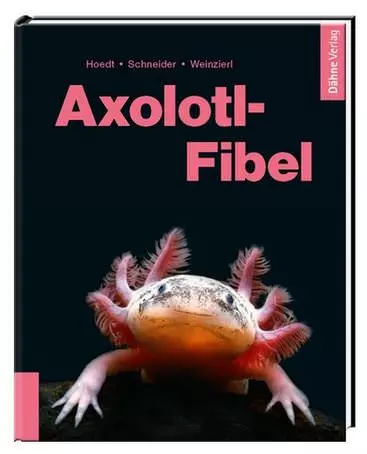
Dähne Verlag - Axolotl Primer
Everything you need to know about keeping and colouring these fascinating amphibians.
96 pages
150 photos
hardback
Authors Hoedt, Schneider and Weinzierl
Publisher Dähne Verlag
The fascinating axolotl has become increasingly popular and there are now also different colour forms. The authors present the most important colour forms and give tips on how to set them up and keep them correctly.
The NTV - Behaviour of Aquarium Fish is a summary of the contributions to the symposium.
208 pages
Photos, drawings, graphical illustrations and tables
hardback
Authors Rüdiger Riehl and Hartmut Greven
The book is a summary of the contributions to the symposium "Behaviour of Aquarium Fish (2)", which took place from 26 to 28 May 2000 in the Löbbecke Museum and Aquazoo of the city of Düsseldorf.The book features contributions from scientists who have, for the most part, been studying the reproductive behaviour of aquarium fish for many years, as well as aquarists who have observed and bred their fish over the years with the utmost care and admirable empathy. In this way, the book exemplifies a complementary collaboration between science and hobby aquaristics.
232 exciting pages Cichlids from West Africa with 237 color photos!
232 pages
237 color photos
Hardcover
Authors H. Linke and dr. staeck
Publisher Tetra-Verlag
The book, with its 232 pages and 237 color photographs, is an ideal handbook for identification, care and breeding.
232 exciting pages about cichlids from East Africa with 201 colour photos!
232 pages
201 colour photos & maps
Drawings
Hardcover
6 edition 2014
Author Dr Wolfgang Staeck
Available from Tetra-Verlag
The book has 232 pages and is a standard work on the Malawi and Lake Tanganyika cichlids. They are among the most popular aquarium fish as they are easy to keep. The book deals with the selection of species and their care in the aquarium. It also reports on their reproduction and lifestyle.
My Aquarium - The great GU Praxish book for every aquarium lover
287 pages
many color photos
bound
Author Ulrich Schliewen
Publisher Gräfe & Unzer
The author describes in this book the natural habitat and the interesting behavior of the fish. Everything is explained easily, so is everything about water and technology. It also describes the decoration, planting, furnishing and care, socialization of fish and also the propagation and breeding. With 400 species of fish, amphibians and invertebrates in the portrait. With tips, checklists, tables, tests and the Quickfinder, the book becomes a standard wake-up for every aquarium enthusiast.
Der Wels Atlas Band 1 beschreibt verschiedene Welsfamilien
944 Seiten
über 900 Fotos
gebunden im Schutzumschlag
Autor Hans-Georg Evers und Ingo Seidel
Verlag Mergus
Die Harnischwelse bilden die grösste Gruppe südamerikanischer Welse. Viele Arten sind beliebte Aquarienpfleglinge. Dieser Band ist der erste von zwei Teilen einer ausführlichen Bearbeitung der Familie Loricariidae. Schwerpunkte dieses in der zweiten Auflage erweiterten Bandes sind ein einleitender Teil mit Vorstellung der Lebensräume und ausführlichen Pflege- und Zuchthinweisen sowie die Besprechnung der Unterfamilien Hypoptopomatinae und Loricariinae. Ein weiterer Teil stellt die Welsfamilien Cetopsidae, Nematogenyidae und Trichomycteridae vor.
The Seawater Atlas Volume 2 describes invertebrates
736 pages
675 photos
hardback
Author Dr Harry Erhardt and Dr Horst Moosleitner
Mergus
Seawater Atlas Volume 2 deals with invertebrates, from sponges, stony and leather corals to nudibranchs. More than 600 species are presented in over 670 photos. The diversity in form and colour, the habits and needs of invertebrates in the aquarium and in nature are vividly presented in pictures and text. Divers and aquarists will find this a successful work. Seawater Atlas Volumes 2 and 3 form a single unit.
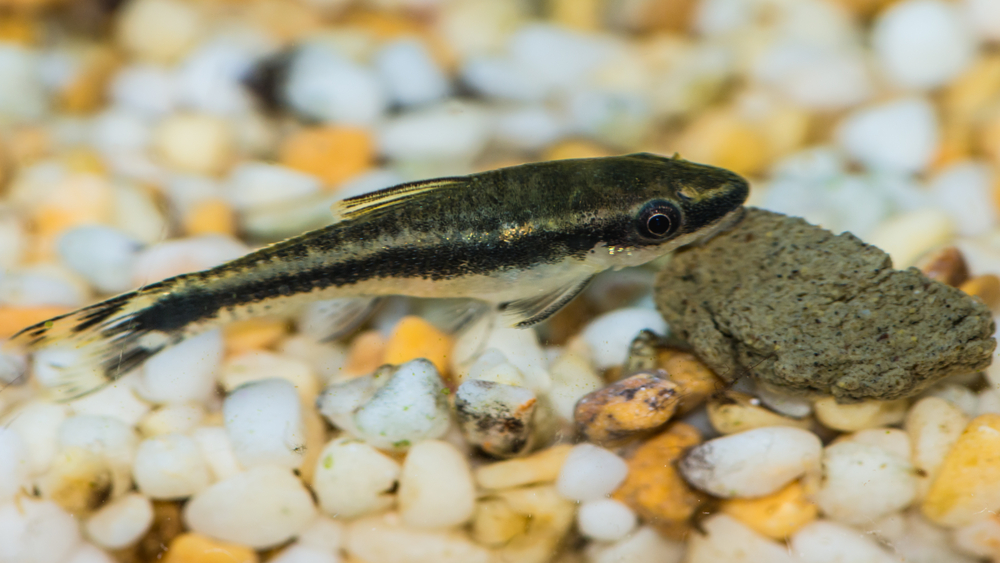
Longitudinally striped lattice-barred loricariid catfishArea of originOtocinclus vittatus lives in clear, oxygen-rich waters of the Amazon and Orinoco regions.
Mostly in shallow river zones with dense vegetation, plenty of plants and roots.SpeciesThe genus Otocinclus includes around 19 species. Many look very similar.
The species frequently offered in the pet trade includeOtocinclus vittatusOtocinclus macrospilusOtocinclus affinis (usually misnamed - true species rare)Otocinclus cocama (Zebra Otocinclus - rare)Social behaviourExtremely peaceful.
Very social - active and relaxed in groups.
Shy when kept alone.
Ideal for community tanks with small, calm fish.
Perfect algae eaters (especially green algae & growth)Keeping conditionsWell-planted aquarium with plenty of surfaces to graze on.
Not a newer, "sterile" aquarium - need biofilm!
Soft to medium-hard water.
High oxygen levels.
No aggressive co-inhabitants.
Caution with medication → sensitive to chemicalsBreedingRare in the aquarium, but possible.
Group spawners.
Males engage in courtship → Females attach eggs to discs and plants.
Parents occasionally eat eggs.
Juveniles require the finest growth food / spirulina-based powdered food.
Very sensitive rearing.BpeculiaritiesOne of the best algae eaters for small aquaria. Very peaceful and ideal for shrimp tanks (does not eat juveniles). Very sensitive during transport and acclimatisation.
Needs stable water values and regular feeding with green food. Must be kept in groups. ConclusionOtocinclus vittatus is an extremely peaceful, useful and social dwarf catfish that is particularly well suited to planted, quiet aquaria. It is an excellent algae eater, but needs stable water values, good acclimatisation and always a group. Properly cared for, it is a valuable and friendly helper in the aquarium.If you have any questions or problems, our trained team at Zoo Roco is here to help. They can provide expert advice on all matters.