Rodentia 58 - As if old iron - Rabbit and rodents in old age

Article no: rodentia58

CHF 10.90

Stock: 4

Available, delivery time: 1-3 days

Delivery between Tuesday, 5 May and Wednesday, 6 May
Zahlungsarten
Product information "Rodentia 58 - As if old iron - Rabbit and rodents in old age"

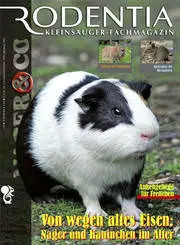
Rodentia 58 - Old iron my arse

Rabbits and rodents in old age

Outdoor enclosure for ferrets
Hygiene for rabbits

Contents:

Even rabbits and rodents such as guinea pigs, coloured rats, hamsters and the like eventually reach old age. Depending on the species and individual, the animals show the first signs of ageing sooner or later, which can be pathological or age-related. In both cases, it is often possible to adapt to these changes in such a way that the seniors continue to feel well. For the owner, this means adapting the housing conditions, diet and care to the special needs of their rabbits or rodents. The cover story of the next issue of RODENTIA – Nager & Co. deals in detail with the special features of keeping and caring for senior rodents and rabbits.

Editorial
Things to know
Tips and dates

My Story
Marie and Maxi – late happiness
Alenka Hornung

Title
Age-related changes in small mammals First signs of ageing recognised in good time
Dr med. vet. Barbara Glöckner

Title
Age-related diseases in coloured rats
Common diseases and typical signs of old age
Sabine Grams

Title
A species-appropriate retirement for long-eared animals
Rabbit “seniors” fit and healthy into old age
Sonja Tschöpe

Attitude
Living with old and disabled guinea pigs
Age- and disability-appropriate husbandry
Christine Wilde

Nutrition
Fresh in the bowl. How is a feed mixture created?
David Küpfer

Animal portrait
The chinchilla in recessive white
Kathrin Aretz

Homemade
No trespassing on the building site. Building an outdoor enclosure for ferrets
Ralf Sistermann

Attitude
It has to be a hamster! Thoughts before acquiring golden and dwarf hamsters
Christine Wilde

Health
Hygiene for rabbits . Practical tips for body and coat care
Kathrin Hentzschel

Portrait
Guinea pigs in Dapple. The latest recognised coat pattern
Sigrid Tooson

Human and animal
Of small mammals and small people . Small mammals in children's hands
Ralf Sistermann

Nutrition
Mice would buy seeds. Natural diet for coloured mice
Christine Nößler

Bookworm

Medicine
Skin and coat changes in rats and gerbils
Dr med. vet. Jennifer Nehls

Consultation with Prof. Dr. Michael Fehr
Classifieds
Service
Internet forums
Preview

Last but not least
Peppi on Tour. Episode 23: Storm-free flat
Kathrin Aretz

Composition
Feeding recommendation
Technical details
Size information

0 of 0 reviews

Give us a rating!

Share your experience with the product with other customers.


Suggested products

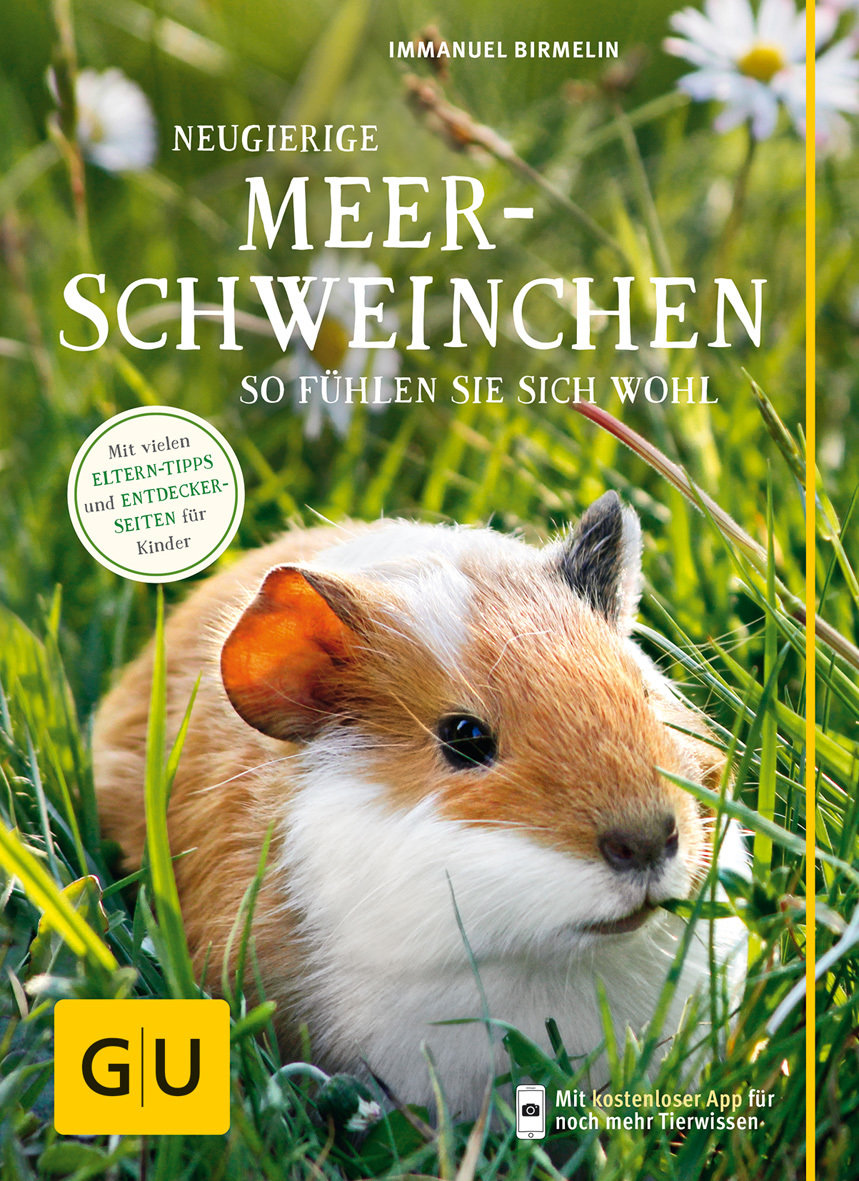
Curious guinea pigs - guide to species-appropriate husbandry
GU Curious guinea pigs - how they feel at home This guide shows what guinea pigs need to feel comfortable in everyday family life - from the right equipment to meaningful activities. With tips for parents and discovery pages, knowledge is conveyed in a way that is easy to understand and suitable for everyday use. Important features Practical guinea pig guide from the GU small animals series With quick start pages, infographics and discovery pages (observation tips/small experiments) Contains tips for parents on how to handle children correctly with the animal Extra: reference to the free GU Pet Plus app Important advantages Helps you to avoid husbandry mistakes so that guinea pigs show typical behavior and feel safe Supports species-appropriate, family-friendly husbandry with clear step-by-step information Promotes activity and observation - ideal if children are to be actively involvedGuinea pigs appear uncomplicated - but in order for them to remain really trusting and show their typical, lively behavior, they need suitable housing conditions. This is exactly where "Curious Guinea Pigs" from the GU Small Animals series comes in: The guide bundles knowledge about a fulfilling guinea pig life and makes it so easy to understand that it can be implemented immediately in everyday life. The author, Dr. Immanuel Birmelin, a well-known behavioral researcher, shares his experiences from years of keeping and researching guinea pigs and explains what is important in practice. You will receive guidance on key topics such as equipment, care and activity - the very things that determine whether your animals feel safe and become active. The book is particularly family-friendly, with quick-start pages for a quick introduction and infographics that show important information at a glance. There are also discovery pages with observation tips and small ideas that encourage children (and adults) to understand guinea pigs better - instead of just "having" them. In addition, tips for parents help children to treat the animals correctly and respectfully. Zoo-Roco tip Guinea pigs are very much group animals: plan the housing from the outset so that your animals have social contact, opportunities to retreat and something to do. If you are unsure whether your enclosure, structure or feeding is suitable, make a note of your questions as you read - this way you can implement the tips in your home.

CHF 21.50

GU Guinea pigs
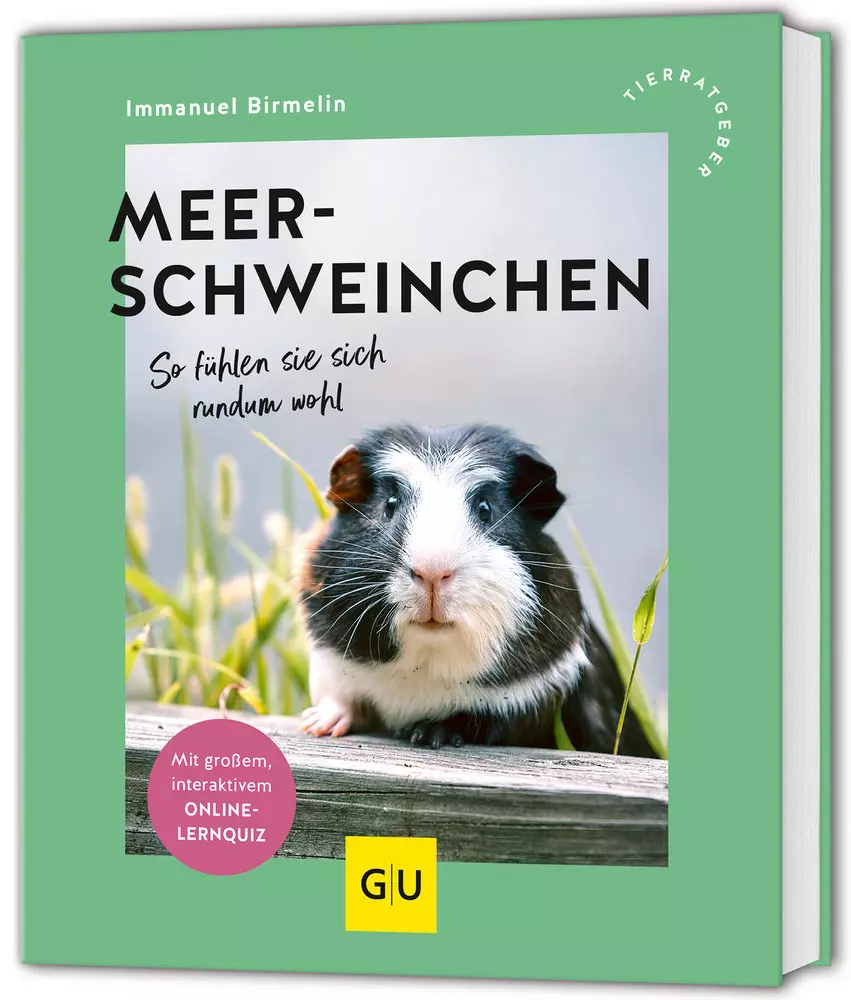
Guinea pigs - How to make them feel good all roundBlurbEverything beginners and real guinea pig fans need to know about keeping and the special needs of these lively rodents.needs of these lively rodents - so that animals and humans feel at home together under one roof.SummaryAll the basics and practical tips from the experts - for happy rodents Guinea pigs are mainly cute, but boring? Not at all! These little South Americans like to go on voyages of discovery and are also really clever. They love company and prove to be real chatterboxes, squeaking and cooing to keep in constant contact with their conspecifics. In the new, completely revised GU Animal Guide to Guinea Pigs, renowned behavioral scientist Dr. Immanuel Birmelin explains what these cute rodents need to feel completely at ease. Whether it's cage equipment, nutrition, care or health: you will learn everything you need to know about keeping guinea pigs in a species-appropriate way in a quick, clear and entertaining way. There are also numerous tips on how to keep the animals moving in an outdoor enclosure in the home, on the balcony or in the garden and provide plenty of variety in your guinea pigs' everyday lives.Sound expert knowledge:Renowned behaviorist Dr. Immanuel Birmelin explains everything you need to know about guinea pigs, their adorable quirks and how to keep and care for them appropriately. Varied activities: With lots of tips for an exciting and healthy guinea pig life - indoors and outdoors. Practical instructions: With easy-to-understand instructions and practical tips, the book helps you to better understand the needs of guinea pigs and provide them with a home in which they feel completely at ease.

CHF 18.50

Hamster
Hamsters - How to make them feel good all roundBlurbEverything beginners and hamster fans need to know about keeping these small rodents and their special needs - so that animals and humans feel at home together under one roof Summary So your hamster feels completely at ease. Hamsters are real night owls: they only really come to life when it gets dark. Then they climb, burrow and of course "hamster" for all they're worth. In the new, completely revised GU hamster pet guide, you will learn what your hamster needs to feel completely at ease - how to acclimatize it step by step, what it likes and what keeps it healthy and how to satisfy its strong urge to move. You will find lots of ideas for exciting activities and find out how the hamster house and enclosure should look and be equipped to meet the needs of these small rodents. The guide is rounded off with tried and tested tips on selection and purchase, offspring, illnesses and veterinary emergencies. Behavioral scientist Peter Fritzsche also explains typical animal behavior. You can then test your hamster knowledge in the large online hamster quiz and be well prepared for the arrival of your new pet.Comprehensive hamster care: Find out how to keep your hamster happy and healthy from settling in to species-appropriate keeping.Creative activity ideas: Discover numerous ideas on how to encourage your nocturnal hamster's strong urge to move in a sensible and exciting way.Expert knowledge and practical tips: The guide offers practical tips on selection, care and emergencies as well as an online quiz to test and expand your hamster knowledge.

CHF 18.50

Djungarian dwarf hamsters
The Djungarian dwarf hamsterPhodopus sungorus from Zachrau AndreaBlurbThe Djungarian dwarf hamster is one of the smallest pets in the world and takes hearts by storm with its beady eyes, loyal gaze and soft fur. In this guide, you will learn all about the dwarf hamster's distribution and habitat, as well as everything you need to know about enclosure size, furnishings and food. Read everything you need to know to better understand the behaviour of these small rodents and how to prevent diseases. Summary The Djungarian dwarf hamster is one of the smallest pets in the world and takes hearts by storm with its beady eyes, loyal gaze and soft fur. In this guide by Andrea Zachrau, you will learn about the dwarf hamster's distribution and habitat as well as everything you need to know about enclosure size, furnishings and food. Read everything you need to know to better understand the behaviour of these small rodents and how to prevent diseases. Each volume offers you detailed, practical care instructions and you will find all the information you need to successfully breed your animals. All the important questions, from housing to furnishings, technical equipment, species-appropriate nutrition and disease prevention, are answered with numerous tricks and tips. Experienced, long-standing breeders reveal how you can encourage the animals to reproduce and raise the young in good health, all in full colour, generously illustrated and attractively designed - species by species.

CHF 21.50

Guinea pigs
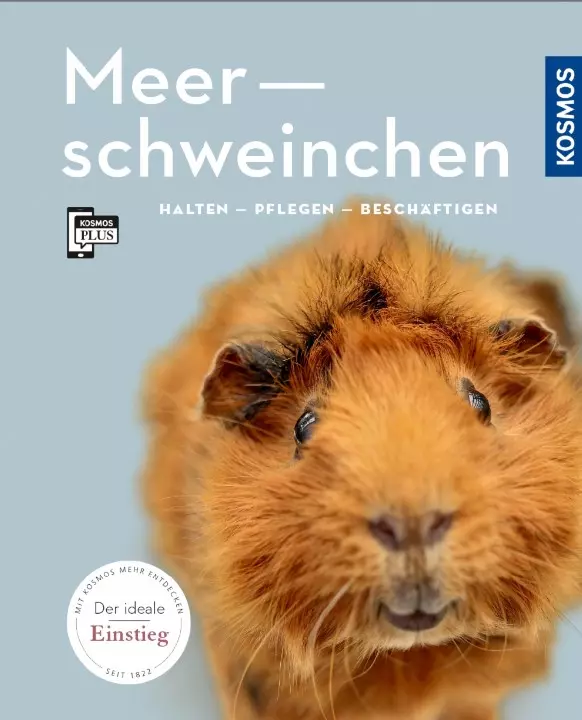
Guinea pigs keeping, caring for and keeping activefrom Beck AngelaBlurbA life in pairs or in a small group, a nice enclosure and daily free run make guinea pigs happy. Optimum husbandry, a healthy diet and an understanding of their nature provide security in their daily life together. A wealth of play ideas provides variety and strengthens the relationship between humans and animals. Everything that is important for species-appropriate keeping: from the selection and housing of guinea pigs to feeding, care and activity. The plus to the book: the free KOSMOS PLUS app with additional information and films.

CHF 14.50

Dwarf rabbit
Dwarf rabbitkeeping, caring for and keeping active from Beck AngelaBlurbPlenty of space to hop around, dig and make hooks, a life in pairs or in a group - that's what makes dwarf rabbits happy. Optimum husbandry, a healthy diet and an understanding of their nature provide security in their daily life together. Many play ideas provide variety and strengthen the relationship between humans and animals. Everything that is important for species-appropriate keeping: from the selection and housing of dwarf rabbits to feeding, care and activity. The plus to the book: the free KOSMOS PLUS app with additional information and films.

CHF 14.50

Atlas plants for pets
Can my cat eat daisies? Is it safe if my Wellensitticham Ficus nibbles? Broken down by wild plants, house and garden plants, fodder plants, herbs, poisonous and medicinal plants are described with which pet animals may come into contact. With advice for individual species.

CHF 21.90

The Persian gerbil
The Persian gerbil book Among the many gerbil species, Persian gerbils are something very special. Their graceful appearance and highly interesting behaviour make the "Persians", as they are affectionately called by many owners, fascinating pets. Due to their curiosity and open-mindedness towards humans, they are also real "heartbreakers" Unfortunately, there is hardly any literature on keeping and breeding these beady-eyed rodents. Author Anne Weber is editor-in-chief of the small mammal specialist magazine RODENTIA and summarises her many years of experience with the care and breeding of "Persians" here. Benefit from her practical tips and detailed husbandry descriptions so that you can enjoy your Persian gerbils right from the start! Contents:Biology,Acquisition,Husbandry,Food and water,Keeping healthy,Fun and games,Offspring

CHF 21.50

Rodentia 01 - Chinchillas
Rodentia 01 - Chinchillas Guinea pigs in the gardenDegus and their relativesSee the most beautiful rats Contents: 2 INTERN 3 EDITORIAL AND ADVISORY BOARD 5 INTERESTING FACTS 11 legal 12 Dates & TIPS 15 MY STORY: Refined guinea pig, by Marion Zeddies 16 PHOTOstory: Chinchillas, by Christian Brüggemann 23 KEEPING AND BREEDING: The keeping of chinchillas, by Anke Suchy 28 REISE: Amy and the chinchillas, by Dr Martina Raffel 34 KEEPING AND BREEDING: Chinchilla colour breeding, by Rebecca Schmidt 38 BIOLOGY: Chinchilla genetics, by Christian Brüggemann 39 POSTER: The Campbell dwarf hamster, by Christian Brüggemann 43 HEIMISCHE TIERWELT: The brown hare gives up the spoons, by Christian Brüggemann 46 REPORTAGE: Guinea pigs in the garden, by Iris Küster 51 KEEPING AND BREEDING: The breeding of Virginia opossums, by Dirk Fußbahn 54 REPORTAGE: See the most beautiful: Rat exhibitions in Germany, by Simone Grigat 58 KEEPING AND BREEDING: Together they are strong: spiny mice, by Frank Böhme & Peter Kneisel 61 KEEPING AND BREEDING: Degus and their relatives, by Sabine Gehrsitz 64 KEEPING AND BREEDING: Persian gerbil, by Michael Herting 66 ZOOLOGISCHE GÄRTEN: The Zoo of Small Mammals: Tierpark Berlin, by Christian Kern 70 SPRECHSTUNDE: Anaesthesia in small rodents and rabbits, by Andreas Küster 73 SCIENCE: What kind of house does the mouse want?, by Lars Lewejohann 76 MAUSKLICK 77 RAT & TAT 78 BOOK REVIEW 80 snickers' wild life: Wild Westphalia, by Christian Brüggemann

CHF 9.80

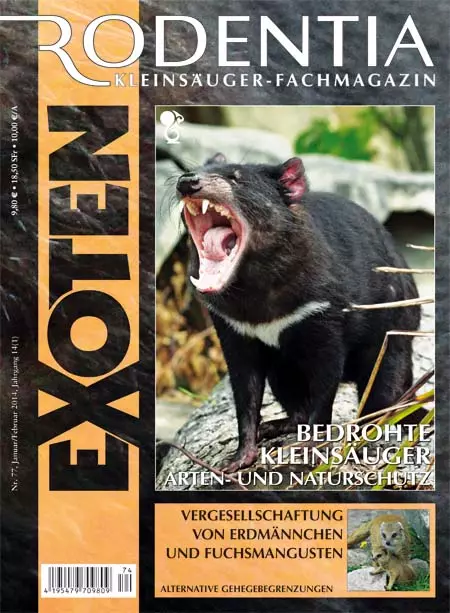
Rodentia 77 - Endangered small mammals
Rodentia 77 - Endangered Small Mammals Socialisation of meerkats and fox mongoosesAlternative enclosure boundaries Contents: Cover story: Endangered small mammals – species and nature conservationWhen it comes to helping (endangered) animal species, the first image that comes to mind for many people is the symbol of international nature and species conservation, the giant panda. But not only “prominent” – frequently featured in the media – species such as the river dolphin and the mountain gorilla are fighting for survival in their original habitats; numerous small mammals are among the species that are highly endangered. For example, the European mink (Mustela lutreola) and the golden lion tamarin (Leontopithecus rosalia) are among the most endangered mammal species of all. Their fate is far less well known, and so there is a risk that many species will quietly and largely unnoticed disappear from our planet in the coming decades. To prevent this, various organisations, in cooperation with zoological institutions and universities, are fighting for the continued existence of the affected species. The measures are diverse and range from research and breeding in human care to nature conservation on site, in the shrinking habitats of the still existing populations. In the cover story of the next issue of RODENTIA – Exoten, you will learn more about endangered small mammal species and their prospects for the future.Internal MagazineDates & tipsPhoto story Endangered biodiversityThe necessity of nature and species conservationAnne Weber Reportage      Small treasures of the zoos. How zoological institutions are committed to small mammalsSandra Honigs ReportageThe Roloway monkey – endangered beauty of West AfricaSandra Reichler Research                 Priodontes maximus must not die. The Pantanal Giant Armadillo Project         Arnaud L. J. Desbiez, Danilo Kluyber, Gabriel F. Massocato and Renata C. F. Santos Reportage      Like a phoenix from the ashes: The return of a prairie landmarkNigel Parr Reportage                  When zoologists travel … Small mammals in the zoos of Southern California and ArizonaKlaus Rudloff PortraitThe spotted elephant shrew (Rhynochocyon cirnei)Anne Weber Keeping and breeding        Chaos included – the hand-rearing of raccoonsRalf Sistermann PoliticsAfter the election is before the election. Animal husbandry and politicsRalf Sistermann KeepingWithout bars – alternative boundaries for enclosuresHannes Lüke Subscription & Service ReportageWildlife Aid Fiel – a paradise at the end of the worldCaroline Altmayer Keeping and breedingFox mongooses and meerkats. A new communal enclosure at Nuremberg ZooBjörn Jordan KeepingUpgrading for escape artists. An outdoor enclosure for black-tailed prairie dogsVirginia Lauterbach KeepingBy no means dwarf– the Asian small-clawed otterRalf Sistermann Keeping Exotic pets in the home – How close to nature should the keeping be?Ralf Sistermann Expedition RodentiaTasmania – Australia’s “wild” islandPeter Stange Internet forums for small mammal keepersPreview Animal & HonestSquirrels and yummy crittersChristian Ehrlich

CHF 28.50

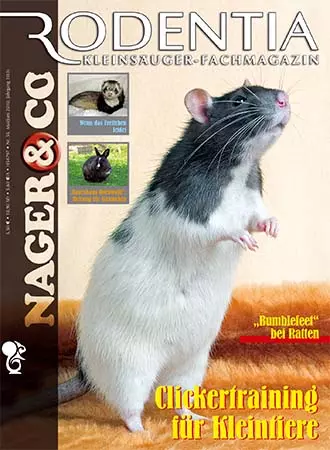
Rodentia 55 - Clicker training for small animals
Rodentia 55 - Clicker training for small animals When the ferret suffers"Hasenhaus Odenwald": Rescue for rabbits"Bumblefeet" for rats Contents: Editorial Things to know Tips and dates My Story One and one makes 14 by Verena Daugs Title Clicker training with guinea pigs. Alternative methods for a more intensive human-animal relationship by Katharina Lang Title Clicker training for rabbits. More fun for long-eared animals with just one click by Kathrin Aretz Title Clicker training with fancy rats. More fun and action in everyday rat life by Stefanie Fricke Health Sick predators. Diseases in ferrets  by Gisela Henke People and animals Guinea pigs are not cuddly toys. Common misunderstandings between humans and animals by Sabrina Moser Nutrition Nuts about it. Nuts in animal nutrition  by David Küpfer Animal portrait The Dalmatian golden hamster (Mesocricetus auratus) by Ralf Sistermann Health Tips from practice. Corn pressure protection rings for bumblefoot prophylaxis by Judith Hößl Animal welfare The “rabbit house in the Odenwald”. A great love for rabbits by Kathrin Hentzschel Breeding Back to nature. Purebred Dzungarian dwarf hamsters are becoming increasingly rare by Andrea Zachrau People and animals A question of morality. Ethics in animal husbandry by Ralf Sistermann Keeping & breeding The darned seventh year. Seven years of experience with “wild Mongols”   by Ralf Sistermann Keeping Chinchillas. Little free spirits with big demands – considerations before purchase by Manulea Laabs Medicine Ectoparasites in guinea pigs by Dr. med. vet. Barbara Glöckner Consultation with Prof. Dr. Michael Fehr Classified ads Service Internet forums Preview Last but not least Peppi on tour. Episode 21: Chaos in the girls’ flatshare by Kathrin Aretz

CHF 10.90

Natural building material clay for keeping birds and small animals
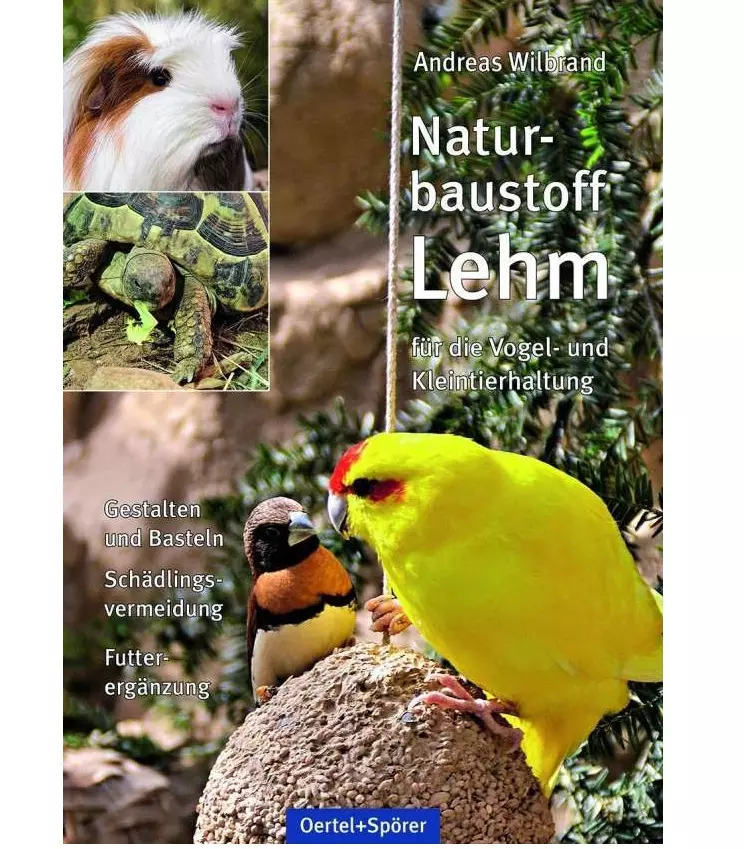
Natural building material clay for keeping birds and small animals The first clay DIY book for animal lovers - a practical guide with simple instructions, new ideas and health tips! Designing and crafting Pest prevention Feed supplement Clay is the oldest and most universal building material in the world. The animal world has been demonstrating for millions of years how it can be used to build safe dwellings. And humans also utilised this building material a long time ago and even created huge and artistic buildings from it. Clay can also be used perfectly for our pets. Building projects for animal housing of all kinds, landscaping in terrariums, soil construction for aquariums, pest control in aviaries, pigeon coops and stables - this book will show you how to do all this and what you need for it.Clay is not only a building material that can almost always be reused, but also contributes to the health of humans and animals. Clay binds toxins, displaces pests and is suitable as a fertiliser. For this reason, the health maintenance of our protégés through clay is also described in detail

CHF 27.90