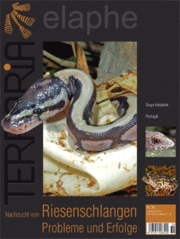
Terraria No. 36 - Breeding of giant snakes

Article no: terraria36

CHF 12.00

Stock: 4

Available, delivery time: 1-3 days

Delivery between Tuesday, 5 May and Wednesday, 6 May
Zahlungsarten
Product information "Terraria No. 36 - Breeding of giant snakes"


Grays Kielskink
Portugal

Inhalt:

Titelthema: Nachzucht von Riesenschlangen – Probleme und Erfolge
Viele Vertreter der Riesenschlangen sind in der Natur besonders gefährdet, gleichzeitig gehören sie zu den beliebtesten Pfleglingen in unseren Terrarien. Wir wagen eine Bestandsaufnahme: Wie sieht es aus mit diesen faszinierenden Reptilien in der Terraristik? Außerdem berichtet Michèl Kroneis über immer wiederkehrende Probleme beim Schlupf Grüner Baumpythons, Ralf Mößle über die erfolgreiche Terrarien-Nachzucht der größten Schlange überhaupt, der Grünen Anakonda.

Territorial
Herpetorama

Titelthema
Riesenschlangenhaltung im Lauf der Zeit
Hans-Dieter Philippen

Haltung, Pflege und Zucht der Großen Anakonda (Eunectes murinus)
Ralf Mößle

Der Grüne Baumpython: vom mysteriösen Absterben schlupfreifer Jungtiere Michél Kroneis

Panorama

Terraglobal
Medizin-Echsen
Fabio Cupul

Knapp am Tod vorbei. Teil 1
Joachim Bulian

Terarristik – ein brandgefährliches Hobby
Stephan Müller

Herpetologische Streifzüge durch die Montados Portugals
Rudolf Malkmus

Forschung
Neue Arten
Aus eins mach drei: zwei neue Arten bei den afrikanischen Gelenkschildkröten Axel Kwet

Unter Forschern
Die Stecknadel im Heuhaufen – auf Schlangensuche im Nationalpark Ulu Temburong, Brunei
Silke Schweiger & Thomas Wampula

Stammesgeschichte der Froschgattung Gephyromantis in Madagaskar
Nathalie Kaffenberger

Salamandra

Terraristik
Klassiker. Die Steppenschildkröte

Grays Kielskink (Tropidophorus grayi Günther, 1861)
Maren Gaulke

Soziale Vogelspinnen aus Afrika
Ingo Wendt, Frank Schneider & Boris F. Striffler

Weitere Beobachtungen zum Geschlechtsdimorphismus bei der Bergbachmolchart Neurergus crocatus
Jürgen Fleck

Natur- und Artenschutz
Feldnotizen. Ameise versus Jungkröte
Jörg Rozycki

Tote Eidechsennatter in Spähhaltung
Axel Kwet

Griechische Teichmolche in Österreich. Bereicherung oder Bedrohung? Hans-Jürgen Luef

Vermisst
Delcourts Riesengecko (Hoplodactylus delcourti)

Auch in Ihrer Nähe
Abo & Service
Galerie
Verschwenderische Schönheit

Vorschau

Brutkasten
Familienausflug, Teil 2
Heiko Werning


Composition
Feeding recommendation
Technical details
Size information

0 of 0 reviews

Give us a rating!

Share your experience with the product with other customers.


Suggested products

Handbook of food plants for tortoises and other reptiles
Handbook of forage plants 2nd revised editionMarion Minch is not only a successful breeder of diverse tortoises for many years, but also an excellent connoisseur of native wild herbs. She founded and runs samenkiste.de, which is well known to many tortoise keepers and nature lovers. Her name is inextricably linked with reptile care and species-appropriate nutrition for tortoises. Her handbook of food plants summarises the most important native food plants for herbivorous and omnivorous reptiles. She not only considers tortoises, but also iguanas, spiny-tailed dragons and even chameleons. From the basics of plant biology to native wild herbs to suitable food plants for hardy tropical reptile species, this comprehensive work provides the basis for species-appropriate keeping. In the expanded and supplemented 2nd edition, the plant section is divided according to flower colour. This makes it even easier to identify wild herbs. The work has also been supplemented with a wealth of additional information and many pictures.

CHF 46.50

Geckos
Geckos in the terrarium by Astrid FalkThe book offers a comprehensive introduction to geckos and their species-appropriate keeping in terrariums. It explains what you need to think about before buying a gecko and what preparations should be made. The book describes in detail how the terrarium is technically equipped and set up. The care of the animals, their special features and behaviour, their diet, reproduction and rearing of young animals are described, as well as diseases and husbandry problems with tried and tested suggestions for prevention and treatment. Individual gecko species that are particularly suitable for keeping and breeding in terrariums are portrayed in detail in the second part of the book.

CHF 28.50

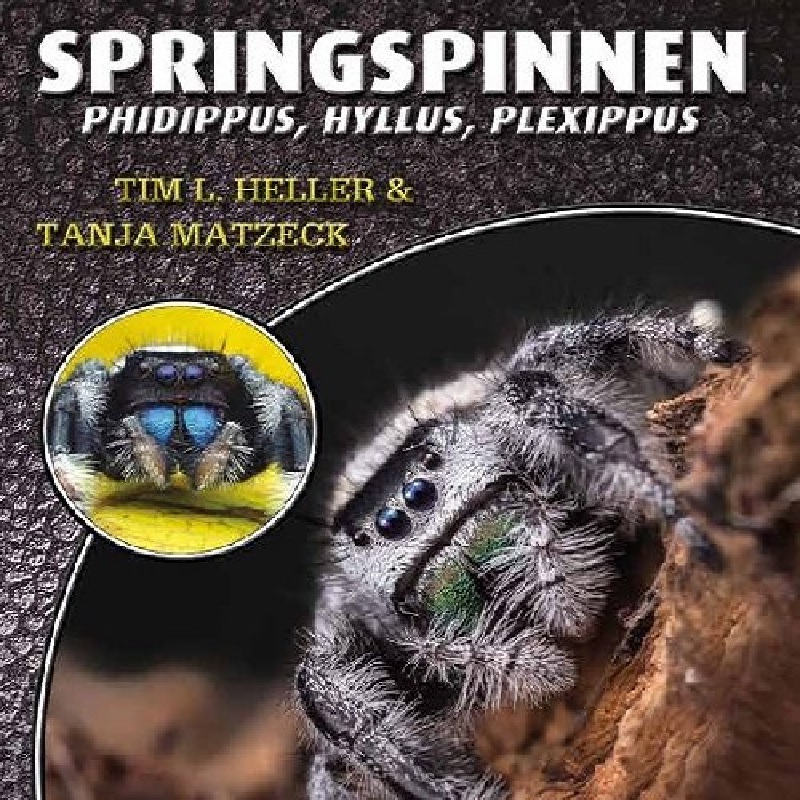
Jumping spiders Phidippus, Hyllus, Plexippus
Book Jumping Spiders - Phidippus, Hyllus & Plexippus A guide to keeping jumping spiders of the genera Phidippus, Hyllus & Plexippus. Who can resist the charm of jumping spiders? The childlike appearance of their expressive face simply leaves no one cold! In addition, their behavior is extremely exciting to observe, their colors are bright and their requirements for species-appropriate keeping are very easy to meet. No wonder these likeable jumpers are all the rage! This volume in the "Species by Species" series describes in detail what to look out for when buying and keeping them, introduces the most commonly kept species and color forms and provides plenty of tips on how to keep them successfully - so you can be sure they will breed well! Species by Species introduces you to the books in this series, which present the most popular terrarium animals. Each volume offers you detailed, practical care instructions and all the information you need to successfully breed your animals. All important questions from the required tank size to terrarium set-up, technical equipment, species-appropriate nutrition and disease prevention are answered with numerous tricks and tips. Experienced, long-standing breeders reveal how you can encourage the animals to reproduce and raise healthy young. All this in full color, generously illustrated and attractively designed - just about your terrarium animal - species by species

CHF 23.90

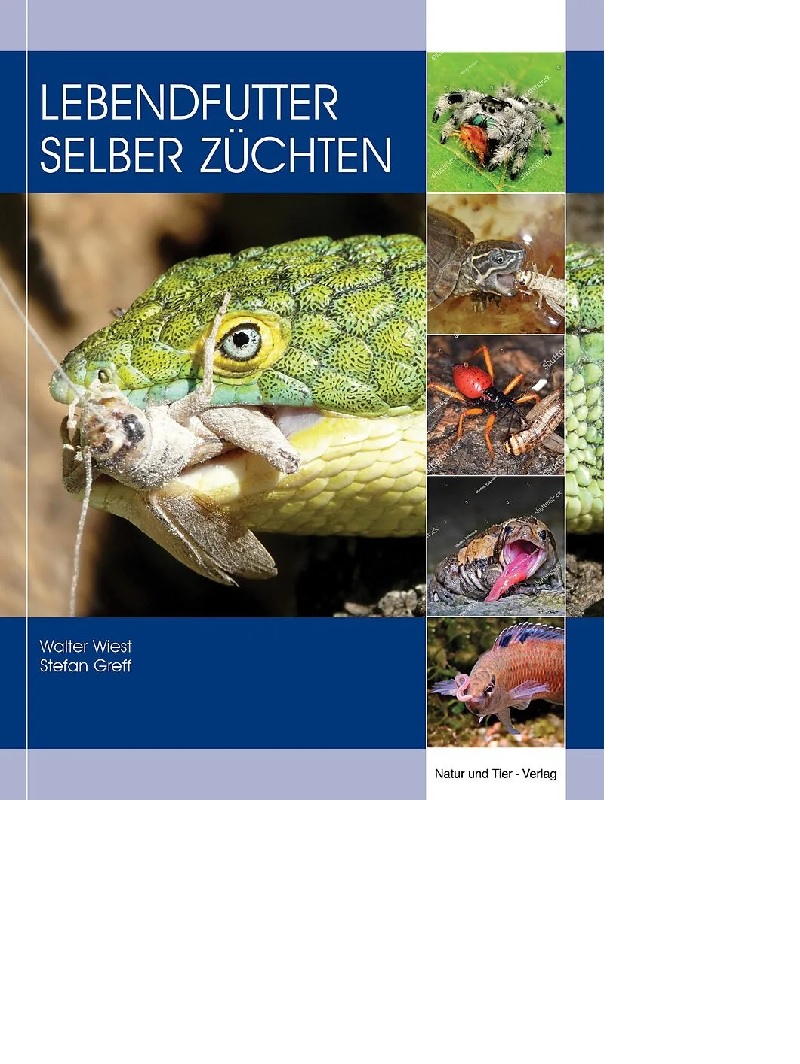
Book Breeding live food yourself
Book "Grow your own live food" - The perfect guide for pet owners Discover practical and detailed instructions on how you can easily breed food for your reptiles, birds, fish or other animals yourself in the book "Breeding live food yourself". With valuable tips on various food insects, their care and breeding, you can save money and ensure a species-appropriate diet for your pets. Contents of the book: Step-by-step instructions for breeding feeder insects Information on the best types of food for reptiles, birds and fish Care instructions and breeding conditions for various live food species Tips for sustainable and cost-effective food production Why breed your own live food? Get healthy, fresh food for your animals Save money and reduce dependence on pet shops Promote the health and well-being of your animals with species-appropriate food Whether you are a beginner or an experienced pet owner, this book provides you with everything you need to successfully breed live food yourself.

CHF 46.50

Marginata 69 - New Guinea tortoises
Marginata 69 - New Guinea tortoises – the genus ElseyaCover storyThe unrecognised beauties: New Guinea tortoises (Andreas S. Hennig)My experiences with Branderhorst's New Guinea tortoise, Elseya (Elseya) branderhorsti (Ouwens, 1914) (Andreas S. Hennig)Keeping and breeding of Rhodin's New Guinea tortoise, Elseya (Hanwarachelys) rhodini Thomson, Amepou, Anamiato & Georges, 2015 (Andreas S. Hennig)PortraitGeoemyda spengleri, Chinese serrated tortoise (Andreas S. Hennig)ReportageMacrochelys temminckii – Experiences and impressions with vulture tortoises part 2 (Reiner Praschag)KeepingAn alternative to year-round keeping of the Egyptian tortoise in the terrarium – my experiences with seasonal outdoor keeping of Testudo kleinmanni (Ricarda Schramm)EtymologySawbacks and living maps part 4: Graptemys gibbonsi, Pascagoula humpback tortoise (Holger Vetter)Classifieds & animal placement

CHF 16.50

GU, tortoises
GU, tortoises - Guide to keeping, care, nutrition and health of tortoises 64 pages colour illustrations and photos Paperback Author Hartmut Wilke Tortoises are fascinating, as they are witnesses of times gone by. They also have a large fan base because of their unusual anatomy and their leisurely way of moving through life. Hartmut Wilke has been collecting information on these reptiles for over 20 years and has compiled his concentrated knowledge on keeping tortoises for you in this guide. Great special pages convey the knowledge in an attractive way, e.g. the "behaviour interpreter" explains the animal's behaviour. "At a glance" explains the animal's sensory abilities in words and pictures or how to turn the terrarium into a cosy home. Under "Does well - better not!" you can find out what is important in the first few days with your new pet. And the 10 GU tips for success summarise the information concisely at the end of the book. Do you still have questions after reading the book? Then write to the publisher. Thanks to the GU Expert Service, you have a direct line to a specialist.  

CHF 12.90

Terraria No. 29 - Incubators for reptile eggs
Schildkrötenjahr: Europäische Landschildkröten im Mai und JuniFreilandterrarien fit für den Sommer machen Inhalt: Ein Schlüsselmoment bei der Nachzucht eierlegender Reptilien ist die Bebrütung der Gelege. Umso wichtiger ist es, Inkubatoren zur Verfügung zu haben, die sowohl die Temperatur als auch die relative Luftfeuchtigkeit zuverlässig regeln. Gerade rechtzeitig zur Nachzuchtsaison 2011 stellen wir Ihnen die verschiedenen Funktionsprinzipien von Brutkästen ausführlich vor, geben Tipps zu den diversen Brutsubstraten und haben die gängigsten Inkubator-Modelle für Sie auf Herz und Nieren geprüft. EditorialMagazinSuche nach verschwundenen Amphibien: vier von 100 Arten wiederentdeckt / Nachschlag / Schlangentagung / Paarung der Gelbgrünen Zornnatter (Hierophis viridiflavus) auf Malta / Rechtliches / Riskante Beute TERRAglobalStrandvergnügen und PazifikleguaneMaik Dobiey Bromelienfrösche – jede NachtMirco Solé TitelthemaEntwicklungsgeschichte der Reptilienzucht und -inkubation – Ein nicht nur historischer ÜberblickHans-Dieter Philippen TestlaufInkubatoren Kriton Kunz SchrankbrüterKriton Kunz Vor- und Nachteile verschiedener InkubationssubstrateHans-Dieter Philippen Das Schildkrötenjahr. Freilandbiologie und Haltung europäischer Landschildkröten über den Jahreslauf. Teil 2: Mai bis Juni – Fortpflanzungszeit Michael Wirth Rhacophorus – Die fliegenden Frösche von Borneo J. Maximilian Dehling Renovierung der Abdeckung des Freilandterrariums für Strumpfbandnattern Helmut Kreyerhoff Reise Die Herpetofauna des westlichen Hohen Atlas in Marokko Uwe Schlüter Abo & Service Neue ArtenListe der im Jahr 2010 neu beschriebenen Reptilien Axel Kwet BlickfangEin Keller voller KGV – und Asseln Michael Wirth In Ihrer Nähe Vorschau Brutkasten Schlimme Nächte: Guayaquil Teil 1: Wir Topchecker-TouristenHeiko Werning

CHF 12.00

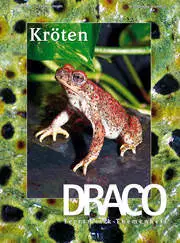
Draco 38 - Toads
Draco 38 - Toads Content:Toads are mysterious, highly interesting animals with a great variety of life strategies. Their observation in the wild is a highlight for everyone interested in nature, and their keeping and reproduction in their own terrarium is very worth the effort - because on the one hand the apparently existing demand for the animals from offspring can be satisfied, but on the other hand it is simply a lot of fun to work successfully with these animals. Anyone who has ever had a few hundred bright-eyed miniature toads hopping around in his breeding tank and raised some of them up to sexual maturity knows what we are talking about. Because toads are really ideal terrarium animals. Many of them are very attractive at first or at least at second glance, do not have too high demands on care and turn out to be attentive and - of course - greedy contemporaries who like to "shoot" a delicacy out of the keeper's hand.For a long time now, we have wanted to introduce you to toads in more detail, tell you about their biology, but also and above all about successful breeding attempts - with this issue of DRACO, we are putting this wish into practice. The pictures also show that, contrary to popular opinion, true optical jewels can be found among toads. We hope to be able to inspire you for these wonderful amphibians!2 Editorial4 GoldenEyeToads, unrecognisedsurvival artistKriton Kunz26 Bufo torrenticola keeping and offspring,the Japanese rapids toadWolfgang & Katharina Heuberger30 The toads of the bufo-bufo complex of theCaucasus systematics, biology and postureA. A. Kidov34 Keeping and breeding of Anaxyrus speciosus,of the texas toad, as well as notes onAnaxyrus cognatus, the Prairie ToadAndrea Brenner42 Observation of an amelanistic toad(Bufo bufo) in Lower AustriaHans-Jürgen Luef46 European toadsAxel Kwet54 Keeping and offspring of the South AmericanSpiny Toad (Rhinella granulosa) in theZoo-Aquarium BerlinRobert Seuntjes58 The toads of MexicoFabio Cupul64 Incredible Colossi! Observationsto the Colorado ToadLeo Spinner68 Keeping and breeding the little toad(Ingerophrynus cf. parvus) abouttwo generationsKriton Kunz 77 Bookcase

CHF 18.40

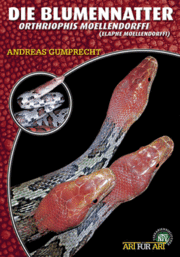
The flower snake
All about the flower snake 64 pages Format: 14.8 x 21 cm numerous colour photos Author Andreas Gumprecht Contents: A large proportion of the animal imports that reach us every year from China consist of various climbing snakes. The majority of these are the flower snakes presented in this book in the "Species by Species" series.Despite this, reports of the successful keeping and breeding of this attractive snake have largely failed to materialise, although from a purely statistical point of view, the flower snake should by now be firmly established in the terrarium hobby.In this guidebook, long-time terrarium keeper and snake expert Andreas Gumprecht shares his positive experiences with the care and reproduction of the flower snake with the reader. Systematics and body structure The fascinating biology: From the life of the flower snake All information on species-appropriate keeping: from suitable terrariums to equipment and technology to feeding Successful breeding: Mating stimulation, incubation of the eggs and rearing the young Solutions to problems: How to avoid the most common mistakes in care and how to help sick animals Brilliant photos

CHF 18.50

Reptilia 72 - Grasshoppers, crickets, house crickets
Reptilia 72 - Grasshoppers, Crickets, House Crickets Jamaican AnoleIndochinese Hinged TurtleSunglow Boas Contents: 2    EDITORIAL 4    REPORTAGE      Potential Dangers of Giant Snakes      by B. Akeret 13  MAGAZINE 21  DATES 24  PHOTOSTORY      Crickets and Grasshoppers      by F. Tomasinelli 32  REPORTAGE      Grasshoppers:      Defence and Survival      by F. Tomasinelli 36  KEEPING AND BREEDING      The Egyptian Migratory Locust     Anacridium aegyptium     by A. Mangoni 40  REPORTAGE      Lord of the Bugs      Visiting Europe’s Largest       Breeding Facility for Feeder Insects      by H. Werning 54  HERPETOFAUNA      The European Tree Frog (Hyla arborea)      “Frog of the Year” in the “Year of the       Frog 2008”      by A. Kwet, A. Nöllert & A. Geiger 64  KEEPING AND BREEDING      Successful Keeping and Offspring of      Cistoclemmys (galbinifrons) bouretti,      the Indochinese Hinged Turtle      by W. & K. Heuberger 73  TRAVEL/KEEPING AND BREEDING      Jamaica, its Iguanas and the      Giant Anole Anolis garmani      by T. Baum 81  KEEPING AND BREEDING      And the Sun Rises … the Sunglow Boa      by R. Ihle & J. Bergman 86  WESTERN HERP PERSPECTIVES      A Turtle Story      by B. Love 91  LIBRARY 104 BRUTKASTEN      Thoughts on the Day of Milk Suffering      by H. Werning

CHF 12.00

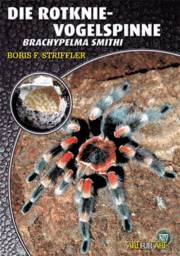
The redknee tarantula
All about the redknee tarantula (Brachypelma smithi) from Boris F. Striffler 64 Seiten 14,8 x 21 cm zahlreiche Farbfotos Taschenbuch Autor Boris F. Striffler Verlag NTV Inhalt: Die Rotknie-Vogelspinne ist sicherlich nicht nur die bekannteste Vogelspinne, sondern auch eine der schönsten. Aber nicht nur ihre attraktive Färbung und das eindrucksvolle Äussere, sondern auch ihr ruhiges Wesen und die leichte Haltbarkeit machten diese Art zu einem der begehrtesten Terrarienpfleglinge überhaupt. Boris F. Striffler beschäftigt sich seit langem wissenschaftlich und als Terrarianer mit Vogelspinnen. In diesem Band der Reihe „Art für Art“ geht er im Detail und leicht verständlich auf sämtliche wissenswerten Aspekte der Haltung und Pflege von Rotknie-Vogelspinnen ein. Und selbstverständlich vermittelt er Ihnen auch, wie Sie Ihre Lieblinge zur Vermehrung bringen und die Jungspinnen aufziehen können. Systematik und Körperbau Die faszinierende Biologie: Aus dem Leben der Rotknie-Vogelspinne Alle Informationen zur artgerechten Haltung: Vom geeigneten Terrarium über Einrichtung und Technik bis hin zur Fütterung Erfolgreich nachzüchten: Paarungsstimulation, verschiedene Methoden zur Eizeitigung und Aufzucht der Jungtiere Problemlösungen: Wie man die häufigsten Fehler bei der Pflege vermeidet, und wie man kranken Tieren helfen kann Brillante Fotos

CHF 21.90

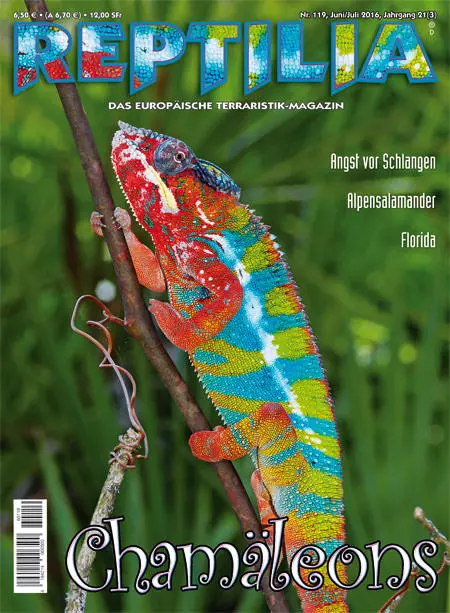
Reptilia 119 - Chameleons
Reptilia 119 - Chameleons Fear of snakesAlpine salamanderFloridaContents:Cover story: ChameleonsThey used to be considered untenable, but today they are among the most popular terrarium animals. Chameleons, the "dragons of our time". We indulge in pictures of these extremely photogenic animals, present in detail the keeping and breeding of one of the most prominent representatives of this group, the lobed chameleon, and devote ourselves to the legendary colour-changing ability of these lizards. EditorialMagazineDates Photo storyChameleons. Always something newN. Lutzmann Keeping and breedingKeeping and breeding the elephant-eared chameleon (Trioceros melleri)C. Malberg & A. Schäberle ResearchInfluence of various factors on colour change in the Yemen chameleon (Chamaeleo calyptratus) and the Madagascar giant chameleon (Furcifer oustaleti)A. Schmidt MAN AND ANIMALFear of snakes: innate, learnt or groundless?D. Schmidt ReportageViper snakes for breakfast. Observations of Natrix maura in southern PortugalW. & Y. Lantermann SERVICEALSO NEAR YOU Animals of our homelandThe Alpine SalamanderR. Leptien LIBRARY WESTERN HERP PERSPECTIVESEuropeans are known for …B. Love TRAVELThe great trek.  Part 2: Spring rivers and eternal swampsH. Werning PREVIEW BRUTKASTEN The spider's web (or: Stuttgart 21 will not be the last victim of these green lizard spiders)Ancestor

CHF 12.00

Customers also saw

Exo Terra Faunarium – plastic container
Variant: No. 1 - 18x11x12.5cm - 2.2 litres | Variant (1): No. 1 - 18x11x12.5cm - 2.2 litres
Exo Terra Faunarium (All-Purpose Terrarium) The Exo Terra Faunarium is an easy to use stackable plastic all-purpose terrarium for reptiles, amphibians, mice and arachnids and insects. Ideal to transport terrarium animals or live foods Great for temporary housing or quarantine Transparent plastic door for easy access Easy to clean and disinfect   Faunarium PT2250 180 x 110 x 125 mm 7 x 4 x 5 po PT2255 230 x 155 x 170 mm 9 x 6 x 6 1/2 po PT2260 300 x 195 x 205 mm 12 x 7 1/2 x 8 po PT2265 370 x 220 x 250 mm 14 1/2 x 8 1/2 x 10 po PT2300 360 x 210 x 160 mm 14 x 8 x 6 po PT2310 460 x 300 x 170 mm 18 x 12 x 6 1/2 po

CHF 6.90