Handbook of forage plants 2nd revised editionMarion Minch is not only a successful breeder of diverse tortoises for many years, but also an excellent connoisseur of native wild herbs. She founded and runs samenkiste.de, which is well known to many tortoise keepers and nature lovers. Her name is inextricably linked with reptile care and species-appropriate nutrition for tortoises. Her handbook of food plants summarises the most important native food plants for herbivorous and omnivorous reptiles. She not only considers tortoises, but also iguanas, spiny-tailed dragons and even chameleons. From the basics of plant biology to native wild herbs to suitable food plants for hardy tropical reptile species, this comprehensive work provides the basis for species-appropriate keeping. In the expanded and supplemented 2nd edition, the plant section is divided according to flower colour. This makes it even easier to identify wild herbs. The work has also been supplemented with a wealth of additional information and many pictures.
Geckos in the terrarium by Astrid FalkThe book offers a comprehensive introduction to geckos and their species-appropriate keeping in terrariums. It explains what you need to think about before buying a gecko and what preparations should be made. The book describes in detail how the terrarium is technically equipped and set up. The care of the animals, their special features and behaviour, their diet, reproduction and rearing of young animals are described, as well as diseases and husbandry problems with tried and tested suggestions for prevention and treatment. Individual gecko species that are particularly suitable for keeping and breeding in terrariums are portrayed in detail in the second part of the book.
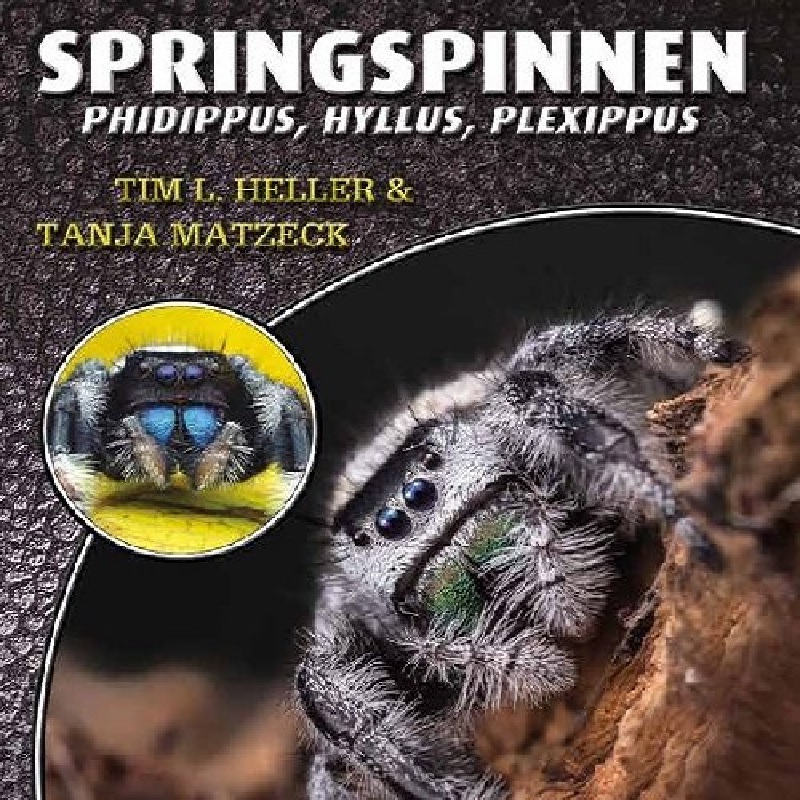
Book Jumping Spiders -
Phidippus, Hyllus & Plexippus
A guide to keeping jumping spiders of the genera Phidippus, Hyllus & Plexippus. Who can resist the charm of jumping spiders? The childlike appearance of their expressive face simply leaves no one cold! In addition, their behavior is extremely exciting to observe, their colors are bright and their requirements for species-appropriate keeping are very easy to meet. No wonder these likeable jumpers are all the rage!
This volume in the "Species by Species" series describes in detail what to look out for when buying and keeping them, introduces the most commonly kept species and color forms and provides plenty of tips on how to keep them successfully - so you can be sure they will breed well!
Species by Species introduces you to the books in this series, which present the most popular terrarium animals. Each volume offers you detailed, practical care instructions and all the information you need to successfully breed your animals.
All important questions from the required tank size to terrarium set-up, technical equipment, species-appropriate nutrition and disease prevention are answered with numerous tricks and tips.
Experienced, long-standing breeders reveal how you can encourage the animals to reproduce and raise healthy young.
All this in full color, generously illustrated and attractively designed - just about your terrarium animal - species by species
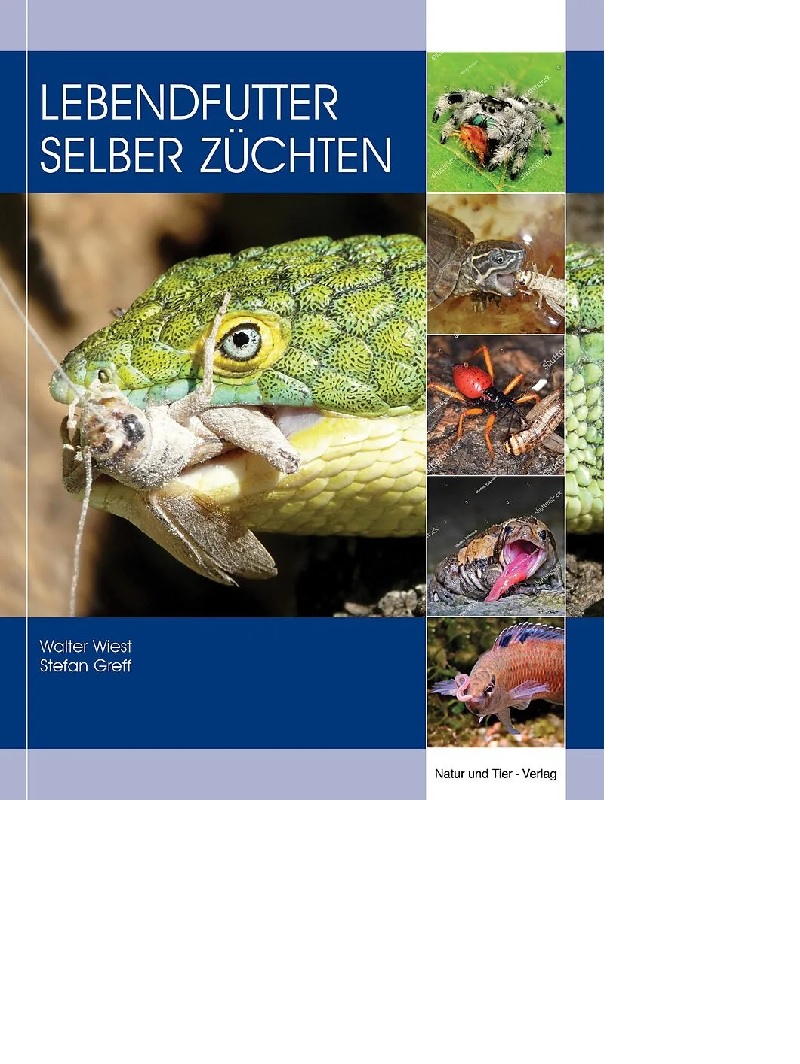
Book "Grow your own live food" - The perfect guide for pet owners
Discover practical and detailed instructions on how you can easily breed food for your reptiles, birds, fish or other animals yourself in the book "Breeding live food yourself". With valuable tips on various food insects, their care and breeding, you can save money and ensure a species-appropriate diet for your pets.
Contents of the book:
Step-by-step instructions for breeding feeder insects
Information on the best types of food for reptiles, birds and fish
Care instructions and breeding conditions for various live food species
Tips for sustainable and cost-effective food production
Why breed your own live food?
Get healthy, fresh food for your animals
Save money and reduce dependence on pet shops
Promote the health and well-being of your animals with species-appropriate food
Whether you are a beginner or an experienced pet owner, this book provides you with everything you need to successfully breed live food yourself.
Marginata 69 - New Guinea tortoises – the genus ElseyaCover storyThe unrecognised beauties: New Guinea tortoises (Andreas S. Hennig)My experiences with Branderhorst's New Guinea tortoise, Elseya (Elseya) branderhorsti (Ouwens, 1914) (Andreas S. Hennig)Keeping and breeding of Rhodin's New Guinea tortoise, Elseya (Hanwarachelys) rhodini Thomson, Amepou, Anamiato & Georges, 2015 (Andreas S. Hennig)PortraitGeoemyda spengleri, Chinese serrated tortoise (Andreas S. Hennig)ReportageMacrochelys temminckii – Experiences and impressions with vulture tortoises part 2 (Reiner Praschag)KeepingAn alternative to year-round keeping of the Egyptian tortoise in the terrarium – my experiences with seasonal outdoor keeping of Testudo kleinmanni (Ricarda Schramm)EtymologySawbacks and living maps part 4: Graptemys gibbonsi, Pascagoula humpback tortoise (Holger Vetter)Classifieds & animal placement
Marginata 23 - Soft-shelled turtlesSea turtles of IndiaCold frames for tortoisesTestudo hermanni in CataloniaContents:2 Editorial3 letters to the editor4 Magazine8 dates10 REPORTAGE The African Beaked Tortoise (Chersina angulata). Part 1 Comments on the biology and ecology of the species, the comparison of three different biotopes and the integration of the species in these areas Michael Wirth31 POSTER The pale-footed tortoise (Pangshura smithii pallidipes) Hans - Dieter Philippen36 REPORTAGE Status and protection of the western tortoise turtle (Testudo hermanni hermanni) in Catalonia, Spain Silvia Brusciotti, Joaquim Soler and Albert Martinez42 REPORT Threats to, protection and utilisation of marine turtles. Part 3: Mass egg laying of the bastard turtles turtle and current protection measures taken in India Gerald & Christa Benyr50 REPORTAGE The Chelonium - a cold frame with a system Michael Wirth58 Book tip60 classifieds61 Subscription & Service63 regional guide
Marginata 47 - Turtles of Mexico
Rarities from VietnamSearching for turtles in the PeloponneseLeatherback turtle
EditorialMagazineTOPICThe turtles of MexicoMaik ShieldsTOPICThe pointed-snouted turtle. A small aquatic turtle for the terrarium Maik ShieldsTOPICSalvin's cross-breasted tortoise. An interesting species from MexicoMaik ShieldsTOPICThe Nayarit tortoise in nature and culture Fabio CupulPORTRAITDermochelys coricea Vandelli, 1761. Leatherback turtleKriton KunzTRAVELMorea – in search of turtles and other reptiles in the west of the Peloponnese (1) Axel KwetTRAVELIn search of the "shy beauty" and the "cave turtles" Torsten Blanck, Sebastian Braun, Timothy McCormack, Hoang Van Ha, Nguyen Tai Thang, Nguyen Van Luc & Minh LeSubscription & ServiceRegional guide
All about the leopard gecko by Melanie Hartwig
64 pages
Format: 14.8 x 21 cm
70 colour photos
1 map
Paperback
Author Melanie Hartwig
Contents:
Foreword
Description
Distribution and natural habitat
Lifestyle
Legal regulations and acquisition
Transport and quarantine
Terrarium and technology
The terrarium setup
Care and diet
Hibernation
Propagation
Rearing the young
Colour and pattern forms
Basics of the theory of heredity
Diseases
Socialisation
Further information
Thanks
Literature used and further reading
Reptilia 36 - Expedition West Africa
Mangrove night tree snakeOrnate tortoisesTokeh
Contents:
2 EDITORIAL
4 READER LETTERS
6 MAGAZINE
12 DATES
16 PHOTO REPORTAGE Expedition West Africa by H. Nickel
24 TRAVEL Through the desert – The West Africa expedition of the Museum Alexander Koenig
by H. Nickel
32 HERPETOFAUNA Spur-thighed tortoises in Mauritania by H. Nickel and D. ould Selah
38 REPORTAGE Crocodiles of the desert by H. Nickel and T. Shine
43 KEEPING AND BREEDING Tokehs in the terrarium: Better than their reputation by I. Kober
51 PORTRAIT AND POSTER Pristidactylus torquatus by H. Werning
56 KEEPING AND BREEDING Breeding and rearing the mangrove night tree snake Boiga dendrophila melanota by J. Bulian
63 REPORTAGE The school vivarium Part 1: General basics by M. Hallmen
69 REPORTAGE New anaconda species discovered! by H. Werning
73 REPORTAGE On some misidentifications of dwarf clawed frogs of the genus Hymenochirus in the literature by K. Kunz
82 ADVICE & ACTION SPECIAL Frequently asked questions about keeping ornamental and ornate tortoises by A. S. Hennig
86 CLASSIFIED ADS
90 LIBRARY
94 WESTERN HERP PERSPECTIVES Watch out! Poisonous snakes by B. Love
104 GLOSSES Exposed! (Part 2) by H. Werning
Philippinen-KrokodilCumberland-SchmuckschildkröteHalsbandleguane im Freilandterrarium
Inhalt:
Die Terraristik bietet eine unendliche Fülle wunderbarer Fotomotive, ein Eldorado für Hobby-Fotografen! Und wohl jeder Halter hat den Wunsch, seine Pfleglinge, seine Nachzuchten und seine Anlage im Bild festzuhalten. Zumal Fotografieren nie einfacher war als heute, wo jedes Telefon die schnelle Aufnahme erlaubt, die dann direkt ins virtuelle Fotoalbum auf Facebook hochgeladen werden kann, wo alle Freunde sie anschauen können.Profi-Fotograf Benny Trapp aber gibt zahlreiche Tipps und Tricks, wie Sie zu Bildern kommen, bei denen garantiert jeder den „Gefällt mir“-Button drückt, ganz gleich, ob Sie mit einer Kompaktkamera oder einer hochwertigen Spiegelreflexkamera arbeiten. EDITORIALMAGAZINTERMINEIN 5 JAHREN UM DIE WELT Menschen und SchildkrötenA. PachmannWESTERN HERP PERSPECTIVESBörsenbesuch down under B. LoveFOTOSTORYBild schön! Fotografie von Terrarientieren K. KunzPRAXISTerrarientiere fotografieren. Einsatz von Licht und Blitz bei SpiegelreflexkamerasB. TrappPRAXISTipps für bessere Bilder mit KompaktkamerasB. TrappHALTUNG UND VERMEHRUNGPhilippinenkrokodile (Crocodylus mindorensis) im Aquarium des Kölner Zoos. Teil 1: Erfahrungen mit „Off-Exhibit“- Haltung einer der am stärksten bedrohten Krokodilarten der Welt T. Ziegler, R. Sommerlad, W. Brass, K. van der Straeten, D. Karbe & A. RauhausHERPETOFAUNAAuf dem Weg ins All. Die Welt der Buchstaben-Schmuckschildkröte, Trachemys scripta Teil 4: Cumberland- und Südtexas-Schmuckschildkröte A. S. HennigWIRBELLOSEDie Isles of Scilly. Ein Paradies nicht nur für Phasmidenfreunde H.-J. LuefHALTUNG UND VERMEHRUNGErfahrungen mit der Haltung von Halsbandleguanen im FreilandterrariumM. DieckmannTIERE UNSERER HEIMATDie AspisviperR. LeptienBIBLIOTHEKTIPPS & TRICKSTESTLAUFABO & SERVICEAUCH IN IHRER NÄHEREISEThe Rock. Die Herpetofauna GibraltarsU. SchlüterVORSCHAUBRUTKASTENIguana chilenaH. Werning
Reptilia 01 - CrocodilesBearded dragonsFire SalamandersBaja californiaGAUDÍ and herpetologyContents:2 - Editorial6 - Magazine14 - Keeping and breeding: Bearded crocodiles, by J. Bergadá and J. Pether23 - Travelogue: Crocodiles in Ghana, by S. Zwernemann26 - Report: Hamburger made from crocodile meat, by M. Schmidt29 - Terraristics: Keeping guidelines for crocodiles30 - Pros and cons: keeping crocodiles33 - Travelogue: Baja California, by H. Werning39 - Portrait and poster: Hyla meridionalis, by M. Aresté and J. L. Farriols43 - Terraristics: Sexing of snakes, by Dr M. Bachs46 - Keeping and reproduction: Acrantophis dummeriliby W. Wengler49 - Herpetofauna, Fire Salamanders, by X. Rivera and A. de Saint Paul58 - Herpetology and culture: Gaudí and herpetology, by E. Filella64 - Veterinary medicine - Shell necrosis in turtles, by C. Lopez del Castillo71 - Report: Species conservation in the jungle of French Guiana, by S. Alviani73 - Library77 - Advice and action80 - Incubator: Glossary by H. Werning
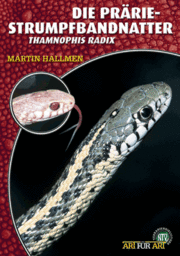
All about the Prairie Garter Snake by Martin Hallmen
64 pages
Format: 14.8 x 21 cm
numerous colour photos
Contents:
The prairie garter snake has a very alert nature. It is usually particularly active and interested in the terrarium. It remains very calm when handled and does not tend to bite.This volume from the "Species by Species" series is intended to provide the basic knowledge for keeping them in a species-appropriate way and shows how easy the prairie garter snake makes it for you if you decide to keep it.
Systematics and body structure
The fascinating biology: From the life of the prairie garter snake
All information on species-appropriate keeping: from suitable terrariums to equipment and technology to feeding
Successful breeding: Mating stimulation and rearing young animals
Solutions to problems: How to avoid the most common mistakes in care and how to help sick animals
Brilliant photos
CHF 16.90
❅
❆
❅
❆
❅
❆
❅
❆
❅
❆
❅
❆
This website uses cookies to ensure the best experience possible. More information...