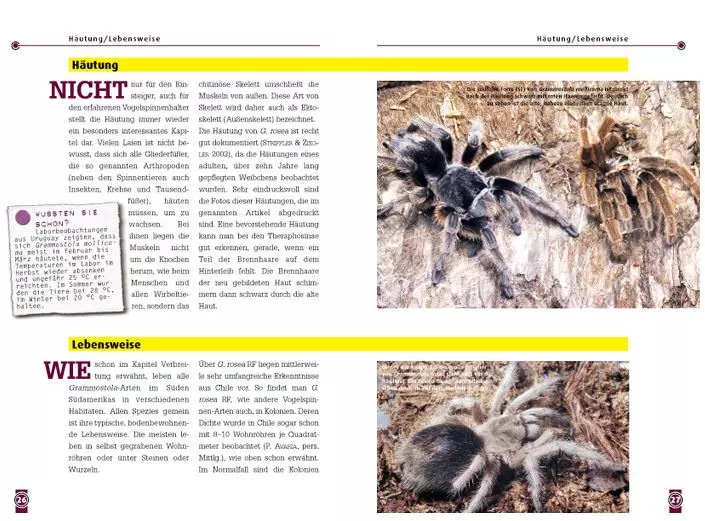
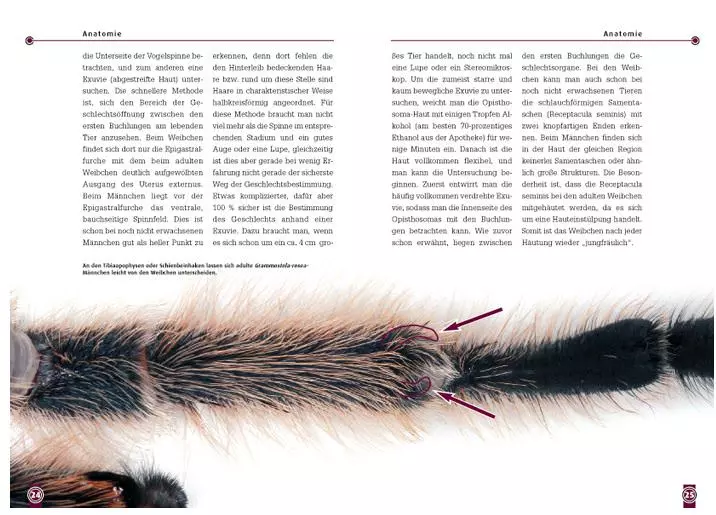
NTV Grammostola rosea

Article no: CC-82639

CHF 18.50

Stock: 0

Ready for dispatch in 1-3 days, delivery time 14 working days

Delivery between Tuesday, 19 May and Wednesday, 20 May
Zahlungsarten
Product information "NTV Grammostola rosea"

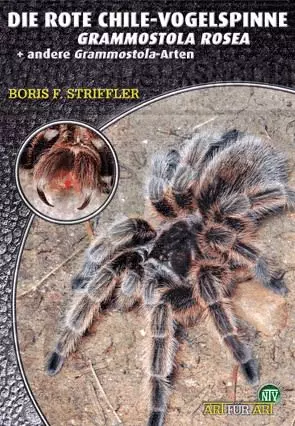
NTV - Grammostola rosea

The red chile tarantula is one of the common interested tarantulas. It is brownish to gray and her calm demeanor, it becomes a super spider beginners.

Boris F. Striffler

  • 64 pages
  • 14.8 x 21cm
  • many color photo


Table of Contents

  • foreword
  • systematology
  • spread
  • endangering
  • anatomy
  • moult
  • way of life
  • Gift and stinging hairs
  • purchase
  • The terrarium
  • care
  • proliferation
  • Hibernation
  • summary
  • thanks
  • Further information
  • Used and further reading
Composition
Feeding recommendation
Technical details
Size information

0 of 0 reviews

Give us a rating!

Share your experience with the product with other customers.


Suggested products

Handbook of food plants for tortoises and other reptiles
Handbook of forage plants 2nd revised editionMarion Minch is not only a successful breeder of diverse tortoises for many years, but also an excellent connoisseur of native wild herbs. She founded and runs samenkiste.de, which is well known to many tortoise keepers and nature lovers. Her name is inextricably linked with reptile care and species-appropriate nutrition for tortoises. Her handbook of food plants summarises the most important native food plants for herbivorous and omnivorous reptiles. She not only considers tortoises, but also iguanas, spiny-tailed dragons and even chameleons. From the basics of plant biology to native wild herbs to suitable food plants for hardy tropical reptile species, this comprehensive work provides the basis for species-appropriate keeping. In the expanded and supplemented 2nd edition, the plant section is divided according to flower colour. This makes it even easier to identify wild herbs. The work has also been supplemented with a wealth of additional information and many pictures.

CHF 46.50

Geckos
Geckos in the terrarium by Astrid FalkThe book offers a comprehensive introduction to geckos and their species-appropriate keeping in terrariums. It explains what you need to think about before buying a gecko and what preparations should be made. The book describes in detail how the terrarium is technically equipped and set up. The care of the animals, their special features and behaviour, their diet, reproduction and rearing of young animals are described, as well as diseases and husbandry problems with tried and tested suggestions for prevention and treatment. Individual gecko species that are particularly suitable for keeping and breeding in terrariums are portrayed in detail in the second part of the book.

CHF 28.50

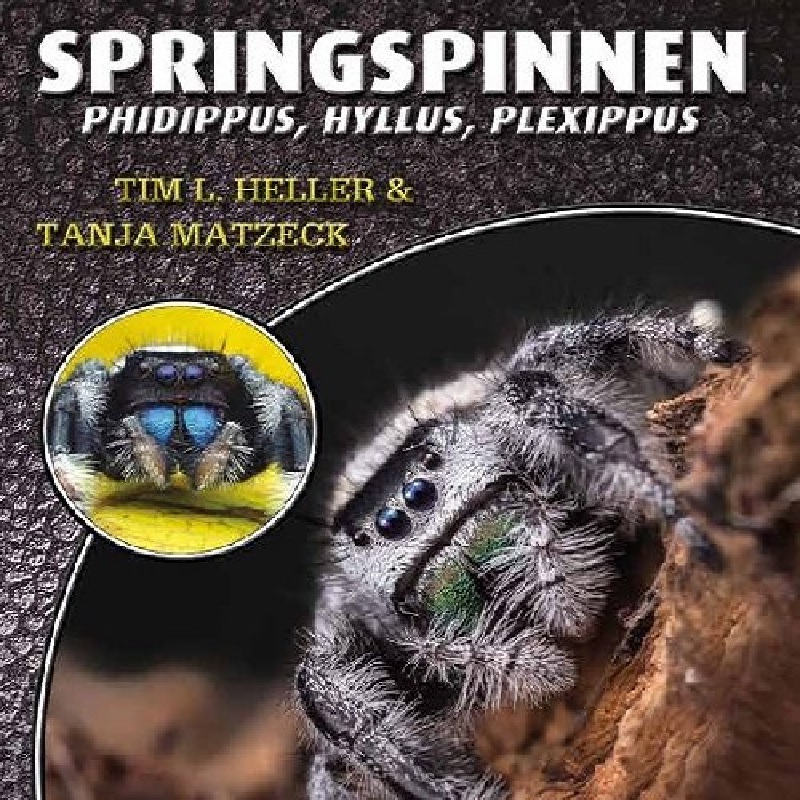
Jumping spiders Phidippus, Hyllus, Plexippus
Book Jumping Spiders - Phidippus, Hyllus & Plexippus A guide to keeping jumping spiders of the genera Phidippus, Hyllus & Plexippus. Who can resist the charm of jumping spiders? The childlike appearance of their expressive face simply leaves no one cold! In addition, their behavior is extremely exciting to observe, their colors are bright and their requirements for species-appropriate keeping are very easy to meet. No wonder these likeable jumpers are all the rage! This volume in the "Species by Species" series describes in detail what to look out for when buying and keeping them, introduces the most commonly kept species and color forms and provides plenty of tips on how to keep them successfully - so you can be sure they will breed well! Species by Species introduces you to the books in this series, which present the most popular terrarium animals. Each volume offers you detailed, practical care instructions and all the information you need to successfully breed your animals. All important questions from the required tank size to terrarium set-up, technical equipment, species-appropriate nutrition and disease prevention are answered with numerous tricks and tips. Experienced, long-standing breeders reveal how you can encourage the animals to reproduce and raise healthy young. All this in full color, generously illustrated and attractively designed - just about your terrarium animal - species by species

CHF 23.90

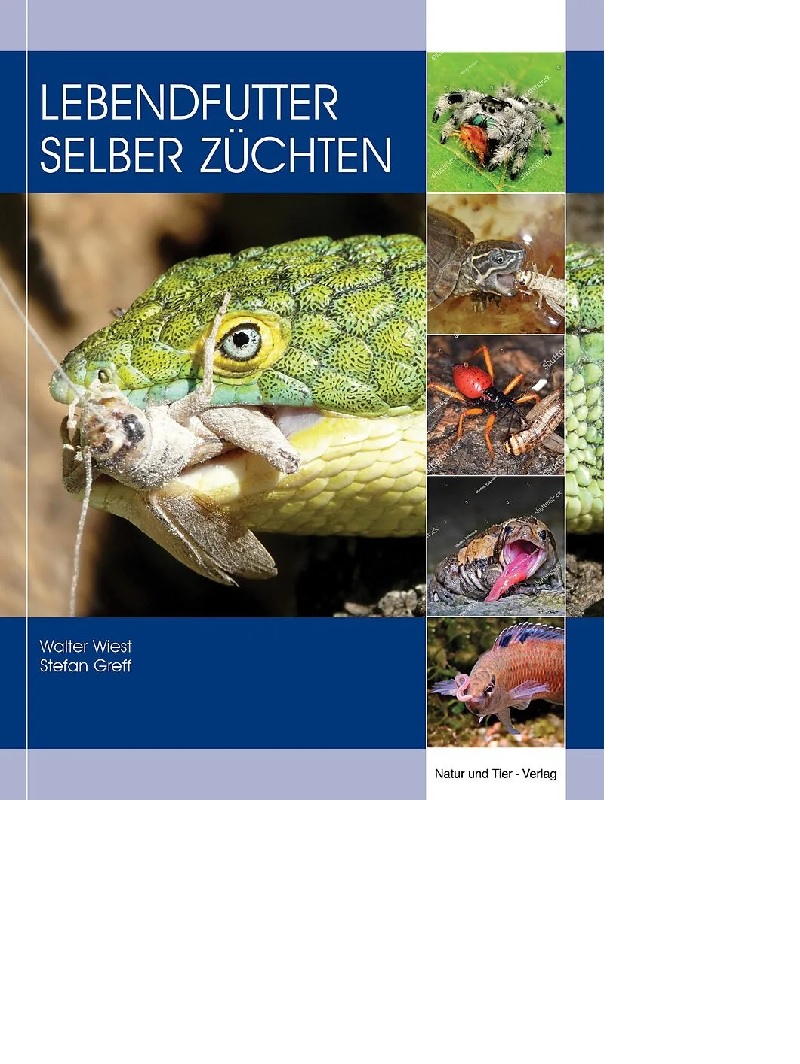
Book Breeding live food yourself
Book "Grow your own live food" - The perfect guide for pet owners Discover practical and detailed instructions on how you can easily breed food for your reptiles, birds, fish or other animals yourself in the book "Breeding live food yourself". With valuable tips on various food insects, their care and breeding, you can save money and ensure a species-appropriate diet for your pets. Contents of the book: Step-by-step instructions for breeding feeder insects Information on the best types of food for reptiles, birds and fish Care instructions and breeding conditions for various live food species Tips for sustainable and cost-effective food production Why breed your own live food? Get healthy, fresh food for your animals Save money and reduce dependence on pet shops Promote the health and well-being of your animals with species-appropriate food Whether you are a beginner or an experienced pet owner, this book provides you with everything you need to successfully breed live food yourself.

CHF 46.50

Marginata 69 - New Guinea tortoises
Marginata 69 - New Guinea tortoises – the genus ElseyaCover storyThe unrecognised beauties: New Guinea tortoises (Andreas S. Hennig)My experiences with Branderhorst's New Guinea tortoise, Elseya (Elseya) branderhorsti (Ouwens, 1914) (Andreas S. Hennig)Keeping and breeding of Rhodin's New Guinea tortoise, Elseya (Hanwarachelys) rhodini Thomson, Amepou, Anamiato & Georges, 2015 (Andreas S. Hennig)PortraitGeoemyda spengleri, Chinese serrated tortoise (Andreas S. Hennig)ReportageMacrochelys temminckii – Experiences and impressions with vulture tortoises part 2 (Reiner Praschag)KeepingAn alternative to year-round keeping of the Egyptian tortoise in the terrarium – my experiences with seasonal outdoor keeping of Testudo kleinmanni (Ricarda Schramm)EtymologySawbacks and living maps part 4: Graptemys gibbonsi, Pascagoula humpback tortoise (Holger Vetter)Classifieds & animal placement

CHF 16.50

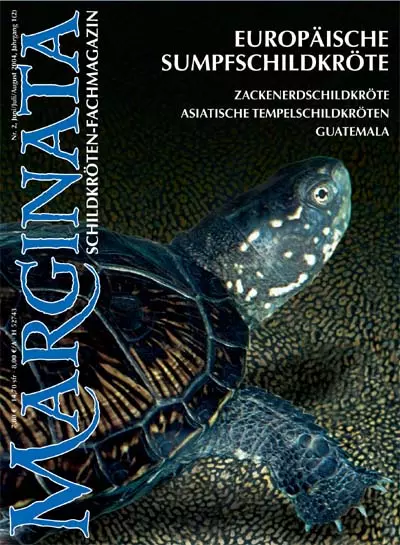
Marginata 02 - European Pond Turtle
Marginata 02 - European pond turtle Serrated terrapinsAsian Temple TurtlesGuatemala Contents: 2 EDITORIAL 3 THE TEAM INTRODUCES ITSELF 4 READER LETTERS 5 MAGAZINE 9 DATES 10 PHOTO REPORTAGEEuropean pond turtles (Emys orbicularis LINNAEUS, 1758)Hans - Dieter Philippen 14 REPORTAGEObservations and experiences regarding the keeping and breeding of the European pond turtle (Emys orbicularis LINNAEUS, 1758)Bernd Wolff 24 REPORTAGEThe relationship between origin, currently known phylogeny (evolutionary history) and habitat of the European pond turtle (Emys orbicularis) using three populations as examplesJens Poschadel 31 PORTRAITMadagascan flat-tailed turtlePyxis [Acinixys] planicauda (GRANDIDIER, 1867)Matthias Mähn 36 REPORTAGESpecies protection on the dream beach –The projects of the organisation ARCAS in GuatemalaKriton Kunz 46 REPORTAGEThe fascination of serrated terrapins (genus GeoemydaSome aspects of their keeping and biologyIngo Schaefer 52 REPORTAGEIntensively exploited without protection: Amyda cartilaginea (BODDART, 1770) and Dogania subplana (GEOFFROY ST.-HILAIRE, 1809) Mark Auliya 56 BOOK TIP 57 CLASSIFIEDS 58 REPORTAGESalmonellosis – Measures to prevent turtle-related transmissionTessa E. H. Römkens and Frank Stam 62 REGIONAL GUIDE 64 AGATHA MARGINATA

CHF 14.70

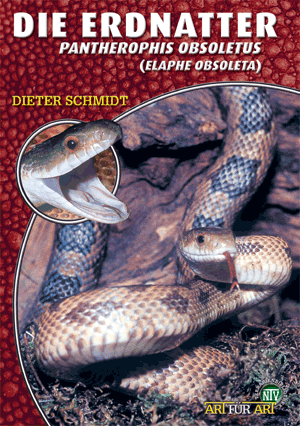
The western rat snake
The Earth Snake by Dieter Schmidt 64 pages 14.8 x 21 cm numerous colour photos Contents: The earth snake is a true classic of terraristics. The elegant, powerful snake is highly sought after in all its many subspecies and attractive colour variants. The fact that their care and breeding are also possible for beginners makes the earth snake all the more recommendable. The long-standing, well-known snake expert Dieter Schmidt presents the earth snake in all its fascinating facets in this guide and describes vividly how to care for the animals appropriately, breed them successfully and raise the young snakes. Systematics and body structure The fascinating biology: From the life of the earth snake All information on species-appropriate keeping: from suitable terrariums to equipment and technology through to feeding Successful breeding: Mating stimulation, incubation of the eggs and rearing of the young animals Problem solutions: How to avoid the most common mistakes in care, and how to help sick animals Brilliant photos

CHF 18.50

Terraria 25 - Livebearers
Terraria 25 - Livebearing Reptiles Breeding of tarantulasDiadem snakeSpur-thighed tortoise Contents: Not all reptiles lay eggs. A whole range of species bear live young, to the delight of many terrarium enthusiasts. However, even though the often problematic artificial incubation of clutches is no longer necessary: Even with livebearing reptiles, many things can go wrong when breeding them in the terrarium, and keepers often find it difficult to recognise the causes of problems. Uwe Schlüter presents the different forms of livebearing in reptiles and explains everything you need to know to breed these species as successfully as possible. In addition, we present some livebearing reptiles in the terrarium, including the Madagascar dog-headed boa, Sanzinia madagascariensis, or the strange crocodile night lizard, Lepidophyma flavimaculatum. EditorialMagazineHatching of a completely healthy hatchling of the North African spiny-tailed agama from a mould-infested eggColour change in the monocled cobra from juvenile to adultLuminous heavy metal detectorsDinosaurs with braking assistance?Hundreds of Madagascan tortoises confiscated in MalaysiaPhotosynthesis in salamandersLegal TERRAglobal specialLizards of the Barkly TablelandGunther Schmida Cover storyLivebearing reptilesUwe Schlüter The crocodile night lizard. Lepidophyma flavimaculatum (Duméril, 1851) Jochen Meyer Care and breeding of the northern Canary Islands skink (Chalcides viridanus) Uwe Schlüter Keeping and breeding a crowned beauty: the diadem snake (Spalerosophis diadema [Schlegel, 1837]) Sascha & Stefanie Esser Giants of the desert. The African spurred tortoiseLeo Spinner JourneyCuc Phuong. Spiders and other animals in Vietnam's oldest national parkGordon Ackermann Breeding of tarantulas Karin Manns New speciesDiversity of Philippine banded monitors deciphered – and three new taxa described André Koch Among researchers Searching for venomous snakes in Austria Johannes Hill Eye-catcher Of prosimians, poison dart frogs and geckos. Visiting Ute Thut and Dennis Peukert Michael Wirth Near youSubscription & ServicePreview Incubator On the wall, on the lookout Mike Zawadzki

CHF 12.00

Terraria 03 - Anolis in the terrarium
Terraria 03 - Anolis in the Terrarium Ornate TurtlesNamaqualand Contents: 2 Editorial Mike ZawadzkiMAIN TOPICAnolis in the Terrarium 4 Anolis – Keeping, Care and Breeding Manfred Rogner 14 A Terrarium for Eternity Design of Rot-Resistant Walls and Epiphyte Branches of a Paludarium for Anolis Holger Herfurth 18 Terrarium Keeping of Anolis – A Field Report Based on the Example of Anolis bahorucoensis bahorucoensis Dieter Bundt 32 Anolis loysianus, a Spiny-Scaled Bark Anole from Cuba Axel Fläschendräger SCIENCE 36 Herpetorama Beware of Conspecifics! / Hydraulic Pump / On the Trail of the Blind 38 New Species Bronchocela vietnamensis / Snakes from Northern Madagascar / Scaphiophryne menabensis 41 Among Researchers In the Centre of the Corridor Philipp Wagner 45 Ornate Turtles – The Genus Pseudemys Part 2: The Species and Subspecies with Information on Distribution and Lifestyle Andreas S. Hennig 54 Melanophryniscus – Not Just Black Toads Part 3: The “Brazilians” Axel Kwet 62 The Devil’s Flower Idolomantis diabolica (SAUSSURE, 1869) Part 2 Christian J. Schwarz, Jürgen E. Mehl & Jürg Sommerhalder 70 The Forgotten Beauty A Few Words on Keeping and Breeding Diadophis punctatus Kriton Kunz 74 TRAVEL Namaqualand Mats BlohmTERRARIUM PRACTICE 82 Test Run Fixing Rod for Snakes from M&S ReptilesMesh Cover from Exo Terra 84 Prelude Understanding Literature – No Problem Timo Plochowietz 87 Eye-Catcher Madagascar in Saxony – Visiting the Phelsuma Breeder Hans-Peter Berghof Heiko Werning 93 Also in Your Area 96 TERRAnet Macro Photography / Anolis Page 98 TERRAglobal The Reptiles in the Culture of Mexico Fabio Cupul Mouse Breeding, a Self-Service Store? Joachim Bulian 104 TERRAwinn

CHF 11.20

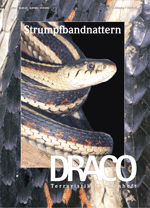
Draco 25 - Garter snakes
Draco 25 - Garter snakes Contents: 2 Editorial 6 Overview of the genus ThamnophisMartin Hallmen & Daniel Grübner 25 Old and new developments regarding the San Francisco garter snake (Thamnophis sirtalis tetrataenia)Martin Hallmen 32 The most common garter snakes in the terrariumDaniel Grübner 40 The garter snakesJan Sonnenberg 50 Aids for distinguishing some subspecies and colour forms of garter snakesPart 1: Thamnophis sirtalis sirtalis “flame” andThamnophis sirtalis sirtalis “speckled flame”Martin HallmenPart 2: The red subspecies of Thamnophis sirtalisJan SonnenbergPart 3: Thamnophis sirtalis similis andThamnophis sirtalis sirtalis “Florida blue”Martin HallmenPart 4: Distinguishing between Thamnophis proximus and Thamnophis sauritus and differentiation fromThamnophis radix and Thamnophis sirtalis sirtalisJan Sonnenberg 60 Garter snakes in scienceJan Gebauer 66 The less frequently recognised garter snakesDaniel Grübner 77 Colour forms of garter snakesDaniel Grübner & Jan Sonnenberg 86 Field observations of garter snakes in North AmericaHerbert Bruchmann 94 Common diseases in garter snakesBirgit Rüschoff, Bettina Christian & Daniel Grübner 102 Garter snakes in outdoor terrariumsMartin Hallmen 114 10 years European Garter Snake AssociationMartin Hallmen 116 Book box 124 Magazine

CHF 18.40

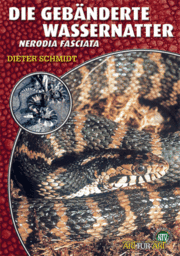
The banded water snake
All about the banded water snake from Dieter Schmidt 64 pages 14.8 x 21 cm numerous color photos Author Dieter Schmidt Content: Watermans have always been one of the most popular terrariums. The Wassernatter, the water-racketeer, shows all the advantages of being a friend of the serpent of his caregiver. It is attractively drawn, easily satisfied with fish as food, is not too large, and has a tempered temperament.Dieter Schmidt, the experienced snake expert, will give you a wealth of experience in this guidebook and explain everything you need to know about the successful keeping and care of this popular species. The author goes into the multiplication of the animals and the rearing of the young - so you will soon be able to celebrate such successes. Systematics and physique The fascinating biology: From the life of the Banded Watercats All information on species-appropriate husbandry: From the appropriate terrarium to equipment and technology to feeding Successfully reproducing: mating stimulation and rearing of the young animals Troubleshooting: How to avoid the most common mistakes in care, and how to help sick animals Brilliant photos

CHF 18.50

Draco 10 - Animals, Terrariums, Habitats
Draco 10 - Animals, Terrariums, Habitats Contents: 2 Editorial4 Deserts – cold land under a hot sunSurvival strategies of desert-dwelling amphibians and reptilesThomas Wilms & Heiko Werning26 Planning, building and setting up a desert terrariumThomas Ackermann41 Colourful jewels in the terrarium – experiences with the long-term care and breeding of Uromastyx ornata (Heyden, 1827) up to the second filial generationThomas Wilms, Hans Dietmar Müller & Beate Löhr 50 The bearded toadhead Phrynocephalus mystaceus (Pallas, 1776) in the terrariumHans Dietmar Müller58 The fringed-fingered lizards (Acanthodactylus) of North AfricaUwe Schlüter 66 The kings of the North American desert: ChuckwallasHeiko Werning74The horned vipers (Cerastes) of North AfricaUwe Schlüter79 Namibia – hot land on a cold currentFelix Hulbert & Mirko Barts 94 Magazine

CHF 16.80

Customers also saw

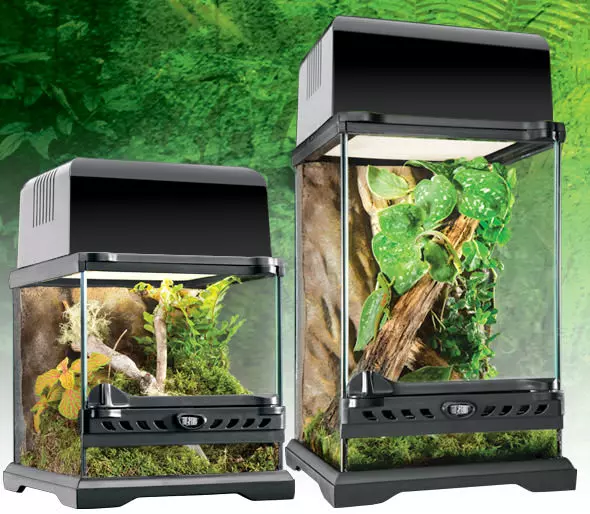
Exo Terra Natural Terrarium Nano
Variant: 20x20x20cm | Variant (1): 20x20x20cm
Exo Terra Nano Terrarium (20x20x20xcm) Designed by European herpetologists for small insects, invertebrates and amphibians Ventilation through the front window  Waterproof bottom (1) Raised bottom frame (2) Top made of fine-meshed stainless steel (3) Lock to prevent “escapes” (4) Mesh screen cover can be easily attached (5) Closable holes for hoses and/or cables (6) Recesses at the back for hoses and/or cables (7) Suitable for the Compact Top Nano PT2224 20x20x20cm or 20x20x30cm The Exo Terra terrarium is the ideal home for reptiles and amphibians, designed by European herpetologists. The front-opening doors allow easy access for feeding and care. A special locking mechanism prevents “escapes” and the doors can be opened independently of each other. The fine-meshed metal mesh top and the associated good ventilation allow UVB and infrared light to penetrate into the terrarium. It can be easily removed completely for decoration or cleaning purposes. At the back of the top there are 5 sealable cable ducts on both sides for attaching heat stones, waterfalls, sensors etc. inside the terrarium. The base of the terrarium is raised so that a substrate heater can be fitted to heat part of the enlarged base area. The extra high front windows are ideal for thick layers of substrate (so that reptiles can burrow), for water points (paludarium) or to install an Exo Terra reptile cave. The lifelike background is in the same colour as all other Exo Terra decorative items and offers extra space for climbing.  ATTENTION: The animals shown are NOT suitable for this size of terrarium! Background included!  The Exo Terra stone motif background is an exceptionally lifelike background that can be easily cut to size. It creates a multi-dimensional home that is ideal for climbing reptiles or can simply be used to embellish the natural terrarium. Its colour and texture is the same as all Exo Terra decorative items to create a perfectly harmonised terrarium environment, wet or dry.

CHF 49.00