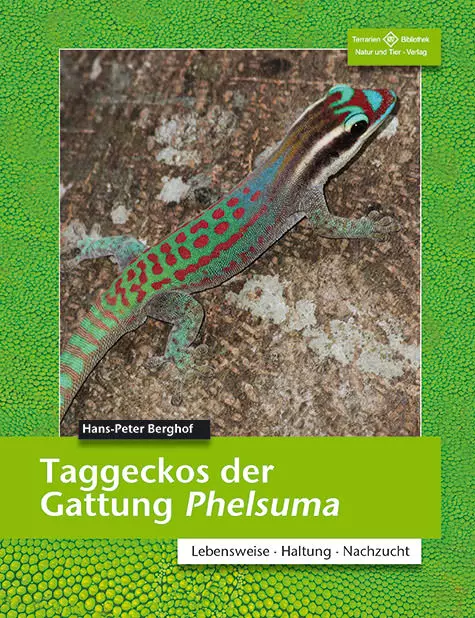
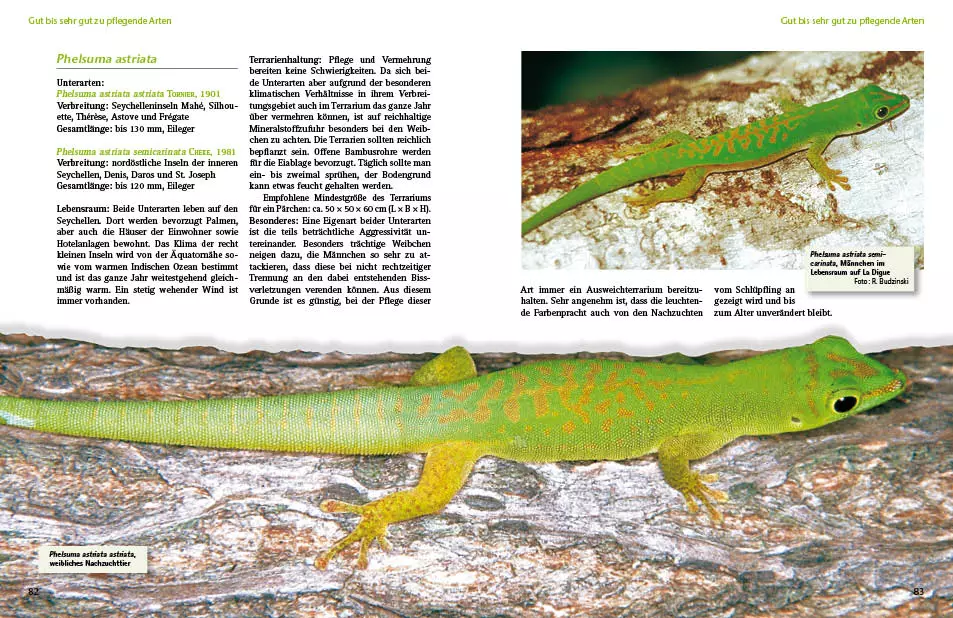
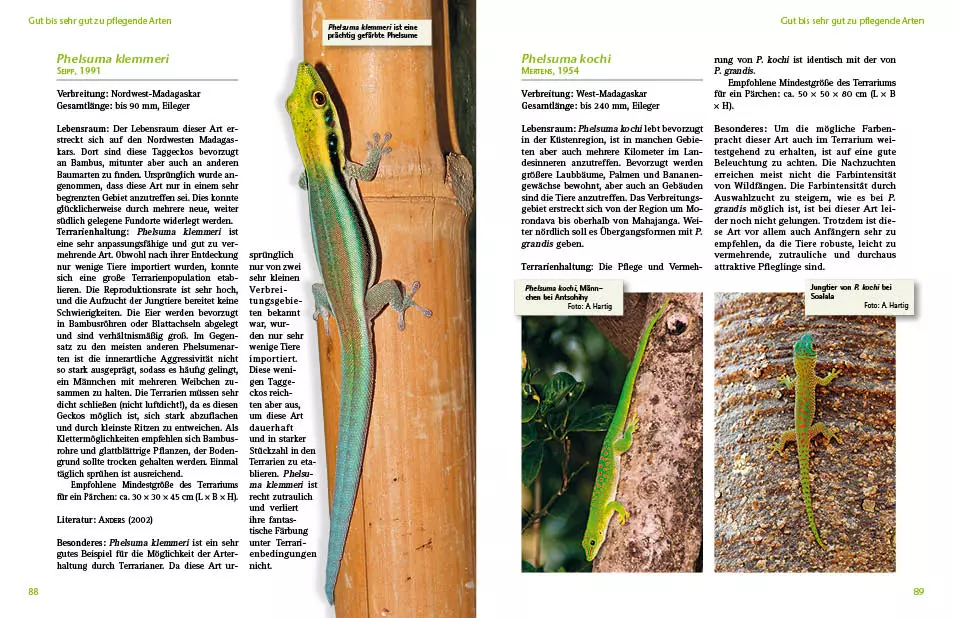
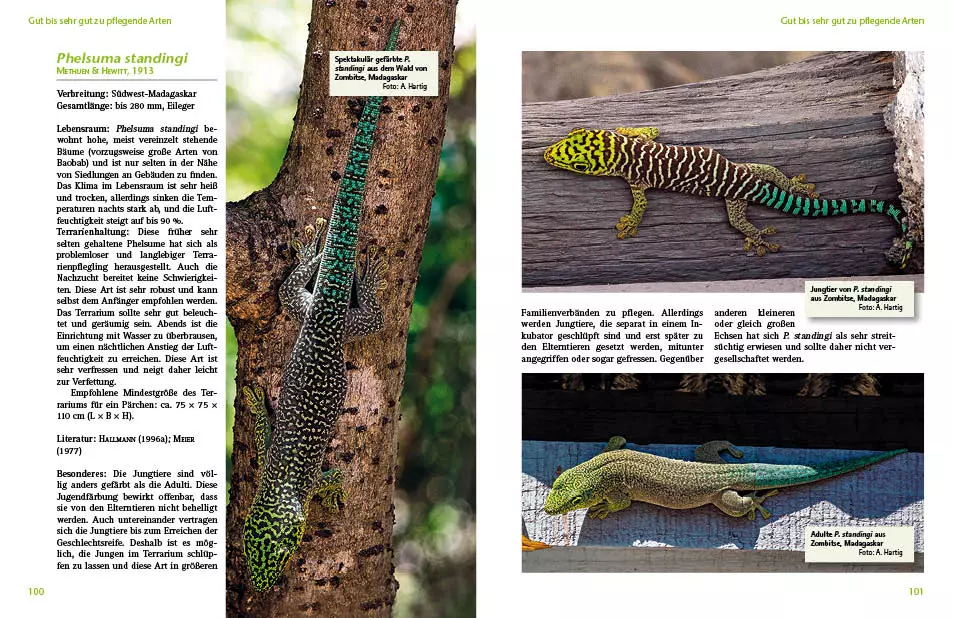
NTV Taggeckos of the genus Phelsuma

Article no: BZ-15948874

CHF 42.90

Stock: 2

Available, delivery time: 1-3 days

Delivery between Tuesday, 5 May and Wednesday, 6 May
Zahlungsarten
Product information "NTV Taggeckos of the genus Phelsuma"

NTV day geckos of the genus Phelsuma - the absolute favourites of terrarium keepers.

Hans-Peter Berghof
  • 192 pages
  • many illustrations
  • Format: 16.8 x 21.8 cm

3rd revised and extended edition

Contents:

The day geckos of the genus Phelsuma with their bright colours and interesting behaviour are among the absolute favourites of terrarium keepers.
Hans-Peter Berghof has been successfully breeding these lizards for a long time and shares his accumulated knowledge about keeping and breeding these beautiful geckos here.
The special section presents all species in detail with their care requirements in words and pictures and indicates which animals are easier and which are more difficult to keep.
The ideal supplement to the standard work by Hallmann et. al. from 1997, supplemented by all species discovered since then and newly published literature.

Forewords
Introductory words for the first edition
Introductory words for the revised 3rd edition
Thanks
Biology
What is a Phelsuma?
Physique
Distribution
Habitats and way of life
Notes on the age of Phelsuma
Colouration
Sexual dichromatism and dimorphism
Differing colouration of the juveniles

Protection status
Threatened in habitat
Threatened by trade and keeping in terrariums
International and national species protection
Which official requirements must I observe when keeping and breeding Phelsuma?

Procurement and handling
Wild-caught or captive bred?
Before purchase
Dealing with the Internet
Where to buy?
Sex differences in Phelsuma
How do I recognise healthy animals?
Transport
Quarantine
Capturing and handling
Photographing Phelsuma

Terrarium technology
Types of terrarium and container sizes
Which terrarium for which species?
Ventilation
Lighting
UV light
Humidity
Temperatures

Furnishing
Substrate
Climbing opportunities
Rear and side wall design
Planting

Care
Acclimatisation
Feeding with animal food
Feeding with plant food
Yoghurt and other dairy products
Artificial food mixtures
Minerals and vitamins
Watering and humidity
Temperatures
Winter dormancy
Stocking density and socialisation
Indoor keeping
Outdoor keeping

Diseases and other problems
Rickets
Bent tail
Injuries
Moulting and moulting difficulties
Laying problems
Mites

Reproduction
Mating
Egg laying
Incubation
Raising the juveniles

Species section
List of all known Phelsuma
All species at a glance

Species that are good to very good to keep
Phelsuma abbotti
Phelsuma astriata
Phelsuma dubia
Phelsuma dorsivittata
Phelsuma grandis
Phelsuma klemmeri
Phelsuma kochi
Phelsuma laticauda
Phelsuma lineata
Phelsuma madagascariensis
Phelsuma nigristriata
Phelsuma ornata
Phelsuma ravenala
Phelsuma standingi
Phelsuma sundbergi

Species that are easy to keep but rarely bred
Phelsuma comorensis
Phelsuma guttata
Phelsuma hielscheri
Phelsuma hoeschi
Phelsuma mutabilis
Phelsuma pusilla
Phelsuma quadriocellata
Phelsuma robertmertensi
Phelsuma parva
Phelsuma pasteuri
Phelsuma seippi
Phelsuma v-nigra

Rare or more difficult to keep species
Phelsuma andamanense
Phelsuma barbouri
Phelsuma borbonica
Phelsuma breviceps
Phelsuma cepediana
Phelsuma flavigularis
Phelsuma guimbeaui
Phelsuma inexpectata
Phelsuma modesta
Phelsuma serraticauda

Very rare or hitherto not kept species
Phelsuma antanosy
Phelsuma berghofi
Phelsuma borai
Phelsuma gouldi
Phelsuma guentheri
Phelsuma kely
Phelsuma malamakibo
Phelsuma masohoala
Phelsuma ocellata
Phelsuma parkeri
Phelsuma pronki
Phelsuma roesleri
Phelsuma rosagularis
Phelsuma vanheygeni

Species considered extinct or lost
Phelsuma edwardnewtoni
Phelsuma gigas

Forms not yet described or not clearly classified
Phelsuma cf. parva
Phelsuma
cf. dorsovittata
Phelsuma lineata
cf. elanthana
Phelsuma madagascariensis
cf. madagascariensis (small island form from Nosy Boraha)

Appendix
Glossary
Further literature on the genus Phelsuma

Composition
Feeding recommendation
Technical details
Size information

0 of 0 reviews

Give us a rating!

Share your experience with the product with other customers.


Suggested products

Handbook of food plants for tortoises and other reptiles
Handbook of forage plants 2nd revised editionMarion Minch is not only a successful breeder of diverse tortoises for many years, but also an excellent connoisseur of native wild herbs. She founded and runs samenkiste.de, which is well known to many tortoise keepers and nature lovers. Her name is inextricably linked with reptile care and species-appropriate nutrition for tortoises. Her handbook of food plants summarises the most important native food plants for herbivorous and omnivorous reptiles. She not only considers tortoises, but also iguanas, spiny-tailed dragons and even chameleons. From the basics of plant biology to native wild herbs to suitable food plants for hardy tropical reptile species, this comprehensive work provides the basis for species-appropriate keeping. In the expanded and supplemented 2nd edition, the plant section is divided according to flower colour. This makes it even easier to identify wild herbs. The work has also been supplemented with a wealth of additional information and many pictures.

CHF 46.50

Geckos
Geckos in the terrarium by Astrid FalkThe book offers a comprehensive introduction to geckos and their species-appropriate keeping in terrariums. It explains what you need to think about before buying a gecko and what preparations should be made. The book describes in detail how the terrarium is technically equipped and set up. The care of the animals, their special features and behaviour, their diet, reproduction and rearing of young animals are described, as well as diseases and husbandry problems with tried and tested suggestions for prevention and treatment. Individual gecko species that are particularly suitable for keeping and breeding in terrariums are portrayed in detail in the second part of the book.

CHF 28.50

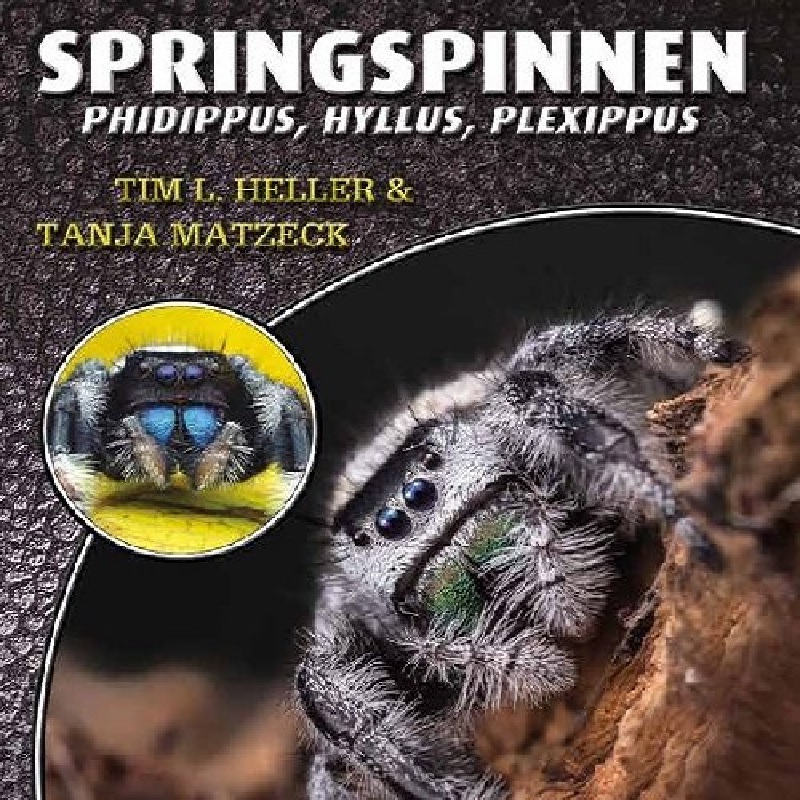
Jumping spiders Phidippus, Hyllus, Plexippus
Book Jumping Spiders - Phidippus, Hyllus & Plexippus A guide to keeping jumping spiders of the genera Phidippus, Hyllus & Plexippus. Who can resist the charm of jumping spiders? The childlike appearance of their expressive face simply leaves no one cold! In addition, their behavior is extremely exciting to observe, their colors are bright and their requirements for species-appropriate keeping are very easy to meet. No wonder these likeable jumpers are all the rage! This volume in the "Species by Species" series describes in detail what to look out for when buying and keeping them, introduces the most commonly kept species and color forms and provides plenty of tips on how to keep them successfully - so you can be sure they will breed well! Species by Species introduces you to the books in this series, which present the most popular terrarium animals. Each volume offers you detailed, practical care instructions and all the information you need to successfully breed your animals. All important questions from the required tank size to terrarium set-up, technical equipment, species-appropriate nutrition and disease prevention are answered with numerous tricks and tips. Experienced, long-standing breeders reveal how you can encourage the animals to reproduce and raise healthy young. All this in full color, generously illustrated and attractively designed - just about your terrarium animal - species by species

CHF 23.90

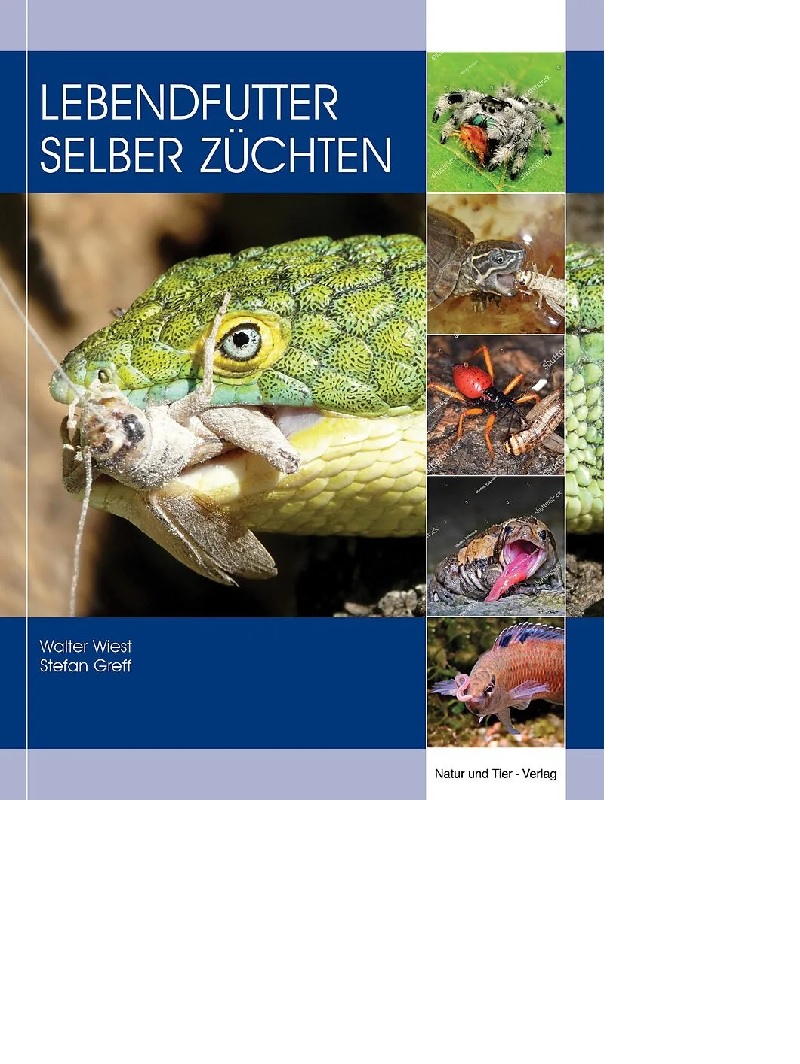
Book Breeding live food yourself
Book "Grow your own live food" - The perfect guide for pet owners Discover practical and detailed instructions on how you can easily breed food for your reptiles, birds, fish or other animals yourself in the book "Breeding live food yourself". With valuable tips on various food insects, their care and breeding, you can save money and ensure a species-appropriate diet for your pets. Contents of the book: Step-by-step instructions for breeding feeder insects Information on the best types of food for reptiles, birds and fish Care instructions and breeding conditions for various live food species Tips for sustainable and cost-effective food production Why breed your own live food? Get healthy, fresh food for your animals Save money and reduce dependence on pet shops Promote the health and well-being of your animals with species-appropriate food Whether you are a beginner or an experienced pet owner, this book provides you with everything you need to successfully breed live food yourself.

CHF 46.50

Marginata 69 - New Guinea tortoises
Marginata 69 - New Guinea tortoises – the genus ElseyaCover storyThe unrecognised beauties: New Guinea tortoises (Andreas S. Hennig)My experiences with Branderhorst's New Guinea tortoise, Elseya (Elseya) branderhorsti (Ouwens, 1914) (Andreas S. Hennig)Keeping and breeding of Rhodin's New Guinea tortoise, Elseya (Hanwarachelys) rhodini Thomson, Amepou, Anamiato & Georges, 2015 (Andreas S. Hennig)PortraitGeoemyda spengleri, Chinese serrated tortoise (Andreas S. Hennig)ReportageMacrochelys temminckii – Experiences and impressions with vulture tortoises part 2 (Reiner Praschag)KeepingAn alternative to year-round keeping of the Egyptian tortoise in the terrarium – my experiences with seasonal outdoor keeping of Testudo kleinmanni (Ricarda Schramm)EtymologySawbacks and living maps part 4: Graptemys gibbonsi, Pascagoula humpback tortoise (Holger Vetter)Classifieds & animal placement

CHF 16.50

Draco 63 - Amphibians of Europe
Draco 63 - Amphibians of Europe Contents: Editorial Frogs and tailed amphibians in Europe – species diversity and biology              Axel Kwet & Benny TrappAmphibian of the Year 2016 – Morphological diversity in Salamandra salamandraAxel Kwet & Benny Trapp New amphibians in EuropeAxel Kwet & Benny Trapp The amphibian fauna of the Iberian PeninsulaAxel Kwet & Benny Trapp Corsica, Sardinia and Sicily: Amphibian diversity in the MediterraneanAxel Kwet & Benny Trapp List of the amphibians of Europe     Axel Kwet & Benny Trapp

CHF 32.00

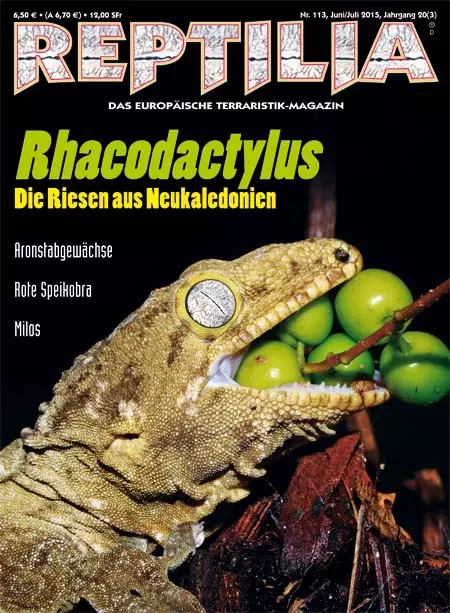
Reptilia 113 - Rhacodactylus, the giants from New Caledonia
Reptilia 113 - RhacodactylusThe giants of New Caledonia Arum familyRed spitting cobraMilos Cover story: Rhacodactylus, the giants of New Caledonia. EditorialMAGAZINEDATES Photo storyRhacodactylus – Diverse giants from New CaledoniaP. Schoenecker Keeping and breedingDark giants in the terrarium: keeping and breeding Rhacodactylus leachianus , the local form from Mont KoghisP. Schoenecker ReportageIn search of New Caledonian giant geckosC. Langner Keeping and breedingThe local variants of Rhacodactylus leachianus in terrarium keeping Part 1: Grande TerreS. Cemelli PlantsArum plants in the terrarium Part 1: Species diversity, biology and special featuresB. Akeret Keeping and breedingThe jewel of venomous snake keeping. The red spitting cobra, Naja pallida, as a pet in the terrariumO. S. Rudolphi ReportageQueensland's spiders and their venoms Part 2: The araneomorph spiders T. J. Hauke ALSO NEAR YOUService Animals of our homelandThe fire-bellied toadR. Leptien WESTERN HERP PERSPECTIVESWalk the boardsB. Love JourneyFeta cheese, sun and snakes. Welcome to Milos!A. Schmid PREVIEW BRUTKASTENChuckwalla anecdotes. Part 2H. Werning

CHF 12.00

Reptilia 58 - Crustacean lizards
Reptilia 58 - Crustacean lizards Bush crocodileAgate snailsPlains snake Contents: 2 EDITORIAL 4 MAGAZINE 8 DATES 12 REPORTAGEExperience with keeping and breedingof dinos in the terrariumBy D. Schmidtwith a review by H. Werning 16 WESTERN HERP PERSPECTIVESThe Madagascan turtle crisisBy B. Love 18 PHOTO REPORTAGECrustacean lizards – the genus HelodermaBy T. Wilms 26 KEEPING AND BREEDINGThe successful and continuouskeeping and breeding of the scorpion-crustacean lizard Heloderma horridumexasperatumBy M. Reisinger 36 HERPETOFAUNAThe Guatemalan scorpion crustacean lizard, Heloderma horridum charlesbogertiCampbell & Vannini, 1998By L. S. Meléndez Garcia 39 SPECIES CONSERVATIONPoisonous giants facing extinction?REPTILIA project for the protection of theGuatemalan scorpion crustacean lizardBy K. Kunz 44 REPORTAGEHunting anacondas with sonar and guillotineBy L. Dirksen 51 PORTRAIT AND POSTERBufo brongersmaiBy U. Schlüter 55 KEEPING AND BREEDINGThe bush crocodile – secret beauty in theterrariumBy M. Evers 63 KEEPING AND BREEDINGKeeping and breeding of the ChineseDione snake (Elaphe dione)By M. Diekmann & A. Weyers 72 KEEPING AND BREEDING Agate snails in the terrariumBy K. Wandtke 81 REPTILIA ON THE ROAD30 years Reptile Zoo HappBy D. Schmidt 88 CLASSIFIED ADS 93 RAT & TAT 94 LIBRARY 104 INCUBATORProtocol of a failed attempt at acautious approach, at first sight based on mutualsympathy and intersexualattraction, during a jubilantcelebrationBy H. Werning

CHF 11.20

Reptilia 66 - Rattlesnakes
Reptilia 66 - Rattlesnakes Peninsula tortoiseMadagascar terrariumFringed Fingers Contents: 2 EDITORIAL 3 MAGAZINE 14 DATES 16 WESTERN HERP PERSPECTIVESTurtles in the seaFrom B. Love 18 PHOTO REPORTAGERattlesnakes! The genus CrotalusBy S. Winchell 26 KEEPING AND REPRODUCTIONKeeping and breeding of the Western diamondback rattlesnakeBy F. J. Caballero Gasca & J. M. Rodriguez Gòmez 32 REPORTAGEPhoto hunt for mountain rattlesnakesin MexicoBy R. W. Bryson Jr. 38 KEEPING AND REPRODUCTIONTerrarium keeping of Mountain RattlesnakesBy D. Lazcano, R. D. J. Galvàn C. Garcia de la Pena G. Castaneda 42 TRAVELA stay in a remote part of the Brazilian Amazon region: Herpetological diaryBy P. Ulmer 51 PORTRAIT AND POSTERAgama lionotus lionotusBy M. Dobiey & P. Wagner 56 HERPETOFAUNAFrogsnake of the year 2007 The spadefoot toad (Pelobates fuscus)By A. Kwet & A. Nöllert 64 PRACTICEMadagascar in the living roomBy A. Hartig 68 HERPETOFAUNAFringed-fingered lizards (Acanthodactylus) in nature and in the terrariumPart 1: General information on ecology and behaviourBy U. Schlüter 77 HERPETOFAUNAKeeping and breeding of the Peninsula Ornate Tortoise Pseudemys peninsularis Carr, 1938By A. S. Hennig 87 FAQ - FREQUENTLY ASKED QUESTIONSThe Indian Praying MantisBy K. Kunz 92 LIBRARY 104 BRUTKASTEN The Silence of the Nose Frogs, Part 1 From H. Werning

CHF 11.20

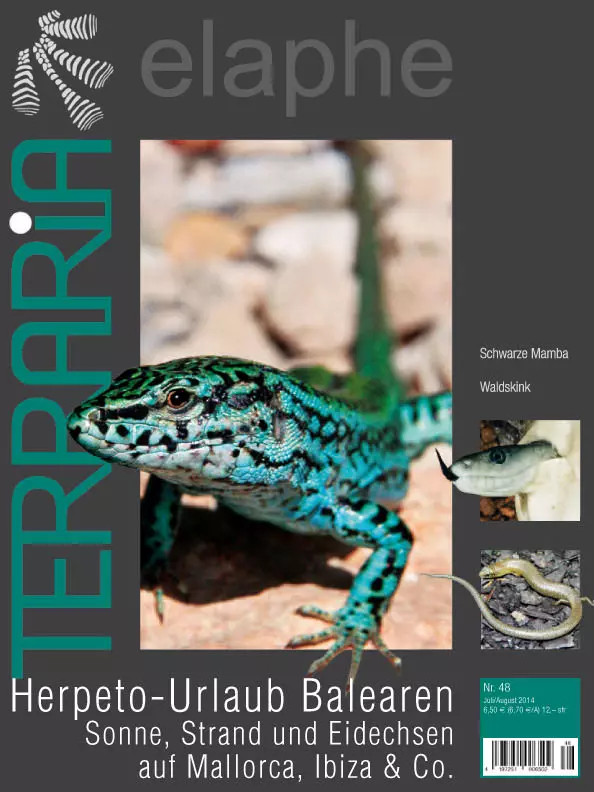
Terraria 48 - Herpeto Holiday Balearic Islands
Terraria 48 - Herpeto holiday Balearic IslandsBlack MambaForest skinkContents:TerritorialHerpetoramaCover storyHerpeto holiday Balearic Islands. Sun, beach and lizards on Mallorca, Ibiza & Co.Mike ZawadzkiIbiza - Sun, beach and lizardsMike ZawadzkiFormentera - Beyond timeMike ZawadzkiMenorca - Blown by the windMike ZawadzkiCabrera - Spain's little GalápagosMike ZawadzkiMallorca - The unrecognised islandMike ZawadzkiPanoramaIn search of mountain vipers (Monitvipera xanthina) in north-eastern Greece – Part 2Michael Wirth"Just Remember that Death is not the End". Taxidermy of reptilesJörg PetzoldWilly Wolterstorff. The "father of the newt" was born 150 years agoWolfgang BischoffResearchAmong researchers"Harmless" snake on the road or the discovery of a new pit viper in the HimalayasGernot VogelNew speciesThe relict-like leaf toad or the discovery of a new frog speciesMirko SoléSalamandraTerraristicsKeeping and breeding the Madagascar forest skink Amphiglossus macorcercusJochen MeyerSubscription & ServiceObservations of the black mamba, Dendroaspis polylepis, in the terrariumLudwig Trutnau & Alfred WallnerNature and species conservationField notesGreek vipersHans PichlerGrass frogs in VilsalpseeAxel KwetEasy help for the amphibian of the year, the yellow-bellied toadAndreas OchsenbeinAlso in your neighbourhoodPreviewIncubator The boys in the swampRolf Leptien

CHF 12.00

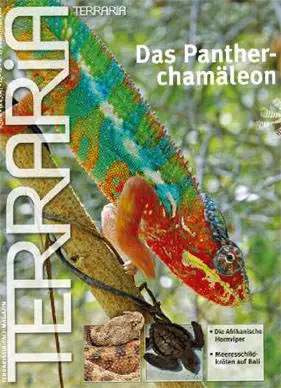
Terraria 27 - The panther chameleon
Terraria 27 - The Panther Chameleon The African Horned ViperSea turtles in Bali Contents: With its spectacular colours, the panther chameleon, Furcifer pardalis. enchants every reptile enthusiast. Fortunately, however, it is not only one of the most beautiful lizards of all, but is also easy to keep and breed for a chameleon. Carsten Schneider presents the basics of caring for and breeding these beautiful animals step by step. And it goes without saying that this cover story will be particularly colourful. EDITORIALMAGAZINEGondwanaland – a pioneering project at Leipzig Zoo, Part 3Andreas S. Henning Change of staff at Museum Koenig in Bonn: Wolfgang Böhme leaves, Dennis Rödder arrivesAxel Kwet & Heiko Werning A brief encounter with Alpine newts (Salamandra atra)Chritiane Kohlruss SupersilkKriton Kunz Lookup News on the pointed-head agamas of the genus PseudocalotesJakob Hallermann TERRAglobalHard days in TabaconasMaik Dobiey TOPICThe colourful panther. About the chameleon Furcifer pardalis Carsten Schneider The keeping of panther chameleonsCarsten Schneider The breeding of the panther chameleon Carsten Schneider Diseases and treatment options for the panther chameleonCarsten Schneider The Tierra Caliente red-kneed tarantula, Brachypelma auratum – a highland tarantula from the Mexican highlands?Boris F. Striffler The African horned viper, Cerastes cerastes cerastes Georg Jachan Small but nice: Proyek Penyu – the sea turtle breeding station in Pemuteran on Bali Martin Hallmen Ranas de Cristal. In search of glass frogs in north-east HondurasAlexander Gutsche New speciesFat prey from MadagascarJörn Köhler … and new “fat frogs” from BrazilAxel Kwet AMONG RESEARCHERSWho belongs to whom? In search of tadpoles and frogs in the eastern lowlands of BoliviaArne Schulze CATCH THE EYELarge and small large ones – the terrarium system of Stefanie and Jochen GeigerMichael Wirth NEAR YOUSUBSCRIPTION & SERVICEPREVIEW INCUBATORIn reality, I was always completely indifferent to clothing (for Wolfgang Böhme) Heiko Werning

CHF 12.00

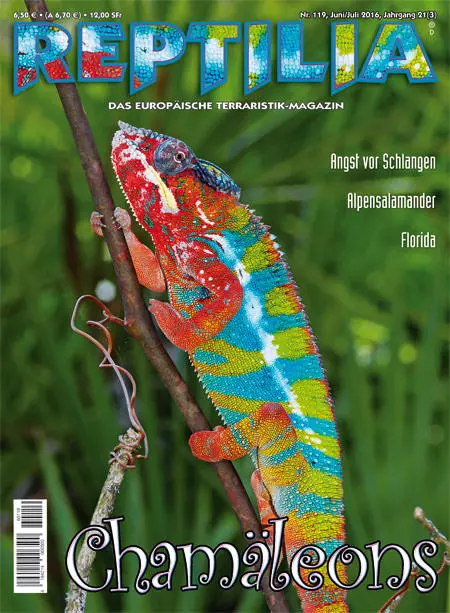
Reptilia 119 - Chameleons
Reptilia 119 - Chameleons Fear of snakesAlpine salamanderFloridaContents:Cover story: ChameleonsThey used to be considered untenable, but today they are among the most popular terrarium animals. Chameleons, the "dragons of our time". We indulge in pictures of these extremely photogenic animals, present in detail the keeping and breeding of one of the most prominent representatives of this group, the lobed chameleon, and devote ourselves to the legendary colour-changing ability of these lizards. EditorialMagazineDates Photo storyChameleons. Always something newN. Lutzmann Keeping and breedingKeeping and breeding the elephant-eared chameleon (Trioceros melleri)C. Malberg & A. Schäberle ResearchInfluence of various factors on colour change in the Yemen chameleon (Chamaeleo calyptratus) and the Madagascar giant chameleon (Furcifer oustaleti)A. Schmidt MAN AND ANIMALFear of snakes: innate, learnt or groundless?D. Schmidt ReportageViper snakes for breakfast. Observations of Natrix maura in southern PortugalW. & Y. Lantermann SERVICEALSO NEAR YOU Animals of our homelandThe Alpine SalamanderR. Leptien LIBRARY WESTERN HERP PERSPECTIVESEuropeans are known for …B. Love TRAVELThe great trek.  Part 2: Spring rivers and eternal swampsH. Werning PREVIEW BRUTKASTEN The spider's web (or: Stuttgart 21 will not be the last victim of these green lizard spiders)Ancestor

CHF 12.00