Fighting fish primer - The most important basics of keeping fighting fish are described here.
96 pages
150 colour photos
hardback
Bestseller
Author Peter Bärwald
Publisher Dähne Verlag
Betta fish have become increasingly popular due to their different fin shapes, colours, behaviour and interesting reproduction. The book describes the most important basics of keeping and breeding these fantastic fish. The author has kept fighting fish since his youth and breeds them very successfully today.
Composition
Feeding recommendation
Technical details
Size information
0 of 0 reviews
Give us a rating!
Share your experience with the product with other customers.
Login
No reviews found. Go ahead and share your findings with others.
Primordial Crayfish PrimerPrehistoric crabs lived on our planet before the dinosaurs. They have the fascination of living fossils. The rapid development from an inconspicuous egg from dry earth to an archaic-looking creature has fascinated Kai Alexander Quante since his childhood. Today the aquarist is a recognised expert and experienced practitioner in the field of ecology, aquarium equipment, breeding, care, reproduction and socialisation of prehistoric crayfish in the aquarium. In addition to the well-known brine shrimp Artemia (also known as fish food), the author shows in this practical handbook how to keep, breed and feed prehistoric crustaceans in an aquarium world that will delight young and old.
Practical Aquarium HandbookWell-maintained aquariums give us an insight into the fascinating underwater world. To ensure that everything runs smoothly in the "mini biotopes" and that the inhabitants feel at home, aquarium expert Ulrich Schliewen provides expert information on the natural habitats and interesting behaviour of the fish in the standard reference book, Praxishandbuch Aquarium. Everything important about water and technology is explained in an easy-to-understand way. Topics such as decoration and planting, set-up and care, socialising fish as well as reproduction and breeding leave no questions unanswered. The comprehensive portrait section with over 400 species of fish, amphibians and invertebrates provides an excellent overview and opens up a wide range of possible combinations for your dream aquarium. Extras: "Nano aquariums - small fish in mini tanks" and "Getting started in marine aquariums - a home for Nemo". Many practical tips, checklists, tables, tests and special elements such as the Quickfinder (knowledge from A to Z at a glance, with topic-related chapter references), question-and-answer pages (practical knowledge transfer), science-and-practice pages (up-to-date specialist knowledge, practical for all aquarists, whether beginners or advanced) and the "What to do if ..." section (expert help with everyday problems). (competent help with everyday problems) make the book an indispensable standard work for every aquarist.
Hobby: Catfish by Dr Jürgren SchmidtThere are many small species of catfish, some of which are currently available in specialised shops. These include a large number of highly interesting species. They really bring life into the aquarium during feeding and especially at night. The interested aquarist will not miss it when the lights go out in the evening. Catfish are simply fascinating. Contents: -The catfish aquarium -The reproduction of catfish - Species section.
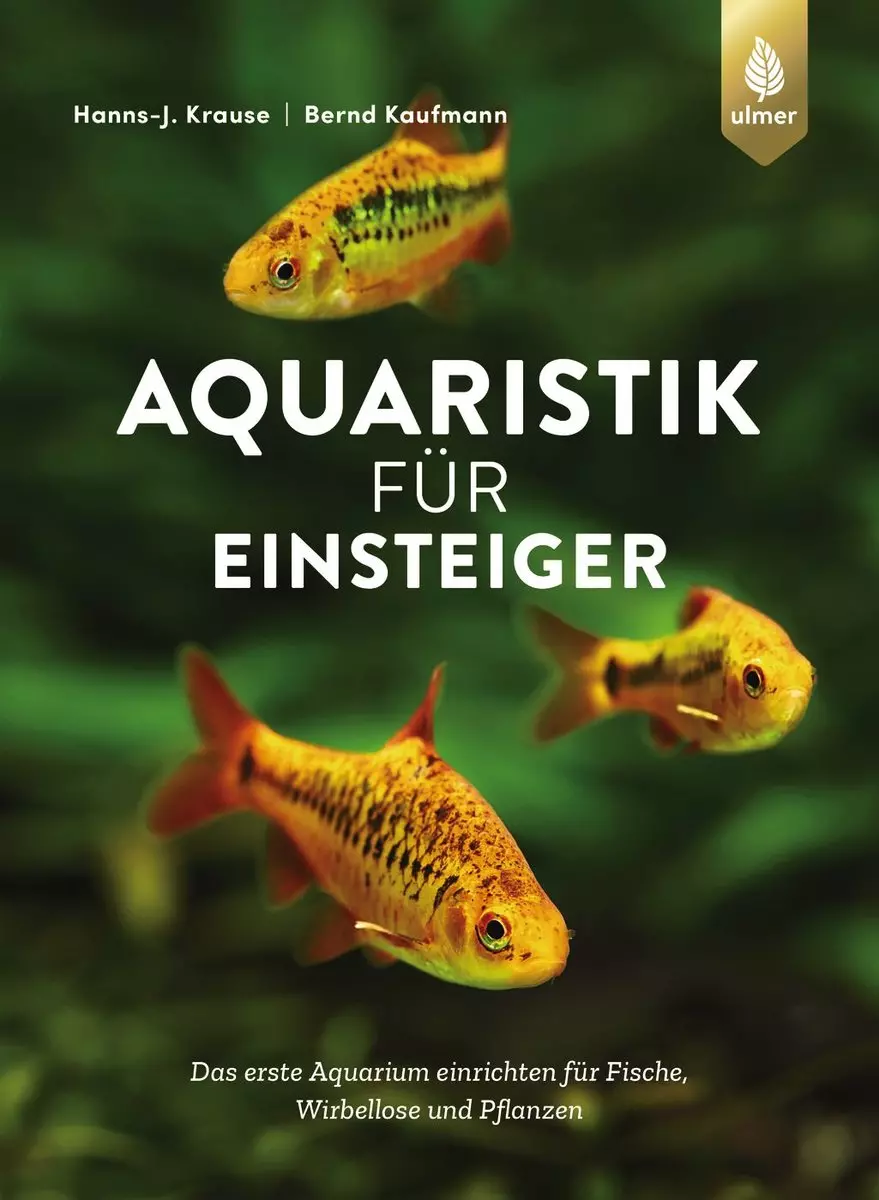
Everything done right from the start with the book Aquaristic for beginners!
80 pages
46 colour photos, 8 drawings
ligated
2nd edition
The guide for all new aquarists
Everything important is explained step by step
With many valuable tips
Author Hans-Jürgen Krause
Publishing House Ulmer Eugen Verlag
In order to keep the very first aquarium beautiful and the fish healthy, many things have to be considered when setting up. And an aquarium is also a lot of fun in the long term if you, as an aquarium newcomer, inform yourself about the basics of water chemistry and aquarium technology beforehand. Everything you need to know is explained step by step and in an understandable way in this book.
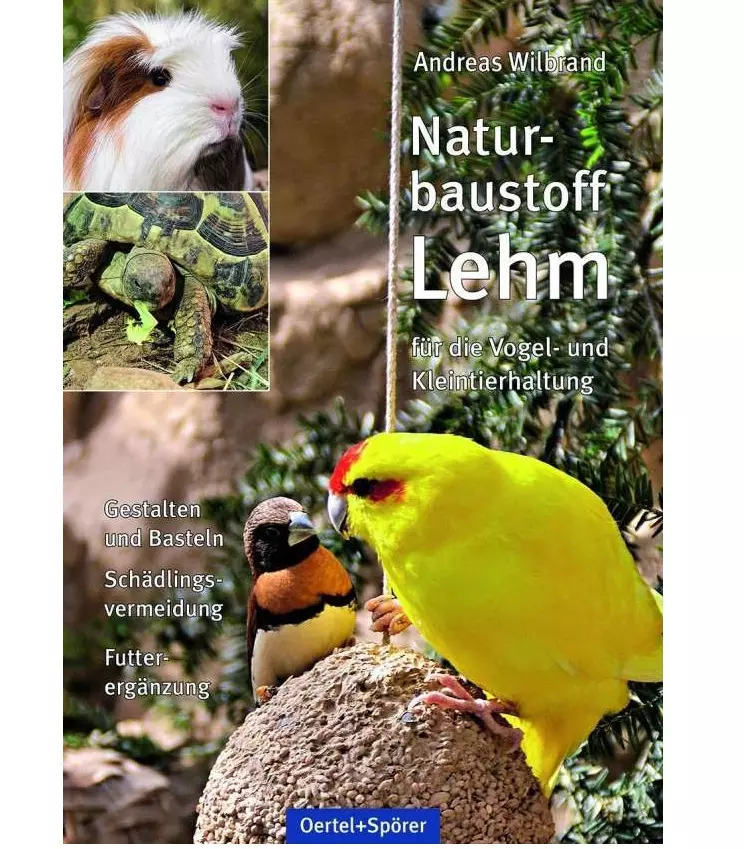
Natural building material clay for keeping birds and small animals
The first clay DIY book for animal lovers - a practical guide with simple instructions, new ideas and health tips!
Designing and crafting
Pest prevention
Feed supplement
Clay is the oldest and most universal building material in the world. The animal world has been demonstrating for millions of years how it can be used to build safe dwellings. And humans also utilised this building material a long time ago and even created huge and artistic buildings from it.
Clay can also be used perfectly for our pets. Building projects for animal housing of all kinds, landscaping in terrariums, soil construction for aquariums, pest control in aviaries, pigeon coops and stables - this book will show you how to do all this and what you need for it.Clay is not only a building material that can almost always be reused, but also contributes to the health of humans and animals. Clay binds toxins, displaces pests and is suitable as a fertiliser. For this reason, the health maintenance of our protégés through clay is also described in detail
Koi in the most beautiful water gardens is a book about the mysterious world of koi fishe
243 Seiten
300 Abbildungen
gebunden
Standardwerk
Autor Bernhard Teichfischer
Verlag Dähne Verlag
Das Standardwerk, das vom Teichbau bis zur Koipflege alles Wesentliche über dieses aktuelle Hobby behandelt. Mit einer herausragenden Fülle von Fotos, Skizzen und Tabellen zeigt es anregende Beispiele und deren praktische Umsetzung.
Malawi cichlids by Ihr Hobby
A book for beginners and advanced aquarists about the Malawi cichlids.
80 pages
74 color photos
bound
2nd edition 2010
Author Peter Bredell
Publisher Bede at Ulmer
The book is suitable for beginners and for advanced aquarists. The book describes the welfare, socialization and propagation of the Malawi cichlids. In addition, also to the filtering, lighting, water and appropriate feed choice explains a lot.
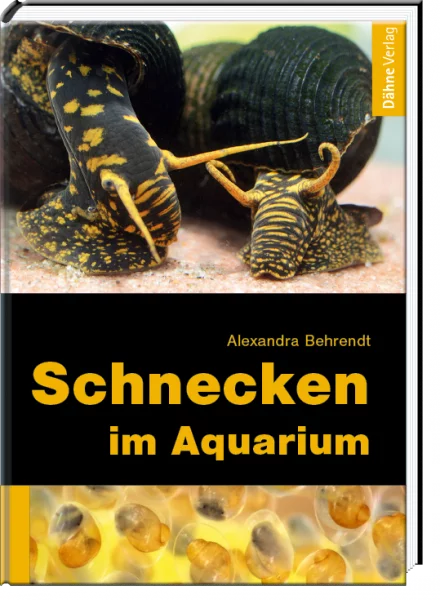
Snails in the aquarium - All important information about snails in your freshwater aquarium
160 pages
200 colour illustrations
hardback
1st edition
Author Alexandra Behrendt
Publisher Dähne Verlag
Systematics and anatomy
Genus and species
Aquarium
Diseases
etc.
With the shrimp boom, many different snails have also found their way into our aquariums in recent years due to their beauty and interesting behaviour. Whether native species that have accidentally found their way into our aquariums or exotic species from distant countries, whether for a community aquarium or a special species aquarium, the choice is now huge. The most important genera and species are presented here with their special characteristics and individual requirements.
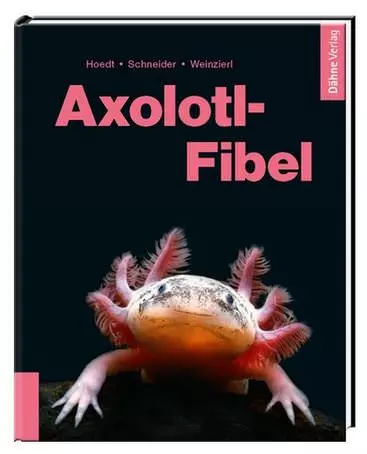
Dähne Verlag - Axolotl Primer
Everything you need to know about keeping and colouring these fascinating amphibians.
96 pages
150 photos
hardback
Authors Hoedt, Schneider and Weinzierl
Publisher Dähne Verlag
The fascinating axolotl has become increasingly popular and there are now also different colour forms. The authors present the most important colour forms and give tips on how to set them up and keep them correctly.
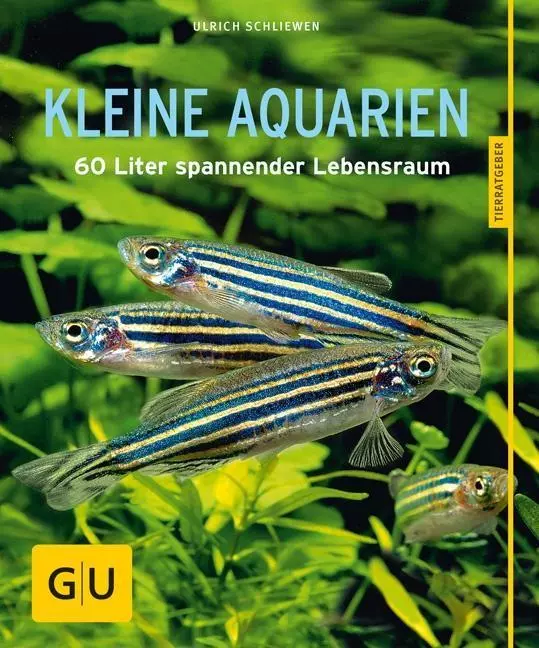
Small aquariums - Underwater world in miniature format
64 pages
color illustrations
practical tips
Author Ulrich Schliewen
Publisher GU
Underwater world in miniature: Small aquariums are particularly popular because they also fit into the smallest apartment. The first guide on this topic shows which fish and plants are suitable for small pools of up to 60 cm in length and are comfortable together. With many practical tips on the right equipment of the aquarium and the proper care of its inhabitants.
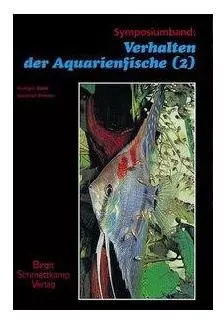
The NTV - Behaviour of Aquarium Fish is a summary of the contributions to the symposium.
208 pages
Photos, drawings, graphical illustrations and tables
hardback
Authors Rüdiger Riehl and Hartmut Greven
The book is a summary of the contributions to the symposium "Behaviour of Aquarium Fish (2)", which took place from 26 to 28 May 2000 in the Löbbecke Museum and Aquazoo of the city of Düsseldorf.The book features contributions from scientists who have, for the most part, been studying the reproductive behaviour of aquarium fish for many years, as well as aquarists who have observed and bred their fish over the years with the utmost care and admirable empathy. In this way, the book exemplifies a complementary collaboration between science and hobby aquaristics.
232 exciting pages Cichlids from West Africa with 237 color photos!
232 pages
237 color photos
Hardcover
Authors H. Linke and dr. staeck
Publisher Tetra-Verlag
The book, with its 232 pages and 237 color photographs, is an ideal handbook for identification, care and breeding.
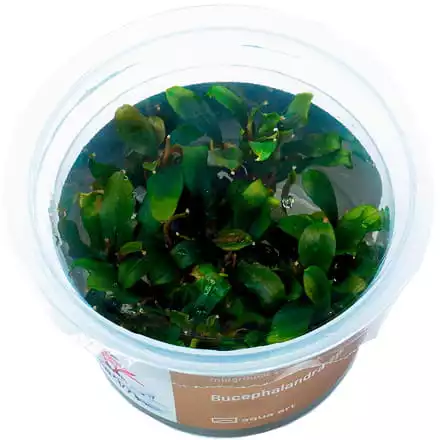
Bucephalandra sp. Browni
Bucephalandra sp. Brownie is an aquarium plant from the island of Borneo. It grows naturally on rocks and roots. In the aquarium it should be attached to decorative elements.Difficulty of growing: easy to moderateLight requirements: lowCO₂ requirements: lowHeight of mature plant: 10 cmGrowth rate: SlowTemperature: 22-28°CPlacement in aquarium: second levelOrigin: Borneo Island, Southeast AsiaCup diameter: 6 cmBucephalandra sp. 'Brownie' is found in the wild on the Asian island of Borneo. Its striking, green-brown, glossy foliage gives it a very attractive appearance. In terms of requirements, it resembles Anubias. It is popular in aquascaping to create gorgeous underwater landscapes that require very little maintenance due to its moderate growth.Bucephalandra can also be grown in paludariums and terrariums.
Bucephalandra sp. Brownie is a real rarity. In nature it grows in streams and rivers, but also on the slopes of waterfalls for example. The equatorial climate zone where Borneo is located is known for its abundant rainy seasons. As the rains come, the levels of the rivers rise, damming up Bucephalandra for months at a time. For this reason, the plant has taken on submersive characteristics. Under water it is more intensely colored and has a finer leaf structure.Bucephalandra sp. Brownie is an easy plant to grow, provided the right conditions are present. It does not make great demands on the parameters. It grows in both soft and medium hard water. It prefers a pH between 5 and 8. The light requirement of this species is low, and it thrives in partial shade and even in shade. If the conditions in the aquarium suit it, it will begin to produce offspring which can be detached and propagated. If allowed to grow, they will form a dense clump. It may also be that it blooms.
In the background, attached to a root or rock, it makes the best figure. Dthe rhizomes of Bucephalandra in any case should not be covered with substrate. Outside the aquarium, this species is also excellent for paludariums, where it forms stiffer foliage.
Bucephalanders are interesting plants that belong to the rheophytes. They have a prehensile root that keeps them on rocks, and they do not need a substrate to grow properly.Planting: The plant must be removed from the cup and thoroughly rinsed from the gel under running water. This is best done by placing the plant in a container of lukewarm water. Most of the gel will then fall off by itself. Divide the contents of the cup into 1-2 cm lumps and then put them on the selected items at a small distance..
CHF 16.90
❅
❆
❅
❆
❅
❆
❅
❆
❅
❆
❅
❆
This website uses cookies to ensure the best experience possible. More information...