Reptilia 51 - Tree agamas

Article no: reptilia51

CHF 11.20

Stock: 0

Ready for dispatch in 1-3 days, delivery time 7 working days

Delivery between Tuesday, 12 May and Wednesday, 13 May
Zahlungsarten
Product information "Reptilia 51 - Tree agamas"

Reptilia 51 - Tree dragons

Drakensberg armadillo
Green night tree snake
Chin spotted tortoise

Contents:

    • 2 EDITORIAL
    • 6 READER LETTERS
    • 8 MAGAZINE
    • 16 DATES
    • 18 PHOTO REPORTAGE
      With horns, crests and gliding membranes
      The bizarre arboreal dragons
      by J. Hallermann
    • 26 KEEPING AND BREEDING
      Mantheyus phuwuanensis (MANTHEY & NABHITABHATA, 1991) – from capture to breeding in the terrarium by S. & U. Manthey
    • 32 HERPETOFAUNA
      On the variability and biology of the Philippine angular-headed dragon Gonocephalus sophiae) by M. Gaulke & A. Demegillo
    • 41 REPORTAGE
      The lyre-headed dragon Lyriocephalus scutatus by U. Bartelt, H. & M. de Bitter
    • 51 PORTRAIT AND POSTER
      Caiman yacare
      by H. Werning
    • 56 TRAVEL
      Pulau Tioman – Pearl in the South China Sea; Part 2 by W. Grossmann & F. Tillack
    • 66 KEEPING AND BREEDING
      Keeping and breeding the Drakensberg armadillo lizard (Cordylus melanotus subviridis)
      by B. Langerwerf
    • 70 KEEPING AND BREEDING
      Boiga cynodon – The green night tree snake
      A rarely kept rear-fanged snake and its breeding
      by J. Bulian
    • 78 REPORTAGE
      Trachemys callirostris callirostris – Biology, use and protection of the chin spotted tortoise in Colombia
      by A. Martínez Silvestre & L. Arias Bernal
    • 86 SMALL ADS
    • 91 WESTERN HERP PERSPECTIVES
      Aliens – not the film
      by B. Love
    • 93 RAT & TAT
    • 95 LIBRARY
  • 104 GLOSSE
    Lots of waves – disturbing turn of the year
    by H. Werning
Composition
Feeding recommendation
Technical details
Size information

0 of 0 reviews

Give us a rating!

Share your experience with the product with other customers.


Suggested products

Handbook of food plants for tortoises and other reptiles
Handbook of forage plants 2nd revised editionMarion Minch is not only a successful breeder of diverse tortoises for many years, but also an excellent connoisseur of native wild herbs. She founded and runs samenkiste.de, which is well known to many tortoise keepers and nature lovers. Her name is inextricably linked with reptile care and species-appropriate nutrition for tortoises. Her handbook of food plants summarises the most important native food plants for herbivorous and omnivorous reptiles. She not only considers tortoises, but also iguanas, spiny-tailed dragons and even chameleons. From the basics of plant biology to native wild herbs to suitable food plants for hardy tropical reptile species, this comprehensive work provides the basis for species-appropriate keeping. In the expanded and supplemented 2nd edition, the plant section is divided according to flower colour. This makes it even easier to identify wild herbs. The work has also been supplemented with a wealth of additional information and many pictures.

CHF 46.50

Geckos
Geckos in the terrarium by Astrid FalkThe book offers a comprehensive introduction to geckos and their species-appropriate keeping in terrariums. It explains what you need to think about before buying a gecko and what preparations should be made. The book describes in detail how the terrarium is technically equipped and set up. The care of the animals, their special features and behaviour, their diet, reproduction and rearing of young animals are described, as well as diseases and husbandry problems with tried and tested suggestions for prevention and treatment. Individual gecko species that are particularly suitable for keeping and breeding in terrariums are portrayed in detail in the second part of the book.

CHF 28.50

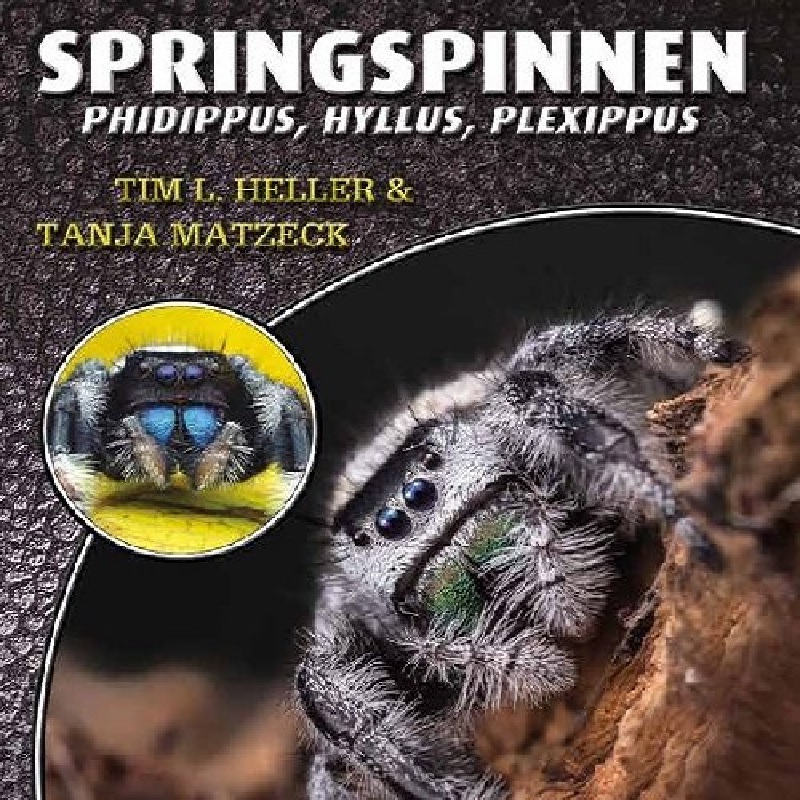
Jumping spiders Phidippus, Hyllus, Plexippus
Book Jumping Spiders - Phidippus, Hyllus & Plexippus A guide to keeping jumping spiders of the genera Phidippus, Hyllus & Plexippus. Who can resist the charm of jumping spiders? The childlike appearance of their expressive face simply leaves no one cold! In addition, their behavior is extremely exciting to observe, their colors are bright and their requirements for species-appropriate keeping are very easy to meet. No wonder these likeable jumpers are all the rage! This volume in the "Species by Species" series describes in detail what to look out for when buying and keeping them, introduces the most commonly kept species and color forms and provides plenty of tips on how to keep them successfully - so you can be sure they will breed well! Species by Species introduces you to the books in this series, which present the most popular terrarium animals. Each volume offers you detailed, practical care instructions and all the information you need to successfully breed your animals. All important questions from the required tank size to terrarium set-up, technical equipment, species-appropriate nutrition and disease prevention are answered with numerous tricks and tips. Experienced, long-standing breeders reveal how you can encourage the animals to reproduce and raise healthy young. All this in full color, generously illustrated and attractively designed - just about your terrarium animal - species by species

CHF 23.90

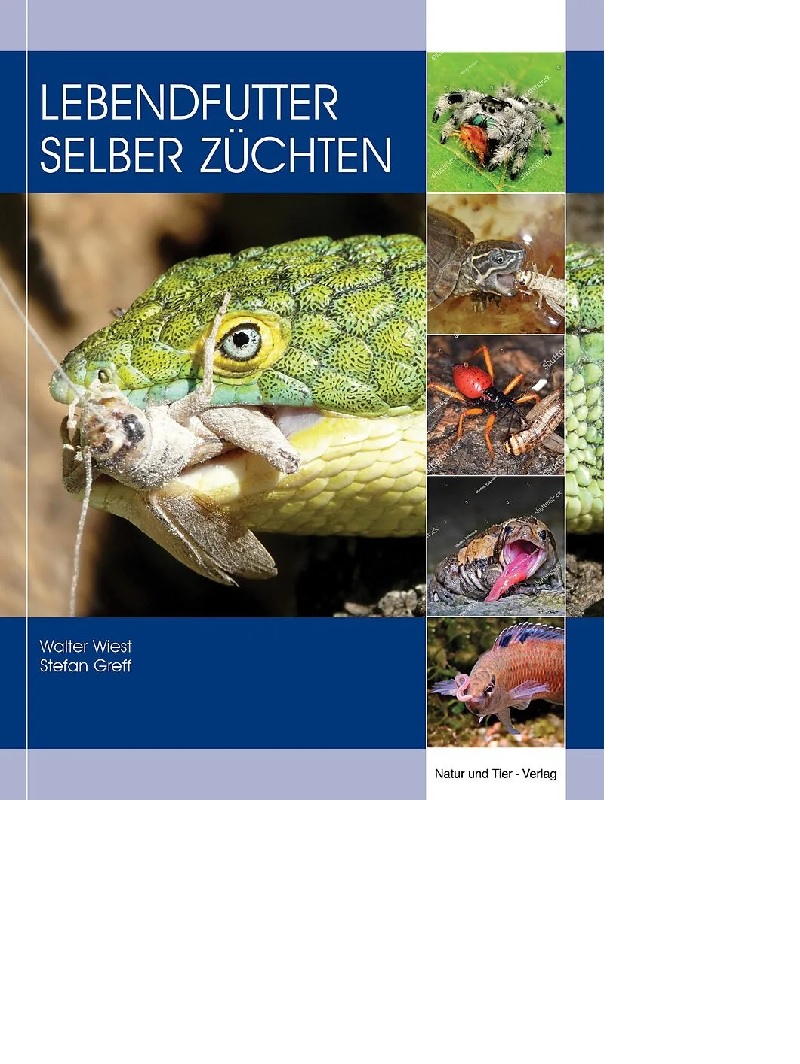
Book Breeding live food yourself
Book "Grow your own live food" - The perfect guide for pet owners Discover practical and detailed instructions on how you can easily breed food for your reptiles, birds, fish or other animals yourself in the book "Breeding live food yourself". With valuable tips on various food insects, their care and breeding, you can save money and ensure a species-appropriate diet for your pets. Contents of the book: Step-by-step instructions for breeding feeder insects Information on the best types of food for reptiles, birds and fish Care instructions and breeding conditions for various live food species Tips for sustainable and cost-effective food production Why breed your own live food? Get healthy, fresh food for your animals Save money and reduce dependence on pet shops Promote the health and well-being of your animals with species-appropriate food Whether you are a beginner or an experienced pet owner, this book provides you with everything you need to successfully breed live food yourself.

CHF 46.50

Marginata 69 - New Guinea tortoises
Marginata 69 - New Guinea tortoises – the genus ElseyaCover storyThe unrecognised beauties: New Guinea tortoises (Andreas S. Hennig)My experiences with Branderhorst's New Guinea tortoise, Elseya (Elseya) branderhorsti (Ouwens, 1914) (Andreas S. Hennig)Keeping and breeding of Rhodin's New Guinea tortoise, Elseya (Hanwarachelys) rhodini Thomson, Amepou, Anamiato & Georges, 2015 (Andreas S. Hennig)PortraitGeoemyda spengleri, Chinese serrated tortoise (Andreas S. Hennig)ReportageMacrochelys temminckii – Experiences and impressions with vulture tortoises part 2 (Reiner Praschag)KeepingAn alternative to year-round keeping of the Egyptian tortoise in the terrarium – my experiences with seasonal outdoor keeping of Testudo kleinmanni (Ricarda Schramm)EtymologySawbacks and living maps part 4: Graptemys gibbonsi, Pascagoula humpback tortoise (Holger Vetter)Classifieds & animal placement

CHF 16.50

Reptilia 27 - Anolis
Reptilia 27 - Anolis Curly-haired tarantulaCape CobraPhilippines Contents: 2 Editorial 3 letters to the editor 4 Lookup 5 Magazine 10 dates 14 Western Herp Perspectives: The aisle phenomenon, by B. Love 16 Photo reportage: Anolis, by L. Wijffels 22 Herpetofauna: The stretchable throat skin of the Anolis, by L. Wijffels 35 Herpetofauna: On the variation of "Le Roquet", the Anolis of Martinique, by L. Wijffels 44 Report: Anolis blanquillanus and Anolis onca. Two interesting skinks from the islands off Venezuela, by A. Flaschendräger 49 Obituary: In memory of Leo C. M. Wijffels, by A. Flaschendräger 51 Portrait and poster: Ctenosaura flavodorsalis, by T. Eisenberg 55 Journey: A visit to the Philippine rainforest, by Dr M. Gaulke 64 Keeping and breeding: Keeping and breeding the Indian star tortoise, by K. Gärtner 69 Terraristics: Building a snake enclosure, Part 3: Experiences, by M. Hallmen 74 Care and Breeding: The Cape Cobra Naja nivea, Care and Reproduction, by W. Strassmann 77 Herpetofauna: Curly Hair – Lovely Creatures, The tarantula Brachypelma albopilosa in the terrarium, by H. Fischer 82 Reptilia on the road: De Oliemeulen zoo and reptile house in Tilburg/Netherlands, by A. Hauschild 94 Advice and action 96 Library 104 Glossary: Anaconda! (Part 2), by H. Werning

CHF 9.80

Tortoises Volume 1 - Hibernation
Hibernation in European tortoises Natural preparation and successful hibernation. Guide to keeping European tortoises, Volume 1 (2nd edition) A challenge for tortoise lovers, a necessity for their pets: the annual hibernation. This guide is aimed at readers who are looking for basic information as well as experienced keepers. It provides clear and concise information on the fundamental importance of hibernation for the species and their health. A separate chapter also deals with naturalised keeping in outdoor enclosures, which is a prerequisite for successful hibernation. Preparing for, carrying out and ending hibernation, including associated problems and mistakes, are described in detail. There is also important information from vet Frank Mittenzwei, a monthly overview of hibernation and lots of helpful illustrations. A really helpful guide for tortoise lovers.

CHF 23.90

Martinique Tree Tarantula
All about the Martinique tarantula "Avicularia versicolor" and other Avicularia species by  Boris F. Striffler 64 pages Format: 14.8 x 21 cm 46 colour photos About Avicularia versicolor, Avicularia minatrix, Avicularia purpurea and Avicularia laeta Author Boris F. Striffler Publisher NTV Contents: Tarantulas of the genus Avicularia have long been among the most popular terrarium invertebrates. This is not only due to their very attractive colouring, but also to the generally very calm nature of these spiders.Boris F. Striffler has long been involved with tarantulas, both scientifically and as a terrarium keeper. In this volume of the "Species by Species" series, he goes into detail and in an easy-to-understand way about all the aspects of keeping and caring for Martinique tarantulas that are worth knowing. And, of course, he also tells you how to breed your favourites and raise the young spiders. Systematics and body structure The fascinating biology: From the life of the Martinique tarantula All information on species-appropriate keeping: from suitable terrariums to equipment and technology to feeding Successful breeding: Mating stimulation, various methods for egg laying and rearing the young Solutions to problems: How to avoid the most common mistakes in care and how to help sick animals Brilliant photos

CHF 21.90

Draco 27 - Highland
Draco 27 - HighlandContents: 2 Editorial 4 Mountains and highlands - reptiles and amphibians in an extreme habitat Heiko Werning & Claudia Wolf 28 New Zealand - the discovery of new geckos at the end of the worldRonald Coleman 32 Giant toads and co. in the highlands of south-west ChinaKlaus Detlef Kühnel 36 Rwenzori - in search of amphibians in the mountains of the moonKatharina C. Wollenberg & Stefan Lötters 40 The keeping of highland chameleonsAndreas Böhle 45 chameleons in the Oster Usambara Mountains in northern TanzaniaWerner & Yvonne Lantermann 49 Spanish adders are also poisonous ...Axel Kwet 54 In search of mountain lizards in three continents Wolfgang Bischoff 74 Life, care and breeding of the alligator skink Mesaspis moreletii (Bocourt, 1871)Uwe Schlüter 81 Magazine

CHF 18.40

Draco 24 - Spiders
Draco 24 - Spiders Contents: 2 Editorial 4 Spiders - a look into strange worlds Kriton Kunz 24 "Relics of prehistoric times" - arthropod spiders, wallpaper spiders and their relativesThomas Ziegler & Boris F. Striffler 32 wheel web spiders in the terrariumTimm Adam 48 The genus Latrodectus - not just black widowsBoris F. Striffler 58 Colourful little predators - care and breeding of the lynx spider Peucetia madagascariensisKriton Kunz 62 water-hunting spiders of the family Ctenidae, Pisauridae and TrechaleidaeTimm Adam 70 Secret roommates in the house: from isopod hunters, hypnotisers and glue spittersKriton Kunz 80 With Piaroa Indians hunting the giant tarantula Theraphosa apophysisBoris F. Striffler & Barbara Zoller 88 Book box 93 Magazine

CHF 16.80

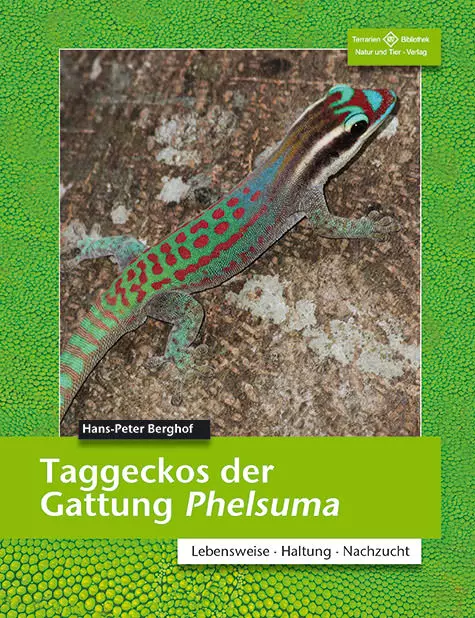
NTV Taggeckos of the genus Phelsuma
NTV day geckos of the genus Phelsuma - the absolute favourites of terrarium keepers. Hans-Peter Berghof 192 pages many illustrations Format: 16.8 x 21.8 cm 3rd revised and extended edition Contents: The day geckos of the genus Phelsuma with their bright colours and interesting behaviour are among the absolute favourites of terrarium keepers.Hans-Peter Berghof has been successfully breeding these lizards for a long time and shares his accumulated knowledge about keeping and breeding these beautiful geckos here.The special section presents all species in detail with their care requirements in words and pictures and indicates which animals are easier and which are more difficult to keep.The ideal supplement to the standard work by Hallmann et. al. from 1997, supplemented by all species discovered since then and newly published literature. ForewordsIntroductory words for the first editionIntroductory words for the revised 3rd editionThanksBiologyWhat is a Phelsuma?PhysiqueDistributionHabitats and way of lifeNotes on the age of PhelsumaColourationSexual dichromatism and dimorphismDiffering colouration of the juveniles Protection statusThreatened in habitatThreatened by trade and keeping in terrariumsInternational and national species protectionWhich official requirements must I observe when keeping and breeding Phelsuma? Procurement and handlingWild-caught or captive bred?Before purchaseDealing with the InternetWhere to buy?Sex differences in PhelsumaHow do I recognise healthy animals?TransportQuarantineCapturing and handlingPhotographing Phelsuma Terrarium technologyTypes of terrarium and container sizesWhich terrarium for which species?VentilationLightingUV lightHumidityTemperatures FurnishingSubstrateClimbing opportunitiesRear and side wall designPlanting CareAcclimatisationFeeding with animal foodFeeding with plant foodYoghurt and other dairy productsArtificial food mixturesMinerals and vitaminsWatering and humidityTemperaturesWinter dormancyStocking density and socialisationIndoor keepingOutdoor keeping Diseases and other problemsRicketsBent tailInjuriesMoulting and moulting difficultiesLaying problemsMites ReproductionMatingEgg layingIncubationRaising the juveniles Species sectionList of all known PhelsumaAll species at a glance Species that are good to very good to keepPhelsuma abbottiPhelsuma astriataPhelsuma dubiaPhelsuma dorsivittataPhelsuma grandisPhelsuma klemmeriPhelsuma kochiPhelsuma laticaudaPhelsuma lineataPhelsuma madagascariensisPhelsuma nigristriataPhelsuma ornataPhelsuma ravenalaPhelsuma standingiPhelsuma sundbergiSpecies that are easy to keep but rarely bredPhelsuma comorensisPhelsuma guttataPhelsuma hielscheriPhelsuma hoeschiPhelsuma mutabilisPhelsuma pusillaPhelsuma quadriocellataPhelsuma robertmertensiPhelsuma parvaPhelsuma pasteuriPhelsuma seippiPhelsuma v-nigra Rare or more difficult to keep speciesPhelsuma andamanensePhelsuma barbouriPhelsuma borbonicaPhelsuma brevicepsPhelsuma cepedianaPhelsuma flavigularisPhelsuma guimbeauiPhelsuma inexpectataPhelsuma modestaPhelsuma serraticauda Very rare or hitherto not kept speciesPhelsuma antanosyPhelsuma berghofiPhelsuma boraiPhelsuma gouldiPhelsuma guentheriPhelsuma kelyPhelsuma malamakiboPhelsuma masohoalaPhelsuma ocellataPhelsuma parkeriPhelsuma pronkiPhelsuma roesleriPhelsuma rosagularisPhelsuma vanheygeni Species considered extinct or lostPhelsuma edwardnewtoniPhelsuma gigas Forms not yet described or not clearly classifiedPhelsuma cf. parvaPhelsuma cf. dorsovittataPhelsuma lineata cf. elanthanaPhelsuma madagascariensis cf. madagascariensis (small island form from Nosy Boraha) AppendixGlossaryFurther literature on the genus Phelsuma

CHF 42.90

Marginata 8 - Panther tortoises
Marginata 8 - Panther tortoises Food plants 3Pakistani tortoisesEuropean pond turtles Contents: 2 EDITORIAL 3 READER LETTERS 5 MAGAZINE 9 DATES 10 PHOTO REPORTAGE Panther tortoises (Stigmochelys pardalis (Bell, 1828)) Hans - Dieter Philippen 16 BREEDING IN HUMAN CARE Breeding of the South African panther tortoise (Stigmochelys p. pardalis (Bell, 1828)) at Prague Zoo (Czech Republic) – Initial findings Petr Velensky & Natasha Velenska 21 BREEDING IN HUMAN CARE Biotopes of the panther tortoises (Stigmochelys pardalis (Bell, 1828)) as well as information on the care and breeding of the subspecies S. pardalis babcocki (Loveridge, 1935) Bernd Wolff 31 PORTRAIT Three-keeled black-bellied tortoise, (Melanochelys tricarinata) (Blyth, 1856) Hans - Dieter Philippen 36 FIELD RESEARCH Comments on the morphology, biology and distribution of the Baluch tortoise (Agrionemys horsfieldii baluchiorum (Annandale, 1906)) Muhammad Sharif Khan 43 REPORT Albino Marginated Tortoise (Testudo marginata) Hans - Dieter Philippen 44 REPORT Harriet – at 175 years old, probably the oldest vertebrate on earth Alf Jacob Nilsen 46 REPORT Food plants for tortoises part 3 Susanne Vogel 52 REPORTAGE The last pond turtles in the east of Slovakia? Stanislav Danko 58 BOOK TIP 61 CLASSIFIEDS 62 REGIONAL GUIDE 64 AGATHA MARGINATA

CHF 14.70