Das Pantherchamäleon - Alles über die Haltung und Pflege dieser speziellen Tiere.
64 Seiten
zahlreiche Farbfotos
Broschiert
Autor David Hellendrung
Verlag NTV
Das Buch beschreibt alles über die Haltung und Pflege der Pantherchamäleons. Das Buch ist leicht verständlich geschrieben und wird mit zahlreichen Farbfotos ergänzt.
Aus dem Inhalt:
Vorwort
Beschreibung
Verwandtschaft und Systematik
Verbreitung und Lebensraum
Lokalformen
Verhalten und Lebensweise
Gesetzliche Bestimmungen
Wo kaufe ich mein Pantherchamäleon?
Transport
Quarantäne
Vergesellschaftung
Das Terrarium
Standort
Material
Holzterrarien im Eigenbau
Glasterrarien
Gazeterrarien
Einrichtung
Technik
Pflegearbeiten
Ernährung
Feuchtigkeit und Trinkwasser
Gesundheit
Voraussetzungen zur Nachzucht
Paarungsverhalten
Trächtigkeit und Eiablage
Inkubation
Aufzucht der Jungtiere
Composition
Feeding recommendation
Technical details
Size information
0 of 0 reviews
Give us a rating!
Share your experience with the product with other customers.
Login
No reviews found. Go ahead and share your findings with others.
Handbook of forage plants 2nd revised editionMarion Minch is not only a successful breeder of diverse tortoises for many years, but also an excellent connoisseur of native wild herbs. She founded and runs samenkiste.de, which is well known to many tortoise keepers and nature lovers. Her name is inextricably linked with reptile care and species-appropriate nutrition for tortoises. Her handbook of food plants summarises the most important native food plants for herbivorous and omnivorous reptiles. She not only considers tortoises, but also iguanas, spiny-tailed dragons and even chameleons. From the basics of plant biology to native wild herbs to suitable food plants for hardy tropical reptile species, this comprehensive work provides the basis for species-appropriate keeping. In the expanded and supplemented 2nd edition, the plant section is divided according to flower colour. This makes it even easier to identify wild herbs. The work has also been supplemented with a wealth of additional information and many pictures.
Geckos in the terrarium by Astrid FalkThe book offers a comprehensive introduction to geckos and their species-appropriate keeping in terrariums. It explains what you need to think about before buying a gecko and what preparations should be made. The book describes in detail how the terrarium is technically equipped and set up. The care of the animals, their special features and behaviour, their diet, reproduction and rearing of young animals are described, as well as diseases and husbandry problems with tried and tested suggestions for prevention and treatment. Individual gecko species that are particularly suitable for keeping and breeding in terrariums are portrayed in detail in the second part of the book.
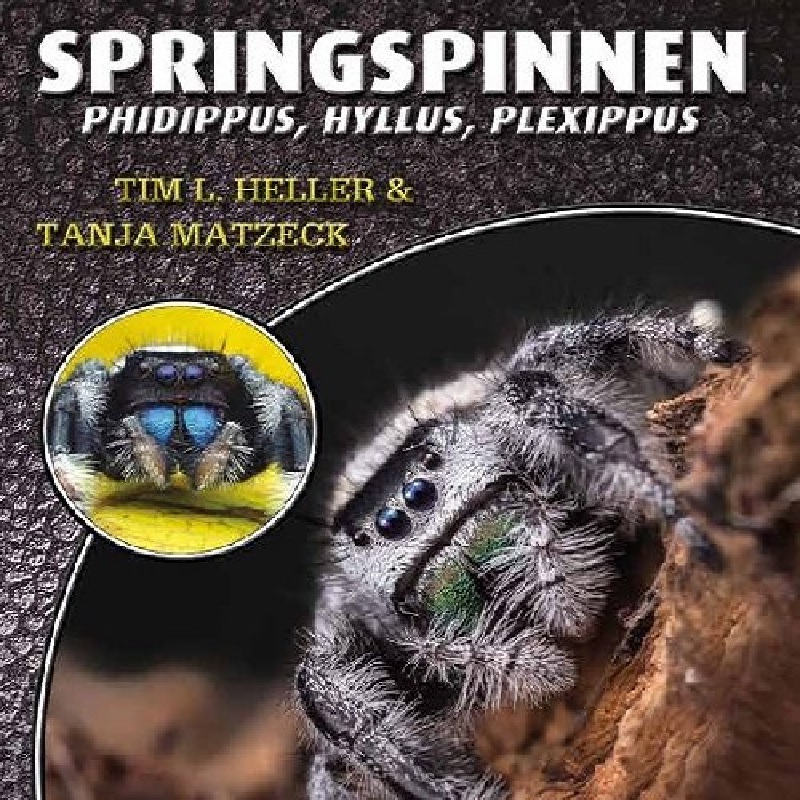
Book Jumping Spiders -
Phidippus, Hyllus & Plexippus
A guide to keeping jumping spiders of the genera Phidippus, Hyllus & Plexippus. Who can resist the charm of jumping spiders? The childlike appearance of their expressive face simply leaves no one cold! In addition, their behavior is extremely exciting to observe, their colors are bright and their requirements for species-appropriate keeping are very easy to meet. No wonder these likeable jumpers are all the rage!
This volume in the "Species by Species" series describes in detail what to look out for when buying and keeping them, introduces the most commonly kept species and color forms and provides plenty of tips on how to keep them successfully - so you can be sure they will breed well!
Species by Species introduces you to the books in this series, which present the most popular terrarium animals. Each volume offers you detailed, practical care instructions and all the information you need to successfully breed your animals.
All important questions from the required tank size to terrarium set-up, technical equipment, species-appropriate nutrition and disease prevention are answered with numerous tricks and tips.
Experienced, long-standing breeders reveal how you can encourage the animals to reproduce and raise healthy young.
All this in full color, generously illustrated and attractively designed - just about your terrarium animal - species by species
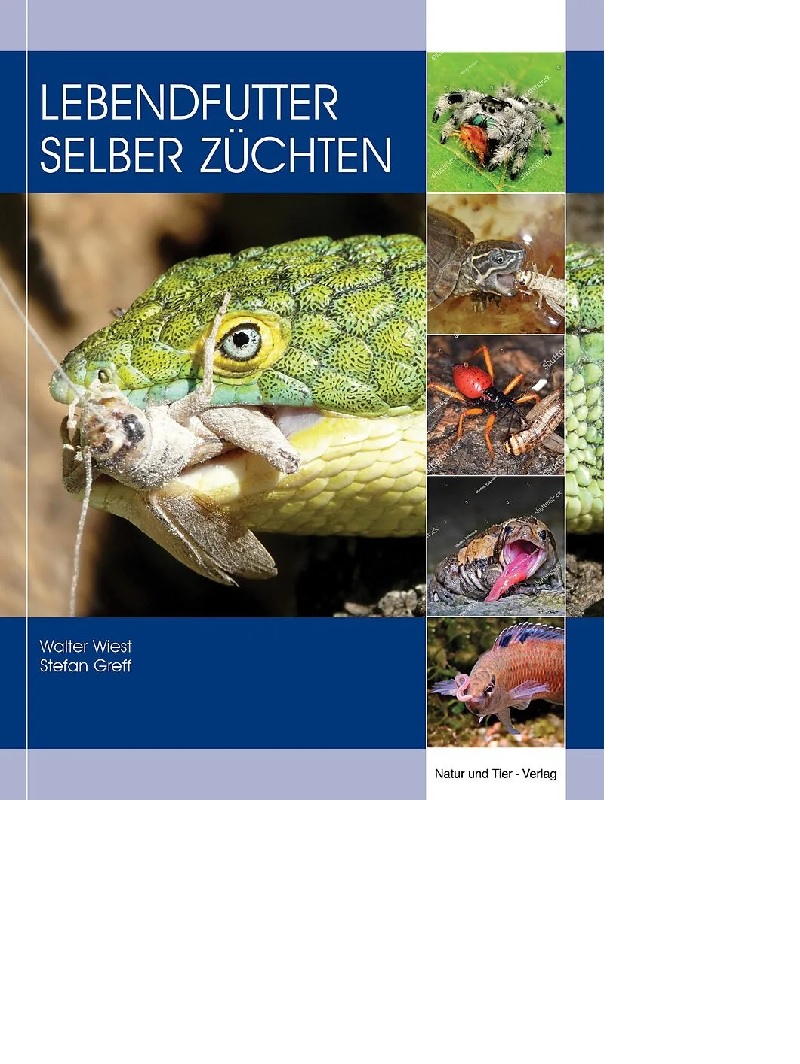
Book "Grow your own live food" - The perfect guide for pet owners
Discover practical and detailed instructions on how you can easily breed food for your reptiles, birds, fish or other animals yourself in the book "Breeding live food yourself". With valuable tips on various food insects, their care and breeding, you can save money and ensure a species-appropriate diet for your pets.
Contents of the book:
Step-by-step instructions for breeding feeder insects
Information on the best types of food for reptiles, birds and fish
Care instructions and breeding conditions for various live food species
Tips for sustainable and cost-effective food production
Why breed your own live food?
Get healthy, fresh food for your animals
Save money and reduce dependence on pet shops
Promote the health and well-being of your animals with species-appropriate food
Whether you are a beginner or an experienced pet owner, this book provides you with everything you need to successfully breed live food yourself.
Marginata 69 - New Guinea tortoises – the genus ElseyaCover storyThe unrecognised beauties: New Guinea tortoises (Andreas S. Hennig)My experiences with Branderhorst's New Guinea tortoise, Elseya (Elseya) branderhorsti (Ouwens, 1914) (Andreas S. Hennig)Keeping and breeding of Rhodin's New Guinea tortoise, Elseya (Hanwarachelys) rhodini Thomson, Amepou, Anamiato & Georges, 2015 (Andreas S. Hennig)PortraitGeoemyda spengleri, Chinese serrated tortoise (Andreas S. Hennig)ReportageMacrochelys temminckii – Experiences and impressions with vulture tortoises part 2 (Reiner Praschag)KeepingAn alternative to year-round keeping of the Egyptian tortoise in the terrarium – my experiences with seasonal outdoor keeping of Testudo kleinmanni (Ricarda Schramm)EtymologySawbacks and living maps part 4: Graptemys gibbonsi, Pascagoula humpback tortoise (Holger Vetter)Classifieds & animal placement
Kosmos - Tortoises
Rogner, Heidi124 pages, 120 color photos, 16 x 21.5 cm, hardcoverKosmos Publisher, Series: Praxiswissen
The original Panzertiere are the classics among the Terrarientieren. This guide presents the most popular species and shows step by step how to create natural habitats for land turtles - from the room terrarium to the open-air pool. The book about nutrition, care, health and breeding is detailed and practical. Heidi Rogner is a biologist and geographer. For many years she has been holding and breeding turtles. After she has been co-author of two cosmos books, this is her first book on land turtles. Her husband, the tortoise expert Manfred Rogner, gave her an advisory role.
Reptilia 07 - Climbing snakesTurtle conservation in NepalStump crocodiles in the CongoRed-footed tarantulaContents:Page 2 - EditorialPage 4 - Letters to the editorPage 5 - MagazinePage 16 - Photo reportagePage 22 - Keeping and breeding: The Persian Climbing Snake Elaphe persica, by K.-D. SchulzePage 25 - Report: Endangerment and protection of the Aesculapian snake in Germany, by M. WaitzmannPage 29 - Keeping and breeding: Elaphe guttata, by J. BergadáPage 33 - Travel report: Stump crocodiles in the Congo, by A. Brieger, F. W. Huchzermeyer and J. RileyPage 39 - Portrait and poster: Corucia zebrata, by M. Aresté and J. L. FarriolsPage 43 - Report: A species conservation programme for tortoises in Nepal, by K. Ernst, K. B. Shah and H. SchleichPage 49 - Keeping and breeding: Dendrobates galactonotus, by R. and B. PieperPage 53 - Keeping and breeding: Avicularia avicularia, by J. M. Marínez NadalPage 57 - Herpetology and Culture: Traditional Chinese Medicine, Part 2: Turtles as fire extinguishers, by G. PetersPage 62 - Western Herp Perspectives, by B. LovePage 64 - Prize puzzlePage 69 - Reptilia on the road: Arizona Sonora Desert Museum Tucson, by H. WerningPage 74 - Advice and actionPage 77 - LibraryPage 80 - Incubator: Glossary by H. Werning
Landschildkröten-Fibel - Der Schildkrötenfachmann Marco Wagemann beantwortet mit diesem Buch alle wichtigen Fragen über die Haltung und Pflege der Landschildkröten.
96 Seiten
150 Fotos
gebunden
1. Auflage 2014
Autor Marco Wagemann
Verlag Dähne Verlag
Das Fibel ist ein ideales Einsteiger Buch und beantwortet alle wichtigen Fragen über die Haltung und die Pflege der Landschildkröten wie zum Beispiel: Worauf beim Kauf geachtet werden muss, wie sich ein Freigehege anlegen lässt und wie es zu beschaffen ist, über die Ernährung und über eine artgerechte Überwinterung. Es werden auch die wichtigsten europäischen Arten aus den Ländern rund um das Mittelmeer vorgestellt.
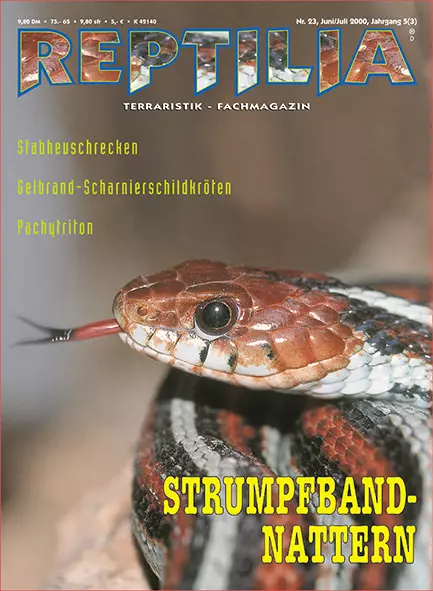
Reptilia 23 - Garter snakesAcquisition of reptilesYellow-banded hinged tortoisesPachytritonContents:Page 2 - EditorialPage 3 - Letters to the editorPage 4 - MagazinePage 12 - DatesPage 14 - Western Herp Perspectives: What you don't know won't hurt you, by B. LovePage 16 - Photo report: Garter snakes - Diversity of a classic, by M. Hallmen and J. ChlebowyPage 22 - Keeping and breeding: The beginner snakePage 28 - Report: The Queen of Garter-Snakes - The San Francisco Garter Snake Thamnophis sirtalis tetrataenia, by M. HallmenPage 32 - Report: Anything but common animals, amazing facts about the biology of the garter snake, by M. HallmenPage 40 - Journey: Herpetological travel impressions from Costa Rica - Part 2: On the road in the country, by T. EisenbergPage 47 - Portrait and posterPage 52 - Report: Aspects of acquiring reptiles, by S. FeistenbergerPage 56 - Keeping and breeding: Keeping and perennial breeding of the Chinese yellow-barred hinged turtle Cuora flavomarginata flavomarginata, by H. Zwartepoorte and R. de BruinPage 61 - Herpetofauna: China is always good for a surprise - The enigma of the short-footed newts (genus Pachytriton), by Dr B. Thiesmeier and C. HornbergPage 69 - Reptilia literary: The tarantula, short story by S. ToperoffPage 75 - Reptilia on the road: The Serpentario in San José, Costa Rica, by A. HohmeisterPage 83 - Advice and actionPage 88 - LibraryPage 96 - Glossary: Now after all: Moving with lizards, once again. Part 2, by H. Werning
Terraria 25 - Livebearing Reptiles
Breeding of tarantulasDiadem snakeSpur-thighed tortoise
Contents:
Not all reptiles lay eggs. A whole range of species bear live young, to the delight of many terrarium enthusiasts. However, even though the often problematic artificial incubation of clutches is no longer necessary: Even with livebearing reptiles, many things can go wrong when breeding them in the terrarium, and keepers often find it difficult to recognise the causes of problems. Uwe Schlüter presents the different forms of livebearing in reptiles and explains everything you need to know to breed these species as successfully as possible. In addition, we present some livebearing reptiles in the terrarium, including the Madagascar dog-headed boa, Sanzinia madagascariensis, or the strange crocodile night lizard, Lepidophyma flavimaculatum.
EditorialMagazineHatching of a completely healthy hatchling of the North African spiny-tailed agama from a mould-infested eggColour change in the monocled cobra from juvenile to adultLuminous heavy metal detectorsDinosaurs with braking assistance?Hundreds of Madagascan tortoises confiscated in MalaysiaPhotosynthesis in salamandersLegal
TERRAglobal specialLizards of the Barkly TablelandGunther Schmida
Cover storyLivebearing reptilesUwe Schlüter
The crocodile night lizard. Lepidophyma flavimaculatum (Duméril, 1851) Jochen Meyer
Care and breeding of the northern Canary Islands skink (Chalcides viridanus) Uwe Schlüter
Keeping and breeding a crowned beauty: the diadem snake (Spalerosophis diadema [Schlegel, 1837]) Sascha & Stefanie Esser
Giants of the desert. The African spurred tortoiseLeo Spinner
JourneyCuc Phuong. Spiders and other animals in Vietnam's oldest national parkGordon Ackermann
Breeding of tarantulas Karin Manns
New speciesDiversity of Philippine banded monitors deciphered – and three new taxa described André Koch
Among researchers Searching for venomous snakes in Austria Johannes Hill
Eye-catcher Of prosimians, poison dart frogs and geckos. Visiting Ute Thut and Dennis Peukert Michael Wirth
Near youSubscription & ServicePreview
Incubator On the wall, on the lookout Mike Zawadzki
Marginata 43 - Vietnamese pond turtlesEuropean pond turtles in Upper SwabiaChinese striped turtles on TaiwanGiant tortoises of CurieuseContents:Cover story: Vietnamese pond turtles - a success storyA Vietnamese pond turtle (Mauremys [Annamemys] annamensis), which was considered extinct in the wild between 1940 and around 1980, has been intensively bred by dedicated private keepers since the 1990s and thus saved from extinction. Zoos became involved in conservation breeding during the EAZA ShellShock turtle campaign in 2002, and in 2013 the first animals from private keepers and zoo breeding programmes were sent back to Vietnam. There, with the help of these animals and the designation of a suitable reintroduction site, a new foundation was laid for the conservation of the species within its original range. The forthcoming issue of Marginata will present both field data from Vietnam, including details on the reintroduction, and data on the long-term husbandry and breeding by private breeders and zoological institutions.EditorialMagazineKEEPING & BREEDINGCare, breeding and rearing of the Annam swamp turtle, Mauremys annamensisHerbert Becker, Elmar Meier, Martina Raffel & Henk ZwartepoorteBIOLOGYGenetic and carapace shape variability in Mauremys annamensisTomáš ProtivaSPECIES PROTECTIONThe critically endangered Annamese pond turtle (Mauremys annamensis) – captive breeding as a contribution to species conservationHenk Zwartepoorte, Herbert Becker, Elmar Meier, Martina Raffel & Tim McCormackREPORTAGEIn the habitat of the Chinese pond turtle (Mauremys sinensis) in TaiwanSebastian Nickl & Bastian EsserPORTRAITTestudo hermanni boettgeri (Mojsisovics, 1889), Böttger’s tortoiseBenny TrappTRAVELThe giant tortoises of CurieuseMartin DieckmannREPORTAGEMarginated tortoises (Testudo marginata) in Sardinia and their endangermentYvonne & Werner LantermannSPECIES PROTECTIONThe European pond turtle in Upper SwabiaDominik HauserBook tipSubscription & ServiceRegional guide
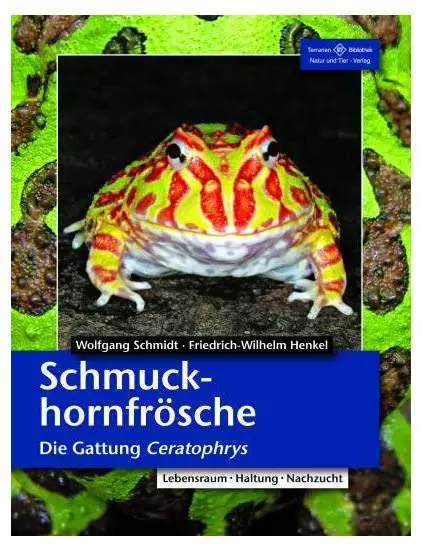
In NTV - Jewelled horn frogs, everything about the so-called "Pacman frogs" is explained.
160 pages
198 colour photos
Paperback
Genus Ceratophrys
Authors Wolfgang Schmidt, Friedrich Wilhelm Henkel
Big mouth - and what's behind it! Jewelled horn frogs are real character animals. They impress with their primitive, brightly coloured appearance, with the variety of species and colour morphs now available and, of course, with their irrepressible appetite, which has also earned them the name "Pacman frogs". Anyone who observes a few basic rules can easily keep these wonderful animals in a terrarium and, with a bit of luck, even get them to breed.
Exo Terra Reptile UVB 200
The Exo Terra Reptile UVB200 emits the ideal UVB spectrum for optimum vitamin D3 photosynthesis.
Ideal for desert terrariums
For reptiles with high UV requirements
Helps protect against bone softening
Very high D3 benefit index
Increased vitamin D3 photosynthesis
Extended UVB radiation distance
Available in 13W or 26W
The Exo Terra Reptile UVB200 has been specially designed to simulate the conditions for reptiles with very high UV requirements, such as reptiles from desert environments. These areas are exposed to direct, unfiltered sunlight with a high UVB content. The extremely high vitamin D3 utilisation index leads to increased vitamin D3 photosynthesis, which helps with calcium absorption and protects against bone softening. Thanks to the extended beam distance, this lamp is the ideal choice for higher terrariums or for terrariums with a denser cover.
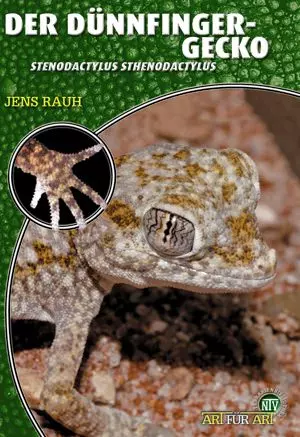
All about the thin-fingered geckos by Jens Rauh
64 pages
Format: 14.8 x 21 cm
numerous colour photos
Paperback
Author Jens Rauh
Contents:
Foreword
Species description
Relationship
Legal regulations
Distribution and habitat
Behaviour/Lifestyle
Where do I buy my thin-fingered gecko?
Transport and quarantine
Socialisation
The terrarium
The technique
The facility
Climate
Care work
Nutrition
Health
Requirements for breeding
Mating behaviour
Pregnancy and egg-laying
Incubation
Egg development and hatching
Rearing the young
Further information
Further and used literature
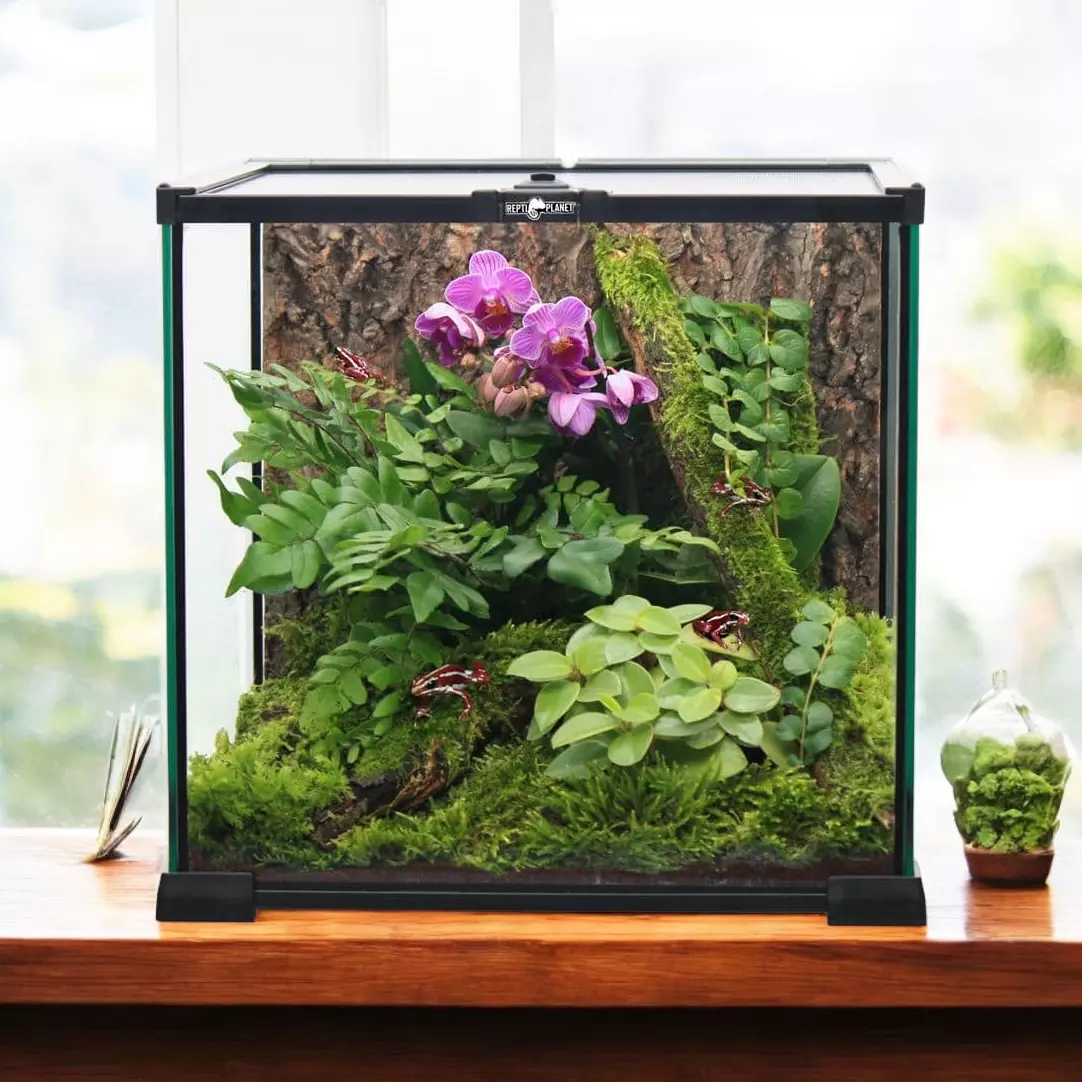
Glass terrarium - 20 x 20 x 20 cmRepti Planet small terrariums - Versatile, robust and ideal for breeding small reptiles.The Repti Planet small terrariums combine durability and functionality to create an ideal environment for various reptile species. Made from high-quality plastic with glass filling, they offer a robust and versatile solution for species-appropriate animal husbandry.
Stable construction: Thanks to the upper and lower plastic frame, the terrariums can be stacked without any problems. In addition, heating plates can be placed directly on the outer lower glass.Flexible use: Ideal for dry environments with a suitable substrate for the animal species or as a beautiful moist terrarium without inhabitants.Suitable for breeding: Ideal for small reptile species such asAdvantages of Repti Planet small terrariumsEasy care: Easy access from above makes maintenance and feeding simple.
Optimum ventilation: The metal mesh cover ensures good air circulation and allows vital heat and UV radiation to flow in.Waterproof bottom section: Specially designed for humid habitats and semi-aquatic species to provide a safe and suitable environmentSuitable for: Praying mantis (depending on species), tarantulas (depending on species), jumping spiders, rose beetles, woodlice, millipedesAttention: the animal species shown in the pictures do not comply with Swiss law
CHF 49.00
❅
❆
❅
❆
❅
❆
❅
❆
❅
❆
❅
❆
This website uses cookies to ensure the best experience possible. More information...