Turtles Volume 2 - The Turtles Gardener

Article no: HA-AB16682

CHF 34.90

Stock: 1

Available, delivery time: 1-3 days

Delivery between Tuesday, 5 May and Wednesday, 6 May
Zahlungsarten
Product information "Turtles Volume 2 - The Turtles Gardener"

The Turtle Gardener – A Natural Diet for European Tortoises

Guide to keeping European tortoises

Over 65 suitable food plants, plus instructions, tips and tricks for successful plant cultivation – 14–99 years

When keeping tortoises, nutrition plays an essential role. Through a careful selection of safe food plants, we can significantly influence their health and thus ensure a balanced diet for our animals. As a recognised expert and successful author of numerous books on tortoises, Thorsten Geier aims to explain all horticultural aspects to you in an accessible way. This guide is aimed at both beginners in tortoise keeping and those who have been keeping them for many years. In this comprehensive guide, you will find detailed, clear and clearly presented information on species-appropriate nutrition and independent foraging within the enclosure. Numerous instructions, tips and tricks for successful plant cultivation, as well as over 65 highly suitable and varied food plants, are listed in this book. Furthermore, it contains information on feeding behaviour in the wild, on keeping tortoises in a natural environment in the garden, and on poisonous or unsuitable plants. Numerous photos and picture galleries document all the necessary steps for successful plant cultivation, so that every tortoise owner can grow valuable and nutritious food in their garden, even without a ‘green thumb’. A truly fabulous guide to a varied diet.

Composition
Feeding recommendation
Technical details
Size information

0 of 0 reviews

Give us a rating!

Share your experience with the product with other customers.


Suggested products

Handbook of food plants for tortoises and other reptiles
Handbook of forage plants 2nd revised editionMarion Minch is not only a successful breeder of diverse tortoises for many years, but also an excellent connoisseur of native wild herbs. She founded and runs samenkiste.de, which is well known to many tortoise keepers and nature lovers. Her name is inextricably linked with reptile care and species-appropriate nutrition for tortoises. Her handbook of food plants summarises the most important native food plants for herbivorous and omnivorous reptiles. She not only considers tortoises, but also iguanas, spiny-tailed dragons and even chameleons. From the basics of plant biology to native wild herbs to suitable food plants for hardy tropical reptile species, this comprehensive work provides the basis for species-appropriate keeping. In the expanded and supplemented 2nd edition, the plant section is divided according to flower colour. This makes it even easier to identify wild herbs. The work has also been supplemented with a wealth of additional information and many pictures.

CHF 46.50

Geckos
Geckos in the terrarium by Astrid FalkThe book offers a comprehensive introduction to geckos and their species-appropriate keeping in terrariums. It explains what you need to think about before buying a gecko and what preparations should be made. The book describes in detail how the terrarium is technically equipped and set up. The care of the animals, their special features and behaviour, their diet, reproduction and rearing of young animals are described, as well as diseases and husbandry problems with tried and tested suggestions for prevention and treatment. Individual gecko species that are particularly suitable for keeping and breeding in terrariums are portrayed in detail in the second part of the book.

CHF 28.50

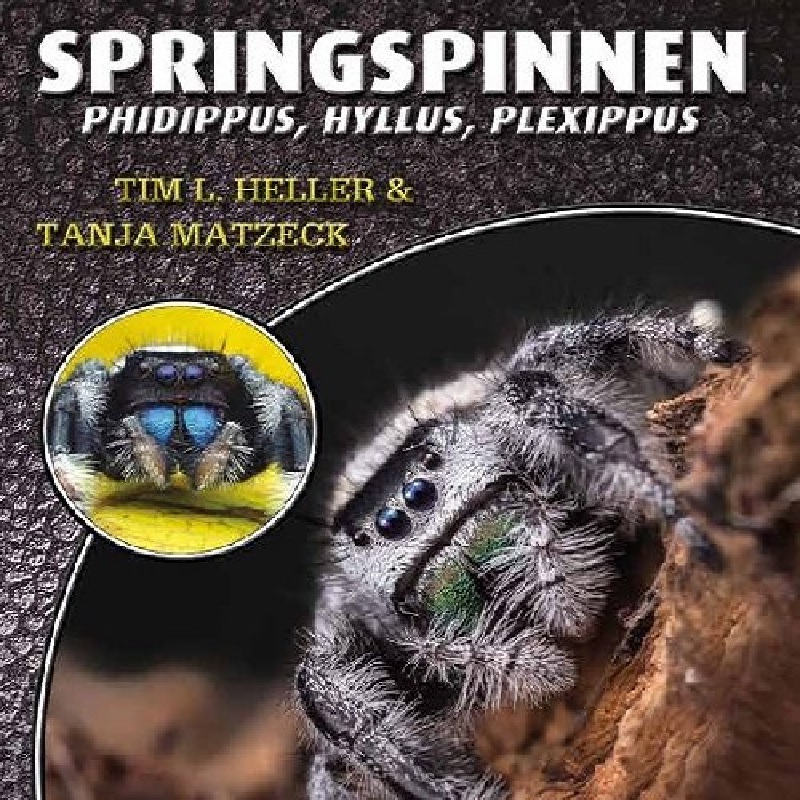
Jumping spiders Phidippus, Hyllus, Plexippus
Book Jumping Spiders - Phidippus, Hyllus & Plexippus A guide to keeping jumping spiders of the genera Phidippus, Hyllus & Plexippus. Who can resist the charm of jumping spiders? The childlike appearance of their expressive face simply leaves no one cold! In addition, their behavior is extremely exciting to observe, their colors are bright and their requirements for species-appropriate keeping are very easy to meet. No wonder these likeable jumpers are all the rage! This volume in the "Species by Species" series describes in detail what to look out for when buying and keeping them, introduces the most commonly kept species and color forms and provides plenty of tips on how to keep them successfully - so you can be sure they will breed well! Species by Species introduces you to the books in this series, which present the most popular terrarium animals. Each volume offers you detailed, practical care instructions and all the information you need to successfully breed your animals. All important questions from the required tank size to terrarium set-up, technical equipment, species-appropriate nutrition and disease prevention are answered with numerous tricks and tips. Experienced, long-standing breeders reveal how you can encourage the animals to reproduce and raise healthy young. All this in full color, generously illustrated and attractively designed - just about your terrarium animal - species by species

CHF 23.90

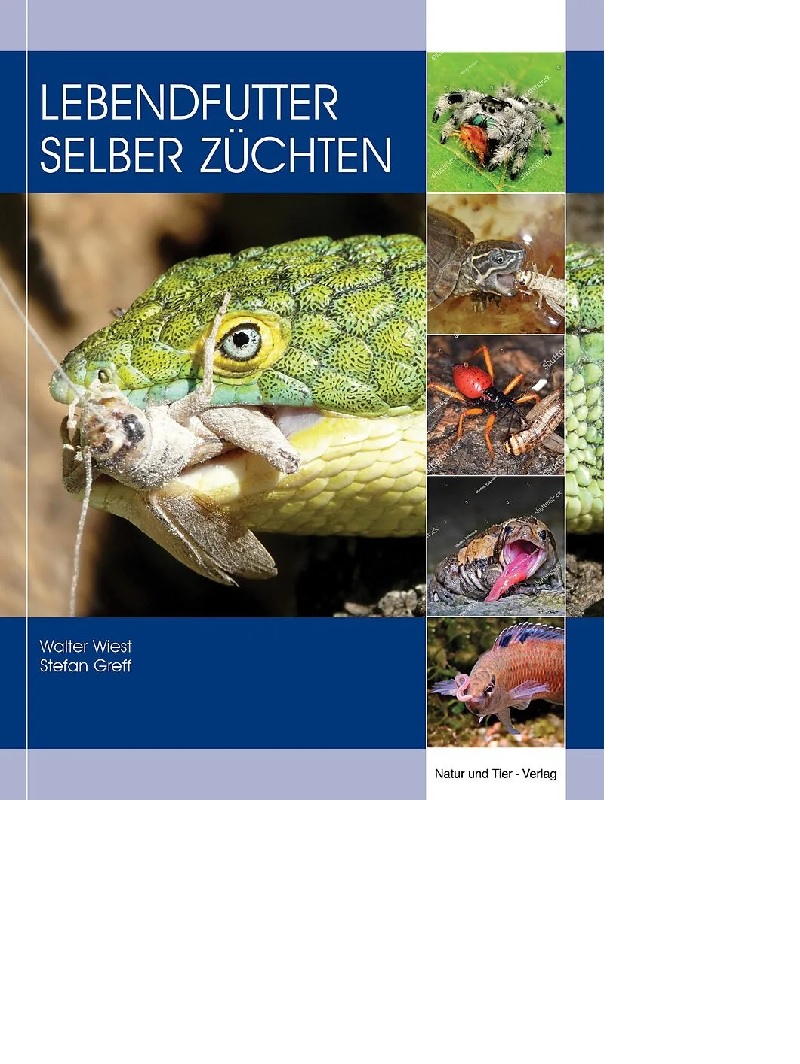
Book Breeding live food yourself
Book "Grow your own live food" - The perfect guide for pet owners Discover practical and detailed instructions on how you can easily breed food for your reptiles, birds, fish or other animals yourself in the book "Breeding live food yourself". With valuable tips on various food insects, their care and breeding, you can save money and ensure a species-appropriate diet for your pets. Contents of the book: Step-by-step instructions for breeding feeder insects Information on the best types of food for reptiles, birds and fish Care instructions and breeding conditions for various live food species Tips for sustainable and cost-effective food production Why breed your own live food? Get healthy, fresh food for your animals Save money and reduce dependence on pet shops Promote the health and well-being of your animals with species-appropriate food Whether you are a beginner or an experienced pet owner, this book provides you with everything you need to successfully breed live food yourself.

CHF 46.50

Marginata 69 - New Guinea tortoises
Marginata 69 - New Guinea tortoises – the genus ElseyaCover storyThe unrecognised beauties: New Guinea tortoises (Andreas S. Hennig)My experiences with Branderhorst's New Guinea tortoise, Elseya (Elseya) branderhorsti (Ouwens, 1914) (Andreas S. Hennig)Keeping and breeding of Rhodin's New Guinea tortoise, Elseya (Hanwarachelys) rhodini Thomson, Amepou, Anamiato & Georges, 2015 (Andreas S. Hennig)PortraitGeoemyda spengleri, Chinese serrated tortoise (Andreas S. Hennig)ReportageMacrochelys temminckii – Experiences and impressions with vulture tortoises part 2 (Reiner Praschag)KeepingAn alternative to year-round keeping of the Egyptian tortoise in the terrarium – my experiences with seasonal outdoor keeping of Testudo kleinmanni (Ricarda Schramm)EtymologySawbacks and living maps part 4: Graptemys gibbonsi, Pascagoula humpback tortoise (Holger Vetter)Classifieds & animal placement

CHF 16.50

Reptilia 82 - The Fox-faced Lidgecko
Reptilia 82 - The Fox-faced Lidgecko Californian chain snakeNorthern Madagascar boaReptile rescue centre Contents: It is undoubtedly one of the strangest lizards in our terrariums, the Fox-faced Lidgecko (Aeluroscalabotes felinus), with its feline-like silent movements and almost ghostly appearance. And it has had one of the most remarkable terrarium careers in recent times. Just a few years ago, this species was practically unknown and a sensation for specialists, but today it has almost become a fashionable gecko.No wonder, because these easy-to-hold animals captivate with their appearance as well as their behaviour. Siriporn Maier and Thomas Bamann present the keeping and breeding of this exceptional gecko in detail and in a way that is easy to understand, even for beginners. EDITORIAL MAGAZINE DATES WESTERN HERP PERSPECTIVES The China-Connection B. Love PHOTOSTORY Fox-faced geckos – fascinating goblins of the night S. Maier & T. Bamann KEEPING AND REPRODUCTION A wild cat in the terrarium – keeping fox-faced geckos S. Maier & T. Bamann KEEPING AND REPRODUCTION Breeding the fox-faced gecko S. Maier & T. Bamann TRAVEL Mysterious Peru C. Koch PORTRAIT and poster Rhacophorus nigropalmatus J. M. Dehling KEEPING AND REPRODUCTION Keeping and breeding the Californian chain snake, Lampropeltis californiae R. Meierkord REPORTAGE The Berlin Reptile Centre L. Dirksen KEEPING AND REPRODUCTION Acrantophis madagascariensis – keeping and breeding of the Northern Madagascar boaM. Borer HERPETOFAUNA The genus Ambystoma in Mexico G. Casas-Andreu & X. Aguilar-Miguel HERPETOFAUNA Observations on common toads M. Felke ANIMALS OF OUR HOME The grass snake R. Leptien SUBSCRIPTION & SERVICE ALSO NEAR YOU PREVIEW BRUTKASTEN Alone among sheep. Part 2 H. Werning

CHF 12.00

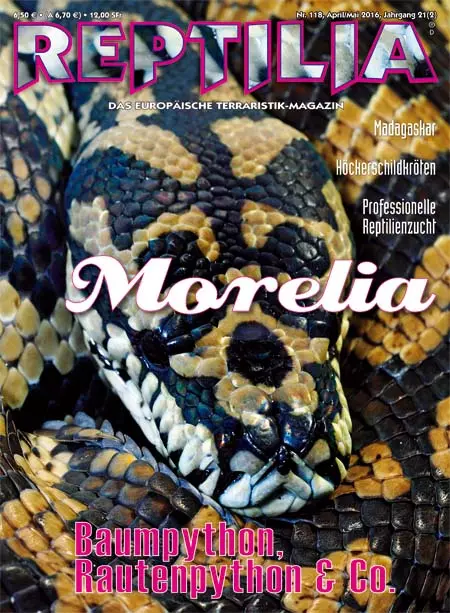
Reptilia 118 - Morelia
Reptilia 118 - MoreliaMadagascarHumpback turtlesProfessional reptile breeding Contents:Cover story: Morelia - tree python, diamond python & Co.Everyone knows the green tree python. The animals are admired for their colouring and their favourite position, curling up over a branch, almost symbolises our idea of a tree-dwelling snake. This species has been successfully kept and bred in terrariums for a long time. However, the other pythons of the Morelia genus are also very popular. We offer an overview of these exceptionally beautiful giant snakes, describe new ways of setting up a terrarium for Morelia viridis in a naturalistic way and look at the keeping and breeding of a species that is still little known, the python with a scaly scales, Morelia carinata.EditorialMAGAZINEDATESWESTERN HERP PERSPECTIVESThe fate of books part 2B. LovePhoto storyPython beauties from the other side of the world: Morelia, the tree and diamond pythonsM. MenseKeeping and breedingKeeping a green tree python in a naturally designed large terrariumR. StallingerKeeping and breedingMorelia carinata – The Python with a Difference!O. JugReportageRare exhibition animal: Morelia bredli at Frankfurt ZooD. RösselKeeping and breedingHumpback turtles – The genus GraptemysM. RognerKeeping and breedingProfessional breeding of terrarium animals for the pet tradeSimone P. ReportageUnder the spell of the big telescopic eyes: jumping spiders on the lookoutU. & J. SchimmelpfennigAnimals of our homelandThe sand lizardR. LeptienSERVICELIBRARYALSO NEAR YOUJourneySearching for reptiles in MadagascarC. SchneiderPREVIEWBRUTKASTEN Why do pigeons of all things have to be the symbol of peace?H. Werning

CHF 12.00

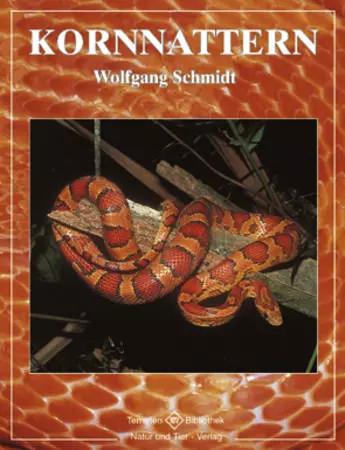
NTV corn snakes
All about corn snakes 88 Seiten 62 Abbildungen Format: 16,8 x 21,8 cm Autor Wolfgang Schmidt Inhalt: Kornnattern gehören schon seit jeher zu den beliebtesten Terrarientieren. Nahezu jeder engagierte Terrarianer hat sie schon kennen gelernt. Doch woher kommt das starke Interesse gerade an dieser Kletternatter? Die Antwort liegt sicherlich in erster Linie im Wesen der Schlange begründet. Als besonders friedfertige Natur ist sie daher nicht nur dem fortgeschrittenen Terrarianer zu empfehlen, sondern sie eignet sich auch ausgezeichnet für den Einstieg in die Terraristik.Der Autor geht intensiv auf die Pflege und Zucht der Tiere ein, spart aber auch Themen wie Krankheiten und deren Behandlung nicht aus. Neben den drei Unterarten stellt er Farbformen vor, die sich mittlerweile auch hierzulande grosser Beliebtheit erfreuen.

CHF 21.90

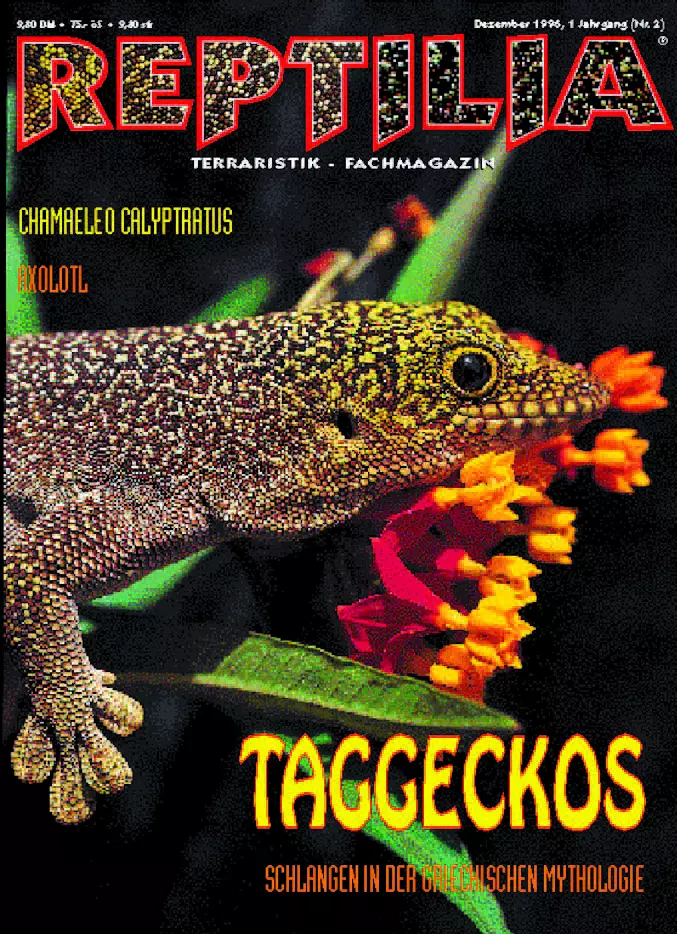
Reptilia 02 - Day geckos
Reptilia 02 - Day geckosChameleo caylptratusAxolotlSnakes in Greek mythologyContents:Page 2 - EditorialPage 3 - Letters to the editor and discussionPage 7 - MagazinePage 17 - Photo report: Phelsuma, by J. KrügerPage 23 - Keeping and reproduction: Phelsuma standingi, by G. HallmannPage 26 - Report: Phelsuma and species conservation: The Round Island project, by G. HallmannPage 29 - Herpetofauna: Diurnal geckos, by Dr M. MeyerPage 33 - Travelogue: Baja California Part 2: The island world in the Gulf of California, by H. WerningPage 39 - Portrait and poster: Anolis marmoratus marmoratus, by M. SchmidtPage 43 - Keeping and breeding: Axolotl, by J. WistubaPage 47 - Terraristics: Sex determination in reptiles, by Dr M. Bachs TabernerPage 47 - Terraristics: Sexual dimorphism in African spurred tortoises, by A. Romairone / I. Iglesias IzquierdoPage 53 - Herpetofauna: Horned frogs, by M. BatllePage 56 - Herpetology and culture: Mythology: The snakes of Olympus, by L. B. Carissimi-PrioriPage 61 - Keeping and reproduction: Chamaeleo calyptratus, by W. SchmidtPage 69 - Veterinary medicine: Internal parasites in reptiles and amphibians, by Dr C. López del CastilloPage 73 - LibraryPage 75 - Advice and actionPage 80 - Incubator: Glossary by H. Werning

CHF 9.80

Ulmer, Salamander and newts
Ulmer , Salamanders and newts – Everything about these fascinating creatures 96 pages 58 colour photos, 19 drawings hardback 1st edition Author Kurt Rimpp Ulmer Eugen Verlag A piece of the primeval world in the terrarium? Amphibians such as the axolotl, tiger salamander and alpine newt are the descendants of primeval amphibians that have survived to this day. In this book, you will find out how they can be kept optimally in the terrarium and what there is to observe and discover. Tips and advice provide information on the following important points: Where and how do amphibians live in nature? Considerations before purchase  Terrarium and furnishings Care and hibernation  Health and nutrition  A portrait of suitable species

CHF 26.90

Draco 11 - Day geckos
Draco 11 - Day geckos Contents: 2 Editorial 4 day geckos of the genus PhelsumaJens Krüger 20 A terrarium for PhelumenHartmut Lipp 27 On the diet of day geckos of the genus Phelsuma Gerhard Hallmann 30 Group keeping and socialisation of PhelsumaHartmut Lipp 38 Phelsuma berghofi Krüger, 1996Biology, care and reproductionHand Peter Berghof 43 Experiences in the care and breeding of Phelsuma hielscheri Rösler, Obst & Seipp, 2001 from Isalo National Park Hans Peter Berhof & Roland Gebhard 47 On the keeping and breeding of Phelsuma inexpectata Mertens, 1966Oliver Pürkel 51 Taxonomy, care and breeding of the subspecies of Phelsuma lineata Hartmut Lipp 58 Selective colour breeding in Phelsuma madagascariensis grandis Rudolf Gerhardt 61 It doesn’t always have to be green – the less colourful representatives of the genus Phelsuma Hand Peter Berghof 68 Phelsums on Mauritius – A situation study Holger Schneider 77 To Madagascar – For the sake of day geckos Klaus Liebel & Wolfgang Schmidt 85 Book box 91 Magazine

CHF 16.80

Terraria 10 - Boa Constrictor
Terraria 10 - Boa ConstrictorOrnamental turtleWall LizardContents:2 EditorialKriton KunzTOPIC4 Boa babies - Tips and tricksErika & Hermann Stöckl 14 "imperator" versus "constrictor" - On the ecology and distribution of selected local forms of Boa constrictor in VenezuelaChristian Neumann 20 Inclusion Body Disease,IBD, "Boa-Aids") of the giant snakes Udo Hetzel 24 Leopard Boa, Stars & Stripes and Co - The colour and pattern variations of the dark Mexican boa Boa constrictor imperator Hans-Jörg Winner SCIENCE29 new speciesAxel Kwet40 The fern stick insect Oreophoetes peruana (Saussure, 1868)?and their diet in the terrarium, special terrariums and plantingTimm Adam54 The princess among the turtles is asking for it:Keeping and breeding the southern ornamental turtle Chrysemys picta dorsalisAndreas S. Hennig63 Wall lizards in the Ruhr areaUwe SchlüterTRAVEL69 On the road in the south of the PhilippinesMaren GaulkeTERRARIUM PRACTICE83 Test runBug Stop/Kricket KeeperKriton Kunz85 Prelude Care and breeding of Asian house geckosMatthias Jurczyk89 Eye-catcherAn ark for native amphibians and reptilesAxel Kwet93 Also near you 96 TERRAnetTerrarium constructionKriton Kunz98 TERRAglobalLife underground ... until the rain comesMirco SoléLima - or: All beginnings are difficultMaik Dobiey104 TERRAwinn

CHF 12.00