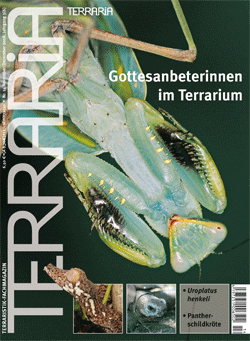
Terraria 14 - Praying Mantises in the Terraria

Article no: terraria14

CHF 12.00

Stock: 0

This article is currently not available

Product information "Terraria 14 - Praying Mantises in the Terraria"

Terraria 14 - Praying Mantises in the Terrarium

Uroplatus henkeli
Panther tortoise

Contents:

2 Editorial
Kriton Kunz
4 Magazine
Gondwanaland – a future-orientated
project at Leipzig Zoo / New findings
on the taxonomy of pythons / snakes and
culture at the Potsdam Natural History Museum /
The Frankfurt Zoological Society and
their activities on Galápagos
12 TERRAglobal
Snake dealer
Joachim Bulian
On the road in the Andes
Maik Dobiey
Cover story: Praying Mantises
16 Praying Mantises: Fascinating
terrarium inhabitants
Timm Adam
28 A terrarium for praying mantises
Timm Adam
33 How to: Tips for species-appropriate care
for praying mantises
Timm Adam
42 Breeding of Mantodea
Timm Adam
46 Lampropeltis triangulum andesianus
rare terrarium jewel with a dubious reputation
Part 2: Reproduction
Thorsten Schmidt
54 Grey giants among themselves – about
panther tortoises and elephants in Addo
Elephant National Park, South Africa
Part 3: Reproduction and lifestyle of the
panther tortoise
Michael Wirth
63 Biology, keeping and breeding of Henkel's
flat-tailed gecko, Uroplatus henkeli
Christian Müttherthies
71 Travel
Herpetological impressions during iguana search
on the French Antilles: Martinique
Stefanie Bach & Patrick Schönecker
82 New Species
Greek wall lizards with a new name /
Two new tree frogs from New Guinea
85 Among Researchers
In the valleys of the Andes: still unknown and
already threatened
Claudia Koch
89 Test run
Aquarium internal filter for terrarium keepers
Kriton Kunz
95 Eye-catcher
Visiting Betty
Heiko Werning
99 Near You
103 Preview
104 Incubator
The invasion of the stray mantises
Heiko Werning

Composition
Feeding recommendation
Technical details
Size information

0 of 0 reviews

Give us a rating!

Share your experience with the product with other customers.


Suggested products

Handbook of food plants for tortoises and other reptiles
Handbook of forage plants 2nd revised editionMarion Minch is not only a successful breeder of diverse tortoises for many years, but also an excellent connoisseur of native wild herbs. She founded and runs samenkiste.de, which is well known to many tortoise keepers and nature lovers. Her name is inextricably linked with reptile care and species-appropriate nutrition for tortoises. Her handbook of food plants summarises the most important native food plants for herbivorous and omnivorous reptiles. She not only considers tortoises, but also iguanas, spiny-tailed dragons and even chameleons. From the basics of plant biology to native wild herbs to suitable food plants for hardy tropical reptile species, this comprehensive work provides the basis for species-appropriate keeping. In the expanded and supplemented 2nd edition, the plant section is divided according to flower colour. This makes it even easier to identify wild herbs. The work has also been supplemented with a wealth of additional information and many pictures.

CHF 46.50

Geckos
Geckos in the terrarium by Astrid FalkThe book offers a comprehensive introduction to geckos and their species-appropriate keeping in terrariums. It explains what you need to think about before buying a gecko and what preparations should be made. The book describes in detail how the terrarium is technically equipped and set up. The care of the animals, their special features and behaviour, their diet, reproduction and rearing of young animals are described, as well as diseases and husbandry problems with tried and tested suggestions for prevention and treatment. Individual gecko species that are particularly suitable for keeping and breeding in terrariums are portrayed in detail in the second part of the book.

CHF 28.50

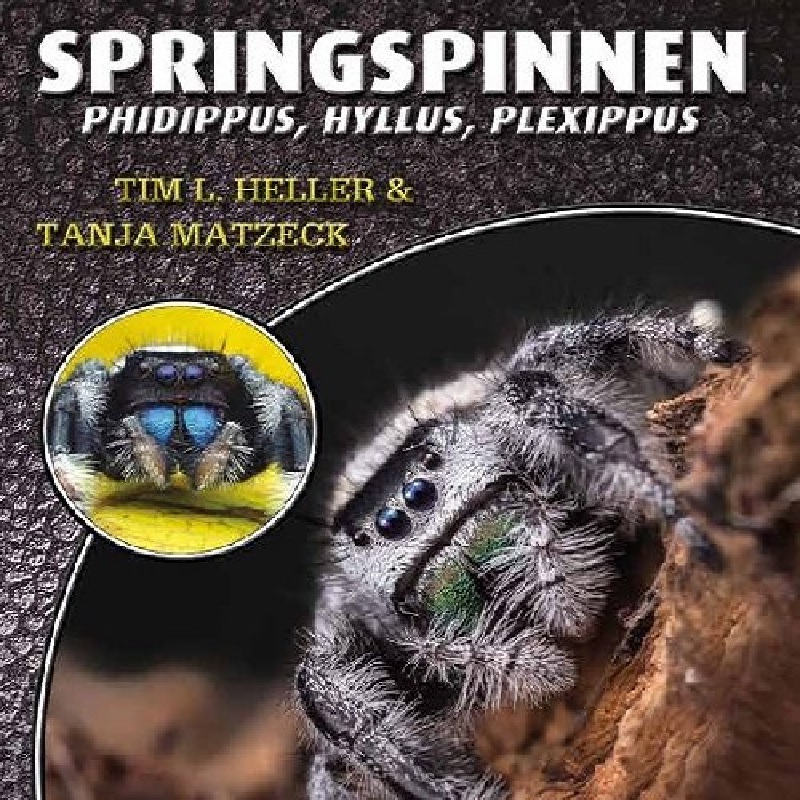
Jumping spiders Phidippus, Hyllus, Plexippus
Book Jumping Spiders - Phidippus, Hyllus & Plexippus A guide to keeping jumping spiders of the genera Phidippus, Hyllus & Plexippus. Who can resist the charm of jumping spiders? The childlike appearance of their expressive face simply leaves no one cold! In addition, their behavior is extremely exciting to observe, their colors are bright and their requirements for species-appropriate keeping are very easy to meet. No wonder these likeable jumpers are all the rage! This volume in the "Species by Species" series describes in detail what to look out for when buying and keeping them, introduces the most commonly kept species and color forms and provides plenty of tips on how to keep them successfully - so you can be sure they will breed well! Species by Species introduces you to the books in this series, which present the most popular terrarium animals. Each volume offers you detailed, practical care instructions and all the information you need to successfully breed your animals. All important questions from the required tank size to terrarium set-up, technical equipment, species-appropriate nutrition and disease prevention are answered with numerous tricks and tips. Experienced, long-standing breeders reveal how you can encourage the animals to reproduce and raise healthy young. All this in full color, generously illustrated and attractively designed - just about your terrarium animal - species by species

CHF 23.90

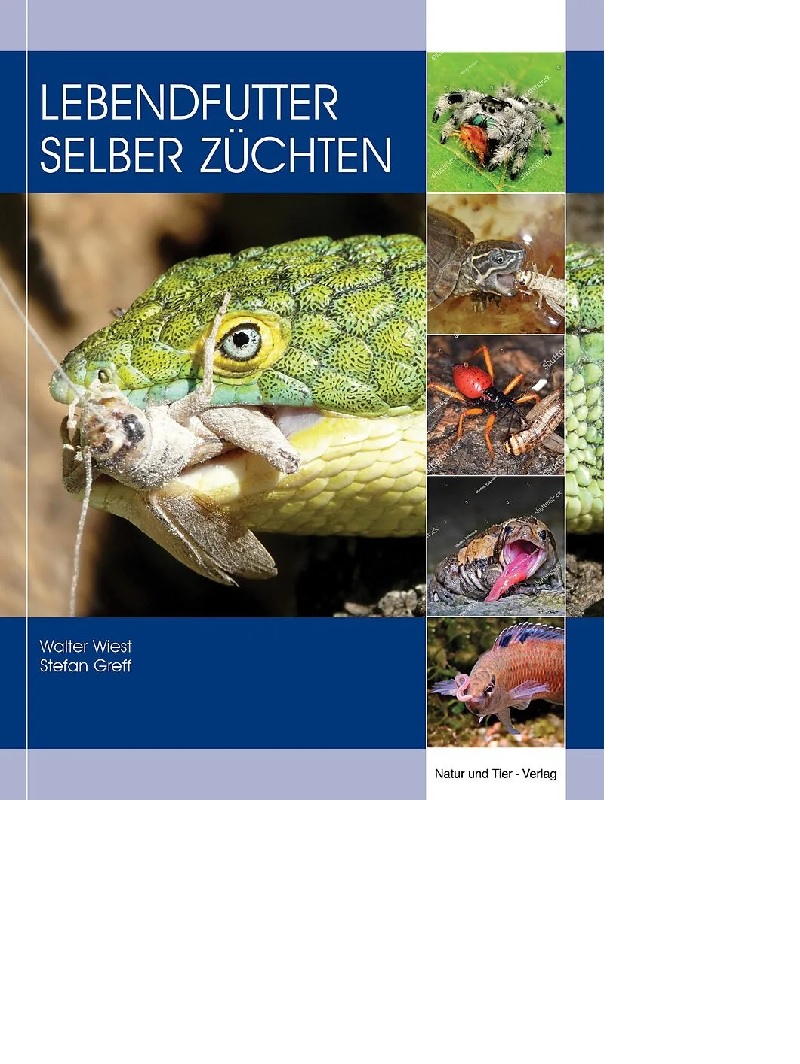
Book Breeding live food yourself
Book "Grow your own live food" - The perfect guide for pet owners Discover practical and detailed instructions on how you can easily breed food for your reptiles, birds, fish or other animals yourself in the book "Breeding live food yourself". With valuable tips on various food insects, their care and breeding, you can save money and ensure a species-appropriate diet for your pets. Contents of the book: Step-by-step instructions for breeding feeder insects Information on the best types of food for reptiles, birds and fish Care instructions and breeding conditions for various live food species Tips for sustainable and cost-effective food production Why breed your own live food? Get healthy, fresh food for your animals Save money and reduce dependence on pet shops Promote the health and well-being of your animals with species-appropriate food Whether you are a beginner or an experienced pet owner, this book provides you with everything you need to successfully breed live food yourself.

CHF 46.50

Marginata 69 - New Guinea tortoises
Marginata 69 - New Guinea tortoises – the genus ElseyaCover storyThe unrecognised beauties: New Guinea tortoises (Andreas S. Hennig)My experiences with Branderhorst's New Guinea tortoise, Elseya (Elseya) branderhorsti (Ouwens, 1914) (Andreas S. Hennig)Keeping and breeding of Rhodin's New Guinea tortoise, Elseya (Hanwarachelys) rhodini Thomson, Amepou, Anamiato & Georges, 2015 (Andreas S. Hennig)PortraitGeoemyda spengleri, Chinese serrated tortoise (Andreas S. Hennig)ReportageMacrochelys temminckii – Experiences and impressions with vulture tortoises part 2 (Reiner Praschag)KeepingAn alternative to year-round keeping of the Egyptian tortoise in the terrarium – my experiences with seasonal outdoor keeping of Testudo kleinmanni (Ricarda Schramm)EtymologySawbacks and living maps part 4: Graptemys gibbonsi, Pascagoula humpback tortoise (Holger Vetter)Classifieds & animal placement

CHF 16.50

Draco 58 - Chameleons
Draco 58 - Chameleons EditorialChameleons in the terrariumManfred RognerThe physiological colour change in chameleonsTobias MachtsChameleons in Burundi and first data on biology from terrarium keepingNicolá Lutzmann, Benoit Nzigidahera, Max Dehling,Eberhard Fischer, Onesphore Masabo, David Hellendrung,Uli Wagner, Walter Herwig, Armin Hummel,Ralph Lademann, Dominik & Natascha RochnaIn search of the Togo chameleonRolf Leptien Where the European chameleon lives up to its nameHans-Jürgen Luef In search of Malta's chameleonsRolf Leptien Now a terrarium classic: the Yemen chameleon, Chamaeleo calyptratusManfred Rogner

CHF 32.00

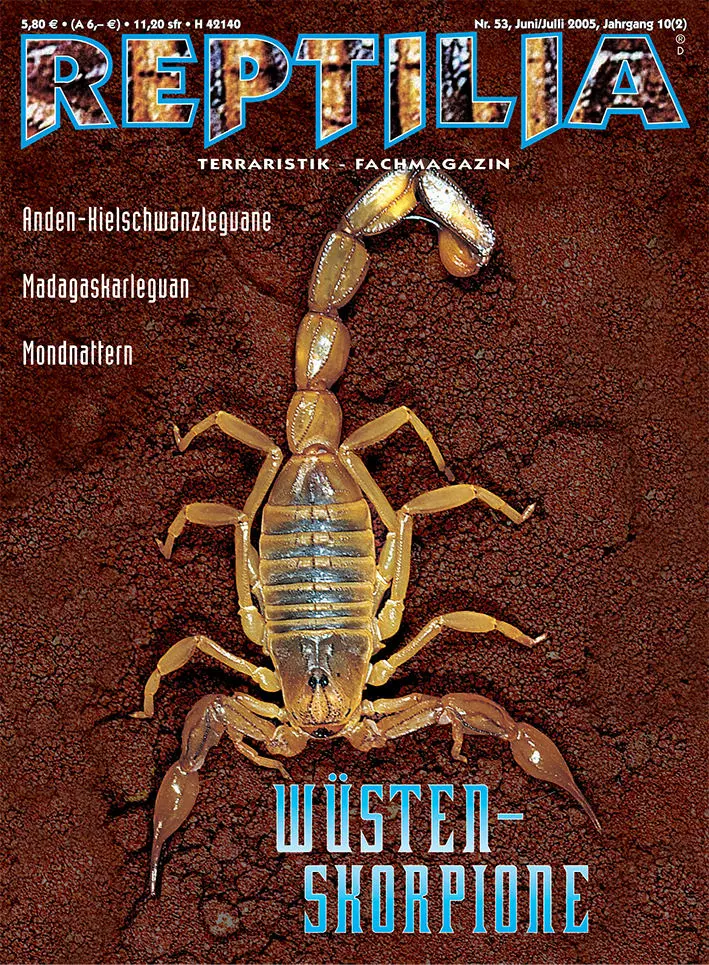
Reptilia 53 - Desert scorpions
Reptilia 53 - Desert scorpions Andean keel-tailed iguanasMadagascar iguanaMoon snakes Contents: 2 EDITORIAL 6 MAGAZINE 14 DATES 16 WESTERN HERP PERSPECTIVESAn early lesson in camouflage from B. Love 18 PHOTO REPORTAGE Desert scorpions by F. Tomasinelli 26 KEEPING AND BREEDINGScorpions of the genusAndroctonusBiology, care and breeding by N. Botsaris, A. Tietz & E. Ythier 34 KEEPING AND BREEDINGKeeping and breeding of Leiurus quinquestriatus, Hottentotta franzwerneri gentili and Hottentotta jayakari jayakari by T. Kaspar 37 ARACHNOFAUNAParabuthus transvaalicus by G. Molisani 40 TRAVELThe house in Kotronas by B. Trapp 46 KEEPING AND BREEDINGBiology, care and breeding of moon snakes (genus Oxyrhopus, WAGLER, 1830) by A. Hohmeister 51 PORTRAIT AND POSTERPodarcis melisellensis fiumana by M. Dieckmann 56 HERPETOFAUNA

CHF 11.20

Reptilia 43 - Australian monitor lizards
Reptilia 43 - Australian monitor lizards Dendrobates claudiaeBrown snakesKruger Park Contents: 2 EDITORIAL 4 READER LETTERS 6 MAGAZINE 12 DATES 16 WESTERN HERP PERSPECTIVESImprove your reptile photos – it's easyby B. Love 18 PHOTO REPORTAGE Australian monitor lizardsby D. F. Bennet 26 HERPETOFAUNAThe Varanus-gouldii-complex by D. F. Bennet 29 HERPETOFAUNAThe monitor lizards of the Australian desert by E. R. Pianka 36 KEEPING AND BREEDINGKeeping and continuous breeding of King’s rock monitor, Varanus kingorum STORR, 1980), including the first breeding of an albino juvenile. by B. Eidenmüllser 41 KEEPING AND BREEDINGVaranus glauerti – the “Scaly Jewel” by F. Izaber 41 KEEPING AND BREEDINGStoreria dekayi – the Northern brown snake by M. Held 47 TRAVELIn Kruger National Park – not because of the big onesby W. Rohdich 51 PORTRAIT AND POSTERBungarus f. flavicepsby A. Gumprecht 56 REPORTAGETurtle Island Part 1: Personal experiences with the sea turtles of Barbadosby M. Hallmen 62 REPORTAGEExperiences and difficulties in caring for and “breeding” the common agama (Agama agamaby J. Rauh and T. Gaubies 68 REPORTAGEMale or female? ROPS e. V. – First results of the research work of the years 1999–2003by B. Röll and F. W. Henkel 29 HERPETOFAUNADendrobates claudiae & Phyllobates lugubris – two poison dart frogs from Panama in the same outfit by T. Ostrowski 76 HERPETOLOGY AND CULTUREDead animals in Tunisia – On the souvenir trade in North Africaby K. Kunz 85 CLASSIFIED ADS 90 RAT & TAT 93 LIBRARY 104 GLOSSBiblical plague on the ICEby H. Werning

CHF 11.20

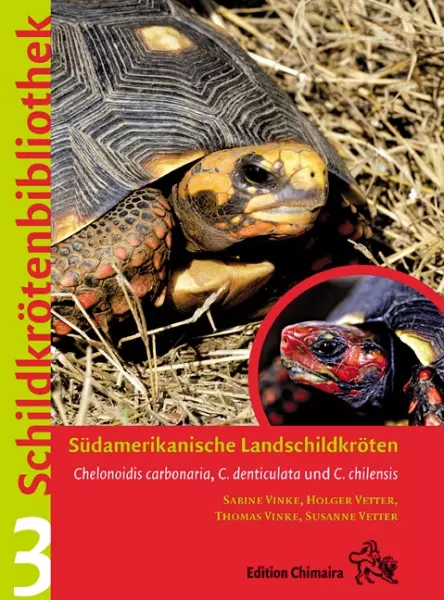
Turtle library 3 - South American tortoises
Turtle library 3 - The South American tortoises Sabine & Thomas Finke, Susanne & Holger Vetter 355 pages 285 color photos 2 drawings 4 distribution maps Format: 15 x 21.5 cm Content: This book is by far the most comprehensive collection of information from all parts of the Southern Turtle's tortoise range: Chelonoidis carbonaria, C. denticulata and C. chilensis.

CHF 42.90

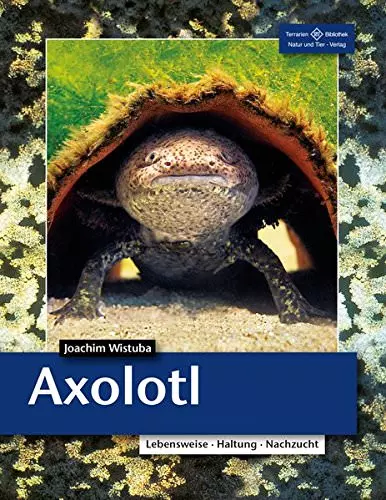
NTV, Axolotl
A book about the salamanders that always remain in the larval stage - the axolotl NTV publishing house Jochaim Wistuba 100 pages Axolotls are widely known as the salamanders that can reproduce in the larval stage. However, it is not only this biological peculiarity and their bizarre appearance that make them popular pets, they are also excellent to keep and breed in the indoor aquarium. The author goes into detail about the origin, keeping, reproduction and diseases of the axolotl and also explains the biology of these fascinating "water monsters". Naturally, all colour varieties and hybrid forms are presented.

CHF 34.90

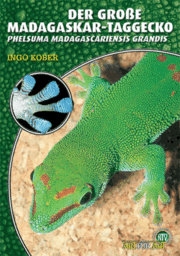
The Great Madagascar Day Gecko
All about the Madagascar Day Gecko by Ingo Kober 64 pages 14.8 x 21 cm 47 colour photos 6th edition Author Ingo Kober Publisher NTV Contents: They are so colourful that they almost make your eyes water: the Madagascar day gecko is one of the most beautiful reptiles of all. What also makes it so popular and extremely suitable as a terrarium pet is its agile, lively nature and easy keeping. Ingo Kober knows more about keeping and breeding these animals than almost anyone else. In this book, he provides expert and easy-to-understand information on the know-how required for the species-appropriate care of these beautiful lizards. Of course, he also tells you how to breed these adorable animals, hatch the eggs and raise the young. Systematics and body structure The fascinating biology: From the life of the Madagascar Day Gecko All information on species-appropriate keeping: from suitable terrariums to equipment and technology to feeding Successful breeding: Mating stimulation, incubation of the eggs and rearing the young Solutions to problems: How to avoid the most common mistakes in care and how to help sick animals Brilliant photos

CHF 21.90

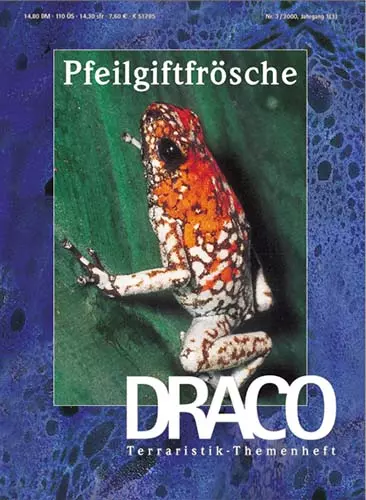
Draco 03 - Poison Arrow Frogs
Draco 03 - Poison dart frogs Contents: 2 Editorial 4 Poison dart frogs - An introduction to biology, systematics and distribution, by S. Lötters 16 Brood care in poison dart frogs, by A. Quiguango-Ubillus 24 Reproductive behaviour in poison dart frogs, by K.-H. Jungfer 29 The poison dart frogs of Bolivia and their distribution, by S. Lötters and S. Reichle 32 Poison dart frogs in the terrarium, by M. Schmidt 50 Building an artificial waterfall from polystyrene, by D. Löhmann 58 The Web-climbing Tree Frog - A small jewel from the rainforest, by H. Divossen 62 Keeping and breeding Dendrobates histrionicus, by E. Schoop 70 Colourful encounters in the Choco, by J. Stelder 73 Infectious diseases - a constant threat to dendrobatid keeping? by M. Mutschmann 83 Book box 89 Magazine

CHF 14.90

Customers also saw

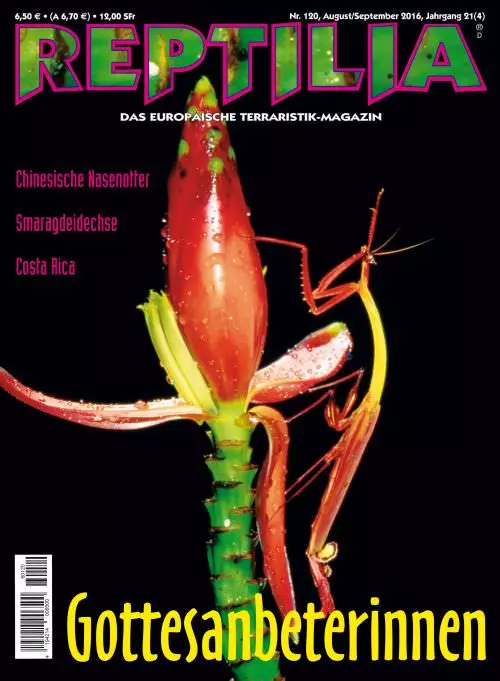
Reptilia 120 - Praying Mantises
Reptilia 120 - Praying Mantises Chinese viperEmerald lizardCosta Rica Contents: Cover story: Praying MantisesNobody can escape the fascination of praying mantises. These predatory insects with their alien appearance and martial mating habits have long secured a permanent place in terrariums. We offer an overview of mantids in breeding, the classics, and the latest trends. We also feature an unusual species from the Philippines and look to eastern Germany, where Mantis religiosa has spread. EditorialMAGAZINEDATES Photo storyThe fascination of praying mantisesK. Kunz Keeping and breedingPraying mantises. The basics of keeping in terrariumsC. J. Schwarz REPORTAGEPraying mantises on the advance in eastern GermanyN. von Lettow-Vorbeck BiologyPraying mantis, change your tune. On the challenge of identifying praying mantises using the Philippine species Creobroter meleagris as an exampleC. J. Schwarz ReportageThe Chinese viper (Deinagkistrodon acutus): a herpetological and cultural phenomenonDr. T. Eimermacher Keeping and breedingThe banded fire salamander (Salamandra salamandra terrestris).  Distribution, habits and breedingM. Rogner RreportageA display terrarium for fire salamandersR. Hoppe Animals of our homelandThe emerald lizardR. Leptien SERVICE WESTERN HERP PERSPECTIVESBut it’s a dry heatB. Love ALSO NEAR YOU TravelCosta Rica – Paradisiacal biodiversity between the Atlantic and the PacificN. Weinbeer PREVIEW INCUBATOR The breakH. Werning

CHF 12.00

West African Mantis
West African Mantis Pseudocreobotra ocellata (flower mantis) This West African mantis (flower mantis) lives in West and East Africa. There it is found in scrubland and grassland, where flowering plants also occur. The male lives for approx. 3-5 months after the last moult and the female for up to 10 months. Food The West African mantis feeds mainly on small, flying insects such as Drosophila, houseflies and moths. However, it also eats small crickets, crickets and cockroaches. Care A terrarium measuring 30x30x45cm is required to keep a West African mantis. Terrarium soil is ideal as a substrate. Live plants and branches are essential. The plants improve the climate in the terrarium. The temperature should be between 30-35°C. It can also be warmer directly under the heat lamp. The humidity should be 50-70%. Special features If the mantis is fed regularly and well, it can also be kept in a group. There must be enough plants and hiding places. However, losses are always to be expected.