

British Shorthair
Profile
| Origin: | Great Britain |
| Coat: | Shorthair |
| Size: | medium |
| Weight: | 4-8kg |
Product information "British Shorthair"
The British Shorthair / British Shorthair cat
Features
Body shape:
- solid
- relatively short legs
- thick paws
Coat:
- short and soft
- dense
- plump undercoat
Character of the British Shorthair
The British Shorthair is an ideal family cat. It is calm, does not meow very much and is even-tempered. It has a strong bond with its owner and is very affectionate, and also enjoys spending a lot of time with them. She always enjoys playing together.
Composition
Feeding recommendation
Technical details
Size information
Login
Suggested products
Main Coon blog post
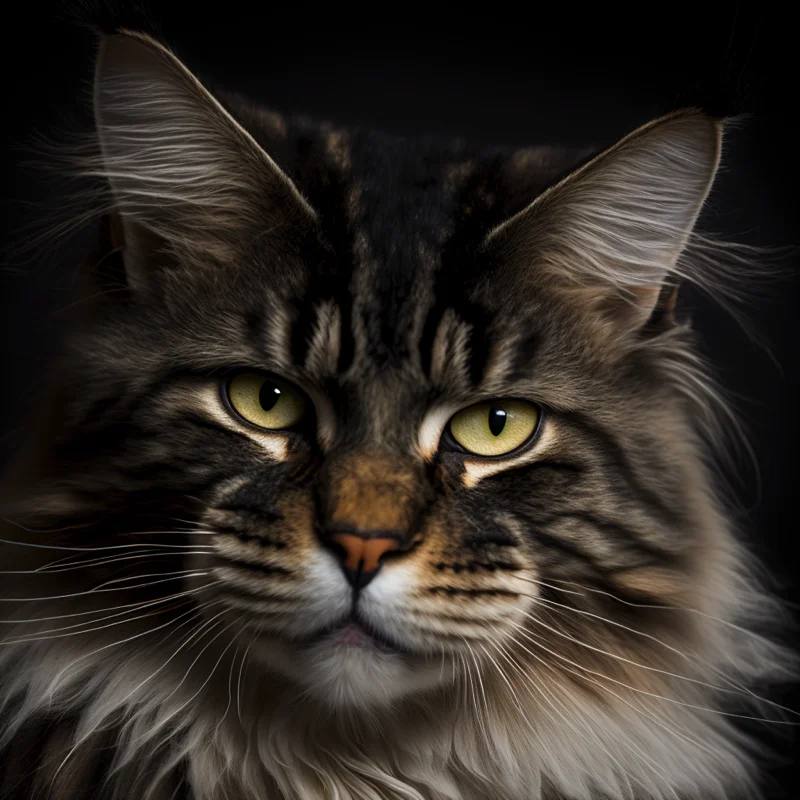
🐾 Maine Coon cats - gentle giants with lots of charmThe Maine Coon is one of the best-known and most popular cat breeds in the world. With their striking appearance, gentle character and remarkable intelligence, they have secured a firm place in the hearts of many cat lovers. In this article you will find answers to the most frequently asked questions about the Maine Coon cat - compact, understandable and up-to-date.What is a Maine Coon cat?
The Maine Coon is one of the world's largest domestic cat breeds. It originally comes from the US state of Maine, where it was already mentioned in the 19th century. Its name is a combination of the place of origin "Maine" and the old popular belief that it was created by crossing with raccoons ("coon") - which is of course not biologically possible. It is a natural breed whose origins probably go back to robust farm cats that have adapted to the harsh New England climate.How big and heavy does a Maine Coon get?
Maine Coon cats reach an impressive size, making them one of the so-called "gentle giants". Males usually weigh between six and nine kilograms, sometimes even more, while females are somewhat more petite and usually weigh between four and six kilograms. Their body length, including tail, can be over one meter, and their shoulder height is often up to forty centimetres. Their growth is slow and they often do not reach their full size until they are three to four years old.What is the character of a Maine Coon?
The character of the Maine Coon is extremely friendly, even-tempered and people-oriented. They are known to be very social and generally get on well with other animals and also with children. Their playful and inquisitive nature often stays with them into old age. Maine Coons are intelligent and enjoy learning new things, whether it's fetching or simple tricks. Their way of communicating is particularly charming: Instead of loud meowing, they often express themselves in soft, trilling sounds. Many owners describe them as "dog-like", as they often form a close bond with their humans.
How do you care for a Maine Coon?
Despite their long and thick coat, grooming a Maine Coon is less involved than you might expect. It is usually sufficient to brush the coat once or twice a week to prevent knots and matting. During the shedding season in spring and fall, daily brushing can be useful. The ears and eyes should be checked regularly and gently cleaned if necessary. Claws should also be trimmed occasionally for indoor cats. Dental care is also an important issue - be it with special dental care products or suitable snacks.
Is the Maine Coon suitable as an indoor cat?
In principle, the Maine Coon is also suitable for living in an apartment, provided it gets enough activity, attention and space to move around. It is ideal if it has access to a secure balcony or an outdoor enclosure. A large and sturdy scratching post, plenty of opportunities to play and regular interaction with their humans will ensure that they feel comfortable even without outdoor access. Many Maine Coons can also be easily accustomed to a harness and enjoy walks on a lead.
What health problems do Maine Coons have?
Like many purebred breeds, the Maine Coon can also have certain health risks. Hypertrophic cardiomyopathy (HCM), a hereditary heart disease that requires regular veterinary checks, is particularly common. Hip dysplasia (HD), a malformation of the hip joint, also occurs occasionally, as does spinal muscular atrophy (SMA), a genetic muscle disease. If you want to buy a Maine Coon, you should make sure that the breeder is reputable and that the parent animals have been tested for these diseases.
How much does a Maine Coon cost?
The cost of a Maine Coon cat depends very much on the breeder, the pedigree and the general health of the animal. As a rule, the price from reputable breeders is between 1500 and 2500 francs. Animals from particularly sought-after lines or with rare colors can be significantly more expensive. If you opt for a cat from an animal welfare organization, you will usually pay less, but should expect to receive less information about its origin and health care. In addition to the purchase price, you should also factor in ongoing expenses for food, visits to the vet, grooming products and accessories.
Which food is suitable for Maine Coons?
Maine Coons have an increased need for energy and nutrients, especially during their long growth period. High-quality food with a high meat content is particularly important. You should look for a balanced mixture of wet and dry food that is specially adapted to large cat breeds. There is also special food with joint support, which can be useful for the large joints of this breed. If you are well versed in the subject, you can also feed your Maine Coon on a barf diet, but you should make sure that the nutritional balance is right. It is also important to keep an eye on their weight, as Maine Coons like to eat a lot.
Is a Maine Coon right for me?
A Maine Coon is the right choice for you if you are prepared to spend a lot of time with your pet, have enough space available and have time for grooming and play. These cats need attention, closeness and an environment in which they can develop. If you are looking for a loving, intelligent and sociable pet that is actively involved in everyday family life, then the Maine Coon is a wonderful choice.
Where to buy Main Coon cats in Switzerland?You can't buy cats and dogs in pet shops in Switzerland. That's why we only sell food and accessories for Main Coon cats.You can find a comprehensive list of breeders on the website of the Maine Coon Association Switzerland. Breeders listConclusion
The Maine Coon is an exceptional breed of cat that not only impresses with its striking appearance, but also with its unique character. It combines the wildness of a small lynx with the loving nature of a loyal friend. Anyone who adapts to its special needs and offers it a species-appropriate home will be rewarded with a loyal, intelligent and extremely charming cat.Customers also searched for: Maine Coon, Maine Coon buy, Maine Coon kitten, Maine Coon breeder, Maine Coon character, Maine Coon keeping, Maine Coon care, Maine Coon weight, Maine Coon size, Maine Coon price, Maine Coon diet, Maine Coon diseases, Maine Coon life expectancy, Maine Coon indoor cat, Maine Coon outdoor cat, Maine Coon allergy, Maine Coon coat care, Maine Coon colors, Maine Coon vs Norwegian Forest Cat, Maine Coon mongrel, Maine Coon shelter, Maine Coon Switzerland, Maine Coon Bern, Maine Coon Lyss, Maine Coon breeding Switzerland, Maine Coon kittens for sale, Maine Coon buy Switzerland, Maine Coon price Switzerland, Maine Coon care Switzerland, Maine Coon keeping Switzerland

Ragdoll
Ragdoll cat
FeaturesBody shape:
muscular
medium sized
heavy
Coat:
soft
long
Character of the Ragdoll
The Ragdoll is an ideal family cat because it is friendly, playful and loves children. The affectionate cat seeks out contact with its people or other animals in the family. It also gets along with dogs that are used to cats. The Ragdoll is a very lovable and cuddly cat. It tends to be slightly overweight and its feeding and weight must be controlled.

Norwegian Forest Cat
The Norwegian Forest Cat
Features
Body shape:
large
muscular
Coat:
medium length
woolly undercoat
cold resistant
The Norwegian Forest Cat is a very friendly, playful and good-natured cat. It loves to play and gets on well with dogs and other animals. All this makes it a very popular and ideal family cat. She forms a strong bond with her humans and also enjoys playing with children. She decides when she wants to be stroked and when she wants to be left alone. Her medium-length coat and undercoat make her very cold resistant. She loves to be outside and curiously explores her territory.The coat should be brushed, especially during the shedding period, to make it easier for the cat to shed.

Egyptian Mau
The Egyptian Mau
CharacteristicsBody shape:
elegant
long-legged
slim
Coat:
spotted
short
fine and silky
glossy
Character of the Egyptian Mau
The Egyptian Mau is one of the fastest domestic cats. It can reach a top speed of 50 km/h. It therefore needs a lot of exercise and movement, which should definitely be taken into account when keeping it. The Egyptian Mau is considered affectionate and intelligent. Thanks to its ability to learn, it can be taught tricks and needs plenty of activity.

Oriental Shorthair
The Oriental Shorthair cat
CharacteristicsBody shape:
elegant
Ears are large
Eyes set wide apart
Coat
short and fine
shiny
Character of the Oriental Shorthair
The Oriental Shorthair is a friendly and affectionate cat. It is also very playful and likes to use its intelligence. It needs a lot of attention from humans and always wants to be spoilt, if it doesn't get it, it starts to meow very loudly. She is also very talkative and "comments" on everything with a noise.She is very docile and loves to learn tricks. As the Oriental Shorthair is very affectionate and sociable, it should not be kept alone, but at least in pairs.
Grooming the coat is not very time-consuming. It does not need to be brushed, a fine stroking of the coat with a cloth is sufficient. The Oriental Shorthair is a robust cat. However, due to its short coat, it should not spend the whole day outside in winter.

European Shorthair
The European Shorthair cat
CharacteristicsBody shape:
solid
vigorous
Coat:
short
Character of the European Shorthair
The lively European Shorthair is very fond of the outdoors and is not suitable for purely indoor keeping. It is an excellent hunter and needs a lot of exercise. They are considered to be very intelligent, affectionate and friendly. The European Shorthair is very robust and rarely gets sick. It is also considered to be very easy to care for.

Cornish Rex
Cornish Rex cat
FeaturesBody shape:
elegant
Legs are long and slender
Large ears
Coat:
short
curly
velvety
No undercoat
The Cornish Rex is a lively and affectionate cat. It curiously explores its surroundings. The Cornish Rex needs a lot of activity and exercise, and also likes to jump in the air. She doesn't mind an active environment at all. She doesn't like to be alone for long periods of time, she loves to be in contact with her human. The Cornish Rex also gets on well with dogs and is an ideal family cat.As it tends to be overweight, the Cornish Rex's diet should be monitored.
Cornish Rex
Cornish Rex cat
FeaturesBody shape:
elegant
Legs are long and slender
Large ears
Coat:
short
curly
velvety
no undercoat
The Cornish Rex is a lively and affectionate cat. It curiously explores its surroundings. The Cornish Rex needs a lot of activity and exercise, and also likes to jump in the air. An active environment does not bother her at all. She does not like being alone for long; she enjoys contact with her human. The Cornish Rex also gets along well with dogs and is an ideal family cat.As it tends to be overweight, the Cornish Rex's feeding should be monitored.

Bengal
Bengal cat
Characteristics
Body shape:
muscular
solid
Coat:
short
glossy
wild pattern
Character of the Bengal cat
The Bengal cat is a cross between a wild cat and a domestic cat. It has a lot of energy, which it also wants to live out. It loves to climb and jump and needs a lot of activity. The Bengal cat has a very pronounced hunting instinct and this should definitely be satisfied. It is clever and enjoys learning tricks. Due to its fearlessness, it also gets on very well with dogs.The Bengal cat is friendly and very sociable. It also enjoys playing with water. Important! The Bengal cat should not be kept with small children and must have sufficient opportunities to be occupied.

Persian Cat
The Persian cat
CharacteristicsBody shape:
round paws
broad head
muscular
Coat:
long and silky
dense undercoat
The Persian cat is a very calm, sensitive and reserved cat. However, it is considered friendly and lovable. It likes to choose its own carer and once it has made up its mind, it is loyal and very affectionate towards him.It also likes to get its own way and can be very stubborn.
Grooming the Persian cat is very time-consuming. It must be brushed regularly to avoid matting. Due to its short nose, it often suffers from health problems.

Savannah
Savannah cat
Characteristics
Body shape:
long-legged
slim
large ears
Coat:
short
beige-gold
The Savannah is a cross between the serval wild cat and a domestic cat. It is large, slim and long-legged. These characteristics make it one of the largest domestic cats. It can jump up to 2 metres high.The Savannah is very playful and affectionate, and also gets on very well with its own kind and other animals. The Savannah is not afraid of water and has very quick reactions.
Important! There are different generations of the Savannah, these indicate how much wild cat it contains.Two examples:
F1= one parent is a domestic cat and the other is a wild cat. This generation is subject to registration.
F5= This generation has almost no wild cat blood left in it. These Savannah cats can be kept just like other domestic cats.
Customers also saw
Main Coon blog post
🐾 Maine Coon cats - gentle giants with lots of charmThe Maine Coon is one of the best-known and most popular cat breeds in the world. With their striking appearance, gentle character and remarkable intelligence, they have secured a firm place in the hearts of many cat lovers. In this article you will find answers to the most frequently asked questions about the Maine Coon cat - compact, understandable and up-to-date.What is a Maine Coon cat?
The Maine Coon is one of the world's largest domestic cat breeds. It originally comes from the US state of Maine, where it was already mentioned in the 19th century. Its name is a combination of the place of origin "Maine" and the old popular belief that it was created by crossing with raccoons ("coon") - which is of course not biologically possible. It is a natural breed whose origins probably go back to robust farm cats that have adapted to the harsh New England climate.How big and heavy does a Maine Coon get?
Maine Coon cats reach an impressive size, making them one of the so-called "gentle giants". Males usually weigh between six and nine kilograms, sometimes even more, while females are somewhat more petite and usually weigh between four and six kilograms. Their body length, including tail, can be over one meter, and their shoulder height is often up to forty centimetres. Their growth is slow and they often do not reach their full size until they are three to four years old.What is the character of a Maine Coon?
The character of the Maine Coon is extremely friendly, even-tempered and people-oriented. They are known to be very social and generally get on well with other animals and also with children. Their playful and inquisitive nature often stays with them into old age. Maine Coons are intelligent and enjoy learning new things, whether it's fetching or simple tricks. Their way of communicating is particularly charming: Instead of loud meowing, they often express themselves in soft, trilling sounds. Many owners describe them as "dog-like", as they often form a close bond with their humans.
How do you care for a Maine Coon?
Despite their long and thick coat, grooming a Maine Coon is less involved than you might expect. It is usually sufficient to brush the coat once or twice a week to prevent knots and matting. During the shedding season in spring and fall, daily brushing can be useful. The ears and eyes should be checked regularly and gently cleaned if necessary. Claws should also be trimmed occasionally for indoor cats. Dental care is also an important issue - be it with special dental care products or suitable snacks.
Is the Maine Coon suitable as an indoor cat?
In principle, the Maine Coon is also suitable for living in an apartment, provided it gets enough activity, attention and space to move around. It is ideal if it has access to a secure balcony or an outdoor enclosure. A large and sturdy scratching post, plenty of opportunities to play and regular interaction with their humans will ensure that they feel comfortable even without outdoor access. Many Maine Coons can also be easily accustomed to a harness and enjoy walks on a lead.
What health problems do Maine Coons have?
Like many purebred breeds, the Maine Coon can also have certain health risks. Hypertrophic cardiomyopathy (HCM), a hereditary heart disease that requires regular veterinary checks, is particularly common. Hip dysplasia (HD), a malformation of the hip joint, also occurs occasionally, as does spinal muscular atrophy (SMA), a genetic muscle disease. If you want to buy a Maine Coon, you should make sure that the breeder is reputable and that the parent animals have been tested for these diseases.
How much does a Maine Coon cost?
The cost of a Maine Coon cat depends very much on the breeder, the pedigree and the general health of the animal. As a rule, the price from reputable breeders is between 1500 and 2500 francs. Animals from particularly sought-after lines or with rare colors can be significantly more expensive. If you opt for a cat from an animal welfare organization, you will usually pay less, but should expect to receive less information about its origin and health care. In addition to the purchase price, you should also factor in ongoing expenses for food, visits to the vet, grooming products and accessories.
Which food is suitable for Maine Coons?
Maine Coons have an increased need for energy and nutrients, especially during their long growth period. High-quality food with a high meat content is particularly important. You should look for a balanced mixture of wet and dry food that is specially adapted to large cat breeds. There is also special food with joint support, which can be useful for the large joints of this breed. If you are well versed in the subject, you can also feed your Maine Coon on a barf diet, but you should make sure that the nutritional balance is right. It is also important to keep an eye on their weight, as Maine Coons like to eat a lot.
Is a Maine Coon right for me?
A Maine Coon is the right choice for you if you are prepared to spend a lot of time with your pet, have enough space available and have time for grooming and play. These cats need attention, closeness and an environment in which they can develop. If you are looking for a loving, intelligent and sociable pet that is actively involved in everyday family life, then the Maine Coon is a wonderful choice.
Where to buy Main Coon cats in Switzerland?You can't buy cats and dogs in pet shops in Switzerland. That's why we only sell food and accessories for Main Coon cats.You can find a comprehensive list of breeders on the website of the Maine Coon Association Switzerland. Breeders listConclusion
The Maine Coon is an exceptional breed of cat that not only impresses with its striking appearance, but also with its unique character. It combines the wildness of a small lynx with the loving nature of a loyal friend. Anyone who adapts to its special needs and offers it a species-appropriate home will be rewarded with a loyal, intelligent and extremely charming cat.Customers also searched for: Maine Coon, Maine Coon buy, Maine Coon kitten, Maine Coon breeder, Maine Coon character, Maine Coon keeping, Maine Coon care, Maine Coon weight, Maine Coon size, Maine Coon price, Maine Coon diet, Maine Coon diseases, Maine Coon life expectancy, Maine Coon indoor cat, Maine Coon outdoor cat, Maine Coon allergy, Maine Coon coat care, Maine Coon colors, Maine Coon vs Norwegian Forest Cat, Maine Coon mongrel, Maine Coon shelter, Maine Coon Switzerland, Maine Coon Bern, Maine Coon Lyss, Maine Coon breeding Switzerland, Maine Coon kittens for sale, Maine Coon buy Switzerland, Maine Coon price Switzerland, Maine Coon care Switzerland, Maine Coon keeping Switzerland
Ragdoll
Ragdoll cat
FeaturesBody shape:
muscular
medium sized
heavy
Coat:
soft
long
Character of the Ragdoll
The Ragdoll is an ideal family cat because it is friendly, playful and loves children. The affectionate cat seeks out contact with its people or other animals in the family. It also gets along with dogs that are used to cats. The Ragdoll is a very lovable and cuddly cat. It tends to be slightly overweight and its feeding and weight must be controlled.
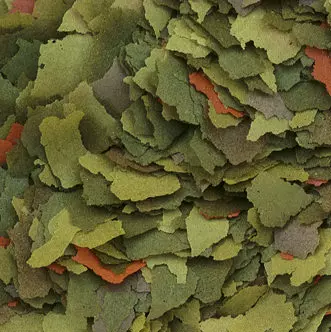
Tropical Malawi
CHF 2.20
Contents:
12 g
Tropical Malawi Flakes
MALAWI basic flake food for Malawi cichlids of the Mbuna group
Ingredient-rich flake food with a high content of vegetable substances (spinach, nettles, spirulina, wheat germ etc.) for the daily feeding of Malawi cichlids of the Mbuna group.
A very varied recipe guarantees excellent condition and beautiful colors and stimulates reproduction.
Fibers and nettles regulate the activity of the long digestive tract of the Malawi cichlids. Green peas and spirulina are a source of easily assimilated vegetable proteins. Wheat germ provides valuable unsaturated fatty acids. L-carnitine stimulates the fat metabolism.
MALAWI is extremely tasty and very popular with fish, even imported fish. It is recommended to alternate the diet of Lake Malawi cichlids with SUPER SPIRULINA FORTE.
Complete food for ornamental fish
Composition:Vegetable protein extracts, fish and fish by-products, cereals (oat flour min. 10%), molluscs and crustaceans, vegetable by-products (green pea flour min. 4%, nettle flour min. 3.75%, wheat germ min. 3.2%, spinach flour min. 2.25%), algae (Spirulina platensis min. 3%), yeasts, oils and fats, minerals (contains zeolite 1%). Additives (per kg): Vitamins, provitamins and chemically defined substances with a similar effect: Vit. A 32 000 IU, Vit. D3 1 900 IU, Vit. E 120 mg, Vit. C 440 mg, L-carnithine 250 mg. Compounds of trace elements: E1 (Fe) 48.6 mg, E6 (Zn) 13.5 mg, E5 (Mn) 10.1 mg, E4 (Cu) 2.43 mg, E2 (I) 0.3 mg, E8 (Se) 0.3 mg, E7 (Mo) 0.06 mg. Lecithin. Colorants. Antioxidant. Analytical constituents: Crude protein 40.0%, crude oils and fats 6.5%, crude fiber 3.5%, moisture 6.0%.Additives (per kg):Vitamins, provitamins and chemically defined substances with a similar effect: Vit. A 32 000 IU, Vit. D3 1 900 IU, Vit. E 120 mg, Vit. C 440 mg, L-carnithine 250 mg. Compounds of trace elements: E1 (Fe) 48.6 mg, E6 (Zn) 13.5 mg, E5 (Mn) 10.1 mg, E4 (Cu) 2.43 mg, E2 (I) 0.3 mg, E8 (Se) 0.3 mg, E7 (Mo) 0.06 mg. Lecithin. Colorants. Antioxidant.
Hamster
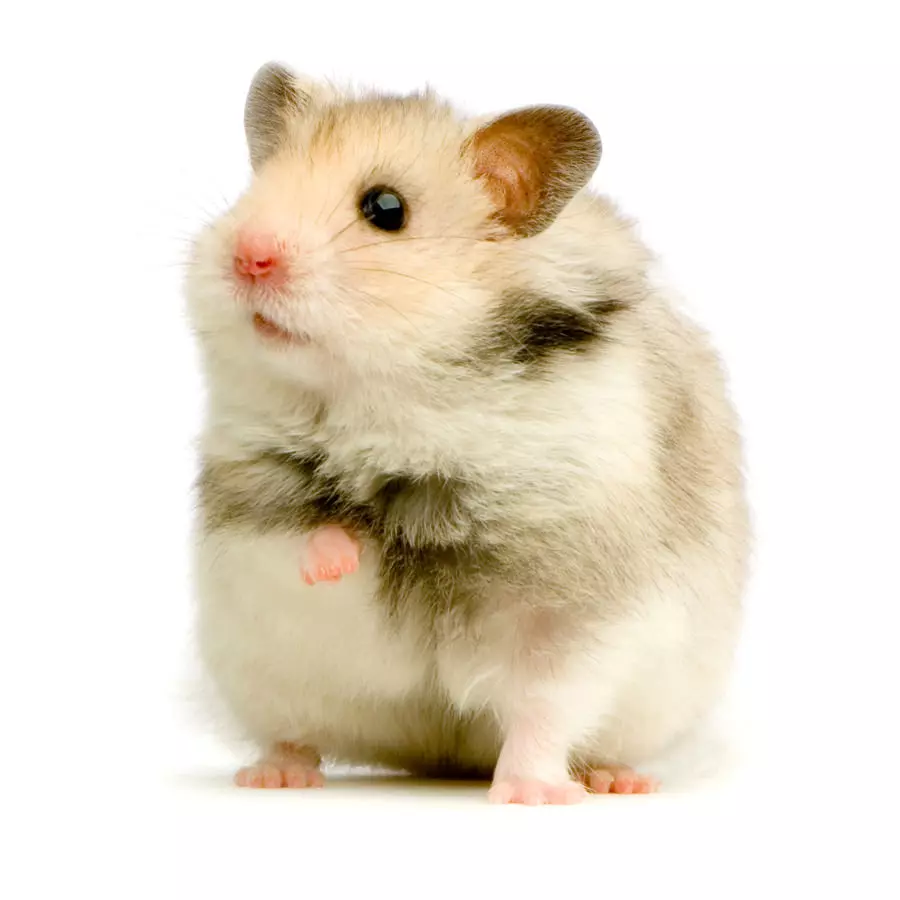
The hamsterHamsters live in self-dug burrows in steppes and semi-deserts from Southern Europe to East Asia. Hamsters have a great urge to move, as hamsters often travel several kilometres in the wild in search of food. Golden hamsters are solitary animals and defend their territory against other hamsters. Males and females only meet during the mating season.Description:The body length of a golden hamster is approx. 15cm. The stubby tail measures only about 10 to 15 mm. The weight is 130 to 180 grams. Breeding has resulted in many colour variations. There are white, cream, cinnamon, black, grey and all variations of pied.Hamster care:You should provide a hamster with a large cage.We recommend a glass container measuring 100x40cm for hamsters.This allows you to fulfil the 15 cm of bedding required by the Animal Welfare Act.The hamster cage should be set up so that the hamster can dig and climb. The absolute minimum size for a hamster cage is approx. 70x40cm. However, the hamster cage must be equipped with shelves and climbing facilities so that the hamster can fulfil its great urge to move. The larger the hamster cage, the better. After all, we prefer to live in a multi-room flat rather than a studio!The cage should be located in a place where the hamster can sleep undisturbed during the day - but where it won't disturb anyone at night with its lively behaviour.Hamster accessories / Cage equipment:
Bedding at least 15cm deep so that the hamster can fulfil its digging needs
Hay
Play opportunities
Various shelters made from wood or cork
Sand bath
Hamster toilet
Nest material - hay or hamster wool. Under no circumstances should synthetic cotton wool be used
Food bowl and drinking bottle
Legal requirements:
Enclosure min. 60x30cm (not our recommendation!)
Hiding places
Digging layer 15cm
Climbing possibilities
Nest material
Gnawing objects such as softwood or fresh branches
Individual housing
Hamster food:To stay healthy, hamsters - like other living creatures - need a varied diet.The main food offered in pet shops ensures a balanced basic diet. You can add variety to your golden hamster's menu with additional food.Unlike dwarf rabbits and guinea pigs, golden hamsters are not pure vegetarians. You should therefore offer them a piece of egg or a little quark from time to time. This will fulfil their need for animal protein.Hamsters particularly enjoy fresh food such as fruit, carrots or dandelions. Make sure that the fresh food is unsprayed. The cage should be checked daily for spoilt fresh food so that the hamster does not eat mouldy food. Although hamsters cover most of their fluid requirements with green food, they also need fresh water every day.Breeding details:At around two months of age, hamsters are capable of reproducing and can be used for breeding. You put a male and a female together, observe whether they get along and then leave them to their happiness for a few days. Then separate them again.The female is provided with sufficient padding material, which is made into a nest. After a gestation period of just 18 days, the female hamster gives birth to five to ten naked and blind young, each weighing just two grams. Once a female has given birth, she should not be disturbed in the early stages, otherwise she may kill and eat her litter.The young open their eyes at ten days old. At three to four weeks, they are already independent enough to make their way through life on their own.We do not recommend breeding the animals, this is only information about reproduction!How much does a hamster cost (per month):
Food: approx. Fr. 15.--
Bedding and hay: approx. CHF 30.
Vet: The more species-appropriate and cleaner your hamster is kept, the less likely it is to need a visit to the vet. Nevertheless, you must always bear in mind that a hamster can fall ill and incur additional costs.
Things to consider before buying:Due to its nocturnal activity, the golden hamster is not an animal for small children. Hamsters sleep during the day and only wake up in the evening when small children have to go to bed. Repeated disturbances from sleep lead to illness and biting in hamsters in the long term.Hamsters are therefore only suitable for older schoolchildren, teenagers and working people.The life expectancy of rodents is 2 to 3 years. During this time, you are responsible for this little guy.Before you decide to buy a golden hamster, you should definitely read a specialised book.The following applies to all animal husbandry: Children (including adolescents) must be guided, supervised and controlled by their parents. Children should know that animals are not toys!Our trained team is available to assist you with any questions or issues at Zoo Roco. They can provide you with expert advice on all matters.
Norwegian Forest Cat
The Norwegian Forest Cat
Features
Body shape:
large
muscular
Coat:
medium length
woolly undercoat
cold resistant
The Norwegian Forest Cat is a very friendly, playful and good-natured cat. It loves to play and gets on well with dogs and other animals. All this makes it a very popular and ideal family cat. She forms a strong bond with her humans and also enjoys playing with children. She decides when she wants to be stroked and when she wants to be left alone. Her medium-length coat and undercoat make her very cold resistant. She loves to be outside and curiously explores her territory.The coat should be brushed, especially during the shedding period, to make it easier for the cat to shed.