Reptilia 10 - Green iguanas

Article no: reptilia10

CHF 9.80

Stock: 0

This article is currently not available

Product information "Reptilia 10 - Green iguanas"

Reptilia 10 - Green Iguanas

Indian Star Tortoise
Springtail Breeding

Contents:

Page 2 - Editorial
Page 3 - Letters to the Editor
Page 6 - Magazine
Page 12 - Dates
Page 15 - Western Herp Perspectives: Spiders Steal the Show, by B. Love
Page 17 - Photo Report: Green Iguanas, by M. Schardt
Page 22 - Keeping and Breeding: Iguana iguana, by M. Schardt
Page 28 - Herpetofauna: The Caribbean Green Iguana Iguana delicatissima, by M. Schardt
Page 33 - Report: The Herpetofauna of Jordan, Part 2, by D. Modry and P. Nečas
Page 39 - Portrait and Poster: Dendrobates quinquevittatus, by Dr. H.-J. Hermann
Page 43 - Keeping and Breeding: Bull Snakes of the Genus Pituophis, by J. Bergadá
Page 48 - Keeping and Breeding: The Indian Star Tortoise Geochelone elegans, by A. Dick
Page 52 - Keeping and Breeding: The West African Clawed Gecko Hemitheconyx caudicinctus, by V. Knietsch
Page 56 - Terraristics: Feeder Breeding: Springtails from the Drawer, by T. Schäffer
Page 61 - Herpetology and Culture: Tarantella – The Spider Dance, by L. Batista Carrissmi-Priori
Page 69 - Reptilia on the Move: Bochum Zoo, by M. Schmidt
Page 74 - Library
Page 76 - Help and Advice
Page 80 - Incubator: As an Exchange Student in the USA, by H. Werning

Composition
Feeding recommendation
Technical details
Size information

0 of 0 reviews

Give us a rating!

Share your experience with the product with other customers.


Suggested products

Handbook of food plants for tortoises and other reptiles
Handbook of forage plants 2nd revised editionMarion Minch is not only a successful breeder of diverse tortoises for many years, but also an excellent connoisseur of native wild herbs. She founded and runs samenkiste.de, which is well known to many tortoise keepers and nature lovers. Her name is inextricably linked with reptile care and species-appropriate nutrition for tortoises. Her handbook of food plants summarises the most important native food plants for herbivorous and omnivorous reptiles. She not only considers tortoises, but also iguanas, spiny-tailed dragons and even chameleons. From the basics of plant biology to native wild herbs to suitable food plants for hardy tropical reptile species, this comprehensive work provides the basis for species-appropriate keeping. In the expanded and supplemented 2nd edition, the plant section is divided according to flower colour. This makes it even easier to identify wild herbs. The work has also been supplemented with a wealth of additional information and many pictures.

CHF 46.50

Geckos
Geckos in the terrarium by Astrid FalkThe book offers a comprehensive introduction to geckos and their species-appropriate keeping in terrariums. It explains what you need to think about before buying a gecko and what preparations should be made. The book describes in detail how the terrarium is technically equipped and set up. The care of the animals, their special features and behaviour, their diet, reproduction and rearing of young animals are described, as well as diseases and husbandry problems with tried and tested suggestions for prevention and treatment. Individual gecko species that are particularly suitable for keeping and breeding in terrariums are portrayed in detail in the second part of the book.

CHF 28.50

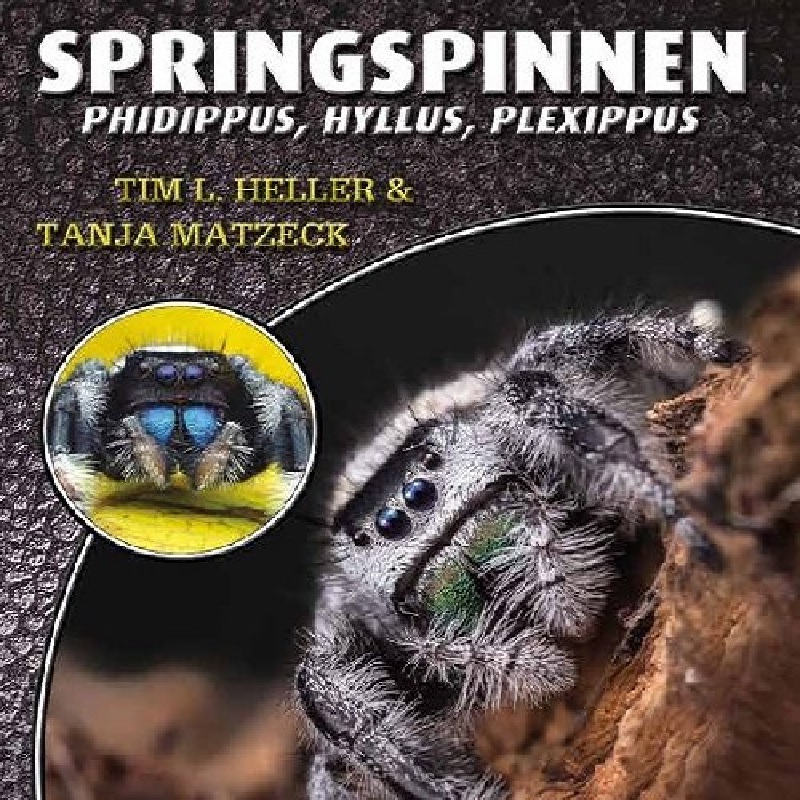
Jumping spiders Phidippus, Hyllus, Plexippus
Book Jumping Spiders - Phidippus, Hyllus & Plexippus A guide to keeping jumping spiders of the genera Phidippus, Hyllus & Plexippus. Who can resist the charm of jumping spiders? The childlike appearance of their expressive face simply leaves no one cold! In addition, their behavior is extremely exciting to observe, their colors are bright and their requirements for species-appropriate keeping are very easy to meet. No wonder these likeable jumpers are all the rage! This volume in the "Species by Species" series describes in detail what to look out for when buying and keeping them, introduces the most commonly kept species and color forms and provides plenty of tips on how to keep them successfully - so you can be sure they will breed well! Species by Species introduces you to the books in this series, which present the most popular terrarium animals. Each volume offers you detailed, practical care instructions and all the information you need to successfully breed your animals. All important questions from the required tank size to terrarium set-up, technical equipment, species-appropriate nutrition and disease prevention are answered with numerous tricks and tips. Experienced, long-standing breeders reveal how you can encourage the animals to reproduce and raise healthy young. All this in full color, generously illustrated and attractively designed - just about your terrarium animal - species by species

CHF 23.90

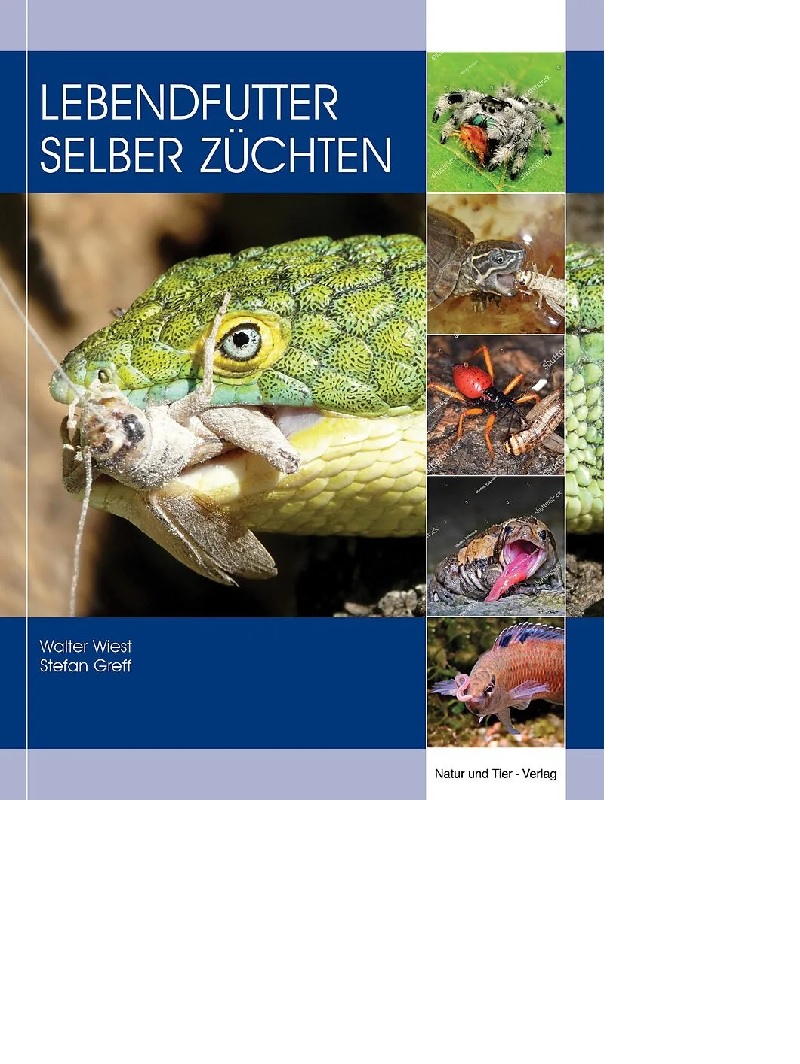
Book Breeding live food yourself
Book "Grow your own live food" - The perfect guide for pet owners Discover practical and detailed instructions on how you can easily breed food for your reptiles, birds, fish or other animals yourself in the book "Breeding live food yourself". With valuable tips on various food insects, their care and breeding, you can save money and ensure a species-appropriate diet for your pets. Contents of the book: Step-by-step instructions for breeding feeder insects Information on the best types of food for reptiles, birds and fish Care instructions and breeding conditions for various live food species Tips for sustainable and cost-effective food production Why breed your own live food? Get healthy, fresh food for your animals Save money and reduce dependence on pet shops Promote the health and well-being of your animals with species-appropriate food Whether you are a beginner or an experienced pet owner, this book provides you with everything you need to successfully breed live food yourself.

CHF 46.50

Marginata 69 - New Guinea tortoises
Marginata 69 - New Guinea tortoises – the genus ElseyaCover storyThe unrecognised beauties: New Guinea tortoises (Andreas S. Hennig)My experiences with Branderhorst's New Guinea tortoise, Elseya (Elseya) branderhorsti (Ouwens, 1914) (Andreas S. Hennig)Keeping and breeding of Rhodin's New Guinea tortoise, Elseya (Hanwarachelys) rhodini Thomson, Amepou, Anamiato & Georges, 2015 (Andreas S. Hennig)PortraitGeoemyda spengleri, Chinese serrated tortoise (Andreas S. Hennig)ReportageMacrochelys temminckii – Experiences and impressions with vulture tortoises part 2 (Reiner Praschag)KeepingAn alternative to year-round keeping of the Egyptian tortoise in the terrarium – my experiences with seasonal outdoor keeping of Testudo kleinmanni (Ricarda Schramm)EtymologySawbacks and living maps part 4: Graptemys gibbonsi, Pascagoula humpback tortoise (Holger Vetter)Classifieds & animal placement

CHF 16.50

NTV, Discover the amphibians
NTV, Discover the amphibians and learn all about these animals. 56 pages colour photos throughout Large format: 20.7 x 28 cm Hardcover Author Kriton Kunz Contents: Every child knows a frog that swims around in its pond and croaks cheerfully, or the black and yellow fire salamander. But how do these friendly animals live? What do they eat, how do they survive the winter? How does a tadpole become a small frog? And what other amazing amphibians are there? "Entdecke die Amphibien" explains what amphibians are, their special features and their incredible abilities in an entertaining and child-friendly way. Fantastic records from the world of frogs, salamanders and the like are included, as well as an exciting quiz about these colourful survival artists. Including 20 great stickers 

CHF 17.90

Bugs No. 05 - Scorpions of North Africa
Bugs No. 05 - Scorpions of North AfricaTrapdoor spidersPhyllium monteithiSnails of CubaThe cover story of Bugs No. 5 takes us to the arid zones of North Africa and the scorpions that live there. Despite their potent venom, some of these survival artists are very popular with invertebrate enthusiasts and are real treasures for nano terrariums. We introduce you to these fascinating predators and explain what you need to know to keep them successfully and, above all, safely. Table of contentsEditorialFacetsDatesFlown inCover storyScorpions of North Africa in focusAndroctonus liouvilleiHottentotta gentili and H. franzwerneriFledgedViñales, an Eldorado for snail loversIn the crosshairsPoecilotheria ornata from Sri LankaCultureThe Maquech: A beetle as a living broochKeeping & BreedingAustralia's Changing LeafKeeping & BreedingThe Giant Marbled Wood CockroachKeeping & BreedingPeacock eye moths in the terrariumReportageThe fascinating life of trapdoor spidersBook scorpionAlso in your neighbourhoodPotter beeFeeding method for young mantidsKids CornerVisitors from prehistoric timesShowcaseCatching and preserving dragonfliesService & ImprintPreviewMetamorphosesActors!

CHF 12.00

Reptilia 95 - Chameleon & Co. The genus Furcifer
  Krokodil-AnlageAsiatische FalltürspinnenHaltung von Schmuckschildkröten Inhalt: Das Pantherchamäleon, Furcifer pardalis, gehört zu den beliebtesten Echsen überhaupt. Diese extrem farbenprächtigen, imposanten Chamäleons aus Madagaskar werden inzwischen in verschiedenen Lokalformen erfolgreich und dauerhaft in unseren Terrarien nachgezüchtet. Die Gattung Furcifer hält aber noch viele weitere hochinteressante Arten bereit – freuen Sie sich auf ein in jeder Hinsicht buntes Titelthema mit viel Praxisbezug! EDITORIALMAGAZINTERMINEIN 5 JAHREN UM DIE WELTBrüllaffen, Klappschildkröten und VulkaneA. PachmannWESTERN HERP PERSPECTIVESAuf Reptiliensuche in AustralienB. LoveFOTOSTORYChamäleons der Gattung FurciferP. NecasHERPETOFAUNAAbenteuer Komorenchamäleon – auf der Suche nach Furcifer cephalolepisR. LeptienPORTÄTIm Porträt: das Teppichchamäleon, Furcifer lateralis P. NecasIm Porträt: das Pantherchamäleon, Furcifer pardalisP. NecasZUCHTDie Entstehung einer neuen Designermorphe der Kornnatter (Pantherophis guttatus)A. SchmidHALTUNG UND VERMEHRUNGPhilippinenkrokodile (Crocodylus mindorensis) im Aquarium des Kölner Zoos. Teil 2: Bau einer Schauanlage für eine der am stärksten bedrohten Krokodilarten der Welt T. Ziegler, R. Sommerlad, W. Brass, K. van der Straeten, D. Karbe & A. RauhausHERPETOFAUNAAuf dem Weg ins All. Die Welt der Buchstaben-Schmuck-schildkröte, Trachemys scripta. Teil 5: Haltung und Vermehrung von Buchstaben-SchmuckschildkrötenA. S. HennigWIRBELLOSEAußergewöhnliche Falltürspinnen aus Asien: die Gattung Cyclocosmia F. Schneider, B. F. Striffler & I. WendtABO & SERVICETerrarienschauanlagen international Der „Rimba Reptile Park“ auf Bali M. HallmenTiere unserer Heimat Die ErdkröteR. LeptienBibliothekTipps & TricksTestlaufAUCH IN IHRER NÄHEREISEZwischen Anolis und Cycluren: Unterwegs auf Puerto RicoH. WerningVORSCHAUBRUTKASTENIguana chilena, Teil 2 H. Werning  

CHF 12.00

Reptilia 59 - Rose chafer
Reptilia 59 - Rose chafer South American tortoisesBuilding a desert terrariumReptile of the year: Forest lizard Contents: 4 EDITORIAL 6 MAGAZINE 17 DATES 20 PHOTO REPORTAGERose chaferBy M. Tomás Rafáles 28 KEEPING AND REPRODUCTIONCare and breeding of the rose chaferAmaurodes passeriniiBy M. Tomás Rafáles 33 REPORTAGEEuropean rose beetles (family Cetoniidae)By M. Yliana 39 TRAVELThin air – An excursion into the highlands ofIran and TurkeyBy B. Trapp 51 PORTRAIT AND POSTERPsammodynastes pulverulentusBy M. Gaulke 55 HERPETOFAUNAOn the "Reptile of the Year 2006" – The Eurasianforest or mountain lizard (Zootoca vivipara),the world's most successful terrestrial reptileBy W. Böhme & D. Rödder 62 PRACTICEUse of a conservatory as a terrariumlocation for a desert terrariumPart 1: Planning and building the terrariumBy T. Ackermann 71 HERPETOFAUNA The North African-Arab cat snakeTelescopus dhara (Forsskål, 1775)By U. Schlüter 77 REPORTAGEObservations on the occurrence ofGeochelone (Chelonoides) in southern BoliviaBy J. Knaack 87 CLASSIFIED ADS 92 RAT & TAT 96 WESTERN HERP PERSPECTIVESThe new "Good Guys"By B. Love 104 INCUBATORMaggot dispenserBy H. Werning

CHF 11.20

NTV, Nutrition of land tortoises
NTV Nutrition of tortoises 144 pages 113 colour photos 27 tables 17 graphics Author Dr Carolin Dennert Format: 16.8 x 21.8 cm  Contents: Tortoises are popular pets. However, these seemingly robust reptiles place high demands on their diet. The popular European tortoises in particular often unintentionally fall victim to inadequate feeding and the wrong food. But the increasingly popular tropical tortoise species also have very specific requirements, which can differ significantly from those of their European relatives. Carolin Dennert is a vet and committed tortoise keeper. For many years, she has focussed on the nutrition and nutrition-related diseases of reptiles, both scientifically and in veterinary practice.This book is the first to present the basics of tortoise nutrition in an understandable way, as well as all common food plants and feedstuffs. The correct supply of vitamins and minerals is discussed in detail, as well as nutrition-related diseases and treatment options. Information on the correct feeding of the individual tortoise species rounds off this special work. The nutrient content of all common food plants and the correct dosage of commercially available vitamin and mineral supplements can be found in an extensive appendix of tables.

CHF 35.90

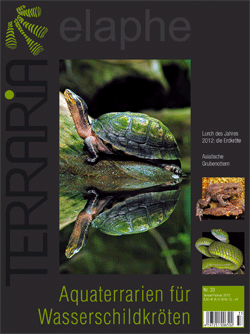
Terraria No. 33 - Aqua terrariums for turtles
Terraria No. 33 - Aqua terrariums for turtles Lurch des Jahres 2012: die ErdkröteAsiatische Grubenottern Inhalt: Wasserschildkröten gehören zu den beliebtesten Reptilien, die häufig auch von Tierhaltern gepflegt werden, die mit Terraristik nichts weiter zu tun haben. Doch aus den häufig in Zoogeschäften und Baumärkten angebotenen eurostückgroßen Babys wachsen schnell kräftige Schildkröten heran, die nach einer angemessenen Unterbringung verlangen. In unserem Titelthema stellen wir die grundlegenden Anforderungen an Aquaterrarien für Wasserschildkröten und ihre Einrichtung vor und zeigen, wie Sie sicher und sinnvoll ganze Anlagen für diese sympathischen Panzerträger errichten.TerritorialHerpetoramaTitelthemaAquaterrarien für WasserschildkrötenAndreas S. HennigSchildkröten im Regal. Vom Bau einer Kompaktanlage zur Haltung von WasserschildkrötenAndreas S. HennigEinrichtungsvorschläge für WasserschildkrötenbeckenSebastian NicklAquaterrarien – Beispiele aus der PraxisAndreas S. HennigTerraglobalSeltenen Schildkröten Namibias auf der SpurAlfred SchleicherWeil ich meinen Eltern nicht gehorcht habeFabio CupulÜberraschendes Arabien 2.0Wolfgang Grossmann, Thomas Kowalski & Hans-Jürgen ZilgerUnter ForschernZerstören für den Aufschwung: Ist es das wirklich wert? Fallstudie aus BrasilienBreno HamdanNeue ArtenDoppelt publiziert hält besser: ein „neues Nilkrokodil“Axel KwetAktuelles zur Taxonomie und Systematik asiatischer GrubenotternAndreas GumprechtStadtkröten vs. LandkrötenSabrina KarlSalamandraTerraristikKlassiker. Der AxolotlAlexander GutscheDie „unscheinbaren Taggeckos“ Oder doch Juwelen aus dem Süden Madagaskars? Phelsuma modesta in Biotop und TerrariumThomas HofmannEuropäische Landschildkröten im WinterMichael WirthHomerange. Vom Vereinsabend zur Reptilienwohnung. Zu Besuch bei Sandra Baus und Steven Arth im SaarlandHeiko WerningNatur- und ArtenschutzFeldnotizen. Fünfbeiniger AlpensalamanderAxel KwetRingelnatter frisst WasserschneckeUrs und Heidi HostDie Erdkröte (Bufo bufo) – Der Lurch des Jahres 2012Axel Kwet & Arno GeigerVermisst. Südliche Florida-Regenbogennatter (Farancia erytrogramma seminola)Alexander GutscheAbo & ServiceAuch in Ihrer NäheGalerie 2012 – Das Jahr des DrachenKriton KunzVorschauBrutkastenBetriebsprüfungHeiko Werning  

CHF 12.00

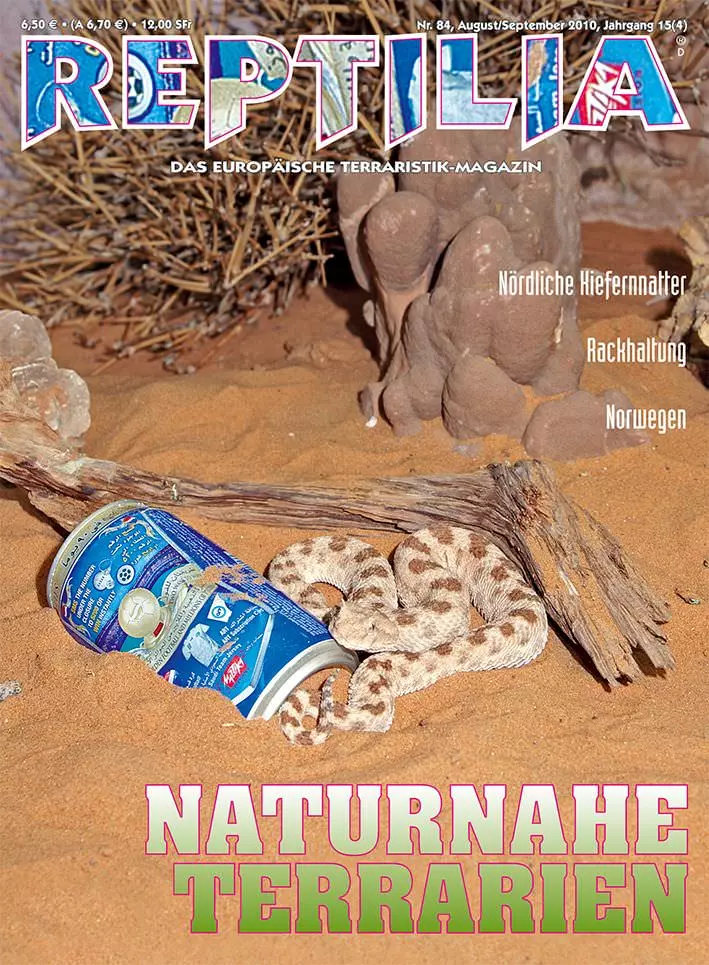
Reptilia 84 - Near-natural terrariums
Reptilia 84 - Near-natural Terrariums Northern pine snakeRack keepingNorway Contents: Creating near-natural terrariums – is that even possible? Does it make sense? And what should the so often described “small section of nature” in the literature look like? Or does the future of terraristics lie in rack keeping? In our cover story we discuss controversially and present practical options for designing terrariums. Editorial MAGAZINE REPTILIA in dialogue: John Berry, breeder of "Desighner Morphs" Dubious caiman, dubious quote – more about the WAZ's working methods Tobias Fritz   MAGAZINE World's first captive-bred Batagur tortoise Axel Kwet   MAGAZINE Obituary: Prof. Dr Dr h.c. mult. Paul Müller Chritian Neumann   DATES   PHOTOSTORY A piece of nature in the living room Heiko Werning   TERRARIUM PRACTICE Natural terrarium or pet cage? Dieter Schmidt   TERRARIUM PRACTICE Advantages of rack keeping F. Longhitano   TERRARIUM PRACTICE Designing hiding places using latex binders C. Frömberg   TERRARIUM PRACTICE Construction of a near-natural display terrarium for a Yemen chameleon S. Braun   TERRARIUM PRACTICE A greenhouse for green iguanas and panther chameleons A. Birtel   PORTRAIT Lychas mucronatus (Fabricius, 1798). Chinese swimming scorpion Kriton Kunz   TRAVEL New Jersey – With “Fieldherpers” and “Pineys” in search of the Northern pine snake (Pituophis melanoleucus melanoleucus) Bernd Skubowius   KEEPING AND REPRODUCTION Fringed-fingered lizards (Acanthodactylus) in the wild and in the terrarium Part 5b: The Acanthodactylus-scutellatus group Uwe Schlüter   HERPETOFAUNA Reptiles and amphibians at Lake Undeland in southern Norway – ecological and pedagogical aspects Werner Lantermann & Yvonne Lantermann   TERRARIUM DISPLAYS 100 years aquarium at Leipzig Zoo Heiko Werning   ANIMALS OF OUR HOME The smooth snake Rolf Leptien   WESTERN HERP PERSPECTIVES Photographing amphibians and reptiles – with style Bill Love   SUBSCRIPTION & SERVICE ALSO NEAR YOU PREVIEW BRUTKASTEN  Patagonian breakdown. Part 2 Heiko Werning

CHF 12.00