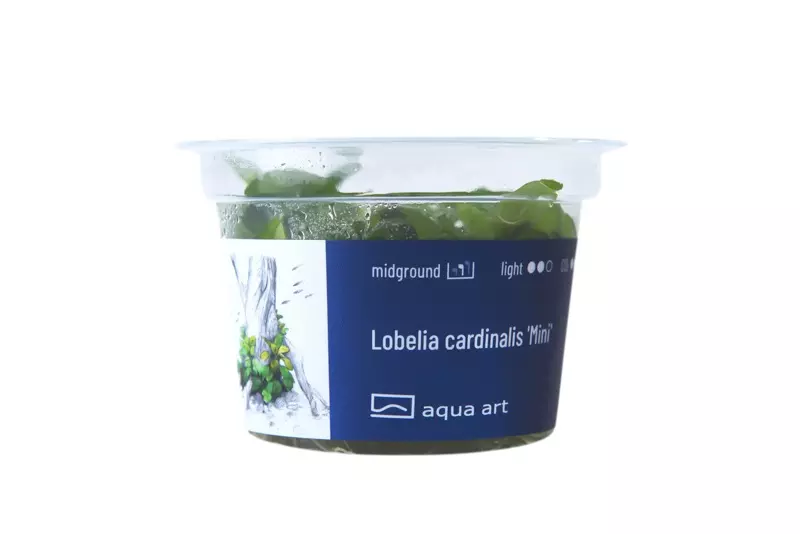
Lobelia cardinalis 'Mini

Article no: ZJ-6050

CHF 6.50

Stock: 6

Available, delivery time: 1-3 days

Delivery between Tuesday, 5 May and Wednesday, 6 May
Zahlungsarten
Product information "Lobelia cardinalis 'Mini"

Lobelia cardinalis 'Mini'

Lobelia cardinalis 'Mini' is a green plant, recommended for the second level of the aquarium and for the paludarium. A very decorative species that is not particularly demanding.

  • Difficulty of growing: easy
  • Light requirements: medium
  • CO₂ requirements: low
  • Outgrown plant height: up to 20 cm
  • Growth: medium
  • Temperature: 15-28°C
  • Placement in aquarium: second level
  • Origin: North America
  • Shell diameter: 6 cm

Lobelia Cardinalis mini is a plant native to North America. In nature, it is found in wetlands and riverbanks. It is distributed from the Gulf of Mexico through the eastern states of the United States to southern Canada. It grows in the ground and has a well-developed root system. The feathery stems can develop auxiliary roots in leafless areas. Its small leaves are bright green, oval with a conspicuous pale central vein.

Lobelias can be cultivated in aquariums and paludariums. It thrives in muddy soil as well as underwater. It tolerates temperatures from 15 to 28 °C and can also be kept in a pond. It thrives best at 20-23°C and requires soft to medium-hard water with a pH between 6.5 and 7.2.

Without sufficient light, the leaves turn yellow, but in bright light the undersides of the leaves turn purple. It is not particularly demanding, but regular water changes, fertilizer and CO₂ support its growth.

In the aquarium, lobelia should be planted in a group in the middle ground, but it is also well suited as a foreground plant. Pruning is necessary for the plant to grow well; use scissors to remove older leaves. You can also cut back the entire plant and use the cut tips as cuttings.

Planting: The plant must be removed from the cup and thoroughly rinsed from the gel under running water. This is best done by placing the plant in a container of lukewarm water. Most of the gel will then fall off by itself. Divide the contents of the cup into 1-2 cm lumps and then set them at intervals of 1 to 2 cm.

Composition
Feeding recommendation
Technical details
Size information

0 of 0 reviews

Give us a rating!

Share your experience with the product with other customers.


Customers also bought

Mouser salt
Moulting salt 150gMolting salt provides the necessary minerals and natural levels of trace elements as birds go through their moult. The combination of selected raw materials can promote strong feathers and eggshells. You can also use the moult salt during the breeding and rearing of the birds.Feeding recommendation: Add one pinch of Mausersalz per animal and day to the normal feed in the bowl.

CHF 4.20

Live food - Food snails
Feeding snails The live feeding snails in the 90 ml bag are a high-quality, natural food source for snail-eating aquarium inhabitants such as puffer fish, predatory snails, loaches, axolotl and water turtles. They promote natural hunting behavior and contribute to a species-appropriate diet.Product details: 90 ml bag with live feeding snails small: mixed bubble snails and post horn snails (up to 5mm)large: Post horn snails from 5mm in size Shelf life: Up to 14 days if stored in a cool place Application: Food for puffer fish, predatory snails, loaches, axolotl, turtles and other snail-eating animals Special features: Promotes the natural hunting instinct and supports dental careAdvantages at a glance: Natural food source: >Live food from our own aquaculture Health-promoting:Rich in vitamins, minerals and nutrients Promotes natural behavior:Stimulates the hunting instinct and supports dental care Versatile use:Suitable for various snail-eating aquarium inhabitants Easy to use: Can be added directly to the aquariumNote: The snails are not suitable for human consumption. Please consider the specific needs of your aquarium inhabitants and feed accordingly.

CHF 2.90

TetraAqua AquaSafe
Variant: 100ml | Variant (1): 100ml
Tetra AquaSafe The fast-dissolving Tetra AquaSafe instantly treats tap water to make it suitable for fish, creating aquarium water close to natural conditions. Through its unique combination of vitamins, natural biopolymers and trace elements, its new formula ensures healthy water and healthy fish. Makes tap water suitable for fish Near-natural aquarium water by neutralising substances harmful to fish Substances in tap water that are harmful to fish are neutralised immediately: Chlorine and chloramine are eliminated and heavy metals such as copper, zinc and lead are bound by means of complexing agents Promotes clear and healthy water Biocolloids promote the development of beneficial bacteria for clear water Vital substances that occur in the natural habitat are added: Iodine for vitalisation, magnesium to promote growth and well-being The optimised vitamin formula reduces stress and supports long-term health Gills and mucous membranes are protected by tactile care colloids Works in seconds with a long-term effect Suitable for freshwater and marine aquariums

CHF 6.50

Lysimachia Nummularia
Lysimachia Nummularia Lysimachia Nummularia is a second level aquarium plant that does well in emersed (above water) form. Easy to grow and tolerant of requirements.Difficult to grow: moderately demandingLight requirements: mediumCO₂ requirements: mediumOutgrown plant height: up to 60 cmGrowth: fastTemperature: 15-26 °Placement in aquarium: Second levelOrigin: EuropeCup diameter: 6 cmLysimachia Nummularia (Sedentary Lysimachia), is an aquatic plant that spreads easily on the bottom when it inhabits the banks of ponds and pools. It has a weakly branched structure. The roots grow in clumps or singly near the round, heart-shaped leaves. If well cared for and not pruned, it can bloom above the surface of the aquarium with yellow flowers.It grows quickly if you provide it with a loamy, sandy substrate along with good light and provide it with enough CO₂ gas fertilizer. Low temperatures don't bother her, but at higher temperatures her growth accelerates considerably, so she can be difficult to control. It prefers soft and slightly acidic water in the aquarium. It feels comfortable at a pH of 6-8. In order to have distinctive, heart-shaped leaves with an intense green color, it requires lots of nitrogen. A nitrogen deficiency will cause the plant to restrict its growth and not climb as much. It is therefore advisable to fertilize it regularly with nitrogenous products and to plant it in aquariums with lots of fish. The hedgehog tree generally grows vertically, without forming too many branches.It grows well in an aquarium with tropical fish, but also in cold biotopes of European waters or on the banks of ponds. Propagation is very simple: just cut the top shoot of the plant and plant it in the substrate, where it will take root. You will achieve the best decorative effect if you plant the plant in small groups of 15-20 specimens. If the shoots are not cut off when it reaches the water table, the plant will continue to grow into an emerse form. Its green-yellow color stands out well against other plants in the aquarium. Lysimachia does well in a hydroponic filter, from which it grows out and forms a green waterfall of leaves that flows into the aquarium. It can also be used in humid terrariums, paludariums or gardens. In a well-lit and regularly sprayed "garden in a jar", it also pleases our eyes with its delicate appearance and rich green color.Planting: The plant must be removed from the cup and thoroughly rinsed from the gel under running water. This is best done by placing the plant in a container of lukewarm water. Most of the gel will then fall off by itself. Divide the contents of the cup into 3-4 cm lumps and then place them in the substrate..

CHF 6.50

Bathhouse with doors
Bathhouse with doors for birds 24x16cm

CHF 18.50

Myriophyllum mattogrossense
Myriophyllum MattogrossenseMyriophyllum Mattogrossense, also known as red columbine, is a decorative aquarium plant that is quite demanding.Growing difficulty: demandingLight requirements: strongCO₂ requirements: strongOutgrown plant height: up to 60 cmGrowth: fastTemperature: 24-28°CPlacement in aquarium: third levelOrigin: South AmericaCup diameter 6 cmMyriophyllum Mattogrossense or red coneflower is a rather demanding, although easy to grow tertiary plant. It is native to Brazil, more specifically to Mato Grosso in the Rio Amazon. It has long, brittle stems with pinnate, whorled leaves.The plant itself is reminiscent of dill in appearance. Under good conditions, it can bloom with small, red, single flowers. It needs a fertile, rich substrate and very intense lighting. Only then can it develop its full potential and show its beauty in the aquarium. It does not like coarse gravel, it grows much better in a fine but permeable substrate. Intensive CO₂ fertilization is advisable. Liquid fertilizer added to the water column will also improve the aesthetic qualities of the plant, which likes to make use of these resources. If it is well fertilized, it grows luxuriantly and the stems have a beautiful red color. It needs a long day, so the light should be on for at least 8-10 hours. It is very sensitive to the parameters that are not maintained. With regular water changes it grows vigorously and the leaves spread into green fans, while in old water the leaves become much smaller and unsightly. If you change the water every few months, you may lose the plant. Myriophyllum Mattogrossense thrives in both soft and hard water.pH 6-7.2.Temperature 24-28°C It is also important that you prune the Myriophyllum regularly. If the plant is not pruned, it will get very fine leaves, especially in the lower part, which will look very unflattering. Regular pruning of the tops helps to prevent this. The plant reproduces very easily, it is enough to plant the cut tip in fertile soil, and it will quickly form a rich, filamentous root system. Due to the need for fertilizer and the capriciousness of the plant, it is not recommended for beginners in aquaristics. The plant is grown in vitro and is free of snails, parasites and algae. A high quality gel was used as a nutrient solution for breeding, so it can quickly and easily adapt to new conditions..

CHF 6.50

Suggested products

New
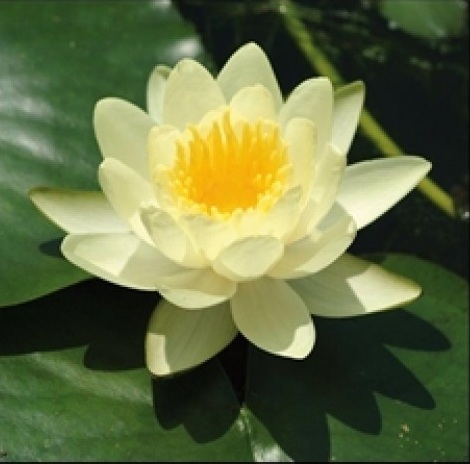
Water lily Chormatella (18cm) - yellow
Nymphaea 'Chromatella' - Yellow water lily in a 3-liter basket (18 cm)Bright yellow flowers for sunny accents in the garden pond.Nymphaea 'Chromatella' is a proven and extremely popular variety among the yellow-flowering water lilies. Its large, fragrant flowers appear from June to September and provide bright color accents on the surface of the water. Thanks to its high adaptability, it is ideal for medium to large garden ponds.Flower color: yellowPlanting depth: -30 to -100 cmFlowering time: June to September (VI-IX)Hardiness zone: Zone 4 - hardy & reliable perennialIn a large 3-liter basket (18 cm) - vigorous growth & stable developmentThe strong floating leaves of Nymphaea 'Chromatella' shade the water surface, reduce algae growth and create a natural balance in the pond. It not only impresses with its bright color, but also with its vigorous growth and longevity.A classic, low-maintenance water lily with a sunny character - ideal for permanent pond greening.We make every effort to ensure that our plants arrive at your doorstep healthy and undamaged. Despite the utmost care, it is possible that plants may be slightly damaged during postal delivery or due to other unforeseen circumstances. This includes brown leaves as well as broken branches. We accept no liability for this. Do not plant in open waters such as lakes or biotopes.

CHF 59.00

New
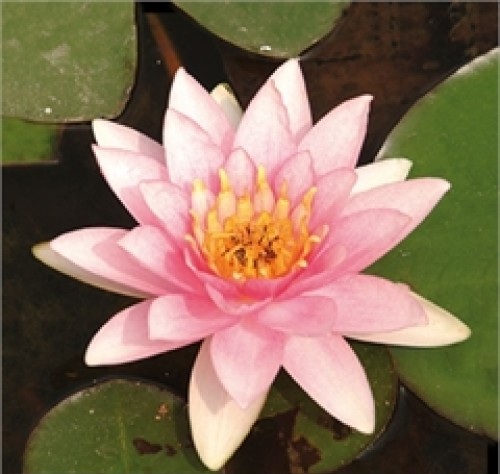
Water lily Carnea (18cm) - pink
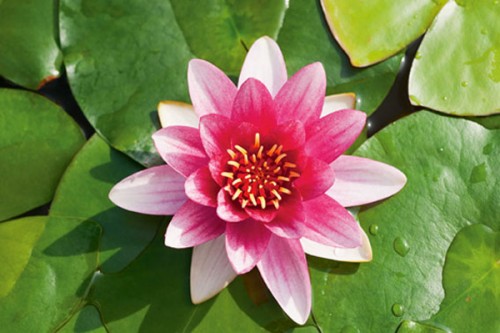
Nymphaea 'Carnea' - Pink water lily for garden pondsDelicate pink flowers - ideal for medium-sized to large ponds.Nymphaea 'Carnea' is a classic, pink water lily with elegant flowers and decorative floating leaves. Its delicate pink flowers appear reliably from June to September and create a romantic, natural pond look. Suitable for planting depths from -40 to -120 cm, it is particularly flexible in pond design and unfolds its full effect in larger garden ponds.Flower color: pinkPlanting depth: -40 to -120 cmFlowering time: June to September (VI-IX)Hardiness zone: Zone 4 - frost-resistant & reliably hardySupplied in a 3-liter basket (18 cm) - for stable growthThe Nymphaea 'Carnea' not only brings color into play, but also contributes to algae reduction and pond shading with its large floating leaves - a plus for water quality and biological balance.Easy to care for, harmonious in color and ideally suited for near-natural water landscapes.We make every effort to ensure that our plants arrive at your doorstep healthy and undamaged. Despite the utmost care, it is possible that plants may be slightly damaged during postal delivery or due to other unforeseen circumstances. This includes brown leaves as well as broken branches. We accept no liability for this. Do not plant in open waters such as lakes or biotopes.

CHF 59.00

New
Dwarf water lily - Nymphaea pygmaea rubra
Dwarf water lily - Nymphaea Pygmaea Rubra - Crimson redThis dwarf water lily is suitable for planting in garden ponds and mini-ponds. The dwarf water lily blooms from June to September and should be planted at a height of between 10 - 40 cm. Scope of delivery Pot with rhizome (rootstock)The plant has few leaves and, due to their fineness, these may break during transportation, but they will grow back.The Nymphaea Pygmaea Rubra is hardy in ponds with a planting depth of 40 cm. Shallow ponds, tubs/bowls or mini-ponds should be kept in a frost-free place.Do not plant in open waters such as lakes or biotopes.We make every effort to ensure that our plants arrive at your doorstep healthy and undamaged. Despite the utmost care, it is possible that plants may be slightly damaged during postal delivery or due to other unforeseen circumstances. This includes brown leaves as well as broken branches. We accept no liability for this.

CHF 35.00

New
Attraction water lily (18cm) - red
Nymphaea 'Attraction' - Red water lily in a 3-liter basket (18 cm) Intense red flowers for elegant accents in the garden pondNymphaea 'Attraction' is a particularly popular variety among the red water lilies. With its large, deep red flowers and rich, green floating leaves, it adds a bright splash of color to any garden pond. Supplied in a sturdy 3-liter planting basket (18 cm diameter), it is ready to plant immediately for medium pond depths.Flower color: redPlanting depth: -40 to -80 cmFlowering time: June to September (VI-IX)Hardiness zone: Zone 4 - hardy & robustLarge planting basket for vigorous growthNymphaea 'Attraction' opens its beautiful flowers during the day and closes them at dusk - a fascinating play of nature. Its shady leaves also help to keep the pond water clear.Elegance in red - a colorful, hardy water lily for every ornamental pondWe make every effort to ensure that our plants arrive at your doorstep healthy and undamaged. Despite the utmost care, it is possible that plants may be slightly damaged during postal delivery or due to other unforeseen circumstances. This includes brown leaves as well as broken branches. We accept no liability for this. Do not plant in open waters such as lakes or biotopes.

CHF 59.00

New
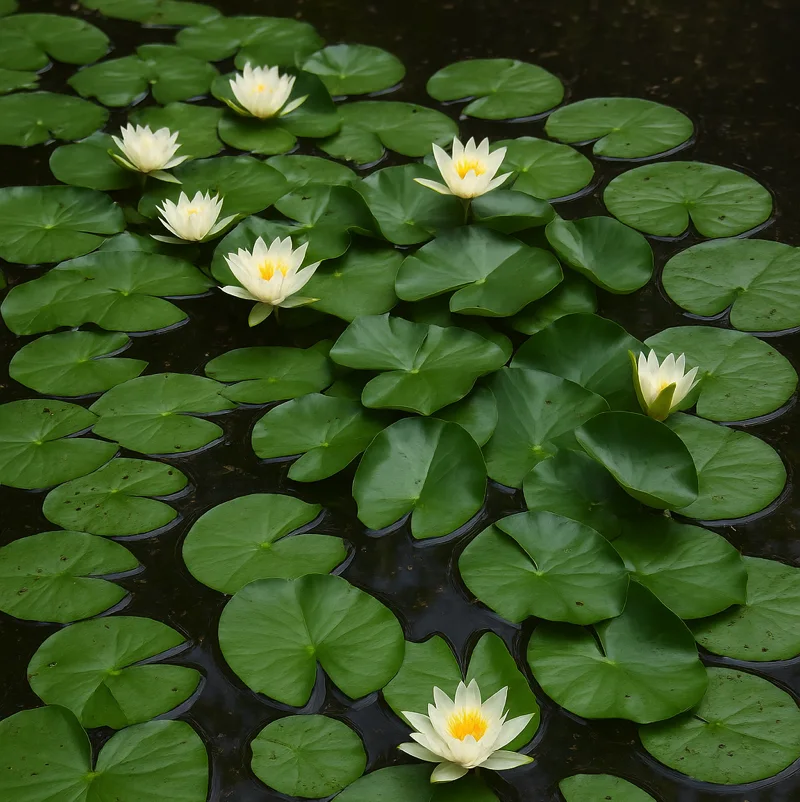
Water lily Alba (18cm) - white
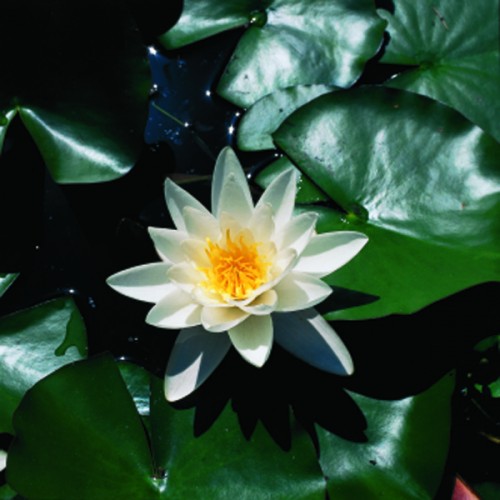
Nymphaea alba - White water lily in a 3-liter basket (18 cm)Classic beauty for the garden pond - with elegant, white flowers.Nymphaea alba, also known as the white water lily, is one of the most popular pond plants of all. With its large, pure white flowers and round floating leaves, it lends a calm, elegant atmosphere to any garden pond. It is supplied in a large 3-liter plant basket (18 cm diameter) and is ideal for medium to deeper pond zones.Flower color: whitePlanting depth: -40 to -100 cmFlowering time: June to September (VI-IX)Hardiness zone: Zone 4 - absolutely hardyIn a 3-liter basket for strong, secure growthThe white water lily not only provides a decorative eye-catcher, but also natural shade that reduces algae growth in the pond. It is robust, easy to care for and a reliable bloomer for years to come.Timeless pond plant for classic waterscapes - robust, hardy and beautiful.We make every effort to ensure that our plants arrive at your doorstep healthy and undamaged. Despite the utmost care, it is possible that plants may be slightly damaged during postal delivery or due to other unforeseen circumstances. This includes brown leaves as well as broken branches. We accept no liability for this. Do not plant in open waters such as lakes or biotopes.

CHF 59.00

New
Dwarf water lily - Nymphaea pygmaea rubra
Dwarf water lily Nymphaea pygmaea ‘Rubra’ red (18cm)The dwarf water lily Nymphaea pygmaea ‘Rubra’ brings an elegant splash of colour to the water’s surface with its red flowers. Thanks to its compact form, it is particularly suitable for smaller garden ponds as well as mini ponds and bowls. Ideal if you want a water lily that doesn’t take up too much space.Dwarf-form water lily – suitable for small water areasFlower colour: redGrowth: compact, for a controlled leaf areaArea of application: Garden pond, mini pond, tub/bowlTechnical dataBotanical name: Nymphaea pygmaea ‘Rubra’English name: Dwarf water lilyFlower colour: redPlanting depth: -10 to -40cmFlowering period: June to September Pot size: approx. 18 cmWith the dwarf water lily Nymphaea pygmaea ‘Rubra’ you bring the typical water lily atmosphere into the garden – even if your pond is rather small or you want to plant in a mini pond or tub. Dwarf water lilies are designed to unfold a harmonious effect in a limited space: Floating leaves on the surface and an attractive blossom, without the water area being quickly completely covered. The ‘Rubra’ variety creates an elegant, easily visible splash of colour with its red flowers.Especially with smaller garden ponds, balanced planting is crucial. Water lilies that grow too vigorously can quickly dominate the surface and “close” the water effect. In comparison, a dwarf water lily remains more compact and is therefore a good choice if you want a calm, well-kept look and nevertheless do not want to do without the classic water lily eye-catcher. ‘Rubra’ is particularly effective when positioned so that you have a good view of the flowers from your seat or terrace – as the red shades clearly stand out against the water and greenery.For establishing, stable placement is important, ideally in a planting basket or a suitable container. This way the rhizome lies undisturbed, and you can adjust the position if necessary. If you are looking for a compact water lily with a strong colour, Nymphaea pygmaea ‘Rubra’ is a fitting choice for a natural yet controlled pond design.Note: We make every effort to ensure that our plants arrive healthy and undamaged. Despite the greatest care, it may occur that plants are slightly damaged during postal delivery or by other unforeseen events. This includes both brown leaves and bent branches. We accept no liability for this. Do not plant in open waters such as lakes or biotopes. Zoo-Roco tip: Put dwarf water lilies in a planting basket so you can easily adjust their position. If the plant is still small at first, start out higher (shallower) and lower them later – this often encourages quicker growth and flowering.

CHF 35.00

New
Water lily Aurora (18cm) - copper
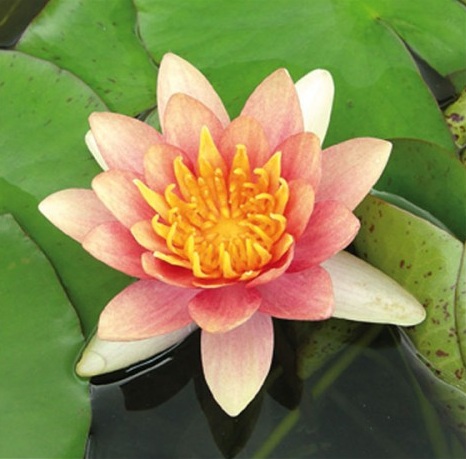
Nymphaea 'Aurora' - Copper-colored water lily in a 3-litre basket (18 cm)Color-changing blooms for large garden ponds.Nymphaea 'Aurora' is an impressive variety for garden ponds that creates fascinating color accents on the surface of the water with its changeable flowers in delicate shades of yellow, orange and copper. Its colorful effect is particularly effective in large ponds.Flower color: Copper-colored with natural color gradientPlanting depth: -30 to -60 cmFlowering time: June to September (VI-IX)Hardiness zone: Zone 4 - absolutely hardyLarge 3-liter basket (18 cm diameter) - for vigorous growth & secure hold in deep waterThis water lily is ideal for ponds and natural ponds, where it not only has a decorative effect with its lush leaves, but also reduces algae growth and supports the pond climate.Robust, hardy variety with exceptional flower color - perfect for large water landscapes.We make every effort to ensure that our plants arrive at your doorstep healthy and undamaged. Despite the utmost care, it is possible that plants may be slightly damaged during postal delivery or due to other unforeseen circumstances. This includes brown leaves as well as broken branches. We accept no liability for this. Do not plant in open waters such as lakes or biotopes.

CHF 59.00

New
Pond rose Lutea (18cm) - yellow
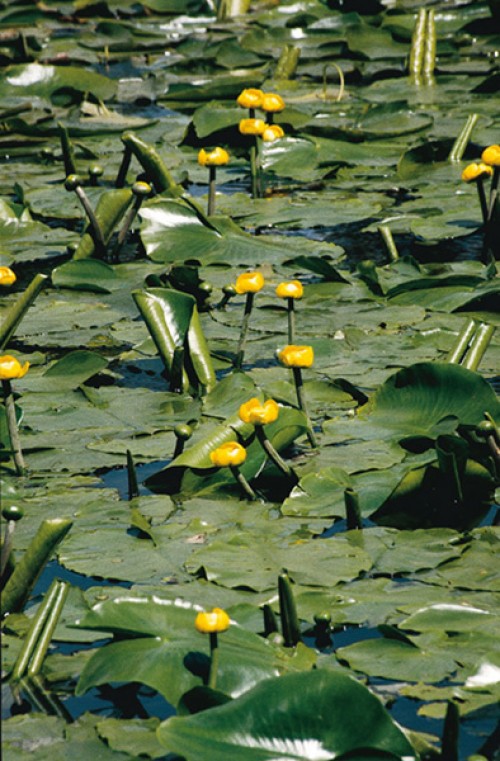
Nuphar lutea - Yellow pond mummel (Brandy Bottle) in a 3-liter basket (18 cm)Bright yellow flowers & strong growth for deeper pond zones.Nuphar lutea, also known as yellow pond rose or brandy bottle, is a robust and hardy aquatic plant with striking yellow flowers. It is ideal for larger ponds and is supplied in a sturdy 3-liter planting basket (18 cm) - perfect for secure rooting in deep water areas.Flower color: Bright yellowPlanting depth: -40 to -120 cmFlowering time: June to September (VI-IX)Hardiness zone: Zone 4 - frost-hardy & reliableSupplied in a large 3-liter basket for vigorous growthThe large floating leaves not only provide shade for fish, but also help to reduce algae growth. The eye-catching yellow flowers exude a subtle fragrance and make the Nuphar lutea an eye-catcher in any pond landscape.Easy to care for, decorative and ecologically valuable - the perfect deep-water plant for natural and ornamental ponds.We make every effort to ensure that our plants arrive at your doorstep healthy and undamaged. Despite the utmost care, it is possible that plants may be slightly damaged during postal delivery or due to other unforeseen circumstances. This includes brown leaves as well as broken branches. We accept no liability for this. Do not plant in open waters such as lakes or biotopes.

CHF 49.00

New
Bachbunge (9 cm) – Veronica beccabunga
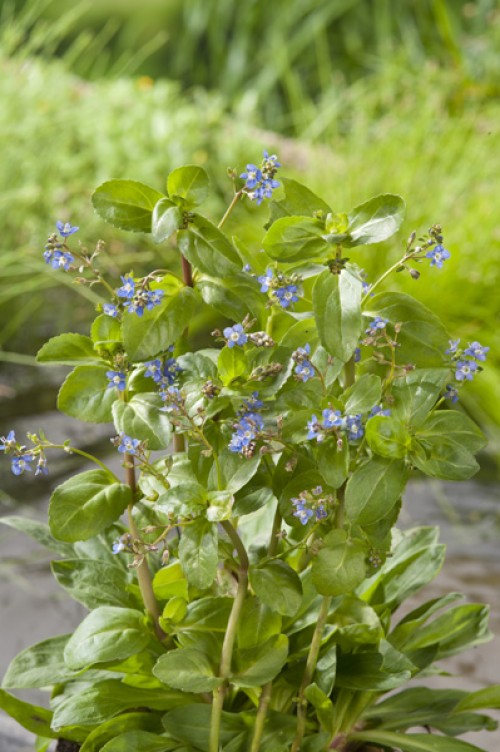
Veronica beccabunga – Brooklime for pond edge & banksVeronica beccabunga (Brooklime) is a low-growing pond-edge plant for damp banks and the shallow water zone. It is suitable for a planting depth of 0 to –15 cm and remains pleasantly compact at a height of 10–20 cm. The flowering period runs from May to September (V–IX).Flowering period: V–IX (May to September)Hardiness/Zone: Zone 1–2Height: approx. 10–20 cmPot size: approx. 9cmSpecifications for the plant:They visually green pond edges and stream courses softly and naturally, without obstructing the view of the water. Thanks to the long flowering period V–IX, the border zone remains lively for many weeks.With zone 1–2, brooklime is suitable for perennial, low-maintenance pond plantings.Technical data:Botanical name: Veronica beccabungaGerman name: BrooklimeFlowering period: V–IXWinter hardiness zones: Zone 1 / 2Height: approx. 10–20 cmPlanting depth: 0 to –15 cmWith Veronica beccabunga (Brooklime) you are choosing a compact, natural-looking plant for garden ponds, streams and damp banks. Especially at pond edges there are often transitions that can quickly appear ‘harsh’ – for example at stones, liner edges or between plant baskets. Brooklime helps to visually connect these areas: it grows low, has a calm appearance, and provides a natural finish without overloading the pond edge.A major advantage is the long flowering period from May to September (V–IX). This keeps the edge zone attractive for much of the season and gives a well-maintained appearance. Thanks to the low growth height of approx. 10 to 20 cm, Veronica beccabunga is particularly suitable for the foreground of bank plantings or as a ‘filler plant’ in the shallow water zone. It can be excellently combined with taller structural plants that may stand behind, while the brooklime in the foreground softly outlines the edge visually.The recommended planting depth of 0 to –15 cm makes the plant very flexible: place it directly in moist bank soil or in a very shallow water area, depending on the pond layout. For a neat pond edge and easy care, a planting basket is often helpful, especially if you want to reposition the plant later. For growth, a consistently moist location is crucial. Thanks to zone 1–2, Veronica beccabunga is suitable for perennial pond installations and is a good choice if you are looking for a low-growing, uncomplicated plant for damp areas that integrates harmoniously into a natural pond design.Note on shipping: We do our utmost to ensure that our plants arrive healthy and undamaged. Despite the greatest care, plants may be slightly damaged by postal delivery or other unforeseen events. This includes brown leaves as well as broken twigs. We do not accept liability for this. Do not plant in open waters such as lakes or biotopes.Zoo-Roco tip: Place brooklime along the shore where you want to fill gaps – it looks especially natural when it ‘grows into’ stones. In very shallow areas (up to –15 cm), a planting basket is practical so that the plant stands stably and you can keep design control easily.

CHF 7.90

New
Pink primrose (9 cm) – Primula rosea
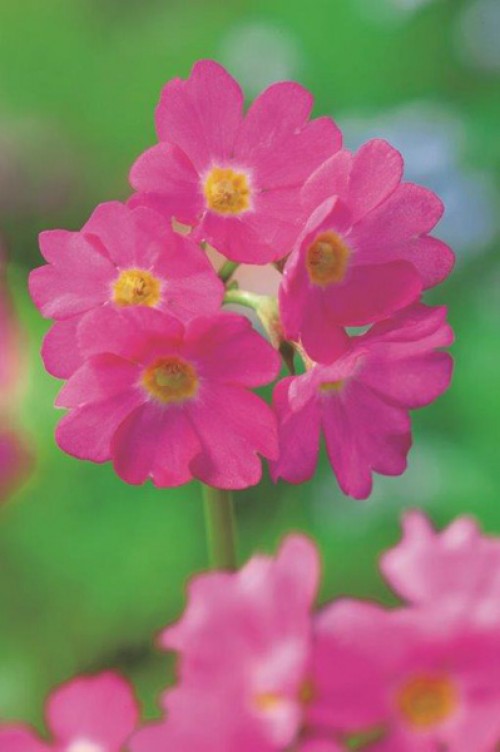
Primula rosea – Pink primrose for the pond edgePrimula rosea is a true spring bloomer for damp areas by the garden pond and adds fresh splashes of colour with pink flowers from March to May (III–V). Reaching 20–30 cm high, it remains compact and is ideal for the bank and edge zone. The planting depth is 0 to –15 cm; it is hardy in zones 1.–2.Flower colour: pinkFlowering time: III–V (March to May)Height: approx. 20–30 cmPot size: approx. 9 cmPlant specifications: They bring vibrant colour to the pond edge very early in the year, when many other plants are still holding backThanks to the compact height, the water surface remains visible, while the edge zone blossoms attractively.With a planting depth of 0 to –15 cm, Primula rosea can be placed flexibly in damp bank areas.Technical data:Botanical name: Primula roseaCommon name: Pink primroseHeight (cm): 20 / 30 cmPlanting depth: 0 / –15 cmFlowering time: III–VWinter hardiness zone: Zone 1Pot size: 9 cmWith Primula rosea you get a reliable harbinger of spring by the garden pond. Especially around ponds, the first splashes of colour in the year have a strong effect: while the water surface is still calm and many marginal plants are only just sprouting, Primula rosea already sets bright highlights from March to May (III–V). This makes it ideal for visually opening the pond season early and bringing the edge zone to life.The plant remains pleasantly low at around 20 to 30 cm. This makes it perfect for the foreground at the pond edge, between stones or along paths and stepping stones. It does not obscure the view of the water, but accentuates the shoreline in a subtle, tidy manner. Primula rosea looks particularly harmonious if you plant several specimens in small groups: this creates a calm area that looks as though it has grown naturally and creates a gentle transition from water to garden.The recommended planting depth of 0 to –15 cm makes Primula rosea flexible for damp areas. In practice, it is particularly suitable for damp bank soil or very shallow edge zones, where the substrate remains evenly fresh. The 9-cm pot is ideal if you want to use several plants to create a visible effect more quickly. If you wish to control the position precisely, a small planting basket can be helpful – especially if water levels fluctuate.Thanks to Zone 1, Primula rosea is winter-hardy and fits well in perennial pond edge designs. It is a harmonious addition if you deliberately aim for a beautiful start to the season and want to make the pond edge attractive not only in summer, but already in spring.Note on shipping: We make every effort to ensure that our plants arrive healthy and undamaged. Despite the utmost care, it can happen that plants are slightly damaged in the post or due to other unforeseen events. This includes brown leaves as well as bent shoots. We do not accept any liability for this. Do not plant in open water such as lakes or biotopes.Zoo-Roco tip: Plant Primula rosea where you often walk past in spring – it is perfect for ‘kissing the pond awake’. If the location becomes drier in summer, combine it with low-growing ground covers at the edge so that the soil stays moist for longer.

CHF 7.90

New
Flaming buttercup (9 cm) – Ranunculus flammula
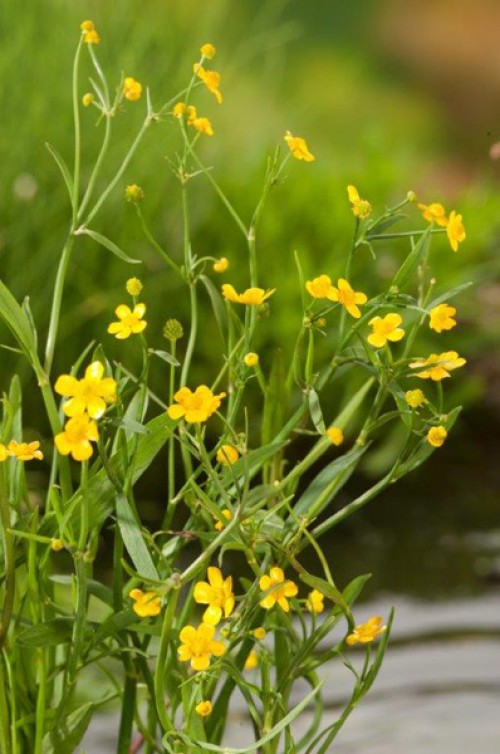
Ranunculus flammula – Flame buttercup for pond edgeRanunculus flammula is a low-growing pond-edge plant, which provides long-lasting colour accents with yellow flowers from May to September (V–IX). With a height of 20–30 cm, it fits ideally into the shore and shallow water zones. It is suitable for a planting depth of 0 to –15 cm and is hardy in zone 1–2.Flower colour: yellowFlowering period: V–IX (May to September)Height: approx. 20–30 cmPot size: approx. 9 cmSpecifications for the plant:You receive a compact marginal plant, which nestles naturally around the pond without obscuring the view of the water.The long flowering period V–IX brings yellow accents to the shoreline for many weeks.Thanks to a planting depth of 0 to –15 cm, the plant can be flexibly placed at the damp edge or in very shallow water.Technical data:Botanical name: Ranunculus flammulaEnglish name: Flame buttercup (also: Lesser spearwort, depending on designation)Height: 20 / 30 cmPlanting depth: 0 / –15 cmFlowering period: V–IXWinter hardiness: Zone 1 / 2Pot size: 9 cmWith Ranunculus flammula (Lesser Spearwort), you choose a delicate yet effective plant for the shore and shallow water zone of your garden pond. Especially at the pond edge, low-growing plants are important to ensure the water surface remains visible and the transition to the surroundings is soft. Ranunculus flammula fulfils exactly this function: it remains compact, can be placed well between stones or along edges and creates a natural, “grown-in” appearance. The long flowering period from May to September (V–IX) is particularly attractive. The yellow flowers add small, cheerful colour accents to the pond edge for many weeks – ideal if you want not just sporadic bursts of flowering, but a permanently lively edge zone.With a growth height of approx. 20 to 30 cm, the plant is suitable for the foreground: it can fill gaps, visually soften edges and have a surface effect without becoming dominant. Planted in small groups, it gives a calm, natural impression; planted singly, it gives specific colour accents.The recommended planting depth of 0 to –15 cm makes Ranunculus flammula very flexible. You can plant it in damp bank soil or place it in very shallow water – depending on how your pond is structured. The 9-cm pot is particularly suitable if you want to plant several specimens to quickly achieve a closed appearance along the shoreline. For a well-kept pond edge, a planting basket can be helpful to ensure the plant stands firmly and can be easily moved if required. Thanks to zone 1–2, Ranunculus flammula is winter hardy and suitable for permanent pond installations.It is a good choice if you are looking for a low-growing, floriferous plant for the pond edge that blends harmoniously into naturalistic plantings.Note on shipping: We make every effort to ensure our plants reach you healthy and undamaged. Despite the greatest care, it may happen that plants are slightly damaged by postal delivery or other unforeseen events. This includes brown leaves as well as bent twigs. We accept no liability for this. Do not plant in open waters such as lakes or biotopes.Zoo-Roco tip: Plant Ranunculus flammula where you desire a delicate “waterside edge” – for example, alongside stones or at the edge of planting baskets. In practice, the plant often gets off to an especially good start if first placed at 0 to –5 cm and later (if desired) set deeper to –15 cm.

CHF 7.90

New
Hedgehog bur (9 cm) – Sparganium erectum
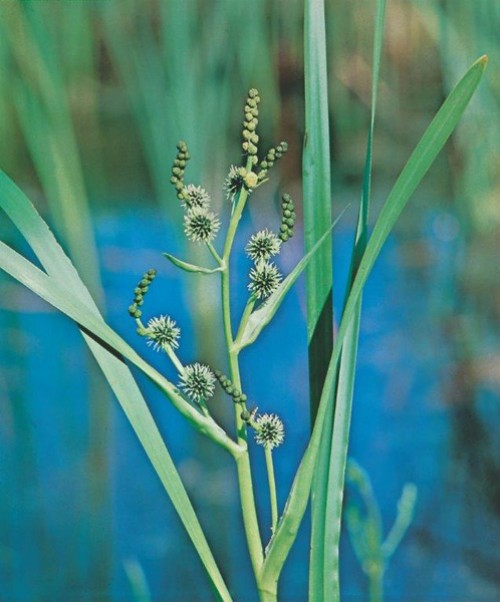
Sparganium erectum – Bur-reed for pond edge & shallow waterSparganium erectum is a vigorous bank and shallow-water plant that naturally structures and stably «frames» pond edges. With a height of 60–80 cm, it is ideal for the middle to background of the bank zone. It can be planted at a depth of 0 to –40 cm and flowers from May to August (V–VIII).Area of use: Pond edge / Bank zone / Shallow water zoneFlowering period: V–VIII (May to August)Height: approx. 60–80 cmPot size: approx. 9 cmSpecifications for the plant: You are bringing a robust structural plant to the pond edge, which ensures a natural, “grown” bank appearance.Thanks to the planting depth of 0 to –40 cm, the bur-reed can be used flexibly – from the damp bank to the shallow water area.With zone 2–3, Sparganium erectum is suitable for perennial garden ponds in many regions.Technical data:Botanical name: Sparganium erectumGerman name: Bur-reedHeight (cm): 60 / 80 cmPlanting depth: 0 / –40 cmFlowering period: V–VIIIWinter hardiness zone: Zone 2 / 3Pot size: 9 cmWith Sparganium erectum (bur-reed), you are choosing a tried-and-tested plant for the natural design of pond edges. It is particularly suitable where the bank area is to be not only flowering but also permanently structured. The bur-reed grows upright and brings stability to the bank area – ideal for visually calming the transition between the water surface and the garden and giving the pond an “embedded” appearance.With a growth height of approx. 60 to 80 cm, Sparganium erectum fits into the middle to background of the border planting. There it can serve as a green frame, in front of which lower pond edge plants and ground covers stand out particularly well. The flowering period from May to August (V–VIII) complements the seasonal cycle, even though with this species the structuring effect through foliage and growth habit is often the primary focus. For a harmonious appearance, it is advisable to plant in small groups or as a recurring element along the bank line.The recommended planting depth of 0 to –40 cm allows for flexible positioning: directly in damp bank soil or in the shallow water area, depending on the pond’s construction. This allows you to specifically control how present the plant is in the overall appearance. The 9-cm pot is ideal if you want to plant several plants in order to quickly achieve a natural bank effect. For a controllable, well-kept pond edge, a planting basket can be useful – this keeps Sparganium erectum in the designated place and makes it easier to move if necessary.Thanks to zone 2–3, the bur-reed is winter-hardy and suitable for perennial pond installations. It is a good choice if you are looking for a robust, long-lived bank plant that permanently structures the pond edge and blends harmoniously into naturalistic planting schemes.Note on shipping: We make every effort to ensure that our plants arrive healthy and undamaged. Despite the greatest care, plants may be slightly damaged by postal shipping or other unforeseen events. This includes brown leaves as well as broken twigs. We accept no liability for this. Do not plant in open water such as lakes or biotopes.Zoo-Roco tip: Do not plant Sparganium erectum in the centre of the pond, but as a border plant along the bank line. If you are unsure to begin with, start at a depth of approx. –10 to –20 cm and later lower the plant towards –40 cm – this makes it very easy to find the optimum position in your own pond.

CHF 7.90

Customers also saw

Lysimachia Nummularia
Lysimachia Nummularia Lysimachia Nummularia is a second level aquarium plant that does well in emersed (above water) form. Easy to grow and tolerant of requirements.Difficult to grow: moderately demandingLight requirements: mediumCO₂ requirements: mediumOutgrown plant height: up to 60 cmGrowth: fastTemperature: 15-26 °Placement in aquarium: Second levelOrigin: EuropeCup diameter: 6 cmLysimachia Nummularia (Sedentary Lysimachia), is an aquatic plant that spreads easily on the bottom when it inhabits the banks of ponds and pools. It has a weakly branched structure. The roots grow in clumps or singly near the round, heart-shaped leaves. If well cared for and not pruned, it can bloom above the surface of the aquarium with yellow flowers.It grows quickly if you provide it with a loamy, sandy substrate along with good light and provide it with enough CO₂ gas fertilizer. Low temperatures don't bother her, but at higher temperatures her growth accelerates considerably, so she can be difficult to control. It prefers soft and slightly acidic water in the aquarium. It feels comfortable at a pH of 6-8. In order to have distinctive, heart-shaped leaves with an intense green color, it requires lots of nitrogen. A nitrogen deficiency will cause the plant to restrict its growth and not climb as much. It is therefore advisable to fertilize it regularly with nitrogenous products and to plant it in aquariums with lots of fish. The hedgehog tree generally grows vertically, without forming too many branches.It grows well in an aquarium with tropical fish, but also in cold biotopes of European waters or on the banks of ponds. Propagation is very simple: just cut the top shoot of the plant and plant it in the substrate, where it will take root. You will achieve the best decorative effect if you plant the plant in small groups of 15-20 specimens. If the shoots are not cut off when it reaches the water table, the plant will continue to grow into an emerse form. Its green-yellow color stands out well against other plants in the aquarium. Lysimachia does well in a hydroponic filter, from which it grows out and forms a green waterfall of leaves that flows into the aquarium. It can also be used in humid terrariums, paludariums or gardens. In a well-lit and regularly sprayed "garden in a jar", it also pleases our eyes with its delicate appearance and rich green color.Planting: The plant must be removed from the cup and thoroughly rinsed from the gel under running water. This is best done by placing the plant in a container of lukewarm water. Most of the gel will then fall off by itself. Divide the contents of the cup into 3-4 cm lumps and then place them in the substrate..

CHF 6.50

Rotala rotundifolia 'Green
Rotala Rotundifolia 'Green' Rotala Rotundifolia 'Green' (Round-leaved Rotala) is a mid-ground plant. It is characterized by fast growth and moderate light requirements. The color is usually light green.Difficulty of growing: easy Light requirements: medium CO₂ requirements: not necessary Height of mature plant: 50-60 cm Growth: fast Temperature: 20-28°C Placement in aquarium: third level Origin: South Asia, Southeast Asia Cup diameter 6 cm The natural range of the round-leaved Rotalas (Rotala rotundifolia) is South, Southeast and East Asia. It has been spread by humans to Australia, the United States and Brazil, among other places. She is thus already almost a globetrotter.Rotala rotundifolia 'Green' is very similar to Rotala rotundifolia, but its leaves remain bright green even in bright light. This plant is characterized by its fast growth and its tendency to spread profusely, especially when regularly pruned. It tolerates medium light levels, but the higher the light, the more intense the plant's growth and colors. If left to grow freely, it reaches a length of 30-60 cm, cutting off access to light to the lower parts, where it begins to lose its leaves. Under favorable conditions, if left uncontrolled, it can dominate an entire tank, especially if it is a tank with a small capacity. Once it reaches the surface of the water, it begins to float on it. It does not need additional carbon dioxide fertilization unless you want to accelerate its growth even more. It is tolerant of pH and water hardness, although like most plants, it cannot tolerate extremes. It tolerates temperatures between 20 and 28 °C, but thrives better in the upper end of this range. It can grow in both an active and a poor substrate, but in this case it is advisable to fertilize under the roots. In well-lit, CO2-fertilized aquariums, it may require additional fertilization with macronutrients due to its rapid growth. Otherwise, it will lose its color and the leaves will become smaller. Rotala rotundifolia is propagated in the aquarium by cutting off stem pieces and placing them in a selected spot in the substrate. When transplanted to a new tank, it will need some time to acclimate and grow faster.Planting: The plant must be removed from the cup and thoroughly rinsed from the gel under running water. This is best done by placing the plant in a container of lukewarm water. Most of the gel will then fall off by itself. Divide the contents of the cup into 1-2 cm lumps and then place them at a small distance into the substrate.

CHF 6.50

Myriophyllum mattogrossense
Myriophyllum MattogrossenseMyriophyllum Mattogrossense, also known as red columbine, is a decorative aquarium plant that is quite demanding.Growing difficulty: demandingLight requirements: strongCO₂ requirements: strongOutgrown plant height: up to 60 cmGrowth: fastTemperature: 24-28°CPlacement in aquarium: third levelOrigin: South AmericaCup diameter 6 cmMyriophyllum Mattogrossense or red coneflower is a rather demanding, although easy to grow tertiary plant. It is native to Brazil, more specifically to Mato Grosso in the Rio Amazon. It has long, brittle stems with pinnate, whorled leaves.The plant itself is reminiscent of dill in appearance. Under good conditions, it can bloom with small, red, single flowers. It needs a fertile, rich substrate and very intense lighting. Only then can it develop its full potential and show its beauty in the aquarium. It does not like coarse gravel, it grows much better in a fine but permeable substrate. Intensive CO₂ fertilization is advisable. Liquid fertilizer added to the water column will also improve the aesthetic qualities of the plant, which likes to make use of these resources. If it is well fertilized, it grows luxuriantly and the stems have a beautiful red color. It needs a long day, so the light should be on for at least 8-10 hours. It is very sensitive to the parameters that are not maintained. With regular water changes it grows vigorously and the leaves spread into green fans, while in old water the leaves become much smaller and unsightly. If you change the water every few months, you may lose the plant. Myriophyllum Mattogrossense thrives in both soft and hard water.pH 6-7.2.Temperature 24-28°C It is also important that you prune the Myriophyllum regularly. If the plant is not pruned, it will get very fine leaves, especially in the lower part, which will look very unflattering. Regular pruning of the tops helps to prevent this. The plant reproduces very easily, it is enough to plant the cut tip in fertile soil, and it will quickly form a rich, filamentous root system. Due to the need for fertilizer and the capriciousness of the plant, it is not recommended for beginners in aquaristics. The plant is grown in vitro and is free of snails, parasites and algae. A high quality gel was used as a nutrient solution for breeding, so it can quickly and easily adapt to new conditions..

CHF 6.50

Rotala rotundifolia Invitro
Invitro aquarium plant Rotala rotundifoliaColorful stem plant for the background Rotala rotundifolia is one of the most popular stem plants in the aquarium hobby - versatile, easy to care for and particularly attractive thanks to its delicate, round leaves. Depending on the light intensity and nutrient supply, it develops a vibrant green to bright red, adding lively color accents to any aquarium layout. The in vitro version is grown under sterile conditions and is therefore free from algae, snails and pesticides - ideal for sensitive aquariums, especially shrimp tanks. Fast-growing and adaptable, Rotala rotundifolia is ideal for the mid to background and harmonizes wonderfully with other fine stem plants in the natural aquarium. Advantages at a glance: ✅ Changes color depending on the light - from green to red ✅ Fast-growing & ideal for dense groups of plants ✅ InVitro - guaranteed free from harmful substances & snails ✅ Safe for shrimps & sensitive tanks ✅ Perfect for aquascaping & classic plant aquariumsProduct details: Name: Rotala rotundifolia Type: Stem plant Position in aquarium: Middle to background Growth height: approx. 30-50 cm Light requirement: Medium to high CO₂ supply: Recommended for more intense colorationTemperature: 22 - 28°C Delivery form: In vitro cup (grown sterile) Color effect: Green to reddish, depending on light & nutrients

CHF 6.50

New
Attraction water lily (18cm) - red
Nymphaea 'Attraction' - Red water lily in a 3-liter basket (18 cm) Intense red flowers for elegant accents in the garden pondNymphaea 'Attraction' is a particularly popular variety among the red water lilies. With its large, deep red flowers and rich, green floating leaves, it adds a bright splash of color to any garden pond. Supplied in a sturdy 3-liter planting basket (18 cm diameter), it is ready to plant immediately for medium pond depths.Flower color: redPlanting depth: -40 to -80 cmFlowering time: June to September (VI-IX)Hardiness zone: Zone 4 - hardy & robustLarge planting basket for vigorous growthNymphaea 'Attraction' opens its beautiful flowers during the day and closes them at dusk - a fascinating play of nature. Its shady leaves also help to keep the pond water clear.Elegance in red - a colorful, hardy water lily for every ornamental pondWe make every effort to ensure that our plants arrive at your doorstep healthy and undamaged. Despite the utmost care, it is possible that plants may be slightly damaged during postal delivery or due to other unforeseen circumstances. This includes brown leaves as well as broken branches. We accept no liability for this. Do not plant in open waters such as lakes or biotopes.

CHF 59.00

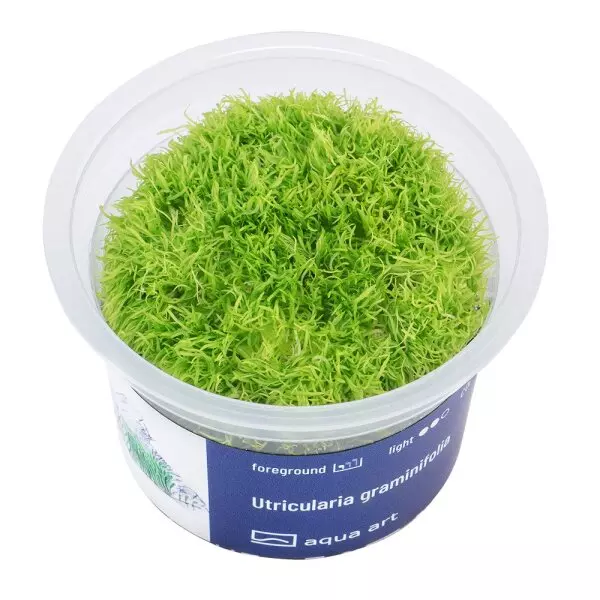
Utricularia graminifolia Invitro aquarium plant
Invitro Utricularia graminifolia Utricularia graminifolia is an attractive in-vitro aquarium plant that is particularly appreciated for its grass-like appearance and its ability to form dense carpets in the aquarium. This plant comes from the water hose family (Lentibulariaceae) and is known for its fine, grass-like leaves that create a natural and aesthetically pleasing underwater landscape. Difficulty of cultivation: : difficultLight requirement: mediumCO₂ requirement: mediumHeight of the adult plant: up to 3-10 cmGrowth: medium to fast, depending on lightTemperature: 24 - 26°CPlacement in the aquarium: ForegroundOrigin: Asia6 cm cup diameter Utricularia graminifolia is ideal for foreground planting in aquaria. It forms dense, green carpets that create a natural look and can serve as hiding places for small fish and shrimps. This plant is suitable for both beginners and experienced aquarists and contributes to the biological diversity and aesthetic beauty of an aquarium. Planting: The plant must be removed from the cup and thoroughly rinsed off the gel under rinse off the gel thoroughly under running water. This is best done by placing the plant in a container of lukewarm water. The Most of the gel will then fall off by itself. Divide the contents the contents of the cup into 1-2 cm clumps and then place these in the substrate into the substrate at a small distance.

CHF 7.90

Golliwoog - Fodder plant
Golliwoog food plant Golliwoog is the most popular food plant for all herbivorous animals, whether rodents, birds or terrarium animals! for all small rodents and rabbits for all ornamental birds for reptiles such as tortoises and bearded dragons Golliwoog is not only an attractive tropical houseplant but is also a popular food for many pets. Reptiles, birds and rodents like to eat Golliwoog. The Golliwoog is only shipped on Mondays and Thursdays so that the plant arrives before the weekend. Our plants come from a German farm and are guaranteed untreated.We make every effort to ensure that our plants arrive healthy and undamaged. Despite the greatest care, it can happen that plants are slightly damaged due to postal delivery or other unforeseen events. This includes brown leaves as well as broken branches. We accept no liability for this.

From CHF 5.90