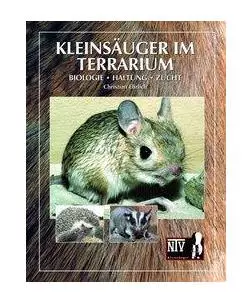
Small mammals in terrariums

Article no: 978-3-86659-023-6

CHF 35.90

Stock: 0

Ready for dispatch in 1-3 days, delivery time 14 working days

Delivery between Tuesday, 19 May and Wednesday, 20 May
Zahlungsarten
Product information "Small mammals in terrariums"

The book explains everything about the care and keeping of small animals.

  • 144 pages
  • 163 photos
  • 2 graphics
  • Format: 16.8 x 21.8 cm
  • 2nd revised edition
  • Author Christian Ehrlich
  • Publisher NTV

Contents:

Away from the stuffy cage and towards modern and species-appropriate animal husbandry: many small mammals are best kept in a suitably equipped terrarium. This book presents the most suitable types of terrarium and provides a detailed and practical description of how to breed and care for the animals successfully.

  • Anatomy, lineage and systematics
  • Distribution, biotopes, adaptations
  • All information on species-appropriate keeping: from suitable terrariums to equipment and technology to feeding
  • Successful breeding: Mating stimulation and rearing of young animals
  • Taming small mammals
  • Topic free-range: This is how it is species-appropriate.
  • Solutions to problems: How to avoid the most common mistakes in care, and how to help sick animals: Keeping animals healthy
  • Huge species section with detailed portraits of 80 species of marsupials, predatory marsupials, true marsupials, xenarthrans, insectivores, bats, rodents and sengis
  • Brilliant photos

Many animal lovers no longer want to be satisfied with just the classic hamster in the equally classic hamster cage. If you want to keep and observe such exciting animals as hedgehogs, opossums, predatory marsupials, sugar gliders, armadillos, tenrecs, ground squirrels, squirrels, bats & co., this book is a must, because all of them and many more are best kept in a suitably equipped terrarium. Christian Ehrlich, editor of the specialist magazine RODENTIA, has now dealt with this topical subject in detail. The author is able to draw on his many years of experience in keeping and breeding small mammals from various related groups and shares his insights here in an easy-to-read but extremely expert manner. Ehrlich describes the biology of the animals, presents their specific husbandry requirements and gives plenty of tips on their successful care and breeding. The book offers detailed portraits of no less than 80 species of marsupials, predatory marsupials, true marsupials, xenarthrans, insectivores, bats, rodents and sengis. For all friends of very special animals and for all those who strive for species-appropriate animal husbandry, this book is an absolute must.

Composition
Feeding recommendation
Technical details
Size information

0 of 0 reviews

Give us a rating!

Share your experience with the product with other customers.


Suggested products

Geckos
Geckos in the terrarium by Astrid FalkThe book offers a comprehensive introduction to geckos and their species-appropriate keeping in terrariums. It explains what you need to think about before buying a gecko and what preparations should be made. The book describes in detail how the terrarium is technically equipped and set up. The care of the animals, their special features and behaviour, their diet, reproduction and rearing of young animals are described, as well as diseases and husbandry problems with tried and tested suggestions for prevention and treatment. Individual gecko species that are particularly suitable for keeping and breeding in terrariums are portrayed in detail in the second part of the book.

CHF 28.50

Handbook of food plants for tortoises and other reptiles
Handbook of forage plants 2nd revised editionMarion Minch is not only a successful breeder of diverse tortoises for many years, but also an excellent connoisseur of native wild herbs. She founded and runs samenkiste.de, which is well known to many tortoise keepers and nature lovers. Her name is inextricably linked with reptile care and species-appropriate nutrition for tortoises. Her handbook of food plants summarises the most important native food plants for herbivorous and omnivorous reptiles. She not only considers tortoises, but also iguanas, spiny-tailed dragons and even chameleons. From the basics of plant biology to native wild herbs to suitable food plants for hardy tropical reptile species, this comprehensive work provides the basis for species-appropriate keeping. In the expanded and supplemented 2nd edition, the plant section is divided according to flower colour. This makes it even easier to identify wild herbs. The work has also been supplemented with a wealth of additional information and many pictures.

CHF 46.50

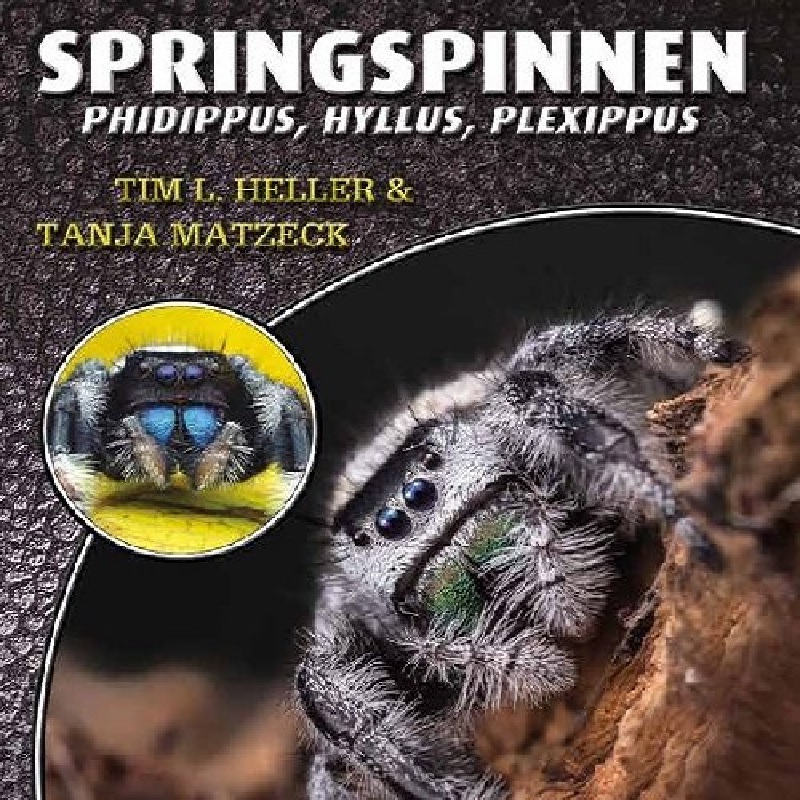
Jumping spiders Phidippus, Hyllus, Plexippus
Book Jumping Spiders - Phidippus, Hyllus & Plexippus A guide to keeping jumping spiders of the genera Phidippus, Hyllus & Plexippus. Who can resist the charm of jumping spiders? The childlike appearance of their expressive face simply leaves no one cold! In addition, their behavior is extremely exciting to observe, their colors are bright and their requirements for species-appropriate keeping are very easy to meet. No wonder these likeable jumpers are all the rage! This volume in the "Species by Species" series describes in detail what to look out for when buying and keeping them, introduces the most commonly kept species and color forms and provides plenty of tips on how to keep them successfully - so you can be sure they will breed well! Species by Species introduces you to the books in this series, which present the most popular terrarium animals. Each volume offers you detailed, practical care instructions and all the information you need to successfully breed your animals. All important questions from the required tank size to terrarium set-up, technical equipment, species-appropriate nutrition and disease prevention are answered with numerous tricks and tips. Experienced, long-standing breeders reveal how you can encourage the animals to reproduce and raise healthy young. All this in full color, generously illustrated and attractively designed - just about your terrarium animal - species by species

CHF 23.90

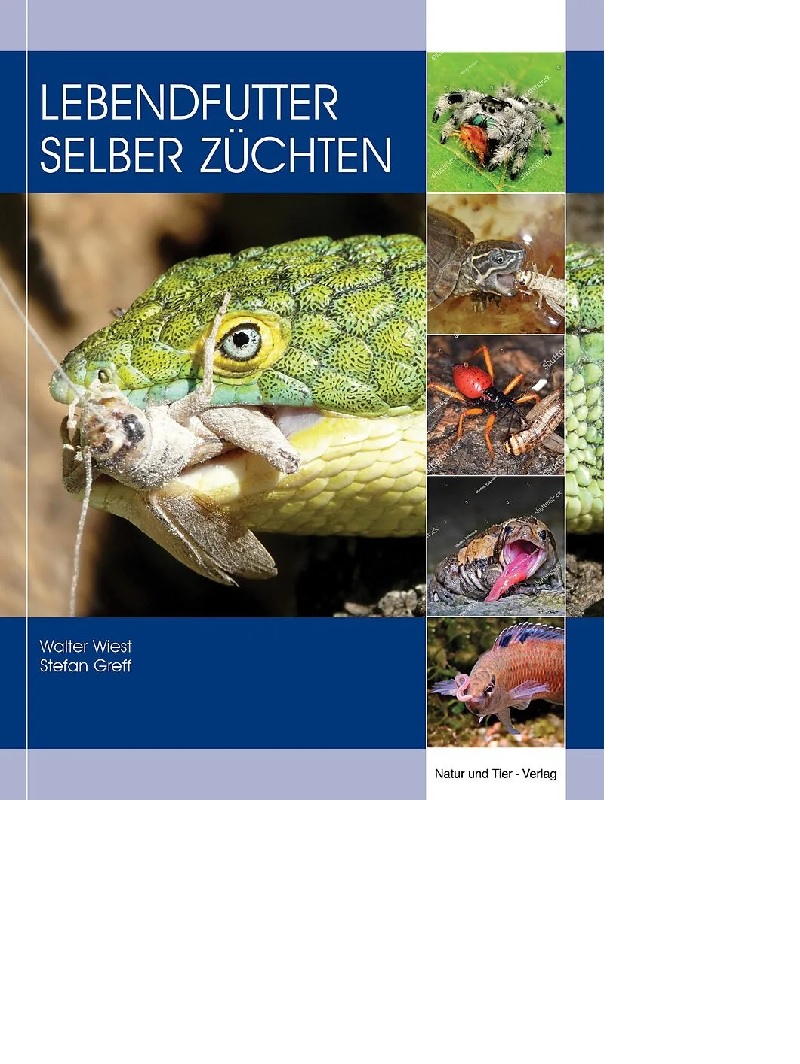
Book Breeding live food yourself
Book "Grow your own live food" - The perfect guide for pet owners Discover practical and detailed instructions on how you can easily breed food for your reptiles, birds, fish or other animals yourself in the book "Breeding live food yourself". With valuable tips on various food insects, their care and breeding, you can save money and ensure a species-appropriate diet for your pets. Contents of the book: Step-by-step instructions for breeding feeder insects Information on the best types of food for reptiles, birds and fish Care instructions and breeding conditions for various live food species Tips for sustainable and cost-effective food production Why breed your own live food? Get healthy, fresh food for your animals Save money and reduce dependence on pet shops Promote the health and well-being of your animals with species-appropriate food Whether you are a beginner or an experienced pet owner, this book provides you with everything you need to successfully breed live food yourself.

CHF 46.50

Marginata 69 - New Guinea tortoises
Marginata 69 - New Guinea tortoises – the genus ElseyaCover storyThe unrecognised beauties: New Guinea tortoises (Andreas S. Hennig)My experiences with Branderhorst's New Guinea tortoise, Elseya (Elseya) branderhorsti (Ouwens, 1914) (Andreas S. Hennig)Keeping and breeding of Rhodin's New Guinea tortoise, Elseya (Hanwarachelys) rhodini Thomson, Amepou, Anamiato & Georges, 2015 (Andreas S. Hennig)PortraitGeoemyda spengleri, Chinese serrated tortoise (Andreas S. Hennig)ReportageMacrochelys temminckii – Experiences and impressions with vulture tortoises part 2 (Reiner Praschag)KeepingAn alternative to year-round keeping of the Egyptian tortoise in the terrarium – my experiences with seasonal outdoor keeping of Testudo kleinmanni (Ricarda Schramm)EtymologySawbacks and living maps part 4: Graptemys gibbonsi, Pascagoula humpback tortoise (Holger Vetter)Classifieds & animal placement

CHF 16.50

Reptilia 97 - Nano terraristics
Reptilia 97 - Nano terraristicsGarter snake colour mutationReady-made food for geckosCharcoal tortoiseContents:Nano terraristics, i.e. small animals in small terrariums - can this be species-appropriate at all? We introduce you to the concept behind the current nano boom and show you how it can fit into modern, animal-friendly terraristics.Birgit Kaup also portrays the tiny, but often brightly coloured and extremely lovable orb-fingered geckos of the genus Sphaerodactylus, and Hans-Werner Auer reports on tree-dwelling mini tarantulas, including exciting novelties.EDITORIALMAGAZINEDATESAROUND THE WORLD IN 5 YEARSTravelling with the bestA. PachmannWESTERN HERP PERSPECTIVESCatching the eyeB. LovePHOTOSTORYSmall animals, small terrariums, high standards: nano terraristics!K. KunzKEEPING AND BREEDINGDwarf Avicularia: small tree tarantulas for the nano terrariumH.-W. AuerKEEPING AND BREEDINGColourful tiny creatures - puffer-fingered geckos in the living room at homeB. KaupHOLDINGInsect-free feeding of omnivorous gecko species in the terrarium - A food from the USA finds its way into gecko keepingP. SchoeneckerKEEPING AND BREEDINGThe charcoal tortoise. Keeping and reproduction of a tropicalbeautyM. RognerREPORTAGEGarter snake on fire. The story of an exceptional specimenof Thamnophis sirtalis sirtalisM. HallmenKEEPING AND BREEDINGThe desert toad lizard (Phrynosoma platyrhinos). A dietary specialist in captive careK. HaaseSHOW FACILITIESArmoured animals in the church - the sea turtles of the Sea Museum StralsundAndreas S. HennigANIMALS OF OUR HOMEThe natterjack toadR. LeptienLIBRARYTIPS & TRICKSTEST RUNSUBSCRIPTION & SERVICEALSO NEAR YOUTRAVELPemba - Herpetological treasure trove in the Indian OceanO. Hawlitschek, F. Glaw & D. RödderPREVIEWBRUTKASTENFurciferM. Zawadzki

CHF 12.00

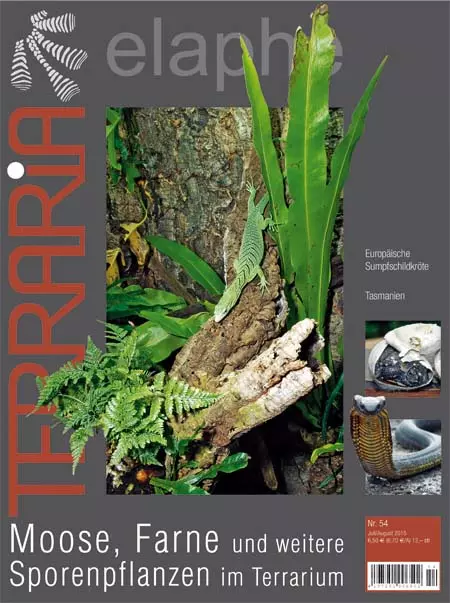
Terraria 54 - Mosses, ferns and further spore plants in the terrarium
Terraria 54 - Mosses, ferns and other spore plants in the terrariumEuropean pond turtleTasmaniaContents:Cover story: Mosses, ferns and other spore plants in the terrariumIn 1892, the English physician Dr N.B. Ward realised that ferns could be cultivated in closed glass containers. This gave rise to Victorian plant display cases planted with ferns and mosses - the forerunners of today's terrariums. However, mosses, ferns and other spore plants are more than just decorative accessories in humid terrariums. Their reproduction by means of alternation of generations, which can also be observed in the terrarium, is particularly interesting. In addition to many interesting aspects of spore plants, the next issue will also contain numerous tips and tricks on how these plants can thrive in the terrarium and how they can best be kept together with reptiles and amphibians.ContentsTerritorialHerpetoramaNew study by the Federal Agency for Nature Conservation: What really jeopardises biodiversity in Germany LookupThorn Devil: The Variable Rain FrogCultural successors: tortoises in ViennaWhat did the first snakes look like?Leafhoppers: In the NewsCover storyWitnesses of the dinosaur era - about terrarium plants with generational changeBeat AkeretMosses - unrecognised dwarfs among terrarium plantsBeat AkeretEpiphytic ferns in the terrariumBeat AkeretNeither moss nor fern. Lycopodiopsida as terrarium plantsBeat AkeretPanoramaTiger otters: an invitation to get to know the reptiles of Tasmania Guillaume GomardResearchNew speciesIn wild Kurdistan - a spectacular large monitor lizard from the Zagros MountainsAxel KwetAmong researchersThe miracle black toad, one of the rarest amphibian species in the worldLuis Fernando Marin da FonteSalamandraTerraristicsMany years of experience in keeping and breeding the European pond turtle. Part 2: Egg laying, incubation, rearing the young, hibernation, husbandry problemsBernd WolffFirst herpetological assistance from Cologne at Saigon ZooThomas Ziegler & Anna RauhausNature and species conservationField notesLate finds of yellow-bellied toad and natterjack toad larvaeJürgen GebhartMysterious deaths of frogs and newtsAxel KwetAlso in your neighbourhoodSubscription & ServicePreviewIncubator The danger seekersHeiko Werning 

CHF 12.00

Reptilia 22 - Still hope for Asian turtles?
Reptilia 22 - Still hope for Asian turtles?Incubation of phelsum eggsHomeopathyCosta RicaContents:Page 2 - EditorialPage 4 - MagazinePage 13 - DatesPage 16 - Western Herp Perspectives: A rattlesnake under every bush, by B. LovePage 18 - Photo report: The incredible diversity of Asian turtles, by E. MeierPage 26 - Report: The turtles of Asia: Sacred animals, food and medical wonder weapon, by E. MeierPage 30 - Report: The end of Asian turtles? The live animal markets of Southeast Asia, by E. MeierPage 34 - Report: An ark for the last of their kind: The planned conservation breeding centre at the Allwetterzoo Münster, by E. MeierPage 40 - Travelling: Herpetological travel impressions from Costa Rica, Part 1: Rara Avis rainforest lodge, by T. EisenbergPage 47 - Portrait and poster: Parasphendale affinis, by I. & R. BischoffPage 51 - Report: Elaphe mandarina: A problem animal in terraristics? by Dr R. Fesser & H. SommerauerPage 57 - Keeping and breeding: Notes on egg laying in day geckos of the genus Phelsuma, by J. KrügerPage 63 - Herpetofauna: The poison dart frog Epipedobates tricolor, by J. & J. Canela Agraz & J. Vazquez SuñéPage 67 - Herpetology and culture: The arachno- and herpetofauna in homeopathic medicine, by K. KunzPage 78 - REPTILIA on the move: The Exotarium in Frankfurt am Main Zoological Garden, by T. WilmsPage 81 - Help and advicePage 87 - LibraryPage 96 - Glossary: Moving with lizards, once again. Part 1: Good preparation is half the move, by H. Werning

CHF 9.80

Terraria 60 - Searching for reptiles on the Greek islands
Terraria 60 - In search of reptiles on the Greek islands> Charcoal turtle breedingOman Day Gecko Contents: Cover story: In search of reptiles on the Greek islands Just in time for the summer holidays: The Greek islands are among our most popular holiday destinations, and at the same time they are home to a highly diverse herpetofauna. The perfect opportunity, then, to combine the family holiday with a herping trip. Or simply spend the whole day on the lookout for reptiles and take a refreshing dip in the Mediterranean in between. We offer a photographic overview of the islands by nature photographer Benny Trapp. Travelogues from Kos, Corfu and the Sporades give you a taste of what to expect – or simply let your mind wander on balmy summer evenings at home.

CHF 12.00

Marginata No. 31 - Moorish pond turtles in Morocco
Marginata No. 31 - Moorish pond turtles in Morocco Zucht der Madagassischen Strahlenschildkröte, Teil 3Zucht von Kinosternon cruentatumSchildkröten im Unterricht Inhalt: EditorialMagazinTermineREPORTAGEDie Maurische Bachschildkröte, Mauremys leprosa (Schweiger, 1812) in MarokkoMario SchweigerHALTUNG UND NACHZUCHTWiederholte Nachzucht der Madagassischen Strahlenschildkröte (Astrochelys radiata) im Zoo RotterdamHenk ZwartepoortePOSTER Die Namibische Bushmanland-Zeltschildkröte, Psammobates tentorius verroxi Hans - Dieter PhilippenHALTUNG UND ZUCHTHaltung und Nachzucht der Madagassischen Strahlenschildkröte Teil 3Michael Wirth und Peter FritzHALTUNG UND ZUCHT Pflege und Vermehrung der Rotwangen-Klappschildkröte, Kinosternon scorpioides cruentatumSebastian NicklREPORTAGEZeitgemäßer Umgang mit „Problemschildkröten“ – Verwahrung, Euthanasie oder gar Nutzung zur Arterhaltung?Tobias Friz, Markus Baur & Rudolf W. HoffmannREPORTAGEBilder einer Ausstellung – Schildkröten einmal anders. Ungewöhnliche Ausstellung im HochharzHans - Dieter PhilippenBuchtippKleinanzeigenAbo & ServiceRegionalführer  

CHF 16.50

Terraria 44 - Keep poisonous snakes responsibly
Terraria 44 - Responsible care for venomous snakesCeylon pigeon dragonCanarian giant lizardsContents:Debates about keeping exotic animals are particularly focussed on animals that are dangerous to humans, such as venomous snakes. Their care is of course reserved for particularly responsible specialists. However, in the next issue, we will show just how successful such private terrarium keepers can be and what valuable information they contribute to our knowledge of these fascinating and epidemiologically significant reptiles with detailed husbandry and breeding reports on various venomous snake species. TerritorialHerpetoramaCover storyResponsible care for venomous snakesAndré WeimaThe Desert Massasauga (Sistrurus catenatus edwardsii)Mark RoggenkampThe puff adder (Bitis arietans)Chandra Alexander Krutwik SagredoPanoramaTerraglobalCrocodiles as an offering for the Aztec gods Fabio CupulAbout a small animal park in north-east CubaRonny BakowskieResearchNew speciesTailed amphibians I: A new fire salamander from North Africa Axel KwetTailed amphibians II: A new crested newt from south-eastern Europe Axel KwetAmong researchersFrog hunting in Madagascar - Herping in and around AndasibeSebastian WolfSalamandraTerraristicsCophotis ceylanica – Biology, care and breeding of theCeylonese deaf agamaHartmut Mohr & Jonathan CabreraNature and species conservationField notesDead spots in Iberian grass snakesRudolf Malkmus & Horst SauerVoracious spawn predators - horse leeches in grass frog spawn Axel Kwet & Nicole GehringerThe new breeding and research centre for the Canarian giant lizards on El Hierro Jürgen SämannCheckered water snakes (Natrix tessellata) at Lake Pécs in south-west Hungary – an updateWerner & Yvonne LantermannSubscription & ServiceAlso in your neighbourhoodGalleryWhich page goes to the top?PreviewIncubator Lost Dutchman Part 1Heiko Werning

CHF 12.00

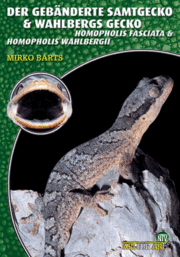
Banded Velvet Gecko & Wahlberg's Gecko
All about the banded velvet gecko and the Wahlberg's gecko by Mirko Barts 64 pages Format: 14.8 x 21 cm numerous colour photos Paperback Author Mirko Barts Contents: This book offers a detailed description of the species Banded Velvet Gecko and Wahlberg's Gecko as well as "instructions" for successful keeping and breeding in the artificial terrarium habitat.Mirko Barts knows more about keeping and breeding these animals than almost anyone else. He provides the reader with the expertise needed to care for these lizards in an expert and easy-to-understand manner. Of course, he also tells you how to breed these adorable animals, hatch the eggs and raise the young. Systematics and body structure The fascinating biology: From the life of the Banded Velvet Gecko and the Wahlberg's Gecko All information on species-appropriate keeping: from suitable terrariums to equipment and technology to feeding Successful breeding: Mating stimulation, incubation of the eggs and rearing the young Solutions to problems: How to avoid the most common mistakes in care and how to help sick animals Brilliant photos

CHF 19.90