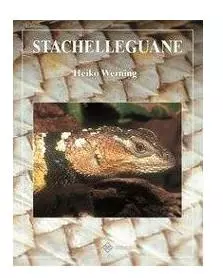

The beautiful and agile spiny lizards are rightly among the most popular lizards kept in terrariums. In this book, Heiko Werning presents for the first time everything worth knowing about this genus in a practical and first-hand manner:
Systematics and identification features
Distribution, habitat and biotope types
Exciting biological details, social behaviour and reproductive strategies that
Terrarium keeping: all the information you need, from setting up the terrarium and the technical requirements to species-appropriate feeding, reproduction of the lively lizards and rearing the charming young animals
Detailed portraits of all species for the terrarium
Presentation of all species and subspecies of the genus Sceloporus
Brilliant colour photos throughout
The absolute must for every lizard fan!
Composition
Feeding recommendation
Technical details
Size information
0 of 0 reviews
Give us a rating!
Share your experience with the product with other customers.
Login
No reviews found. Go ahead and share your findings with others.
Handbook of forage plants 2nd revised editionMarion Minch is not only a successful breeder of diverse tortoises for many years, but also an excellent connoisseur of native wild herbs. She founded and runs samenkiste.de, which is well known to many tortoise keepers and nature lovers. Her name is inextricably linked with reptile care and species-appropriate nutrition for tortoises. Her handbook of food plants summarises the most important native food plants for herbivorous and omnivorous reptiles. She not only considers tortoises, but also iguanas, spiny-tailed dragons and even chameleons. From the basics of plant biology to native wild herbs to suitable food plants for hardy tropical reptile species, this comprehensive work provides the basis for species-appropriate keeping. In the expanded and supplemented 2nd edition, the plant section is divided according to flower colour. This makes it even easier to identify wild herbs. The work has also been supplemented with a wealth of additional information and many pictures.
Geckos in the terrarium by Astrid FalkThe book offers a comprehensive introduction to geckos and their species-appropriate keeping in terrariums. It explains what you need to think about before buying a gecko and what preparations should be made. The book describes in detail how the terrarium is technically equipped and set up. The care of the animals, their special features and behaviour, their diet, reproduction and rearing of young animals are described, as well as diseases and husbandry problems with tried and tested suggestions for prevention and treatment. Individual gecko species that are particularly suitable for keeping and breeding in terrariums are portrayed in detail in the second part of the book.
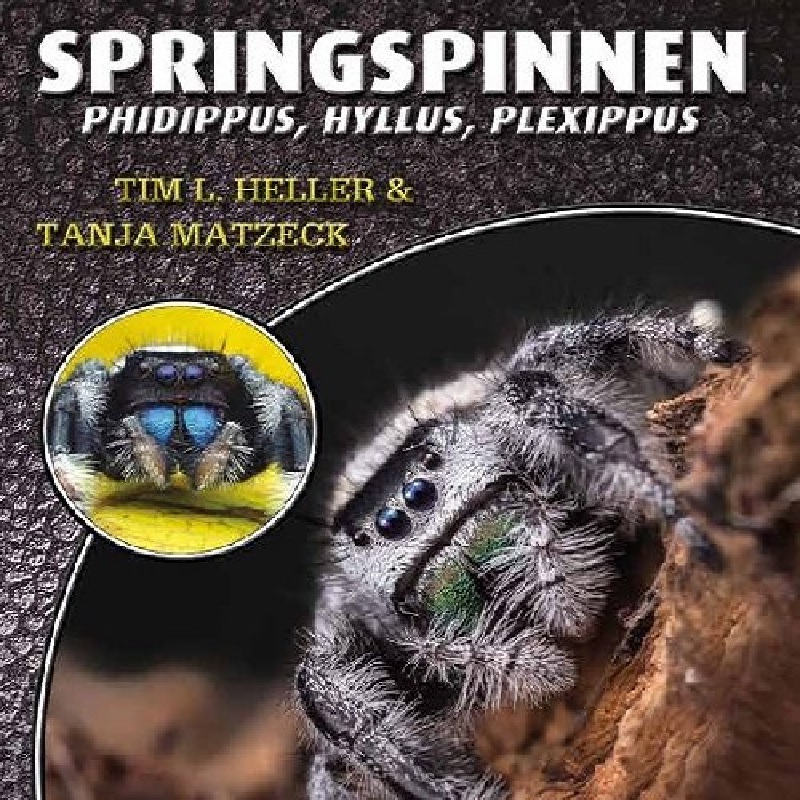
Book Jumping Spiders -
Phidippus, Hyllus & Plexippus
A guide to keeping jumping spiders of the genera Phidippus, Hyllus & Plexippus. Who can resist the charm of jumping spiders? The childlike appearance of their expressive face simply leaves no one cold! In addition, their behavior is extremely exciting to observe, their colors are bright and their requirements for species-appropriate keeping are very easy to meet. No wonder these likeable jumpers are all the rage!
This volume in the "Species by Species" series describes in detail what to look out for when buying and keeping them, introduces the most commonly kept species and color forms and provides plenty of tips on how to keep them successfully - so you can be sure they will breed well!
Species by Species introduces you to the books in this series, which present the most popular terrarium animals. Each volume offers you detailed, practical care instructions and all the information you need to successfully breed your animals.
All important questions from the required tank size to terrarium set-up, technical equipment, species-appropriate nutrition and disease prevention are answered with numerous tricks and tips.
Experienced, long-standing breeders reveal how you can encourage the animals to reproduce and raise healthy young.
All this in full color, generously illustrated and attractively designed - just about your terrarium animal - species by species
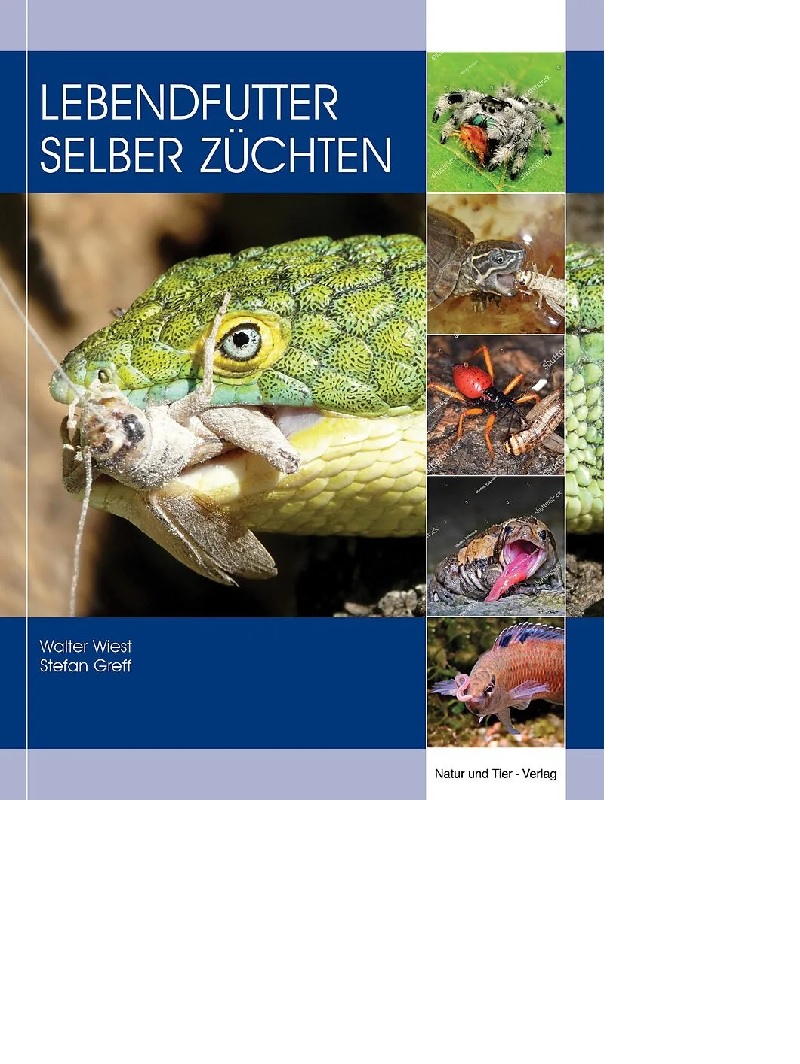
Book "Grow your own live food" - The perfect guide for pet owners
Discover practical and detailed instructions on how you can easily breed food for your reptiles, birds, fish or other animals yourself in the book "Breeding live food yourself". With valuable tips on various food insects, their care and breeding, you can save money and ensure a species-appropriate diet for your pets.
Contents of the book:
Step-by-step instructions for breeding feeder insects
Information on the best types of food for reptiles, birds and fish
Care instructions and breeding conditions for various live food species
Tips for sustainable and cost-effective food production
Why breed your own live food?
Get healthy, fresh food for your animals
Save money and reduce dependence on pet shops
Promote the health and well-being of your animals with species-appropriate food
Whether you are a beginner or an experienced pet owner, this book provides you with everything you need to successfully breed live food yourself.
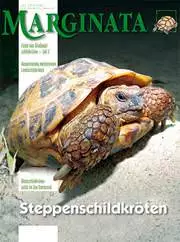
Marginata 69 - New Guinea tortoises – the genus ElseyaCover storyThe unrecognised beauties: New Guinea tortoises (Andreas S. Hennig)My experiences with Branderhorst's New Guinea tortoise, Elseya (Elseya) branderhorsti (Ouwens, 1914) (Andreas S. Hennig)Keeping and breeding of Rhodin's New Guinea tortoise, Elseya (Hanwarachelys) rhodini Thomson, Amepou, Anamiato & Georges, 2015 (Andreas S. Hennig)PortraitGeoemyda spengleri, Chinese serrated tortoise (Andreas S. Hennig)ReportageMacrochelys temminckii – Experiences and impressions with vulture tortoises part 2 (Reiner Praschag)KeepingAn alternative to year-round keeping of the Egyptian tortoise in the terrarium – my experiences with seasonal outdoor keeping of Testudo kleinmanni (Ricarda Schramm)EtymologySawbacks and living maps part 4: Graptemys gibbonsi, Pascagoula humpback tortoise (Holger Vetter)Classifieds & animal placement
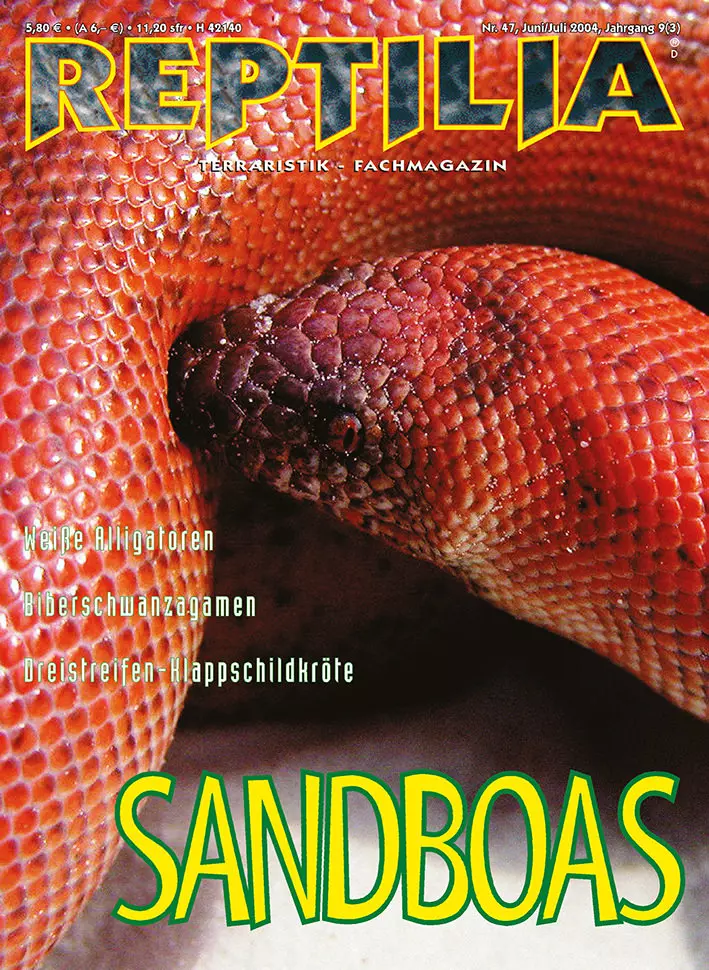
Reptilia 47 - Sandboas
White alligatorsBeavertail dragonsThree-striped folding tortoise
Contents:
2 EDITORIAL
3 MAGAZINE
16 DATES
18 WESTERN HERP PERSPECTIVESThe Mecca of a reptile photographerby B. Love
20 PHOTO REPORTAGE Sandboasby C. Jones
31 KEEPING AND BREEDINGOn keeping and caring for sandboas
by C. Jones
35 KEEPING AND BREEDINGOn breeding Eurasian sandboas: Eryx jaculus, Eryx miliaris and Eryx tataricus
by C. Jones
42 REPORTFascination record snakePart 3: Don't let them bite you…
by Henry Bellosa
45 TRAVELThe white alligators of the MississippiOf ancient Indian trails, bald cypresses and crocodiles
by W. Ise
51 PORTRAIT AND POSTERLialis burtonisby U. Schlüter
56 KEEPING AND BREEDINGThe Three-striped Box Turtle Kinosternon baurii) – A turtle for small aquariums?by A. M. Glaser
64 HERPETOFAUNAKeeping and breeding some Andean keel-tailed iguanas Stenocercus from the Peruvian highlandsPart 4: Observations on behaviour, sexual dimorphism and ecology of Stenocercus melanopygus BOULENGER, 1900by U. Schlüter
72 KEEPING AND BREEDINGExperiences in keeping and breeding Xenagama batillifera (VAILLANT, 1882), with observations on the behaviour of Xenagama taylori (PARKER, 1935)by M. Barts
78 REPORTAGEPlanning and building a reptile zoo: "Reptilium - Terrarien- und Wüstenzoo" in Landau is being built - Part 2: The construction phaseby T. Wilms
87 CLASSIFIED ADS
91 RAT & TAT
94 LIBRARY
104 GLOSSA family story. Part 1by H. Werning
Reptilia 07 - Climbing snakesTurtle conservation in NepalStump crocodiles in the CongoRed-footed tarantulaContents:Page 2 - EditorialPage 4 - Letters to the editorPage 5 - MagazinePage 16 - Photo reportagePage 22 - Keeping and breeding: The Persian Climbing Snake Elaphe persica, by K.-D. SchulzePage 25 - Report: Endangerment and protection of the Aesculapian snake in Germany, by M. WaitzmannPage 29 - Keeping and breeding: Elaphe guttata, by J. BergadáPage 33 - Travel report: Stump crocodiles in the Congo, by A. Brieger, F. W. Huchzermeyer and J. RileyPage 39 - Portrait and poster: Corucia zebrata, by M. Aresté and J. L. FarriolsPage 43 - Report: A species conservation programme for tortoises in Nepal, by K. Ernst, K. B. Shah and H. SchleichPage 49 - Keeping and breeding: Dendrobates galactonotus, by R. and B. PieperPage 53 - Keeping and breeding: Avicularia avicularia, by J. M. Marínez NadalPage 57 - Herpetology and Culture: Traditional Chinese Medicine, Part 2: Turtles as fire extinguishers, by G. PetersPage 62 - Western Herp Perspectives, by B. LovePage 64 - Prize puzzlePage 69 - Reptilia on the road: Arizona Sonora Desert Museum Tucson, by H. WerningPage 74 - Advice and actionPage 77 - LibraryPage 80 - Incubator: Glossary by H. Werning
All about the fascinating steppe turtles
64 Seiten
14,8 x 21 cm
zahlreiche Farbfotos
Autor Thomas Wilms
Inhalt:
Schildkröten sind die Sympathieträger unter den Reptilien. Urtümliches Äusseres gepaart mit liebenswertem Wesen und sprichwörtlicher Gemütlichkeit machen sie bei allen Altersgruppen beliebt. Die Steppenschildkröte bildet da keine Ausnahme, ganz im Gegenteil: Ihr „handliches“ Format und die einfach zu erfüllenden Haltungsanforderungen machen sie zu einem äusserst geeigneten Terrarientier. Thomas Wilms, DRACO-Redakteur und Leiter des „Reptiliums“, schildert aus seiner langjährigen erfolgreichen Haltungspraxis sämtliche Aspekte rund um Haltung und Pflege dieser attraktiven Schildkröten. Ausserdem lesen Sie, wie Sie Ihre Tiere zur Paarung stimulieren, die Eier ausbrüten und die niedlichen Jungen aufziehen können.
Systematik und Körperbau
Die faszinierende Biologie: Aus dem Leben der Steppenschildkröte
Alle Informationen zur artgerechten Haltung: Vom geeigneten Terrarium über Einrichtung und Technik bis hin zur Fütterung
Erfolgreich nachzüchten: Paarungsstimulation, Inkubation der Eier und Aufzucht der Jungtiere
Problemlösungen: Wie man die häufigsten Fehler bei der Pflege vermeidet, und wie man kranken Tieren helfen kann
Brillante Fotos
Marginata 41 - Steppe tortoisesKeeping and breeding big-headed tortoises part 3Wintering of Mediterranean tortoisesForest tortoise breeding at Dortmund ZooContents:EditorialMagazineDatesPHOTOSTORYNews about steppe tortoisesHans - Dieter PhilippenKEEPING AND BREEDINGKeeping and breeding of the steppe tortoise in the Alpine regionWilli HoferBREEDINGNature-identical carapace proportions and shapes in the breeding of steppe tortoisesPetr Velensky & Natasha VelenskaHOLDINGWintering of steppe tortoises and European tortoisesThorsten GeierPORTRAITChinese three-keeled turtle. Chinemys[Mauremys] reevesii (Grey, 1831)Hans - Dieter PhilippenBREEDINGBig-headed tortoises in nature and human care. Part 3Reiner PraschagBREEDINGKeeping and breeding the red-headed box turtle (Podocnemis erythrocephala) Part 2David DrajeskeKEEPING AND BREEDINGBreeding of forest tortoises at Dortmund ZooSimone Karlowski & Stephanie ZechREPORTAGEThe European Studbook Foundation: off to new shores!Henk ZwartepoorteREPORTAGESurprising observation of charcoal tortoisesSusanne VogelBook tipSubscription & ServiceRegional guide
Terraria 25 - Livebearing Reptiles
Breeding of tarantulasDiadem snakeSpur-thighed tortoise
Contents:
Not all reptiles lay eggs. A whole range of species bear live young, to the delight of many terrarium enthusiasts. However, even though the often problematic artificial incubation of clutches is no longer necessary: Even with livebearing reptiles, many things can go wrong when breeding them in the terrarium, and keepers often find it difficult to recognise the causes of problems. Uwe Schlüter presents the different forms of livebearing in reptiles and explains everything you need to know to breed these species as successfully as possible. In addition, we present some livebearing reptiles in the terrarium, including the Madagascar dog-headed boa, Sanzinia madagascariensis, or the strange crocodile night lizard, Lepidophyma flavimaculatum.
EditorialMagazineHatching of a completely healthy hatchling of the North African spiny-tailed agama from a mould-infested eggColour change in the monocled cobra from juvenile to adultLuminous heavy metal detectorsDinosaurs with braking assistance?Hundreds of Madagascan tortoises confiscated in MalaysiaPhotosynthesis in salamandersLegal
TERRAglobal specialLizards of the Barkly TablelandGunther Schmida
Cover storyLivebearing reptilesUwe Schlüter
The crocodile night lizard. Lepidophyma flavimaculatum (Duméril, 1851) Jochen Meyer
Care and breeding of the northern Canary Islands skink (Chalcides viridanus) Uwe Schlüter
Keeping and breeding a crowned beauty: the diadem snake (Spalerosophis diadema [Schlegel, 1837]) Sascha & Stefanie Esser
Giants of the desert. The African spurred tortoiseLeo Spinner
JourneyCuc Phuong. Spiders and other animals in Vietnam's oldest national parkGordon Ackermann
Breeding of tarantulas Karin Manns
New speciesDiversity of Philippine banded monitors deciphered – and three new taxa described André Koch
Among researchers Searching for venomous snakes in Austria Johannes Hill
Eye-catcher Of prosimians, poison dart frogs and geckos. Visiting Ute Thut and Dennis Peukert Michael Wirth
Near youSubscription & ServicePreview
Incubator On the wall, on the lookout Mike Zawadzki
Terraria 03 - Anolis in the Terrarium
Ornate TurtlesNamaqualand
Contents:
2 Editorial Mike ZawadzkiMAIN TOPICAnolis in the Terrarium
4 Anolis – Keeping, Care and Breeding Manfred Rogner
14 A Terrarium for Eternity Design of Rot-Resistant Walls and Epiphyte Branches of a Paludarium for Anolis Holger Herfurth
18 Terrarium Keeping of Anolis – A Field Report Based on the Example of Anolis bahorucoensis bahorucoensis Dieter Bundt
32 Anolis loysianus, a Spiny-Scaled Bark Anole from Cuba Axel Fläschendräger SCIENCE
36 Herpetorama Beware of Conspecifics! / Hydraulic Pump / On the Trail of the Blind
38 New Species Bronchocela vietnamensis / Snakes from Northern Madagascar / Scaphiophryne menabensis
41 Among Researchers In the Centre of the Corridor Philipp Wagner
45 Ornate Turtles – The Genus Pseudemys Part 2: The Species and Subspecies with Information on Distribution and Lifestyle Andreas S. Hennig
54 Melanophryniscus – Not Just Black Toads Part 3: The “Brazilians” Axel Kwet
62 The Devil’s Flower Idolomantis diabolica (SAUSSURE, 1869) Part 2 Christian J. Schwarz, Jürgen E. Mehl & Jürg Sommerhalder
70 The Forgotten Beauty A Few Words on Keeping and Breeding Diadophis punctatus Kriton Kunz
74 TRAVEL Namaqualand Mats BlohmTERRARIUM PRACTICE
82 Test Run Fixing Rod for Snakes from M&S ReptilesMesh Cover from Exo Terra
84 Prelude Understanding Literature – No Problem Timo Plochowietz
87 Eye-Catcher Madagascar in Saxony – Visiting the Phelsuma Breeder Hans-Peter Berghof Heiko Werning
93 Also in Your Area
96 TERRAnet Macro Photography / Anolis Page
98 TERRAglobal The Reptiles in the Culture of Mexico Fabio Cupul Mouse Breeding, a Self-Service Store? Joachim Bulian
104 TERRAwinn
Reptilia 49 - Food animal breedingScorpion crust lizardSpotted pythonChinese mountain dragonContents:
2 EDITORIAL
4 READER LETTERS
5 MAGAZINE
14 DATES
18 WESTERN HERP PERSPECTIVESHurricane Sale in Floridaby B. Love
20 PHOTO REPORTAGE Breeding food animals yourself - a problem?by F. Bruse & H. Werning
27 REPORTAGEEfficient and productive cricket breeding
by F. Bruse
33 REPORTAGEBreeding the chocolate cockroach (Shellfordella tartara)
by F. Bruse
36 REPORTAGEA simple Drosophila breeding project
by F. Bruse
40 HERPETOFAUNANotes on the Motagua lizard (Cnemidophorus motaguae)
by U. Schlüter
43 TRAVELHerpetological observations and more from Gambia
by U. Thieme
51 PORTRAIT AND POSTERGeoclemys hamiltoniby H. - D. Philippen
56 KEEPING AND BREEDINGKeeping and Breeding the Chinese Mountain Agame (Japalura splendida) by H. Schradin
68 HERPETOFAUNADendrobates pumilioThe strawberry frog on the Bocas Islands by B. Schwarz
72 KEEPING AND BREEDING The black Mexican chain snake (Lampropeltis getula nigrita in the terrariumby M. Thums
79 REPORTAGEAntaresia maculosa (PETERS, 1873)Spotted pythonby D. Hasselberg
85 CLASSIFIED ADS
90 RAT & TAT
93 LIBRARY
104 GLOSSESIn search of Uracentron azureumPart 1by H. Werning
CHF 11.20
❅
❆
❅
❆
❅
❆
❅
❆
❅
❆
❅
❆
This website uses cookies to ensure the best experience possible. More information...