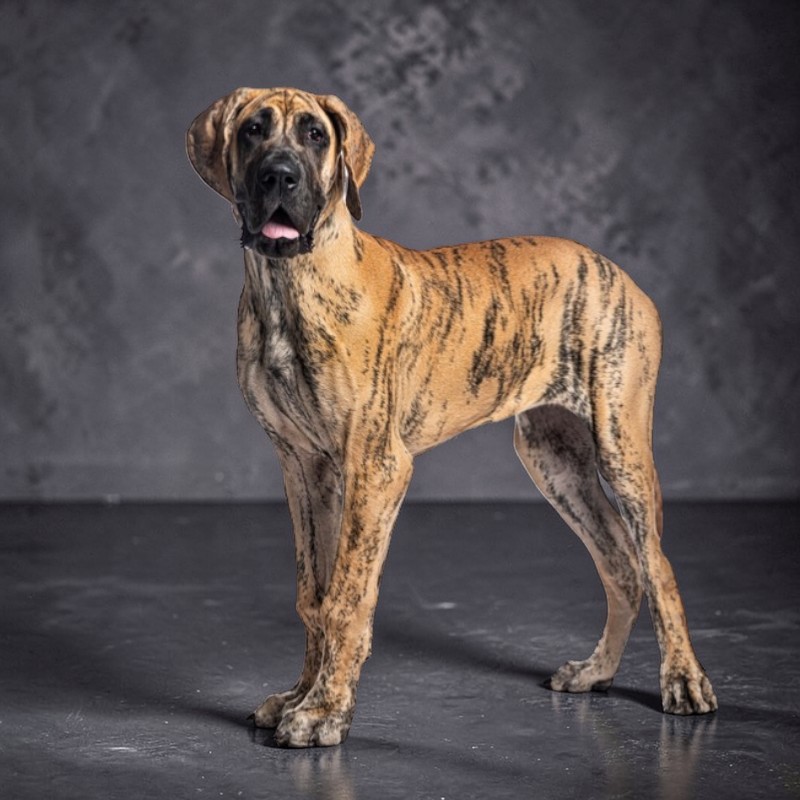
German Wirehair
FCI standard number: 119
Country of origin: Germany
Classification: FCI Group 7 (Pointing Dogs)
Height at withers bitch: 58-63 cm
Height at withers male: 62-66 cm
Weight bitch: not specified in the FCI standard (in practice often around 20-27 kg, depending on the line)
Weight male: not specified in the FCI standard (in practice often around 25-32 kg, depending on the line)
Coat colour: shades of brown (also grey), also black in corresponding variations; small markings such as blaze/snip are possible
Coat texture: short, dense, coarse to hard to the touch; finer on the head and leathers
Neck circumference: individual; often roughly approx. 38-55 cm (measure on the dog)
The German Wirehaired Pointer
History of the German Shorthair
The German Shorthaired Pointer developed from pointing dogs that were initially used for hunting with nets and falconry. Such dogs came to German courts via various countries; with the advent of modern hunting weapons, the "pure pointing dog" increasingly became a versatile hunting dog. There has been a stud book since 1897; the breed is still strongly selected today through breeding and testing.
Appearance
Body shape: The German Shorthaired Pointer has a noble, harmonious and athletic build. Its construction is designed for strength, endurance and speed; the body is slightly rectangular (rump slightly longer than the height at the withers).
Coat: Short, dense and functional, generally low-maintenance - but as a shorthair breed, it can still shed noticeably.
Temperament and character
He is considered firm, balanced, reliable and controlled in temperament - neither nervous nor shy or aggressive. At the same time, he is eager to work and needs typical hunting tasks to be satisfied.
Grooming
The short coat needs above all regular brushing/wiping, plus ears, claws and teeth as usual. The decisive factor is not so much "cosmetics" as exercise: the German Shorthaired Pointer is an efficient working dog and wants to work physically and mentally.
Health
The German Shorthaired Pointer is generally considered to be robust, but - like many active, larger dogs - can be prone to certain problems, particularly hip and elbow dysplasia. In addition, gastric torsion (GDV) in deep-chested breeds and other hereditary issues such as PRA (eyes) or subaortic stenosis (heart) are described as relevant issues.
Education
Training works best with clear rules, structure and positive motivation. The German Shorthair learns quickly, but needs consistent leadership and real tasks (nose work, retrieving, field/water work, dummy work). Without training and activity, he will otherwise look for "his own jobs".
What are the special characteristics of this breed?
A lot of energy and willingness to work: more of a hunting and sporting partner than a pure companion dog. Versatile hunting dog: performance tests (also widespread in Switzerland) play a major role. Strong nose and prey drive: recall and impulse control must be established early on.
Suitable for first-time dog owners?
Conditionally. If you are sporty, enjoy training and stick with it consistently, it can work. If you are looking for a "low-maintenance side dog", the German Shorthaired Pointer is usually too demanding (exercise, training, hunting instinct).
Family dog or not?
Yes, but only if the family is active. In a structured, active household, he can be very friendly and affectionate. Without enough activity, he quickly becomes unbalanced.
Login
Suggested products


Customers also saw