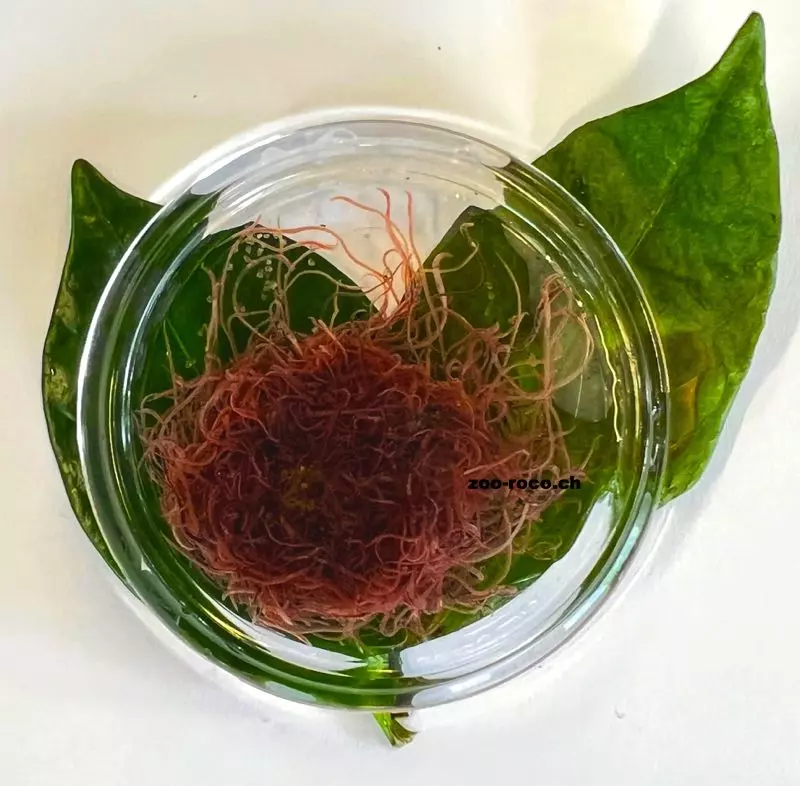
Fair shirmp Egs - Dendrocephalus brasiliensis

Article no: DV-UZK-DB-1000

CHF 9.90

Stock: 8

Available, delivery time: 1-3 days

Delivery between Tuesday, 5 May and Wednesday, 6 May
Zahlungsarten
Product information "Fair shirmp Egs - Dendrocephalus brasiliensis"

The Mini crabs are going! The freshwater fairy shrimp (Dendrocephalus brasiliensis)

The freshwater fairy shrimp Dendrocephalus brasiliensis is from Brasil and breed as life food for ornamental fish.from Thailandis is very well suited for aquarium at temperatures around 24 - 28 °C. Keeping is optimal in a small aquarium with soft water.

They grow fast and they can have a size of 1 cm after 2 weeks. Then the female start to lay eggs.

Facts: Fairy shrimp among to the anostraca, have a fascinating floating manner and are even a nutritious feed for fish.

  • Max. size: 30 mm
  • Life expectancy: max. 3 - 4 months
  • Cysts per female: max. 5000
  • Temperature: 22 - 30 °C (optimal 24 - 28 °C)
  • pH Wert: 6,0 - 9,0 (optimal 6,5 - 7,5)
  • Expected fairy shrimp amount: at least 100 or 1.000 per bag
  • Aquarium starting with 2 liters

Tip: An approach with fairy shrimp cysts should be used multiple times by respective drying because at the first time not all nauplii slip out.

Composition
Feeding recommendation
Technical details
Size information

8 of 8 reviews

4.56 out of 5 stars


63%

38%

0%

0%

0%


Give us a rating!

Share your experience with the product with other customers.


22 March 2025 21:11

Many eggs present

I recommend using the whole bag. Many nauplii hatched in stream water.

8 August 2024 20:55

Fast hatching in large numbers

Absolutely satisfied with the quality of the breeding batch

10 July 2021 13:32

The animals were in good condition.

The animals are not too expensive and they arrive alive.

25 March 2021 20:45

Sale as described.

Unfortunately, they didn't survive long in the tank. But that was more our fault. In any case, a few hatched from the eggs

9 February 2021 04:14

Super quality

Super quality

14 January 2018 17:36

Shop simple, delivery fast, takes...

Shop easy, delivery fast, takes WE, quality of fairy shrimps are good. Good hatch rate

4 October 2017 18:14

Good eggs...

Good eggs

10 September 2017 20:43

Hatch quickly and in...

Hatch quickly and in large numbers

Customers also bought

Fairy shrimps Egs - Branchinella thailandensis
The Mini crabs are going! Fairy shrimps (Branchinella thailandensis) The freshwater fairy shrimp Branchinella thailandensis from Thailandis is very well suited for aquarium at temperatures around 23 - 25 °C. Keeping is optimal in a small aquarium with soft water. The small larvae slit out from eggs (cysts) within one or three days and life with good care about 6 to 12 weeks. Facts: Fairy shrimp among to the anostraca, have a fascinating floating manner and are even a nutritious feed for fish. Max. size: 35 mm Life expectancy: max. 3 months Cysts per female: max. 5000 Temperature: 20 - 28 °C (optimal 23 - 25 °C) pH value: 6,0 - 9,0 (optimal 6,5 - 7,5) Expected fairy shrimp amount: at least 100 or 1.000 per bag Aquarium starting with 2 liters Tip: An approach with fairy shrimp cysts should be used multiple times by respective drying because at the first time not all nauplii slip out.  

CHF 9.90

Prehistoric Cancer Eggs
Variant: Triops cancriformis (red)
Primeval crabsObserving primeval crayfish from the egg stage to the adult animals - a real experience at home.Primeval crayfish are suitable for both beginners and experienced aquarists, as they are easy to keep and breed. They will delight young and old. Each pack of primeval crayfish eggs comes with detailed instructions.Available in three forms:Triops longicaudatusis an American shield crayfish, which has a light olive-green marbling at the beginning. With age the marbling disappears and the colours become more intense.Size: max. 9 cmTemperature: 21 - 26 °CLife expectancy: max. 3 monthsFood: primeval crayfish foodTriops longicaudatus (red)is an American crayfish. This species is probably a breeding form of the "normal" Triops longicaudatus. In contrast to these, however, the body shell of Triops longicaudatus (red) is transparent, which is why the animals appear wonderfully red in colour due to the translucent red blood.Quantity: basically about 100 to 250 eggsSize: max. 9 cmTemperature: 21 - 26 °CLife expectancy: max. 3 monthsTriops cancriformis var. Beni Kabuto Ebi (red)The red cultivated form of the European summer crab Triops cancriformis probably comes from Asia and has therefore been given the name "Beni Kabuto Ebi". Keeping and breeding corresponds to the original species.The original form is brown marbled. The red Triops lack the brown colour, which is why they appear red due to their body fluid. However, if you look closely, you can still see the marbling. As juveniles, like all Triops species, they are still quite pale. The strong pinkish-red colour develops only with age.Size: max. 7 cmTemperature: 20 - 25 °CLife expectancy: max. 3 months

CHF 9.90

Fair shirmp Egs - Streptocephalus siamensis
AQ4Aquaristik Fairy crayfish eggs - Streptocelphalus siamensisThe mini crayfish are on the loose! Freshwater fairy crayfish are the survival artists of our timeFacts: Siam fairy crayfish Streptocephalus siamensis are primeval crayfish with a fascinating swimming style. These animals are rather bluish with an orange tail fan. In the aquarium they remain appealingly small at 2 cm, but can certainly become larger and more vividly coloured with plenty of sun and temperatures around 30 °C.Size: max. 2.5 cmTemperature: 22 - 28 °CLife expectancy: max. 3 monthsFood: primeval crab foodTip: A preparation with fairy crab cysts should be used several times after drying, as nauplii do not always hatch immediately from all cysts.

CHF 9.90

Prehistoric Cancer Feed
Complete diet for fairy shrimp and Triops This balanced feed is optimally adapted to the needs of prehistoric crayfish of all ages.Fine dust food already suitable for the smallest triops and fairy shrimps Recommended for all primeval crayfish Distributed in the aquarium, so that the primeval crayfish can eat everywhere Many vitamins and minerals Promotes growth, vitality and health Feeding recommendation:Prehistoric crabs prefer to take the finest food from the open water. Therefore, put some dust food in a glass or vial of water and shake so that the food dissolves. You then feed each a few drops and cool the rest for further feeding. Also, the food can be sprinkled on the water surface and gently stirred with your finger. Composition:Molluscs and crustaceans, algae, vegetable by-products, minerals, 5% nuts (walnut), yeasts. Quantity: 5 g

CHF 3.90

House flies (Musca domestica)
Contents Food animals: 1/2 liter
House flies - Musca domestica House flies (Musca domestica) are comparable to European house flies, but house flies cannot fly properly, instead they can only hop a few centimetres. unable to fly for reptiles and amphibians House flies are comparable to European house flies, but specimens with crippled wings have also been selectively bred, so that house flies also cannot fly properly but can generally only hop a few centimetres.However, this genetic defect is not dominant. This means that if the flies are mixed with flight-capable animals, the offspring are predominantly able to fly again. In this case, the flight-capable animals must be sorted out before further breeding can take place. House flies are offered either in breeding batches or in the form of washed-out pupae. Order by Sunday evening - delivery on Thursday Orders received by Sunday evening will be dispatched by A Mail on Wednesday or Thursday.Please provide a recipient address where the parcel can also be delivered.We accept no responsibility for parcels delivered late or collected late. Even with the greatest care, it can happen that feeder animals die due to temperature fluctuations or unpredictable events. We accept no liability for this.  

CHF 5.90

Drosera nidiformis x natalensis - carnivorous plant
Carnivorous plant - Drosera nidiformis x natalensissupplied in an in vitro cupThe diameter of the adult plant is 5 cm.The plant prefers full sun16 hours of light / dayHumidity: 50-70%Temperature: 20-28°CDormancy period: none Drosera nidiformis x natalensis is a hybrid of Drosera nidiformis and Drosera natalensis. It has a maximum diameter of around 5 cm. It is ideal for small terrariums, planters and arrangements with other carnivorous plants.Drosera nidiformis x natalensis is an easy to cultivate insectivorous plant that insectivorous plant that is perfect for beginners interested in insectivores. interested in insectivores. With its attractive shape and relatively simple requirements, it is an interesting addition to any for any collection of insect plants.Size: The adult plant reaches a diameter of 5 to 7.6 cm. Leaf color: Plant color ranges from deep olive green to wine red in the right light. Stronger lighting leads to a more reddish color.light: Drosera nidiformis x natalensis prefers full sun or bright, diffused light for most of the day. At home, it is best placed on a sunny windowsill or under plant lamps.Substrate: The best substrate for Drosera nidiformis x natalensis is a mixture of sphagnum peat and perlite or sand in a 1:1 ratio. The substrate should be acidic (pH 4.5-5.5) and well-drained. Feeding/fertilizing: Sedums generally do not need additional fertilization as they absorb nutrients from the insects they catch. Occasionally you can feed the plant with small insects such as fruit flies.Humidity: This plant prefers moderate to high humidity, usually 50-70%. Regular spraying is sufficient.The hybrid sundew requires constant moisture in the substrate. It is best watered with distilled, demineralized or rainwater, although tap water should be avoided. The substrate should be moist but not flooded. Temperature: The sundew hybrid grows best at moderate temperatures. The optimum temperature range is 20-28 °C during the day and 10-18 °C at night. The plant can tolerate lower temperatures, but is not frost-hardy.The combination of carnivorous plants with reptiles reptiles in a terrarium can create an aesthetically pleasing and ecologically interesting environment. Carnivorous plants such as Drosera, Nepenthes, Pinguicula and Sarracenia are not only exotic and beautiful, they also they also contribute to a balanced ecosystem by controlling the population of small insects. small insects.

CHF 9.90

Suggested products

The sieve
StreamBiz DAS sieve - extra-fine food sieve for Pure Nature & frozen foodExtra-fine plastic strainer for easy, clean feeding of StreamBiz Pure Nature products. Also ideal for rinsing and portioning fine frozen or live food - universally applicable whenever a very fine sieve is required. Product information: Extra fine mesh for precise straining and rinsingPerfect for StreamBiz Pure Nature productsCan be used universally (fine straining work in everyday aquaristics)Made of robust plastic, easy to cleanWith eyelet for hanging (practical storage) The StreamBiz DAS sieve is a practical, extra-fine plastic sieve for aquariums. It helps you to portion StreamBiz Pure Nature products cleanly and reliably drain off excess liquid as required. It is also ideal for briefly rinsing or sieving fine frozen or live food before feeding. Thanks to the particularly fine mesh and handy format, the strainer is an uncomplicated accessory for everyday use. The eyelet makes it easy to hang in or on the aquarium cabinet. FAQ What is "DAS Sieb" particularly suitable for? For the administration of StreamBiz Pure Nature products and wherever a very fine sieve is required. Can the sieve also be used for frozen food?Yes, it is very suitable for straining and rinsing fine food How big is the sieve?Approx. 16 cm long and 6.5 cm in diameter.Is there a hanging loop?Yes, an eyelet for hanging is provided. How is the sieve cleaned? Simply rinse with clear water; if necessary, clean with a soft brush (without detergent).

CHF 5.90

Live food - Food snails
Feeding snails The live feeding snails in the 90 ml bag are a high-quality, natural food source for snail-eating aquarium inhabitants such as puffer fish, predatory snails, loaches, axolotl and water turtles. They promote natural hunting behavior and contribute to a species-appropriate diet.Product details: 90 ml bag with live feeding snails small: mixed bubble snails and post horn snails (up to 5mm)large: Post horn snails from 5mm in size Shelf life: Up to 14 days if stored in a cool place Application: Food for puffer fish, predatory snails, loaches, axolotl, turtles and other snail-eating animals Special features: Promotes the natural hunting instinct and supports dental careAdvantages at a glance: Natural food source: >Live food from our own aquaculture Health-promoting:Rich in vitamins, minerals and nutrients Promotes natural behavior:Stimulates the hunting instinct and supports dental care Versatile use:Suitable for various snail-eating aquarium inhabitants Easy to use: Can be added directly to the aquariumNote: The snails are not suitable for human consumption. Please consider the specific needs of your aquarium inhabitants and feed accordingly.

CHF 2.90

Streambiz Nauplii liquid
StreamBiz Artemia nauplii, liquid 100ml Artemia nauplii and decapsulated cysts in a purely plant-based nutrientsolution with vitamins.This nature food solution consists of freshly hatched Artemia without egg capsules in a purely plant-based nutrient solution. The Artemia solution is mainly used for newly hatched fish, as the nutrient content is particularly high. The ideal food for small fish that feed exclusively on live food. The ideal replacement for live and frozen food. Enriched with vitamins and trace elements without preservatives Suitable for saltwater aquariums Content: 100ml

CHF 16.90

Red mosquito larvae paste
StreamBiz red mosquito larvae paste 120g A complete food for tropical fish. Feed paste with red mosquito larvae. The easily digestible and extremely economical feed pastes ensure good health and vibrant colors of the fish.The feed paste can be attached anywhere in the aquarium. Also suitable for feeding specialists.The advantage over live food is that no contamination can occur as the food is sterile. It is therefore an ideal replacement for live and frozen food. Content: 120g

CHF 19.90

Live food phytoplankton
Phytoplankton live food for aquariums Phytoplankton forms the basis of the marine food chain and is of vital importance to the ocean ecosystem. These unicellular algae are responsible for the direct or indirect nutrition of a wide variety of creatures, ranging from microscopic animal zooplankton to whales weighing tons.45ml → for aquariums up to 100 liters80ml → for aquariums up to 180 liters300ml → for aquariums up to 600 liters1000ml → for aquariums up to 2000 liters Phytoplankton can have various positive effects in saltwater aquariums:Direct supply of various filter feeders such as tube worms, mussels, gorgonians, sponges or sea squirtsIndirect supply through the reproduction and enrichment of zooplankton, which in turn serves as food for larger aquarium inhabitants.Competition for food for unwanted algae such as cyanobacteria and other unwanted algae, resulting in a more balanced and healthier aquarium.Phytoplankton for the marine aquarium is carefully manufactured and provides a high quality food source to promote the health and well-being of the aquarium. It is an essential supplement for any aquarist looking to create a balanced and vibrant ecosystem in their marine aquarium.

From CHF 1.90

Microbelift Artemia ready mix
Artemia ready mix 195gWith this ready mix from Microbe-Lift, you can be sure of a hatch rate of up to 95%.The Microbe-Lift Artemia ready mix contains Artemia eggs and salt for easy cultivation of Artemia crustaceans. Live food promotes the vitality and healthy development of young animals. The colorfulness of the fish is maintained and liveliness is promoted. Artemia nauplii are also ideal as rearing food for young fish and for feeding corals. The hatching time is approx. 24-48 hours. Practical dosing spoon included.Instructions: Add 3 spoons (approx. 16 g) of the ready-to-use Artemia mix to 500 ml of water. The use of a separate container is recommended. The waiting time is 24-48 hours. The hatched Artemia/nauplii can then be fed to fish, corals and lower animals as live food.

CHF 9.90

Superfish Easy food kit
Easy food kit from SuperfishTool set for feeding flake, frozen or live fooddrifting feed ring for flake food feed basket for frozen food and live food funnel with sieve effectYou can thaw the frozen food directly in the sieve and the water flows into the measuring cup. Or you sieve the live food with it.You can then feed the frozen or live food also in the sieve that you hang in the feed ring.The feed ring alone you can also use, so that the fed flake food remains in place and does not float on the entire water surface.

CHF 12.90

Fair shirmp Egs - Streptocephalus siamensis
AQ4Aquaristik Fairy crayfish eggs - Streptocelphalus siamensisThe mini crayfish are on the loose! Freshwater fairy crayfish are the survival artists of our timeFacts: Siam fairy crayfish Streptocephalus siamensis are primeval crayfish with a fascinating swimming style. These animals are rather bluish with an orange tail fan. In the aquarium they remain appealingly small at 2 cm, but can certainly become larger and more vividly coloured with plenty of sun and temperatures around 30 °C.Size: max. 2.5 cmTemperature: 22 - 28 °CLife expectancy: max. 3 monthsFood: primeval crab foodTip: A preparation with fairy crab cysts should be used several times after drying, as nauplii do not always hatch immediately from all cysts.

CHF 9.90

Live food - Mud tube worms (Tubifex tubifex)
Live food mud tube worms (Tubifex tubifex) Live food mud tube worms (Tubifex tubifex) is a protein-rich food for all ornamental fish This live food is highly valued by catfish and is eaten with pleasure. However, it should be fed in moderation so that "uneaten" Tubifex do not become embedded in the aquarium floor. Optimum storage temperature: 5-8 °C Shelf life up to 2 weeks Live food is the most natural way of feeding ornamental fish. No other food is as complete. With all essential vitamins, minerals and nutrients Stimulates the hunting instinct promotes vitality.Even with the greatest care, it can happen that food animals die due to temperature fluctuations or unpredictable events. We accept no liability for this.

From CHF 1.30

Live food - Zoo plankton Rotatoria / rotifers 90ml
Live food Zooplankton Rotatoria / rotifers Live food is the most natural way of feeding ornamental fish. No other food is as wholesome. With all essential vitamins, minerals and nutrients stimulates the hunting instinct promotes vitality With special scientific knowledge, many years of experience and a high level of technical effort, Poseidon Aquaculture has developed special procedures to breed various types of live feed of the highest quality. Continuous quality controls guarantee premium quality live food. Orders received until Sunday evening will be sent on Thursday by A-Post Even with the greatest care, it can happen that feed animals die due to temperature fluctuations or incalculable events. We accept no liability for this.  

CHF 1.90

Prehistoric Cancer Feed
Complete diet for fairy shrimp and Triops This balanced feed is optimally adapted to the needs of prehistoric crayfish of all ages.Fine dust food already suitable for the smallest triops and fairy shrimps Recommended for all primeval crayfish Distributed in the aquarium, so that the primeval crayfish can eat everywhere Many vitamins and minerals Promotes growth, vitality and health Feeding recommendation:Prehistoric crabs prefer to take the finest food from the open water. Therefore, put some dust food in a glass or vial of water and shake so that the food dissolves. You then feed each a few drops and cool the rest for further feeding. Also, the food can be sprinkled on the water surface and gently stirred with your finger. Composition:Molluscs and crustaceans, algae, vegetable by-products, minerals, 5% nuts (walnut), yeasts. Quantity: 5 g

CHF 3.90

Fairy shrimps Egs - Branchinella thailandensis
The Mini crabs are going! Fairy shrimps (Branchinella thailandensis) The freshwater fairy shrimp Branchinella thailandensis from Thailandis is very well suited for aquarium at temperatures around 23 - 25 °C. Keeping is optimal in a small aquarium with soft water. The small larvae slit out from eggs (cysts) within one or three days and life with good care about 6 to 12 weeks. Facts: Fairy shrimp among to the anostraca, have a fascinating floating manner and are even a nutritious feed for fish. Max. size: 35 mm Life expectancy: max. 3 months Cysts per female: max. 5000 Temperature: 20 - 28 °C (optimal 23 - 25 °C) pH value: 6,0 - 9,0 (optimal 6,5 - 7,5) Expected fairy shrimp amount: at least 100 or 1.000 per bag Aquarium starting with 2 liters Tip: An approach with fairy shrimp cysts should be used multiple times by respective drying because at the first time not all nauplii slip out.  

CHF 9.90

Customers also saw

Fair shirmp Egs - Streptocephalus siamensis
AQ4Aquaristik Fairy crayfish eggs - Streptocelphalus siamensisThe mini crayfish are on the loose! Freshwater fairy crayfish are the survival artists of our timeFacts: Siam fairy crayfish Streptocephalus siamensis are primeval crayfish with a fascinating swimming style. These animals are rather bluish with an orange tail fan. In the aquarium they remain appealingly small at 2 cm, but can certainly become larger and more vividly coloured with plenty of sun and temperatures around 30 °C.Size: max. 2.5 cmTemperature: 22 - 28 °CLife expectancy: max. 3 monthsFood: primeval crab foodTip: A preparation with fairy crab cysts should be used several times after drying, as nauplii do not always hatch immediately from all cysts.

CHF 9.90

Storage basin for live food
Holding tank for live feed With live food you can feed your aquarium fish in the most natural way or you can offer them a natural variety.The holding tank with integrated air filter offers an optimal space for the breeding and holding of live food like: Artemia, mosquito larvae, mini shrimps, copepods, mysis, gammarus Space-saving 5 litres food-safe plastic

CHF 39.90

Eubranchipus grubii
Fairy shrimps (spring gillfoot) Fairy shrimps (spring gillfoot) are very common. Fairy shrimps are gilled crustaceans that have been found on our planet since prehistoric times in salt lakes, drying waters or polar waters.Only animals from Asia or America that live in a water temperature of 20-30°C are suitable for keeping in an aquarium. These species (Branchinella thailandensis and Dendrocephalus brasiliensis) live in waters that regularly dry out and are only filled with rainwater. The water is therefore very soft. Appearance The animals have 11 pairs of leaf feet. These leaf-shaped limbs serve not only for locomotion but also for breathing – which has led to the term "gilled-foot crustacean". There are sometimes minor differences in colour. They are found in colours ranging from orange to reddish-brown and may have greenish to bluish hues at the joints and at the boundaries of the segments.Both sexes have two short thread-like antennae. However, another pair of antennae differ in both shape and according to sex. Males have lobe-shaped appendages that can be curled up. Adult females are mainly distinguished by the ventrally located brood sacs, which are filled with eggs, and the ends of the female's tail are translucently light. Systematics Phylum: Arthropoda / ArthropodsSubphylum: Crustacea / CrustaceansClass: Anostraca – Gill-feetFamily: BranchipodidaeGenus: Branchipus / Eubranchipus /Tanymastix etc. Care Depending on the species, fairy shrimps live for 6-12 weeks and the size of adult animals varies from 1-3cm.Can Triops and fairy shrimps be kept together?yes, they can Aquarium size: Initially, a Faunarium box size 230 x 155 x 170 mm is quite sufficient From a body length of 1.5cm, they can be gradually accustomed to larger tanks Basic lighting: Sunlight or aquarium lighting is sufficientAeration: An air pump with a stone and very little air flow is sufficient for keepingSetup:Only water and breeding substrate in the breeding/starting container. A little fine aquarium sand can be used as substrate (but this is not absolutely necessary)Decorations can be used, but are only for our eyes and not of importance to the fairy shrimps.Fairy shrimps are free-swimmers – so they need enough free swimming space in the breeding container.If the animals swim around freely, you can also add a little aquarium moss to the water. To ensure the water is soft, it is best to use 2/3 distilled water and 1/3 mineral water (non-carbonated).Water temperature: Fluctuations in temperature of +/- 5° C are not dramatic.The ideal breeding temperature is 26°.Start:The larvae only hatch when they are completely surrounded by water. Therefore, place the eggs on adhesive tape and then put this in the water – so the eggs are not washed to the edge and always remain in contact with water.After 1-3 days the larvae hatch. The larvae grow quickly and can reach sexual maturity after up to 40 moults in one to two weeks. The males hold the females with their jaw pincers shortly before and also during mating. After mating, the eggs develop in the egg sacs on the females’ abdomens. They fall to the bottom of the water and can survive for several years of prolonged drought in the substrate.When the fairy shrimps have died, the water can be drained off and the substrate with the eggs left completely dry. The larvae can only hatch again if the eggs were completely dry.Once this is dried out, a new batch can be started.If no substrate is used, you can also siphon off the eggs with a thin hose. Let the water containing the eggs run through a fine net or a coffee filter – this way you can collect the eggs.Important: The animals do not tolerate large water changes. If fairy shrimps are to be moved to a larger home, it is best to place the animals together with the breeding water into the new home or tank and slowly fill up the container with conditioned tap water. Feeding The larvae are fed from the 3rd day after hatching.The larvae can be fed with algae powder or JBL Artemio fluid. For all animal husbandry: Children must be guided, supervised and monitored by their parents. Children must learn that an animal has its own needs and habits and they must respect this. Parents should be aware that they are responsible for the animal. For questions and problems our trained team at Zoo Roco is at your disposal. They can advise you professionally on all matters.
 
Triops granules - complete food
AQ4 Aquaristik - Premium Triops granules Complete food for healthy Triops. AQ4 Aquaristik Premium Triops Granules are the ideal complete food for the daily feeding of Triops and other crustaceans. It was specially developed for ambitious Triops keepers and breeders who are aiming for great breeding success. With high acceptance by Triops from 2 weeks of age and a high yield 40 g tin that lasts for several generations, it ensures rapid growth, good egg production and stable health for your Triops. Product features: Optimum size for Triops: The granules are 0.9-1.4 mm in size and are perfect for Triops and Lepidurus from around 2 weeks of age. It sinks quickly to the bottom, making it easy for the animals to eat. Promotes rapid growth and vitality: The Premium Triops Granules provide all the necessary nutrients to promote the growth of your Triops, increase their vitality and support excellent egg production. Excellent acceptance and stability: The granules remain stable over a long period of time and do not disintegrate, making feeding particularly easy and practical. It is very well accepted by Triops and thus contributes to healthy and successful breeding. Simple and cost-effective feeding: The 40 g can is particularly cost-effective and is sufficient for feeding several generations of Triops. It is a high-yield solution for the daily diet of your prehistoric crayfish. Feeding recommendation: Feed the Premium Triops Granules daily in small portions to ensure a species-appropriate diet and healthy development of your Triops. Zoo Roco tips:When feeding, make sure that the amount can be eaten by your Triops without polluting the water in the long term. Overfeeding may result in the water no longer being of optimum quality.

CHF 11.90

Fairy shrimps Egs - Branchinella thailandensis
The Mini crabs are going! Fairy shrimps (Branchinella thailandensis) The freshwater fairy shrimp Branchinella thailandensis from Thailandis is very well suited for aquarium at temperatures around 23 - 25 °C. Keeping is optimal in a small aquarium with soft water. The small larvae slit out from eggs (cysts) within one or three days and life with good care about 6 to 12 weeks. Facts: Fairy shrimp among to the anostraca, have a fascinating floating manner and are even a nutritious feed for fish. Max. size: 35 mm Life expectancy: max. 3 months Cysts per female: max. 5000 Temperature: 20 - 28 °C (optimal 23 - 25 °C) pH value: 6,0 - 9,0 (optimal 6,5 - 7,5) Expected fairy shrimp amount: at least 100 or 1.000 per bag Aquarium starting with 2 liters Tip: An approach with fairy shrimp cysts should be used multiple times by respective drying because at the first time not all nauplii slip out.  

CHF 9.90

White assel (Trichorhina tomentosa)
White woodlice - Trichorhina tomentosa These insects are not only used as feeder animals, but also as health police in tropical terrariums. only 4mm feeder animals good for the substrate (humid terrariums) White woodlice are a species of isopod that is only about 4 mm in size and is known from tropical forest soils. They can therefore tolerate neither dryness nor cold temperatures.These insects are not only used as feeder animals but also as health police in tropical terrariums. The animals reproduce independently in warm, moist soil and in addition to dead feeder animals, they also consume plant residue or decaying wood. Order by Sunday evening - delivery on Thursday Orders received by Sunday evening will be shipped by A Mail on Wednesday or Thursday.Please provide a recipient address where the parcel can be delivered.We accept no responsibility for parcels that are delivered late or collected late. Even with the greatest care, it can happen that feeder animals die due to temperature fluctuations or unpredictable events. We accept no liability for this. 

CHF 6.90

Rose beetle larvae (Pachnoda butana), box, 8-10 pieces
Rose chafer larvae (Pachnoda butana) - tin of 8-10 pieces Rose chafer larvae originate from tropical to subtropical areas of Africa. They reach an impressive size of up to 40 mm. As a treat for reptiles or tarantulas Protein bomb Rose chafer larvae originate from tropical to subtropical areas of Africa. They are comparable to the native grubs of various beetle species. Rose chafer larvae reach an impressive size of up to 40 mm and are almost as thick as a finger. They can bite hard with their biting tools. However, the animals are otherwise very soft, as the body is only covered by a thick skin and is not protected by a chitin armour, as is the case with Zophobas, for example. Rose chafer larvae should be stored at room temperature and can be fed with fruit or vegetables. Order by Sunday evening - delivery on ThursdayOrders received by Sunday evening will be dispatched by A Mail on Wednesday or Thursday.Please enter a recipient address where the parcel can be delivered.We accept no responsibility for parcels that are delivered late or collected late.

CHF 9.90